The popularity and sober reflection of OpenClaw: What major problems does it face, what is its next development trend, and how will it change the software ecosystem?
“Fortunately, Manus was sold. Otherwise, it would have been devalued by OpenClaw.”
This exclamation made by Pang Dawei, the CEO of Yuankong Intelligence, during an interview with China Software Network, reveals the market shock brought by OpenClaw.
Meanwhile, another voice of security warning is also circulating among industry leaders: “What OpenClaw is doing is essentially an important step in enabling AI to autonomously control computer systems.”
At the beginning of 2026, the intelligent agent OpenClaw, affectionately called “Little Crayfish” (previously known as Moltbot, and even earlier as Clawdbot), swept across the entire AI technology circle more rapidly, wildly, and deeply than Manus.
Through interviews and exchanges with many professionals, I found that as an open - source “intelligent agent engine” capable of autonomously taking over computers and processing tasks around the clock, it not only demonstrates the latest form of AI intelligent agent evolution but also raises deeper concerns in the industry about AI applications.
Facing this rapidly popular AI intelligent agent engine with seemingly limitless capabilities, there are three distinct voices:
1. Not the “Yuanbao Faction,” but Three Different Coping Strategies
1. The “Not for Immediate Use” Faction
Yang Jianwei, the CEO of Lanling Company, which first proposed the 16 - character guideline for AI construction in China, clearly stated, “This represents a trend where AI application scenarios are getting closer to actual human work scenarios, and enterprise AI vendors should actively embrace it.” However, he believes that it is necessary to note that the enterprise security and personal risks brought by it are still very high! “This kind of technology needs to be applied under controlled management on an enterprise - level intelligent agent platform. For enterprise IT departments, they must be cautious before confirming control.” He further introduced that some of their clients have even issued official notices strictly prohibiting colleagues in less - informed and confidential positions from using it.
The person in charge of ChangjieTong, a subsidiary of UFIDA Network, a leading domestic enterprise application vendor, and a service provider focusing on the digital and intelligent transformation of finance, taxation, and business for small and micro - enterprises, also believes that companies like theirs, with mature businesses, especially those engaged in enterprise digital and intelligent services, generally have a relatively conservative style and usually won't adopt new technologies immediately after they emerge. They will adopt a “proactive delay” strategy, waiting until the technology becomes more mature and stable before starting to use it. “After all, for us, stability is the top priority, and then we can gradually innovate and apply on this basis.”
As a journalist who has reported on the domestic enterprise service ecosystem for many years, I fully understand and empathize with the mindsets, viewpoints, and strategies of these two leaders. I also believe that they actually represent the mindsets of many enterprise application service providers.
2. The “Use Immediately” Faction
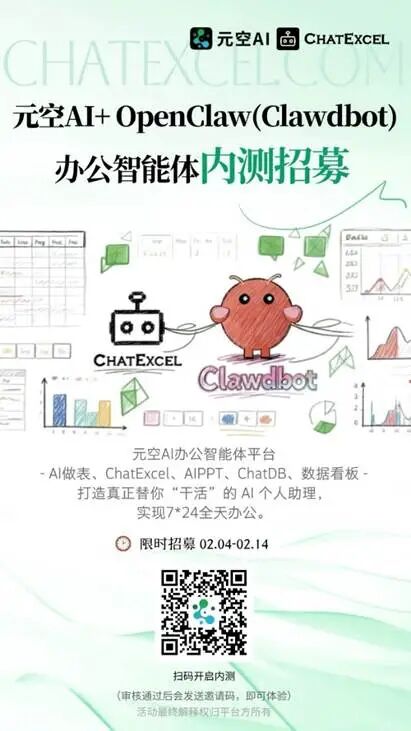
“We are so excited and really in awe. We didn't expect OpenClaw to be so powerful and open - source.” “We immediately decided to develop a comprehensive office intelligent agent based on OpenClaw, combining it with our previous office suite like ChatExcel to form a personal AI that serves workplace employees comprehensively: Yuankong AI + OpenClaw.” And we will start recruiting for internal testing on February 4th!”
Pang Dawei said excitedly during an interview with reporters. I could sense his “excitement.” He spoke very fast and couldn't wait to launch new products and plunge into this exciting AI wave that makes people sleepless.
Another AI company dedicated to promoting the application of local intelligent agents, Shoujie Technology, revealed an explosive news during an interview with China Software Network. Its co - founder, Guo Mengming, said, “We will launch the latest Qwen3 - Coder - Next model on our Linglongxinghe Nova Studio AI platform.” (Author's note: Qwen3 - Coder - Next is an open - source weighted language model newly launched by Qianwen, specifically designed for programming intelligent agents and local development. The Qwen team has optimized the model's tool - calling and skill capabilities.) They have optimized the inference engine based on ROCm for this model, and the speed can be increased by up to 400% in the case of long contexts! They believe that this will become the local brain of OpenClaw, making OpenClaw truly available offline without expensive Token consumption and running at zero cost.
We found that for these “AI Native” companies, when facing OpenClaw, they are basically shining with excitement, actively embracing it, and ready to take action immediately!
3. The “For Geeks First” Faction
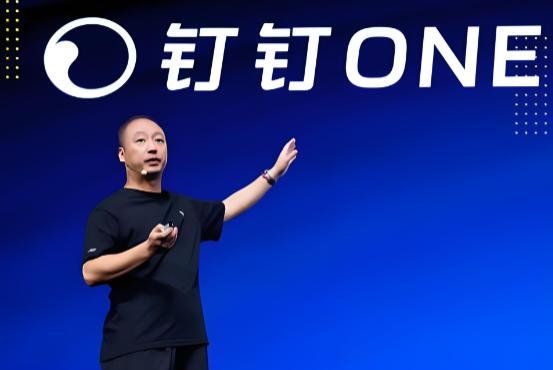
“OpenClaw is something for geeks. It can be used in consumer scenarios as you like, but in business scenarios, there are many basic requirements that the current OpenClaw can hardly meet.” Wuzhao, the founder and CEO of DingTalk, the largest domestic collaborative office platform, believes, “We released Real a long time ago. In the B2B market, Dingtalk Real is the productized solution that is'secure + simple + commercially viable.'”
Tang Yi, the CEO of Evernote, a leading domestic one - stop efficiency tool provider, also believes that ordinary people should not use OpenClaw for the time being. This is because OpenClaw has great permissions to take over the computer's read, write, and modification operations, which will bring many security risks that ordinary people cannot control.
In fact, not only Wuzhao and Tang Yi, but also many professionals such as Guo Mengming, Yang Jianwei, and Ji Zhaohui, the vice - president of marketing for AMD Greater China, hold this view.
“Let the geeks use it first. We are trying to strengthen security.” This is often the attitude of Internet or mobile Internet companies. Their characteristic is to keep up with the trend of new technologies but accept them critically.
Although the views of different factions vary, they all pay great attention to OpenClaw. The “Yuanbao Faction” of Tencent's Yuanbao was a hot topic a couple of days ago, but now it has been overshadowed by OpenClaw.
2. God - like Abilities, Devil - like Problems
Unexpectedly, “Little Crayfish” quickly became popular beyond the geek circle!
Peter Steinberger, the founder of the well - known PDF development tool PSPDFKit, who achieved financial freedom by selling the company for about $119 million in 2021 and is an “AI geek,” perhaps never imagined that OpenClaw, which he developed because he felt bored and thought there was no ideal AI assistant on the market, would develop at an unimaginable speed: it quickly received over 100,000 stars after its release and continued to grow, then triggered a strong “little crayfish” whirlwind in the global AI field.

I'm full of curiosity about OpenClaw. I want to conduct an in - depth analysis and report on it, and I'm extremely eager to try it.
Theoretically, I must try OpenClaw myself.
But I'm not a geek. I don't have a Mac mini. I only have a Windows PC. I'm just a journalist. I don't understand technology, command lines, or cloud images. I'm also afraid of spending an unaffordable amount of Token fees.
So, in fact, I've tried many ways but still haven't found a way to experience OpenClaw personally. Naturally and regrettably, up to now, when I've finished writing this article, I still haven't really experienced OpenClaw.
But I can still feel the power of OpenClaw.
To gain an in - depth understanding of OpenClaw, I interviewed many industry insiders, checked a lot of materials, watched many experience videos, and had many discussions with AI.
I'm now trying to position OpenClaw from the perspective of a professional journalist in the software and AI fields.
At first, I thought its intelligent agent form was an APP or an application program, but I soon found it was wrong. Guo Mengming, the co - founder of Shoujie Technology, told me that it's not an APP, nor is it an application program that can be executed by double - clicking. It's a “capability” that needs to be launched through APPs or application programs such as instant messaging.
Then I thought it was just a “smarter” chatbot that understands itself better. Guo Mengming also corrected this “cognitive misunderstanding” of mine: OpenClaw can not only chat but also do work. It's like having its own brain, hands, and feet and can do various tasks, such as ordering takeaways, booking tickets, sending emails, arranging schedules, writing PPTs, deleting useless files, and reorganizing the desktop.
Is it similar to Manus? I thought of this intelligent agent that was just acquired by Meta at a sky - high price. “No,” Pang Dawei clearly told me. “Manus can only intervene in pre - set tasks, that is, complete the tasks it has learned. But OpenClaw can do tasks it hasn't learned. It can learn on the spot and seek assistance from other intelligent agents to complete the tasks assigned by the user.”
Oh, is it the same as Qianwen or Doubao on mobile phones? I thought to myself. There are also many AIs and super intelligent agents that can do various tasks. The battle among super AI entrances like Qianwen, Wenxin Yiyan, and Doubao has already begun, and doing some work is no problem. “The starting points are different,” Pang Dawei denied my idea again. Qianwen and others work in the cloud, which is like renting an external helper, while OpenClaw is deployed locally and is a private assistant belonging to oneself.
Is it an all - powerful intelligent agent similar to a “human” or even stronger than a human? Pang Dawei told me, “Yes, but not only.” OpenClaw itself has a strong ability to execute tasks. It's like an extremely smart and capable partner of yours. But at the same time, it's also an open - source and open intelligent agent building platform. Developers can use their professional knowledge and experience to develop various professional application intelligent agents on this basis.
After being educated by various experts and a lot of materials, and after my own repeated thinking and understanding, I now position OpenClaw as follows: for ordinary users, it's a super - capable and continuously growing AI partner that can help us with various tasks; for geeks and AI developers, it's a free and open - source intelligent agent operating system that can provide an operating environment for various intelligent agents and a framework and platform for their construction.
To be honest, this positioning also corresponds to the dramatic changes in its name. At first, it was called “Clawdbot,” presumably to pay tribute to the Claude large model. But because its pronunciation was similar to “Claude,” it made Anthropic unhappy. At the end of January 2026, they received an official trademark objection email from Anthropic. So they changed the name for the first time to “Moltbot.”
However, soon they decided to change the name again. Because the pronunciation of “Moltbot” was not smooth, and there were chaotic situations such as the social media account being pre - registered. Just a few days later, they decided to change the name again and finally named it OpenClaw.
I really prefer OpenClaw. It makes people think of openness, open - source, crayfish, and platforms. However, it also makes me think of OpenAI. This series of name changes seems to dramatically reflect the delicate relationship between a startup project and ecological giants during its rapid development.
Although OpenClaw has become a phenomenon - level AI intelligent agent craze, after the craze, its major problems and challenges have begun to emerge.
As Yang Jianwei pointed out, the security issue is the most important challenge. Deploying OpenClaw requires high local system permissions, and there are vulnerabilities in the initial deployment, which are widely questioned by security experts.
Ji Zhaohui, the vice - president of marketing for AMD Greater China, also pointed out that since many OpenClaw users currently use Mac mini for deployment and rely on cloud - based large models as the brain of OpenClaw, it brings two problems to users. One is that uploading personal privacy and local sensitive data to the cloud - based large model may be unsafe; the other is that OpenClaw often runs long - chain tasks, and the Token consumption during execution is quite large. Large - model vendors will charge a considerable amount of API call fees for this.
At the same time, I can also feel that the governance of the OpenClaw open - source community, as well as its commercialization and profit models, are also major challenges. After the explosive growth of the project, how to transform from a personal project to a sustainable community project is a major test that open - source software must go through.
3. The Next Step of the OpenClaw Ecosystem
Although there are various problems and challenges, one thing is very certain: OpenClaw has gone beyond the geek circle, become an AI star, and formed the prototype of its own ecosystem.
Based on the current situation of the community, industry rules, and the views of many experts, I divide the OpenClaw ecosystem into three levels:
1. The Core Platform Layer: It is mainly maintained by the founder, the core team, heavy - tech users, and geeks. Their main responsibility is to ensure the stability, security, and core innovation of the OpenClaw infrastructure.
2. The Commercial Product Layer: It mainly involves intelligent agent startup companies, ISVs, and enterprise IT departments. Their main task is to productize, scenario - based, and commercialize the capabilities of OpenClaw, solve the enterprise - level security, usability, and compliance requirements, and make profits from it.
3. The Derivative Partner Layer: It mainly involves geeks, researchers, associations, alliances, and even robots (AI intelligent agents themselves). They jointly explore and practice various supports needed for the AI intelligent agent ecosystem, and constantly try the boundaries and possibilities of products and the ecosystem, such as intelligent agent social networks (Moltbook), novel skills, and even new interaction paradigms.
During the gradual differentiation of these three layers, I believe that Peter Steinberger will soon face a turning - point decision. As the founder, the fundamental decision he has to make immediately is: what will OpenClaw ultimately become?
A. Become a Reliable Basic Engine: Narrow the boundaries, focus on building a secure and stable intelligent agent runtime, provide power for upper - layer commercial products and experiments, and leave the complex productization and scenario - based development to the ecosystem.
B. Become a Benchmark Intelligent Agent Terminal Product: Under the leadership of the core team, continuously improve the functions and experience, directly serve end - users, and compete directly with commercial products in the ecosystem.
My personal prediction is that he is very likely to choose A.
The greatest value of OpenClaw lies in its open - source, local core concept and strong execution ability, which are more suitable as infrastructure. Problems such as usability, enterprise permission management, and in - depth optimization of vertical scenarios can be solved more efficiently by commercial companies on the basis of the open - source engine, and the ecosystem will be healthier and more powerful in the future!
Therefore, the next development trend of the OpenClaw ecosystem is worthy of prediction and attention.
Based on the views of the experts I interviewed, I summarized the following four judgments:
Trend 1: The Accelerated Emergence of Secure Applications Based on OpenClaw
Security will change from a “weakness” to a “selling point.” Many developers will develop various AI intelligent agents based on OpenClaw and limit security issues to a range acceptable to ordinary users. As mentioned before, companies like Yuankong AI and Shoujie Technology have taken the lead in launching relevant products. These products retain the core capabilities of OpenClaw, integrate their own core products and capabilities, and achieve both “scenario - based” and “secure” through strict permission control and data isolation technologies.
Trend 2: The Blossoming of Special