When an AI developer decides to domesticate OpenClaw
Since the end of January, OpenClaw has flooded the WeChat Moments of technology practitioners. I've seen many interesting shares from developer friends about this project.
A senior developer born in the 1970s said that with OpenClaw, vibe has become more important than code, almost subverting the skill system he has built up over the past two decades. It can run autonomously on the computer for a whole day, mobilizing multiple agents to grab skills without him writing a single line of code. However, he doesn't feel frustrated. Instead, he believes that at his age in his 40s, it's still the prime time to strive. He can leverage his existing engineering experience to set more reasonable and broader operating boundaries for the agent, enabling it to safely and powerfully accomplish tasks that were previously impossible. He has an edge over novice developers.
Even programming beginners with zero foundation are extremely excited. Although they don't understand code at all, after some tinkering, they successfully got Clawdbot up and running and deployed it on a cloud server.
Some engineers from software companies believe that this amazing tool is more suitable as a personal operating system and currently cannot support the creation of profitable commercial products.
In short, both beginners and experts are taming OpenClaw, each with their own insights.
OpenClaw makes it possible for "everyone to have their own Jarvis." It can be predicted that taming general agents like OpenClaw will become a major theme in the AI story of 2026.
So, what will an AI developer experience when deciding to tame OpenClaw?
First Encounter: When AI Gets a Soul
OpenClaw is called "the greatest AI application to date," but this statement is generally not recognized by senior programmers.
In their eyes, the technical architecture of OpenClaw is quite simple in essence and still follows the ReAct (Reasoning + Action) paradigm that emerged in the past two years.
The specific process is as follows: First, it obtains the user's specific instructions, then judges and breaks them down into corresponding execution steps. After completing each step of the operation, it iterates the decision on the next action direction through execution feedback and result observation. This is a typical tool - calling cycle and also the core logic of AI Agents all along. So, OpenClaw doesn't have complex technical barriers.
Then why is it so attractive to developers? The most amazing thing is that AI finally has a sense of being alive for the first time.
Some people say that OpenClaw is like having their own personal assistant, Jarvis. Others say that when OpenClaw automatically pops up a conversation, they feel like they've been "wall - slammed" by AI.

The reason behind this is not that AI has really awakened, but rather several innovations of OpenClaw at the engineering level:
Firstly, it interacts like a human. AI Agents like Manus and Cursor need to be accessed through dedicated web pages or independent clients, which is a bit geeky but also somewhat complicated. In contrast, OpenClaw relies on message adapters (channels) and can be connected to instant messaging tools commonly used by the general public, such as WhatsApp, Telegram, DingTalk, Feishu, QQ, and Email. Users can send an instruction in the chat window, and the AI will start working through the conversation. This two - way communication is more like directing a real human, giving users a strong sense of interaction.
Secondly, it is proactive like a human. Vertical agents can only passively respond to a single request and will stop when encountering obstacles. However, OpenClaw maintains dynamic interaction with the user throughout the task execution process. When encountering execution obstacles, such as failing to book a restaurant, it will autonomously switch strategies, switch to making a phone reservation, and provide real - time feedback on the progress and actively seek user confirmation, discussing with you. This flexibility comes from the skill mechanism, which allows OpenClaw to start local services and access data, and it will also autonomously search the Internet for relevant API interfaces. If it can't find a suitable interface, it will actively inform that the task may not be completed. This ability to adapt flexibly makes the AI no longer just mechanically execute tasks and gives it a sense of independent judgment and aliveness.

Thirdly, it is all - around like a human. After the popularity of large models in 2023, the industry realized that large models alone can accomplish very limited work. AI must have "hands and feet" and rely on external tools to complete tasks on behalf of users, and OpenClaw exactly meets this need. The central gateway is responsible for session management, agent scheduling, and multi - channel message connection. The agent module calls large models, tools, and skills to complete specific task executions. It can be controlled through multiple clients externally and also supports node management of device software (such as Mac mini). Therefore, once given local permissions, OpenClaw can expand infinitely. It can interact with email, manage schedules, conduct personal knowledge management and financial management, and even connect to home IoT devices to achieve voice control, lamp adjustment, etc., becoming a 24/7, tireless personal assistant.
So, the rapid spread of OpenClaw is not because of its advanced technology or the so - called "awakening of the agent" as reported in some shocking news. In essence, it is the engineering innovation in the three dimensions of interaction, autonomy, and ability that endows the tool - type agent with the missing soul, thus opening up infinite imagination space for developers regarding AI agents.
Disillusionment: The Seesaw between Technology and Commercialization
After the initial amazement, disillusionment follows. As independent developers, they not only pursue technological ideals but also need to consider the commercialization potential of the project. Although OpenClaw is regarded as a miraculous tool by programmers, it is not perfect.
Some people found that a simple interface operation that can be completed in 30 seconds on Miaoda costs $30 when executed by OpenClaw. Others spent as much as $55 on API fees when using it to register an X account and send a tweet.
Cost is just the tip of the iceberg. This means that delivering a software project based on OpenClaw to customers for commercial use will face significant challenges.
The most primary challenge is: how much will it cost?
OpenClaw is called a "Token furnace" because of its astonishing consumption of computing power costs. The reason behind this lies in the ReAct mechanism. OpenClaw is a project that heavily relies on LLM APIs and needs to interact with large models frequently. Each task requires at least three rounds of interaction, and a single task will consume a large amount of Tokens.

Burning millions of Tokens and spending hundreds of dollars within 20 minutes is not uncommon in actual use. This is unbearable for high - frequency use or enterprise - level applications and makes it difficult to form a sustainable business model. This also discourages many developers who hope to achieve commercial monetization through it.
Assuming cost is not a concern, professional customers will definitely focus on: is it safe?
The power of OpenClaw comes from skill packages. Currently, the Skill market has tens of thousands of skill packages, and most of them have not been strictly reviewed. Developers can upload and share various Skills at will. This provides an opportunity for attackers. They can implant malicious code into Skills. When developers call these Skills, the malicious code will execute automatically, stealing user information and controlling devices, and developers often find it hard to detect. These risks make many enterprises hesitant to use it in work scenarios.
To avoid the above risks, developers generally use sandbox isolation and deploy OpenClaw on dedicated devices (such as old computers or Mac minis) to completely isolate it from personal main devices and sensitive data, preventing the spread of security risks.
However, this method also has obvious drawbacks. If completely isolated, OpenClaw cannot access files and tools on personal main devices, and its functions will be greatly limited. It can do very few things and will completely lose its original value. If the isolation is not thorough, security risks cannot be effectively avoided, and there is still a risk of privacy leakage and device control.
High autonomy and high security are difficult to achieve simultaneously. This dilemma not only troubles ordinary developers but also restricts the commercialization of the project. Currently, there is no mature solution in the industry, which means that developers still need to weigh between security and functionality in the future.

Can you use OpenClaw safely after sandbox isolation and local deployment? The next problem is how to correctly and efficiently schedule and use a wide range of Skill tools with large models.
The understanding and orchestration of multiple agents in OpenClaw still rely on the basic model, but the capabilities of the current basic model are still limited. For example, when the large model processes long - context (such as 128K) data, the accuracy of tool use will drop significantly. This results in a low task completion rate for OpenClaw in complex scenarios. It may call the wrong Skill, miss key task steps, or perform ineffective operations, requiring developers to intervene frequently, making it difficult to achieve true automation.
At this time, enterprises will find that the all - powerful general agent is still an ideal. In reality, a dedicated agent with limited but reliable capabilities is more reasonable.
These flaws make the commercialization logic of projects based on OpenClaw seem weak. Independent development allows for free - flowing creativity, but commercialization must consider returns. OpenClaw has always struggled to find a balance between capabilities and risks, and between technological ideals and commercial realities.
So, currently, OpenClaw is more suitable for personal exploration and geek experiments and is still difficult to support serious commercial applications.
Taming: The Symbiosis between Developers and OpenClaw
After disillusionment, there comes the symbiotic evolution with OpenClaw.
In "The Little Prince," the fox tells the little prince that only tamed things can be understood and a unique relationship can be established. The same is true between developers and intelligent agent assistants.
While the public is anxious about agents causing chaos on laptops, experienced AI developers have started to try to tame OpenClaw, seeking a balance between authorization and restraint, and between capabilities and security, to let it unleash its maximum value.
Here's what they're doing:
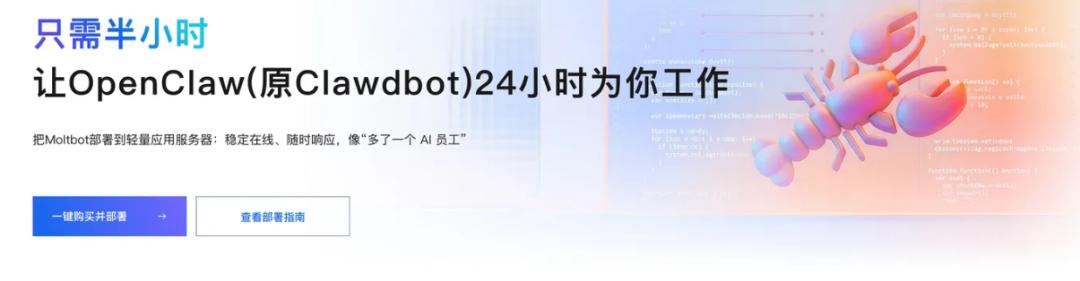
The most basic and important technique is sandbox isolation. In addition to local deployment on computers, some developers choose cloud environments. Currently, domestic tech giants such as Alibaba Cloud, Tencent Cloud, and Baidu Smart Cloud have all launched one - click deployment of OpenClaw and provide sandbox environments, which can effectively isolate security risks. At the same time, cloud servers support 24/7 operation, and their cost - effectiveness is more suitable for long - term use.
Secondly, more experienced developers don't use OpenClaw for showy things and set reasonable expectations.
The so - called "Jarvis" myths like automatic tweeting and voice interaction usually amaze the general public. Developers focus more on productivity scenarios, especially tasks that were previously difficult or impossible to do. These tasks are often repetitive, boring but highly deterministic, such as batch - processing files and generating reports. They are time - consuming, labor - intensive, and error - prone. OpenClaw is exactly suitable for these tasks. Just give clear instructions and set task boundaries, and OpenClaw can continuously advance the task.
For example, a data analyst can ask OpenClaw to batch - read data and generate reports. What used to take days can now be completed by OpenClaw in just a few hours or even dozens of minutes.
Finally, humans should act as reviewers for OpenClaw. For complex tasks, review each step completed by the AI. After confirming that it is correct, let the AI proceed to the next step to avoid a chain of mistakes. For some important tasks, such as code refactoring and processing sensitive files, first let the AI generate an example. After reviewing and confirming the example, let the AI execute it in batches.
In short, OpenClaw is not magic but engineering. What the public sees as Jarvis or the awakening of intelligence is, in the eyes of developers, solid engineering practice. Without fear or blind following, safely authorizing and reasonably empowering within a controllable range may be the optimal solution for the symbiosis between humans and AI.
In the future, everyone will have their own Jarvis. Why not start by taming OpenClaw?
This article is from the WeChat official account "Brain Intelligence" (ID: unity007). Author: Tibetan Fox. Republished by 36Kr with permission.