High-tech meets the real world: Drones fly with pigs on their backs, and robotic dogs carry goods.
01: Authentic Flying Pig
You might have heard the saying "If you haven't seen a pig fly, surely you've seen one run."
Well, hold your horses! Now you can actually witness a flying pig.
On January 24th, in a certain area of Bazhong, Sichuan, a live pig was hanging from a high - voltage power line.
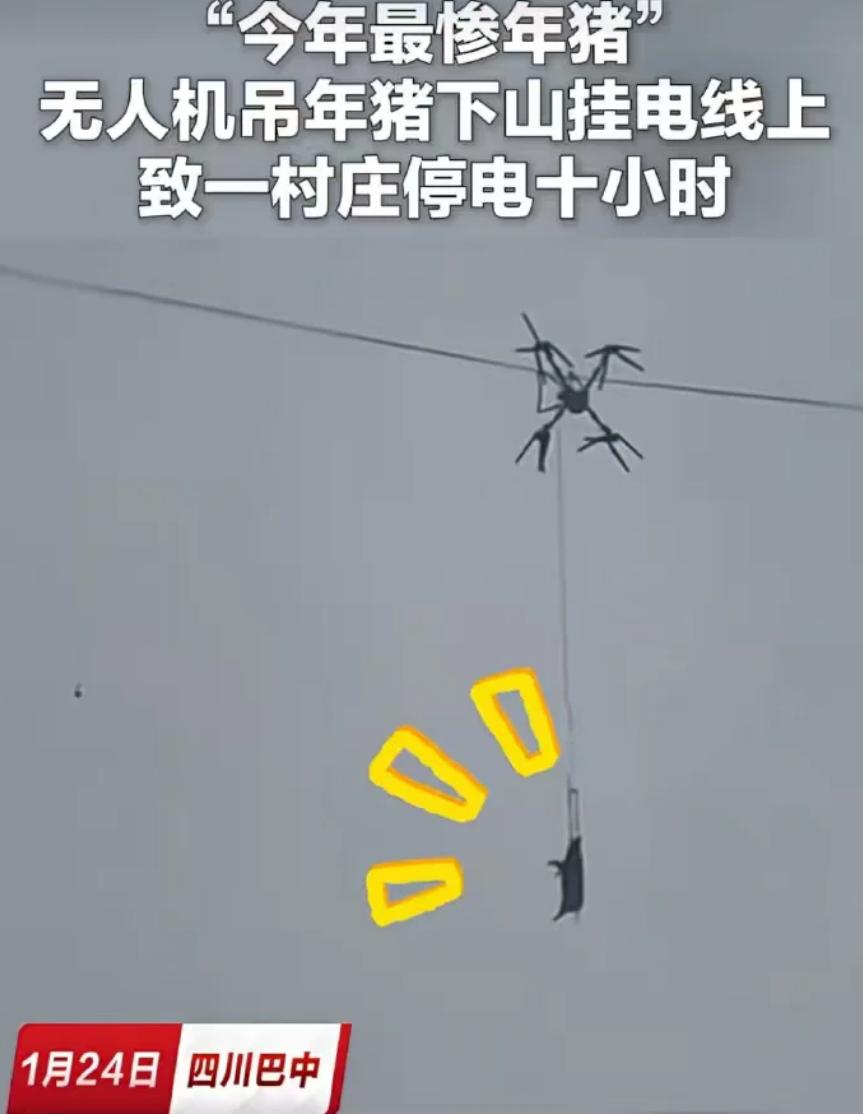
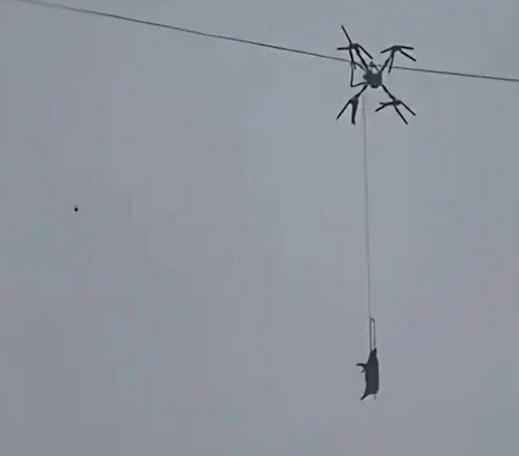
One drone, one pig, one power line
This pig wasn't electrocuted or scared to death; it was hanged.
As for how this "flying pig" took to the sky, the drone not far above revealed the answer. The drone was carrying the pig, but then it got caught on the power line. The pig was strangled by the rope for several hours and finally met its end in such a bizarre way.
Recently, the activity of slaughtering pigs for the New Year has been booming everywhere, and there's a high demand for pigs. The relevant personnel planned to use the drone to lift more than a dozen live pigs down the mountain in the early morning.
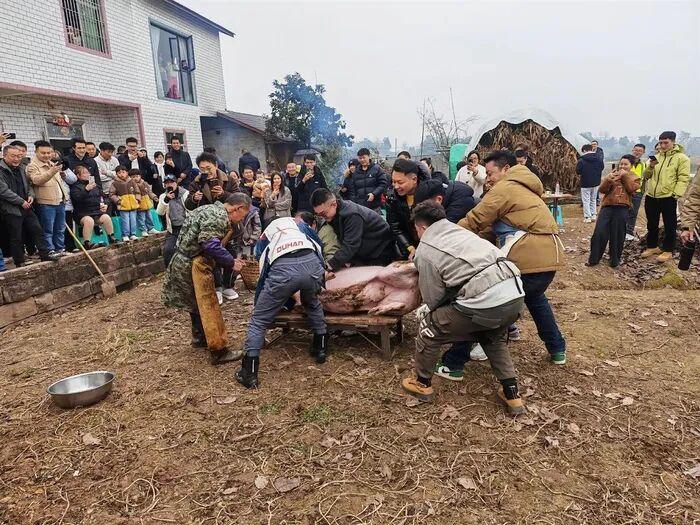
The plan was to slaughter them after lifting them down the mountain
It was dark, so the drone was flying in the dark.
During the process of using the drone to lift the pig, things got off to a bad start. The first pig got directly caught on the power line. An insider said that the on - site personnel tried several times to handle the situation and rescue the pig but failed.
Ultimately, this incident caused a ten - hour power outage in a village, and the power supply was restored after emergency repairs.

Previously, the United States didn't shut down half of the country's power to save a sparrow. Now, in China, a whole village lost power for ten hours because of a pig.
However, many netizens launched a heated discussion about this strange incident.
Technically, the drone involved should be a DJI T100. As a medium - to - large - sized drone, its maximum lifting capacity is 85 kg. Lifting a pig shouldn't be a big problem.
Regarding the issue of "unauthorized flights" that many people are discussing, since operators of this type of drone are required to have a professional pilot's license, there shouldn't be any random flying. Moreover, since it was in a rural area, there were probably no military restricted areas, so there was no need to worry about causing a major incident just for lifting a pig.
The only possible flaw is that the drone should not have been flown at night.
It's pitch - black in the countryside in the early morning, making it difficult to see. And the high - voltage power towers in the mountains usually cause strong interference, which can interrupt the remote - control signal. Additionally, even if the drone's automatic obstacle - avoidance system detects the power line, it doesn't know there's a big pig hanging below, so accidents are likely to happen.

So why transport the pig at night?
People who are often involved in buying, transporting, and slaughtering pigs know (or rather, it's a common assumption) that pigs to be sold in the market the next day usually need to be slaughtered in the early morning of the same day. The time for transporting the pigs to the slaughterhouse is even earlier. Of course, transporting the pig at night might also be to spare the pig's feelings. Otherwise, flying so high during the day would probably scare the pig to death.
In some cases where drones were used to lift pigs during the day, even when the pigs were put in cages for protection, they were so scared that they defecated right after taking off.
Yes, they really did.
If we really want to nitpick, this way of transporting pigs doesn't quite comply with the "Regulations for Pig Transportation."
According to the latest national standard "Technical Requirements for Pig Transportation Management," to prevent the cross - regional spread of animal diseases during pig transportation, there are multiple regulations on related transport vehicles. You might have noticed, where does a drone fit into these regulations?
So, strictly speaking, using a drone to lift a pig doesn't comply with the national transportation regulations.

The country never expected pigs to be transported like this
Nevertheless, transporting a few pigs individually, rather than a whole truckload like on the highway, can be somewhat understandable.
After all, the Chinese New Year is approaching, and there's a high demand for pig - killing. In this "pig - slaughtering season," pigs are really flying in the sky.
Anyway, this incident of a drone lifting a pig at night and getting it caught on the power line will probably be recorded in the history of domestic drone transportation.
Don't think this is the first time a pig has flown. This is just the first time a flying pig got caught on a power line. In fact, pigs have flown countless times.
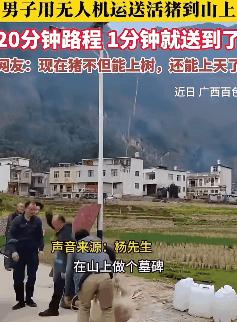
The country never expected pigs to be transported like this
In Guangxi, some people used a drone to lift a pig by its four limbs and flew it directly up the mountain. The journey that used to take 20 minutes on foot now only takes one minute.
The drone can carry a load of 250 pounds, and the pig weighs 180 pounds, so it can be lifted easily.
After reaching the mountain, the pig is slaughtered, allowing the "flying pig" to complete a magnificent transformation from taking off to meeting its end.
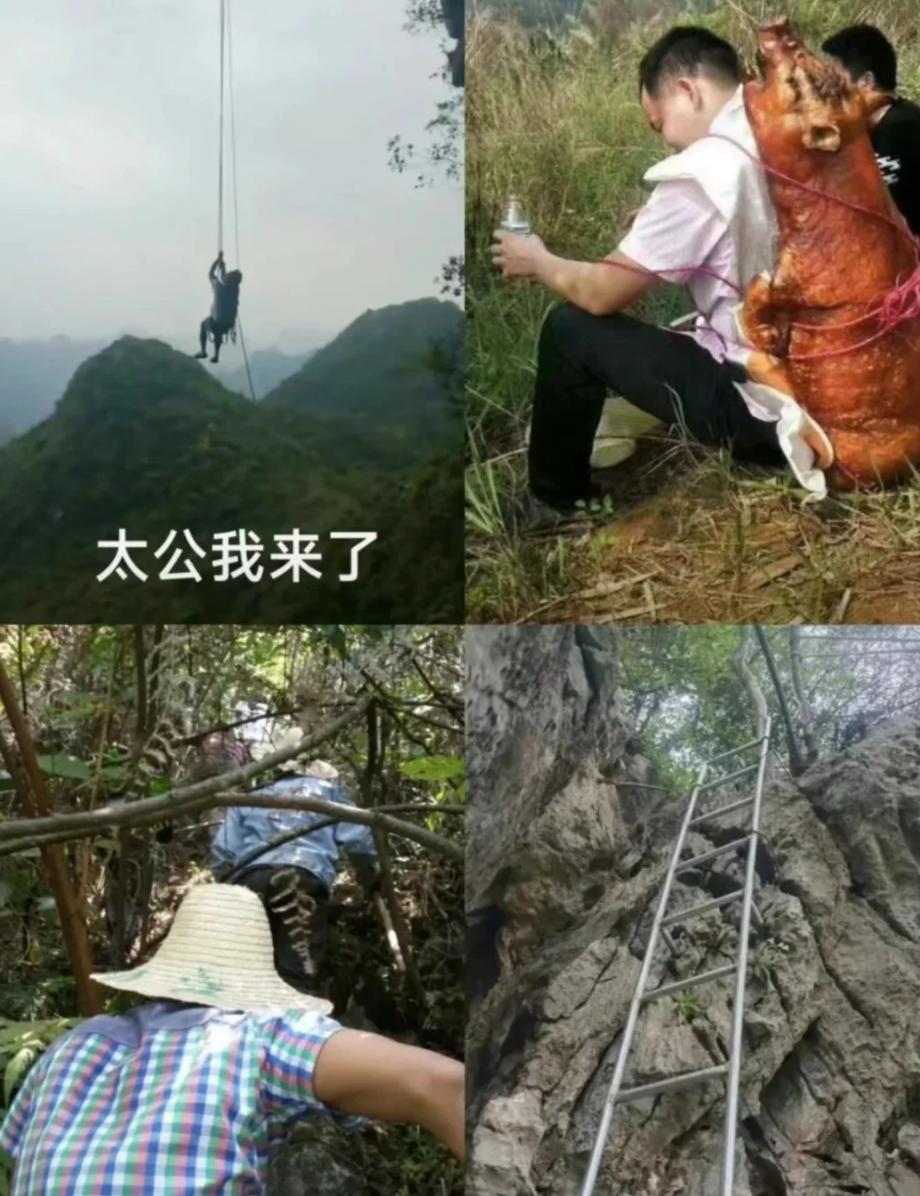
Technology is changing ancestor - worship ceremonies
Especially for people from the "Southern China F4" region, ancestor - worshiping during Tomb - Sweeping Festival every year is like participating in a multi - stage orienteering race. They have to travel long distances through difficult terrain.
They not only have to carry all kinds of sacrifices but also carefully search for the resting places of their ancestors along the way. After a long and tiring day, they're so exhausted that they almost see their great - grandmothers in front of their eyes. It's not that the ancestors are showing their spirits; it's just that they're really about to collapse from fatigue.
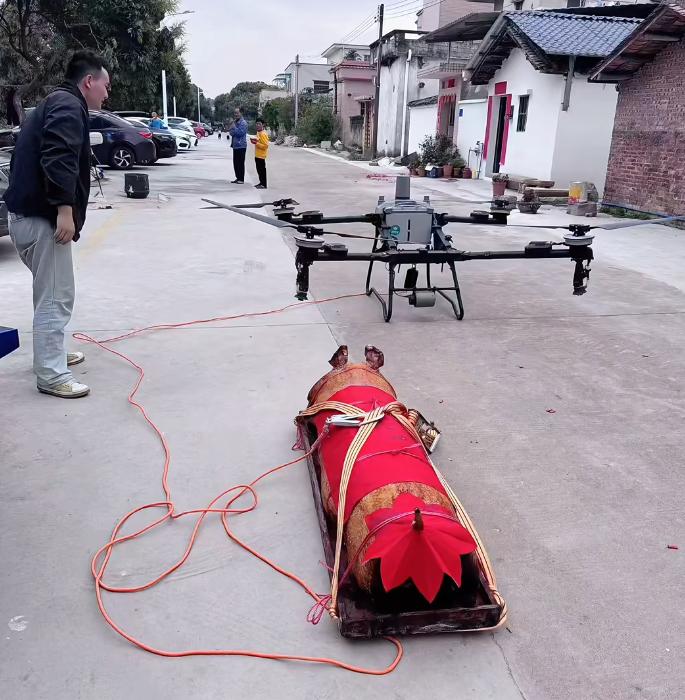
You can lift as big a pig as you want
Now with the drone, there's no need to carry a pig up the mountain on one's back. The drone can fly over and lift it away directly. In the past, people could only carry small suckling pigs, but now they can lift a whole big pig.
The ancestors can experience the charm of technology, and the pig can also have a no - regret life.
Besides transportation, drones are now also acting as "cyber sheepdogs" for many free - range farmers, scanning the chickens, ducks, cows, and pigs that are let out to graze from a bird's - eye view.
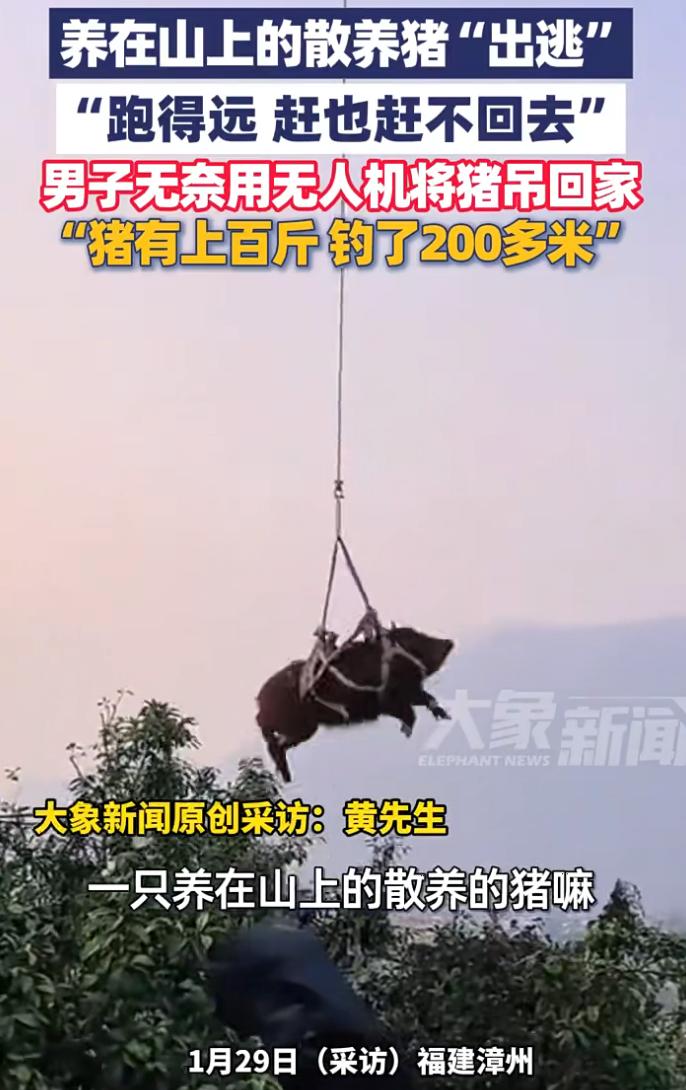
The drone can watch carefully and accurately. If a livestock animal runs too far away by chance, it can track it throughout the process. As for how to transport it back, it's an easy question. Of course, the drone can lift it away.
This is really practical, but it's just the tip of the iceberg of "high - tech meeting the real world."
02: Entering the Creative Mode
In the past two years, the term "low - altitude economy" has become increasingly popular. The drone industry is booming, and new business forms such as eVTOL (flying cars) are constantly emerging.
Since 2023, the number of newly registered enterprises related to the low - altitude economy has been increasing year by year. In 2025, the number of registered enterprises rose to 49,000, a year - on - year increase of 142.26%, reaching a double - peak in terms of the number of registered enterprises and the year - on - year growth rate in the past decade.
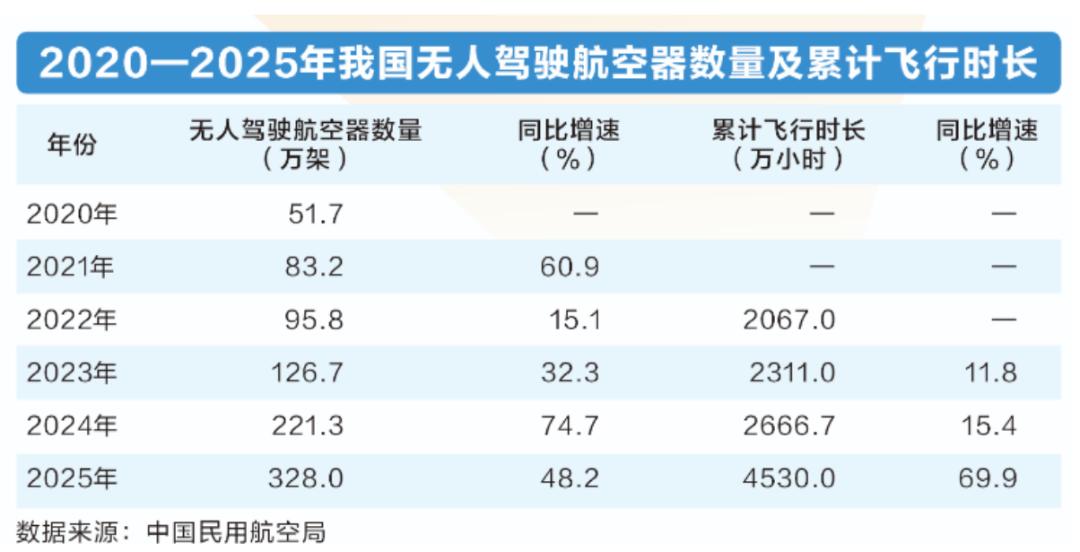
According to the "2024 China Low - Altitude Logistics Development Report," the low - altitude logistics market is showing a high - speed growth trend. The market scale is expected to reach 120 - 150 billion yuan in 2025 and is expected to rise to 450 - 605 billion yuan in 2035.
According to the prediction of the Civil Aviation Administration of China, the market scale of China's low - altitude economy will reach 1.5 trillion yuan in 2025 and is expected to reach 3.5 trillion yuan in 2035.
In the face of such a grand prospect, many netizens say they don't have a strong perception of the "low - altitude economy." The reason is simple: not everyone can use drone - delivered takeaways, let alone take a "flying taxi." It still seems to be in the exhibition stage.
So, for the general public, drones are more like tourist aerial - photography equipment rather than the so - called "economic concept." However, although netizens don't feel the real impact, it doesn't stop many people in need from using drones in a "creative mode."
Take this "flying pig incident" that's as amazing as the Marshal Tianpeng descending to the mortal world. Even in the simple task of lifting objects, drones have been developed with countless options.
People in the city use drones to deliver takeaways, while those in rural areas use drones as "mechanical laborers."
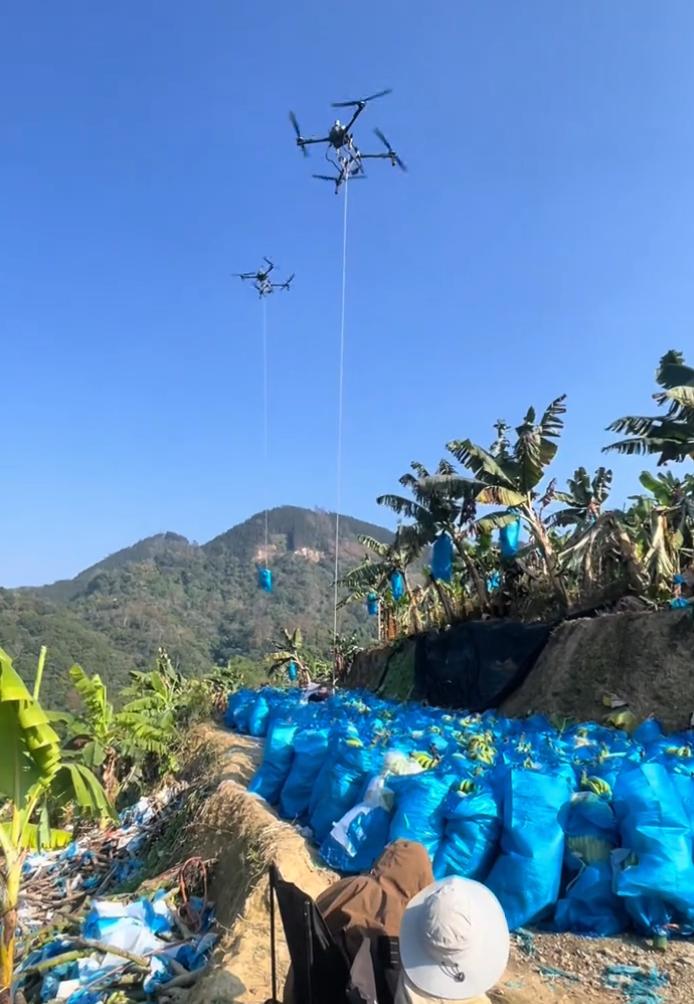
When there's a fruit harvest in the mountains and the vehicles can't reach, it's time - consuming and labor - intensive to carry the fruits down the mountain manually.
Drones are fast. Even if they carry the fruits bag by bag, it won't take long. If the route is fixed, the flight path can be set, and the drone will fly away automatically after being loaded with the goods.
Some netizens have shared their experiences. Carrying a large basket of fruits on one's back is slow and tiring, and many workers need to be hired. Drones are cheaper. Although they need to make more trips, the actual efficiency is higher.
In the past, without roads, vehicles, or enough manpower, people had to do it the hard way. Now, drones can handle everything. Whether it's going up or down the mountain or transporting goods across several mountain peaks, drones are fast and cost - effective.
From bananas, apples, and oranges to sugarcane, bamboo, and wood, all can be lifted into the air for transportation. The scenes of farmers carrying baskets of fruits and bundles of wood and bamboo down the mountain are becoming less and less common, and their lives have become much easier.
Some people may say that this will take away many people's livelihoods.
But actually, doing heavy manual labor in the countryside isn't