Xiaomi has entered the fray, triggering a major upheaval in the security camera market: 4G, solar power, and AI have become the new battlegrounds.
On February 4th, Xiaomi launched a crowdfunding campaign for its first outdoor 4G camera.
The crowdfunding price is 379 yuan. The "Xiaomi Smart Outdoor Camera 4 4G Dual - Camera Version" is equipped with dual 5 - megapixel f/1.6 cameras, capable of presenting 3K resolution images. It combines long - and short - focal lengths, and supports functions such as gun - dome camera linkage, intelligent full - color night vision, AI human and vehicle recognition, IP66 dust and water resistance, sound and light alarm, and two - way voice.
As the biggest highlight, this Xiaomi outdoor camera completely gets rid of the constraints of Wi - Fi and Ethernet cables. It comes with built - in China Telecom and China Unicom 4G SIM cards, can intelligently switch to high - quality networks, and supports quick connection via the Mi Home App.
Based on the built - in China Telecom and China Unicom 4G SIM cards, this Xiaomi outdoor camera offers a free data package with "unlimited data, no speed limit, and no additional recharge required", but it is only available for use in the Mi Home App.
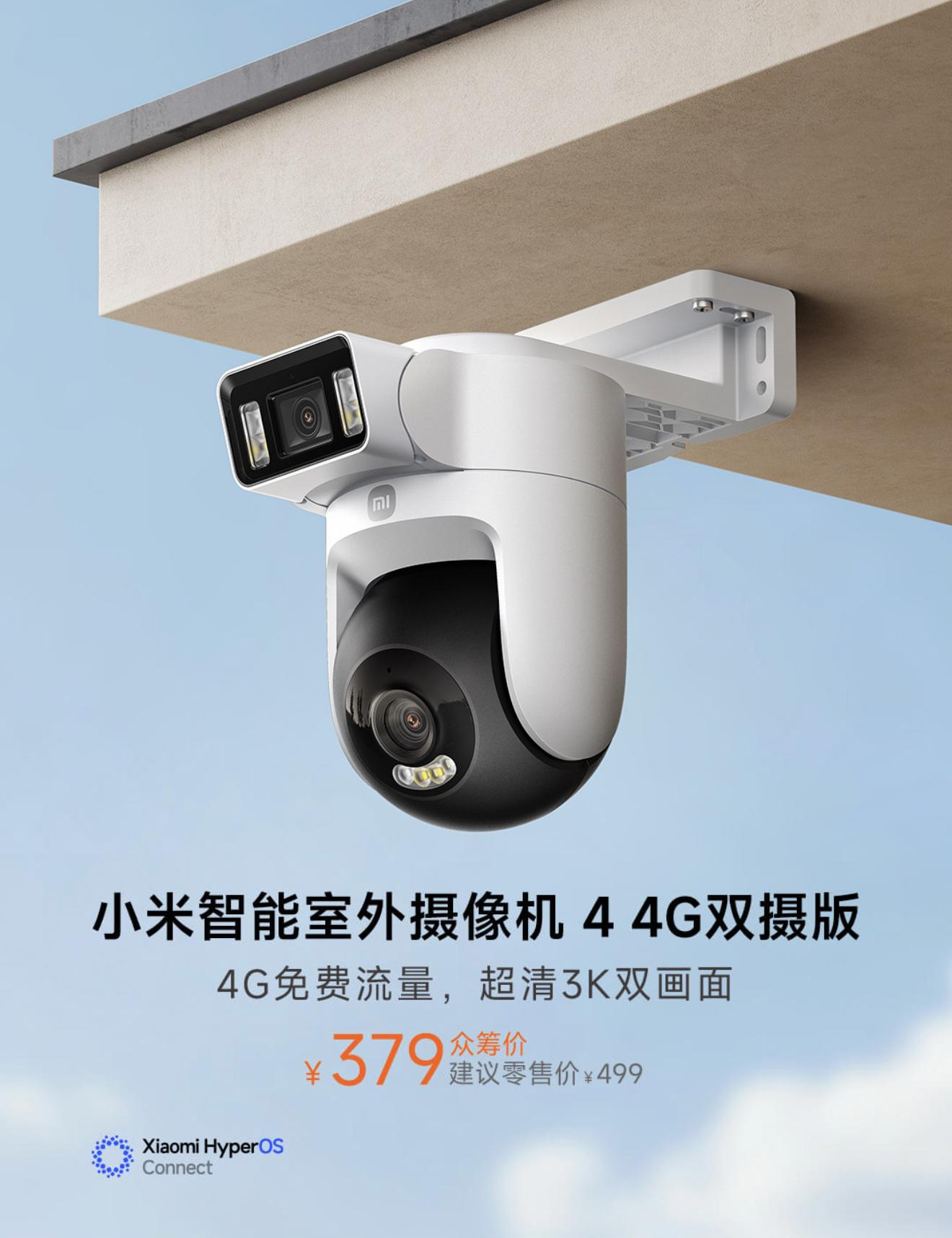
Image source: Xiaomi Mall
Although Xiaomi entered the outdoor camera market relatively early, it has only now launched its first product that supports non - Wi - Fi and non - Ethernet cable connections. Compared with the traditional home scenarios, Wi - Fi connections, and power - supply paradigms, home security cameras have been focusing on outdoor scenarios, data transmission, and low - power consumption technologies in recent years, and a transformation is quietly underway.
Half of the brands are new entrants, and the security camera market is witnessing a "new - old replacement"
Data from Lotu Technology shows that the total sales volume of China's consumer - grade surveillance camera market across all channels reached 55.07 million units in 2025, a year - on - year increase of 3%. Among them, online channels accounted for 63.6% of the sales volume, holding an absolute dominant position.
In 2025, there were more than 1000 consumer - grade surveillance camera brands available for sale across all domestic online channels. Among them, over 500 were new brands that entered the market during the year, and more than 260 white - label manufacturers exited the market during the same period.
While new players are flocking into the market, the domestic consumer - grade surveillance camera market is still concentrating on leading brand manufacturers. In the domestic online market for surveillance cameras in 2025, in terms of sales volume, Xiaomi, Qiaoan, Ezviz, Hikvision, and Aux ranked in the top five; in terms of sales revenue, Xiaomi, Ezviz, Hikvision, Qiaoan, and Shenmu ranked in the top five.
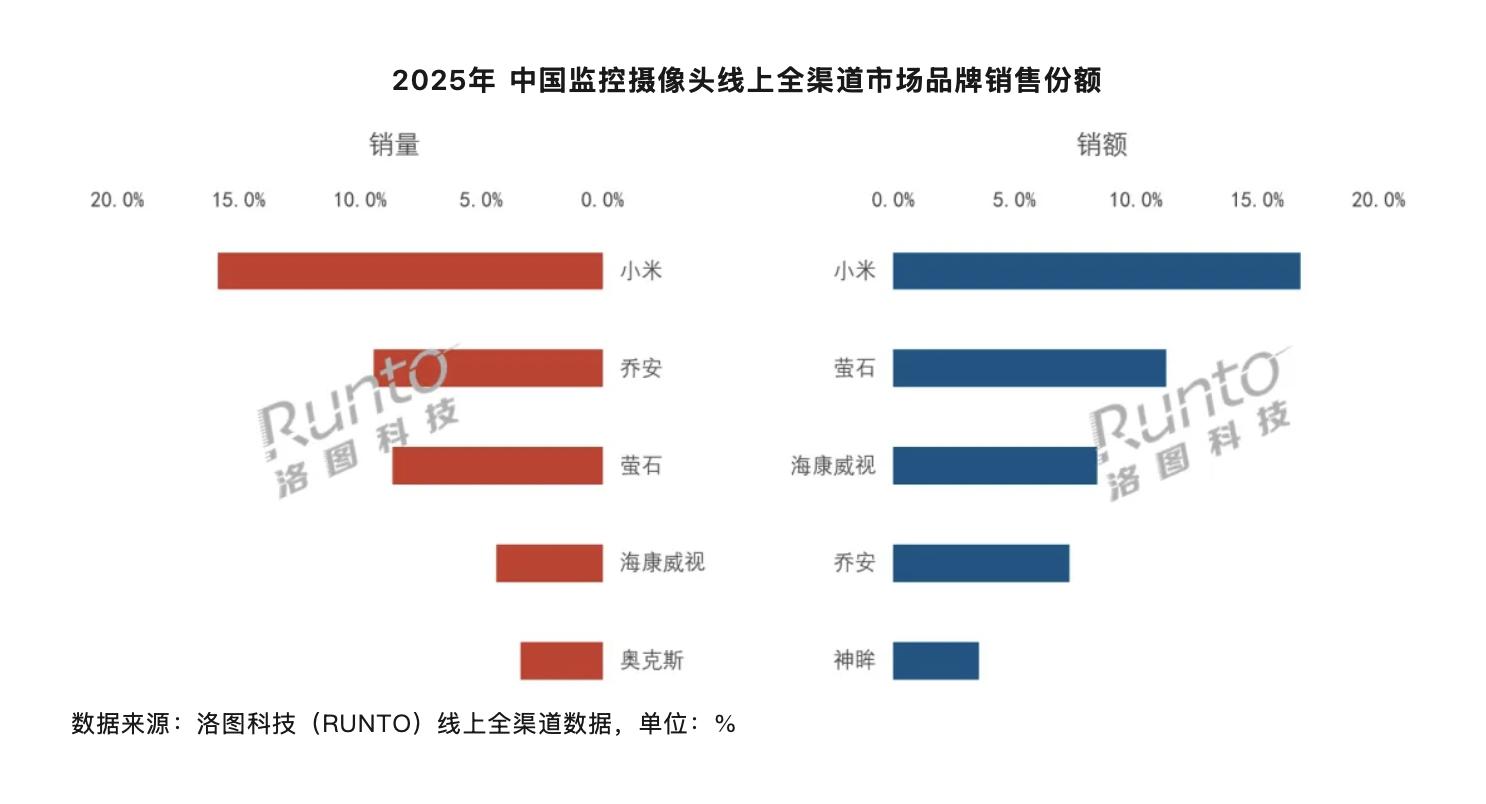
Image source: Lotu Technology
The security camera market has been developing for many years, and its product forms are relatively mature. However, in recent years, it has witnessed a large number of new players entering the market. There is only one reason behind this: this product category is experiencing the biggest wave of technological updates since its inception.
In terms of image transmission for security cameras, more and more new brands are now focusing on 4G connections instead of traditional Wi - Fi connections. In terms of power supply methods, more and more new brands are promoting large batteries after "wirelessization" and solar panel power supply. These technological updates, when combined, enable security cameras to fully move out of home scenarios and into outdoor and even outdoor environments.
Yanji Microelectronics was established in 2020. Its brand Shenmu focuses on the field of consumer - grade intelligent security and imaging products. Data from Lotu Technology shows that in the first half of 2025, Shenmu ranked first in both the low - power consumption camera and 4G camera categories on emerging domestic e - commerce platforms (such as Pinduoduo, Douyin, and Kuaishou).
Shenmu's self - developed ultra - low - power consumption chip aims to solve the problem of short battery life for wireless cameras. Shenmu's latest PT3 camera is equipped with a 9000mAh rechargeable lithium battery and an integrated solar charging panel design. In terms of power supply logic, during the day, the electricity generated by the solar panel is first supplied to the camera, and the remaining electricity is stored in the rechargeable lithium battery. On rainy days or when there is no sunlight, the battery can continue to supply power to the entire camera.
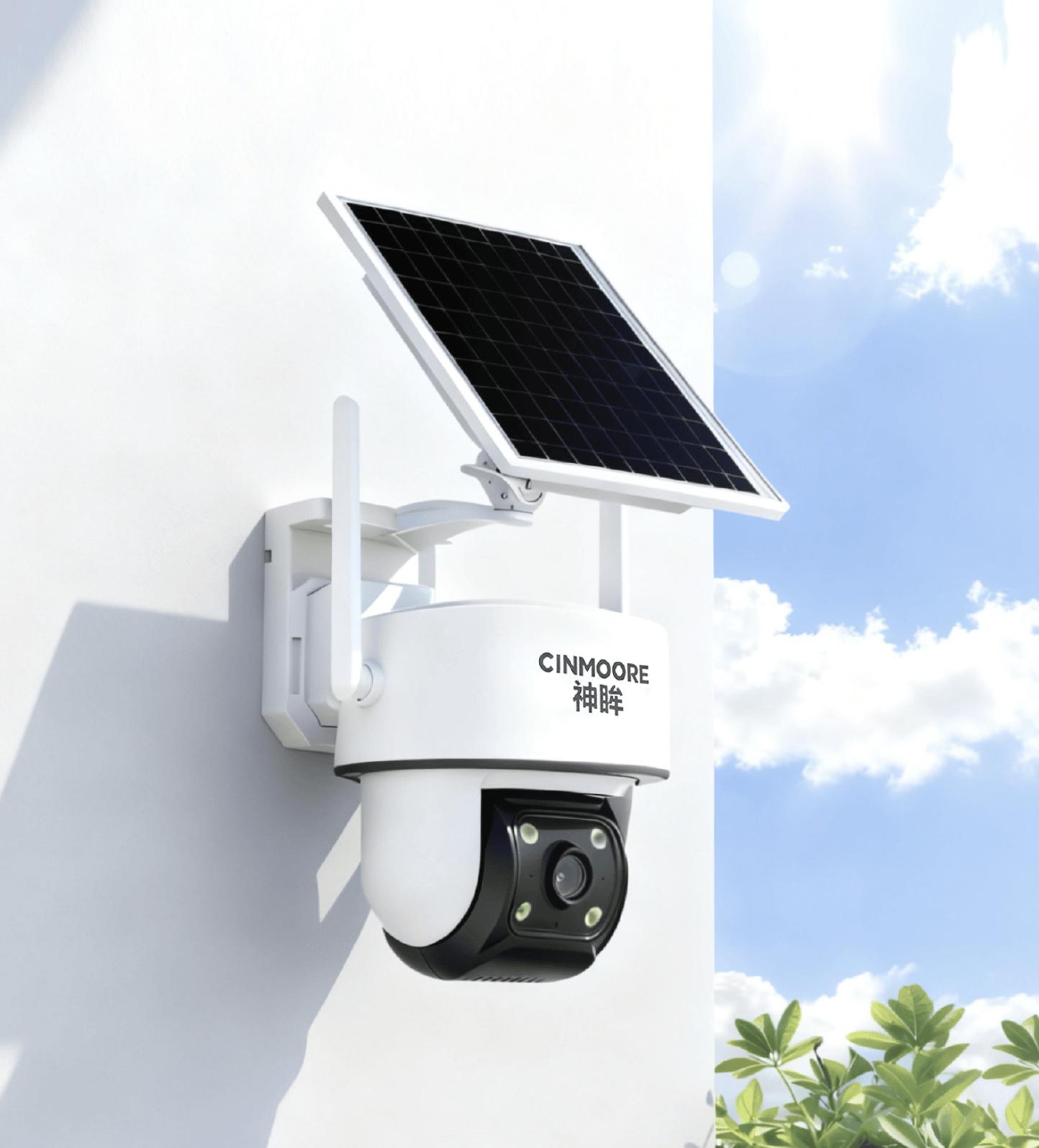
Image source: Shenmu
Industry data shows that the current annual global shipment of security cameras is approximately 300 to 400 million units, of which 90% are wired products that require power plug - in. Yang Zuoxing, the founder of Yanji Microelectronics, said in an interview with "Hard Krypton" that "if the proportion of wireless cameras increases to 90%, the market size will grow from the current tens of billions to trillions, and the annual shipment is expected to reach 10 billion units in 2035."
Big brands are focusing on new technologies, and Ezviz and Hikvision are ahead of Xiaomi
In addition to new brands, big domestic brands in the consumer - grade security camera market, such as Ezviz and Hikvision, are also focusing on the "wirelessization" and 4G development of new products.
It should be noted that Xiaomi's newly launched first outdoor 4G camera only supports 4G communication connection technology and does not feature a "wireless" plug - free design. Big brands like Ezviz and Hikvision are already ahead of Xiaomi in the new journey of "4G + wirelessization" for home security cameras.
Ezviz's home security camera product line currently has multiple products for outdoor application scenarios. Even among its indoor cameras, Ezviz has launched a 4G dual - SIM card version with "self - power supply".
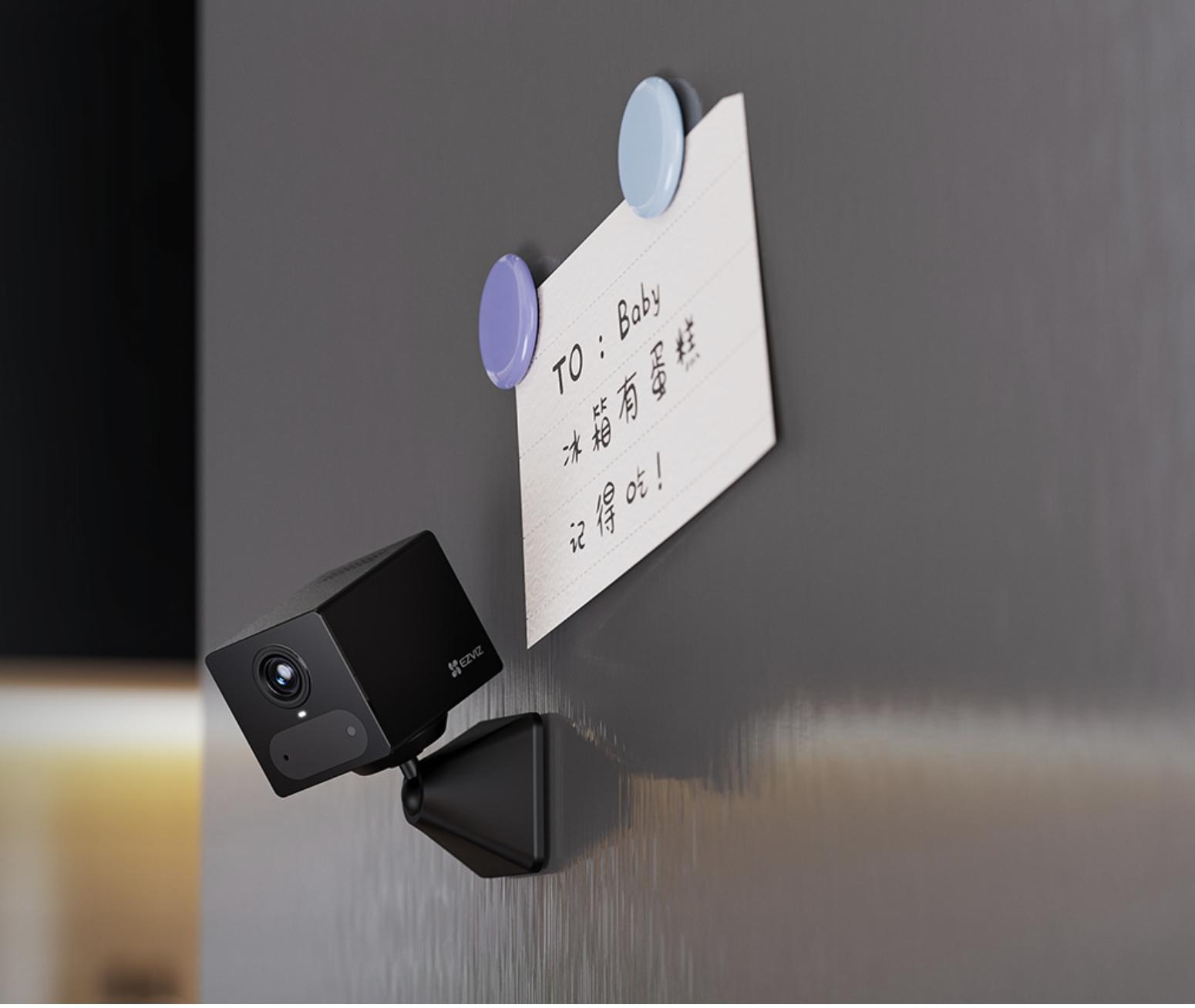
Image source: Ezviz
It is worth mentioning that Ezviz's 4G dual - SIM card camera product comes with a built - in China Telecom SIM card (not removable or replaceable), which offers a free data package for permanent use. At the same time, users can optionally install a SIM card from a different operator. The pre - installed card is a China Mobile 4G card. After the free trial data is used up, users need to purchase a new data package.
Hikvision's home security camera product line has even dedicated a "solar low - power consumption" camera series, which includes products in different forms such as simple cameras, dome cameras, and pan - tilt cameras. The 4G dual - SIM card version (China Telecom + China Unicom, 2 free unlimited data SIM cards) can be used in vast outdoor scenarios.
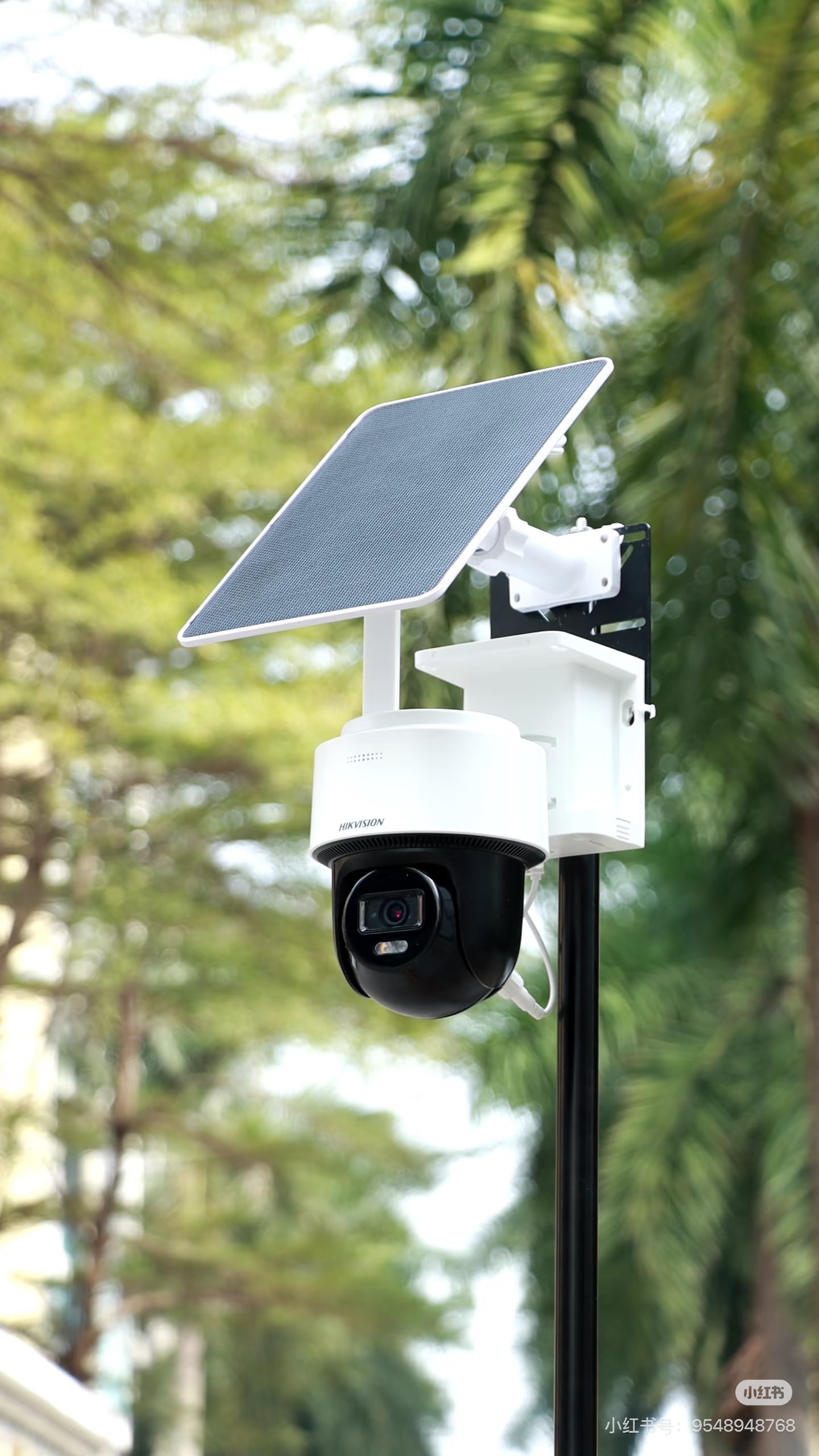
Image source: @Shi Chenjie, Xiaohongshu
However, it should be noted that currently, all consumer - grade "4G + wireless" security camera products have undergone a certain degree of configuration reduction in terms of product performance or camera functions. This is mainly due to the consideration of power consumption control. In other words, even if a security camera is equipped with a large battery of tens of thousands of milliamp - hours, without a solar panel, it is difficult to ensure a long battery life (such as several months) even with light use. To better solve this problem, the power consumption level of the camera needs to be further and significantly reduced.
At the same time, among the three major operators, only China Telecom and China Unicom have "actively" connected to 4G dual - SIM card camera products, and they all offer permanent free data packages. This is naturally the result of sincere cooperation between device manufacturers and operators. As the "big brother" among the three major operators, can China Mobile also be more proactive in cooperating with device manufacturers so that the latter can also offer camera products with built - in China Mobile 4G cards and allow users to use them with permanent free data?
Of course, compared with indoor cameras, one of the core capabilities of outdoor and outdoor cameras lies in their ability to withstand extreme external weather or climate changes. For example, in extremely cold weather above - 30 degrees Celsius, Hikvision's outdoor "4G solar" security camera can withstand the test and operate normally.
The competition among cameras is shifting towards AI technology applications, and all brands are not willing to lag behind
After entering the new AI era, almost all technology hardware is embarking on a magnificent "AI - enabled" journey, and security camera products are no exception.
Xiaomi's first outdoor 4G camera features AI functions such as dual - camera collaborative detection and intelligent monitoring. In addition, when a human figure is detected at night, the camera will automatically turn on the fill light. All of these applications involve technologies such as machine vision and AI algorithms.
In terms of AI technology applications, camera brands like Ezviz and Hikvision are also not willing to fall behind and have already come up with system - level solutions. They offer a full range of AI functions such as human figure detection, vehicle figure detection, and intelligent tracking.
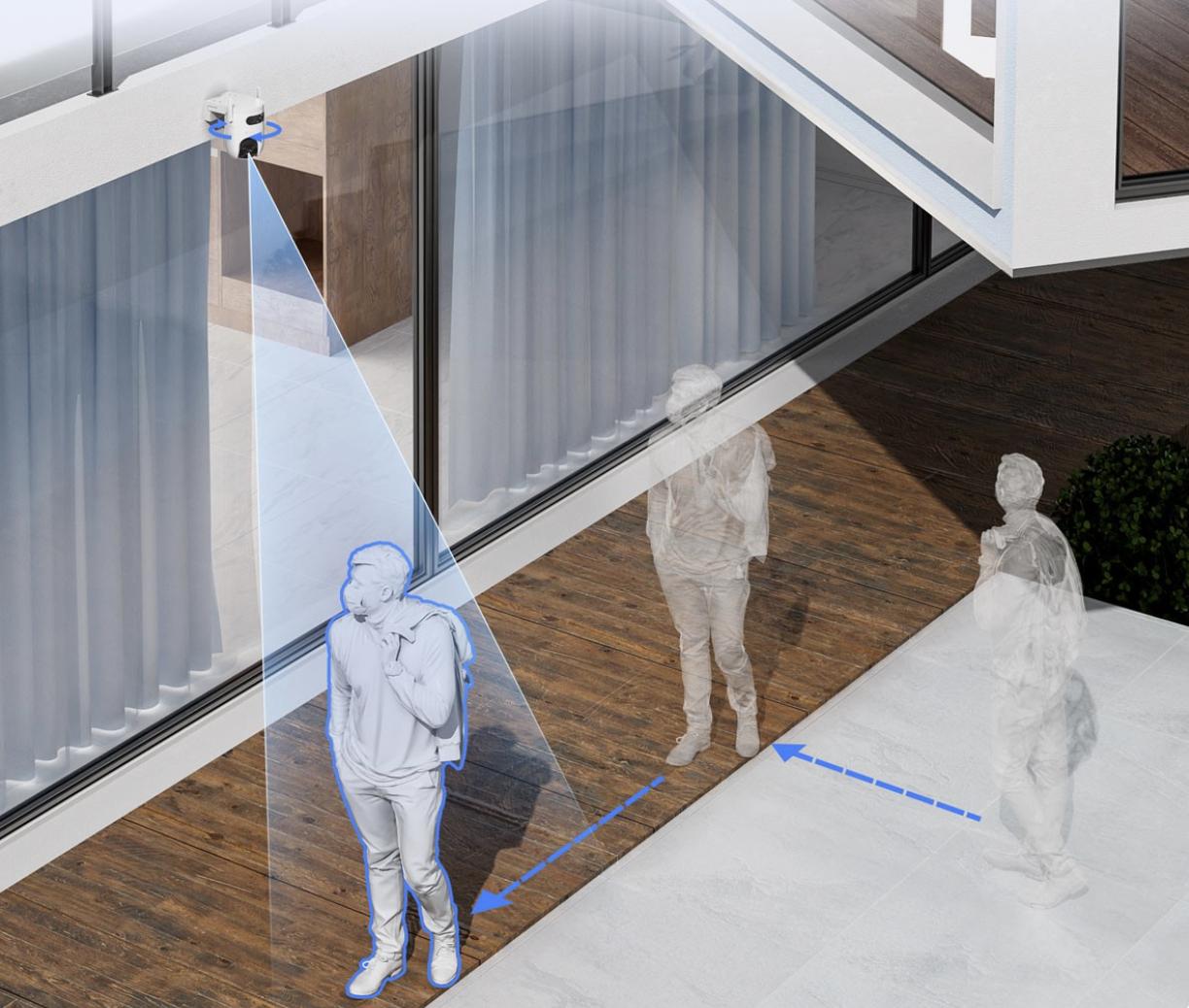
Image source: Ezviz
Actually, this also poses a problem. The more powerful the applications of technologies such as machine vision and AI algorithms, the greater the impact on power consumption. While providing greater computing power for cameras, how to further reduce the product's own power consumption is an important issue facing the entire industry's development. Yang Zuoxing said that "low power consumption is a prerequisite for AI to truly penetrate into a large number of end - side devices."
The ultimate form of consumer - grade security cameras should not only be wireless (without power cords) and free of data charges (4G/5G connection), but also fully AI - enabled (with high computing power and even capable of running end - side inference large models) and have low power consumption (able to achieve long - term battery life with just battery power).
Some people even propose that a truly intelligent and AI - enabled camera can keenly observe changes in the surrounding environment, especially abnormal changes. Under normal circumstances, it can enter intelligent sleep mode, which can fundamentally lead to extremely long battery life. If we let our imagination run wild, adding a "walking" function to an AI camera would turn it into a robot.
It is not difficult to find that after deeply integrating AI and even robot technology applications into cameras, the product forms and functional applications of this product category will also undergo a major change. The current form and function of AI cameras are just a relatively basic version.
All major manufacturers, both new and old brands, are competing in the camera market (especially outdoor and outdoor cameras). In essence, they are starting from this relatively mature product form and gradually transitioning to the implementation of AI technology application scenarios. In the future physical world, the physical world will be surrounded by various sensors, and the technological applications of home cameras are far more than what we see now.
The prediction that "the annual shipment of wireless cameras is expected to reach 10 billion units in 2035" may seem a bit exaggerated at present, but it at least shows the broad market prospects of this product category and, more importantly, the plasticity of its product technology applications.
This article is from the WeChat official account "Lei Technology". Author: Lei Technology. Republished by 36Kr with permission.