Apple's "Foldable Screen Matrix" Plan: A Revolution in "Flexible" Form
In the tech and digital circle, "When will the foldable iPhone be released?" has probably been the most tiring question in the past five years.
While Samsung has iterated its Galaxy Z Fold to the 7th generation, Huawei has showcased its "muscle" with two generations of Mate triple-foldable screens, and even Google, which is least adept at making hardware, has its third-generation foldable phone, Apple still seems to be in a strange silence.
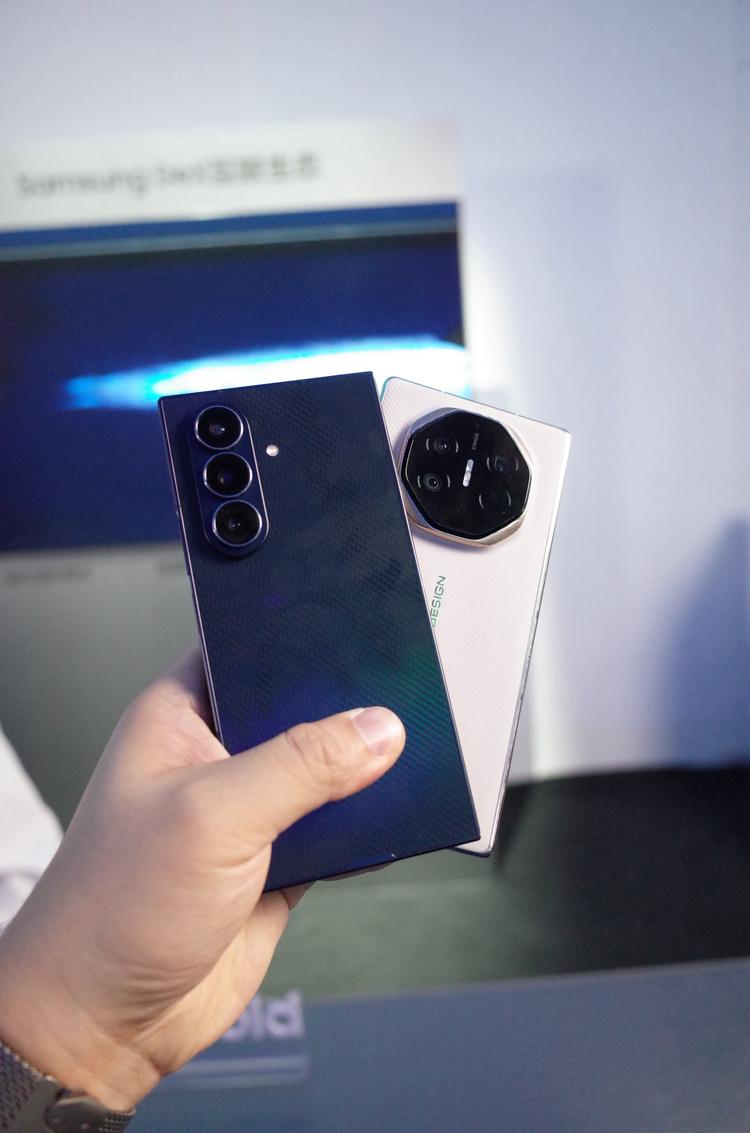
Image source: Unobjective Lab
However, the latest revelations from Mark Gurman, a well-known tech journalist from Bloomberg, and the supply chain tracking by well-known analyst Ming-Chi Kuo are piecing together an astonishing fact:
Apple's delay is not due to slowness but because it is preparing a huge "product suite."
As we all know, Apple will launch its first "book-style" foldable iPhone Fold in the second half of this year, but this is just the tip of the iceberg.
According to Mark Gurman's revelations, Apple may launch a vertically foldable model, the iPhone Flip, in 2027. More importantly, by combining a series of "hardcore" patents Apple has applied for in the past two years, we can clearly see the ultimate plan of this tech giant: "Folding" will not be an exclusive selling point of a single iPhone but a reshaping of the entire Apple product line - from iPads to MacBooks and even professional monitor series.
We call this grand vision Apple's "foldable screen matrix" plan.
The Duet of 2026 and 2027
Previously, rumors about the foldable iPhone always seemed fragmented and contradictory. But in 2025, as supply chain information converges, a clear timeline is emerging: Apple's foldable screen strategy will adopt the strategy of "starting with large-sized devices, then moving to small-sized ones; starting with a comprehensive approach, then differentiating."
Phase 1: The iPhone Fold in the second half of 2026.
This device is described as a "book-style" phone with an inner screen size of about 7.9 to 8 inches, which is close to the current iPad mini when unfolded. This is not only a response to Samsung's Galaxy Z Fold series but also Apple's first attempt to blur the boundary between the iPhone and the iPad.
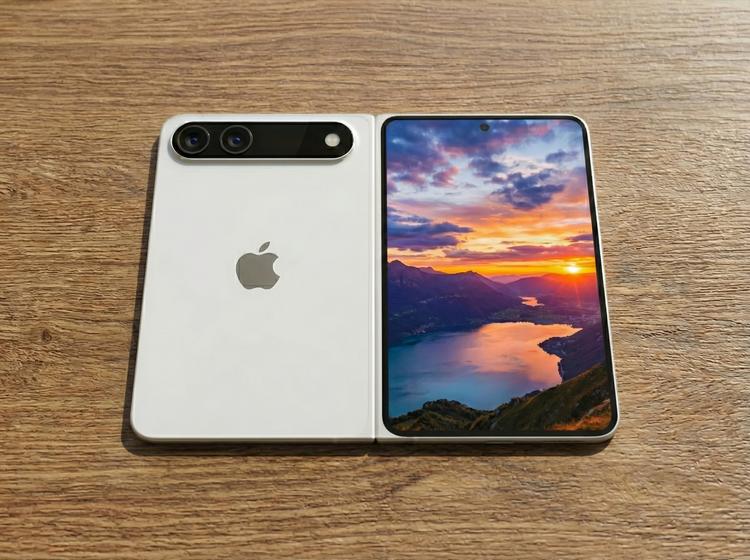
Image source: Internet
For Apple, this device bears the important task of verifying market demand - it must prove that iOS can provide a productivity or entertainment experience that a straight - edged phone cannot match in a foldable form, rather than just being "bigger."
Phase 2: The iPhone Flip in 2027.
If the Fold is for productivity, then the Flip is for fashion and portability. The vertically foldable model in 2027 mentioned by Gurman logically coincides with Apple's current product stratification of the iPhone.
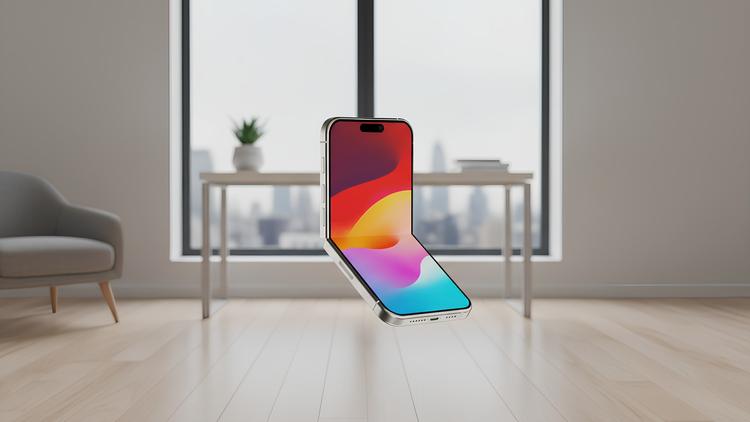
Image source: Internet
Just as the iPhone has differentiated into Pro Max and Air/Plus models, after the foldable screen market matures, it will inevitably differentiate into two distinct demands: "for reading documents" and "for fitting into a small bag."
But does Apple's ambition stop there? Obviously not.
Well-known analyst Ming-Chi Kuo revealed a bombshell in a 2024 report: Currently, the only foldable product Apple has a "clear development schedule" for is actually a 20.3 - inch MacBook.

Image source: Internet
This is the core of the "matrix" plan.
While we are discussing phones, Apple is already thinking about the ultimate form of laptops. Imagine a device that has a huge 20 - inch canvas when unfolded but is only the size of a 13 - inch laptop when folded - it is neither a simple iPad nor a traditional MacBook but a new species that combines the powerful productivity of macOS and touch interaction, similar in form to the Huawei MateBook Fold.
What is Apple Waiting For?
Why has Apple waited so long?
Usually, the explanation we hear is "Apple doesn't strive to be the first but to be the best." But in the foldable screen field, this means that Apple must solve several of the most painful experience flaws in current foldable phones - screen creases, low - temperature brittleness, and fragile screens.
By combining the latest patents publicly available from the US Patent and Trademark Office, we find that Apple is trying to develop a near - science - fiction flexible screen.
The "Self - Healing" Magic of the Screen
Among all the exposed patents, the most eye - catching one is the patent coded US11991901B2. This technology directly targets the most vulnerable part of foldable screens - the surface of the flexible screen.
Currently, in order to ensure bending performance, the surfaces of foldable phones are usually covered with UTG (ultra - thin glass) or CPI (transparent polyimide). Although they are tough, they are still vulnerable to key scratches or nail indentations. Apple's patent describes an outer covering made of ultra - high - toughness elastomers.
The characteristics of this material are similar to memory foam but at the molecular level. When there are fine scratches or indentations on the screen surface, this polymer material will automatically fill the gaps using the fluidity of its molecular chains.
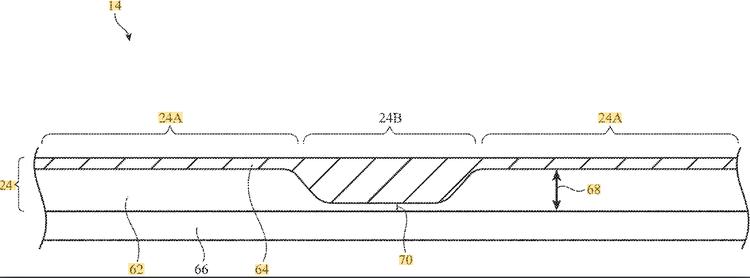
Image source: Internet
What's even more "high - tech" is that the patent clearly states that this repair process is not just passive. Apple has embedded a transparent conductive metal mesh in the screen structure, and the device can actively monitor the screen status. When damage is detected or the user is idle, the device can accelerate the flow of the elastomer through electrification, light exposure, or heating (similar to the principle of memory metal) to achieve "induced material repair."
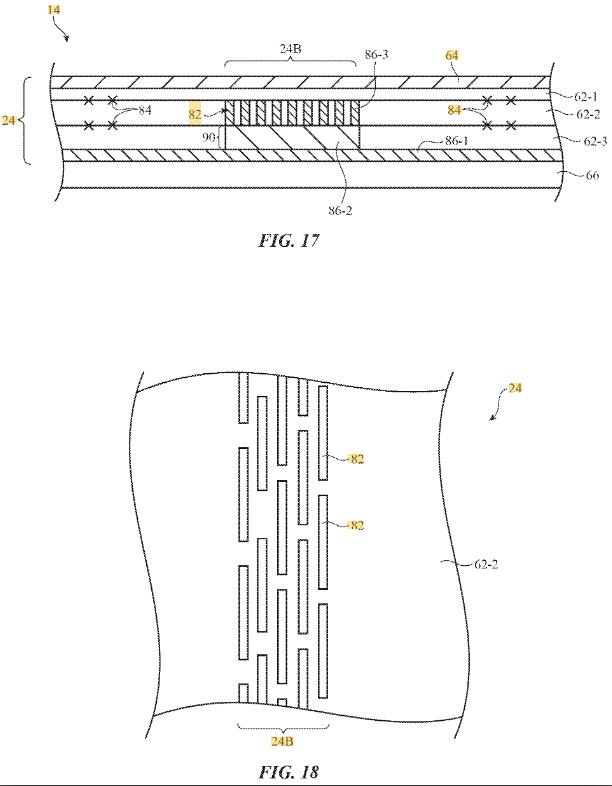
Image source: Internet
Imagine that when you plug your phone in to charge at night, the phone screen uses the slight heat generated by charging and internal instructions to silently smooth out the nail marks left from a day's use. This is the user experience Apple wants.
Resisting the Cold: A Screen with Built - in "Floor Heating"
With the tourism development in northern cities like Harbin, many southern users have found that foldable screens often become "fragile items" in the northern winter. Physics tells us that flexible materials become brittle at low temperatures, and forcibly folding them can easily lead to screen breakage.
To solve this problem, Apple has applied for a patent called "Flexible display with heating element."
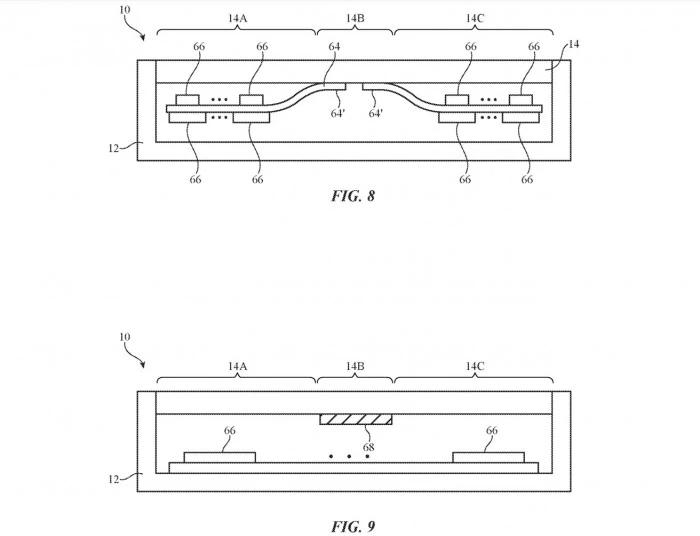
Image source: Internet
The core of this technology is that the iPhone will monitor the ambient temperature and the temperature of the screen folding area in real - time. Once it detects that the temperature is too low (for example, outdoors in Harbin at minus 20 degrees Celsius), due to the hardening of the material, forcibly unfolding the screen may cause it to shatter. At this time, the system will trigger a protection mechanism:
- Pixel heating: Use the pixels of the OLED screen itself to emit high - brightness light or refresh at a specific frequency to generate heat in the folding area.
- Heating screen: Activate the transparent heating element embedded under the screen (similar to the defogging line on the rear window of a car but more microscopic).
- Physical locking: Before the screen "softens" to a safe threshold, the hinge may increase damping or even physically lock to prevent the user from forcibly opening it.
This consideration for extreme environments is a typical example of Apple's engineering thinking - using the most complex engineering methods to solve the most basic reliability problems where users are unaware.
"Anti - Gravity" Drop Protection
In addition to the screen itself, Apple has also put some thought into the hinge structure. As early as a few years ago, Apple applied for a patent that uses an acceleration sensor to detect the device's fall. When the foldable iPhone detects that it is in free - fall, the hinge mechanism will be quickly triggered to forcibly fold or half - fold the phone in the air.
This is like a cat adjusting its posture in the air. Through this action, the phone can avoid having its fragile inner screen directly hit the ground and instead let the more robust metal frame or back panel land.
When iPads and MacBooks Disappear
If we shift our focus from the iPhone, we will find that the significance of "folding" for the iPad and MacBook product lines is far more profound than for phones.
The current iPad Pro with the M4 chip is already as thin as 5.1mm, and its performance has caught up with that of Macs through the M - series chips. However, the interaction limitations of iPadOS and the lack of a physical keyboard have always made it difficult to completely replace the MacBook. On the other hand, although the MacBook has high productivity, its form has remained unchanged for decades.
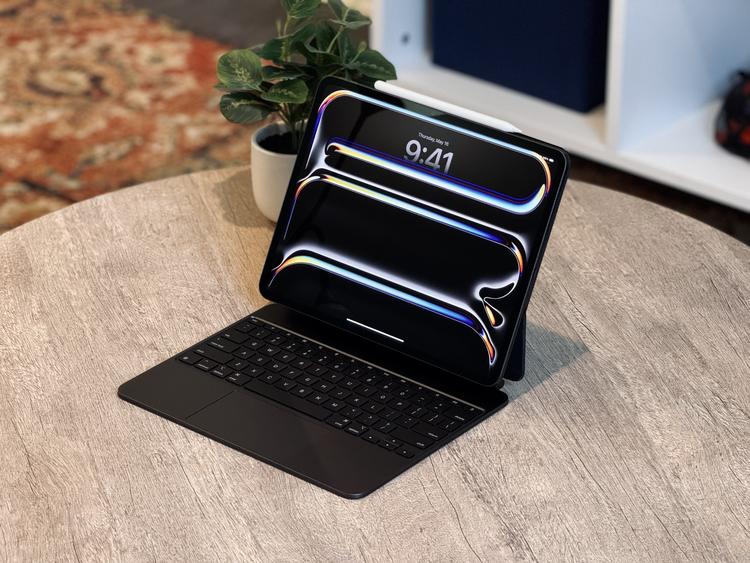
Image source: Internet
The 20.3 - inch foldable MacBook is the perfect "hybrid" of these two worlds.
According to Ming - Chi Kuo and Ross Young, the CEO of the screen supply chain consulting firm DSCC, when fully unfolded, this device is a huge 4K+ monitor. When paired with an external keyboard and mouse, it becomes an iMac. When half - folded, the lower half of the screen can transform into a virtual keyboard with force feedback or a control console for professional software (such as Final Cut Pro), and the upper half is the display area.
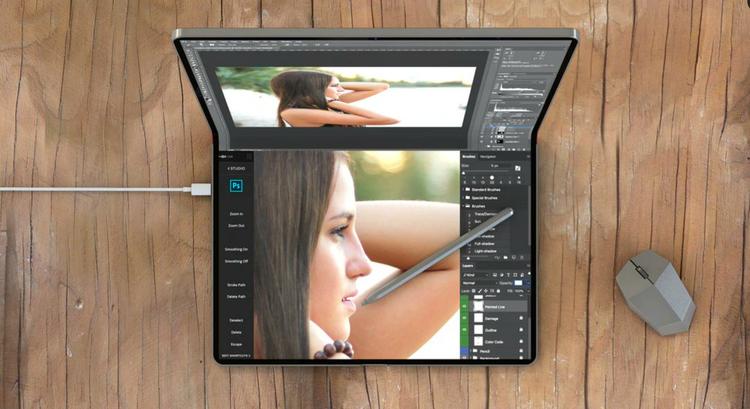
Image source: Internet
This is not just the folding of hardware but also the folding of interaction paradigms.
This also explains why Apple has been testing "Stage Manager" on iPads and introducing iPhone widgets on MacBooks. Apple is unifying the interaction language and laying the software foundation for this "ultimate device." Once the foldable MacBook is launched, the two independent product lines of iPad and MacBook may face unprecedented integration and reconstruction.
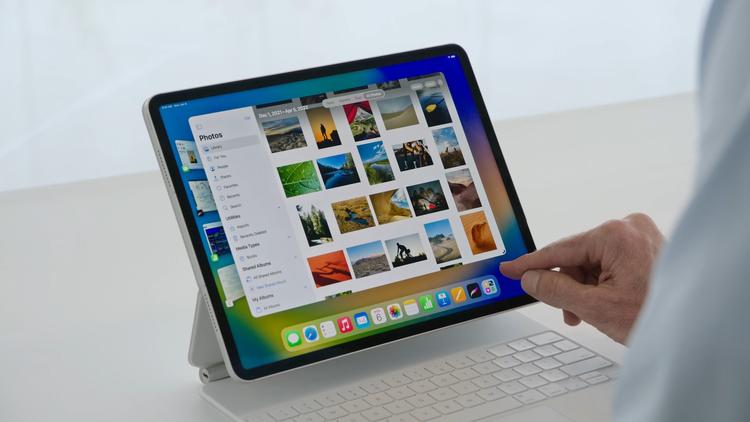
Image source: Internet
This also conforms to Apple's consistent high - end strategy: Use new technologies to create a higher price anchor. Just like the Vision Pro, the foldable MacBook may be launched at an extremely high price (expected to be over $3000), not only showing off its strength but also exploring the form of computing containers in the post - PC era.
Why Must It Be Now?
Some people may ask, since Apple has been late for so many years, why is there a sudden burst of activity in the 2026 - 2027 period?
Although the iPhone 17 series is still selling well, it is undeniable that the marginal utility of straight - edged phones is decreasing. Features like the Dynamic Island, action buttons, and camera control buttons... these minor innovations can hardly arouse amazement in the mass market, and the so - called "tech gala" is becoming more and more boring. Apple urgently needs a new form to stimulate the replacement cycle, especially for those "loyal users" who still hold onto their iPhone 12/13 and are reluctant to upgrade.
According to South Korean media reports, Apple signed confidentiality agreements with Samsung Display and LG Display in 2024 to jointly develop this generation of ultra - high - specification foldable panels. Apple has extremely high requirements - not only to completely eliminate creases (through etched ultra - thin glass and special hinge design) but also to ensure optical consistency after hundreds of thousands of folds. When the technology was not mature before, Apple preferred not to