Japan extracts rare earth mud from the seabed, but faces challenges in industrialization.
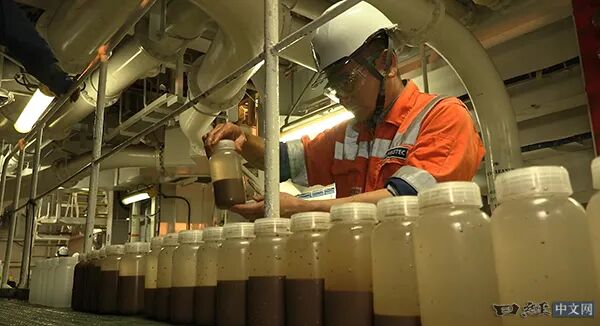
The first batch of rare earth mud mined by the exploration vessel "Chikyu" (Photo provided by the "Strategic Innovation Creation Program" of the Cabinet Office/R Japan Agency for Marine-Earth Science and Technology)
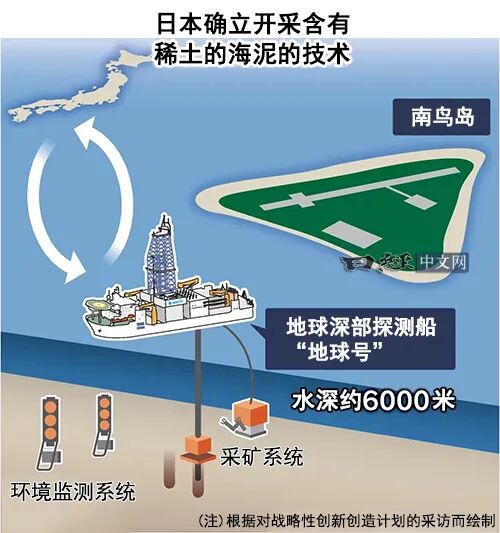
Japan has successfully extracted rare earth mud from the seabed 6,000 meters deep in the waters off Minamitorishima Island. It will analyze the composition and attempt to extract rare earths from it. China accounts for 70% of the world's rare earth production. If Japan can mine in the waters off Minamitorishima Island, it will be beneficial to its own economic security. However, there are still issues in terms of technology and profitability...
The Cabinet Office of Japan and the Japan Agency for Marine-Earth Science and Technology (JAMSTEC) said on February 2 that they had successfully extracted seabed mud believed to contain rare earths from the seabed about 6,000 meters deep in the waters off Minamitorishima Island in the Ogasawara Islands. The deep - sea exploration vessel "Chikyu", which mined the seabed mud, is scheduled to return to Shimizu Port (Shizuoka City) on February 15. After returning to the port, the composition of the seabed mud will be analyzed. In order to achieve industrialization after fiscal year 2028, Japan will promote the verification of profitability and the development of refining technology.
Analyze Rare Earths in Seabed Mud
After the exploration vessel set off from Shimizu Port (Shizuoka City) on January 12, it arrived at the scheduled trial mining area in the waters off Minamitorishima Island on January 17. About 600 "mud-lifting pipes" about 10 meters long were connected and lowered from the exploration vessel to the seabed about 6,000 meters deep. A mining machine was set up on the seabed. After mixing the mud and seawater into a suspension, it was recovered through the mud-lifting pipes. The recovery operation began on January 30, and the collection of the first batch of rare earth mud was confirmed in the early morning of February 1.
Japan has discovered seabed mud containing more than six rare earth elements such as dysprosium, neodymium, and gadolinium in high concentrations in the waters off Minamitorishima Island. Among them, dysprosium, neodymium, and samarium are used in high - performance magnets for electric vehicle motors, etc. Yttrium is a material for light - emitting diodes (LEDs) and superconductors for medical devices. Gadolinium is used in systems for controlling nuclear reactors.
After the exploration vessel returns to the port, the composition of the mud - water and the data obtained from the seabed will be analyzed at research facilities such as the Japan Agency for Marine - Earth Science and Technology. There will also be attempts to extract rare earths from the mud.
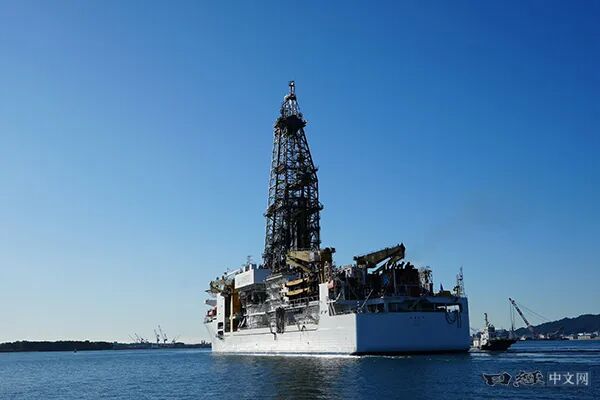
The exploration vessel "Chikyu" (Shimizu Port, Shizuoka City, January 12)
This trial mining was carried out as part of the large - scale R & D project "Strategic Innovation Creation Program (SIP)" of the Cabinet Office. Based on the results of this trial, the SIP program plans to conduct a large - scale demonstration test in February 2027.
The ability to mine 350 tons of seabed mud per day will be verified. Before the start of the test in 2027, a facility for extracting seawater from the seabed mud and performing dehydration treatment will be built on Minamitorishima Island. Rare earths will be extracted from the brought - back seabed mud to accumulate experience for industrialization after fiscal year 2028.
Establishment of Mining and Refining Technologies and Profitability Become Issues
In the rare earth field, China accounts for 70% of global production. As of 2024, Japan imported 63% of its rare earths from China. If Japan can mine in the waters off Minamitorishima Island, it will have great benefits in terms of economic security.
However, there are many issues in industrialization. One of the major challenges is to establish mining and refining technologies. In terms of mining, technologies in the oil development field can be applied when extracting from the seabed in the form of muddy water.
Deep - sea remote operation, such as remotely operating the mining machine placed on the seabed to connect it to the mud - lifting pipe, is considered to be quite difficult. Yasuhiro Yamada, a professor of resource and energy engineering at Kyushu University in Japan, said, "It is also technically difficult to perform complex operations on heavy objects on the deep seabed."
Regarding the technology for extracting rare earths from seabed mud, Yamada believes that the technology for extracting land - based ores can be used. Different from land - based ores, rare earth mud does not contain harmful substances such as radioactive materials and arsenic. Therefore, it is also considered to have the advantage of reducing the treatment process for industrial waste. However, there has been no example of extracting rare earths from seabed mud so far.
Rare earth mud is formed when calcium phosphate, which makes up fish bones and teeth and accumulates on the seabed, absorbs rare earth elements. Therefore, calcium must first be removed when refining rare earth mud.
The biggest problem is considered to be profitability. Minamitorishima Island is about 1,950 kilometers away from the center of Tokyo, and the area where the rare earth mud lies is 6,000 meters deep. The use of equipment and ships required for mining incurs huge costs. Masakazu Ishii, the project leader of the Strategic Innovation Creation Program, said, "Horizontal movement (distance from Tokyo) and vertical movement (water depth) are the most costly." Professor Yamada of Kyushu University believes that "although we are looking forward to this project, resource development cannot be carried out if it is not economically viable."
Requires International Understanding
On the other hand, some people believe that even if the profitability is low, having rare earth production technology in one's own country still has significance in terms of economic security. Ishii emphasized, "It is necessary to master resources, establish exploitable technologies, and ensure supply channels in case of emergencies, which is essential for economic security."
There are currently no international rules regarding the commercial development of marine mineral resources. Japan also needs international understanding to promote development. The International Seabed Authority (ISA) of the United Nations aims to formulate rules regarding seabed development based on the protection of resources and ecosystems.
Leticia Carvalho, the Secretary - General of the International Seabed Authority, visited Japan in November 2025 and paid an official visit to the Strategic Innovation Creation Program and the Ministry of Foreign Affairs. Regarding this survey, the International Seabed Authority evaluated that the exploration vessel "Chikyu" "is equipped at the highest level. Japan's basic scientific research and technology will effectively promote the trial in the waters off Minamitorishima Island."
This article is from the WeChat official account "Nikkei Chinese Net" (ID: rijingzhongwenwang). The author is Nikkei Chinese Net, and it is published by 36Kr with authorization.