Competing for 700 million myopic users, AI glasses are expanding rapidly offline. TCL RayNeo, Rokid, and XREAL are engaged in a fierce battle.
In early December last year, Lei Technology visited the business district on Tianhe Road in Guangzhou to observe the offline market coverage of AI glasses. In early January this year, the reporting team of Lei Technology at CES 2026 witnessed the great enthusiasm of global merchants for Chinese AI glasses products in Las Vegas.
As stated in the on - site observation article of Lei Technology, "The AI glasses industry is developing at a high - speed, yet the offline world is not ready to embrace it."
Before the Spring Festival in 2026, based on the coverage of brand stores, Lei Technology conducted another observation on the AI glasses category, this time expanding from Guangzhou to the whole country.
Channels are King: AI Glasses Brands are Aggressively Opening Stores in China
Xiaomi, TCL Thunderbird, Rokid, and XREAL are currently the "Big Four" brands in the Chinese smart glasses market.
Thanks to the extensive layout system of Xiaomi Home exclusive stores/direct - operated stores, Xiaomi's AI glasses products have had offline market display and sales channels that other domestic brands can hardly match since their launch.
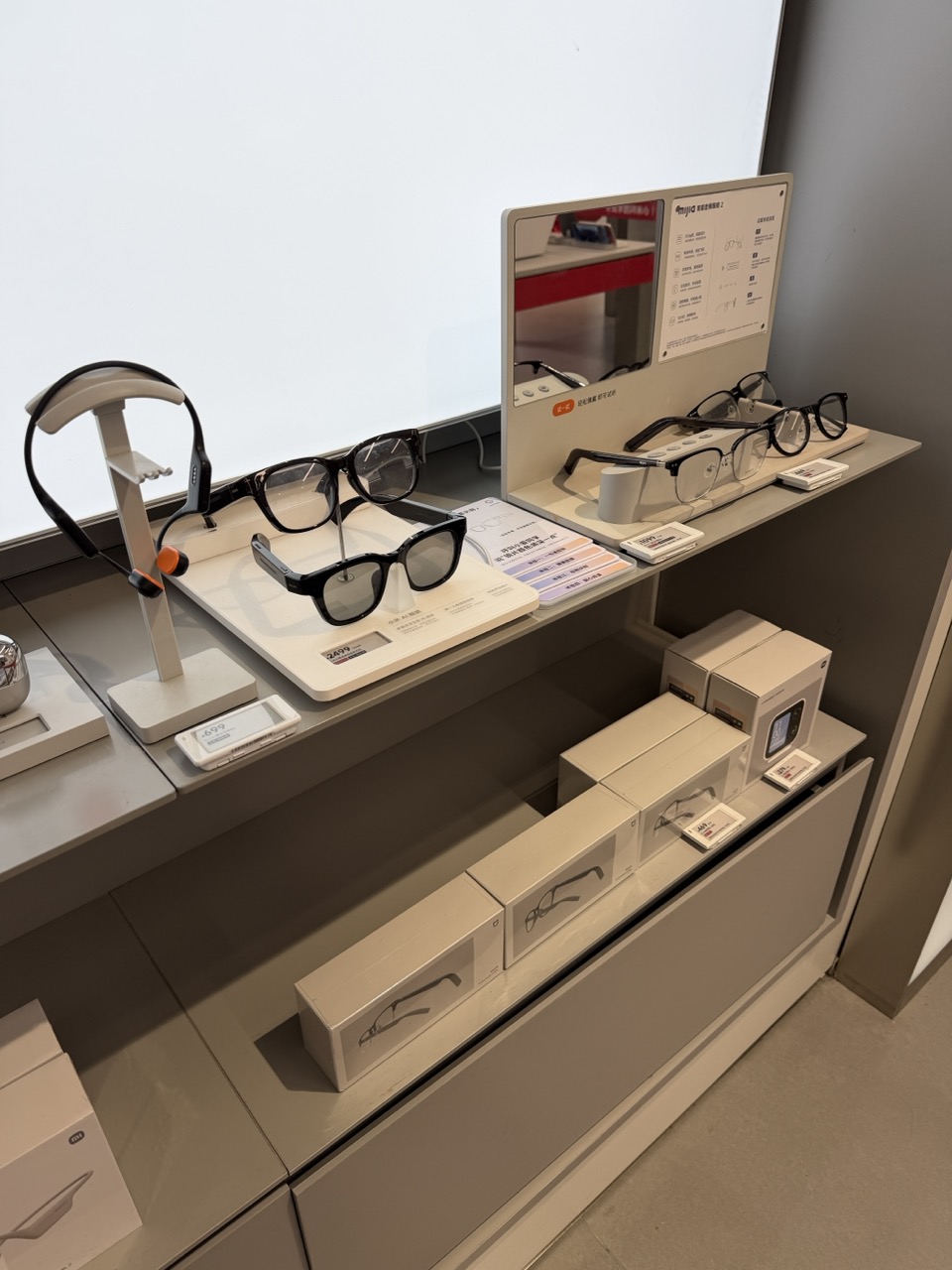
The direct - operated Xiaomi Home store in Lingnan Tiandi, Foshan (filmed on - site by Lei Technology)
However, if all 34 provincial - level administrative regions in China are taken into account, even a powerful brand like Xiaomi cannot achieve full coverage through its own channel stores. For example, Xiaomi Home exclusive stores/direct - operated stores have not opened in Tibet, Macau and other places yet.
For AI glasses brands to achieve full coverage across all provinces and cities in a short time, there is only one way, which is to connect with as many third - party offline channel providers as possible, whether they are digital technology stores or traditional glasses stores.
Based on such an offline market promotion strategy, among Chinese AI glasses brands, Rokid was the first to achieve full coverage of 34 provincial - level administrative regions.
Official website data shows that Rokid's offline experience stores have been opened in various locations, from Musen Glasses Store in Lhasa to CTT stores in Macau, from Mingda Glasses Store in Hegang to Baodao Glasses Store in Xiaogang, Kaohsiung. Especially in the Hong Kong Special Administrative Region and Taiwan Province, with the help of third - party offline channel provider networks, Rokid has currently established a high - density offline experience store system locally.
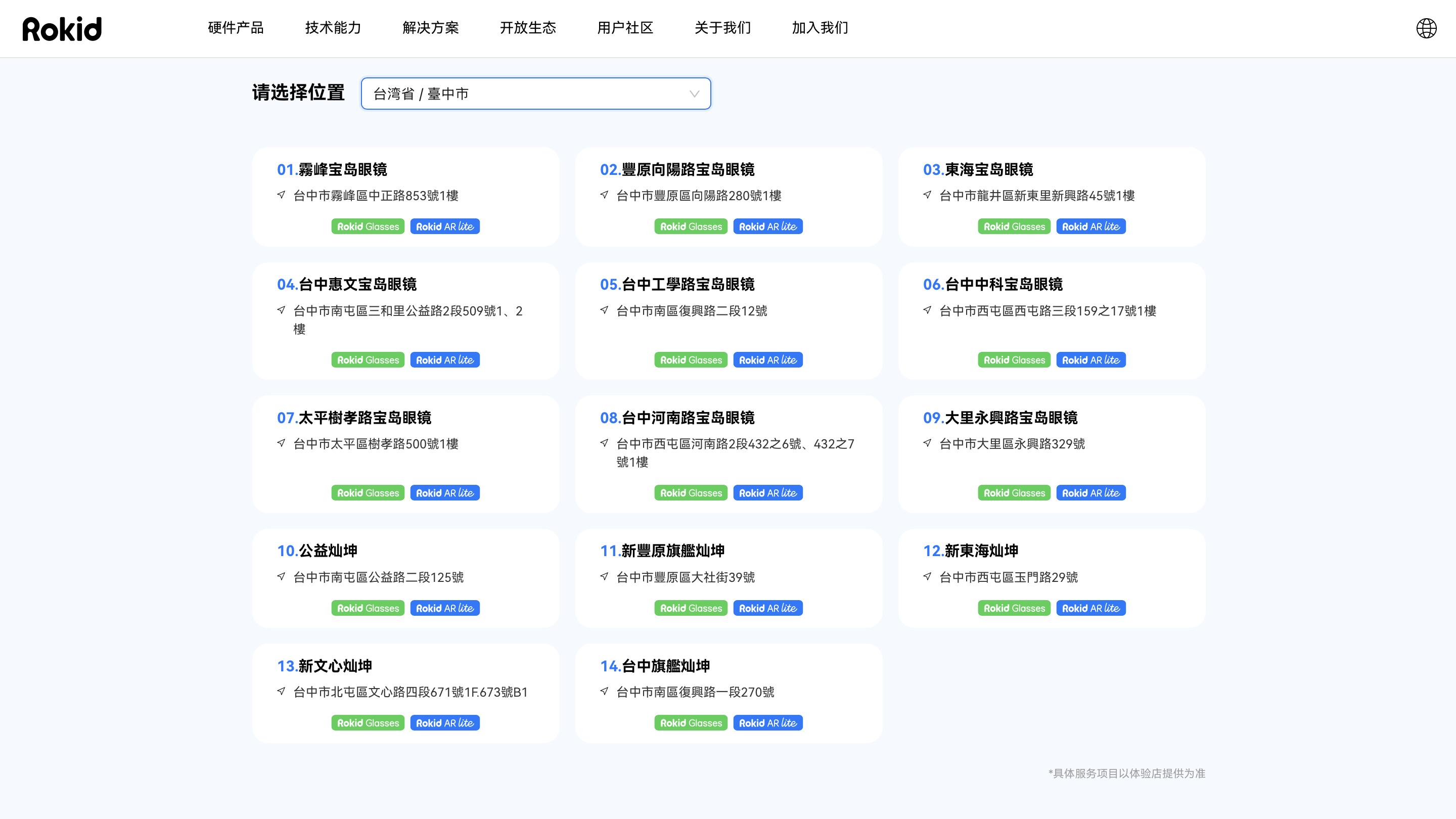
Screenshot from Lei Technology
Specifically, there are currently 56 Rokid offline experience stores in the Hong Kong Special Administrative Region, far more than the 17 in Guangzhou. In Taipei City, New Taipei City, Taoyuan City, Taichung City, Tainan City, Kaohsiung City, Keelung City, Hsinchu City, Chiayi City, Miaoli County, Hsinchu County, Nantou County, Changhua County, Yunlin County, Pingtung County, and Taitung County in Taiwan Province, there are currently 75 Rokid offline experience stores. The number of Rokid stores in the whole of Taiwan is even more than that in the whole of Fujian Province (70 stores).
However, there are obvious differences in the selection of third - party channel providers for Rokid in the Hong Kong Special Administrative Region and Taiwan Province. Simply put, Rokid's offline experience stores in Hong Kong are mainly concentrated in digital technology channel stores, such as Fortress Electrical Appliance stores; while in Taiwan, they are mainly concentrated in traditional glasses channel stores, such as Baodao Glasses stores. The different selections of the main types of offline channels seem to imply certain differences between the offline market user groups of AI glasses in Hong Kong and Taiwan.
Back in the Chinese mainland, the layout of the offline market for AI glasses in core cities is also accelerating. Taking Rokid as an example, the cities with a relatively large number of its offline experience stores are as follows:
- Beijing, 112 stores
- Hangzhou, 86 stores
- Shenzhen, 81 stores
- Shanghai, 80 stores
- Xi'an, 67 stores
- Chengdu, 58 stores
It should be noted that in the development stage where "channels are king", the number of AI glasses brand stores that can be opened in each city is not solely determined by the AI glasses brands. For example, Rokid currently has only 17 offline experience stores in Guangzhou, while it has 20 in Nanchang.
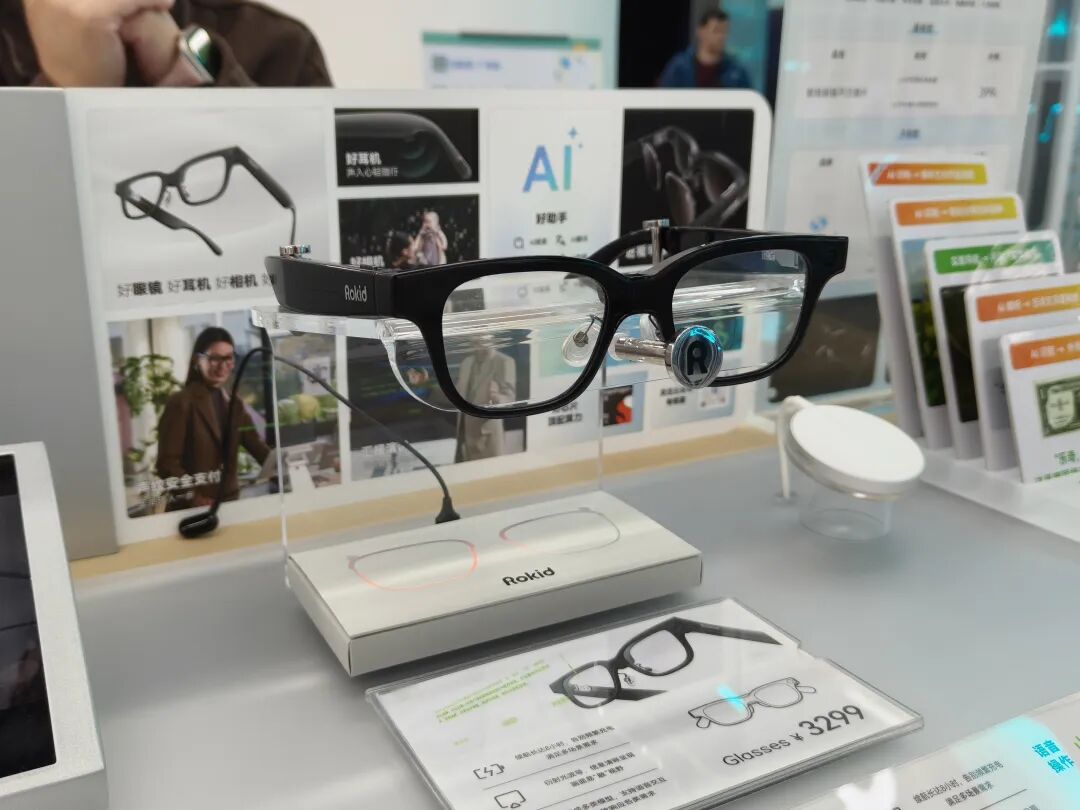
Rokid's offline experience store in Guangzhou (filmed on - site by Lei Technology)
TCL Thunderbird, one of the "Big Four" brands, has currently also adopted a similar offline market promotion strategy to Rokid and has cooperated with traditional glasses offline channel stores such as Dr. Glasses and President Glasses.
Should it be in Digital Stores or Glasses Stores? It Shouldn't be a Problem
As one of the "Big Four" brands in the Chinese smart glasses market, XREAL is also promoting the layout of the Chinese offline market, but the number of its current stores is far less than that of Rokid.
Compared with other brands, XREAL smart glasses pay more attention to AR display technology and immersive entertainment experience and may not even be standard AI glasses in the strict sense. This product design route determines that XREAL smart glasses have a brand image more inclined to the digital technology user group. Even so, expanding the traditional glasses audience is still the top priority for XREAL smart glasses in the offline market.
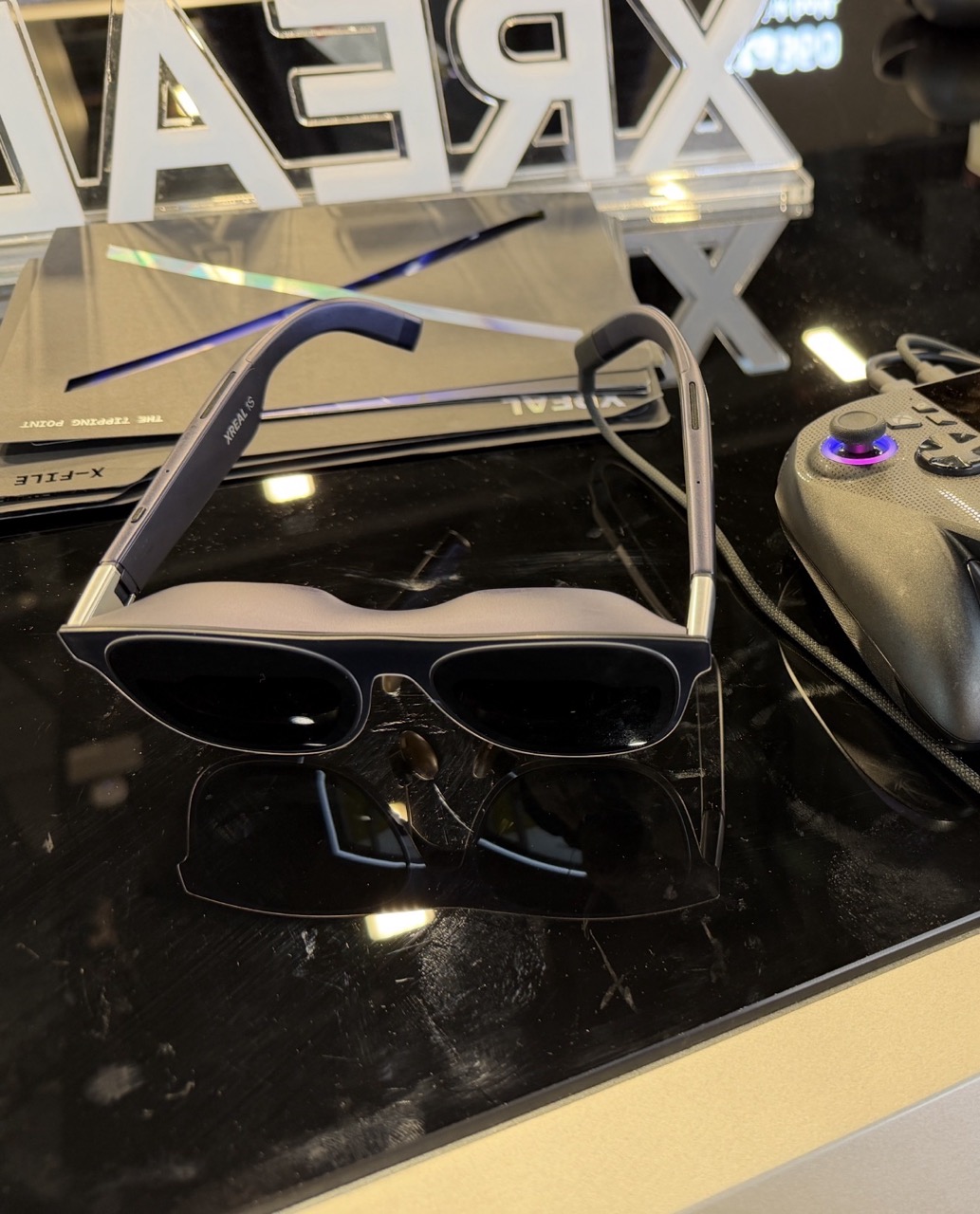
XREAL smart glasses (filmed on - site at CES 2026 by Lei Technology)
Official website data shows that XREAL smart glasses currently have 28 offline experience stores in Guangdong, 24 of which are in Shenzhen. Among the 24 XREAL smart glasses offline experience stores in Shenzhen, 20 are opened in traditional glasses channel stores, accounting for more than 80%.
In contrast, Rokid, which mainly focuses on AI glasses, seems "less reliant" on traditional glasses channel stores due to the larger number of opened stores.
Among the 81 Rokid offline experience stores in Shenzhen, only 45 are opened in traditional glasses channel stores, accounting for less than 60%.
A reasonable explanation is that after an AI glasses brand has opened a certain number of stores in a city, it has to balance the offline store networks of the two major channels to achieve maximum coverage of the offline market audience.
There is nothing wrong with such an offline market expansion strategy. However, as pointed out in the on - site observation article of Lei Technology, "Glasses stores understand lenses, prescriptions, and wearing, but they may not understand digital technology and AI. However, every pair of AI glasses that really wants to be sold to myopic users cannot avoid optometry, lens fitting, and adjustment."
XREAL smart glasses focus on immersive entertainment experience, and the offline market system currently being expanded in China is highly concentrated in traditional glasses channel stores. Can the clerks in these stores clearly explain the technological functions and product technologies of XREAL? The same goes for Rokid. Among the many offline experience stores opened in major cities in China, whether in traditional glasses channel stores or digital technology channel stores, how many clerks truly have the industry knowledge and skills to integrate the traditional glasses system (understanding vision, lenses, and wearing) and the digital technology system (understanding interaction, experience, and technology)?
In the Xiaomi offline store system that is completely targeted at the digital technology user group, can myopic users interested in Xiaomi AI glasses have a better in - store experience and purchasing process?
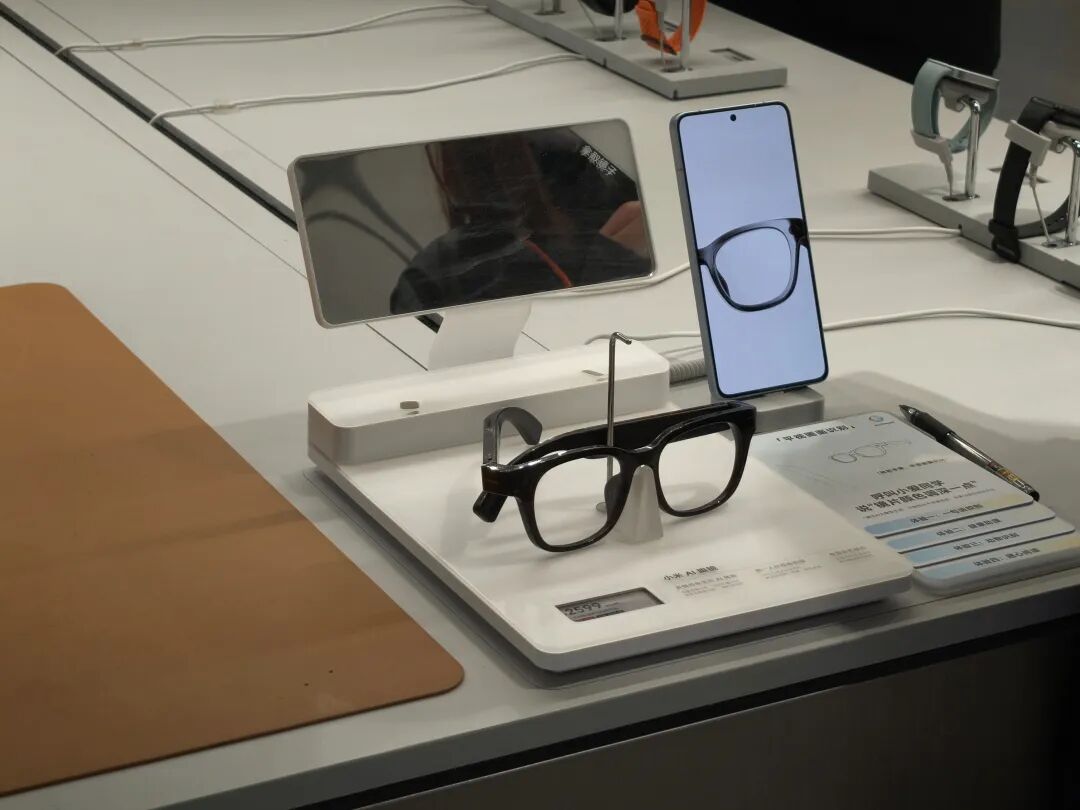
A Xiaomi Home store in Guangzhou (filmed on - site by Lei Technology)
Fundamentally, to make the choice between digital stores and glasses stores no longer a problem, for smart glasses brands, the service system and clerk training of offline stores must simultaneously focus on the "dual main lines" of the traditional glasses system (understanding vision, lenses, and wearing) and the digital technology system (understanding interaction, experience, and technology), so as to bring in - store service experiences truly matching their products to all user groups.
Backed by 700 Million Myopic Users: The "Poetry and Distance" of Domestic AI Glasses
Data shows that there are currently nearly 700 million myopic people in China, and more than 80% of users in the global glasses market are myopic.
As a fashion item, sunglasses can be a breakthrough in the product form of smart glasses, and in fact, Meta has become the absolute leader in the global AI glasses market. However, in the domestic market, it is not easy to replicate the "Meta - style success" by following the fashion item route of sunglasses.
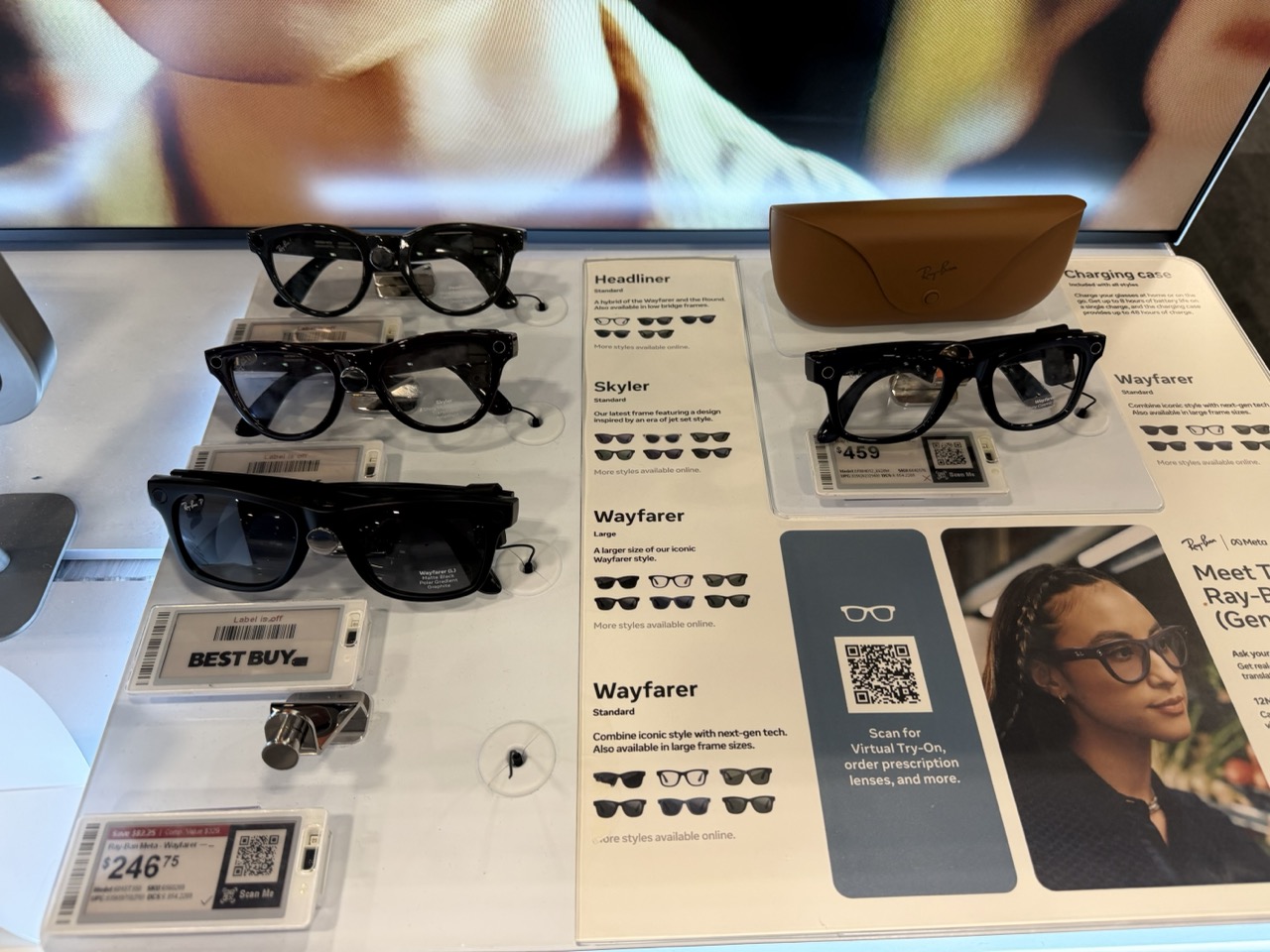
Meta AI glasses (filmed at Best Buy in the US by Lei Technology)
Looking at the essence through the phenomenon, the "Meta - style success" of AI glasses is fundamentally due to its product design concept of "AI glasses should first be a pair of good glasses". Considering the basic development trend of the domestic glasses market over the years, the entry route through the product form of myopia glasses may be the optimal or even the only solution.
This may also be the underlying consideration for the operational strategy of smart glasses vertical brands such as XREAL and Rokid to mainly expand through traditional glasses stores in the domestic offline market. Of course, the number of domestic traditional glasses stores is not less than that of digital technology stores. From the perspective of full coverage of the audience, traditional glasses stores backed by 700 million myopic users naturally become the top priority.
Overall, the domestic user group market for AI glasses may go through the following three stages:
1. The first wave of AI glasses usage mainly by digital technology users
2. The large - scale expansion wave of AI glasses users mainly composed of myopic users
3. The popularization wave of AI glasses covering all users and serving as the next - generation personal terminal
Currently, it is at the critical stage from stage 1 to stage 2. At this stage, AI glasses are gradually entering traditional glasses stores, and the clerks in these stores need to make up for their knowledge reserves in the digital technology system (understanding interaction, experience, and technology); the AI glasses displayed in digital technology stores need to improve their supporting service systems, and the clerks in these stores need to make up for their knowledge reserves in the traditional glasses system (understanding vision, lenses, and wearing).
Meanwhile, with the further improvement and evolution of technology application and product form, if the new - generation AI glasses can become the choice for more or even the mainstream myopic glasses users to wear or replace their glasses, then the large - scale expansion wave of AI glasses users mainly composed of myopic users will become a reality.
After establishing this "largest basic user group", the "poetry and distance" of AI glasses, that is, the grand vision of covering all users and becoming the next - generation personal terminal, will have a truly solid market foundation.
This article is from the WeChat official account "Lei Technology" and is published by 36Kr with authorization.