During this Spring Festival, robots are working like crazy.
As the end of the year approaches, besides workers, robots are also extremely busy. In the rental market, humanoid robots are becoming a popular choice for various events.
This trend started with the robots wearing flowered cotton - padded jackets and doing the yangko dance on the Spring Festival Gala stage in 2025. In just one year, they have spread from the screen to the real world, frequently appearing at corporate annual meetings, shopping mall openings, and cultural and tourism events, acting as the "traffic magnets".
Recently, several embodied intelligence companies such as Magic Atom, Galaxy Universal Robotics, Unitree Technology, and Songyan Power have successively announced that they have become partners of this year's Spring Festival Gala, trying to add more fuel to this field.
Not only on the Spring Festival Gala stage, but also offline, the demand for humanoid robot rentals is quite strong. These "silicon - based workers" who can earn thousands or even tens of thousands of yuan a day have joined the busy event - hopping army, such as taking promotional videos with CCTV hosts, performing at university galas, dancing "The Big Sedan Chair" at corporate annual meetings, and performing Wing Chun in film crews.
However, beneath the hustle and bustle, problems have also emerged. The most common ones include a chaotic price system, inconsistent service standards, and a discrepancy between the promotional effects and the actual performance. There has even been a situation where "spending ten thousand yuan to rent a robot only to have it dance for three minutes on stage".
Is the seemingly prosperous rental demand a path for humanoid robots to move towards commercialization, or just a bubble supported by short - term scenarios such as annual meetings and commercial performances? Is robot rental a truly sustainable business?
During the peak season of annual meetings, robots are busier than humans
"Contact me if you're a humanoid robot rental provider that can have robots dance 'The Big Sedan Chair' and do backflips. I need 4 units."
Such requests have recently appeared frequently in the robot rental communication group where "Focus One" is located. As the Spring Festival approaches, corporate annual meetings and commercial activities are at their peak, and the humanoid robot rental market has heated up rapidly. The messages in the group have hardly stopped.
Due to the limited overall production of humanoid robots and their scattered geographical distribution, the rental communication group has become one of the important channels to facilitate business. Customers with needs "shout out" their orders in the group, and rental providers with available machines and schedules can take orders and connect at any time.
Relevant practitioners are extremely busy.
Xiao Chen, a staff member of Shunbo Intelligence, has hardly had a rest since the beginning of January 2026 and receives new robot rental orders every day. The company he works for cooperates with many well - known humanoid robot brands such as Unitree, Zhipu, Zhongqing, and Fourier. Just for the Unitree brand, there are 20 units in stock for allocation.
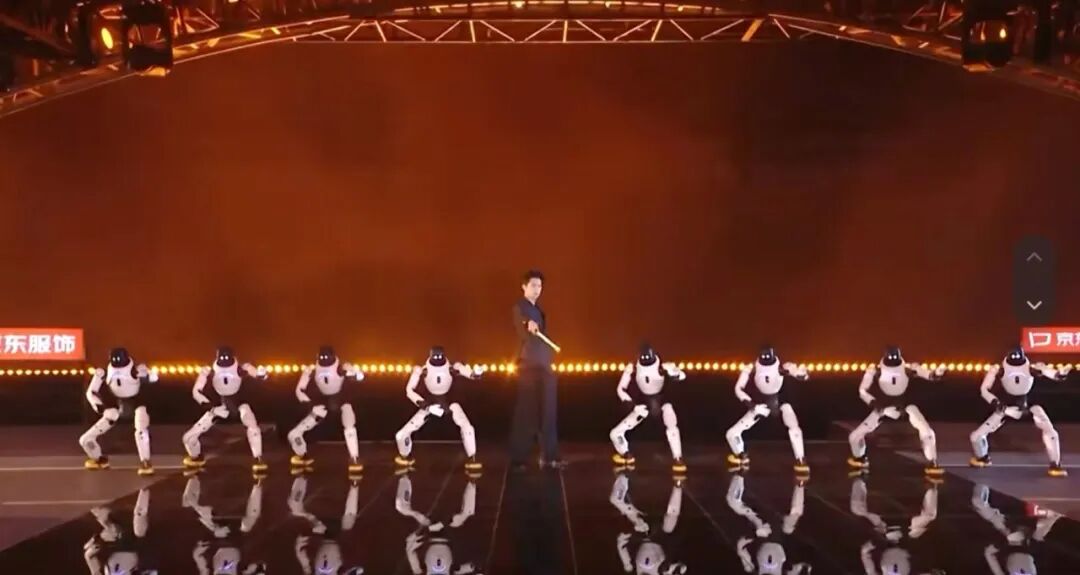
Image source / Screenshot from Zhipu Robot's video account
In addition to basic rental services, the company where Xiao Chen works also has a dedicated R & D team that provides secondary development services for robots. Simply put, on the basis of the original functions, they re - choreograph movements for the robots, adapt music or interaction processes to make the performance more suitable for specific scenarios. They have developed supporting robot dances for more than 20 songs, including "Youth Training Manual", "Love You", "The Big Sedan Chair", and "Skillful Gomoku". During this period, there has been a significant increase in both customers who just want to "rent a robot to make an appearance" and those who require customized services.
Mr. Ye, who runs an offline store in Chongqing, has also felt this rental boom. His business mainly focuses on the sales and rental of humanoid robots and also involves some customized services. Based on his observations in the past year, the month around the Spring Festival is the "peak season" for robot rentals, with the order volume reaching the annual peak. The monthly rental sales can reach twice that of normal times.
Mr. Ye said that although the current robot rental price has dropped significantly from the peak in early 2025 and the market is gradually returning to rationality, the demand during the peak season is still strong. He observed that the overall rental price of humanoid robots has increased by 20% - 30% compared to normal times, with an average price of 5,000 yuan per unit per day.
This change has also been transmitted to the event planning end. Gu Gu, an event planner in Chengdu, organizes various events for hundreds of enterprises every year. Recently, a large - scale enterprise entrusted her to plan its annual meeting. She clearly felt that among the several versions of plans she provided, the enterprise was more interested in the plans with "humanoid robots".
Based on the feedback from multiple practitioners, in terms of the customer structure, the current customers of humanoid robot rentals are mainly enterprises or institutions, accounting for 70% - 80%, mainly concentrated in scenarios such as shopping mall celebrations, corporate annual meetings, and school exhibitions. In terms of the number of rentals, many enterprises are contacting humanoid robots for the first time and tend to rent one unit first to test the waters, with relatively controllable costs. However, for stage performances or large - scale events, they often rent 5 units at once to enhance the visual effect and on - site atmosphere.
In essence, currently, when enterprise customers rent humanoid robots, they don't want to replace human labor. The biggest purpose is to add a technological element and generate topics for the event. It is more like an "eye - catching prop".
How many steps are there to rent a robot?
So, what is the process of renting a robot?
The answer is much simpler than many people think, but it's far from being as easy as "clicking a button and having it delivered".
In a relatively standardized rental process, the following steps are usually involved: First, both parties sign a rental contract, clearly stipulating the rent, deposit (usually 50% of the total rental price), service period, payment method, and at the same time, stipulating the liability division and compensation standards for equipment damage.
After the contract is signed, the rental company will arrange logistics, and professional operators will deliver the equipment to the site and complete the debugging. After the event, the operator checks the equipment status. After both parties confirm that everything is correct and sign, the robot is taken back by the rental company, and the deposit is refunded according to the contract.
There are two easily overlooked details in this process.
One is that an operator will accompany the robot during the rental process. Although the robot itself has automation capabilities, in actual rental use, it still highly depends on manual operation.
During the entire rental period, the operator is usually present throughout, responsible for operation, maintenance, and handling of emergencies. Their professional level is directly related to the equipment's performance and event safety, so their daily salary is also much higher than that of ordinary event execution personnel. According to Gu Gu, in a normal local event, the daily salary of ordinary personnel is about 300 - 400 yuan, while that of robot operators can reach more than 800 yuan.
In addition, since it is not a mailing method, the logistics cost is also higher. Moreover, humanoid robots are expensive, and some rental companies will purchase commercial event insurance or transportation insurance to cover potential accidental risks during transportation and performance. This part is included in the rent.
This explains why "renting a robot is expensive". Besides the rent of the robot itself, labor and logistics are also important costs.
As this business heats up, the channels for renting robots are also changing.
Different from what is imagined, the companies that provide robot rentals are not the ones that produce robots. Currently, the mainstream channels can be roughly divided into three categories: one is companies that originally engaged in equipment or performance equipment rental and expanded their business after the popularity of humanoid robots; another is the "free market" where transactions are made through online group chats and social platforms; and the third is the newly emerged open - style rental platforms.
On December 22, 2025, Zhipu Robot, together with embodied intelligence companies such as Feikuo Technology, jointly launched the "Qingtian Rent" open - style rental platform, adopting the "shared rental + platform - based scheduling" model. The official promotional slogan is to make rental as convenient as "shared power banks".
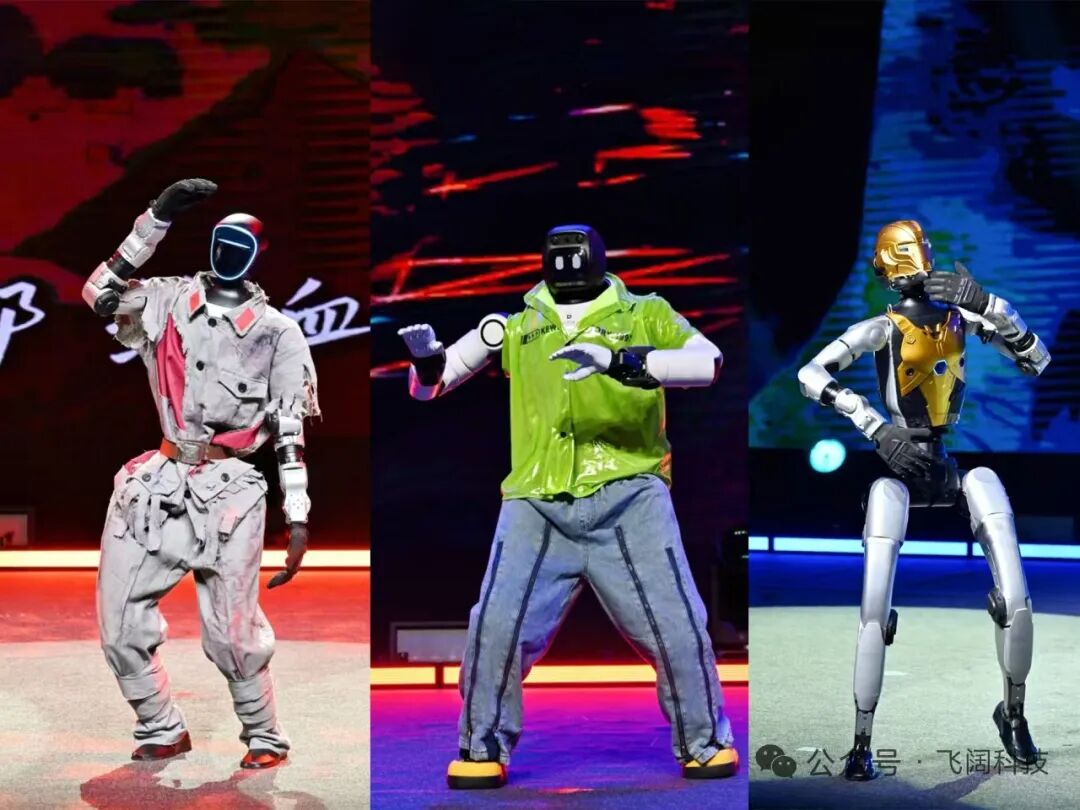
Image source / WeChat official account of Feikuo Technology
As an emerging integrated platform, Qingtian Rent has a certain price advantage. "Focus One" saw on the platform that the daily rent of the Unitree G1 - Edu version is 4,599 yuan. This price is at the lower end of the market price range of 4,000 - 6,000 yuan and is also lower than the quotes of many traditional scattered rental providers.
As for which brand of robot is the most popular, according to the statements of multiple rental providers, in the current market, Unitree robots are the most popular brand because they have strong motion expressiveness, large room for secondary development, and high brand recognition.
Multiple practitioners mentioned that since Unitree robots appeared on the Spring Festival Gala, in just one year, with the maturity of technology and the popularization of secondary development, the skill library of robots has also been expanding rapidly, evolving from simple waving and dancing to hosting events, conducting guided tours, and even performing complex dances.
Take the Unitree Technology U2 humanoid robot as an example. It has voice interaction capabilities, can interact with the audience, complete simple hosting tasks, and can also navigate autonomously and explain exhibit information. In performance scenarios, it can perform martial arts fights, boxing, and complex dance moves.
Zhipu and Ubtech are also favored by many customers. Ubtech has deep accumulation in the education field and is more popular among schools and exhibition halls. Zhipu is recognized by users for its high stability, low failure rate, and wide - covering service network.
Under the hustle and bustle, three "minefields" in robot rental
However, while the demand is heating up rapidly, the humanoid robot rental market has also exposed growing pains such as a chaotic price system and unclear service standards.
Gu Gu's previously planned research and study activities involved robots. But when she first tried to rent a robot as a customer, she found that this business was far from as simple as she thought.
In order to compare prices, she contacted more than fifty robot rental providers back and forth. She found that the quoted prices varied greatly, with the daily rental price per unit ranging from 3,000 yuan to 30,000 yuan. Even for robots of the same brand and model, the quotes from different merchants could vary by several times. What confused her more was that the quotes of some merchants were also unstable. For example, for the Unitree Technology G1 humanoid robot, the quote was 4,000 yuan when she inquired on the first day, but dropped to 3,000 yuan the next day.
More than one practitioner pointed out that there are mainly two reasons behind the price chaos: one is the difference in service content and depth. Some service providers only offer equipment rental, while others provide customized solutions including secondary development, such as designing a dance for the robot. Different services naturally lead to differences in quotes.
More importantly, this industry is still in its early stage of development. The three types of service providers mentioned above have significant differences in resources, technology, and operating costs, which directly leads to the fragmentation of the market price system. Especially for some scattered individual service providers, their quotes are quite arbitrary without a unified standard.
The overly long intermediary chain is also an important factor exacerbating price opacity. Some rental orders are sub - contracted multiple times among intermediaries, and the commission ratio can reach 30% - 50%. Some enterprises have reported that they paid 12,000 yuan in rent for a shopping mall opening event, but the actual executor only received 7,000 yuan. This results in enterprises paying high fees but not necessarily getting corresponding - quality services.
Against the background of uneven prices, many enterprises have begun to question the cost - effectiveness of humanoid robot rentals.
Take the most common commercial performance as an example. The robot may only perform on stage for three or four minutes, but the rental is charged by the day, and the rehearsal and debugging further extend the time. If a special dance needs to be choreographed according to the event theme, the price will be even higher.
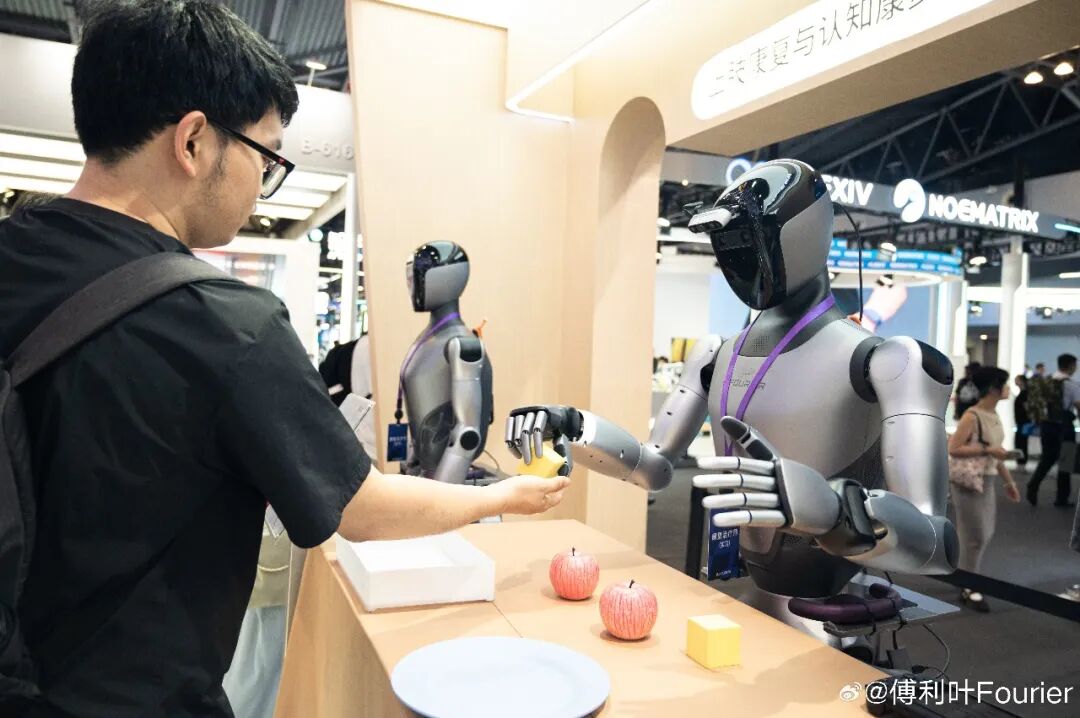
Image source /
It is understood that during the current peak season, if simply renting a robot, the daily rent of some popular models can reach 5,000 yuan or even higher. "If the demand exceeds the robot's preset motion library, the customized development cost generally reaches tens of thousands of yuan. The complexity of the movements and the programming duration directly determine the development cost," said Xiao Chen.
Although some rental providers prepare popular programs such as "The Big Sedan Chair" in advance to spread the development cost, the cost of personalized customization is still very high. When Gu Gu was inquiring, she encountered a rental provider that offered customized dance services and promised to choreograph movements according to the requirements, but the quote was as high as tens of thousands of yuan, which made her finally give up.
In addition to price issues, the inconsistency between promotion and actual service is also one of the prominent risks in the industry.
Some rental providers use the effect videos of high - end models for promotion, but the actual quotes and the robots they provide are low - configuration basic models, and there is a significant gap between their performance and the displayed effects. Xiao Chen said that this situation is not uncommon in the industry, which affects the consumption experience and market trust.
In such an environment, enterprises are often in a dilemma: they dare not easily try service providers with too low quotes, while those with high quotes may exceed the budget. To reduce risks, many planners like Gu Gu will give priority to local direct - operated companies with offline physical stores or ask the other party to provide qualification certificates and support video inspections of the machines to minimize risks as much as possible.
After all, when the industry is not fully regulated, being cautious is more important than "trying something new".
The trend is still there, but it's not that easy to make money
Is humanoid robot rental a business with long - term potential or just a short - term trend? There are obvious differences in the views of practitioners on whether its high - margin state can be sustained and whether the business model is viable.
At first, this business was indeed "profitable". Some rental providers once revealed that in the first half of 2025, a quarterly performance of 5 million yuan was only considered average in the industry, and outstanding rental providers could generate more than 10 million yuan in a single quarter. The profit was also relatively easy to calculate at that time. After deducting about 2,000 yuan in labor costs and a small amount of travel expenses from the daily rental income, most of it was gross profit. For example, for an order of 30,000 yuan, the gross profit could reach about 28,000 yuan.
However, as the market has gradually expanded, practitioners have felt that the profit is declining. Mr. Ye said that the industry's average gross profit margin has dropped from about 35% at the peak in 2025 to the current 22%.
This change is mainly affected by the rapid disappearance of scarcity. Specifically, on the one hand, the number of robot brands and the quantity entering the market have increased significantly, which has increased the market supply, weakened the scarcity of products, and thus led to a price decline. On the other hand, the increase in participants