As the battle among hundreds of smart glasses brands heats up and tech giants enter the fray, will the industry follow in the footsteps of the mobile phone market and end up monopolized by a few oligarchs?
The smartphone industry has been fiercely contested by new entrants. Where will all the players go from here?
As the growth of the smartphone market slows down and its landscape becomes more stable, smart glasses have emerged as one of the few sectors in the consumer electronics field experiencing explosive growth, thanks to technological iterations and scenario expansions. From internet giants, smartphone manufacturers to automobile companies and ecosystem companies, cross - border players are flocking to this market.
It now seems that this "Battle of a Hundred Glasses" has not only disrupted the dominance of traditional optical enterprises but also propelled the industry to evolve rapidly from concept hype to a return to real demand in just two years.
However, beneath the hype, the industry has begun to show typical characteristics of the consumer electronics sector: the clustering of players has led to the premature convergence of functions, and the shadow of homogeneous competition is gradually emerging.
With the support of large - scale models, 5G, and optical technologies, smart glasses are moving towards a new stage of high - appearance design, lightweight construction, and deep integration with AI. However, they also face the challenges of intensified involution, market reshuffle, and crucial decisions regarding their development paths. Will they follow in the footsteps of the smartphone industry's oligopoly, or can they carve out new niches through ecosystem integration and scenario innovation?
In fact, this long - term battle involving technology, brands, and user needs has become one of the most noteworthy focuses in the technology industry.
With players from different camps pouring in, will function convergence arrive prematurely?
Since the end of the golden growth period of smartphones, smart glasses are one of the few sub - industries experiencing explosive growth. The more the supply and demand of an industry are magnified, the more frantically players will layout and enter the market. According to incomplete statistics, there are no less than dozens of domestic players in the smart glasses field, and the industry scale is also showing a rapid growth trend.

However, different from the automotive industry, which is mostly dominated by traditional automakers, the leading forces in the smart glasses industry are not traditional optical giants such as Chiba Optical, Thornbird Glasses, or even Zeiss. Instead, internet giants, smartphone manufacturers, automobile companies, and other ecosystem companies have taken the lead.
Currently, in addition to well - known names like Quark, Inmo, Thunderbird, Rokid, and Xiaomi, giants such as Alibaba, Li Auto, and Huawei have also entered the market. What was once a "niche toy" has now become a "hot commodity" pursued by capital and fought over by enterprises. The expanding lineup of players has blurred the industry boundaries.
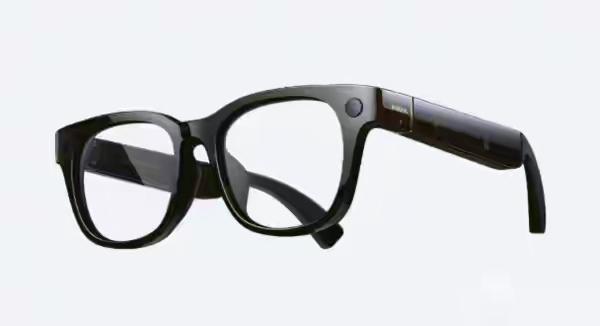
On the surface, these enterprises use smart glasses as a link to try to firmly bind users to their own ecosystems, forming a closed - loop barrier with their core businesses and creating what the outside world calls a "new entry point." However, it is overly simplistic to attribute the clustering of giants entering the market solely to the pursuit of new interaction or connection entry points.
On the one hand, the domestic market is still far from reaching the shipment volume of tens of millions. Even if the average unit price of smart glasses products reaches 2,000 yuan, the profit margin for players is not large. On the other hand, the iteration speed of large - scale models has been shortened to just a few months. ByteDance's "Doubao" and Alibaba's "Tongyi Qianwen" are continuously investing in the multi - modal field. Smart glasses are actually one of the key scenarios for each company to verify their model capabilities.
This means that the hotter the market, the more cross - border players there are, and the faster the homogenization will come. This is a typical law in the consumer electronics industry.
Will involution become the next theme?
During the process of any industry transitioning from the blue - ocean stage to the mature stage, both insiders and outsiders of the industry will worry about whether it will fall into involution. The fierce price wars and verbal battles in the new energy industry in the past are the most prominent examples.
According to the product evolution trend of smart glasses, high - appearance design, lightweight construction, and practicality will become the new focus of competition, and they will enter an era of joint definition through deep integration with AI technology. The Li Livis AI glasses are made of Swiss EMS medical - grade TR90 material, weighing as little as 36 grams, and are equipped with adjustable titanium alloy nose pads to fit the nasal structure of Asians. The Quark AI Glasses S1 series is equipped with a dual - optical - engine binocular display solution with a brightness of 4000 nits, solving the display problem under strong outdoor light. Thunderbird Innovation focuses on shooting technology to improve the imaging ability of AI glasses.
Behind almost all these trends is a signal that the early - stage industry is shifting from concept hype to meeting user needs. Instead of pursuing gimmicky and complex functions, some manufacturers are beginning to focus on improving wearing comfort and practicality in high - frequency scenarios.
This means that, different from mature industries, the involution of smart glasses may not be reflected in price wars or over - capacity. After all, the current average price of the industry is maintained at around 1,500 yuan, and the price range of some mainstream AI models is concentrated between 1,800 and 3,800 yuan, with a much smaller fluctuation range than that of the smartphone industry during the same period.
This is because the industry is still in the growth stage, and the high - profit margin space has not yet been formed. Moreover, the market demand is still expanding rapidly. According to iiMedia Research, the sales volume of smart glasses in China is expected to reach 41.533 million pairs in 2029. The huge growth space means that over - capacity will not occur for the time being.
We believe that in the future, the core of involution will lie in the competition of functional experience. The deep integration of large - scale models has raised higher requirements from users for interaction fluency and scenario adaptability. For example, the 300 - ms wake - up speed of the Li Livis glasses and the multi - scenario ecological linkage of the Quark AI glasses are competitions in different directions.
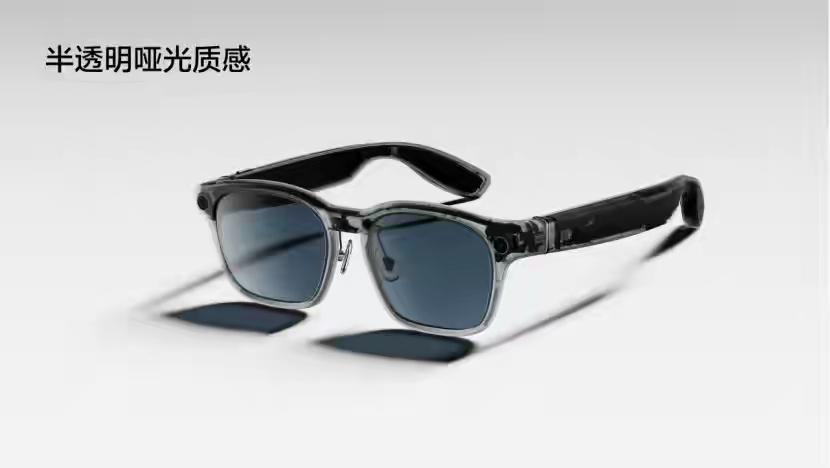
Objectively speaking, this kind of involution is not a vicious competition. It is more like a necessary process for the industry to screen out high - quality players. In other words, only products that truly solve user pain points can survive.
Once the involution in product function intensifies, it will accelerate the industry reshuffle. We believe that this is a step that the smart glasses industry will probably not be able to avoid in the future.
As for who can take the lead in the subsequent reshuffle and gain the initiative beyond the existing players, brand power may be an important test factor.
There is a reason for this conclusion. According to an iResearch report, more than 70% of consumers will consider brand factors when purchasing smart glasses. This trend is also reflected in market data. Leading manufacturers may be more likely to seize more market share with their brand accumulation and channel advantages.
For new entrants, it is difficult to break through by simply piling up functions. Without sustainable brand recognition, it is often difficult to gain a foothold in the fierce competition. After all, functions can be imitated, but brand trust requires time to build. This is a common rule in all consumer electronics sectors.
Will it go towards a bubble or follow the path of the smartphone industry?
Once smart glasses move from the current stage of market awareness and user habit cultivation to a mature stage of rapid scale - up, brand recognition establishment, and scenario stickiness cultivation.
Two questions need to be faced by all players: will the entire industry go towards a bubble or follow the path of the smartphone industry?
We believe that the bubble in the global and domestic smart glasses market is actually not large. In fact, most enterprises are still increasing their investment. For example, Meta laid off about 1,000 employees in its Reality Labs in early January 2026 and gradually shifted one of its R & D focuses to the field of AI smart glasses. Thunderbird Innovation also raised 1 billion yuan in financing recently. These all indicate that the smart glasses market is an investment based on rational judgment from all parties, which is much more rational than the frenzy in the robot market with over 10 billion yuan in financing and a large number of new investment enterprises in the upstream and downstream of the industrial chain.
So overall, the bubble component in the industry is limited:
The industry's growth is supported by solid demand. China's 700 million myopic population forms a huge user base, and the digital transformation of enterprises has also promoted B - end applications. Technologically, the maturity of large - scale models, 5G, and optics provides substantial support for the industry's development. The existence of a bubble may accelerate the industry reshuffle, but it will not change the long - term upward trend.
As for whether it will follow the path of the smartphone industry, it is very likely.
Looking back at the development path of smart hardware industries such as smartphones, it is not difficult to find similar laws.
In terms of market structure, both may evolve from a diversified landscape to an oligopoly. Currently, the oligopoly phenomenon in the domestic smartphone market is becoming increasingly prominent, and a market structure dominated by "Huawei, Xiaomi, and Vivo" has roughly taken shape.
Looking back, the smart glasses industry has completed in just two years what other industries took several years to achieve, from explosive growth to homogeneous competition. It may repeat some of the mistakes of the smartphone industry, such as increased market concentration and function convergence, but it will also develop its own characteristics and create new space in ecosystem integration and scenario applications.
For consumers, industry involution means better products and more reasonable prices; for enterprises, it is a long - term battle that tests their technological, brand, and ecological capabilities. When the hype fades, only those players who adhere to user needs and build core barriers will remain.
As for the question of whether smart glasses can ultimately become the next - generation super - terminal surpassing smartphones, there is still no answer so far.
This article is from the WeChat official account "Boyang Finance", author: Haishan. It is published by 36Kr with authorization.