Claude "Drives" on Mars, Crossing 360 Million Kilometers. AI Directs the Perseverance Rover's Autonomous Driving
While we're still using Claude to write emails and modify code, it has secretly gone to Mars to become a "veteran driver." This journey is far more insane than you think.
Claude lands on Mars!
This is the first time AI has achieved "autonomous driving" on an alien planet.
Just now, NASA officially confirmed that the first extraterrestrial driving mission fully planned by AI in human history has been successfully completed!
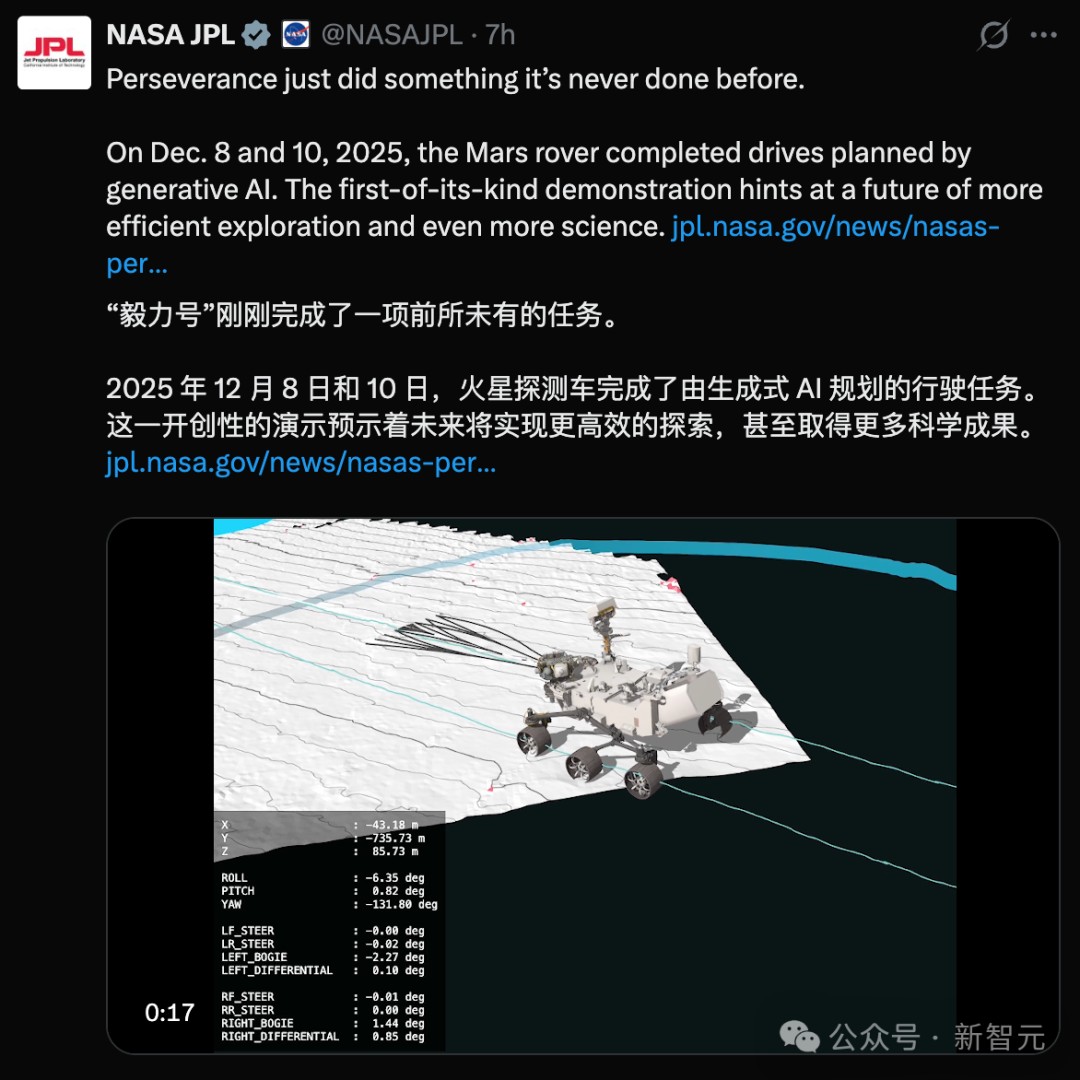
The specific location of this mission is in Jezero Crater on Mars.
It's 360 million kilometers away from Earth, a desolate wasteland filled with red dust and broken rocks.
Here, no human instructions can arrive in real - time. The speed of light limits us. Even a simple "stop" signal takes a long 20 minutes to travel from Earth to Mars.
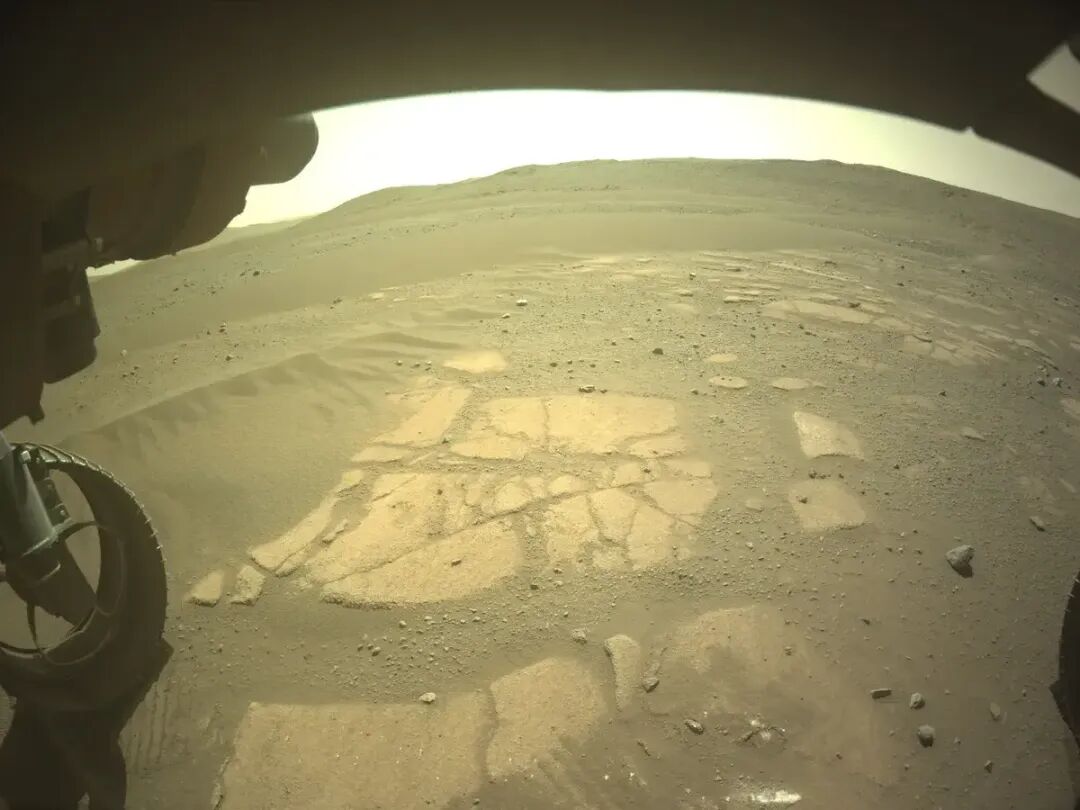
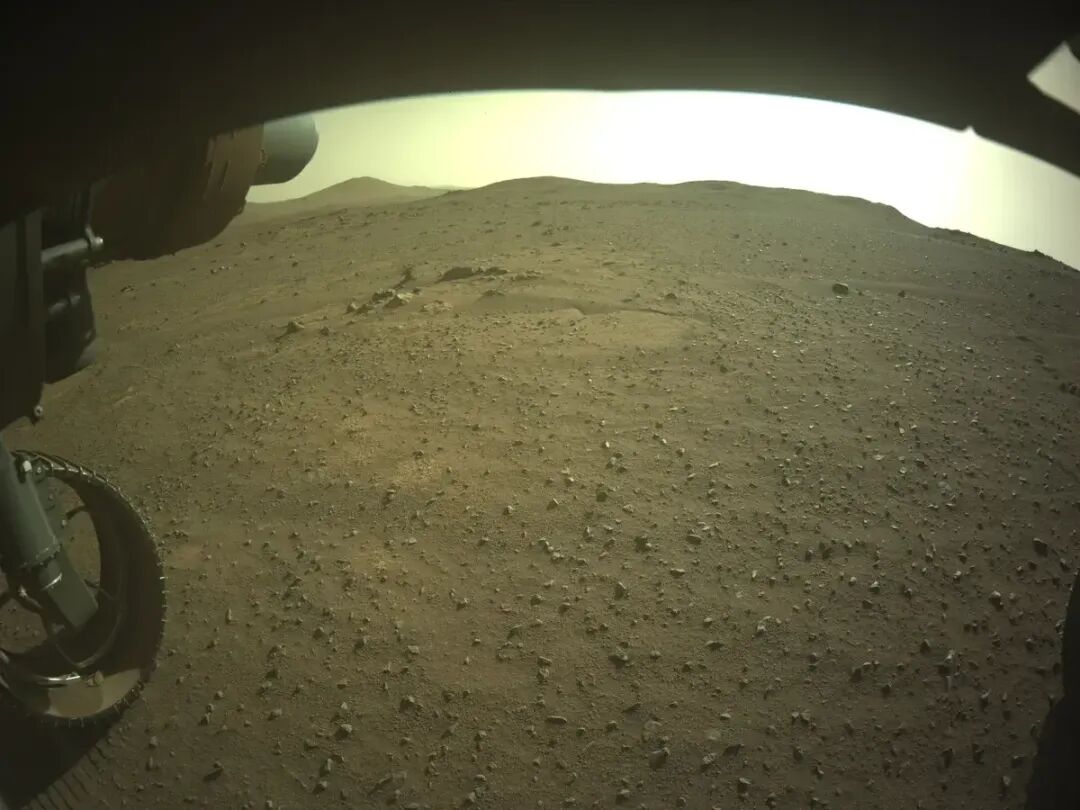
On December 8, 2025 (Martian day Sol 1707), the Perseverance rover received a special set of instructions during its patrol. The rover started its engine, avoided sharp rocks, and precisely bypassed sand pits.
Although the driving distance was only 400 meters - about one lap of a standard track - just like Armstrong's small step, this is a huge leap for silicon - based intelligence from the virtual world to the physical entity.
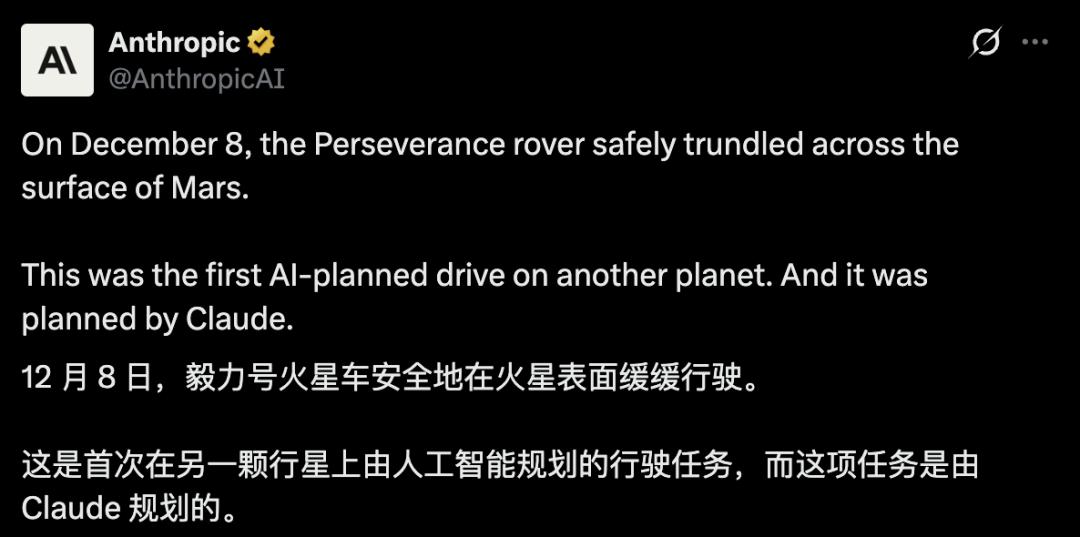
This is unprecedented - these instructions were written by AI, specifically Claude from Anthropic.
Four hundred meters isn't far: it's only about the distance of one lap around a standard track.
But this is a beginning.
Claude - the same AI model that people use to draft emails, develop software applications, and analyze corporate finances - is now helping humans explore other worlds.
Why can Claude take over the Mars rover?
Since its successful landing in February 2021, the Perseverance rover has been busy on Mars for nearly five years.
This robot, about the size of a car, is equipped with top - notch cameras and scientific instruments all over. Like a lonely but professional explorer, it searches for traces of life on the desolate red planet.
Its work is very substantial and mainly includes the following aspects:
Field investigation: Study the geological evolution and ancient climate of Mars.
Sampling and packing: Collect Martian rocks and "regolith" (broken stones and dust) for future detectors to bring back to Earth.
Pioneering: Conduct path - finding tests for future human exploration of Mars.
Why choose Jezero Crater for landing?
Because this 45 - kilometer - diameter crater has an interesting origin.
Scientists have found that there was liquid water here billions of years ago, which means it might have been a cradle for tiny life forms.
So far, the Perseverance rover has performed excellently and discovered some exciting clues.
These discoveries suggest that life might have existed on Mars in the distant past.
However, it's no easy task for the Perseverance rover to move on the Martian surface.
Every drive must be carefully planned. Otherwise, the rover might slip, tip over, spin its wheels, or even get completely stuck.
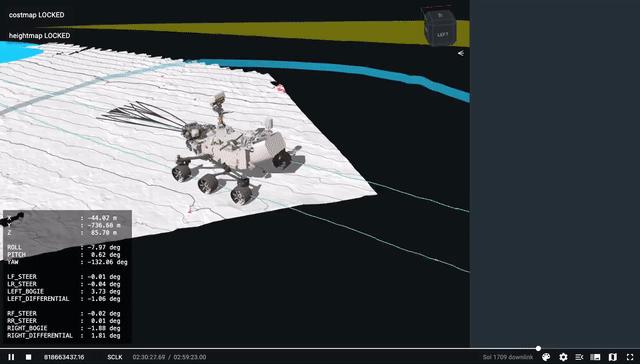
That's why, since the Perseverance landed, human operators have laid out a series of "breadcrumb" - like driving waypoints to guide it forward.
These waypoints are based on images taken by orbiters and the rover's own cameras.
Once the route is determined, instructions are sent via the Deep Space Network across the approximately 362 million - kilometer distance between Earth and Mars, and then the rover starts to execute.
This is a high - risk job.
In 2009, the Spirit rover, the predecessor of the Perseverance, got stuck in soft sand and was never able to get out.
This meticulous planning process is extremely time - consuming.
Although the Perseverance is equipped with the AutoNav system, which can automatically avoid obstacles between waypoints, it can only make judgments based on its own perspective and cannot perform long - distance overall planning.
Engineers at NASA's Jet Propulsion Laboratory (JPL) hope that Claude can assist in formulating driving routes while maintaining the same level of accuracy as human operators.
The JPL engineers didn't treat Claude as a chatbot. Instead, they connected it to Claude Code, a specialized programming agent environment.
Feeding "veteran driver" experience: Engineers "fed" Claude with all the Mars rover driving data and terrain analysis logs accumulated by NASA over the years. It's like giving the AI tens of thousands of hours of driving simulation training.
Mastering the "Martian language": Claude must learn a special programming language - Rover Markup Language (RML). This XML - based instruction set is the "dialect" that the Mars rover can understand.
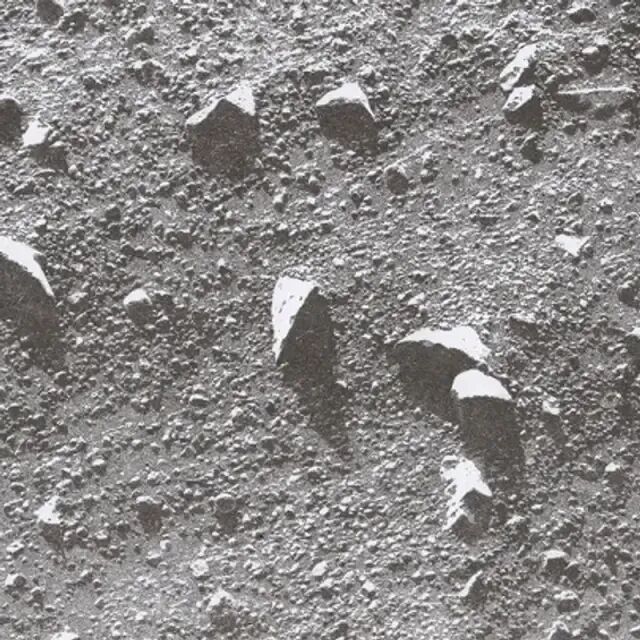
Thinking like a human: In the planning process, Claude analyzes the terrain data from satellites and on - board cameras, breaks the 400 - meter journey into tiny 10 - meter segments, and precisely calculates each waypoint.

Boost efficiency by 50% and liberate NASA engineers
Why does NASA dare to entrust a multi - billion - dollar Mars rover to AI?
Behind it is a carefully designed "human - machine collaboration" experiment.
Although the route is generated by Claude, to ensure absolute safety, NASA has activated an extremely strict verification system.
This system models more than 500,000 physical variables to predict the rover's position changes and identify potential risks in advance.
The result is astonishing: Claude's plan is almost perfect and only requires minor adjustments.
The "human intervention" is only for some very minor details:
For example, human engineers, through the ground - based perspective (a blind spot that Claude can't see), noticed special sand ripples on both sides of a narrow passage and manually fine - tuned that section of the route.
Other than that, the overall planning is reliable.
Finally, these instructions were successfully sent to Mars, and the Perseverance rover completed the journey smoothly.
Even more amazingly, after generating the code, Claude will self - review like a senior engineer, constantly iterating and optimizing the route until it finds the optimal solution.
With Claude's involvement, the route planning time has been significantly shortened. JPL engineers estimate that this method can halve the route planning time and also improve consistency.
Reducing the time spent on manual planning and training means that human scientists and engineers can arrange more driving tasks, collect more scientific data, and conduct more analyses, thus focusing their energy on truly important Mars scientific exploration.
This will significantly enhance human understanding of Mars exploration.
Evolution from a "game idiot" to an "interstellar navigator"
Let's go back about a year.
At that time, Claude struggled even to play the classic Game Boy game Pokémon Red. It often got stuck in corners and couldn't move, and was ridiculed by netizens as a "game idiot."
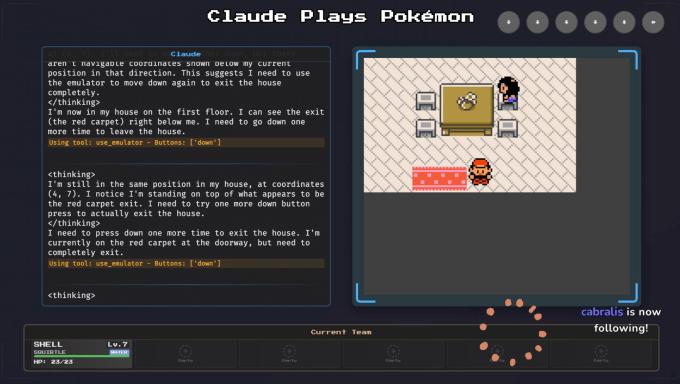
But in less than a year, it has gone into space and taken over the Mars rover. Its evolution speed is astonishing.
In experiments like Anthropic's Project Fetch, Claude is no longer just a "brain" that can write. It can break down tasks into executable engineering steps: writing code, changing parameters, and iterative debugging, enabling non - robot experts to drive robotic dogs to complete physical tasks such as fetching balls more quickly.
This time, by successfully navigating the Perseverance rover, Claude has once again proven that it is no longer just a "brain" that can only process text. It has begun to understand space, causality, and the logic of the physical world.
From controlling pixelated characters to controlling a real - world Mars rover, this is not only an improvement in computing power but also a turning point towards "physical intelligence."
The next step in the vast universe: lonely deep space needs AI
The 400 meters on Mars is just a beginning.
On a cosmic scale, the limit of the speed of light is an insurmountable law.
From Earth to Mars: 20 - minute communication delay.
From Earth to Jupiter: A delay of several hours.
From Earth to the edge of the solar system: Delays are measured in days.
In future deep - space exploration, human instructions will always be "in the past."
When a detector is exploring the subsurface ocean of Europa or landing on the methane lake of Titan and encounters an unexpected danger, it can't wait for Earth's rescue.
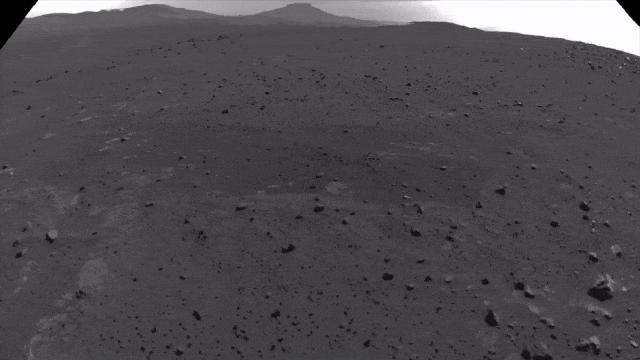
Therefore, it must have an "on - site" brain, an AI as highly evolved as Claude.
In the long interstellar journey filled with radiation, high pressure, extreme cold, and beyond the reach of human lifespan, silicon - based AI can perfectly replace humans and undertake some long - term monitoring, real - time decision - making, and self - healing tasks, ensuring that detectors and Mars rovers can continuously achieve scientific goals without human intervention.
In addition to the technical needs, the efficiency improvement brought by AI is also an important reason why NASA is so eager to embrace Claude.
According to media reports such as Engadget, NASA is facing an unprecedented "winter."
A wave of layoffs has hit this legendary institution, with about 4,000 employees (20% of the total) leaving their positions. In the 2026 budget proposal, the science budget was even at risk of being halved.
NASA not only has to maintain Mars exploration but also promote the grand Artemis program to return to the moon.
With a staff size less than half of that during the Apollo program, how can it accomplish these seemingly impossible tasks?
AI has become NASA's "efficiency multiplier" in this budget - constrained winter.
The 400 - meter drive of the Perseverance rover may seem insignificant, but when it receives code instructions from Claude 360 million kilometers away, AI is already changing the way humans explore the universe.
Spacecraft are no longer just remotely controlled tools but have become companions with "on - site thinking ability."
References:
https://www.anthropic.com/features/claude - on - mars -
https://www.engadget.com/ai/nasa - used - claude - to - plot - a - route - for - its - perseverance - rover - on - mars - 203150701.html - https://au.news.yahoo.com/nasa - used - claude - plot - route - 203150483.html
This article is from the WeChat official account "New Intelligence Yuan". Author: New Intelligence Yuan. Republished by 36Kr with permission.