Who has supported the first municipal district with a GDP of one trillion yuan in China?
Shekou is a sub - district under the jurisdiction of Nanshan District in Shenzhen. In the memories of many Chinese people, this name once represented a certain kind of zeitgeist.
In July 1979, the construction of the Shekou Industrial Zone began. The slogan "Time is money, efficiency is life" was written into the collective narrative of China's reform and opening - up. That year, Shenzhen had not yet become a special economic zone, and China's market - oriented reform had just started.
More than forty years later, as the competition among Chinese cities has entered a new stage centered on innovation ability and industrial structure, Nanshan District, where Shekou is located, has once again stepped into the spotlight.
On January 27th, at the two sessions of Nanshan District in Shenzhen, a set of data was officially announced: In 2025, the GDP of Nanshan District exceeded one trillion yuan, making it the first municipal district with a GDP of one trillion yuan.
Previously, only Pudong New Area in Shanghai and Haidian District in Beijing in the whole country had entered the "trillion - yuan club", and they are both districts of municipalities directly under the Central Government.
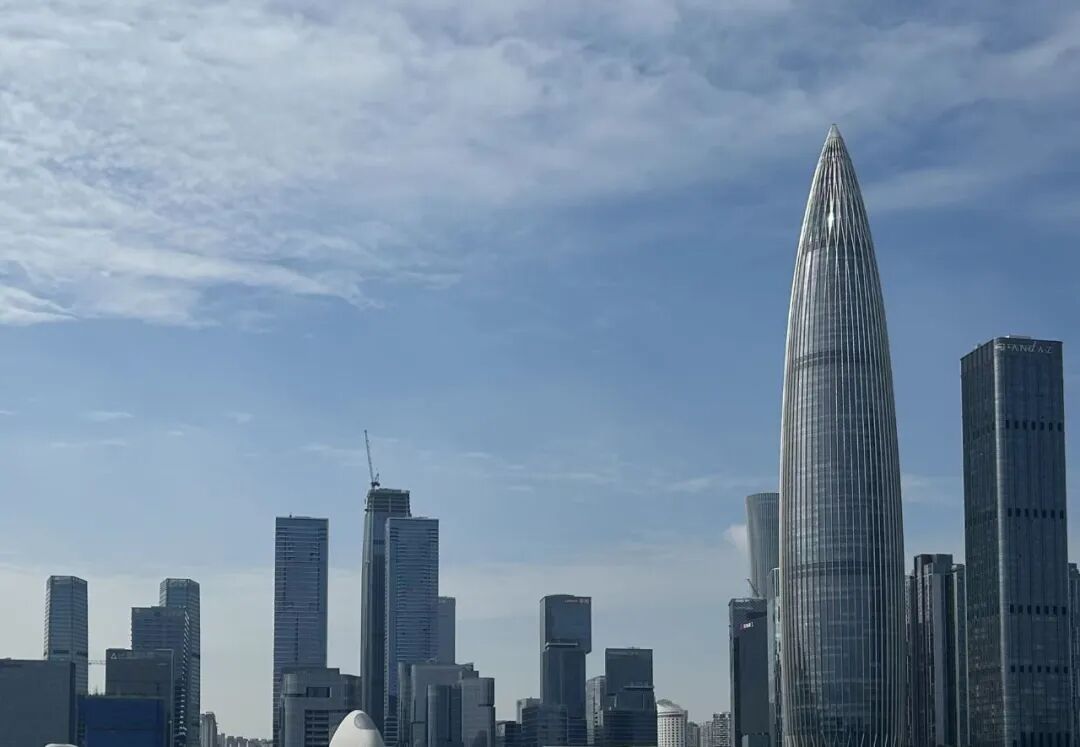
The skyline of Nanshan (Source: Studio of Reading the City)
The change in Nanshan's economic scale is particularly remarkable. In 2020, Nanshan's GDP was 652.7 billion yuan. In the following five years, it crossed four steps of one hundred billion yuan each, with an average annual growth rate of over 5.8%. In 2025, Nanshan's GDP exceeded one trillion yuan for the first time. The GDP per unit area reached 5.4 billion yuan per square kilometer, and the per - capita GDP exceeded 540,000 yuan. Both indicators rank among the top in the country.
Against the background of a high base, such a growth rate means that an increment equivalent to the scale of a medium - sized city has emerged on the original economic scale.
The question then arises: How can Nanshan continue to lead the way?
A Timeline: From Experiment to Agglomeration
If we draw a timeline for Nanshan's development, then the starting point of Nanshan is almost synchronous with the starting point of China's reform and opening - up.
On January 31st, 1979, the Central Government approved the establishment of the Shekou Industrial Zone. In July of the same year, the "first blast of opening up the mountain" went off on the coast of Shekou. This blast not only changed the landform between the mountains and the sea but also unlocked the possibilities of reform and opening - up. A series of breakthrough attempts were carried out here in terms of employment systems, wage distribution, land use, and investment promotion.
In 1983, the State Council approved the establishment of Nantou District, whose administrative area was roughly the same as that of today's Nanshan District. However, one year later, with the approval of the Guangdong Provincial Party Committee and the provincial government, part of the area of Nantou District was separated to establish Shekou District. In 1990, Nanshan District was officially established, governing the administrative areas of the former Nantou District and Shekou District. From the perspective of administrative structure, this is an urban area born with the reform.
In the following more than forty years, Shenzhen has rapidly grown into a city with a top - ranked economic aggregate in the country, and Nanshan has long ranked first among all districts in Shenzhen. By 2020, Shenzhen's GDP reached 2.77 trillion yuan, and the total import and export volume exceeded 3 trillion yuan. Nanshan contributed the most core scientific and industrial forces.
But if we go back ten years, Nanshan was not far ahead. In the comparison within the Guangdong - Hong Kong - Macao Greater Bay Area, Nanshan was just one of the members of the "first echelon". Compared with functional areas such as Tianhe in Guangzhou and Futian in Shenzhen, it had its own advantages but did not form an absolute lead.
The real differentiation occurred during the five - year period of the 14th Five - Year Plan.
In 2020, Nanshan's economic aggregate accounted for 23.5% of the whole city of Shenzhen, and by 2025, it had exceeded 27%. And the administrative area of Nanshan is only 10% of Shenzhen's.
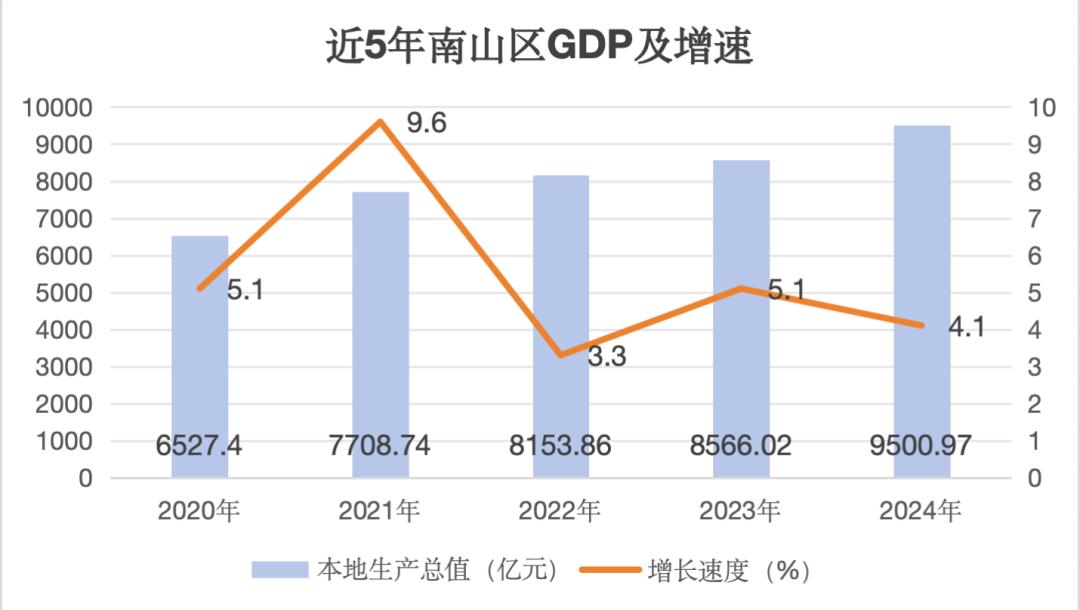
Changes in Nanshan's GDP in the past five years (Data source: Nanshan District Statistics Bureau)
Many people call this period Nanshan's "golden five years". Compared with the end of 2020, Nanshan has achieved a structural leap on an already high - level platform:
The added value of strategic emerging industries as a proportion of GDP has increased to 60%, becoming the main engine of economic growth; the number of listed companies has increased to 218, even exceeding that of many provinces. More than 70% of them are science and technology innovation enterprises, and the density of listed companies ranks first in the country; new sectors such as artificial intelligence, robotics, and low - altitude economy are rapidly taking shape; the R & D investment of the whole society as a proportion of GDP reaches 7.66%, nearly three times the national average.
In other words, reform and opening - up laid the institutional foundation for Nanshan, and what really made it stand out in the new round of urban competition is the high - level agglomeration and accelerated transformation of innovation elements in the past five years.
A Coordinate Axis: Liuxian Avenue and the "Rainforest"
If the timeline explains "why now", then a spatial coordinate may answer "why Nanshan".
Right after the new year in 2026, the world's largest consumer electronics show, CES, came to an end in Las Vegas. In the robotics and intelligent hardware exhibition area, enterprises from Shenzhen were particularly concentrated. According to incomplete statistics, at this CES, more than 530 enterprises from Guangdong participated, including more than 370 from Shenzhen and as many as 110 from Nanshan District.
Yunjing, Woan, Kuma, Zibianliang... These names frequently appeared on the exhibition stands of cleaning robots, household service robots, lawn - mowing robots, and embodied intelligence. Although they target different markets, tracing back through the registered addresses of the enterprises and the distribution of R & D teams will lead to a city corridor in the north of Shenzhen - Liuxian Avenue.
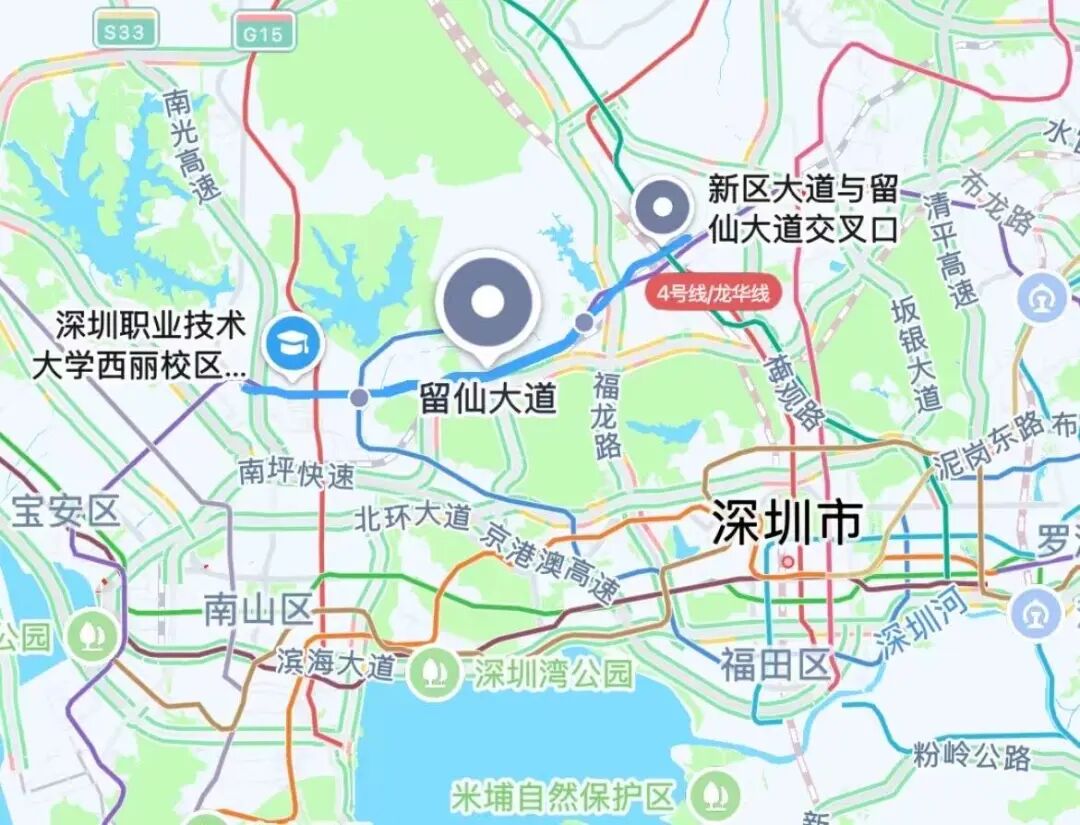
Liuxian Avenue (Source: Screenshot from Gaode Map)
This east - west main road crosses between Yangtai Mountain and Tanglang Mountain, connecting nodes such as Shenzhen University Town, Xili Lake International Science and Education City, Liuxiandong Headquarters Base, and Nanshan Wisdom Park. From the start of the construction of Shenzhen University Town in 2000, the inclusion of Liuxiandong and the university town in the high - tech zone planning in 2009, to the release of the "One Center, Two Axes, Multiple Areas" plan by Nanshan in 2023, the "Robot Valley" composed of this about 10 - kilometer - long industrial axis has gradually taken shape in the urban fabric.
Different from traditional industrial parks, this is not simply an area for enterprise concentration but compresses the "source - headquarters - manufacturing" on one axis. Algorithm R & D, engineering verification, pilot testing, and small - batch production are all within a 20 - minute drive, and then it is connected to a larger global manufacturing network through Shenzhen North Station, the Shenzhen - Zhongshan Link, ports, and airports.
This way of spatial organization is called the "rainforest" model by Nanshan: Instead of selectively supporting a few "champion enterprises", it allows large enterprises, small and medium - sized enterprises, and start - up teams to co - exist and evolve in the same ecosystem.
Zhang Jingping, the director of the Science and Technology Innovation Bureau of Nanshan District, summarized this ecosystem in three sentences: "Large enterprises stand out prominently, small and medium - sized enterprises spread everywhere, and innovation enterprises break new ground."
The first large - scale financing in the robotics sector at the beginning of the year occurred in the Liuxiandong area. Zibianliang Robotics, established at the end of 2023, completed its A++ round of financing on January 12th, with an amount of one billion yuan. Top institutions such as ByteDance, Sequoia Capital China, and Shenzhen Capital Group led the investment. This is also the first investment of Shenzhen Capital Group's AI Fund since its establishment.
Zibianliang Robotics' approach is also in line with the "rainforest" model. Instead of making a single - point breakthrough, it adheres to full - stack self - research of software and hardware, forming a closed - loop among models, data, and hardware architectures.
Nie Xiangru, the co - founder of Pasini Perception Technology, also located in Liuxiandong, once said that Pasini's innovation and entrepreneurship in Shenzhen Robot Valley benefited from the excellent upstream and downstream industrial chain support here. "A large number of robotics industries are concentrated here, and the innovation efficiency in the Robot Valley is extremely high. For example, the R & D cycle of circuit boards can be reduced from three months to one or two weeks." He said.
Such enterprises are not an exception. Enterprises such as Ubtech, Pudu, Yuejiang, Yunjing, and RoboSense have formed a complete chain from sensors, motion control to complete machine manufacturing in the same area. In terms of data, this agglomeration effect has shown results: Currently, more than 200 robotics - related enterprises are concentrated in Nanshan District, including 14 listed companies and more than 30 specialized and sophisticated "little giants". In the first three quarters of 2025, the output value of the robotics cluster increased by more than 50% year - on - year.
Can It Be Replicated?
As Nanshan enters the ranks of "trillion - yuan urban areas", one of the most concerned questions from the outside world is: Can this model be replicated by other regions?
In form, Nanshan's experience seems clear: introducing universities and research institutions, building headquarters bases, allocating manufacturing space, and superimposing capital and policy tools. But the real difficulty lies in that Nanshan has not simply superimposed elements but has achieved a high - density coupling of the industrial chain on the urban scale.
"Connecting the university town, the science and education city, the headquarters base, and the manufacturing carriers on one axis is essentially reducing the organizational cost of innovation, allowing talents, technologies, and capital to flow freely in a smaller space." Gong Zhiyuan, the deputy director of the First Planning and Design Department of the Shenzhen Branch of the China Urban Planning and Design Institute, believes.
Hu Gang, a professor at Jinan University and the president of the South China City Research Association (Think Tank), said that Nanshan's success is the result of multiple factors. "Geographical location, the construction of an innovation ecosystem, the investment of government innovation funds, and support for talents are all indispensable. Nanshan and Shenzhen have also continuously improved and adjusted policies during the development process. Even for urban areas in Beijing, Shanghai, and Guangzhou, it is not easy to replicate." He told reporters.
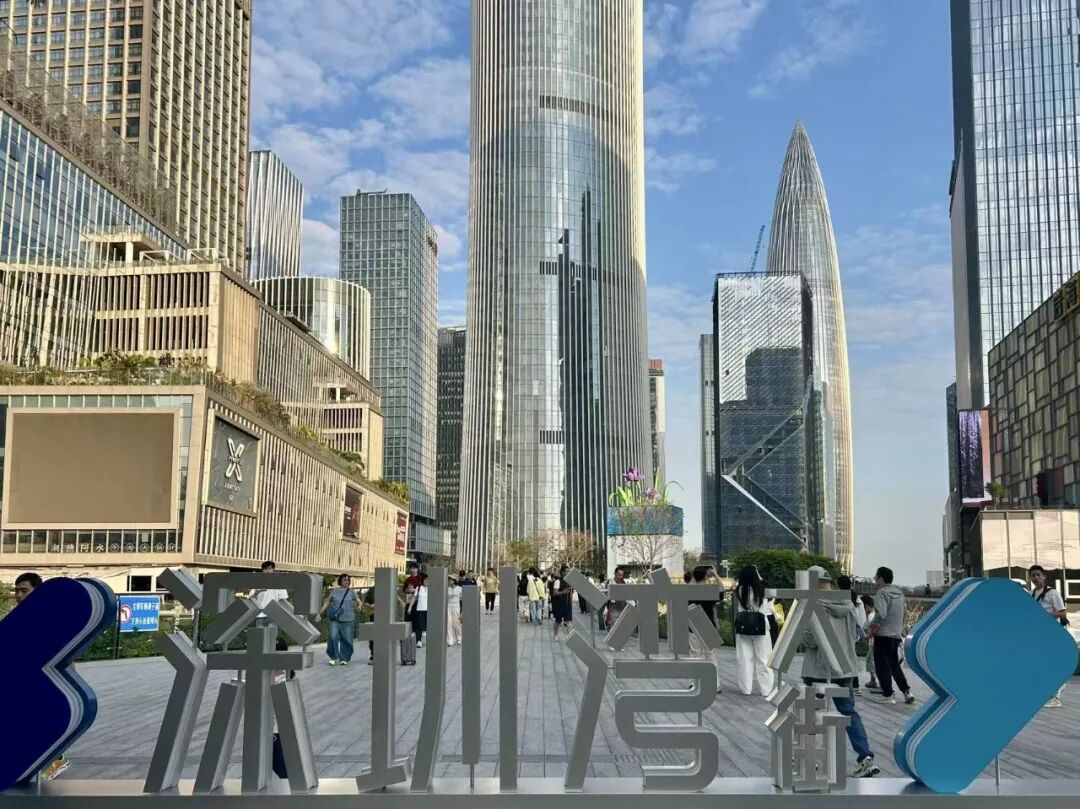
Skyscrapers in Nanshan District (Source: Studio of Reading the City)
This model has extremely high requirements for land, transportation, and governance capabilities, and may not be suitable for all regions. But it provides a clear judgment for other cities: Innovation is not about decentralized layout but needs to be carefully organized.
For Nanshan, a positive spiral has been formed, and more advantages are increasingly concentrated.
In December 2025, the National Venture Capital Guidance Fund was launched. Among the three regional funds under the guidance fund, the Guangdong - Hong Kong - Macao Greater Bay Area Venture Capital Guidance Fund Partnership was registered and established in Nanshan. The target scale of this fund is 50.45 billion yuan, and Shenzhen Capital Group serves as the manager. The fund will adhere to "investing in the early - stage, small - scale, long - term, and hard - tech projects" to help cultivate and develop new productive forces in the Guangdong - Hong Kong - Macao Greater Bay Area.
The two sessions of Nanshan District revealed that in 2026, it is necessary to strive for reasonable quantitative growth and effective qualitative improvement, and to promote the accelerated development of the three sectors of intelligence, green, and health. Nanshan will adhere to the mutual promotion and strengthening of "AI industrialization" and "industrial AI - application", open up scenarios for more enterprises, and provide computing power, tool chains, and incubation platform support for small and medium - sized enterprises.
By 2030, Nanshan aims to exceed 1.4 trillion yuan in GDP, and its total import and export volume is expected to cross the one - trillion - yuan mark. For a central urban area with an area of less than 200 square kilometers, this means a development proposition of higher intensity.
The birth of the first municipal district with a GDP of one trillion yuan is not the end but the starting point of a new round of competition.
This article is from the WeChat official account "Studio of Reading the City". Author: Wang Chenting. Republished by 36Kr with permission.