The world's number one, Chinese machine tools, have avenged the shame.
China accounts for 21.6%, and Germany 16.7%.
China has surpassed Germany in machine tool exports, becoming the world's number one, and leading by a large margin.
After studying the global industry and official statistics, the German Machine Tool Builders' Association summarized this report card for the Chinese machine tool industry. It is also an important report card indicating that China's manufacturing industry has entered a new era of high - quality development.
Epic Changes
Machine tools, also known as the "mother machines" of industry, are the core cornerstone of the manufacturing industry.
From small plastic toys to the manufacturing of cars, airplanes, tanks, and aircraft carriers... Without machine tools, there would be no modern industrial manufacturing.
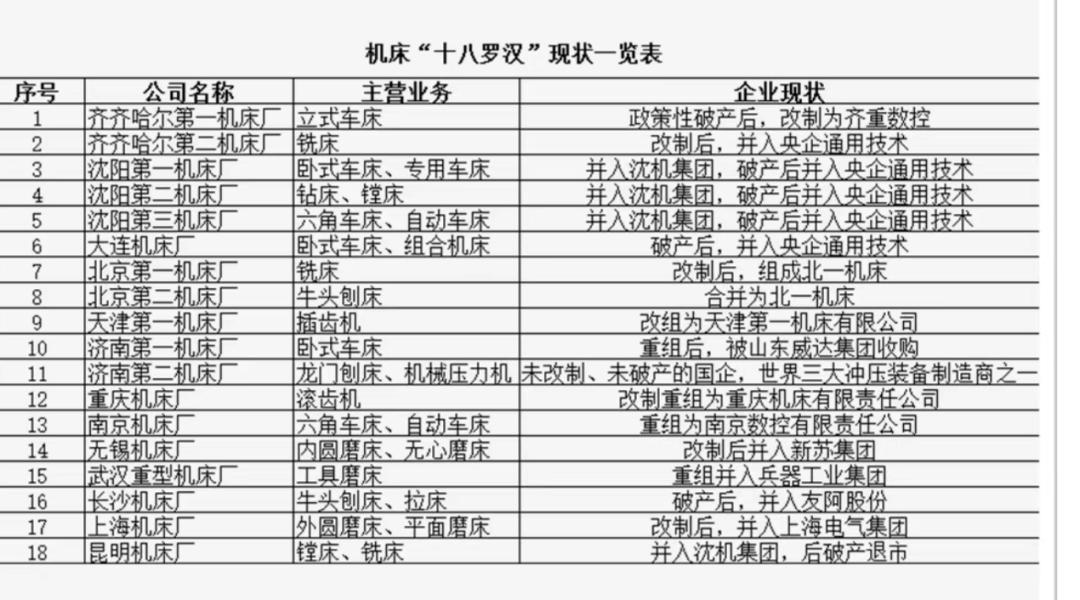
The development of China's machine tool industry began during the First Five - Year Plan period. It was one of the earliest industries to receive attention and support. At that time when the country was in great need of reconstruction, it was directly under the jurisdiction of the Second Bureau (Machine Tool Bureau) of the First Ministry of Machine - Building Industry, which established a machine tool industrial system consisting of 18 key state - owned enterprises (the "Eighteen Arhats") and 8 scientific research institutions (the "Seven Institutes and One Academy").
The "Eighteen Arhats" also represented the highest level of China's machine tool industry for a long time. The first lathe in New China (Shenyang No.1 Machine Tool Works), the first horizontal milling and boring machine (Shenyang No.2 Machine Tool Works), the first CNC gantry milling machine (Qiqihaer No.2 Machine Tool Works), and the first three - coordinate CNC gantry mobile milling machine (Beijing No.1 Machine Tool Works)... All were their masterpieces.
After the reform and opening - up, China opened its doors wide. The Chinese machine tool industry introduced a large amount of CNC technology from Japan, Germany, and the United States. The "Eighteen Arhats" also actively carried out international cooperation. For example, Jinan No.1 Machine Tool Works cooperated with Japan's Mazak, Shenyang No.2 Machine Tool Works with Germany's Scharmann, and Qiqihaer No.1 Machine Tool Works with Germany's Waldrich Siegen...
Chinese enterprises hoped to narrow the gap with developed counterparts through cooperation, and foreign counterparts were initially relatively open. However, the "honeymoon" period quickly ended in the new market situation where China's tariffs were reduced and imported machine tools flooded into the Chinese market. The "Eighteen Arhats" became the "Eighteen Losers." It was not until China joined the WTO and the manufacturing industry boomed that the domestic machine tool industry welcomed the so - called "Golden Decade."
During this period, the total output value of China's machine tool industry soared tenfold, and it became the world's largest machine tool production base. A large number of private machine tool enterprises emerged. Shenyang Machine Tool and Dalian Machine Tool among the "Eighteen Arhats" even entered the top 10 of the world's machine tool enterprises in terms of output value in 2008.
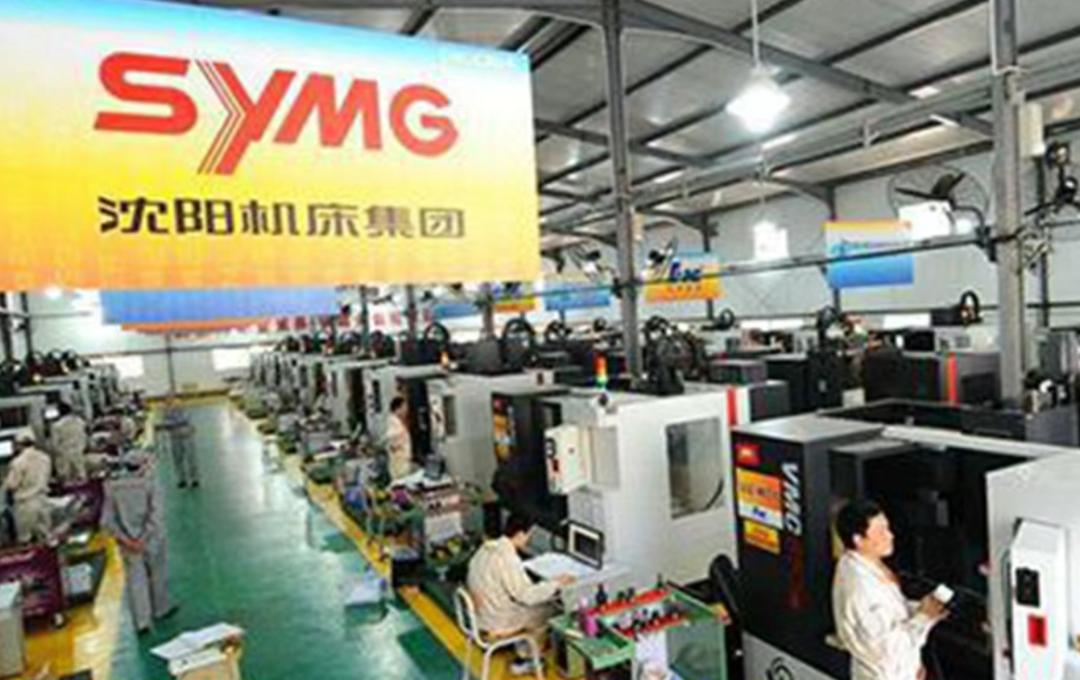
However, when China's manufacturing industry bid farewell to the explosive scale growth and shifted towards qualitative transformation and upgrading, the entire machine tool industry faced even more intense competition. The Chinese machine tool industry, which had relied on scale expansion, once again fell into great difficulties. Several leading enterprises that had risen rapidly also quickly became negative examples of decline.
In November 2017, Dalian Machine Tool was ruled by the court to undergo bankruptcy reorganization. The total amount of claims declared by creditors reached 22.422 billion yuan. Chen Yongkai, the group's chairman, was later listed as an A - level wanted criminal by the Ministry of Public Security.
In 2019, Shenyang Machine Tool, once the leading domestic enterprise, went into bankruptcy reorganization and was then taken over by China National General Technology Group...
Data shows that by the first half of 2020, the proportion of loss - making enterprises above a designated size in the Chinese machine tool industry had expanded to 24.1%. Among the former "Four Kings" of the Chinese machine tool industry, the first (Shenyang Machine Tool) and the second (Dalian Machine Tool) underwent bankruptcy reorganization, and the third (Qinchuan Machine Tool) suffered heavy losses.
It has only been about five years since then.
In just five years, the industry has changed from having one in every four enterprises in the red to becoming the world's number one exporter, surpassing the established machine tool power, Germany. The development of the Chinese machine tool industry can be described as an epic change.
The Painful Decade
There was a "Golden Decade" before 2010, and then a performance collapse in 2020. In between was the painful decade for the Chinese machine tool industry.
The root cause of the pain lies in four words: "big but not strong."
The primary reason for being "big but not strong" is the inferior technology. The key to the inferior technology is the lack of awareness of independent innovation and path dependence.
At the beginning of New China, despite being poor and facing international market blockades, the "Eighteen Arhats" each made breakthroughs. However, after the reform and opening - up, with the influx of foreign capital and the prevalence of the "importing" approach, there were different views on how to obtain technology. A painful lesson was that it was once thought that technology could be exchanged for the market and that one could enjoy others' technology through cooperation.
Like the automobile and other industries, the Chinese machine tool industry also tried to develop through the "market - for - technology" R & D path and had a sweet period of internal and external cooperation. However, it ultimately failed due to foreign technology blockades.
In 1996, Shenyang Machine Tool spent over 100 million yuan to introduce the CNC technology from Bridgeport in the United States. However, the foreign party sent a source code data package without revealing the core technology and its operating principles. The CNC machine tools developed based on this became useless.
In 1999, when Dalian Guangyang imported Japanese machine tools, the Japanese side imposed a series of "overbearing terms": the installation location and usage were restricted; if the machine tool was moved without permission, it would be automatically locked and become scrap iron.
In 2005, Shenyang Machine Tool bought Germany's Schiess, thinking it had obtained the technology. However, German law stipulates that "local knowledge cannot be transferred abroad." The technology of machine tools with five or more axes is also embargoed against China. In 2007, Shenyang Machine Tool planned to buy the source code of the CNC system for 60 million euros. However, after expert evaluation, it would take five years to interpret the code and another five years for industrialization, by which time the technology would be outdated.
Since technology introduction and cooperation did not work, the only option left for Chinese enterprises was independent R & D. However, this path was extremely difficult: for products that China could not manufacture independently, foreign brands would sell them at high prices or ban sales; for products that China had achieved breakthroughs in, foreign enterprises would immediately engage in dumping at low prices, rendering the huge R & D investment of Chinese enterprises in vain.
Under these two strategies, the Chinese machine tool industry was long - term suppressed. This experience was a disgrace in the hearts of many industry insiders. A large number of small and medium - sized private machine tool enterprises were trapped in low - end competition. Large enterprises attempting to break foreign monopolies also once fell into the dilemma of going bankrupt as they innovated more.
At a critical moment, the development strategies, management strategies, and operating systems of some enterprises did not meet the requirements of market competition and even ran counter to industrial laws, further exacerbating the situation.
The machine tool industry has a high - tech threshold, emphasizes professional division of labor, and requires long - term accumulation. Enterprises such as Japan's Fanuc and Germany's Siemens have long - term focused on becoming champions in a single field. However, many Chinese machine tool enterprises became over - ambitious and hasty after achieving some achievements. Shenyang Machine Tool and Dalian Machine Tool both got into difficult situations because of this.
For example, after the mixed - ownership reform, Dalian Machine Tool not only expanded rapidly under the slogan of "manufacturing machine tools like making cars" but also engaged in fraud and illegal loans, ultimately creating a debt hole of tens of billions of yuan, and its chairman was wanted.
In addition to the problems of the machine tool enterprises themselves, the domestic market environment was also a major constraint on the innovation and development of Chinese machine tool enterprises.
Some manufacturing enterprises preferred to buy foreign machine tool products at high prices rather than domestic products at low prices. A major reason for this was indeed the gap in technology and quality between domestic and foreign products.
However, this market preference further restricted the development of domestic machine tool enterprises: even if better products were developed, they could not gain the corresponding market share. Without market support, there would be no capital for further R & D and innovation.
Insufficient technological innovation, improper strategies and management, and a poor market environment restricted the Chinese machine tool industry for a decade. However, it also made the industry reflect and seek change.
New Qualitative Transformation
When the Chinese machine tool industry was in trouble due to the lack of core technology, the forces for breakthrough were emerging like bamboo shoots after a spring rain.
In 2013, at the National Science Conference, Wuhan Heavy Machine Tool Group, under the China North Industries Group, won the second - prize of the National Science and Technology Progress Award for its seven - axis and five - linkage heavy - duty machine tool.
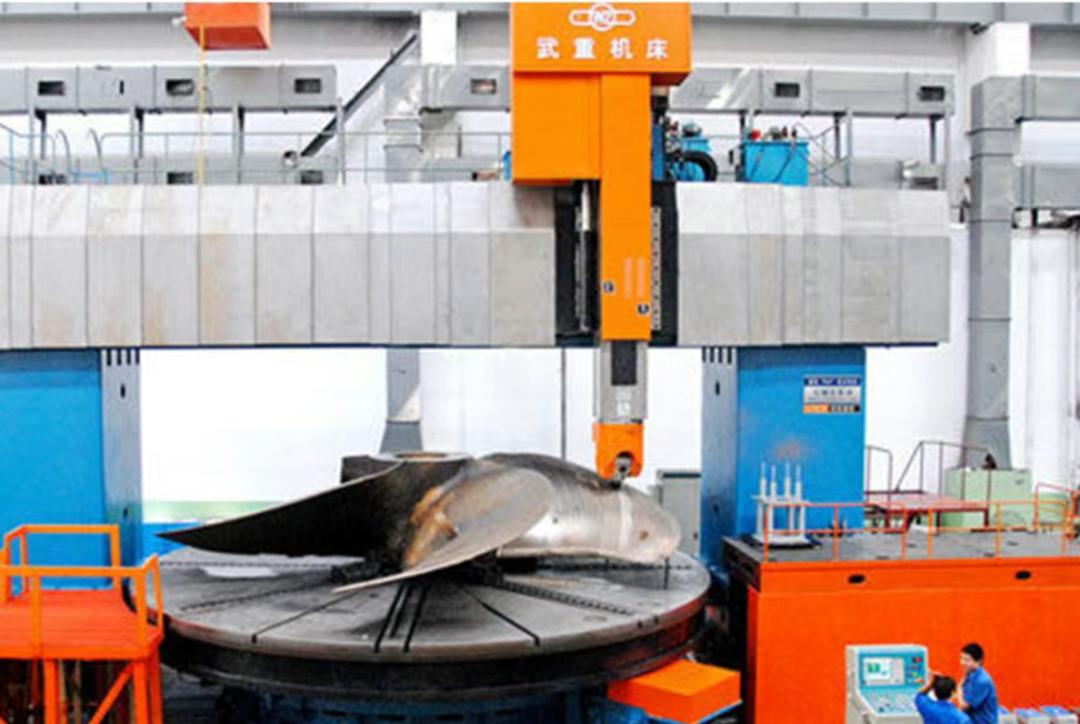
This national heavy - duty equipment, with a maximum processing diameter of 8.5 meters, a load - bearing capacity of 160 tons, and a positioning accuracy of 0.025 millimeters, took ten years to develop. It can control the noise of giant propellers to a level comparable to the background noise of the quiet ocean.
In addition to the long - term efforts of Wuhan Heavy Machine Tool Group itself, this major breakthrough was also the result of the joint efforts of Huazhong CNC and Dalian Guangyang and other machine tool industry enterprises working together to break through the bottleneck.
The CNC system, known as the "brain" of the machine tool, is the core basic component of intelligent manufacturing. Huazhong CNC, incubated by Huazhong University of Science and Technology, set the mission of "equipping Chinese manufacturing with Chinese 'brains'" at its inception.
Today, it has not only activated the strategic heavy - duty equipment of Wuhan Heavy Machine Tool Group but also shown its strength in high - end manufacturing fields such as the military, aerospace, automotive, and shipbuilding industries. It has also developed the world's first intelligent CNC system with an embedded AI chip.
In 2025, the world's first "Huazhong Type 10" CNC system with self - learning ability developed by Huazhong CNC refreshed the AI level of the entire CNC industry by reducing the programming time of complex parts from 30 minutes to 3 minutes.
Dalian Guangyang is a powerful private enterprise. For more than 20 years, under the simple concept of its chairman, Yu Dehai, "If you don't want to be controlled by others, you have to make some things by yourself," through "bankruptcy - style" R & D, it has filled many gaps in China in the entire industrial chain of CNC systems, key components, and machine tool complete machines, from software to hardware.
Even Shenyang Machine Tool, which once went through bankruptcy reorganization, has not only been reborn through technological breakthroughs but also "innovated" in the path of technological innovation. For example, it cooperates with Dongfang Electric and China National General Technology Group to create a new model of "scenario - driven, joint R & D" to jointly tackle high - end five - axis linkage CNC machine tools.
Even Gree, the air - conditioner giant, is quietly becoming a machine tool giant. Today, its independently developed "high - speed double five - axis gantry machining center" of the world's top - level has been used in the new - energy vehicle industry and won the Gold Medal at the Geneva Invention Exhibition. It has become a top - selling product in the industry.
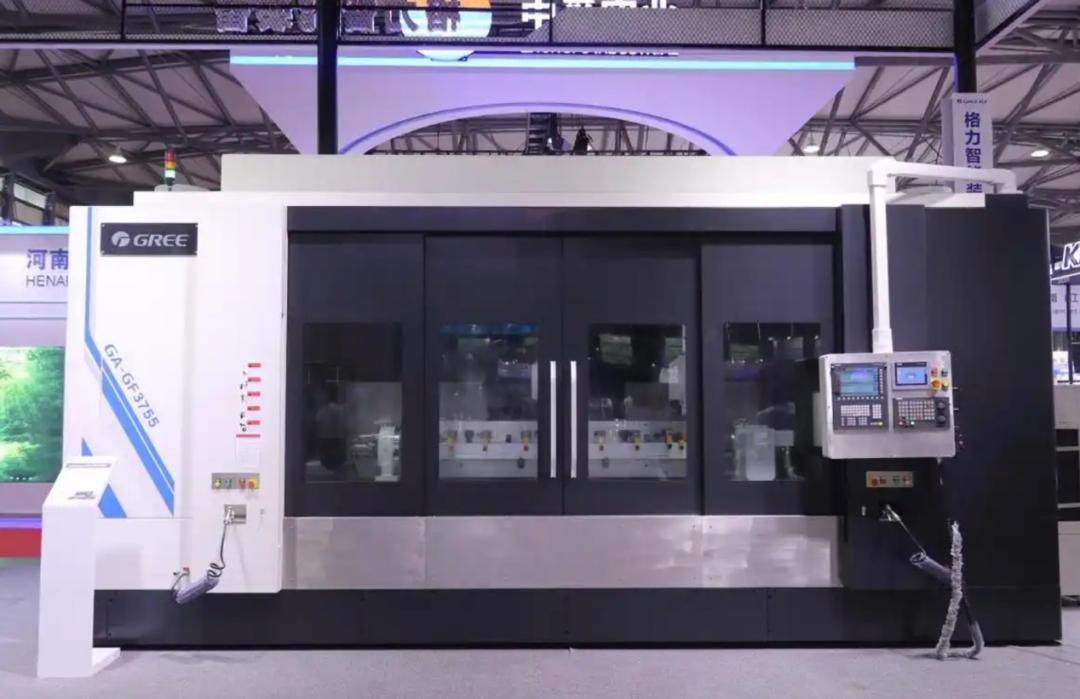
There are many similar cases. For example:
Zhongke Yibei Ge Machinery has achieved the basic localization of the "five - axis linkage double - pendulum milling head" through continuous R & D, completely breaking the situation where China's high - end CNC machine tool milling head market relied on imports and was subject to foreign control.
Huagong Technology, also incubated by Huazhong University of Science and Technology, has broken the situation where the three - dimensional five - axis laser processing machine tool relied on imports and has a 70% domestic market share, ranking third in the world.
Kede CNC has created high - end equipment with a self - supporting rate of core components up to 85% and a localization rate of the complete machine over 90% with a complete technology chain of "CNC system + key functional components + high - end five - axis machine tools" to serve the "national heavy - duty equipment."
Shandong Dahan Intelligent Technology has developed the first "intelligent manufacturing cloud platform AI large model" in China. Through deep learning to optimize the processing path, it has increased the processing efficiency of complex curved surfaces by 30%, reducing the processing time of aviation parts from 8 hours to 2.5 hours...
Once, technology was a long - term pain for Chinese machine tool enterprises. Now, it is becoming their strength. More and more world - first products, world - pioneering technologies, and world - class standards are emerging and being refreshed in the Chinese machine tool industry.
Behind the technological breakthroughs is a major reversal of the environment and momentum for the entire Chinese machine tool industry. The previous unfavorable factors are turning into favorable ones. In addition to the efforts of enterprises themselves, historical trends also play a role: the continuous support from the state for the machine tool industry and the top - priority status of independent core technologies in the entire Chinese industrial chain under the great - power game.
In 2009, the Ministry of Science and Technology and the Ministry of Industry and Information Technology of China launched a major project on "High - end CNC Machine Tools and Basic Manufacturing Equipment."
In 2015, the State Council issued the "Made in China 2025" plan, clearly identifying high - end CNC machine tools as a key area for breakthroughs and promoting industrial upgrading through specific measures such as fiscal and tax support and technological research.
In 2019, the National Manufacturing Transformation and Upgrading Fund, with a registered capital of 147.2 billion yuan and backed by the Ministry of Finance, was established. One of its key focuses is also the machine tool industry, especially the breakthrough in high - end core technologies.
Equally important is that since 2019, the "Catalogue of Major Technical Equipment and Products for Which Import Duties Are Not Exempted" in China has continuously added types of machine tool products and components.
For example, previously, the import of mid - to high - end CNC laser processing machine tools with more than four axes was tax - free, but since 2019, import duties have been levied.
With strong national support and the full awareness of enterprises, the overall environment for independent innovation in terms of