Pet companion robot: Embodied intelligence born out of anxiety
After the implementation of embodied intelligence, a lot of "anxiety" has emerged. This anxiety stems from people's subconscious avoidance of new species and is also a necessary cultivation period for the implementation of new technological products.
In the field of embodied intelligence, pet companion robots have taken an opposite path. They have no sense of distance and have grown in the anxious gaps of people's lives.
Let me ask, which pet owner has never been anxious about questions like "Will my pet wreck the house when I'm not at home? Will there be any accidents?"
This is a real and visible commercial closed - loop. After all, given the limited technological level in the past, products such as intelligent cat litter boxes, intelligent pet feeders, and collars that can detect health and translate animal languages have already emerged. All kinds of intelligent pet products, diverse in form and constantly upgraded, have paved the way for pet companion robots.
From the perspective of manufacturers, making pet companion robots is not only a "genuine necessity" but also represents multiple "clear - headed business strategies" behind it. First of all, the pet scenario is a market with a scale of hundreds of billions, and embodied intelligence represents a commercial potential of trillions. As the intersection point of the two, pet companion robots not only inherit the dividends of the upgrading of the pet economy but also become a practical landing point for the robot industry.
Secondly, pet companion robots are a practical and adaptable idea in the large scenario of home - embodied intelligence. The idea is relatively clear, that is, starting from accompanying pets, accumulating capital for long - term development and technical experience in navigation, obstacle avoidance, interaction, and operation in the home environment.
From every aspect, this is a target favored by capital and a product that consumers are willing to order.
The core of pet companion robots is to relieve people's anxiety
What is a "good" pet companion robot? Many people may prefer how rich its functional design is and how many imaginative needs it can meet. But in fact, its core lies in how much psychological burden it can relieve for people.
"What should I do if I go back to my hometown during the Spring Festival and no one takes care of my pet?"
"Will my pet wreck the house while I'm at work?"
"Will my pet get depressed if no one plays with it?"
These are not only daily topics among pet owners in our company but also the daily anxieties that almost all pet owners chew over repeatedly. It may sound very abstract, but they are indeed extremely real and common problems: insufficient companionship time, lack of pet - raising knowledge, and the inability to transfer responsibilities. Especially, pets cannot express their abnormalities like humans, and it is also difficult for humans to recognize their emotions.
In the past, these anxieties have given rise to a huge "pet economy" such as pet boarding and pet medical services. Data shows that in 2024, the scale of the Chinese pet market reached 345.3 billion yuan, among which the market scale of intelligent pet products exceeded 10.2 billion yuan, accounting for 20% of the pet product market. The three sub - sectors of intelligent feeding, health monitoring, and environmental cleaning are leading in terms of growth rate, and the sales of pet companion robots have increased sharply, with a year - on - year growth of 210%.
Past products were more limited to being "mobile cameras", recording the daily lives of pets in a fixed or tracking form. However, they did not have the ability for active or passive interaction, and it was also difficult to generate data - based and visualized work diaries. But today, with the iteration of technology, we have seen very obvious changes. Although pet companion robots have not reached the so - called "general" level in a certain sense, they are no longer single - functioned and can even be called a set of solutions.
We have seen the emergence of multiple robot products targeting the pet scenario:
• Tuya Smart's Aura focuses on automatic feeding, health detection, and remote care;
• FrontierX Vex focuses on daily pet records and can automatically generate video content;
• Looking further back, there were also products like ROLA Mini, which centered on mobile cruising and remote monitoring.
From a technical path perspective, these products are not mysterious. They do not need to focus on the most difficult issue of lower - limb dynamic balance in humanoid robots, nor do they need to replicate the delicate and most difficult upper - limb operations. Moreover, there is no need to achieve a high - intensity understanding of the physical environment and complex interaction behaviors. For pets, being able to stably achieve basic movement, fixed - point cruising, and basic audio - visual perception is more than enough.
In other words, these are products with relatively low "embodied content". However, this "simplicity" is obviously not due to mediocre technology or incompetence but a practical choice by manufacturers: shifting the technical difficulties from the physical - level interaction between the machine and the world to the emotional - level concern for people's hearts.
In the pet - accompanying scenario, the solution of robot manufacturers is not about designing what functional support for pets but about whether they can relieve people's anxiety.
Therefore, the core barrier of similar products on the market does not focus on the high or low of parameters but on how accurately they can capture anxiety signals. They stay in families with extremely low presence and extremely high stability, essentially acting as a "buffer" for human anxiety:
- The value of FrontierX Vex does not lie in whether it can really "accompany" cats and dogs like a friend. Instead, it relieves the owner of the boring and repetitive burden of recording through automated recording and editing.
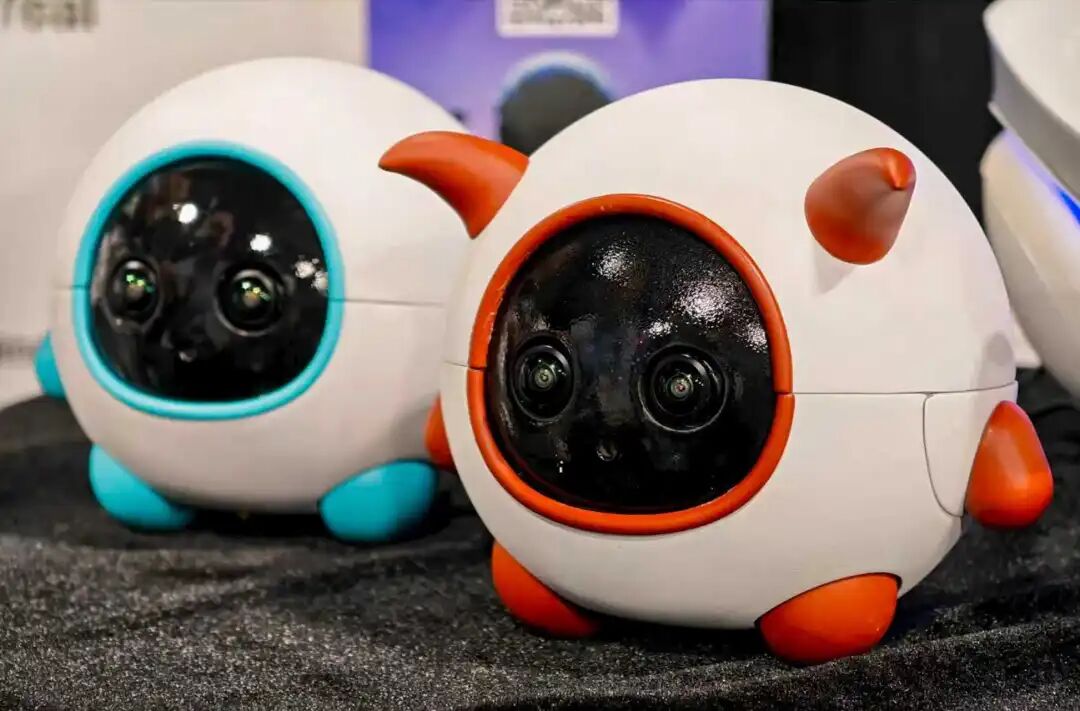
Picture description: FrontierX's Vex pet camera robot
- The core charm of Aura does not only lie in feeding or monitoring. It gives inexperienced and highly nervous pet owners a psychological support of "professional help is always available" when facing potential health risks.
After all, pet companion robots seem to be playmates for pets, but in fact, they are compensatory tools for human uneasiness.
Paying for function premium, but actually for emotions
A real - world problem that can't be avoided is: Does a pet that costs nothing or a few thousand yuan really "deserve" a robot that costs thousands or even tens of thousands of yuan? According to a research by iResearch, in the Chinese pet consumption structure, the average annual cost of raising a pet reaches 4,440 yuan, mainly distributed in pet food, pet health care, pet products, and pet - related services. The types of pet products are gradually becoming more refined, among which intelligent pet products account for 50.8%, being the main expenditure on pet products.
So, although the proportion of intelligent products is increasing, the average expenditure is limited. It is unknown how "tolerant" consumers will be of a product that costs hundreds, thousands, or even tens of thousands of yuan out of the blue. Moreover, will this type of product repeat the high return rate of around 30 - 40% that is common among companion robots or AI toys? These are questions that need to be answered urgently.
However, if we simply measure them by "functional cost - effectiveness", it is easy to draw a negative conclusion. Does their value really only come from functions?
First of all, it is undeniable that there is a cost of technology integration. The technical complexity of mobile navigation, environmental perception, and continuous - running AI interaction systems is much higher than that of traditional pet products. This is almost on a different cost dimension from products like cat litter boxes, which are just "mechanical structures + simple sensors".
But if we only stay at the technical level, we still can't explain why the price elasticity of products in this field ranges from a few hundred to tens of thousands of yuan. The more crucial anchor point is actually the emotional value.
During an interview, a relevant staff member of Tuya Smart described Aura with a very thought - provoking statement - it is more like a pet's "emotional partner" and health manager. The robot can continuously observe and record the pet's state, identify abnormalities, and give early warnings. These are exactly the parts that are the most difficult for humans to do and the most easily overlooked.
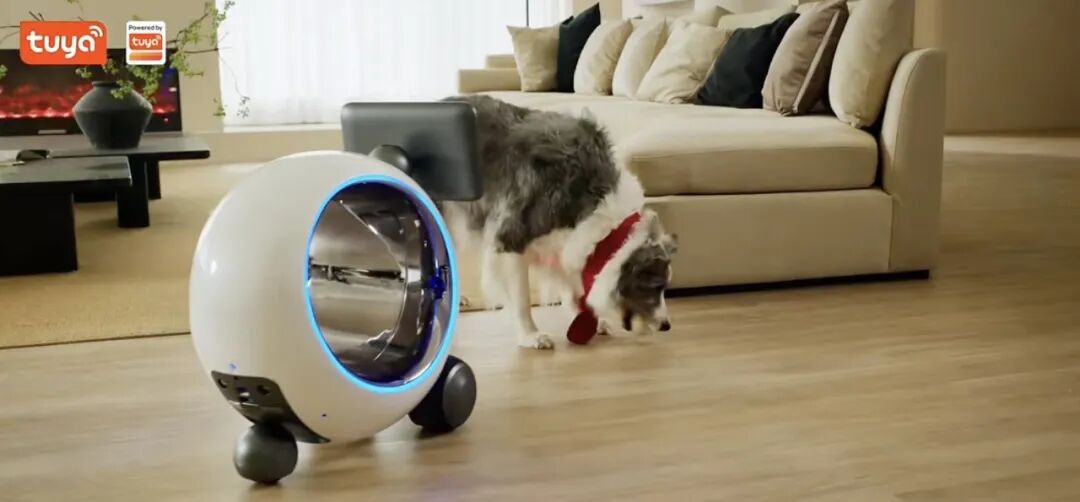
Picture description: Tuya Smart's Aura
During CES, the final price of Aura had not been announced yet, but according to the Tuya Smart staff, some people were "willing to pay $3,000 to take it home". This is not the result of rational calculation but a typical emotional decision.
From a business logic perspective, this is almost the same as human companion robots: the former allows humans to gain satisfaction from "being accompanied", while the latter allows humans to gain peace of mind from "someone taking care of my pet for me".
The improvement of technology does increase the value of traditional pet - accompanying products, but what really supports the premium and presents a large price range is the emotional value carried by technology, which varies from person to person. Whether people are willing to pay for it is likely to follow the existing consumption model of companion robots: those with money can "buy without hesitation" like LOVOT, while those with limited budgets can choose the simplified and alternative Ropet.
It is worth mentioning that this type of product may also evolve into an ecological entrance in the future. For example, if Aura can further connect with pet - boarding services, veterinary appointment systems, and even link with smart home systems, its premium will not only come from the hardware itself but also be continuously broken down into a series of continuous services.
The lightweight implementation of embodied intelligence
In a recent interview, Na Jingdan, the vice - president of marketing and strategic cooperation and CMO of Tuya Smart, mentioned that the pet scenario is not the end but the first stop for home robots.
This statement itself reveals the deeper meaning of this type of product.
Home robots have always been an end - game scenario with extremely high technical thresholds. It requires an extremely delicate balance to be achieved among safety, reliability, cost, and experience. Truly entering families and operating stably in the long term has never been an overnight thing.
Therefore, on the path to "home robots", appropriate dimensional reduction and decomposition are actually a realistic and rational choice.
Past practices have already provided answers. Whether it is intelligent cat litter boxes or educational robots, these products that seem "less robotic" actually occupy an important position in the corporate revenue structure. We have also seen robot products specifically designed for pets on the DDC2025 of Sweet Potato Robot. They have highly consistent characteristics: the technical difficulty is relatively controllable, without the need for complex motion control and delicate operations, and basic movement and audio - visual perception are sufficient; the product completion is very high, as they are all intelligent - empowered on a mature and market - accepted product form.
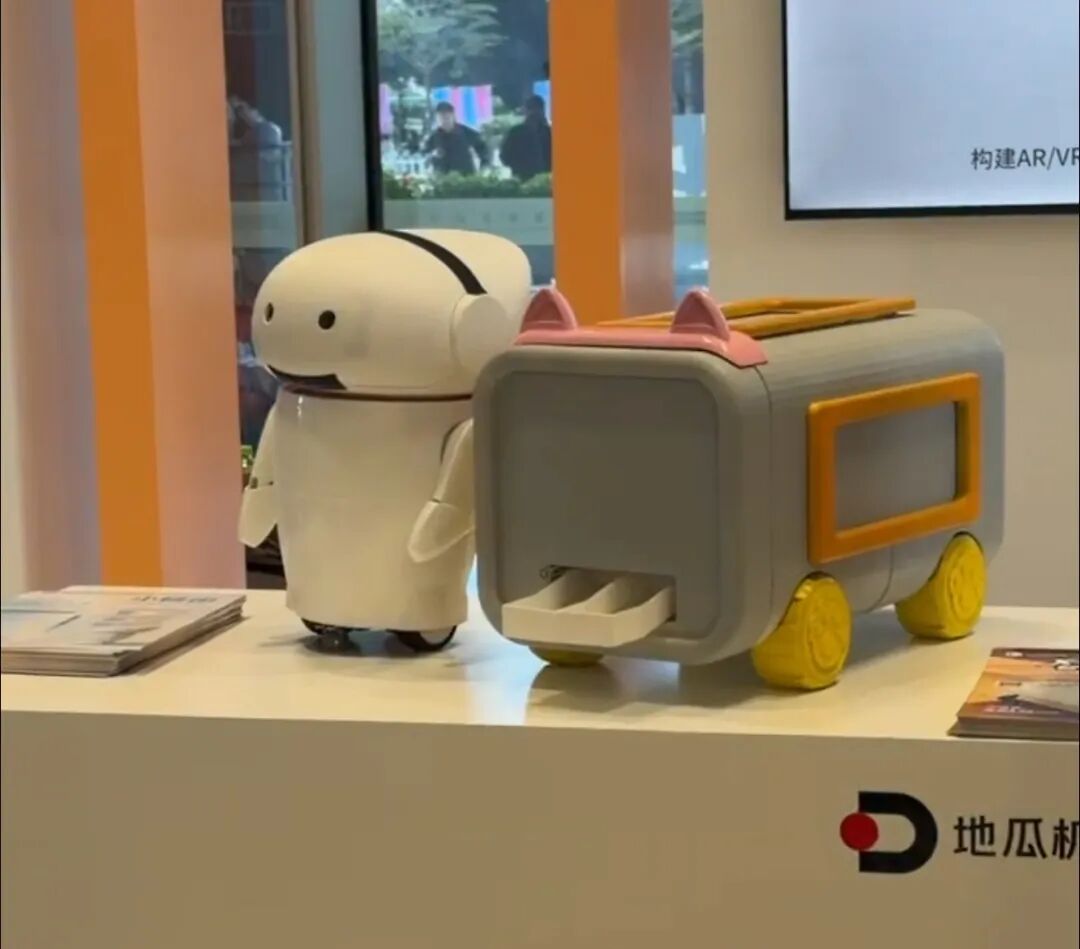
Picture description: The left is the "Xiaonuotuan" companion robot, and the right is the pet companion robot.
Precisely because of this, this type of product can be directly sold to the market and is a real choice with commercial implementation possibilities.
But short - term commercial returns are just one aspect. In the broader picture of embodied intelligence, they are more like a tentative move.
Pet companion robots have lower requirements for precision and reliability than home or even industrial robots, with a larger fault - tolerance space. They have become the "minimum viable product" for the implementation of technologies such as large models, multi - modal perception, and low - power chips, accelerating the commercialization process of the entire embodied field.
Meanwhile, when robots continuously accumulate experience in navigation, obstacle avoidance, interaction, and operation in the home environment during the process of accompanying pets, this data and engineering capabilities will eventually feed back into the real - sense home companion robots - the form that is ultimately "accompanying people".
So, at this stage, these products that seem to have a low threshold and are even somewhat "marginal", but are named "robots", are by no means unworthy of the title. They are not the final answer but a very crucial step on the way to the final goal. In short, the combination of the booming pet economy and the warmth of technology makes us realize that the evolution of the industry is not that easy. Through continuous understanding of human needs, robots are slowly but firmly transforming from "tools" to "partners".
Today, robots enter families in the role of "taking care of pets"; tomorrow, when the connection between technology and emotion becomes more stable and the industrial ecosystem matures, they will surely respond to humans' deep - seated expectations for companionship and care in a more relaxed form.
This article is from the WeChat official account "Embodied Research Society". Author: Peng Kunfang. It is published by 36Kr with authorization.