After going viral globally, a two-hour in-depth interview with the father of Clawdbot: I'm back in the game three years after retirement.
[Introduction] At the age of 14, he stole a game and wrote an anti-copy program, received remittances from Apple using his grandfather's account, and single-handedly made a PDF framework run on 1 billion devices. After burning out and retiring for three years, he resurrected himself with Claude and Codex, making 600 commits a day and simultaneously controlling 10 AI agents, like a master playing multi - sided chess. This is not science fiction but the first two - hour in - depth interview with Peter Steinberger, the father of Clawdbot, after he became popular.
Now, global developers are going crazy for one person!
It's no exaggeration to say that the entire AI circle has been "obsessed" with this guy and his Moltbot (formerly Clawdbot).
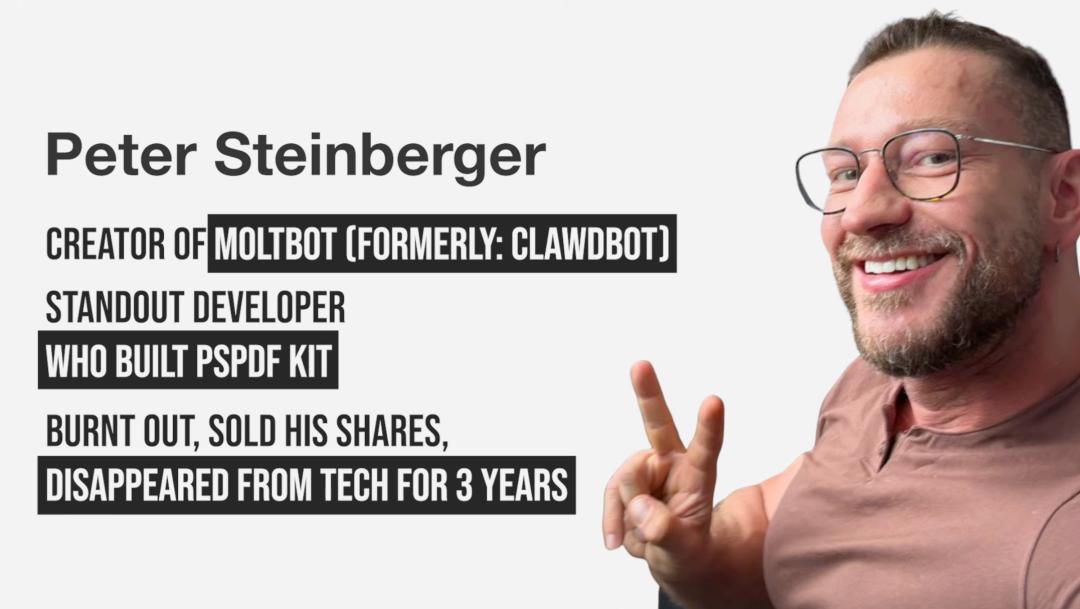
Peter Steinberger, the founder of Moltbot (formerly named Clawdbot).
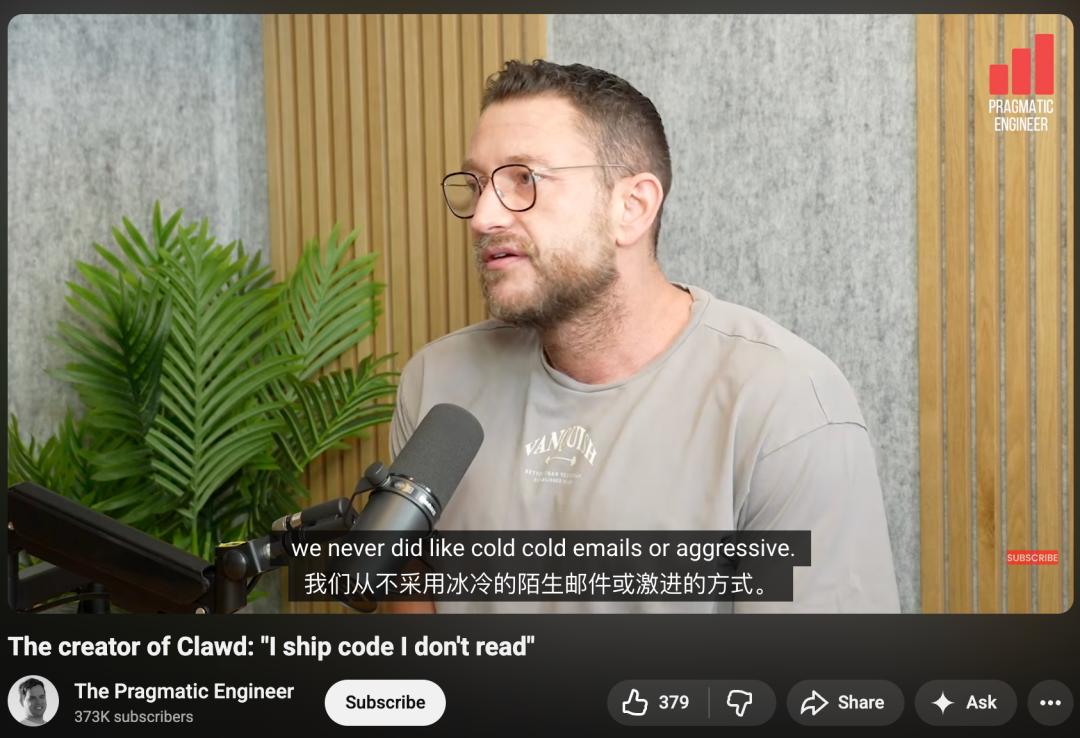
There's no need to say more about Clawdbot~
Regarding the popularity of Clawdbot, you can refer to the following two articles with over 100,000 views. After reading them, your perception will definitely be overturned (the views are exactly opposite).

This is Peter's first ultra - long in - depth interview after Moltbot became popular across the internet.
This nearly two - hour conversation can be regarded as the "Programmer's Bible" in the era of AI programming!
How does a person who truly reconstructs the workflow with AI agents actually work?
TL;DR (Too long; didn't read):
1. 600 commits a day: Not junk code, but real working code.
2. "I publish code I haven't read.": Not hasty, but letting the AI verify itself.
3. Pull Request is dead: Now it's called Prompt Request. He'd rather see the prompt than the code.
4. Simultaneously control 5 - 10 agents: Like a master playing multi - sided chess, for parallel development.
5. The closed - loop is the secret: The AI must be able to compile, lint, execute, and verify its own output.
6. Algorithm fanatics may be the worst off: Those obsessed with solving problems may find it difficult to adapt, while those focused on delivery will thrive.
From a rural area in Austria to the CEO of a global company
You know, Peter Steinberger is not just a "wild programmer".
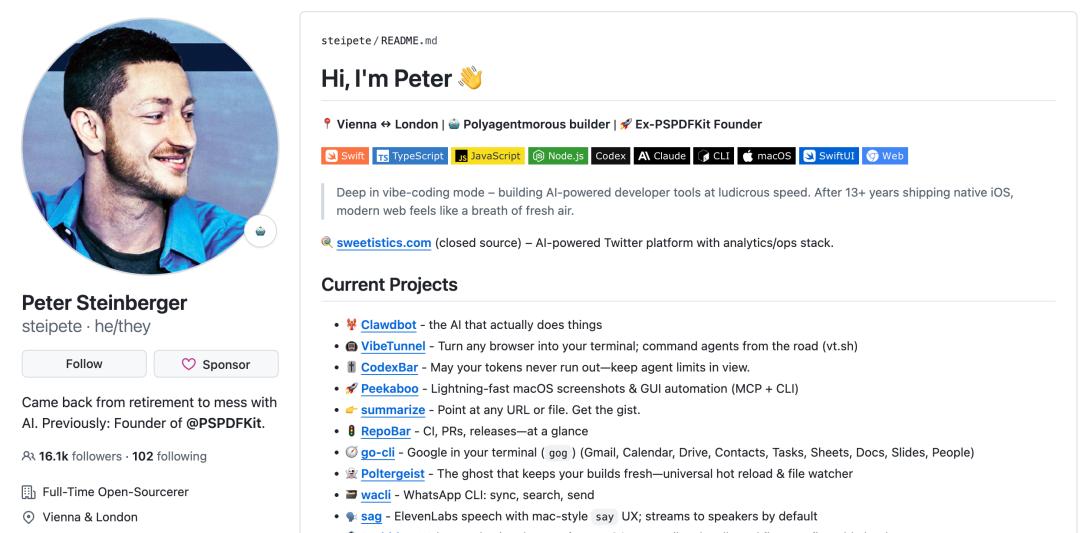
He's from a rural area in Austria. At the age of 14, he was fascinated by a computer brought by a summer guest and got into programming ever since.
"The earliest thing I remember is that I stole a DOS game from school and then wrote an anti - copy program for the floppy disk so that I could sell it."

This "tinkering" gene has run through his entire career.
During college, he had to work full - time to support his studies. On his first day at work, the company gave him a thick book on MFC.
Peter really got into iOS development because of a "furious moment" on the subway.
At that time, he was using a dating app on iPhone OS 2 and typed a long message.
As the train entered the tunnel, JavaScript disabled the send button and popped up an error message.
But there was no copy - paste, no screenshot function, and scrolling was also disabled.
"My long, somewhat emotional message was just gone. I was furious."
After getting home, he downloaded Xcode and started developing his own app.
He put this app on the App Store and priced it at $5. He earned $10,000 in the first month.
The payment account was his grandfather's.
"One day my grandfather called me and said, 'There's something strange. Apple transferred a large sum of money to me.' I said, 'That's mine! That's mine! Don't touch it!'"
PSPDFKit: A 13 - year endeavor
Later, Peter took on a job to fix a magazine - reading app.
He spent two months rewriting it and found himself addicted to PDF rendering.
"Do you know there are some problems that seem simple but are actually incredibly difficult? PDF rendering is one of them."
Just like that, he spent 13 years building PSPDFKit, which is now used on over 1 billion devices.
The company grew from just him to over 70 people, with a global remote - working model.
"My marketing strategy is simple: Only care about developers. If I can convince the developers in a company, they'll do the internal promotion for me."
Burnout, retirement, and disappearance
But being a CEO is not easy.
"A CEO is basically a garbage can. All the things others can't handle or mess up, you have to clean up in the end."
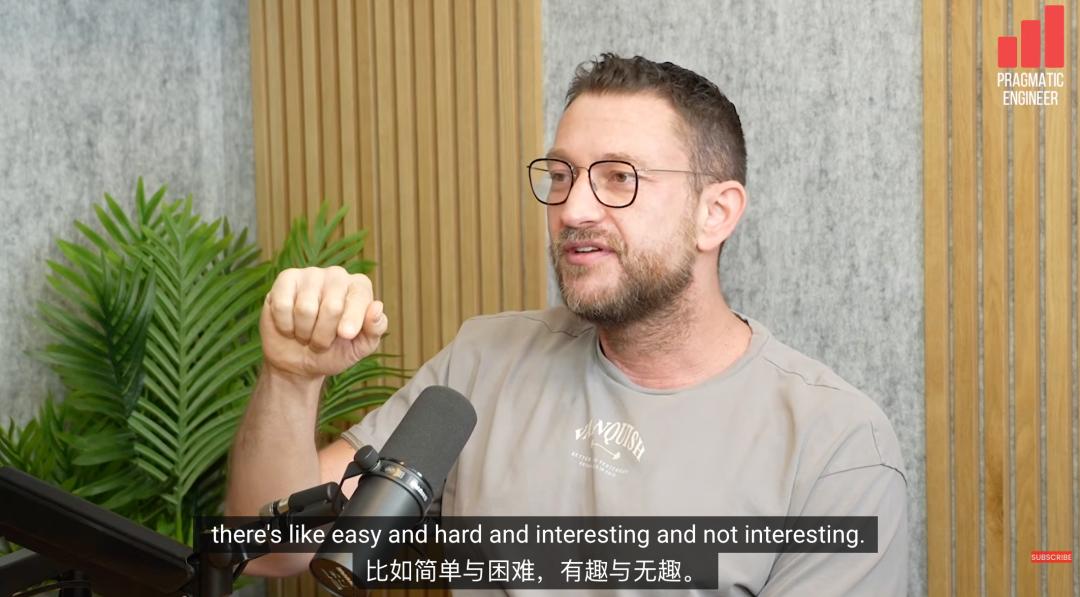
Under this long - term pressure, Peter burned out completely.
He sold his shares and disappeared from the tech circle for a full three years.
"I needed a long time to relieve the stress. I went to a lot of parties. I didn't even turn on my computer for several months."
In April 2025, Peter turned on his computer again.
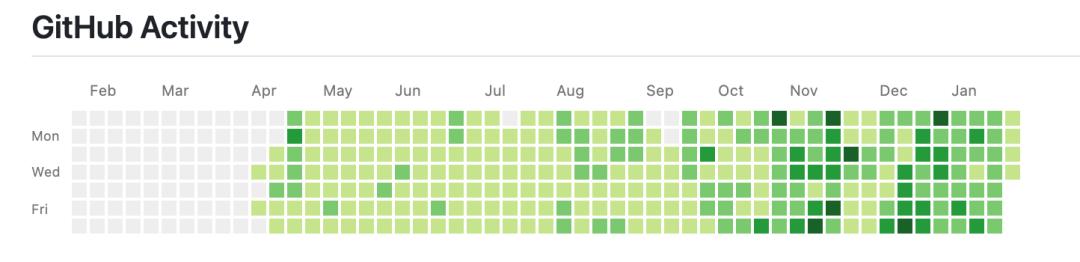
Peter's GitHub heatmap shows that he started writing code again from April.
He wanted to make a Twitter analysis tool but found he didn't know web development at all.
Then he discovered AI.
He dragged a 1.3MB Markdown file from a GitHub repository into Gemini and typed "Write a specification". The AI output a 400 - line specification.
Then he dragged the specification into Claude Code and typed "build".
Then he kept clicking "continue, continue, continue..."
Finally, the AI told him, "100% production - ready." It was done! But when Peter launched the program, it crashed.
"But it was good enough for me to see the potential." Peter began to realize that a revolution was coming.
From that moment on, Peter started having trouble sleeping.
"I was still using Claude at 5 a.m." he told the interviewer Gergely.
"Using Claude is like playing a slot machine in a casino. You input a prompt, and it either outputs garbage or something that will blow your mind."
"The code I write now is better than when I didn't use AI."
Peter soon discovered the core secret of AI programming: the closed - loop.
"The key is that the AI can verify its own work. It must be able to compile, lint, execute, and verify the output."
"Since I set up a verification loop. If the tests pass, I trust it."
Simultaneously control 5 - 10 agents
Peter's current work state is like this:
Run 5 to 10 AI agents simultaneously, hopping around like a master playing multi - sided chess.
"I'm designing a new subsystem and know that Codex takes about 40 minutes to 1 hour to build. So I get the plan right, start it, and then switch to the next task."
"While this one is 'cooking', I go to deal with that one. When that one is 'cooking', I go to deal with another one. Then I come back to check the first one. Just keep hopping like this."
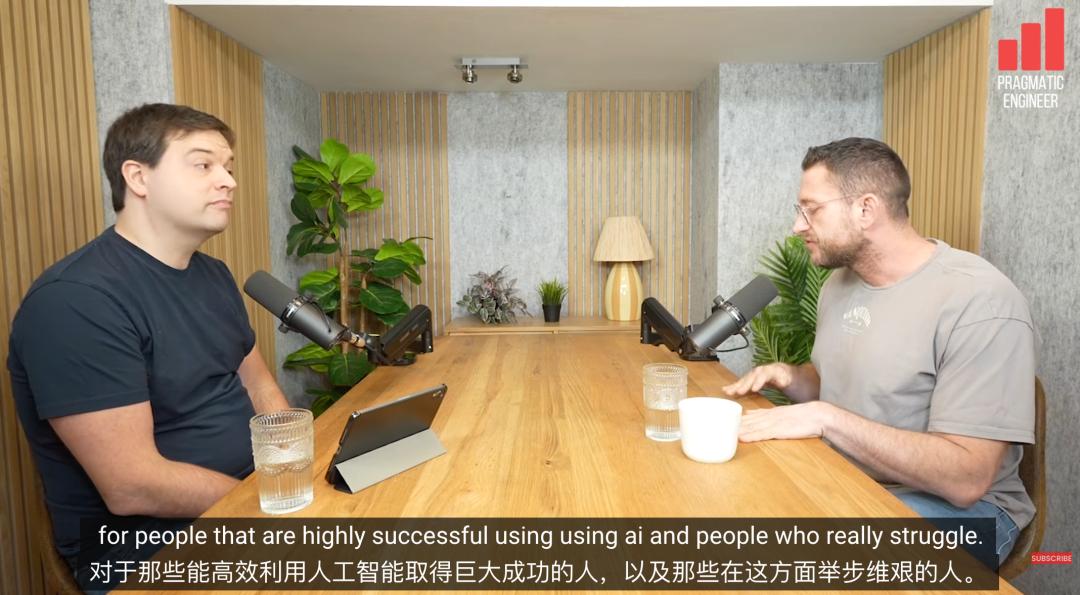
"I prefer using Codex." "Because Codex will quietly read the code for 10 minutes and then work on long - term tasks. Claude Code is too fast and often comes back to ask questions, interrupting my train of thought."
Pull Request is dead, Prompt Request rules
In Peter's workflow, traditional code review is history.
"Pull Request? I now call it Prompt Request."
"When someone sends me a PR, what I want to see more is the prompt that generated this code, not the code itself."
"If someone wants a feature, I'll say: Please write a detailed prompt request. Because then I just need to point it to my agent, input 'build', and it'll handle it."
"If someone sends a PR just to fix a few minor bugs, I'll tell them: Please don't do this. Reviewing this PR takes 10 times as long as if I just let Codex fix it."
ClawdBot: What Siri should be like in the future
What will the future AI super - assistant look like?
Peter's Moltbot (formerly ClawdBot) is his exploration of the "super personal assistant".
ClawdBot was originally just a WhatsApp relay.
"When I was traveling in Morocco, I used WhatsApp to chat with my agent. It gave me directions, told jokes, and even sent messages to my friends on my behalf."
"Once, without thinking, I sent a voice message - but I hadn't even built the voice function."
"Thirty seconds later, it replied to my voice message."
"I asked, 'How did you do that?' It said, 'You sent a file. I checked the header and found it was in OGG format. I used FFmpeg to convert it, found your OpenAI key on your computer, and sent it to the OpenAI server via curl to convert it to text.'"
"My god. It just figured it out on its own."
So, Peter put his agent on the public Discord with full read - write access to his computer.
"This is absolutely crazy. But everyone who has experienced it for a few minutes gets addicted."
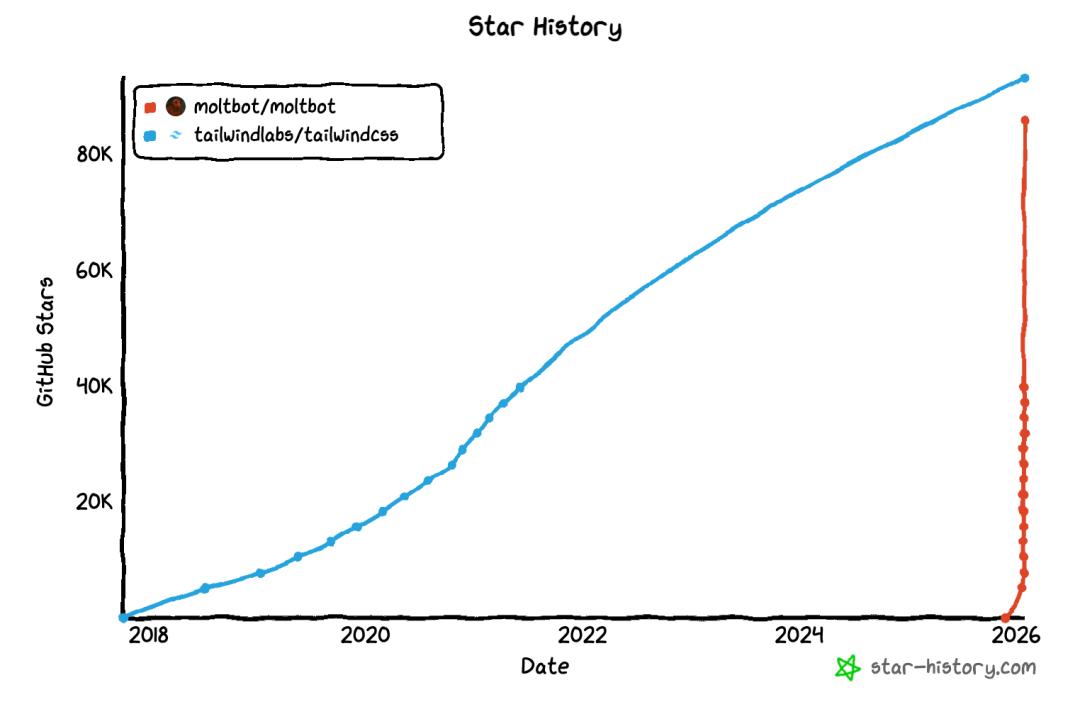
"Within a week, the GitHub stars increased from 100 to 3,300. The Google search volume exceeded the sum of Claude Code and Codex."
Now, the number of stars on the repository has exceeded 80,000! And it's still rising.
It's truly an unprecedented growth rate, and global developers are voting with their feet!
Peter observed an interesting pattern:
Engineers obsessed with algorithmic problems find it difficult to adapt to AI - driven development.
"If you like the excitement of solving problems, like on LeetCode, you may suffer a lot."
"But if you really care about getting the product out and focus on the result rather than the implementation details, you'll thrive."
"Those who have managed teams have learned to let go of perfectionism, which is a key skill for collaborating with AI."
Is software engineering dead?
Peter's answer is: On the contrary.
"I don't care much about code details anymore, but I care a lot about system architecture, technical debt, scalability, and modularity."
"The code can be left to the AI, but system thinking, architectural judgment, and trade - offs - these will always be the core values of human engineers."
They'll only become more important in the AI era.
