With a flurry of official announcements about all-solid-state batteries, the last shortcoming of pure electric vehicles is about to be addressed.
The ultimate form of pure electric vehicles has arrived
For the new energy vehicle industry, it has recently felt like "destiny is on our side".
First, there has been a sudden turn in geopolitical relations. Previously, there were always tariff and policy barriers for new energy vehicles to enter overseas markets. Some overseas markets with strong consumer purchasing power often imposed heavy taxes on or even banned Chinese-made new energy vehicles to protect their domestic automobile industries.
However, recently, regions such as Europe and Canada have started to show goodwill and sincerity, opening their doors to Chinese-made new energy vehicles. In particular, the EU has even actively requested price increases for sales. This has almost instantly removed the noose around the necks of new energy vehicle brands that have been struggling in the highly competitive domestic market.
Of course, some people have raised objections, arguing that in high-latitude regions like Canada, where winters are long and cold, the batteries of Chinese-made new energy vehicles may not perform ideally, so there's no need to be overly optimistic.
Don't be hasty. Here's the second piece of news - on January 22nd, CATL officially announced the release of the "Tianxing II" low-temperature battery for light commercial vehicles.
In addition to being the world's first mass-produced sodium-ion battery in the light commercial vehicle field, the "Tianxing II" has a major feature: it can maintain 90% of its available power in an extremely cold environment of -40°C, can be charged immediately at -30°C, and can be fast-charged from 20% to 80% in 30 minutes at -15°C.
With these targeted features, the "Tianxing II" is a powerful weapon against problems such as range degradation and charging difficulties in extreme winter environments in high-latitude regions.
It's reasonable to guess that CATL's new product launch was timed to coincide with the shift in overseas policies, like making dumplings specifically for the vinegar. The underlying message is an announcement to the world: whether in Northeast China or in Northern Europe and Canada, the last shortcoming of new energy vehicles affected by regional environments has been overcome by us.
To be honest, this is a significant technological breakthrough in the new energy vehicle field, but the market reaction has not been as enthusiastic as expected. The core reason is that around a week before and after the release of the "Tianxing II", there were rumors in the market that Huawei's solid-state battery was about to be launched, with the related data being astonishing:
A full charge can provide a range of 3000 kilometers. Five minutes of charging can replenish 800 kilometers of range, and it can be charged to 80% in 10 minutes.
Regardless of whether it's true or not, once this news came out, people started to envision the ultimate form of new energy vehicles.
A.
Looking back at the development path of batteries, you'll understand why the market is so sensitive to such news.
In the early days of the new energy vehicle industry, Tesla dominated the battery technology with the "ternary lithium" route. Compared with early lead-acid batteries, ternary lithium batteries have a higher energy density and stronger range under the same volume, generally exceeding 700 kilometers and even reaching over 1000 kilometers in extreme cases. However, the disadvantages are well-known: they have strict requirements for thermal management, high costs, and are prone to catching fire. Most of the news reports in previous years were about these issues.
Later, when Chinese new energy vehicle brands boomed, BYD and CATL chose another technology route, "lithium iron phosphate". Compared with ternary lithium batteries, the biggest advantages of lithium iron phosphate batteries are low cost, high safety, and long lifespan. However, due to technological and material limitations, the range of lithium iron phosphate batteries in small pure electric commercial vehicles can reach a maximum of about 800 kilometers under normal conditions.
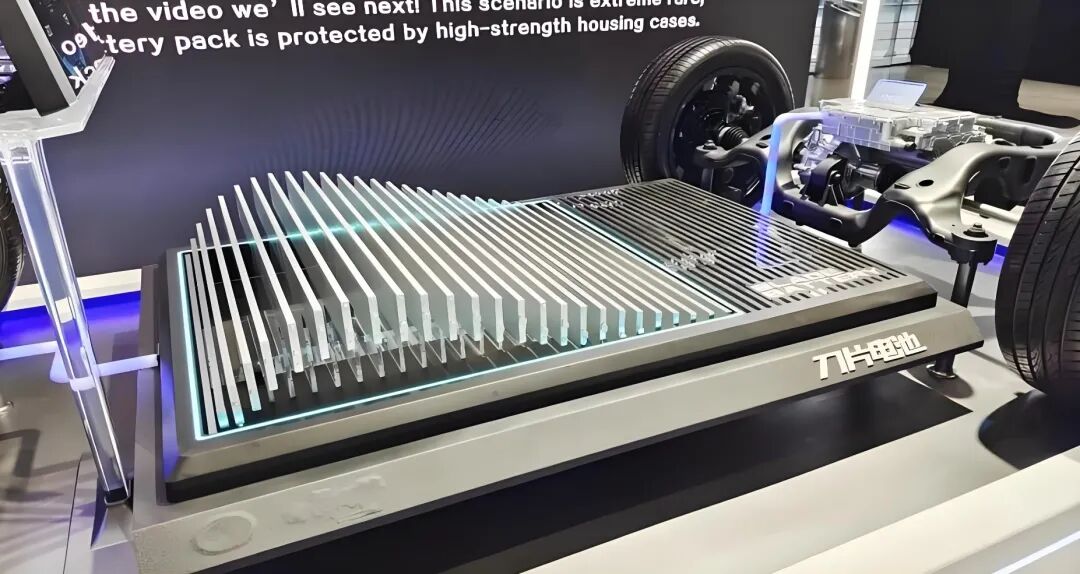
However, the lithium iron phosphate technology route is highly suitable for China's national conditions, with features such as low cost, easy price competition, independent control of key raw materials, no patent barriers for core technologies, and a sufficient range ceiling to meet daily needs. In recent years, we've often seen leading companies like BYD, CATL, EVE Energy, Guoxuan High-Tech, and Sunwoda constantly advancing in lithium iron phosphate technology, turning a rather mediocre technology route into a dominant one.
In particular, CATL announced the full mass production of its fifth-generation lithium iron phosphate battery three months ago, with a range approaching 1200 kilometers. Compared with the widely used ternary lithium technology overseas, Chinese new energy vehicles have lower costs, no brand premium, better intelligent in-vehicle interaction, and their range is not inferior and even slightly ahead. So, how can overseas new energy vehicles compete?
This is the fundamental reason why many established imported car brands have been defeated by Chinese brands in the new energy field.
B.
However, no matter how much the lithium iron phosphate technology is improved, there are still limits. The most obvious is that at a low temperature of -20°C, the battery capacity retention rate is generally below 70%, and the charging speed is extremely slow. Therefore, in high-latitude and cold regions, fuel vehicles still hold a firm position. Moreover, the range and charging of pure electric vehicles still cannot match the convenience of fuel vehicles, which has always been a concern for consumers.
More importantly, when the whole world is betting on lithium batteries, lithium mines have naturally become important strategic resources. Between 2020 and 2024, the price of lithium carbonate soared from $6,000 per ton to $83,000 per ton, creating a typical seller's market. The entire upstream and downstream of the new energy vehicle industry urgently needs a new technology route, even if it's just an alternative, rather than relying entirely on lithium.
Sodium-ion batteries, such as the aforementioned "Tianxing II", were born in this context. At the January 22nd launch event, the CTO of CATL said with confidence that the development pattern of sodium-ion batteries will follow that of lithium batteries, but based on the accumulated experience and technology, the development curve and slope of sodium-ion batteries will be steeper. In the next three years, CATL's sodium-ion batteries can achieve an energy density comparable to today's lithium iron phosphate batteries, and sodium-ion batteries will be more cost-effective than lithium batteries.
However, sodium-ion batteries can only solve the problems in extreme environments and still cannot enable consumers to achieve complete energy freedom. The entire industry urgently needs a new technology route that offers high range, high safety, controllable costs, stable performance, and supports fast charging.
Solid-state batteries.
All industry players have long reached a consensus: the gem in the industrial crown in the next decade will be solid-state batteries. They will be the "smartphone moment" in the energy field, a revolutionary change that will completely transform the status quo. More importantly, all solid-state batteries in the world are still in the laboratory stage, and there is no significant technological gap yet. This is the last chance for all industry players - either make a breakthrough first and reap huge rewards, or be left behind and depend on others.
C.
How powerful are solid-state batteries? Let's first look at a simple data comparison.
Taking the higher-performance ternary lithium battery as an example, its energy density is 300 Wh per kilogram. However, the simplest sulfide solid-state battery, which is still in the laboratory, has an energy density of 720 Wh per kilogram, more than doubling the density. That means that with a solid-state battery of the same specifications, a small commercial vehicle can easily achieve a range of over 2000 kilometers.
In terms of charging, limited by the characteristics of lithium batteries, even the fastest supercharger can only charge from 5% to 80% in 15 minutes. However, sulfide solid-state batteries have already achieved the ultimate performance of being fully charged in 5 minutes, with a waiting time comparable to refueling. Moreover, sulfide solid-state batteries have no risk of fire, leakage, or thermal runaway, with a safety coefficient higher than that of a fuel tank.
In terms of lifespan, ternary lithium batteries generally show significant energy degradation after about 1500 charge-discharge cycles. In contrast, solid-state batteries can achieve about 3000 cycles, so consumers basically don't need to worry about battery replacement.
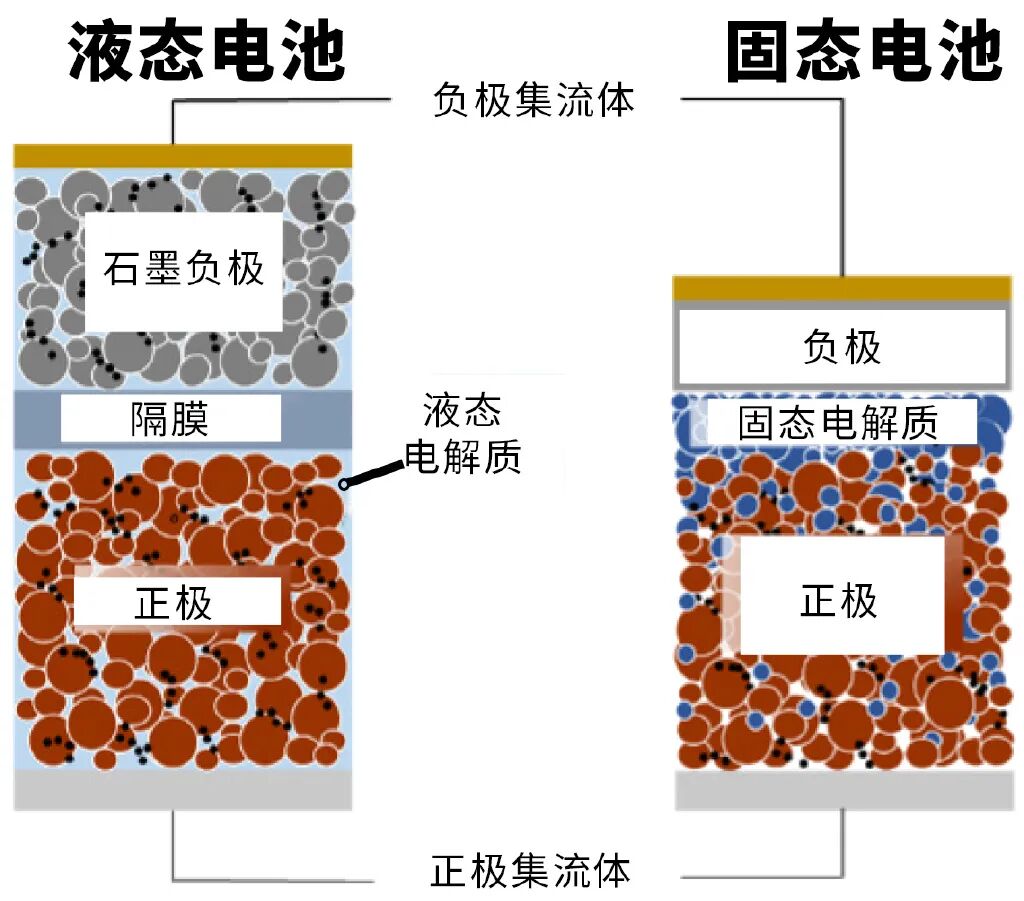
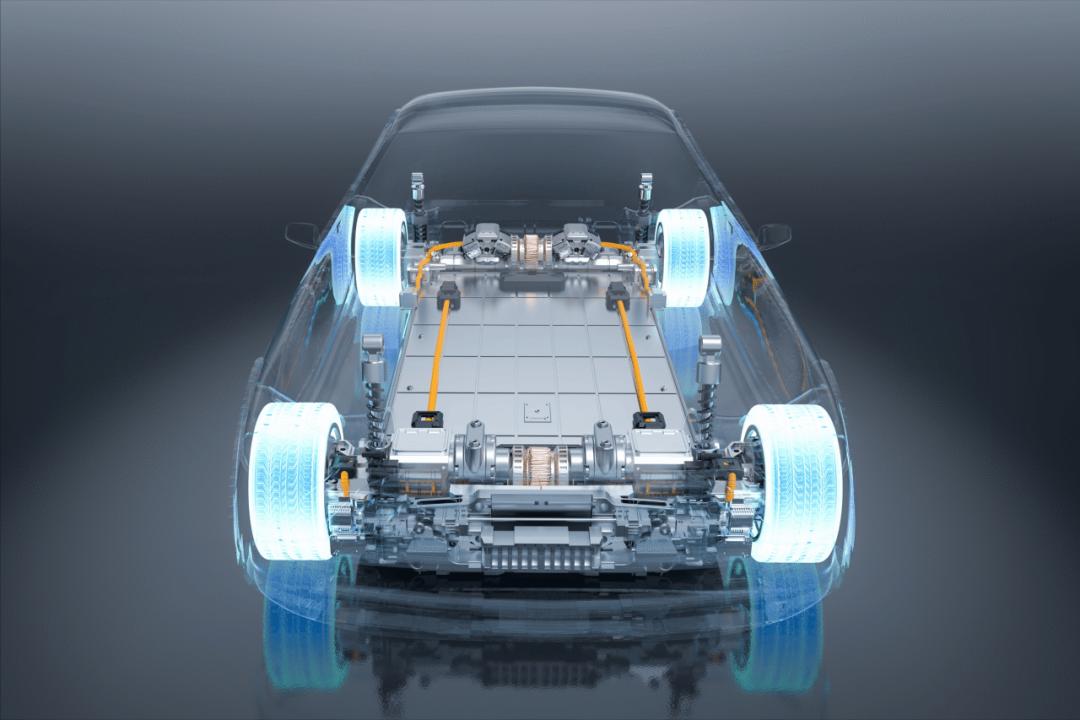
A range generally exceeding 2000 kilometers, 5-minute energy replenishment, no risks, and a service life of about 15 years are the ultimate form of pure electric vehicles. Moreover, the high energy density can also power various smart devices, truly realizing the "full-scenario mobile home" that Chinese new energy vehicle brands have been longing for.
Moreover, if solid-state batteries can be miniaturized and integrated into mobile phones, laptops, or other electrical appliances, the product experience will be exponentially improved. Let your imagination run wild. If power-hungry humanoid robots, drones, and pure electric aircraft can all be equipped with more mature and high-performance solid-state batteries in the future, many scenes from science fiction movies will become a reality.
D.
Driven by the huge market potential and profits, everyone, whether they are vehicle manufacturers or battery companies, both at home and abroad, has gone crazy.
For vehicle manufacturers, battery costs account for about 40% of the total vehicle cost. That means for a pure electric vehicle priced at 200,000 yuan, the manufacturer has to spend 80,000 yuan on the battery, which not only limits the product's potential but also squeezes the profit margin. Once a company develops solid-state batteries first, it can launch a price war without hesitation and crush its competitors. It's worth noting that the reason BYD dared to start a price war in 2024 was that it could reduce costs by about 15% by using its own batteries.
For battery companies, the solid-state battery route is the "Holy Grail" that they cannot afford to lose. Currently, Chinese companies dominate the global liquid battery market, with CATL and BYD alone accounting for 70% of the global power battery share. If they lose the market, it will not only be unacceptable for the companies but will also seriously threaten the country's strategic, security, and economic interests.
For overseas established vehicle and battery companies that have been pushed to the brink by Chinese companies, solid-state batteries will be their last chance to turn the tables. Currently, Japanese and South Korean vehicle and battery companies have clearly gone crazy: Toyota holds more than 2100 patents for solid-state batteries and plans to launch its first vehicle equipped with all-solid-state batteries in 2027. Samsung SDI is also aiming for mass production in 2027. Mercedes-Benz and BMW have successively started road tests of their all-solid-state battery test vehicles.
Whether it's just talk or they're really serious, we'll have to wait and see.
E.
So, the question is, how far is the large-scale mass production and commercialization of solid-state batteries?
According to the current industry view, although solid-state batteries perform perfectly in the laboratory, there are still three issues to be resolved for large-scale mass production.
The first is the cost issue. The raw materials for solid-state batteries, especially those in the sulfide route, such as germanium, phosphorus, and sulfur, have always been expensive. The preparation process is complex, and the manufacturing environment requirements are strict. The initial cost may be about ten times that of existing batteries, which is difficult for consumers who have been "spoiled" by lithium batteries to accept.
The second is the fast-charging issue. In the laboratory, a single cell can be fully charged in 5 minutes, but when multiple cells are connected in series, there will be significant transmission losses. As a result, the time required to fully charge the currently tested solid-state battery packs is still similar to that of lithium iron phosphate batteries, with no significant difference.
The third is that the manufacturing process of solid-state batteries is completely different from that of previous liquid lithium batteries. That means the production lines and industrial chains that have received trillions of yuan in investment will become useless and completely scrapped. These heavy losses are beyond what companies can bear.
It's hopeless to overcome these problems in the short term. Many companies have started to take a detour by choosing the "semi-solid" route - essentially continuing to improve liquid batteries, which may have better results but no fundamental improvement. Currently, many vehicle and battery companies have missed their deadlines and are no longer promoting their products as "all-solid-state batteries".
According to the prediction of the Society of Automotive Engineers of China, all-solid-state batteries are expected to be technically available by 2030. And the academician Ouyang Minggao of the Chinese Academy of Sciences emphasized that 2030 is only for technological implementation, not commercial implementation. It is expected that large-scale commercial implementation of high-density all-solid-state batteries will not happen until 2035.
This article is from the WeChat official account "Needle Probe STI", author: Yue Qing. Republished by 36Kr with permission.