A cryogenic technology company has completed nearly 500 million yuan in financing and has received hundreds of millions of yuan in orders from customers in fields such as nuclear fusion | Exclusive report by Yingke
Author | Huang Nan
Editor | Yuan Silai
Yingke has learned that Henan Zhongke Qingneng Technology Co., Ltd. (hereinafter referred to as "Zhongke Qingneng") has completed a nearly 500 million yuan Pre-A++ round of financing. We have summarized the information of this round of financing and several highlights of the company:
Financing Amount and Investment Institutions
Financing Round: Pre-A++ Round
Financing Scale: Nearly 500 million yuan
Investors: CDH Baifu led the investment, jointly with NIO Capital, Guoxin Fund, and Kunpeng Capital. Many well-known investment institutions such as Hetang Capital, Xiaoyu Capital, Henan Assets, Feitu Venture Capital, and West Lake Venture Capital also participated. The original shareholders, Rongtuo Capital and CGN Capital, continued to increase their investment. Yundao Capital served as the financial advisor for this round of financing.
Use of Funds: The funds will be mainly used for the R & D and engineering delivery of larger-scale liquid hydrogen systems, the largest domestic nuclear fusion refrigeration system, key refrigeration systems for multiple domestic large scientific facilities, and the third-generation quantum low-temperature sensing system.
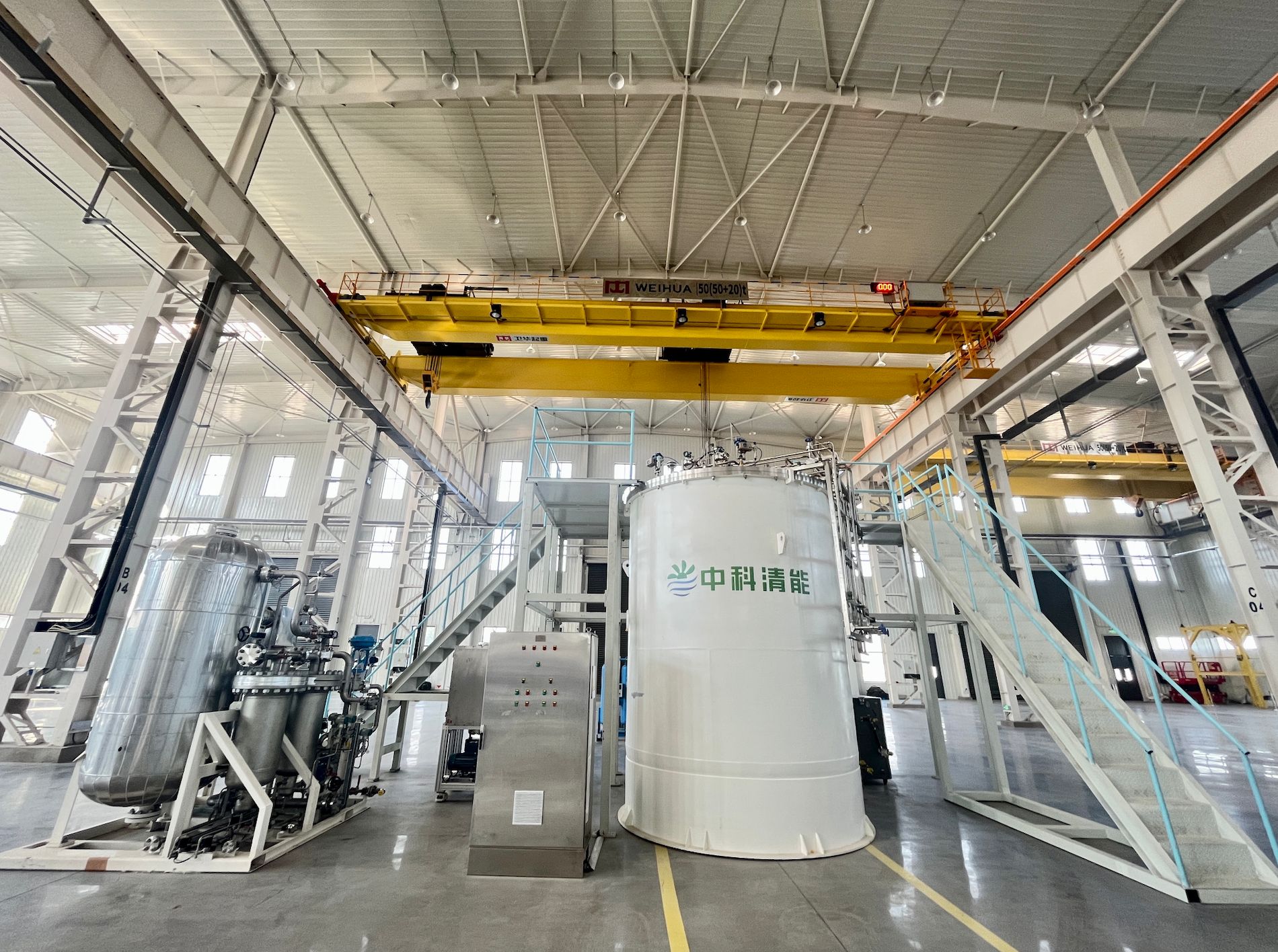
The first domestic liquid hydrogen equipment in the domestic aerospace field (Source: Enterprise)
Basic Information of the Company
Establishment Time: June 2022
Registered Address: Gongyi City, Henan Province
Enterprise Positioning: Zhongke Qingneng was jointly funded by CGN Capital Holdings Co., Ltd. and Henan Aerospace Industry Fund, and jointly initiated and established with industrial chain partners such as Hefei Comprehensive National Science Center Energy Research Institute and Shanghai Ke'an Chuangneng Technology Co., Ltd.
The company focuses on cryogenic technology below 20K. It is a market-oriented hard technology company dedicated to the R & D, manufacturing, and industrial chain operation of equipment in the low-temperature field, such as hydrogen liquefaction, helium liquefaction, and cryogenic sensing systems. It provides core equipment and low-temperature technology services for frontier fields such as controllable nuclear fusion, hydrogen energy, aerospace, quantum computing, and civil superconductivity. It is committed to continuously tackling the "bottleneck" technological problems in key links, improving the economy of the future energy system, and contributing to the construction of national energy security.
Technological Highlights: By integrating R & D, manufacturing, and scenario implementation capabilities, Zhongke Qingneng has built an independently controllable cryogenic technology system, with core barriers in aspects such as full-chain localization, multi-scenario reuse, and high-performance breakthroughs.
In the field of key cryogenic equipment, the company has achieved multiple core breakthroughs. Its independently developed 3kW@4.5K helium refrigerator is currently the helium refrigeration system with the largest refrigeration power in operation in the domestic nuclear fusion field and has been applied to the key system of the CRAFT large scientific facility. The delivered 1-ton-per-day hydrogen liquefaction equipment is the first domestic liquid hydrogen equipment in the domestic aerospace field, which has assisted the launch of the "Long March 8" rocket and maintained the longest continuous operation record in China. In addition, the company has successfully rolled out 5-ton-per-day hydrogen liquefaction equipment and completed the signing. The relevant liquid hydrogen plant is expected to be put into operation in September 2026 and will become China's first commercial 5-ton-per-day liquid hydrogen plant.
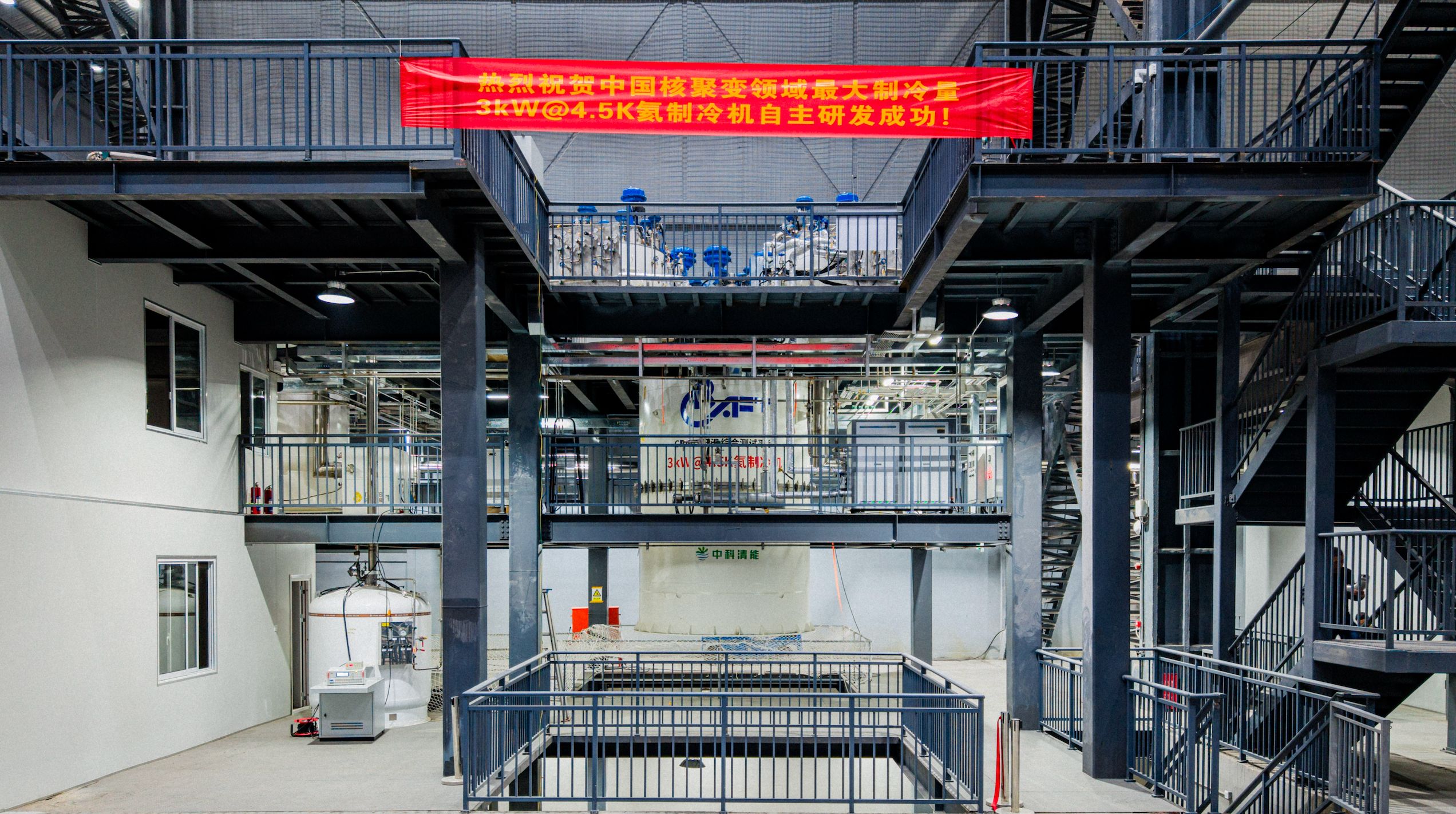
The helium refrigeration system with the largest refrigeration power in operation in the domestic nuclear fusion field (Source: Enterprise)
Yingke has learned that Zhongke Qingneng has established a standardized R & D, manufacturing, and delivery system covering the temperature range from 20K to near absolute zero, achieving cross-scenario application migration of cryogenic technology in multiple fields such as hydrogen energy, nuclear fusion, quantum information, and aerospace, and completing full-chain in-depth localization from core components to the whole machine system, from hardware to software.
Market Size
Reports such as "Market Analysis of China's Cryogenic Equipment Industry in 2025" show that the global cryogenic equipment market size reached 25 billion US dollars in 2024, and the overall market size of China's low-temperature equipment industry reached 48.76 billion yuan, a year-on-year increase of 8.3%. Driven by the "dual carbon" strategy and medical infrastructure investment, it is expected to reach 52.98 billion yuan in 2025 and is expected to exceed 80 billion yuan in 2030, with the compound annual growth rate remaining at 8% - 9% in the long term.
Team Background
The core technology system of the team's background comes from the years of accumulation of Hefei Energy Institute in the field of magnetic confinement fusion cryogenics. CEO Pan Weiwei once served as the director of the CGN Research Institute, with a solid scientific research foundation and rich management experience. Many core members have in - depth experience in cryogenic system design, project delivery, and long - term operation and maintenance.
CEO's Thoughts
Yingke: Zhongke Qingneng takes cryogenic technology as the core direction. Is it based on the judgment of specific industrial trends or the logic of the technology itself?
Pan Weiwei: At the beginning of our entrepreneurship, we clearly chose the common technology track of "cryogenic technology below 20K" without being limited to a specific industry. Whether it is the extremely low - temperature environment for quantum computing or the superconducting magnets of medical accelerators, the underlying layer deeply depends on the low - temperature environment as support, and it is necessary to solve the problems of obtaining, maintaining, and controlling the extremely low temperature.
Cryogenic technology is a bottleneck link in specific industries. In essence, it is an infrastructure - type technology. Many top - level technologies are challenging physical limits, such as the highest temperature, the lowest temperature, and the strongest magnetic field. The "lowest temperature" we are tackling essentially represents a low - entropy state, which is often a necessary condition in basic scientific research and high - precision experiments and plays an irreplaceable role.
Almost all fields, from large - scale nuclear fusion scientific facilities to quantum computing prototypes, from space exploration to cutting - edge medical imaging, cannot do without an extremely low - temperature environment. Therefore, when we master the core ability of cryogenic technology, the scenarios it can serve will naturally continue to expand. The industrial logic is the result after the technology is implemented for us, not the starting point.
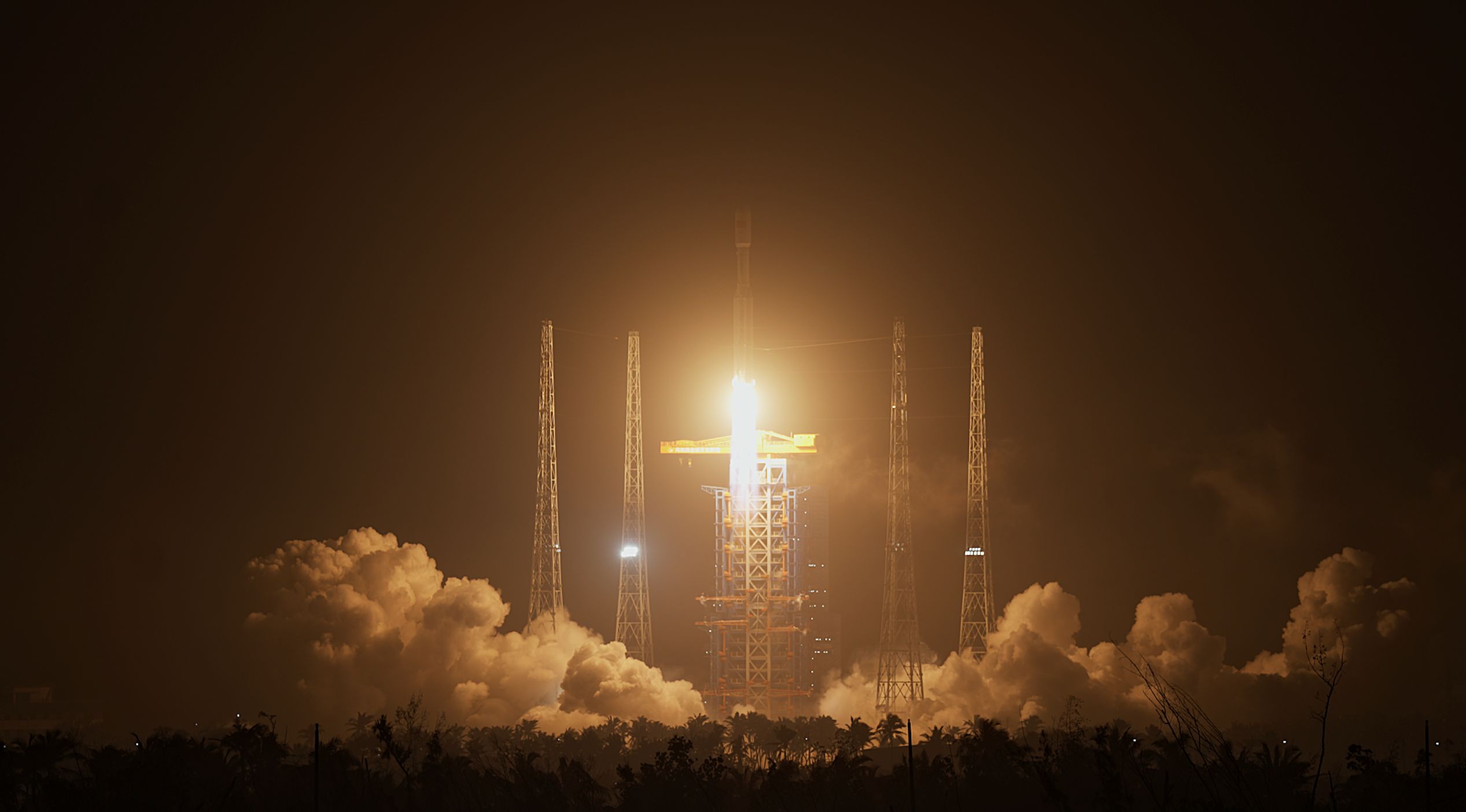
Its products have been applied to the launch of the "Long March 8" rocket (Source: Enterprise)
Yingke: Taking specific tracks as an example, what key problems has Zhongke Qingneng's low - temperature technology solved?
Pan Weiwei: Taking quantum computing as an example, the current mainstream superconducting quantum chips must operate in an extremely low - temperature environment close to absolute zero (about minus 273 degrees Celsius). The core reason is that quantum bits are extremely sensitive to external disturbances. It is necessary to use extremely low temperatures to suppress thermal noise and make microscopic particles tend to be "stationary", thereby ensuring the coherence and operation accuracy of the quantum state.
This is actually a problem of constructing and controlling an extremely low - temperature environment, with extremely high technical thresholds. Previously, only a few US companies in the world could achieve this. Based on its technological accumulation in the cryogenic field, Zhongke Qingneng is developing an extremely low - temperature sensing and refrigeration system for quantum computing, aiming to provide stable and reliable low - temperature environment support for domestic superconducting quantum computers, which is an indispensable part of realizing the autonomy of quantum computing.
In the field of high - end medical equipment, such as proton/heavy ion therapy systems, the core is the particle accelerator. Traditional room - temperature accelerators are bulky and energy - consuming, while superconducting accelerators use low - temperature superconducting materials to achieve higher particle energy with a smaller size and lower energy consumption under a strong magnetic field. Among them, the low - temperature system is the key to maintaining the superconducting state.
The cryogenic solutions we provide can ensure the stable operation of the accelerator magnet in the superconducting state, thereby promoting the development of medical equipment towards a more compact, efficient, and accurate direction. This is also a challenge to the physical limit. How to generate and maintain an extremely strong magnetic field, and low temperature is the foundation for achieving this goal.
Yingke: In addition to the currently implemented directions, which fields may become new opportunities for Zhongke Qingneng in the next two years?
Pan Weiwei: To be honest, most of our company's key achievements in the past few years are not the result of actively "entering" the tracks. We have always focused on the underlying technology of challenging physical limits - especially the realization and maintenance of the lowest temperature. Many orders came from customers who actively approached us and told us that "without this low - temperature system, our equipment or experiments cannot operate", and then we realized that there was such a clear and strong demand in this field.
This actually confirms our original judgment. In the process of pursuing technological innovation, extremely low temperature is often a common infrastructure.
The main line of national technological innovation is to constantly challenge physical limits. The low - noise, low - entropy state represented by the "lowest temperature" is the basic condition for many frontier experiments and high - end equipment. According to our observation, more than 95% of the large scientific facilities newly built by the country in the past decade require cryogenic systems as key support. This proportion itself gives us great confidence and courage.
We believe that as long as the country continues to invest in fields such as large scientific facilities, quantum information, advanced energy, and precision measurement, new low - temperature demands will surely emerge. Maybe next year, there will be a new direction that we haven't fully realized today, telling us that "we also need Zhongke Qingneng's low - temperature system here." And all we can do is to maintain technological sensitivity and engineering resilience and respond to these real demands from the front - line of innovation at any time.