Two new Tesla models are exposed: The affordable Model 3 is launched in the Chinese market. Does it aim to outperform domestic electric vehicles by cutting prices?
After Elon Musk revealed that Full Self - Driving (FSD) would soon be approved in China, two new models - the budget version of Model 3 and Model Y L+ - were successively exposed, making Tesla once again the focus of public opinion.
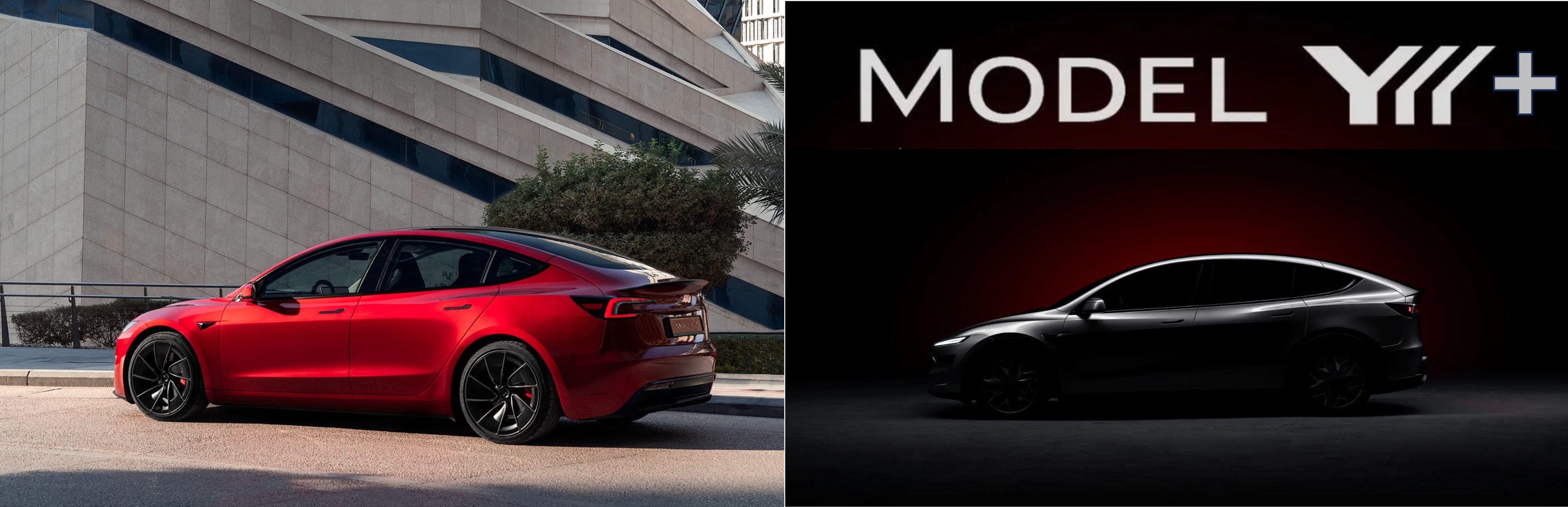
Image source: X
In the impression of Dianchetong, Tesla likes to "stir things up" at the beginning of the year. It's not just about price adjustments; many significant model launches are also scheduled for January. For example, the Model Y was launched in 2021, the Cybertruck started its China market tour in January 2024, and the new Model Y was quietly launched in January 2025.
Looking back at the two newly exposed models, the budget version of Model 3 has been launched in many Asian markets such as Thailand, the Philippines, and South Korea. The price of the Thai version is about 254,800 RMB, the price in the Philippine market is 217,000 RMB, and the model in the South Korean market is the cheapest, equivalent to about 204,000 RMB. Moreover, the local market also offers tens of thousands of RMB in preferential subsidies.
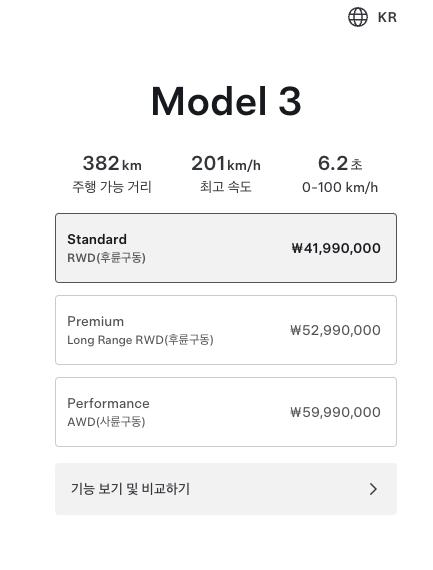
Screenshot: Tesla's South Korean official website
The Model Y L+ is not an extended version of the Model Y L but a long - range version. Overseas blogger @Ming revealed that the new car will be equipped with an 88kWh battery pack, 6kWh higher than the Model Y L currently on sale in China. The current Model Y L has a pure - electric range of 751km. Although the 6kWh increase may not seem much, it is expected to extend the pure - electric range of the Model Y L+ to about 800km.
However, when Dianchetong calmly analyzed these two new models, it was found that they may not be as effective as expected and may even have some problems that cannot be ignored.
Can Tesla still crush domestic electric vehicles without solving the core pain points?
Tesla doesn't have many cards in hand, only the Model 3 and Model Y. However, this doesn't prevent it from having a high popularity in the domestic market. The core reasons can be summarized into two points: a strong brand and aggressive pricing.
In the early days, Tesla successfully established itself as a synonym for "technological pioneer" with its leading "three - electric" technology and the legend of intelligent driving. Even though the "full - version" FSD hasn't been used, this brand halo still works. There's no need to mention the price. As long as there is room to reduce costs, the official price will drop directly. Coupled with the temptation of interest - free or low - interest offers, even if old car owners may feel a bit disappointed, those who want to buy a car can't help but say it's a great deal.
Obviously, Tesla is trying to continue its past success with these two new models. The budget version of Model 3 aims to replicate the myth of "trading price for volume", while the Model Y L+ tries to consolidate its position with the traditional strength of "range". After the exposure of these two new models, many friends regarded this as a series of aggressive moves by Tesla in response to the Chinese market. Some even thought that once these models are introduced into China, the living space of domestic new - energy vehicles in the same price range will be severely squeezed.
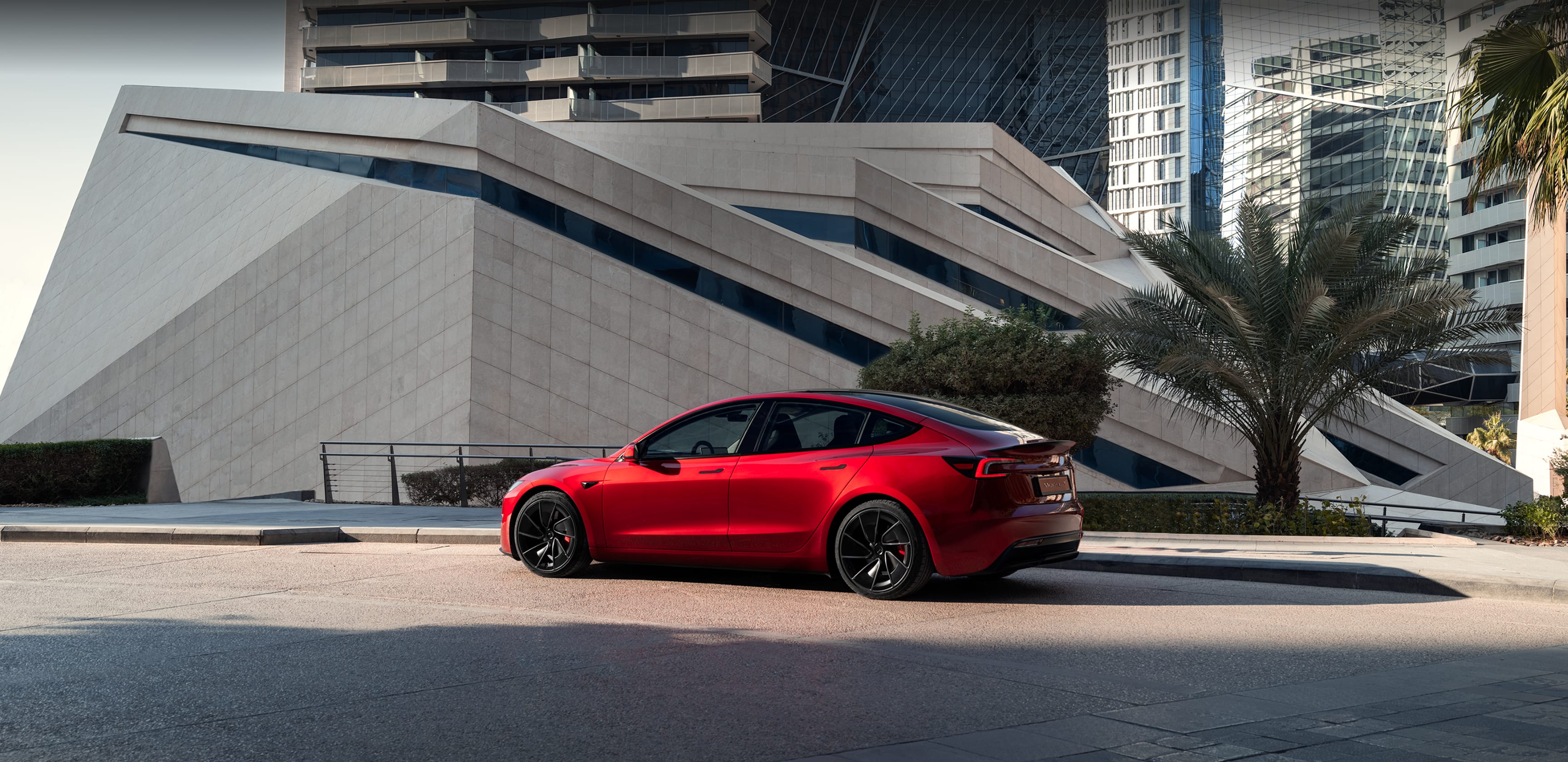
Image source: Tesla official
But is this really the case?
Let's first look at the budget version of Model 3. Although the price of the new car is tens of thousands of RMB cheaper, the cost is a significant reduction in configuration.
From the information published on the South Korean market's official website, we can intuitively see the extent of the configuration reduction of the budget version of Model 3. In order to compress production costs and lower the entry - level price, the vehicle has comprehensively streamlined its comfort features. The ambient lighting, glass sunroof, and rear - seat control screen have all been removed. The interior materials and functional configurations have also been greatly reduced. The seat material has been changed from leather to fabric, the electric steering wheel adjustment has been downgraded to manual adjustment, and the in - car audio system has been reduced from 9 speakers to 7 speakers.
It's not just the reduction in configuration. The vehicle's core performance and range have also declined simultaneously. The range has decreased from 583km to 382km, and the 0 - 100km/h acceleration time is a full second slower than the original model. The overall product strength has significantly regressed.
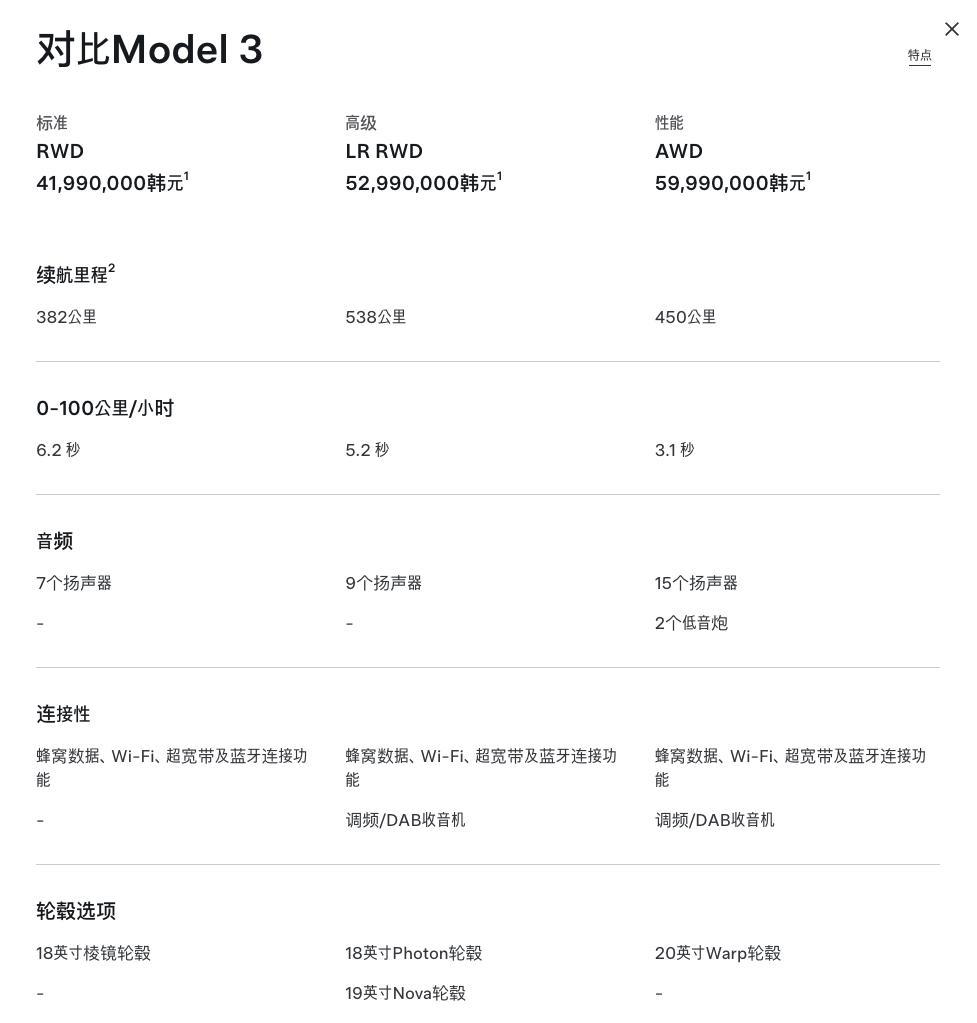
Screenshot: Tesla's South Korean official website