From "Siri's Dilemma" to "Jarvis in the Phone": The Product Mandatory Course Taught by Clawdbot
The emergence of Clawdbot has completely overturned people's perception of AI assistants. This open - source project not only breaks the application isolation, reconstructs the interaction paradigm, but also realizes a qualitative change from "intelligent response" to "autonomous execution". With its "local - first" architecture, it lays a solid foundation of trust and outlines the four core characteristics of an ideal AI assistant for users.
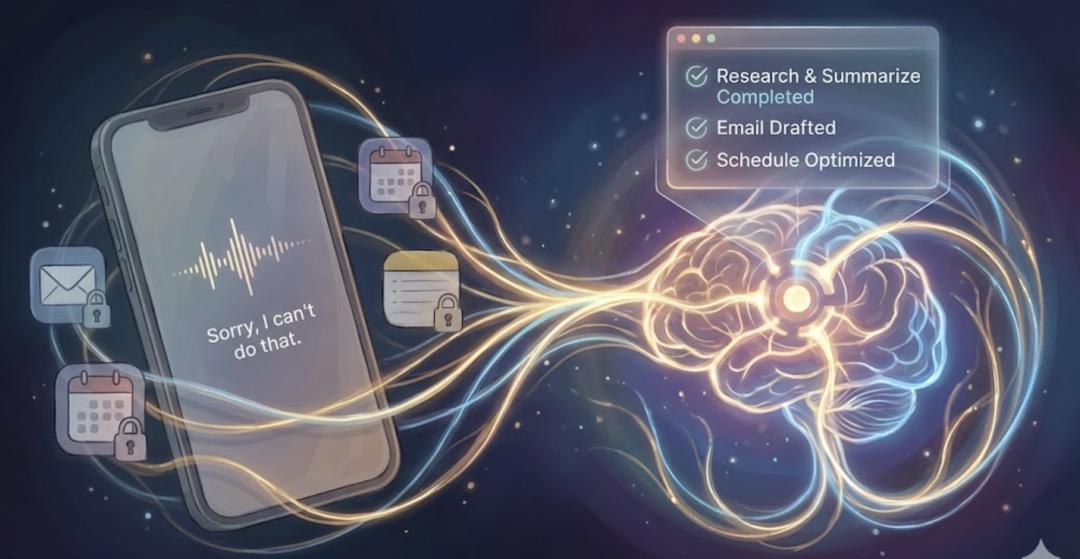
Our generation has been immersed in the vision of artificial intelligence presented in science - fiction movies. Who hasn't longed for a partner like Jarvis, who is intelligent and considerate and can manage life and work in an orderly manner? However, in reality, for more than a decade, when we call out "Hey, Siri" to our phones, most of the responses we get are "An alarm has been set for you" or "This operation cannot be completed".
Over the long term, Siri has gradually solidified into a single - function voice remote control. For years, it has been limited to executing isolated and simple instructions. Users' expectations for it have downgraded from an "all - round partner" to a "convenient timer".
Just when the industry was getting numb to the concept of "personal AI assistants", Clawdbot exploded in the technology circle like a depth charge. This open - source project, hailed as a "private AI employee", has allowed industry insiders to truly see the prototype of Jarvis and rekindled new expectations for personal AI assistants.
This phenomenon is highly worthy of discussion: Why can a "geek toy" that is cumbersome to deploy, requires operating the command line, and manual key configuration drive well - informed industry practitioners crazy, and even make them exclaim, "This is what Siri should have been like"? The product logic hidden behind it may reveal the essence of a "good product" that tech giants have ignored, and it is worth in - depth analysis by every product person.
Targeting Core Pain Points
——Breaking the "Ecological Fragmentation" Instead of Function Stacking
The core success logic of Clawdbot lies in breaking out of the function arms race and accurately capturing the core pain points of office workers.
Most office workers have had the following experience: After checking emails in the morning and receiving tasks, they need to open Notion to create a new note for recording, switch to Things to create a to - do reminder, then jump to multiple websites to collect information and copy links to the note. In the middle, if they are @ - mentioned in the team group, they need to switch to WeChat to reply. By the time they finish handling the messages, they have already forgotten the progress of information collection.
This fragmented digital life caused by isolated apps is the current norm. Each app pursues its own ecological closed - loop, but cuts the user's workflow into pieces. Users have become "couriers" who are exhausted from moving data between information islands, and their energy is dissipated in ineffective switching, copying, and pasting.
The traditional product solutions often involve creating "super apps" that attempt to integrate all functions. However, they can never cover all user habits and are difficult to fundamentally solve the pain points. Clawdbot has opened up a new path: instead of creating a new island, it becomes a "super gateway" and a "central router" that connects all tools.
Its product philosophy is clear: it does not replace existing note - taking or chat tools. Its core value is to become the central hub of all digital tools and information. Users don't need to care about where the data is stored or what the task - recording carrier is. They only need to issue instructions in natural language, and Clawdbot will handle all the remaining routing and execution work.
"Using dialogue as a unified interface to integrate all services", behind this simple concept is a deep understanding of users' pain points. It confirms that the core value of the next - generation AI products does not lie in model parameters and IQ, but in breaking down application barriers and providing a seamless and coherent scenario - based experience. This understanding is more instructive for product design than simply stacking functions.
It prompts us to rethink the essence of "intelligence": what users expect is not an independent application with more functions, but a "commander" that can understand their intentions and mobilize existing tools to complete tasks. This is the real efficiency revolution, rather than adding new burdens to the existing constraints.
Reconstructing the Interaction Paradigm
——"Messages as the Interface", Achieving Boundless Access and Zero Learning Cost
In addition to its precise product positioning, Clawdbot's interaction design is also subversive, reshaping the interaction logic of AI assistants.
Traditional intelligent assistants, whether on mobile devices or smart speakers, require specific wake - up actions, such as calling out the name or long - pressing a button. This sense of ritual creates an invisible barrier between users and assistants, disrupting the continuity of the workflow.
Clawdbot's design completely breaks this limitation: there are no icons, no independent app, and no fixed interface. It only exists in the form of a "contact" in chat software. When users summon it, it is as natural as sending a message to a friend. They can issue instructions by typing or sending voice messages, fully integrating into the existing communication habits.
This design has achieved two key breakthroughs, reconstructing the underlying logic of the interaction experience.
Firstly, it enables "seamless cross - platform activation". As high - frequency tools, chat software is widely available on all devices such as mobile phones, computers, tablets, and smartwatches, which means the AI assistant can be accessed across devices without boundaries. There is no need to install multi - platform versions. Relying on the most familiar communication tools, this sense of companionship is difficult for independent apps to achieve.
Secondly, it has "absolutely zero learning cost". Humans have spent decades getting used to operations such as clicking, dragging, and zooming on graphical interfaces, while language communication is an innate instinct. Clawdbot returns the interaction to the most primitive and natural way of communication. Users don't need to learn any new operation logic and can use it based on their daily communication habits, completely eliminating the cost of tool adaptation.
This design conforms to the ultimate ideal of product design: the best design is "no design", making users unaware of the existence of the tool. The "intelligence" of an intelligent assistant should not be reflected in a cool interface and complex interaction, but in actively adapting to human habits. It should blend into the existing workflow like water, rather than forcing users to adapt to its own logic.
Compared with the wake - up threshold, complex logic, and workflow interruption of traditional voice assistants, Clawdbot's concept of "invisible service" truly interprets the connotation of "intelligence". It is no longer a tool that needs to be actively "used", but a partner that integrates into life and stands by at any time, giving a profound lesson in AI interaction design.
Redefining the Boundaries of Capability
——A Qualitative Change from "Intelligent Response" to "Autonomous Execution"
If the first two aspects focus on product philosophy and interaction concepts, the third aspect demonstrates the core capability gap of Clawdbot: it is not only an "intelligent mouth" that can give accurate responses, but also an "executing hand and foot" with the ability to take action, achieving a leap from "suggestion" to "action".
Traditional AI is essentially a "suggestor". When users ask about file - organizing methods, it can only provide step - by - step guides or links, and users need to manually understand and execute them. In contrast, Clawdbot is a pure "executor". After users issue an instruction like "Classify desktop screenshots by creation date into the 'Screenshot Backup' folder", the desktop can be organized without manual operation.
The core support for this qualitative change is the "gateway" architecture and the rich "skill" library mentioned earlier. By connecting to the operating system and invoking various software interfaces, Clawdbot realizes a closed - loop of "thinking - acting", translating AI capabilities from virtual responses into actual operations. This ability is fully demonstrated in multiple scenarios.
Active Agency: A Role Transformation from "Users Seeking AI" to "AI Seeking Users"
Traditional assistants are always in a passive response state and remain silent without user instructions. Clawdbot endows itself with the ability to work actively through a "heartbeat mechanism": it can be set to check emails every hour and push reminders for important emails, grab industry headlines at 8 a.m. every day to generate briefings, and monitor the schedule and push materials and reminders 15 minutes before a meeting.
This transformation from "passive response" to "active service" allows it to evolve from a tool to a real "assistant".
Closed - Loop Execution of Complex Tasks: Having "Project - Level" Execution Ability
Real - life cases shared in the community confirm its powerful task - handling ability:
Some users have asked Clawdbot to research the parameters, reviews, and price fluctuations of alternative car models, generate comparison tables, and even authorize it to negotiate with dealers in their own tone, and finally summarize the optimal quotation plan;
Other users rely on it to manage their tea business, achieving full - process automation of order processing, inventory management, shipping arrangements, and customer feedback follow - up. This closed - loop execution ability for complex projects is a core advantage that previous consumer - level AI products have never had.
Persistent Memory: Building the Foundation for "Context - Aware" Collaboration
Persistent memory is the key ability for Clawdbot to build trust.
The conversations of traditional AI assistants are mostly one - time interactions without context continuity. When communicating again, users need to explain the background again. Clawdbot stores all conversations and task records in local files, forming long - term memory. It can understand the user's project background, work habits, and personal preferences like a senior colleague. When users mention "Send the last project report to the boss", it can accurately locate the corresponding file. This context - awareness ability is the core prerequisite for efficient collaboration and trust - building.
It can be seen that when an AI has the abilities to understand instructions, provide active service, execute complex tasks, and have persistent memory, it is no longer a cold tool, but a trustworthy and reliable "digital colleague", completing the evolution from a functional tool to a collaborative partner.
Strengthening the Foundation of Trust
——The "Local - First" Architecture and User Data Sovereignty
The more powerful an AI is and the more sensitive information it accesses, the more crucial privacy and data security become.
This issue directly determines whether users are willing to entrust their core workflows to AI. Clawdbot has provided the optimal solution with its "local - first" architecture, and even gone against the mainstream trend of cloud - based AI by breaking the path dependence.
Current mainstream cloud - based AI solutions require uploading all user conversation records, file data, and personal preferences to the manufacturer's servers, forming a data black - box in the name of "personalized service". Users have no idea how the data is used, what the access rights are, or how secure the storage is. This sense of loss of control has become the core obstacle to AI popularization, especially for users in sensitive professions such as lawyers, doctors, and managers, who cannot bear the risk of data leakage.
Clawdbot's "local - first" architecture enables complete control of data: all conversation records, operation logs, and user preference data are stored in plain - text files on the user's local hard drive. For example, all memory content is recorded in the MEMORY.md file, and users can view, edit, or delete it at any time using a text editor. This design builds two core advantages and strengthens the foundation of trust.
Firstly, it provides "absolute privacy sovereignty". The data is always stored on the user's device without being uploaded to the cloud, avoiding the risk of leakage from the source and allowing users in sensitive professions to safely entrust their core workflows.
Secondly, it is "transparent and auditable". It breaks the black - box dilemma of cloud - based AI. Users can directly manage the AI's "brain", correct memory biases, and eliminate inappropriate prejudices. This complete control completely eliminates users' fear of AI getting out of control.
In an era when data security has increasingly become users' core requirement, Clawdbot's design of returning data sovereignty to users is not only a technological choice but also an embodiment of product values. This differentiated advantage forms its core moat against the cloud - based solutions of tech giants, and also confirms a simple product logic: winning users' trust depends not on empty privacy promises, but on real - world control delivery.
Rational Review
——The "Last Mile" from the Ideal Prototype to the Mass Market
Although Clawdbot has outlined the blueprint of an ideal personal AI assistant, as product people, we need to rationally view the gap between its technological prototype and a mass - market product. Currently, Clawdbot still remains at the "geek toy" stage. The three major problems of deployment threshold, security risk, and continuous cost are the core obstacles to its entry into the mass market.
1. The high deployment threshold is the primary problem. For ordinary users without a technical background, steps such as command - line operations, API key applications, and configuration file debugging are like a mystery, directly blocking 99% of potential users. A product that can only be used with the help of technical documents lacks the basic conditions for mass popularization, and this is the first hurdle that must be overcome in the productization process.
2. The security risks caused by high - risk permissions cannot be ignored. To achieve file operations and application calls, Clawdbot needs to obtain the highest access rights on the computer. Once there are security vulnerabilities such as prompt - injection attacks, it may lead to catastrophic consequences such as file deletion and data leakage. Although the official repeatedly reminds users to deploy it in an independent and secure environment, this model that relies on users to bear the security responsibility independently is completely incompatible with the needs of the ordinary consumer market.
3. The problem of continuous cost also needs to be solved urgently. Although Clawdbot itself is open - source and free, its powerful inference ability depends on calling cloud - based large - model APIs, and it is billed according to usage - the more frequent the interaction and the more complex the tasks, the higher the cost. For high - value tasks, the cost may be acceptable, but in daily high - frequency use, the accumulated cost will become a burden for users. How to balance ability, experience, and cost and build a sustainable business model is the core challenge for its commercialization.
These three major problems are essentially the inevitable path for a technological prototype to become a commercial product. Clawdbot has provided a perfect product blueprint, but to transform the blueprint into a product that everyone can use, a large number of engineering and business problems still need to be overcome to complete the "last mile" of productization.
Resetting the Race Track: The Window Period for "Siri - like" Assistants is Narrowing
The popularity of Clawdbot has gone far beyond the significance of an open - source project itself. It is more like a declaration of the industry race track and a revolution in the AI product paradigm initiated by the community. It clearly sends a signal: the focus of competition for personal AI assistants has shifted from model parameters and evaluation scores to "the ability to take over complex digital workflows".
The core of the competition for the next - generation personal AI assistants lies in the in - depth understanding of user scenarios, the ability to integrate the existing tool ecosystem, and the efficiency of solving information - flow breakpoints. Those who can accurately grasp these dimensions will gain an advantage in the race. Clawdbot has outlined four core characteristics of an ideal AI assistant for the industry: providing active service instead of passive response, having all - round execution ability instead of just giving suggestions, prioritizing privacy and returning data sovereignty, and seamlessly integrating into the existing workflow.
It is worth pondering that tech giants like Apple, which have the advantage of a software - hardware integrated ecosystem, should have been the best carriers to realize this vision - they control the operating system, hardware entrances, and application distribution channels and have the natural conditions to create a system - level AI assistant. However, in the past decade, the giants have been in a state of patching up and have failed to achieve a revolutionary product innovation, giving an open - source project like Clawdbot an opportunity to break the situation.
The emergence of Clawdbot has stirred up the dormant AI assistant market like a catfish. It has proven the feasibility of a new product path through actual implementation and also confirmed users' strong demand for high - quality AI assistants. This undoubtedly rings an alarm for "Siri - like" assistants, and the window period for traditional AI assistants to iterate and transform is continuously narrowing.
For all Internet practitioners, the core inspiration brought by Clawdbot returns to the essential principles of products:
The ultimate goal of technology is to serve people, not to show off skills; the optimal interaction is "invisibility", allowing tools to blend into habits rather than transforming them in the opposite way; the core of a good product is to