HSG's "Infidelity" and AI's "New God": Silicon Valley Investment Discipline Died in 2026
01
The End of the Classical Era: The Loyalty Test of Finix
In early 2020 in Silicon Valley, the venture capital industry still adhered to a set of unwritten rules that had been in place for decades. In this system, a nearly feudal loyalty relationship was formed between capital and startups: once a top venture capital firm selected a "champion" in a certain field, it would pour in resources, connections, and credibility, forming a deep - seated bond with it. In return, they promised not to fund the direct competitors of this company - this was an ironclad discipline regarding loyalty and boundaries.
At that time, Sequoia Capital was the perfect embodiment of this classical order. As the most legendary venture capital firm in Silicon Valley, its authority not only came from its remarkable investment track record but also from its proficiency and adherence to this set of ethical rules. In Sequoia's philosophy, a clear sense of boundaries was the foundation for building long - term trust, while a vague stance was the most dangerous poison in the relationship network.
Against this backdrop, Sequoia faced a classic test. A startup named Finix caught Sequoia's eye. Finix offered "payment infrastructure as a service", which helped enterprises quickly embed payment processing functions into their products. The problem was that this was exactly the core area of the payment giant Stripe - and Sequoia was one of Stripe's earliest and most important investors. According to the then - prevailing rules in Silicon Valley, investing in Finix would constitute a direct betrayal of Stripe. Media reports revealed Sequoia's final decision: to gracefully withdraw from the negotiation and give up potential board seats and financial returns. This was not just a simple abandonment of a deal but a public oath of loyalty. At that time, Sequoia was like a feudal lord, clearly knowing the boundaries of its fiefdom and understanding that protecting existing relationships was far more important than seizing new opportunities. This restraint was not weakness but a form of strength based on the wisdom of long - term game - playing.
02
The Collapse of Rules: Sequoia's Three Aces in AI
Four years is enough to bring about a complete transformation in the tech world. When Sequoia sat at the negotiation tables of OpenAI, Anthropic, and Elon Musk's xAI in 2026, the Sequoia that gave up on Finix in 2020 due to "potential competition" seemed like a distant memory.
According to reports from authoritative media such as the Financial Times, Sequoia is deeply involved in a capital layout that may reshape the global AI landscape: on the basis of already heavily investing in OpenAI and xAI, Sequoia is about to join a new round of investment in Anthropic. The target valuation of this round of financing is as high as $350 billion - just four months ago, the company's valuation was only $170 billion. What's even more eye - catching is the financing lineup: Singapore's sovereign wealth fund GIC and the US hedge fund Coatue are each leading an investment of $1.5 billion, and Microsoft and Nvidia have promised to invest up to $15 billion, presenting a grand picture of industrial capital and financial capital jointly placing bets.
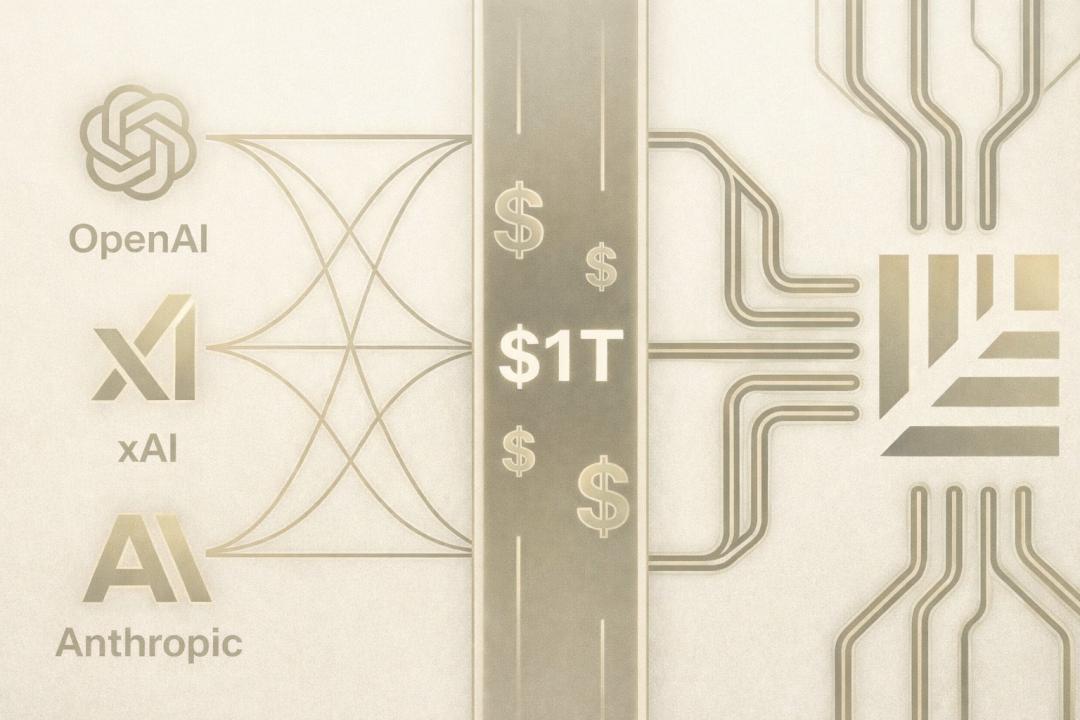
Sequoia, the veteran powerhouse of Silicon Valley venture capital, no longer avoids conflicts but systematically lays out all major AI players; it no longer takes sides in competition but tries to hold all positions. The once - clear red line - "not cooperating with the direct competitors of existing invested enterprises" - has been completely erased and redrawn in the AI era. This transformation may seem sudden, but it is actually a rational choice when facing the special field of AI. The core ability of traditional venture capital is "identifying patterns in uncertainty", but in the large - model competition, almost all the old evaluation frameworks have become invalid. AI competition is a multi - dimensional and multi - stage composite war: competition for underlying computing power, innovation in algorithm architectures, construction of data ecosystems, games in security and ethics, adaptation to regulatory policies... When the uncertainty reaches such a level, the optimal strategy has shifted from "choosing the winner" to "covering all possible nodes". Sequoia's layout logic in the AI field is no longer the traditional venture - capital way of "betting on a horse" but more like "buying a permanent seat in the casino" - it realizes that in the process of intelligence becoming an infrastructure like electricity, what matters is not which company ultimately wins but ensuring that it can stay at the gaming table no matter what.
03
Managing Conflicts: Sequoia's New Rules for AI Investment
The crazy curve of Anthropic's valuation doubling in four months reveals a profound transformation in the capital market's evaluation criteria for AI companies. On the surface, the soaring valuation is directly related to revenue growth - the company's annualized revenue has skyrocketed from $1 billion to $10 billion. But the deeper driving force is an asset that is being re - priced: systematic trust. Against the backdrop of rapid technological convergence, the core - ability gap between major models is narrowing on a monthly basis. As the window period for technological advantages becomes shorter and shorter, the decisive point of competition has shifted from the "performance competition" in the laboratory to the "adoption competition" in the real world. The decisive factor is no longer "whose technology is stronger" but "who can be more safely, reliably, and compliantly accepted by governments, banks, hospitals, and multinational enterprises".
Anthropic's proposed "Constitutional AI" framework - a method that allows AI systems to align values through human feedback and principle - based self - correction - although complex in technical details, sends a clear political signal: this is a company that values security, transparency, and controllability. This positioning precisely addresses the deepest concerns of corporate customers, government regulators, and the public. The huge investments from industrial giants such as Microsoft and Nvidia are essentially votes for this "cooperability". What they need is not just financial returns but also to ensure that there is a reliable, stable, and business - ethical partner in the future AI infrastructure. Sequoia's participation adds the endorsement of financial capital to this trust, forming a complete chain of legitimacy certification.
And this means that the core ability of top - tier venture capital has been re - defined. In the classical era, avoiding conflicts of interest was a professional virtue; in the AI era, precisely managing multiple conflicts has become a rarer and more fundamental professional ability. What Sequoia is doing is far more than just betting on several competitors - it is completing a paradigm revolution in the operation mode of venture capital: from looking for a single battlefield to learning to maintain a delicate balance among all fronts of a global war.
04
Building a New Temple on the Ruins of the Old Gods
Sequoia's turn is a rational overstep of capital. It has personally dismantled the classical order based on loyalty and instead built a capital empire centered around itself.
This seemingly rational choice is giving birth to the most irrational future. When all top - tier capital adopts the same multi - sided betting logic, the result will be a structural monopoly of innovation - a small number of institutions will effectively control the resource channels of all technological routes through cross - shareholding. Those disruptive ideas that are not included in the capital map will face a "resource death penalty" from the moment of their birth. A deeper change lies in the transformation of the nature of power. When Sequoia sits at the tables of OpenAI, Anthropic, and xAI at the same time, it has transformed from a "field coach" into a "league manager who knows all the teams' tactics". Competition still exists, but the rules have been re - defined.
Top - tier capital no longer predicts the future but becomes the structural foundation of the future itself through precise layout. When we are amazed by sky - high valuations, we should be more vigilant that the power to decide what is worthy of being given value is concentrating at the center of the gaming table at an unprecedented speed.
This article is from the WeChat official account "Silicon Rabbit King" (ID: gh_1faae33d0655). Author: Silicon Rabbit King. Republished by 36Kr with permission.