We don't need one million "dancing robots".
"In the past month, there have been a lot of false information circulating online about our company's shipment volume in 2025," Yushu Technology wrote in a response announcement.
This response from Yushu is directly aimed at the "Humanoid Robot Shipment Volume List" previously released by Omdia.
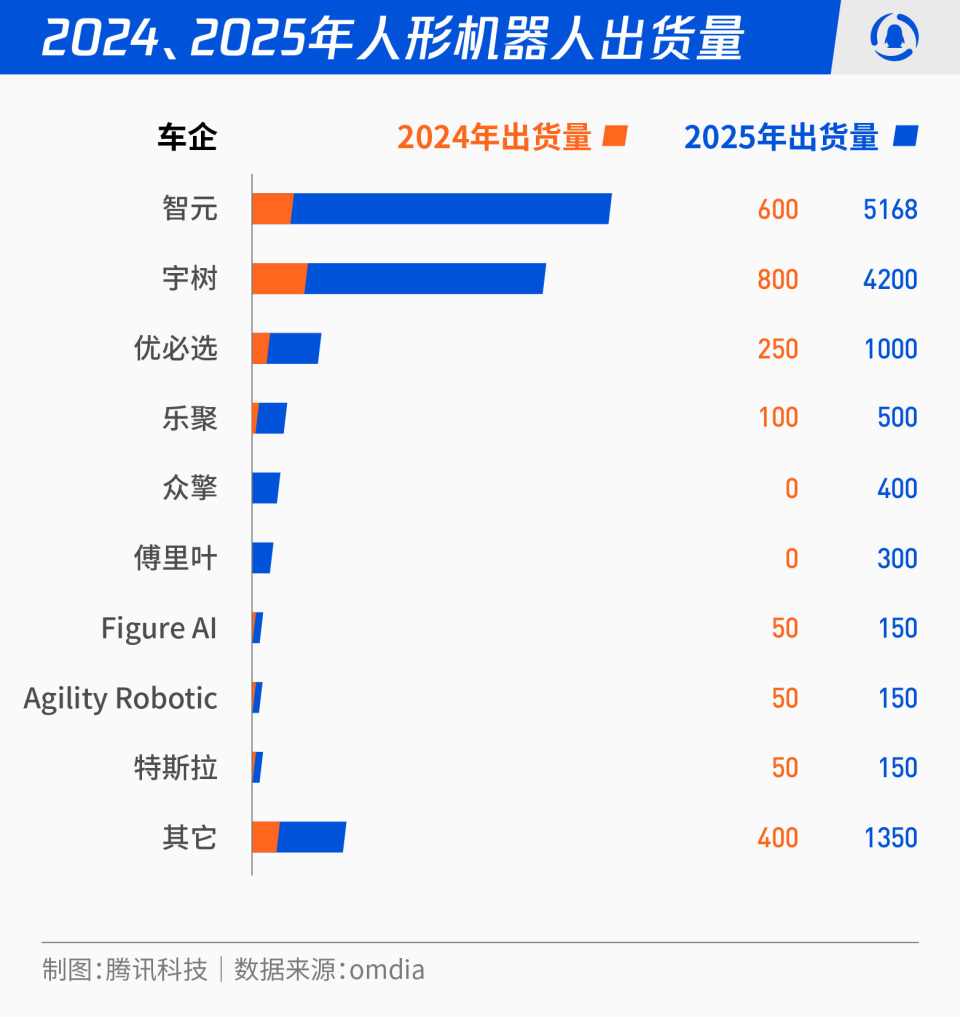
The data previously released by Omdia shows that in 2025, the top three humanoid robot shipments are: Zhiyuan Robot, Yushu Technology, and Ubtech, with corresponding shipment volumes of 5,168 units, 4,200 units, and 1,000 units respectively.
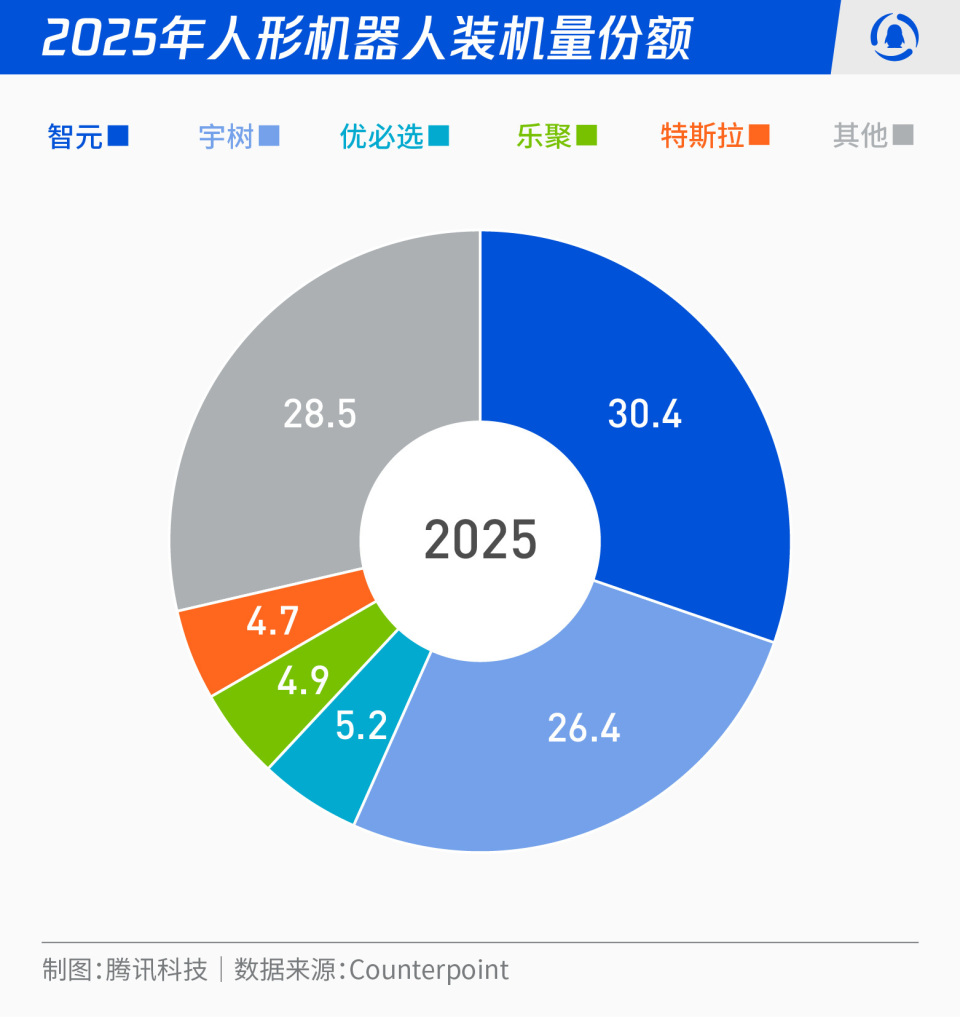
In addition, the data recently disclosed by market research firm Counterpoint also shows that Zhiyuan, Yushu, and Ubtech rank among the top three in the humanoid robot market share, accounting for 30.4%, 26.4%, and 5.2% respectively.
Although the two lists have different statistical criteria, the rankings of the top three companies are highly consistent.
In this situation, Yushu Technology emphasizes that the actual shipment volume of humanoid robots in 2025 exceeded 5,500 units, and the data circulating externally is false. Between the lines, it expresses that "Yushu Technology is the number one in humanoid robot shipments."
However, some entrepreneurs in the field of wheeled humanoid robots said that this list covers most bipedal products but does not cover wheeled ones. "Our shipment volume can also rank among the top, but we are not on the list."
Regardless of the differences in data criteria, the total shipment volume of the three leading companies in 2025 exceeded 10,000 units, a significant year-on-year increase compared to less than 2,000 units in 2024. But behind this growth lies a more critical piece of data - in 2025, the number of domestic humanoid robot manufacturers exceeded 140, and more than 330 humanoid robot products were launched.
Looking at these two sets of data together, whether it's 5,000 units or 4,000 units, in fact, most companies still haven't achieved substantial production capacity. The humanoid robot industry is still groping forward in the long night.
01 Dancing Doesn't Mean a Dead End
If humanoid robots in 2026 are still just for dancing and entertainment, then the outcome will be a dead end. An investor made a radical evaluation of the current application situation of humanoid robots.
Although this evaluation is extreme, the story starts more than a decade ago.
In 2013, Boston Dynamics developed Atlas for the DARPA project based on its PETMAN humanoid robot. "It's like a one-year-old child who can barely walk and falls down many times. That's the state we're in now," said Gill Pratt, the project manager of DARPA at that time, describing the prototype of Atlas.
From 2013 to 2026, over the past decade, the form, joints, materials, and "brains" of humanoid robots have been constantly evolving, from a wobbly "iron lump" to a "joker" that can now dance on stage and perform martial arts.
The problem is that the public's impression of the humanoid robot product form and industry is only one - this thing can only be used for entertainment and can't do serious work.
When it comes to the difficulty of making breakthroughs in application and implementation, it's easy to think of a joke - humans are always 30 years away from achieving controllable nuclear fusion.
Similarly, how many years are humans away from the large-scale application of humanoid robots? And besides dancing and boxing, what else can they do? There may not be a standard answer yet.
A user in our comment section said, "Robots can only do the yangko dance. Can't they come out and be environmental protection robots on the street?" At the same time, another user in a follow-up post mentioned, "Can there be robots that can quickly climb dozens of meters into the air, are equipped with water connection and spraying devices, and can continuously and rapidly extinguish fires at high altitudes?"
The answer is actually yes. Just recently, we encountered specially modified robotic dog products at an exhibition at the Chinese Academy of Fire and Rescue.
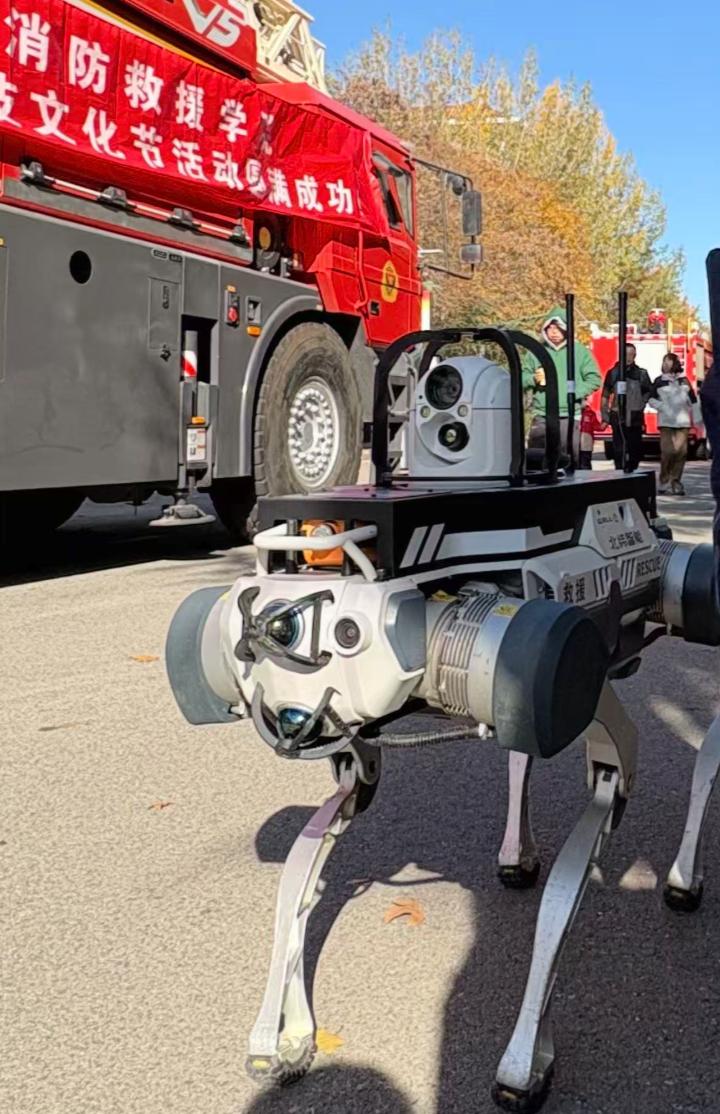
Specially modified quadruped robotic dog
As an entrepreneur, Zhang Yujia, the market and ecosystem director of Xinghaitu, believes that dancing is a form of implementation scenario. At this stage, robots have the ability to perform dances, and the downstream market is full of novelty. It's a market choice.
Wang Rongjin of Xuanyuan Capital also holds a similar view. He believes that the commercialization of humanoid robots should start from relatively simple scenarios, and entertainment is one of the scenarios for humanoid robots. "The conclusion that (dancing and entertainment means a dead end) is too arbitrary and hasty."
Dancing doesn't mean a dead end, but constantly staying at the level of dancing will surely invite controversy. However, the industry is also releasing some new details and signals - at this year's Spring Festival Gala, in addition to the expected large-scale "scuffle" of robots, they may also appear as on-site "waiters."
Of course, there will also be a lot of critical voices.
"It's just winning the advertising bid for the Spring Festival Gala. It's a scuffle of remote-controlled toys," a user wrote in the comment section.
Zhang Yujia said, "Robots that can really do work are still in the development stage. (Indeed), we haven't reached the cool and fancy turning point yet."
Yushu Technology also clearly writes on its official page that currently, the world is in the early exploration stage. Personal users must fully understand the limitations of humanoid robots before making a purchase.
A friend of mine in my WeChat circle, Ma Jiesi, bought a Yushu G1. After shooting a few unboxing and trial videos, there has been no new content update.
"I'm not playing with it anymore. I just bought it for the videos. Now it's collecting dust every day," Ma Jiesi said.
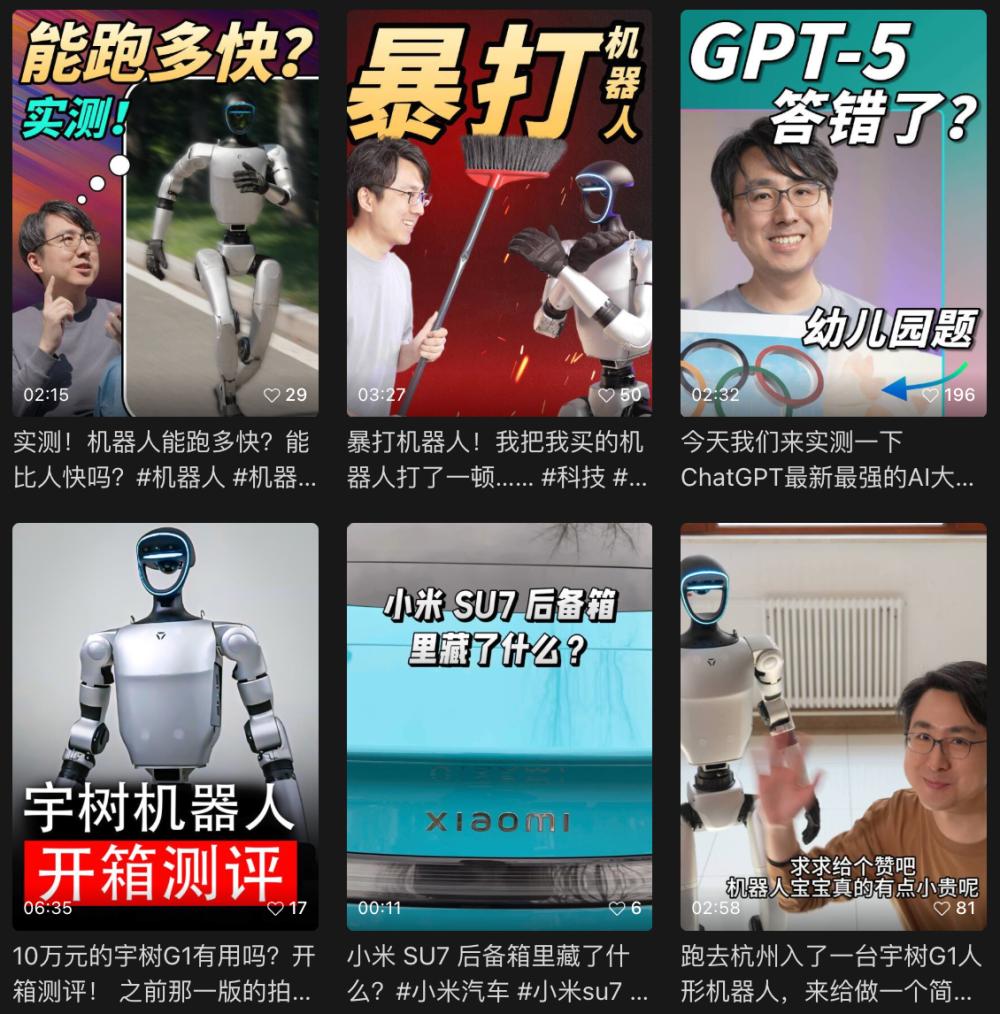
Ma Jiesi's video account has stopped updating humanoid robot content
It has to be said that the sales of humanoid robots are now modeled after consumer electronics products like mobile phones, with both online stores and offline retail stores. However, in most cases, when ordinary users buy such products, they go through a process from high expectations to neglect and the product ends up collecting dust.
The reason why it fails to generate a positive response among the general consumer group is that creative experiences require more secondary development, and this secondary development is a threshold that the general consumers can't cross at this stage.
02 "Ready to Use Out of the Box"
Whether it's Yushu marking "limitations" on its sales page or the case of the product collecting dust after the video shoot, because humanoid robots can't be "ready to use out of the box," they can't be as popular in the consumer electronics market as mobile phones and smart glasses.
A senior robot industry insider introduced that POC (Product Concept Validation) covers aspects such as robot ability validation, scenario-based data collection, post-model training, and engineering optimization.
"A simplified POC can take a few weeks at the fastest and one to two months at the slowest," the insider said.
The process is slow, but there is room for optimization. If the data of the basic model is comprehensive enough, the deployment time is expected to be significantly reduced. "With a strong basic model, it may only take dozens of hours or a few hours to collect data because most of the data has already been pre-trained."
Another key to reducing deployment time is the stability of the hardware, which is a common problem for current humanoid robots.
At the "Embodied Intelligence Open Day" in 2025, Wang Zhongyuan, the director of the Zhiyuan Research Institute, mentioned a case where the team purchased 10 humanoid robots, and 5 of them broke down within one to two months.
"The hardware stability is still at the research stage," Wang Zhongyuan introduced. "In the laboratory, the robotic arms frequently shut down due to overheating protection. Some robots even need a fan beside them, like having a nanny."
"What Director Wang Zhongyuan said is true," the aforementioned insider emphasized. "But the customers are mainly engaged in cutting-edge research and are tolerant of the product's immaturity. We are also improving the after-sales and product systems. The failure-free duration is getting longer, and the customer response speed is also getting faster."
The threshold of secondary development and product stability determine that humanoid robots can't be "ready to use out of the box" in the mass market.
However, recently we've also observed that some smart glasses, for example, have started to introduce the concept of an Agent application library. This is actually a way to increase the playability of products at the consumer end, but it requires the participation of a large number of developers.
Another point is that the Clawedbot assistant, known as the "open-source Jarvis," has become very popular. One of the key details is that when the assistant doesn't have a specific skill, it will actively learn, research, and develop the skill. If the capabilities of this type of model can be reused in humanoid robots in the future, it may also lower the threshold of secondary development and make "ready to use out of the box" a reality.
Before these problems are completely solved, the current customer group for humanoid robot products mainly consists of developers, including top research institutes, universities, regional innovation centers, Internet giants, and startups.
That's why we often see pictures of researchers in some Internet giants "walking their children" (humanoid robots) and "walking their dogs" (robotic dogs) in the buildings.
"Our core target customer group mainly focuses on Internet giants. They have sufficient resources for investment, the ability to build teams, and can cooperate with external ecological partners to promote the implementation of scenarios," Zhang Yujia, the market and ecosystem director of Xinghaitu, revealed. "We are currently in-depth cooperation with this type of customer group. The real implementation of applications is actually a scaling process, just like large models."
Wang Rongjin of Xuanyuan Capital emphasizes drawing a comparison with the new energy vehicle industry. He stresses that large industries usually have a cycle of 10 - 20 years, and we shouldn't focus on short-term data of one or two years.
"In terms of shipment volume and expectations, it's not a large number. But more than a decade ago, the shipment volume of new energy vehicles also started from thousands, to tens of thousands, to hundreds of thousands, to millions, and now to tens of millions," Wang Rongjin said.
03 The Unreachable One Million Units
Elon Musk announced the goal of producing one million Optimus units per year a long time ago. Even at Tesla's shareholders' meeting, this figure was set as one of the key conditions for unlocking Musk's "trillion - dollar compensation package."
But if we look at Omdia's data, Optimus only has a "pitiful" 150 units. There is a huge gap between the grand ideal and the reality in terms of mass production.
From this perspective, the Chinese competitors with shipment volumes exceeding 5,000 units are actually leading the way.
Fu Sheng, the chairman of OrionStar and the CEO of Cheetah Mobile, is not optimistic about the expansion of humanoid robot production. "It's like a game of musical chairs now. The large - scale application of humanoid robots is still far away, at least another five years."
A person familiar with the industry revealed that many winning bids are project - based, and the shipment volume can't be simply calculated based on the contract amount. He believes that looking at the "quantity" of humanoid robots in 2025 from different perspectives will lead to different conclusions.
"Looking at the popularity over the course of a year starting from the 2025 Spring Festival Gala, this number is actually quite conservative. But after really understanding what the current robots can actually do, this data is quite in line with expectations," the person familiar with the industry said.
According to the figures confirmed by Yushu - the shipment volume in 2025 was 5,500 units. Assuming an average price of 60,000 yuan, the corresponding annual sales revenue was 360 million yuan. However, the aforementioned senior robot industry insider emphasized that the revenue of leading companies has already exceeded 500 million yuan.
"The basic non - development version of Yushu is priced at around 100,000 yuan, and the mainstream version with complete development capabilities can reach 300,000 - 500,000 yuan. If secondary development services such as action customization and full - body remote operation are required, additional fees will be charged," the insider emphasized. "The pricing strategies of other brands in the industry are even higher."
If the revenue is to increase from 500 million yuan to 5 billion yuan, the corresponding annual shipment volume needs to increase tenfold, that is, 55,000 units. In the view of many industry insiders, achieving this mass - production goal is not difficult. The more crucial thing is to make the basic model more intelligent.
Wang Zhongyuan, the director of the Zhiyuan Research Institute, previously emphasized that it is much more difficult to let a robot continuously execute a two - hour process in a real - life scenario than to complete a one - time action on a display stand.
"Manufacturing is not a big problem now. The main issue is that the robots are not smart enough. That's why what we see are mostly pre - choreographed applications like dancing. Their capabilities in actual production are limited," the aforementioned person familiar with the industry said.
Wang Rongjin believes that from 10,000 units to 100,000 units, and then to 1,000,000 units, the core lies in whether continuous iteration, cost reduction, and performance improvement can be achieved. Automobile companies have inherent advantages in this regard, which is why automakers such as Tesla and XPeng have successively announced the mass production of humanoid robots.
"The two industries are highly related. They both follow the logic of electrification and intelligence. The lidars, cameras, millimeter - wave radars, and ultrasonic radars used in cars can also be used in robots," Wang Rongjin said.
Regarding the goal of one million units, the aforementioned insider believes that there is a promotional element in it, hoping to attract attention through the news value. "Elon Musk often sets goals and releases positive signals at the same time. We definitely hope to cooperate with such industry giants to expand the market together."
Different from some chip foundries that require land, factories, and equipment and have a construction cycle of 2 - 3 years, since humanoid robots are mainly assembled, expanding production essentially means expanding