Valued at $12 billion, the founder's fortune has doubled. This AI tool is quietly transforming the US medical industry.
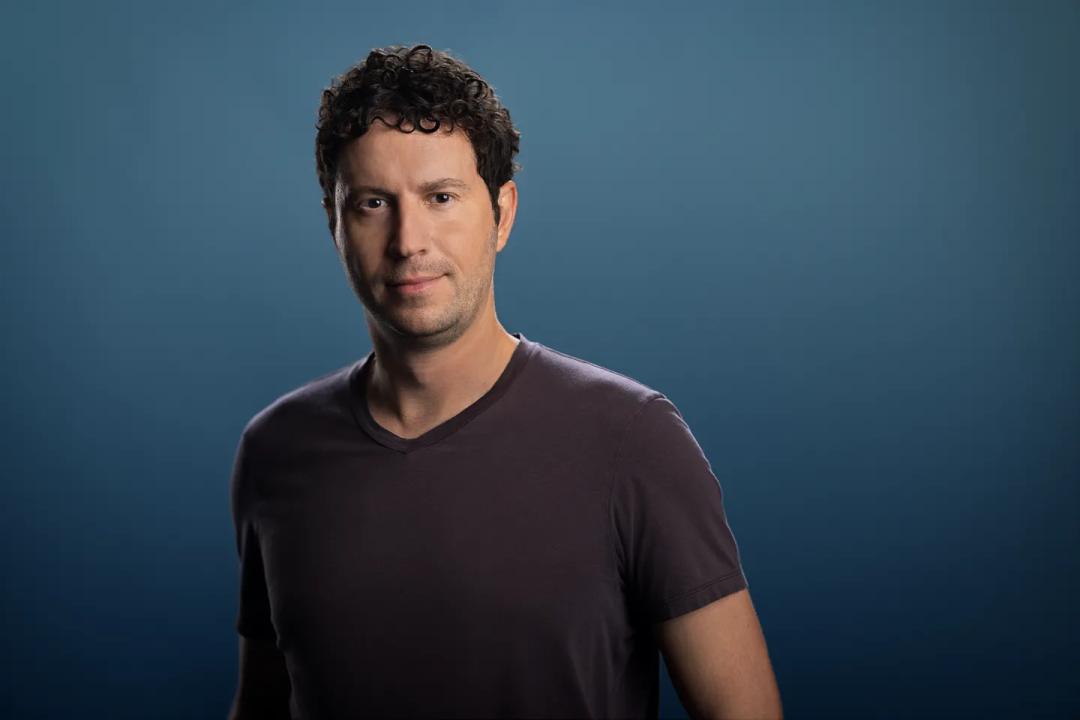
The AI search tool for doctors, OpenEvidence, has completed a new round of financing at a valuation of $12 billion. Daniel Nadler, the CEO and co-founder, has doubled his net worth to $7.6 billion. Image source: MAURICIO CANDELA FOR FORBES
The AI search tool OpenEvidence is highly popular among doctors in the United States, propelling Daniel Nadler, the 42-year-old CEO and co-founder, to a net worth of $7.6 billion.
Three years ago, Daniel Nadler launched OpenEvidence, an AI-based search tool that helps doctors quickly and conveniently answer complex clinical questions.
Recently, this startup completed a $250 million financing round, doubling its valuation to $12 billion, and Nadler's net worth also doubled accordingly. Forbes estimates that this Miami-based AI founder currently has a net worth of $7.6 billion, more than doubling from $3.6 billion in late October last year.
01
OpenEvidence has rapidly grown into one of the hottest AI startups in the healthcare field.
Currently, approximately 740,000 doctors - about 45% of the total number of doctors in the United States - use this search engine to quickly retrieve millions of peer-reviewed research papers from top medical journals and find useful (and sometimes even life-saving) information in just a few seconds, instead of spending hours or even days as in the past. Nadler said that doctors used the software in about 18 million clinical consultations last month. He told Forbes, "We've become the default operating system for the medical community."
Nadler said that OpenEvidence's annualized revenue exceeded $100 million in 2025 and has achieved profitability through advertising, although most of the advertising resources are not yet available for sale. He said that if the company fully opens up all advertising resources, the annual revenue could reach about $1 billion. However, to prioritize the user experience, he doesn't plan to do so - which is quite similar to Google's early approach. Pharmaceutical companies and medical device companies can purchase 5-second video ads within the app, and the ads are precisely targeted based on the search keywords entered by doctors.
Thanks to its first-mover advantage and rapid popularity among medical professionals in the United States, Nadler isn't too worried that competitors like OpenAI's ChatGPT will catch up. This popular chatbot doesn't have a tool specifically designed for doctors, but that hasn't stopped doctors from using it. OpenAI recently launched a dedicated product for ordinary consumers to consult ChatGPT on health and wellness-related issues.
Renowned venture capital firm Thrive Capital (which has invested in fast-growing AI star companies such as Cursor and OpenAI) and DST Global led this Series D financing round, bringing the total financing of this startup to $700 million. Nadler said that OpenEvidence still has hundreds of millions of dollars in cash on its books, and this financing isn't due to a need for funds but to capitalize on the venture capital circle's enthusiasm for mature AI players. "Now, a dozen funds are chasing half a dozen companies," he said. "It's all about doubling down on the same company."
02
In 2018, Nadler, who grew up in Toronto and graduated from Harvard University, sold his first startup, the AI data analytics company Kensho Technologies, to S&P for $700 million. With his 20% stake, he earned $140 million and used part of the funds to buy $30 million worth of Nvidia stocks in 2019, selling them for about $100 million in 2024. "It was a good deal," he said. "But to be honest, I sold too early." He also personally invested $10 million in his second startup, OpenEvidence. It was a wise self-bet. Today, he still holds about 58% of OpenEvidence's shares.
In July 2025, when OpenEvidence was valued at $3.5 billion, Nadler first joined the ranks of billionaires. That's also when he bought a $38 million beachfront penthouse in Miami, where he spends most of his time. Since then, his net worth has grown in tandem with the company's valuation, reaching $3.6 billion in October and further climbing after this financing round. Co-founder Zachary Ziegler holds 7.3% of the company's shares, worth $875 million.
OpenEvidence is still continuously training and optimizing its search model to accurately identify information related to medical queries. Nadler plans to use the funds raised this time to build an "orchestra" of small specialized models, with each model focusing on a specific sub - field within the broader medical domain. The idea is to train a series of medical specialty models covering areas such as oncology, radiology, and neurology. The training data for each specialty model is collected from real - world scenarios such as clinical consultations, replicating the way doctors think when dealing with complex cases. Whenever a doctor initiates a query, the central model analyzes the question and then distributes it internally to the corresponding specialty model to provide the best answer. "If you think about it, it works almost exactly like a real hospital," he said.
This article is translated from: https://www.forbes.com/sites/rashishrivastava/2026/01/21/openevidence-founder-doubles-his-wealth-as-medical-ai-startup-hits-12-billion-valuation/
Original title: "Medical AI Startup OpenEvidence Hits $12 Billion Valuation, Founder Doubles His Wealth"
This article is from the WeChat official account “Forbes” (ID: forbes_china). Author: Rashi Shrivastava; Translator: Björn & Rach; Proofreader: Lemin. Republished by 36Kr with permission.