Ambitions and Expeditions: Autonomous Driving Ushered in the "Age of Discovery"
At the end of the 15th century, Vasco da Gama's fleet rounded the Cape of Good Hope, and Christopher Columbus accidentally landed in the New World of America. Humans broke the geographical isolation with sailing ships and compasses, inaugurating the era of great navigation that reshaped the world pattern.
Today, in the intertwined wave of artificial intelligence and the automotive industry, autonomous driving is replicating this exploration history - using algorithms as compasses, chips as sails and oars, and data as ocean currents to break the boundaries of traditional transportation and sail towards a new sea area where technology is reconstructed, business is iterated, and the ecosystem is reshaped.
Since 2025, with the implementation of the access policy for L3-level autonomous driving, the breakthrough in mass production of one million units, the acceleration of global layout, and the overseas deployment of autonomous buses, this magnificent "intelligent expedition" has officially entered the deep - water zone.
Iteration from "Coastal Trials" to "Ocean - Going Equipment"
The rise of the era of great navigation began with revolutionary breakthroughs in shipbuilding technology and navigational instruments. The popularization of autonomous driving also depends on the leap of core technologies from "laboratory verification" to "large - scale adaptation".
After more than a decade of technological breakthroughs, autonomous driving, which was once just a concept, has built a complete technological system covering perception, decision - making, and execution. Just like the caravel ships back then, it has the hard power to conquer complex sea areas.
The technological iteration of the "clairvoyant" in the perception layer has cleared the visual obstacles for autonomous driving. In the early days, autonomous driving relied on multi - lidar solutions for environmental perception, and the high cost became a constraint for large - scale implementation, just as the ships in the early days of great navigation could hardly carry supplies for long - distance voyages.
Today, the technological route continues to converge. The cost of semi - solid - state lidars has dropped below a thousand yuan. Enterprises such as Hesai and RoboSense have achieved mass production at the vehicle - grade level, making high - order intelligent driving solutions popular. Recently, QCraft launched an end - to - end urban NOA solution based on a single Journey 6M platform, achieving adaptation to complex road conditions with limited computing power, highlighting the core value of technological optimization.
Meanwhile, the pure vision solution and the fusion perception technology of lidar, millimeter - wave radar, and cameras are developing in parallel. The "vision - based + solid - state lidar fusion" technological route of Mobike Union has significantly improved the consistency and reliability of the system, increased the target perception distance by more than 50%, reduced the missed detection/ false detection rate by 70%, and decreased the takeover rate by two orders of magnitude. It has also greatly reduced the R & D and hardware costs, laying a solid foundation for the large - scale implementation of autonomous buses.
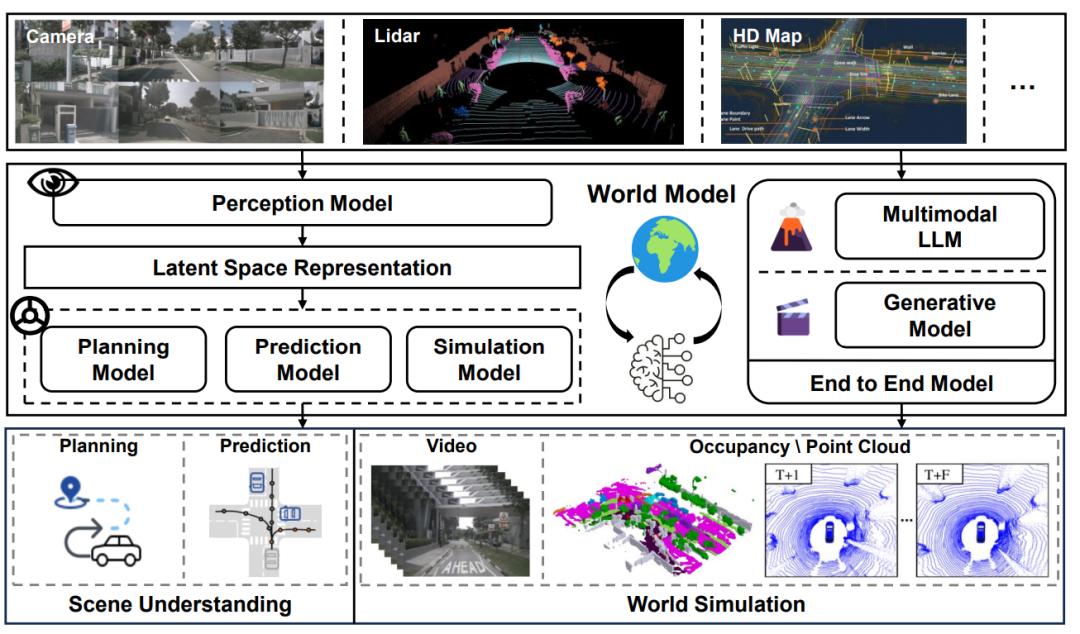
The upgrade of the "most powerful brain" in the decision - making layer endows autonomous driving with the ability to handle complex scenarios. If the early algorithms were like "coastal navigation" relying on preset rules, today's end - to - end architecture and world models are like navigators with the ability to predict ocean currents. Since 2025, end - to - end has become an industry consensus. Many autonomous driving enterprises have launched new architectures that integrate VLM, VLA, and world models. Relying on the real - world road condition data accumulated from mass production, they have achieved an end - to - end closed - loop from perception to control, greatly improving the ability to handle long - tail scenarios.
The computing power support has also achieved a leap. The computing power of NVIDIA's DRIVE Thor X chip has exceeded 2000 TOPS. Domestic enterprises such as Huawei and Horizon are accelerating the domestic substitution, providing sufficient power reserves for high - order algorithms, just as the steam engine revolutionized the sails in the era of great navigation.
The improvement of the execution layer and basic software has strengthened the foundation for technological implementation. The line - controlled braking and steering technologies enable high - precision control, providing safety guarantees for driverless operations. High - precision maps and Beidou positioning achieve centimeter - level coverage, just like the astrolabes and nautical charts back then, planning precise routes for vehicles. The high - precision maps of Baidu and AutoNavi have covered major cities across the country. The positioning service of Qianxun Positioning allows autonomous driving to maintain accurate perception in complex environments such as tunnels and high - rise buildings, constructing a "vehicle - road - cloud" integrated technological ecosystem.
"Route Exploration" under the Mass Production Threshold
The real arrival of the era of great navigation was not due to the success of a single expedition, but the regular operation of shipping routes and the establishment of trade networks. Similarly, the "era of great navigation" of autonomous driving is also marked by large - scale mass production, moving from technological novelty to full - scale popularization and achieving a leap from "point - based breakthroughs" to "area - wide coverage".
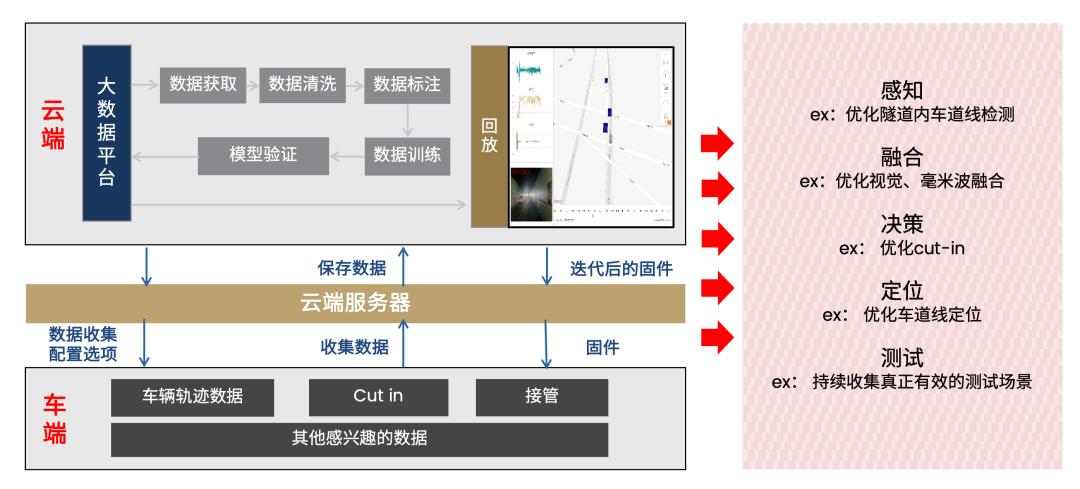
The core value of mass production lies in building a data - driven technological iteration closed - loop. The safety and reliability of autonomous driving rely on the training of a large amount of real - world scenario data, just as navigators need to record ocean currents and the locations of reefs to optimize shipping routes.
The data from different climates, road conditions, and driving habits continuously feed back into algorithm iteration, enabling the autonomous driving system to continuously evolve in complex scenarios such as rainy and snowy weather, construction sections, and urban villages, forming a positive cycle of "mass production delivery - data accumulation - algorithm optimization - experience upgrade".
The continuous operation of this cycle not only strengthens the technological foundation of autonomous driving but also promotes the industry to move from single - technology R & D to the coordinated maturity of the entire industrial chain.
The economies of scale brought about by mass production have directly promoted the cost reduction and technological upgrading of core components. Core components such as lidars, in - vehicle computing platforms, and high - precision positioning modules, which were once extremely expensive, have achieved miniaturization, generalization, and low - cost due to the surge in mass production demand. As a result, autonomous driving has moved out of the laboratory and pilot scenarios, extending from point - based trials in industrial parks, scenic areas, and highways to area - wide coverage of urban main roads and community micro - circulations, truly achieving a qualitative change from technological trials to people - oriented popularization.
More importantly, the travel network built by mass production has elevated the value of autonomous driving from simply replacing human driving to an important part of urban intelligent transportation. The mobile perception nodes formed by mass - produced vehicles are connected to urban roadside devices, traffic control systems, and intelligent parking networks, constituting a real - time perception and dynamically regulated traffic neural network.
Each autonomous vehicle is a mobile data collection terminal, which not only provides data for its own algorithm iteration but also offers accurate data on traffic flow, road conditions, and congestion points for urban traffic planning, helping cities optimize traffic signal timing, plan bus routes, and relieve traffic congestion, realizing the deep integration of people, vehicles, roads, and cities.
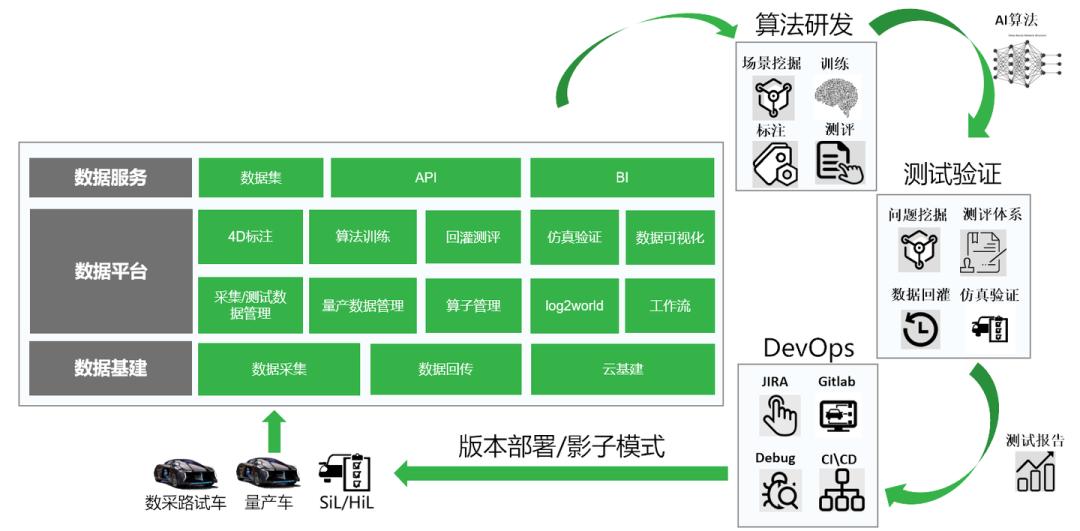
The implementation of mass production has shifted the focus of industry competition from "technological show - off" to "engineering capabilities". In the early days, the autonomous driving industry was keen on verifying the limits of autonomous driving technology. Now, with the issuance of access permits for L3 - level autonomous driving, the industry focus has shifted to large - scale delivery and cost control.
In December 2025, the Ministry of Industry and Information Technology issued the first batch of access permits for L3 - level autonomous driving to automobile enterprises such as Changan and BAIC. Beijing, Chongqing and other places issued special license plates simultaneously, clarifying that automobile enterprises should bear the accident liability during the system activation period, clearing the policy obstacles for mass production implementation.
The coordinated maturity of the industrial chain provides underlying support for the explosion of mass production. The cost of upstream core hardware has been continuously decreasing. The price of lidars has dropped from tens of thousands of yuan in the early days to the thousand - yuan level. High - computing - power chips have achieved domestic substitution, and the integration level of domain controllers has been continuously improving, greatly reducing the pre - installation cost of high - order intelligent driving solutions.
In the middle reaches, a "golden triangle" cooperation model of "technology companies + vehicle manufacturers + travel platforms" has been formed. The cooperation between GAC, WeRide, and Ruqi Chuxing, and the partnership between General Motors, Cruise, and Lyft have achieved resource complementarity and risk sharing, accelerating technological implementation and standardized mass production.
In the downstream, the operation service system has been gradually improved. Supporting services such as charging and battery swapping, maintenance, and exclusive insurance have quickly followed up, providing guarantees for consumers to accept autonomous driving.
"Competition for New Lands" in the Global Landscape
The essence of the era of great navigation was the competition for new lands, new markets, and new trade routes. The commercialization process of autonomous driving also shows global market segmentation and ecological games. The pattern of bipolar leadership by China and the United States and the rise of regional markets is becoming increasingly clear. Each player has demarcated its "sphere of influence" and launched its own "expedition to new lands".
China and the United States have formed the core competitive camps, leading the global commercialization process. In the US market, Waymo and Tesla are the core forces. Waymo has deployed more than 2500 driverless vehicles in 5 cities across the United States, and had completed a cumulative total of 14 million commercial orders in 2025. It plans to expand its services to 12 cities and accelerate market penetration through cooperation with Uber and Toyota.
Tesla bets on large - scale implementation with a pure vision solution and was the first to remove safety drivers in Austin. According to the prediction of Morgan Stanley analysts, the scale of Tesla's Robotaxi fleet will experience explosive growth. The fleet size will rapidly expand from about 200 vehicles in 2025 to 1000 vehicles in 2026. By 2035, Tesla will deploy about one million Robotaxis in multiple cities across the United States.
The Chinese autonomous driving market is accelerating implementation under policy pilots and industrial chain coordination. Baidu's Apollo Go has provided more than 17 million services globally and is accelerating its overseas expansion through cooperation with Uber and Lyft. Pony.ai and WeRide have achieved regular operation of Robotaxis in first - tier cities, and the daily average order volume of some platforms in a single city has exceeded a thousand. In 2026, XPeng Motors announced the introduction of the Robotaxi business, and Hello Bike joined hands with CATL to enter the market, further intensifying market competition.
Scenario expansion has become the core direction of "new land exploration", extending from passenger cars to all fields. If the NOA for passenger cars is like "coastal trade" in autonomous driving, scenarios such as RoboBuses, unmanned logistics, and port transportation are the broader "ocean - going areas".
Momenta has increased its investment in trunk logistics. Zhuoyue Technology has cooperated with Shaanxi Automobile to layout heavy - truck autonomous driving. Enterprises such as Youjia Innovation and QCraft have entered the field of unmanned small vehicles, forming a full - scenario coverage pattern of "passenger cars + commercial vehicles + special vehicles".
Global layout has become a must - do for leading enterprises, and Chinese enterprises are accelerating their "overseas expeditions". As domestic market competition intensifies, the overseas market has become an important direction to spread costs and achieve economies of scale, just as explorers in the era of great navigation sailed to America and Africa.
WeRide's Robobus has started commercial operation in Leuven, Belgium. As the 16th - route bus of the local public transportation company De Lijn, WeRide's Robobus has been put into regular public operation.
In October last year, Mobike Union won the bid for Singapore's first official L4 - level autonomous bus project exclusively. This is the first time that a Chinese autonomous driving enterprise has successfully entered the world's most demanding and highest - standard technological high - ground, marking that Chinese autonomous driving technology has officially integrated into the overseas mainstream public transportation system.
Chinese autonomous driving enterprises have significant advantages in going overseas. Their technologies have been tempered by morning and evening rush hours, various complex road conditions, and different urban scenarios in China, and can be adapted to overseas markets with little adjustment. This technological generalization ability has become the core competitiveness for going overseas.
Three Challenges on the Expedition Road
The expeditions in the era of great navigation were never smooth sailing. Storms, reefs, and unknown risks always accompanied them. Similarly, the "era of great navigation" of autonomous driving also faces three tests: technological bottlenecks, lagging regulations, and profit - making pressure. These "reefs and storms" determine whether the industry can achieve sustainable development.
Technologically, long - tail scenarios and safety redundancy remain unsolved problems. Although autonomous driving has high reliability under normal road conditions, long - tail scenarios such as extreme weather, sudden construction, and irregular obstacles are still like storms in navigation, testing the robustness of algorithms.
The end - to - end architecture performs well in L2 - level scenarios, but its reliability in L4 - level driverless operations still needs long - term verification. At the same time, there is a natural contradiction between safety redundancy design and cost control. How to reduce costs while ensuring safety has become the key to large - scale profitability.
Regulatoryly, the definition of liability and standard mutual recognition lag behind technological development. Currently, a unified global regulatory system for autonomous driving has not been formed, and there are still gaps in issues such as accident liability division, data security regulations, and the scope of road - right opening. China is exploring through the "policy sandbox" model and has clarified the liability subject status of automobile enterprises in L3 - level scenarios, but a national regulatory system still needs to be improved. The EU's "Artificial Intelligence Act" emphasizes ethical review, and the UK has pioneered a "triple - liability subject" system, including software developers in the liability chain. The regulatory differences in different regions pose obstacles to global layout.
Profit - wise, the economies of scale have not yet emerged, and enterprises are facing continuous loss pressure. Most autonomous driving enterprises are still in the "money - burning" stage. Analysis shows that the single - vehicle economic model of Robotaxis needs to optimize both order density and hardware cost, and large - scale profitability is expected to be achieved around 2027. Even leading enterprises need to continuously invest in technological R & D, fleet expansion, and operation and maintenance, and the road to profitability is long and difficult.
Looking forward from the time point of 2026, the "era of great navigation" of autonomous driving has just begun. From technological breakthroughs to mass production explosions, from domestic competition to global expeditions, this exploration journey is filled with both the longing for the vast ocean and the tests of reefs and storms.
Just as explorers in the era of great navigation broke through geographical boundaries with courage and wisdom, participants in the autonomous driving industry are also exploring a new world of future travel with technological innovation and business resilience. When algorithms are intelligent enough, regulations are perfect enough, and costs are affordable enough, autonomous driving will eventually integrate into the fabric of daily life and become an important force in reshaping future lifestyles. This is the ultimate goal of this "intelligent expedition".
This article is from the WeChat public account "GeeTech", author: Banshan. It is published by 36Kr with authorization.