The robotics landscape is changing: Unitree and UBTECH are vying for the spotlight, while Tencent, Alibaba, and ByteDance are waging a "proxy war."
CES 2026 is back, and Xiaolei noticed that the high popularity of the embodied intelligence and robotics track shows no sign of decline. In particular, a piece of data recently released by Omdia has sparked a rivalry between two star brands in the robotics industry, Unitree and Zhipu.
Omdia data shows that the global shipment volume of humanoid robots is expected to reach 13,000 units in 2025. Among them, Zhipu, with a shipment volume of over 5,100 units, occupies 39% of the market share and ranks first; Unitree, with a shipment volume of 4,200 units, occupies 32% of the market share and ranks second. Together, Zhipu and Unitree account for 71% of the global humanoid robot market.
It is such a "two-power rivalry" list that has made Unitree, which "lags behind", unhappy. The official even specially issued a data clarification statement.
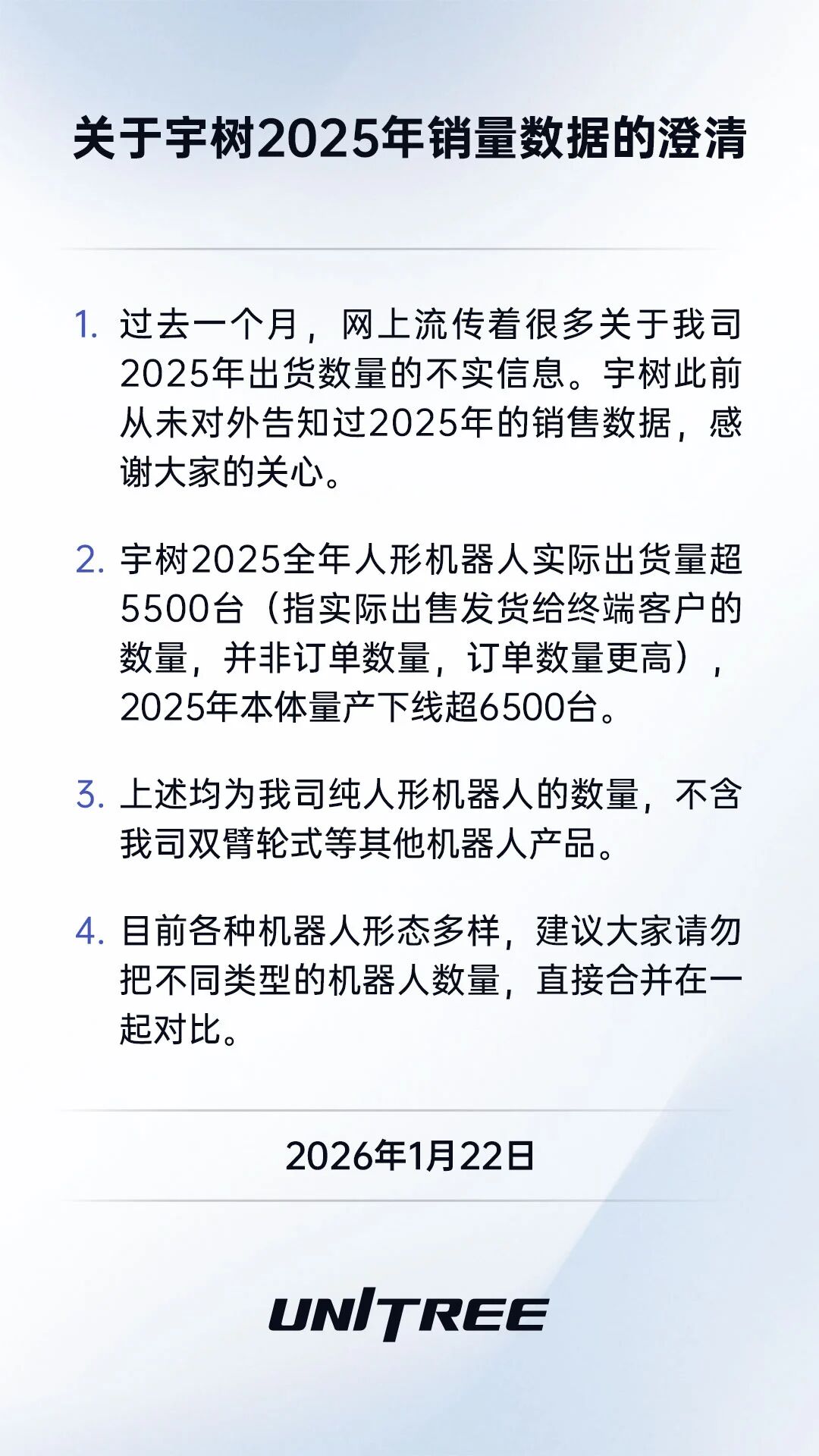
Unitree revealed that its actual annual shipment volume of humanoid robots in 2025 exceeded 5,500 units, and the mass production of the main body offline in 2025 exceeded 6,500 units. The above two data do not include other robot products such as dual-arm and wheeled robots. Unitree also specifically pointed out that "currently, there are various forms of robots. Please do not directly combine the quantities of different types of robots for comparison."
The shipment volume data released by third-party market research institutions usually have a certain error range. For relatively mature categories, the error range will be smaller, such as the mobile phone and computer markets. For categories like humanoid robots, which are in the early stage of development and have a very small market scale, it is difficult for third-party market research institutions to give relatively accurate shipment volume data for each manufacturer without clear official data.
Next, it remains to be seen whether Zhipu will provide the exact annual shipment volume data of humanoid robots for 2025 to "overpower" Unitree again.
The Rivalry between Unitree and Zhipu: More "Pragmatic" Robot Players Step into the Spotlight
While Unitree and Zhipu are in a rivalry, more "pragmatic" robot players are no longer keeping a low profile and are even making frequent appearances.
During the Spring Festival Gala of the Year of the Snake, Unitree stole the show, triggering national attention on humanoid robots and significantly enhancing the brand's popularity and influence. In the Spring Festival Gala of the Year of the Horse, more robot brands are vying for a spot on this top-tier stage, even sparing no expense of hundreds of millions of yuan.
Previously, it was reported that no single robot enterprise obtained the exclusive sponsorship rights for the Spring Festival Gala of the Year of the Horse. "Ultimately, about five embodied intelligence companies will appear on the gala together, with each contributing about 100 million yuan." Recently, two brand enterprises have preempted Unitree and officially announced that they have obtained the sponsorship qualification for the Spring Festival Gala of the Year of the Horse: Magic Atom and Galaxy Universal, neither of which was the most highly anticipated brand enterprise before.
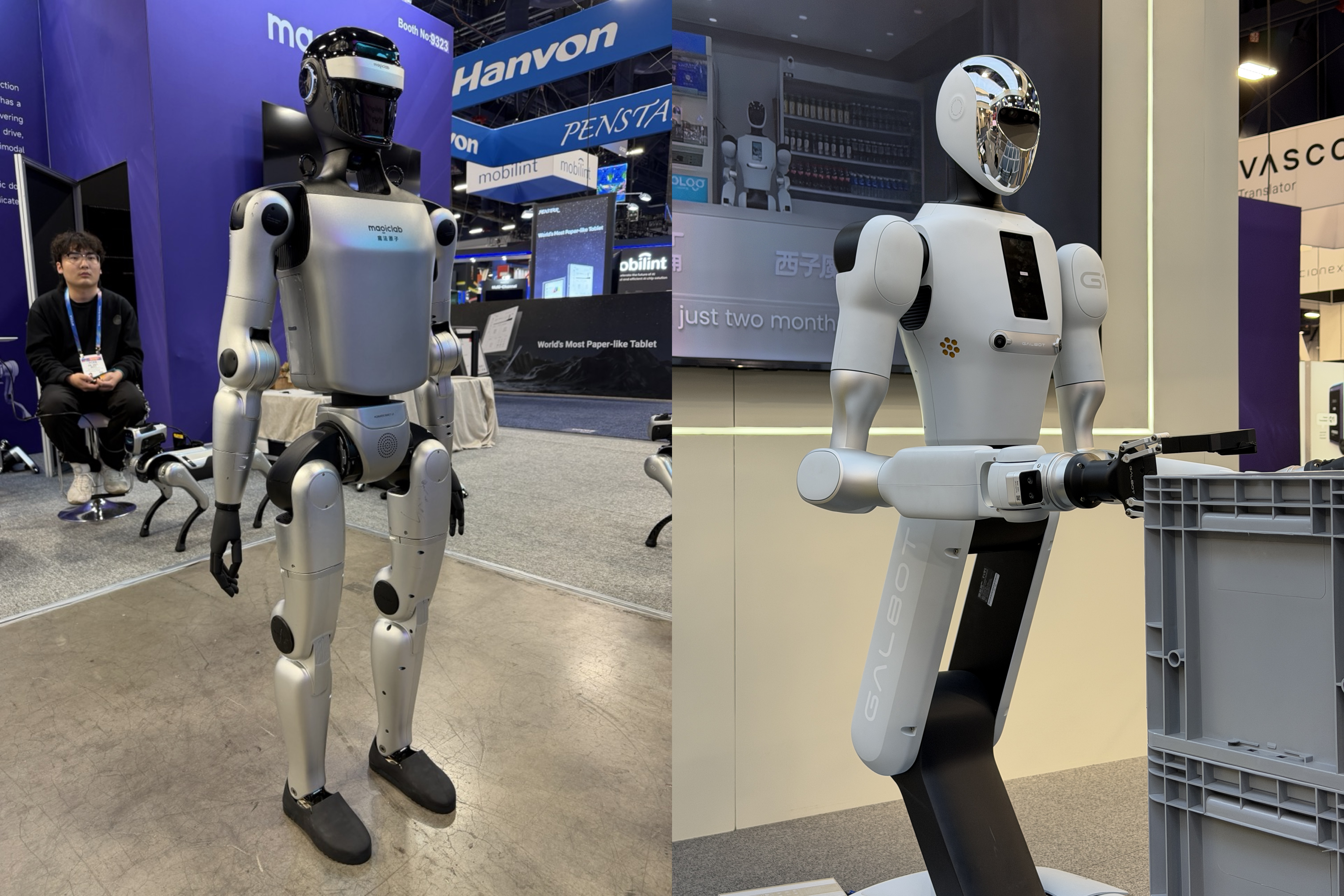
Photographed by Lei Technology at CES 2026
It is believed that the reason why these two robot enterprises were the first to obtain the tickets to the Spring Festival Gala of the Year of the Horse is that their product design concepts and scenario applications are more inclined to "practicality" and "feasibility". This view makes some sense.
As a member of the reporting team for CES 2026, Xiaolei witnessed the practicality rather than the ornamental value of the robots of these two brands at the scene in Las Vegas.
Magic Atom's robots made their debut at CES this year, presenting a series of robot products covering scenarios from scientific research and education to industrial production and then to family life applications. For example, there are robots with high-degree-of-freedom humanoid operation capabilities in industrial scenarios, robots that can autonomously complete the entire process from ordering to serving food, robots that can perform daily household chores such as delivering items and opening and closing doors and windows, and industrial quadruped robots in complex and high-risk inspection environments. Obviously, Magic Atom aims to adapt the core capabilities that robots can achieve to more practical application and work scenarios as soon as possible.
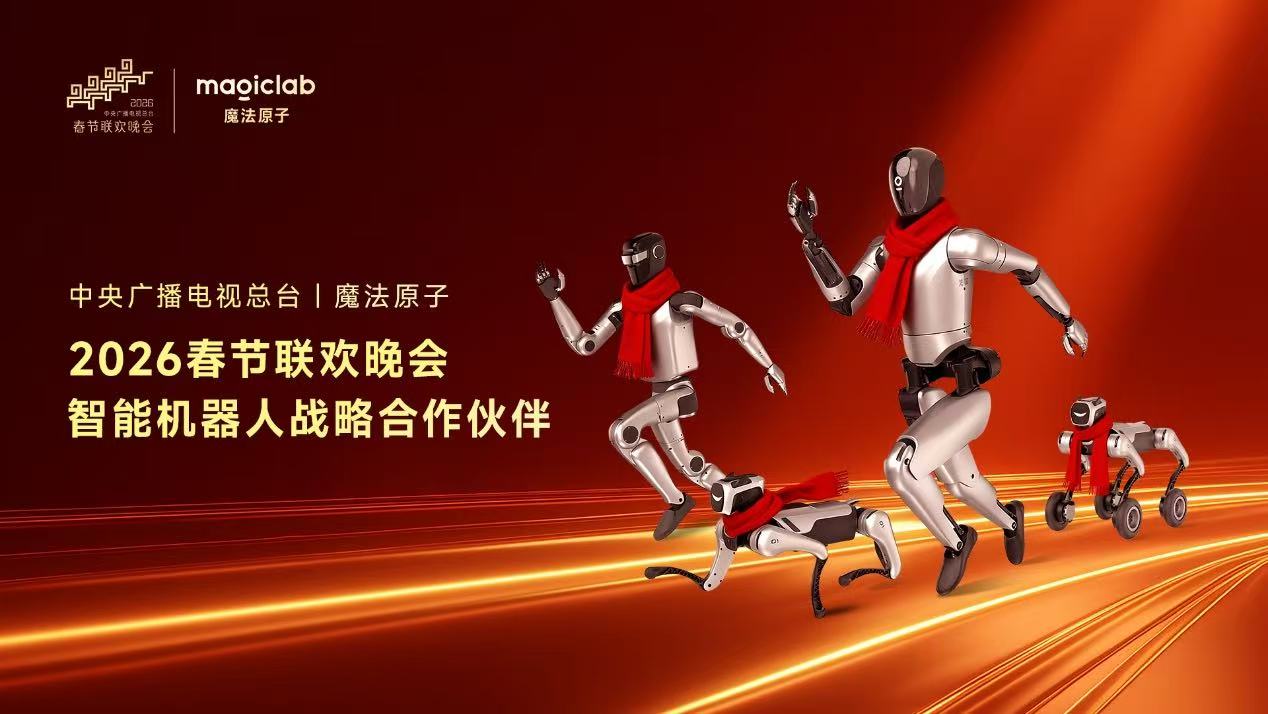
Image source: Magic Atom
It is worth mentioning that while becoming the first robot cooperation brand for the Spring Festival Gala of the Year of the Horse, Gu Shitao, the co-founder of Magic Atom, revealed that the company will aim for an IPO this year.
As another robot brand that preemptively announced its appearance on the Spring Festival Gala of the Year of the Horse, Galaxy Universal completed a new round of financing of over 300 million US dollars in December last year, breaking both the single-round and cumulative financing records in the domestic robotics industry. The company's valuation has also reached 3 billion US dollars.
In terms of technical route, Galaxy Universal also emphasizes "pragmatism". At its CES 2026 booth, Xiaolei saw a prominent slogan "AI-Driven Autonomous Robots, Born for Productivity". The robots at the booth demonstrated two core skills: one is to pick and deliver goods from the shelves, and the other is to carry boxes, all in a fully automated process.
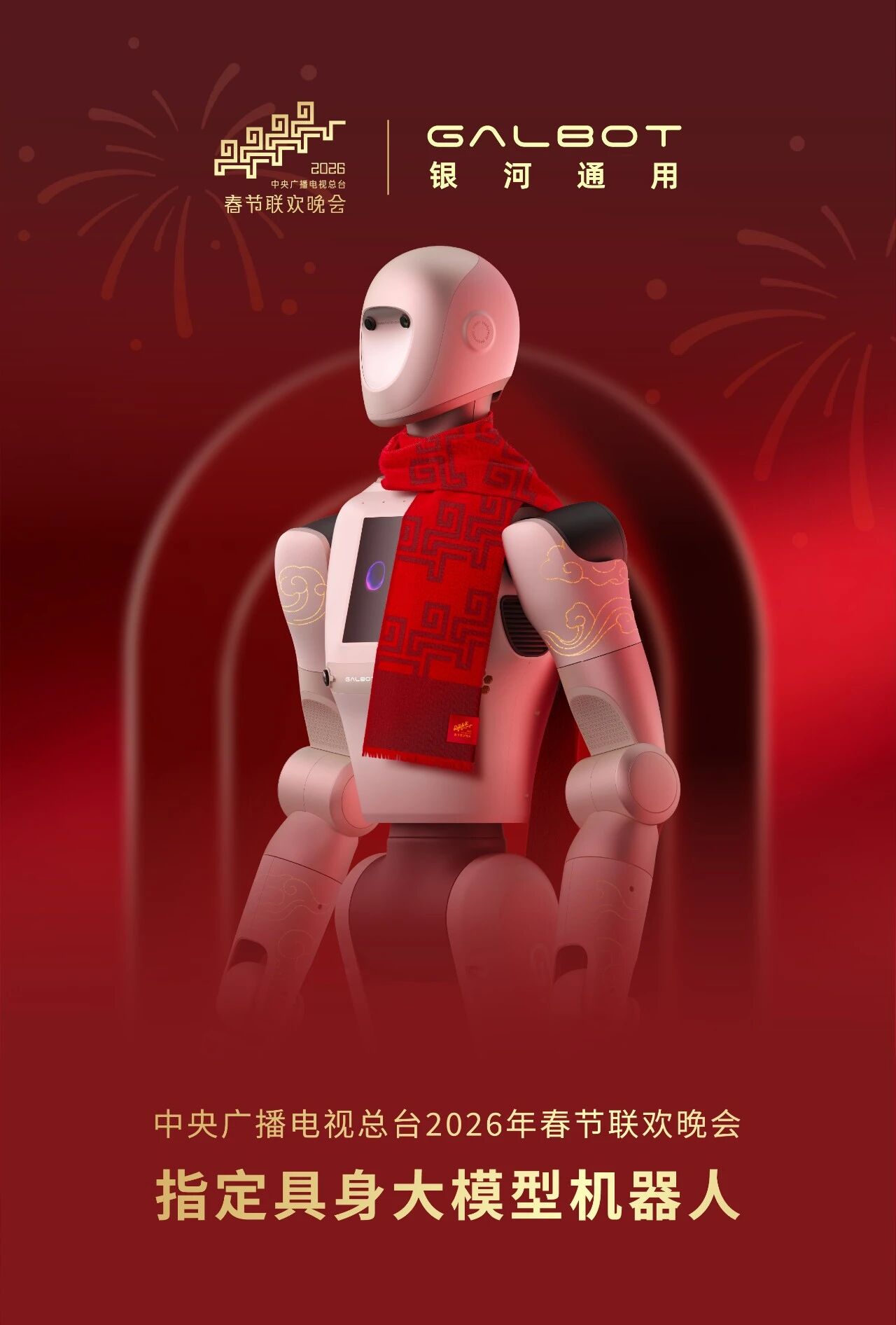
Image source: Galaxy Universal
In addition to these two new startups that will appear on the Spring Festival Gala of the Year of the Horse, some established startups in the robotics field are also increasing their brand promotion and product marketing efforts.
Lei Technology recently noticed a robotics and embodied intelligence enterprise called RealMan, which was founded in 2018. Zheng Suibing, the founder of RealMan, once told the media that "we build robots not to create a human being, but to create a tool that can work in specific scenarios".
Specifically in terms of enterprise development, RealMan currently has three core products: a full-stack self-developed integrated joint module, an ultra-light humanoid robotic arm, and a remote operation network (GLN), all of which have clear commercial application scenarios.
Among them, RealMan completed a cross-ocean real-time remote operation demonstration between "Beijing - Las Vegas" at CES 2026. That is, by building a remote labor network between the "Beijing Humanoid Robot Data Training Center - Las Vegas International Convention Center", embodied trainers in Beijing can remotely and precisely control the RealBOT wheeled folding robot at the CES booth to perform real-scenario operations such as "delivering items" and "transferring fruits".
Beyond RealMan, there should be more established startups in the industry quietly making efforts to achieve a breakthrough from quantitative to qualitative change and finally have their moment of glory.
The Booming Embodied Intelligence Track: Internet Giants Initiate a "Proxy" Battle
On the Spring Festival Gala stage of the Year of the Horse, Magic Atom and Galaxy Universal preempted Unitree in making official announcements. Multiple robot brands will appear on the stage, ending the era of a single brand's "solo performance". As the Year of the Horse approaches, more enterprises in the embodied intelligence and robotics track are striving to gain attention, such as in the currently booming venture capital market. Recently, the little-known Variable Robot completed a 1 billion yuan Series A++ financing, and Zhijian Dynamics, which was established less than half a year ago, completed its fourth round of financing.
In the embodied intelligence and robotics track, new startups are eager to try, and emerging enterprises are constantly emerging. The market pattern is far from being finalized.
It is worth noting that there are the shadows of multiple internet giants behind Variable Robot and Zhijian Dynamics. Among them, Variable Robot is the only embodied intelligence enterprise in the industry currently invested in by Meituan, Alibaba, and ByteDance, three major internet companies. Zhijian Dynamics is an embodied intelligence enterprise simultaneously invested in by Tencent and Alibaba.
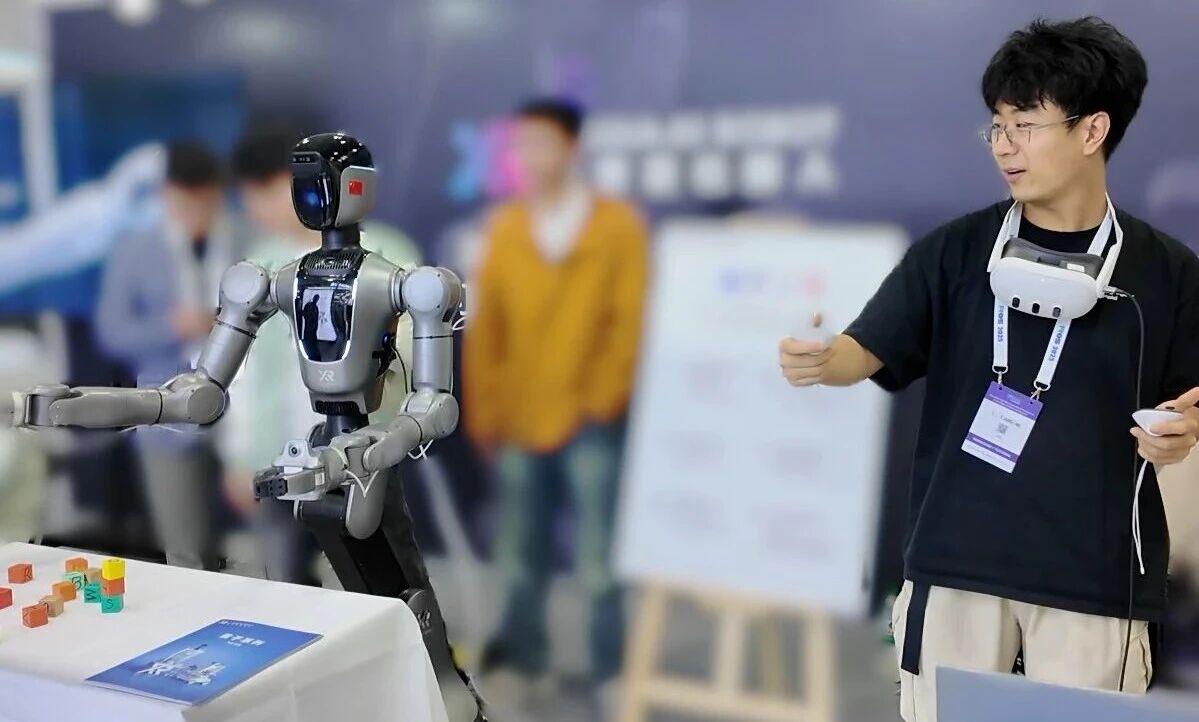
Image source: Variable Robot
Why are internet giants still frantically investing in embodied intelligence and robotics enterprises, especially emerging startups in the track?
1. Internet giants are also AI large model platform enterprises, and embodied intelligence is the "top-tier" and "future" track in the hardware application field of AI large models.
The mainstream view is that on the path to AGI (Artificial General Intelligence), AI is the brain and robots are the body, and both are indispensable. Therefore, these AI large model platform enterprises cannot afford to miss the robotics, especially the embodied intelligence track. At the same time, the overall scale of the current embodied intelligence and robotics market is relatively small. Internet giants need to make strategic layouts but cannot directly involve themselves. Standing behind new startups (especially emerging enterprises that are not yet fully formed) naturally becomes the only option.
2. Robots urgently need to solve the problems of the asynchronous development of the "brain and cerebellum" and batch delivery (rapid scale - up), which provides an opportunity for internet giants to fully intervene.
Robot enterprises are generally more proficient in hardware technology, motion control, and corresponding software adaptation and optimization. This determines that most robot enterprises can only polish robot products at the hardware and motion control levels. The "cerebellum" of a robot refers to the functional module that controls its movement ability, and the "brain" refers to the functional module that controls its intelligence level. Over time, the current situation of the asynchronous development of the "brain and cerebellum" of robots and the difficulty in implementing the concept of embodied intelligence has emerged in the industry.
This common development bottleneck in the robotics industry is both a challenge and an opportunity. New startups in the embodied intelligence track, especially those selected by internet giants, will naturally not miss this opportunity.
Variable Robot focuses on the basic model of embodied intelligence, that is, a physical - world basic model independent of and parallel to virtual - world basic models such as large language models and multi - modal models. The embodied intelligence basic model of Variable Robot takes all the perception information of robots (such as vision, touch, and voice) as input and directly outputs the robot's actions, vision, and language, enabling the robot to have the ability to process unstructured, dynamic, and random tasks in real - time.
Zhijian Dynamics was jointly founded and led by several former senior executives of Li Auto. Its products focus on general robots rather than humanoid bipedal robots. Based on the intelligent driving technology route of automobiles (the core members are from Li Auto's intelligent driving R & D team), it aims to "rapidly scale up" for B - end application scenarios.
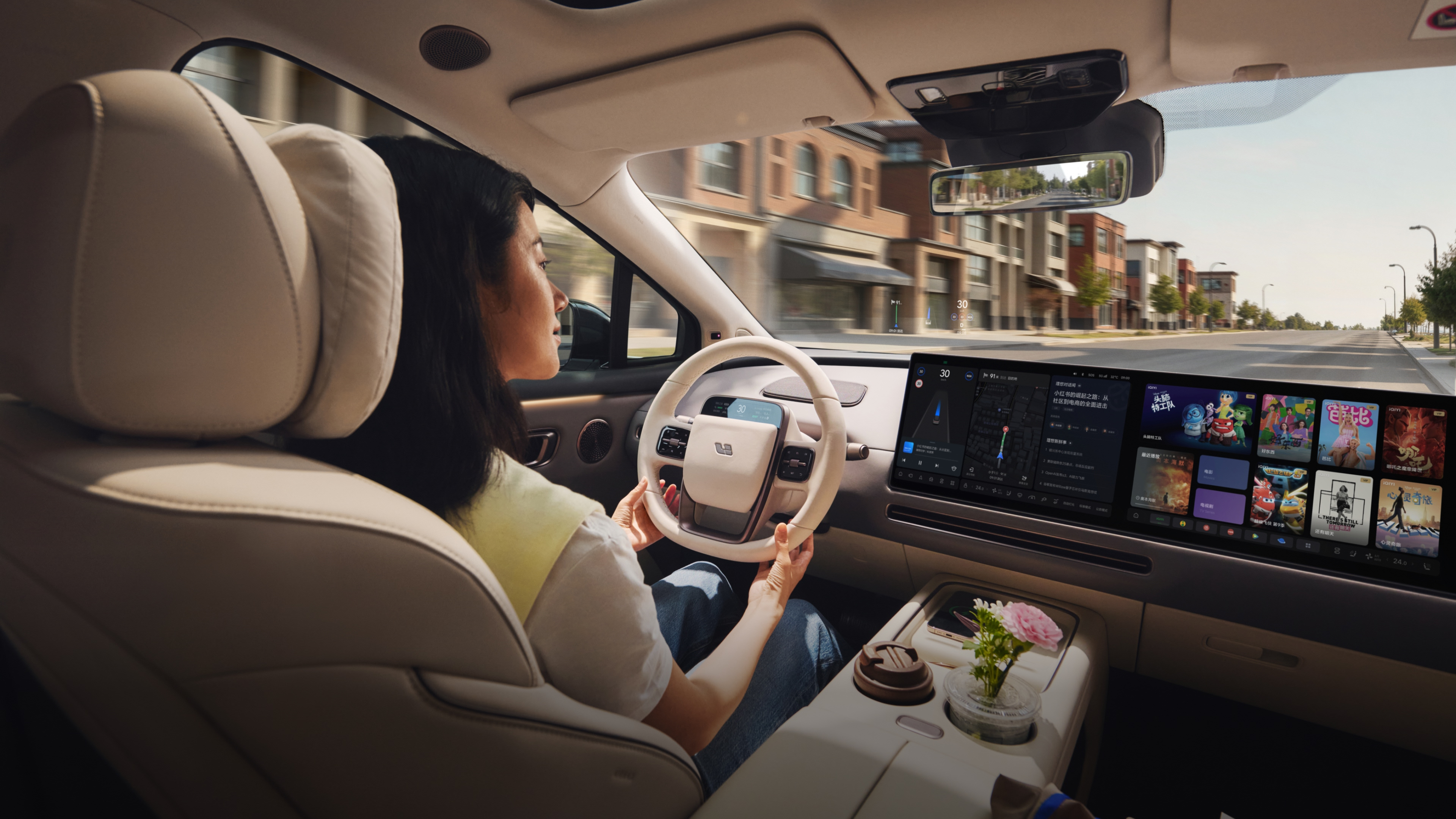
Image source: Li Auto
How fast is this speed? Zhijian Dynamics, which was founded in the second half of last year, plans to achieve mass production of general robots this year. One of the key concepts in the internet thinking is speed. Perhaps it is this that has impressed Tencent and Alibaba, two major internet giants, and they have jointly supported it.
3. Many new and old enterprises have flocked to the robotics and embodied intelligence track. For new startups, especially emerging enterprises, that still want to obtain continuous/large - scale financing at this moment, internet giants, which believe in the "last ticket", naturally become one of the few generous investors.
Fundamentally, software - level AI, hardware - level robots, and embodied intelligence that connects the two are a battle that internet giants aiming to fully transform into AI large model platforms have to plan ahead for.
As long as internet giants (AI large model platforms) have not obtained enough "tickets" and resources, new startups in the robotics, especially the embodied intelligence track, will continue to be eager to try, and emerging enterprises will continue to emerge.
The Four Forces Compete for the Future: A Robot War Seems Inevitable
With the full - scale involvement of internet giants, the current robotics and embodied intelligence track in China not only seems quite crowded but also brings together multiple forces. For this market that is still in its very early stage and remains a blue ocean, it seems a bit overwhelming.
Generally speaking, there are currently the following four forces in the robotics and embodied intelligence track:
1. Robot hardware enterprises: Star brand enterprises such as Zhipu and Unitree, eager - to - shine brand enterprises such as Galaxy Universal and Magic Atom, and established startups like RealMan that are quietly making efforts.
2. Intelligent cleaning and large - home - appliance enterprises, including those that have launched general robots, companion robots, and concept products such as humanoid robots.
3. Automobile enterprises, especially intelligent automobile brands (new car - making forces), are intensively entering the humanoid robot field. Li Auto has recently announced that it will definitely develop humanoid robots and will launch them as soon as possible.
4. Embodied intelligence enterprises, especially new startups and emerging enterprises supported by internet giants.
Currently, these four forces in the robotics and embodied intelligence track each have their own advantages. For example:
Robot hardware enterprises possess core technologies in the fields of robot joints (degrees of freedom) and motion control. Intelligent cleaning and large - home - appliance enterprises have natural advantages in AI hard technology and home - scenario applications. Intelligent automobile enterprises can fully expand or even recreate VLA in the robotics track. Embodied intelligence enterprises supported by internet giants can play an important role in solving the problem of the asynchronous development of the "brain and cerebellum" of robots.
Specifically, in one of these forces, such as the most typical robot hardware field, the current star enterprises, or the "top - tier" enterprises, have not firmly established their positions in the industry. The "no - longer - low - profile" actions of non - star enterprises and established startups at the beginning of this year and during the Spring Festival also prove that they are not willing to be just the "supporting roles" forever.
The star enterprises, non - star enterprises, and established enterprises in the robot hardware industry, intelligent cleaning and large - home - appliance enterprises, intelligent automobile enterprises, and embodied intelligence enterprises supported by internet giants (AI large model platforms) each have their own advantages. It is