The launch ceremony of the research project "Building Global Consensus on AI Guardrails" was successfully held.
On the morning of January 23rd, the launch ceremony of the research project "Global Consensus on Building AI Guardrails", jointly hosted by the Research Base for Sino-foreign People-to-people and Cultural Exchanges at Peking University and Qiming Venture Partners, was held in the Starlight Hall of Yingjie Conference Center at Peking University in a hybrid format of online and offline participation. Experts, scholars, and media representatives from various countries gathered together to discuss the construction of global rules in the field of artificial intelligence and explore international governance consensus.
Wang Dong, a professor at the School of International Studies at Peking University and the executive director of the Research Base for Sino-foreign People-to-people and Cultural Exchanges, presided over the event.
Jia Qingguo, a standing member of the National Committee of the Chinese People's Political Consultative Conference, a professor at the School of International Studies at Peking University, and the director of the Research Base for Sino-foreign People-to-people and Cultural Exchanges, delivered an opening speech via video. Jia Qingguo said that compared with any previous technological breakthrough in human development, artificial intelligence may bring more and greater opportunities and challenges to humanity. On the one hand, the application of artificial intelligence has made significant progress in many fields such as information processing, knowledge innovation, health protection, economic quality improvement and efficiency enhancement, and the construction of a clean government. On the other hand, the risks and challenges it has triggered, such as the impact on employment, the leakage of privacy information, the reduction of direct social interaction, the development of lethal weapons, and the emergence of super intelligence, have begun to emerge and are predictable. As a global phenomenon, the effective governance of artificial intelligence risks is a major issue that all mankind is facing together, and it is urgent for the international community to cooperate and respond jointly. This project is a direct response to this urgent human need and is of great significance for China to participate in global artificial intelligence risk governance and contribute Chinese solutions and Chinese strength.
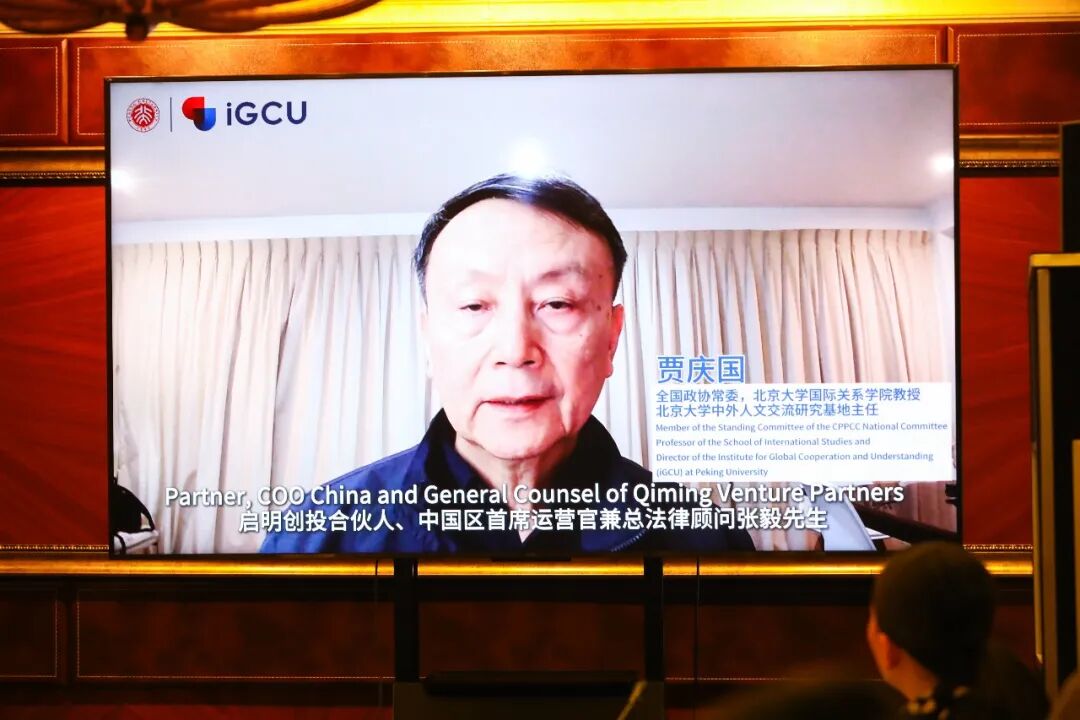
Jia Qingguo delivering a speech
Kuang Ziping, the founding managing partner of Qiming Venture Partners, delivered an opening speech. Kuang Ziping said that Qiming Venture Partners has been investing in China for the past 20 years and firmly believes that technological innovation can be integrated into society and benefit mankind. For this reason, Qiming Venture Partners has concentrated a large amount of energy on investing in the field of artificial intelligence in recent years and has made multiple investments in this field. Many of Qiming Venture Partners' invested enterprises have brought double benefits to the economy and society. Kuang Ziping said, "We are deeply convinced that AI is a transformative technology that will bring changes or even disruptions, and in most cases, improve efficiency, enhance the quality of life, and even change the way society operates." At the same time, Qiming Venture Partners also realizes that AI also brings many risks and challenges, and these challenges are global and shared by all mankind. Qiming Venture Partners hopes to support the research project "Global Consensus on Building AI Guardrails" of the International Governance of AI (IGCU), a top international research institution, to build a dialogue framework based on common understanding for the industrial circle, the professional circle, and even policymakers, and to promote the formation of basic international behavioral norms.
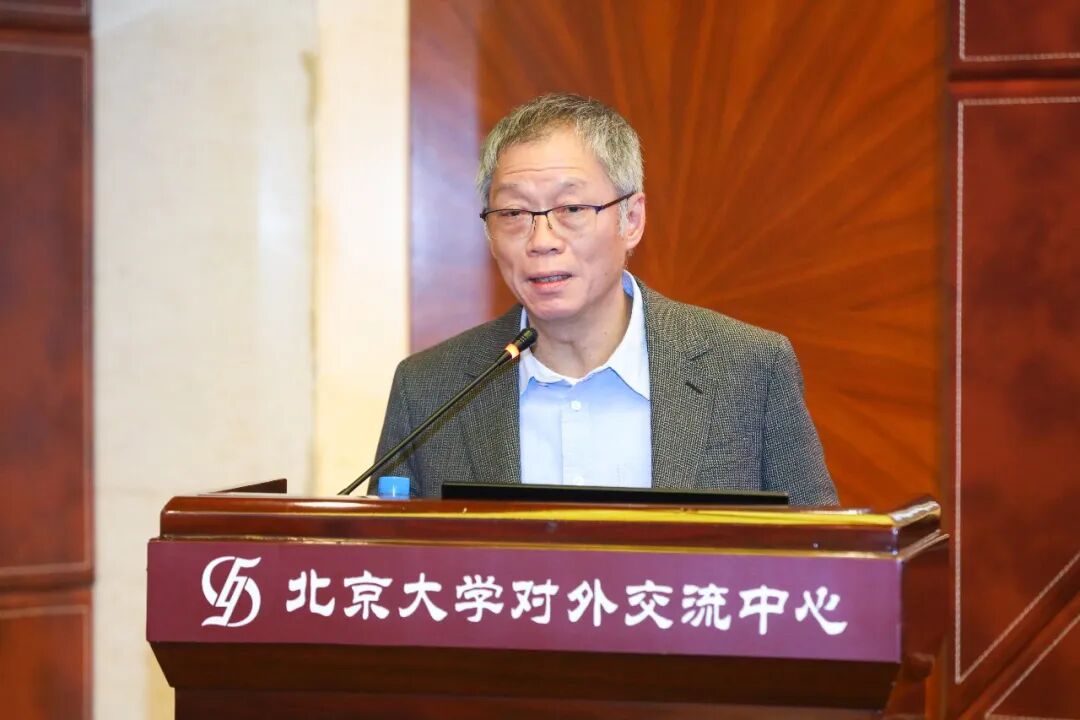
Kuang Ziping delivering a speech
At the project launch ceremony, Wang Dong, a professor at the School of International Studies at Peking University and the executive director of the Research Base for Sino-foreign People-to-people and Cultural Exchanges, introduced the overall project plan and the arrangement for the release of the report. Wang Dong said that this research project is committed to establishing a clear, operable, and sustainable mechanism for reaching and implementing consensus, which serves as the core approach to resolving the differences in AI governance. Through "panoramic mapping", the project will sort out the AI governance frameworks of various countries, identify the areas of consensus, differences, and gaps; rely on "co-research and coordination" to establish a dynamic tracking mechanism for differences, and identify the safety red lines and common ground for global AI governance; and implement the "mechanism implementation" of AI governance consensus to build a full-process mechanism of "dialogue - co-research - transformation - tracking" to promote the aggregation of AI governance consensus and the sustainable development of technology. Wang Dong highlighted the project's first report, "The International Landscape of AI Governance", which aims to systematically sort out the AI guardrail frameworks proposed or adopted by governments, international organizations, enterprises, and the academic community of various countries and present a panoramic view of the current global governance landscape.

The project launch ceremony
During the thematic discussion session, the participating guests put forward guiding opinions on the project design.
Wu Zhiqiang, the executive dean of the Wuhan Institute of Artificial Intelligence at Peking University, said that the two - part framework of nuclear safety governance should be used for reference to distinguish between the "existential risks" and "systemic risks" of artificial intelligence. He emphasized that current policies should focus on the real and solvable systemic risks, avoid over - concentrating resources on long - term hypothetical threats, and called for an increase in the proportion of investment in AI safety research to make it the core of infrastructure design.
Daniel Castro, the vice - president of the Information Technology and Innovation Foundation, compared AI governance with food safety and said that different countries will make different choices in AI governance, and the key is to ensure basic safety standards. He emphasized that the design of guardrails needs to consider internal trade - offs and pointed out that open science and research sharing are crucial for global common learning and avoiding repeated mistakes.
Wei Kai, the director of the Artificial Intelligence Research Institute of the China Academy of Information and Communications Technology and the leader of the General Group of the China AI Industry Alliance, elaborated on the multi - level nature of AI risks and emphasized the concepts of the "dynamic safety concept" and "agile governance". He suggested establishing a "PDCA" (Plan, Do, Check, Act) closed - loop management mechanism from enterprises to the country to form a multi - party collaborative governance ecosystem to cope with the uncertainties brought about by the rapid iteration of technology.
Karman Lucero, a senior fellow at the Tseng Law Center for China in the Yale Law School, said that global AI governance faces three challenges: technological, institutional, and political. He suggested that research should face up to and deeply analyze the political differences and institutional capacity - building issues and seek operable consensus and frameworks on the basis of acknowledging differences.
Dai Xin, the deputy dean of the Law School at Peking University, said that the effectiveness of any technological or institutional guardrails ultimately depends on the legal and social norm system in which they are embedded. He believes that the reasonable expectation for guardrails and even governance is not that they can ensure safety, but that they help maintain public safety perception and social trust in the context of great uncertainty in the development of artificial intelligence. In terms of international cooperation, he suggested starting from identifying several uncontroversial consensus - based governance issues to break through the current situation where various AI governance dialogues are trapped in discourse differences and unable to take specific actions.
Jason ZHOU, a senior research manager of international AI governance at Anyuan AI, introduced a three - category risk framework based on "misuse, malfunction, system" and the operational ideas of "yellow lines" and "red lines". He proposed that governance principles can be implemented through specific risk assessments and model tests and called for strengthening cross - border crisis management cooperation to jointly improve the ability to respond to AI emergencies.
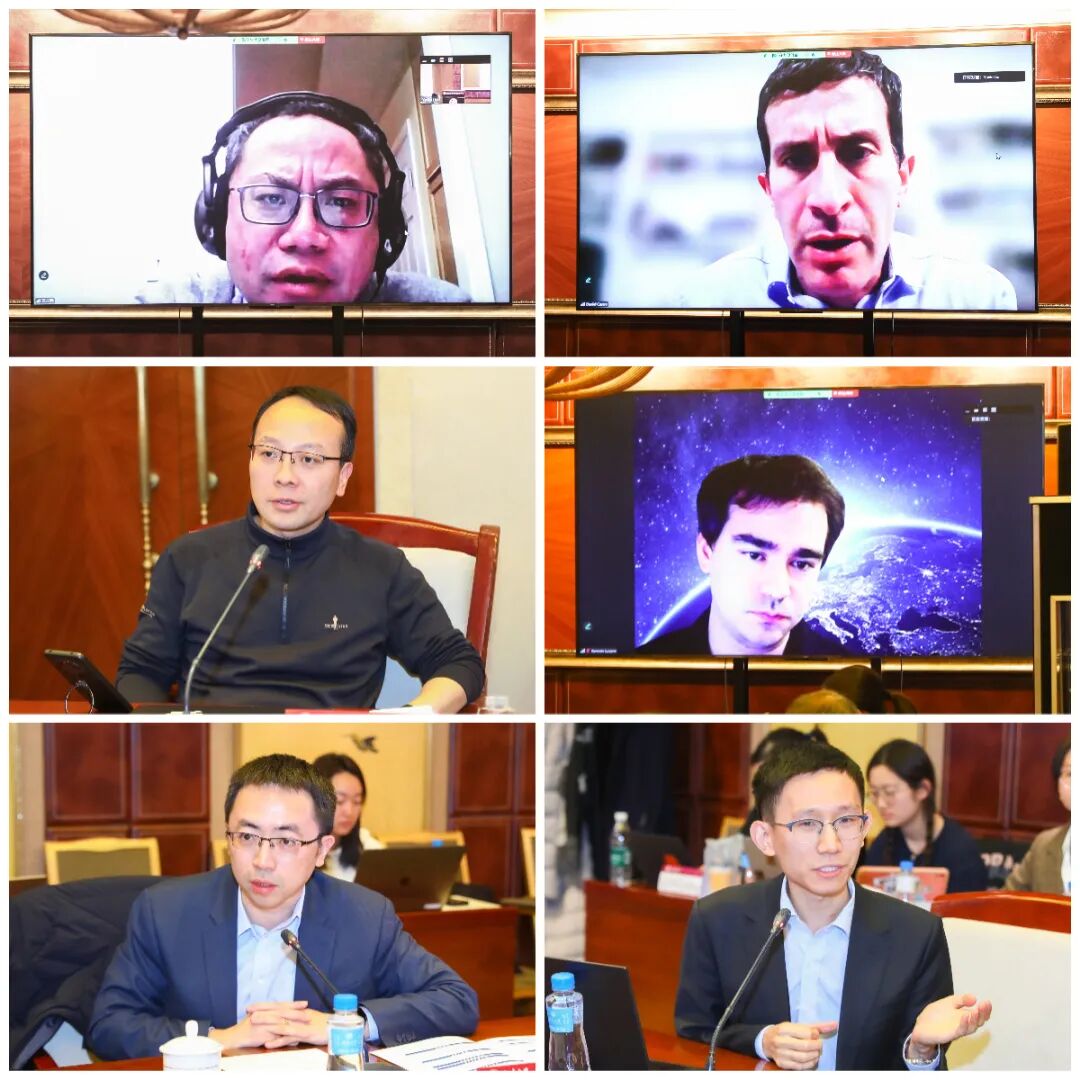
Participating guests speaking
At the end of the event, Wang Dong, a professor at the School of International Studies at Peking University and the executive director of the Research Base for Sino-foreign People-to-people and Cultural Exchanges, made a concluding speech. Wang Dong said that the insightful opinions expressed by the experts and scholars at the meeting will provide important guidance for the next step of the project. The research team will carefully sort out and absorb these valuable suggestions and make every effort to write the first report. In the future, the project will continue to focus on the global issue of AI safety guardrails and promote the aggregation and implementation of international consensus through in - depth research. He sincerely thanked Qiming Venture Partners for their strong support, the participating guests for their in - depth sharing, and the team members for their hard work, and looked forward to working with all parties to jointly promote the global governance and sustainable development of artificial intelligence.
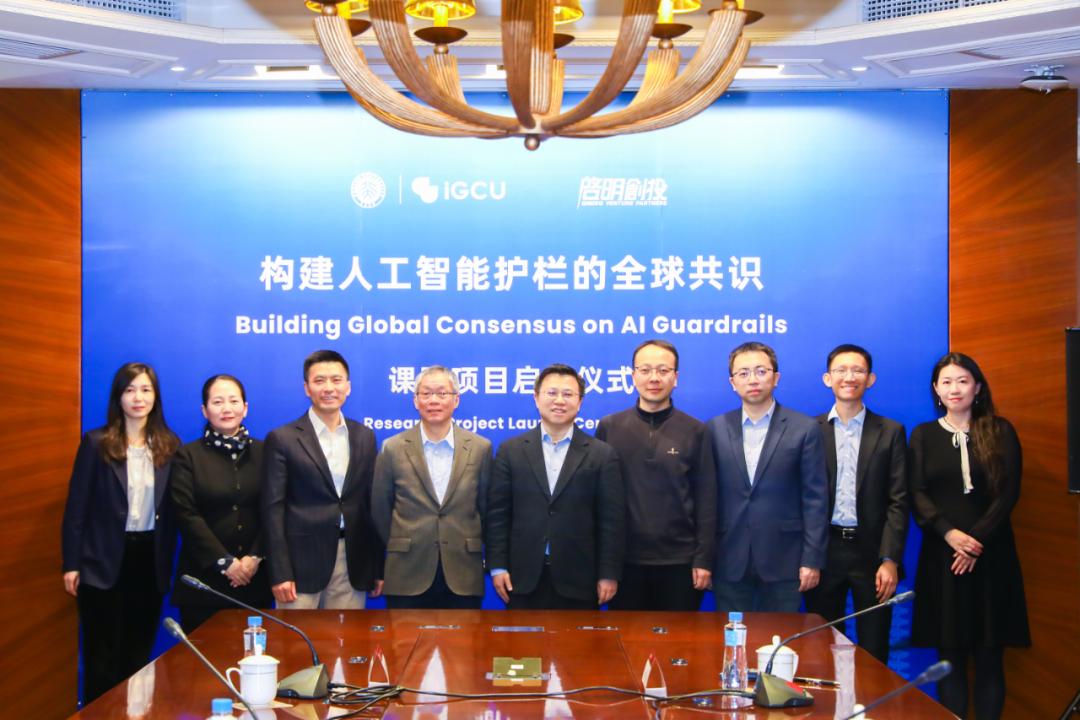
Group photo of participating guests
This article is from the WeChat official account "Qiming Venture Partners" and is published by 36Kr with authorization.