Is it worth spending 3 million yuan for 3 minutes to send Huang Jingyu into space?
01
In the past few days, the news that actor Huang Jingyu is going to space has gone viral on social media.
According to the disclosure of Beijing Transcender Manned Space Technology Co., Ltd., its Transcender No. 1 spaceship can transport passengers to the Karman Line, which is 100 kilometers above the ground, to experience 3 to 6 minutes of weightlessness. Huang Jingyu is the 009th passenger.
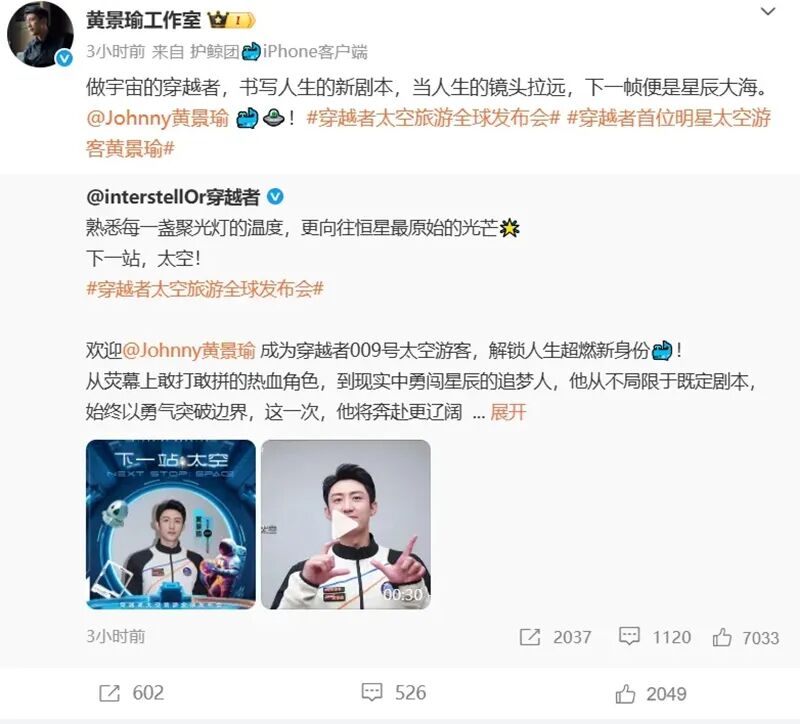
According to the disclosure of multiple media, after the commercial pre - sale of this spaceship was launched, the first ticket was sold in 2023, and nearly 20 tickets have been pre - sold so far. The pre - sale price of each ticket is 3 million yuan, and you can lock in your spot by paying a 10% deposit.
In the list of the first batch of passengers, besides Huang Jingyu, it also includes Lei Shiqing, the founder and CEO of Transcender; Li Licheng, an academician of the Chinese Academy of Engineering; Qiu Heng, the CMO of Zhipu Robotics; Wang Jing, the founder of Toread; Fu Zhekuan, the chairman and founder of Qifu Capital. There is even a humanoid robot named Zhongqing PM01.
This list that spans carbon - based and silicon - based life has quickly attracted public attention to China's first manned commercial space enterprise.
From a communication perspective, considering Huang Jingyu's status in the entertainment circle, although it has not been disclosed whether he is a self - paying tourist, this celebrity's ticket seems more like a catalyst to attract public attention rather than a pure ticket - purchasing behavior.
With the announcement of the list of China's first commercial space flight, the reaction on the hot search has been quite lively.
Some people said that in the past, people joked about "Why don't you go to space?", and now this has really become a reality. Some people sighed in the comment section that "Poverty restricts my sense of weightlessness." Some media also publicly questioned that the so - called space dream is just an elite game in a new guise.
Anyway, a fact is in front of us. Space tourism has officially entered the stage of commercial sales from science fiction, experiments, and visions, and the prices are clearly marked.
Transcender has also presented a clear roadmap. It plans to achieve the first sub - orbital manned flight in 2028, sending passengers to the edge of the Karman Line, 100 kilometers from the Earth. In 2032, it aims to enter the low - Earth orbit about 400 kilometers above the ground. By 2038, the goal is to explore the Earth - Moon space 380,000 kilometers away.
Just looking at the numbers, it might be hard to get a clear concept. But if we compare it with the past flight records of astronauts, in 2003, Yang Liwei entered the low - Earth orbit at an altitude of 343 kilometers when he took Shenzhou V, which was the starting point of China's manned spaceflight.
More than twenty years later, domestic and foreign commercial companies have started selling tickets for ordinary people to go to space.
In the United States, since 2021, Virgin Galactic, Blue Origin, and SpaceX have all completed commercial space flights in the same year.
Virgin Galactic uses the "airplane + spaceship" model. First, the mother aircraft takes off, and then releases the spaceship to soar into the sky. The flight altitude is close to 100 kilometers. It is currently the most mature and commercially successful space tourism project in the world.
Blue Origin takes off vertically. The cabin is like a huge capsule, which is sent into space by a rocket and then returns.
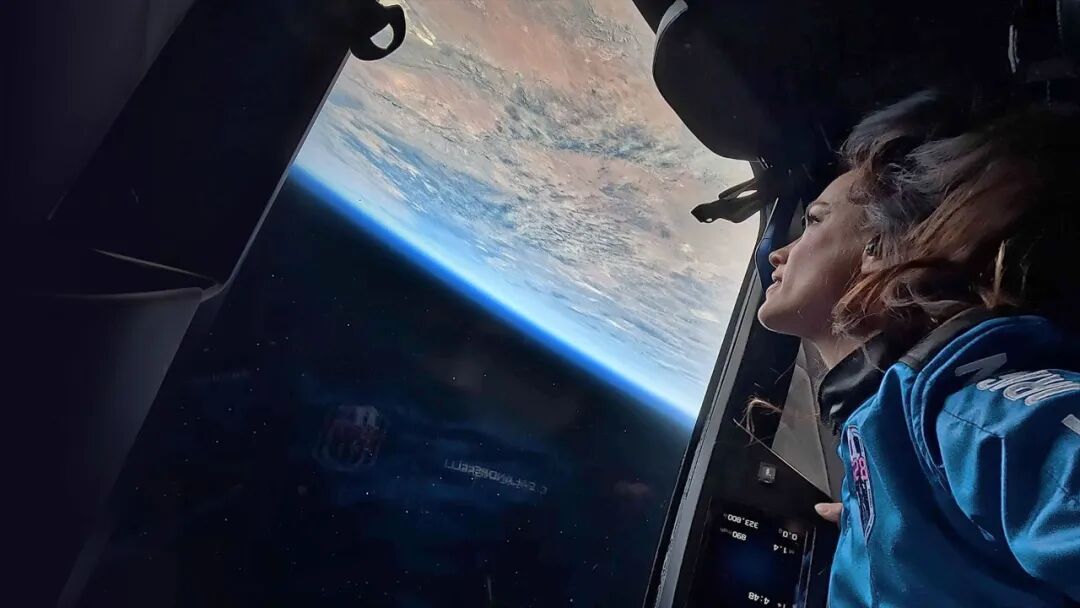
The view of passengers "going to space" provided by Blue Origin
SpaceX takes a more ambitious route, directly sending passengers into the Earth's orbit, flying around the Earth, and even docking with the space station.
The three companies have different routes, but they all point in the same direction: enabling non - astronauts, that is, ordinary people, to enter space.
In terms of price, the three American companies have also formed a clear gradient.
The unit price of Virgin Galactic's and Blue Origin's sub - orbital flights is between 400,000 and 500,000 US dollars. SpaceX's orbital flights start at tens of millions of US dollars. The 3 - million - yuan price set by Transcender is almost precisely at the lower end of this global price range.
It's not cheap, but it's not outrageous either.
From a policy perspective, as early as in the "China's Space Program in 2021" white paper, it was clearly stated that new business forms such as space tourism should be cultivated. In the subsequent commercial space action plan released by Beijing, space tourism and space manufacturing were also included in the development direction.
Now, space tourism has finally been priced in China, and the admission tickets are no longer only for astronauts.
02
What can Huang Jingyu and others get with a 3 - million - yuan spaceship ticket?
To understand the commercial value behind this ticket, we first need to take a closer look at the place called the Karman Line.
The Karman Line is the internationally recognized boundary between the Earth's atmosphere and outer space, at an altitude of 100 kilometers above the ground.
It was proposed by the Hungarian - American scientist Theodore von Kármán. When an aircraft reaches this altitude, the air is so thin that it can no longer generate lift, and it must rely on rocket power to maintain flight.
Above this altitude, you are no longer under the jurisdiction of any country's airspace but have entered the public space.
So far, only about 720 people in the world have reached this altitude.
This means that once you cross that invisible line, you will obtain the internationally recognized astronaut qualification.
If we break down Transcender's ticket, what it mainly offers is such a sub - orbital flight.
Judging from the similar flight experiences of foreign companies, the whole process from launch to return takes about ten minutes, and the actual time crossing the Karman Line may be only a few tens of seconds, with the weightless state lasting for 3 to 6 minutes.
The experience is confined to a very short time window. The position it reaches just skims the upper edge of the atmosphere but is far from the orbit around the Earth that we imagine.
If we use geographical perception as an analogy, taking a plane is a three - dimensional commute, going to space is a four - dimensional breakthrough, and sub - orbital flight is like skirting the edge of dimensions.
So, what can tourists who spend 3 million yuan see at the Karman Line?
Most photos show that from this altitude, the Earth appears curved, the sky transitions from dark blue to pitch - black, and the clouds and mountains on the surface are spread out like a map.
The view is wide but not complete.
If you want to see a complete spherical Earth like the "Blue Marble" photo taken during the Apollo era, you usually need to reach the lunar orbit or a perspective from a deep - space probe farther away.
Sub - orbital flight cannot provide such a view. It presents a partial curved view of the Earth.
Therefore, from a commercial logic perspective, this commercial space flight actually has only three selling points: the weightless experience, the view from the edge of space, and the status symbol of crossing the Karman Line.
Each aspect has its own story.
Weightlessness is a physical state that only a few people can experience. The view is a photo that many billionaires around the world want to take. As for the Karman Line, it is the dividing line between astronauts and non - astronauts.
For the first - batch of paying users of commercial space flights, this is more like an identity label. Even if they are well - prepared, whether they can take a decent space photo in the end depends on the weather, angle, and window seat.
In short, this is a game that tests the passengers' budget, courage, and preparation. There is still a long physical distance from the so - called "God's perspective" that many people imagine.
03
So far, no one can answer whether the photo taken after returning from the Karman Line is worth 3 million yuan.
Looking back, in the early stages of commercialization of every new type of transportation and tourism tool, the price was not cheap, and there were not many participants.
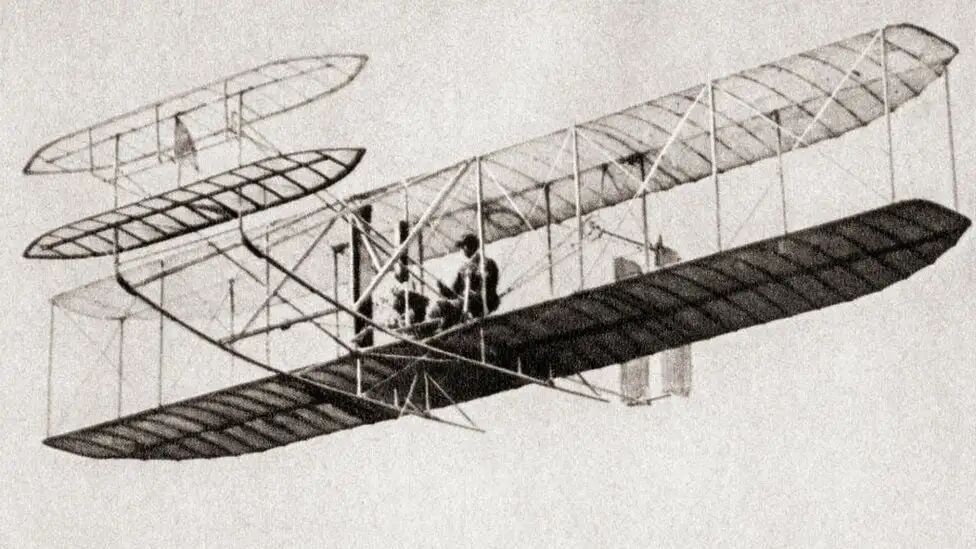
In 1903, when the Wright brothers made their first flight in North Carolina, there were only five spectators on the ground.
In 1952, the world's first jet passenger route was opened, flying from London to Johannesburg. The one - way ticket price was equivalent to $40,000 - $50,000 today. The flight took 23 hours and had to make seven stops.
In 1991, China's first business charter company was established. A single flight cost hundreds of thousands of yuan and was once regarded as a symbol of entrepreneurs' status.
Around 2005, traveling to Antarctica became a hot topic in China. At that time, a ticket also cost hundreds of thousands of yuan, and the trip lasted more than twenty days. Almost every returning tourist made it onto financial magazines.
Every new form of travel has almost gone through a stage where it was questioned as an exclusive consumption game for the rich before it became popular.
Now it's 2026, and space tourism is on this path. Its difference lies in a shorter time, a higher threshold, and more difficult - to - predict risks.
In the public's imagination, this should be an experience that symbolizes the future. But in reality, even the currently relatively affordable sub - orbital flight is far from being a "pack - and - go" experience.
Passengers need to undergo medical examinations, overload training, weightless simulations, and safety briefings before the flight. They have to complete several days of adaptation courses following the astronaut - level process throughout.
You can't move around randomly in a weightless state, and you can't even change your seat or window seat at will.
According to the information released by companies like Virgin Galactic that have achieved commercial flights, flight suits are issued by the company, and cameras must be fixed to avoid floating and colliding in a weightless state.
The seats in the entire flight cabin are similar to those in economy class, with almost no space to move between seats. The time, actions, and rhythm of each passenger are almost all clearly arranged.
This one - hour experience is destined to be highly compressed.
When the new freedom brought by technology has to be strictly controlled, defining the value of this trip becomes a completely subjective question.
In the passenger list of Virgin Galactic, there have been teachers, artists, entrepreneurs, and retired soldiers. Each person has given a different answer.
Some people said that it was worth it to see the Earth from the outside for the first time in their lives.
Some people said that it was too short and too expensive, and they wouldn't fly again. But no one said it was a scam.
Because the technological threshold is there, and the flight process really happened. If someone says the experience isn't worth it after getting off the spaceship, it's like denying their own choice at the beginning.
Just like those who once laughed at electric cars but now drive BYD or Tesla to send their children to school, space tourism is, in an expensive way, making it possible for people to see the Earth from the outside, starting from a very small number of people.
Perhaps the only thing we need to care about is the flight safety issue.
Compared with foreign companies, a company like Blue Origin had completed nearly 40 flights by the beginning of 2026. This high - frequency flight has accumulated data, which is the most core trust asset in commercial spaceflight.
Although domestic companies have the support of policy dividends, they are still in the stage of making up for their lack of practical experience in manned flights.
At the beginning of the era of expensive space flights, we look forward to seeing the tickets to the stars and the sea. We also hope that time will give a fair answer to the passengers who have really spent 3 million yuan to go to space.
This article is from the WeChat public account "Travel World". The author is Theodore Xishao. It is published by 36Kr with permission.