US AI can't do without Chinese transformers
"The most proud AI industry in the United States owes its existence to Chinese transformers."
Many people may think the recently popular saying is full of the so - called "Chinese winning mentality". However, the official has recently released a set of data. Let's take a look at the amazing capabilities of Chinese transformers:
According to the data released by the General Administration of Customs of China on January 18th, last year, China's transformer export volume reached a record high of 64.6 billion yuan, a year - on - year increase of nearly 36%. Factory orders are already scheduled beyond 2026, indicating extremely strong demand.
Bloomberg also followed up on this story and released some information not mentioned in official news:
Due to the high demand for Chinese transformers, European customers are willing to pay a 20% premium to secure production capacity. In the United States, not only did it import transformers and related components worth $4 billion from China in 2024, but it will still be the largest buyer of Chinese transformers in 2025.
Chinese companies like Siyuan Electric have directly established subsidiaries in the United States to more conveniently seize this lucrative business opportunity.
In short, Chinese transformers are selling like hotcakes.
However, this set of data also raises many questions. As the world's most developed capitalist country, why does the United States need to purchase a large number of Chinese transformers?
What is the connection between the large - scale purchase of transformers and saving the US AI industry?
The Aging Grid of the Empire
Because the United States has encountered an electricity - guzzling monster that comes once in a century: AI.
Here is a very straightforward example: Elon Musk built a super - computing cluster called "Colossus" in Memphis, Tennessee, to train Grok, the large - scale model of xAI.
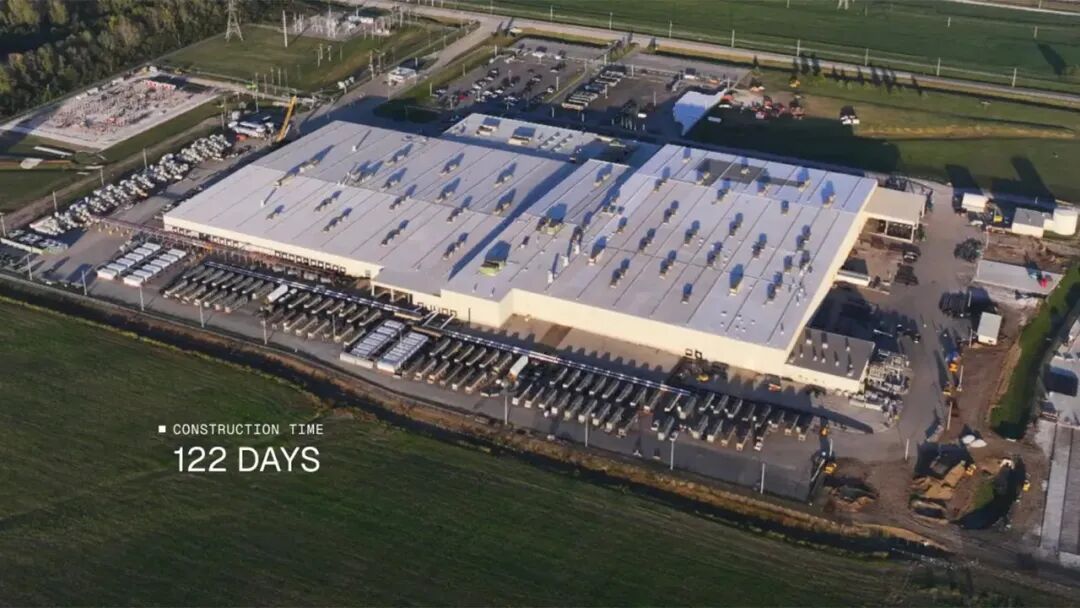
Musk's "Colossus" can be thought of as a huge computer room filled with 100,000 H100 graphics cards. Just by running, it consumes 150 megawatts of electricity every day.
What does this mean? This is equivalent to the total daily electricity consumption of 100,000 American households. Musk's one computer room consumes the electricity quota of a medium - sized American city.
In addition to having a large "appetite" for electricity, AI also places a very high load on the power grid.
Imagine if you turn a light bulb on and off one million times in one second. What will happen? Besides getting scolded by your mom, the light bulb will explode, the wires will burn, and the circuit breaker will trip.
This is what a large - scale model with trillions of parameters does to the power grid during gradient - descent calculations. The current load can soar from a trough to a peak in milliseconds, accompanied by severe harmonic interference.
Such a high load is too much for the US power grid.
Can't the US power grid meet the electricity demand of AI data centers? Does it mean that the US power grid construction level is poor?
Not really.
Actually, before China, the United States was the one known as the "infrastructure powerhouse".
Especially in power grid construction, as the home of Thomas Edison and Nikola Tesla, long - distance power transmission began to appear in the United States in the 1890s. At that time, China was still in the late Qing Dynasty, and the Empress Dowager Cixi had just seen a steam train for the first time.
From the 1930s to the 1960s, while China was still in a stage of war and post - war reconstruction, the United States launched a series of large - scale national infrastructure projects.
By the end of the 1960s, 97% of American farms had access to electricity, and the total length of the national power grid reached 60,000 miles, basically achieving universal electrification.

During the same period, the United States completed major infrastructure projects such as the Hoover Dam, the Interstate Highway System, and airport expansions, laying the foundation for the current US infrastructure.
However, a problem arises. According to the latest data from the US Department of Energy, currently about 70% of the US transmission lines and 70% of large - scale transformers have been in service for more than 25 years, and many core components are approaching the limit of their designed service life.
This is because since the United States completed the basic construction of its power grid in 1960, there has been no large - scale renovation and construction of the power grid in the following five or six decades.
The reasons behind this are quite complex. Generally speaking, the sharp slowdown in electricity demand growth, the limited power and mobilization ability of the US federal government, and the explosive extension of environmental protection regulations and approval cycles have made the United States lose the motivation to update the existing power grid.
So, the inability to meet the electricity demand of AI data centers is because the US power grid was built too early.
Moreover, Musk is not the only one planning large - scale computing clusters. Tech giants like OpenAI, Microsoft, and Google are all building power - hungry black holes at the gigawatt (GW) level, which means a power consumption level of one billion watts.

Facing the surge in electricity consumption and load, the old - fashioned US power grid can no longer hold up.
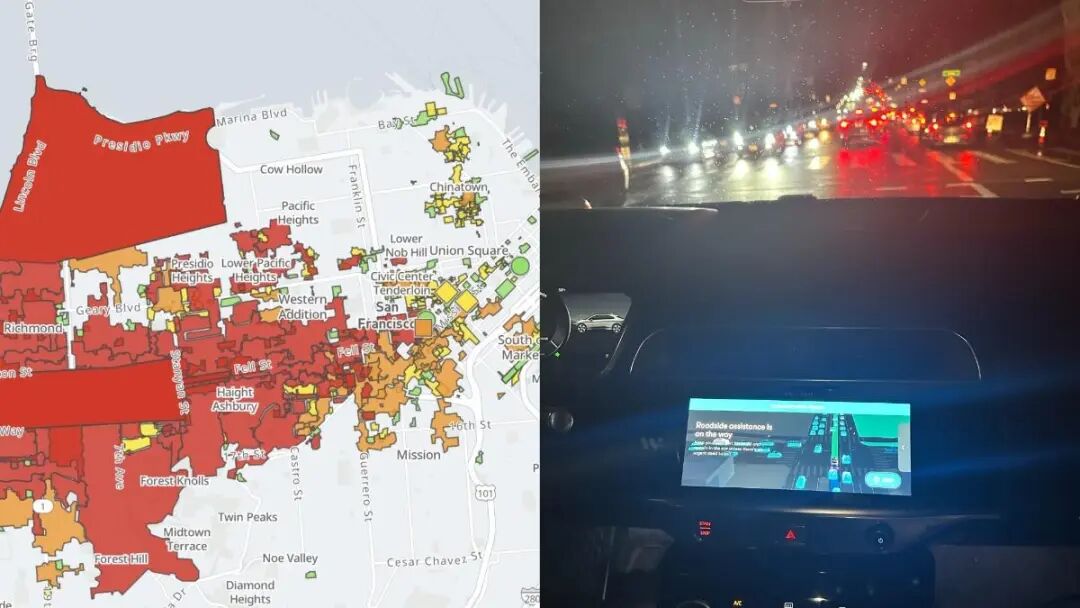
In the 10 years starting from 2013, there were 10 major power outages in the United States, averaging one per year. On December 21, 2025, a major power outage affecting more than 100,000 households occurred in San Francisco, California. US media reported that the cause of the outage was a fire at a substation, and the fire was likely related to equipment aging.
To solve the problem of electricity shortage, the update of the US power grid is extremely urgent.
On September 18, 2025, the US Department of Energy urgently launched the "Speed to Power" plan, preparing to invest billions of dollars to speed up the transmission line projects that would originally take 7 to 10 years to complete.
On January 16th, news reported that Donald Trump was even preparing to use administrative means to intervene in the power market, forcing AI giants to sign 15 - year contracts to pay for a new power plant worth $15 billion.
However, just throwing money at the power grid update won't work.
After electricity leaves the power plant, it has to pass through three "checkpoints": the "transmission grid", the "distribution grid", and the "end - user power supply". And to pass through these three checkpoints, the most core component, the "transformer", is essential for voltage step - up and step - down, current splitting, and filtering, so that the electricity can finally be used by AI computing cards.
Just when the United States urgently needed transformers, it found itself in an "industrial shrinkage dilemma":
Currently, there are less than 8 large - scale transformer manufacturers in the United States, and their technology is outdated. Their production capacity can only meet 20% of the domestic demand.
However, since 2019, the demand for power transformers has increased by 116 - 119%, the demand for generator step - up transformers has increased by 274%, and the demand for distribution transformers has increased by 34 - 41%.
The US domestic production capacity can't even meet the gap in its own power grid transformation. Even if domestic manufacturers invest to expand production, the delivery cycle will still take 2 - 4 years, which is too slow to solve the current problem.
Therefore, to fill the huge gap in transformers needed for the update and transformation of the old - fashioned US power grid, it is obviously more cost - effective and realistic to buy transformers from China.
Of course, even if the United States can solve the production capacity problem of transformers, it is still very likely that it can't produce the transformers truly needed for power grid upgrade.
The Secret Weapon of Chinese Transformers
As early as the first term of the former US President, an executive order was signed to ban the power grid from using equipment from "foreign adversaries". In 2025, US senators even wrote letters firmly stating that China should be "kicked out" of US critical infrastructure...
However, even though Washington has a firm attitude, the market is still frantically sending emails to Chinese factories: "Dear, please give us a production schedule. We're willing to pay more..."
This is because while there is only one factory in the United States that can produce the key material for transformers, grain - oriented electrical steel (GOES), China has a leading global advantage in this field.
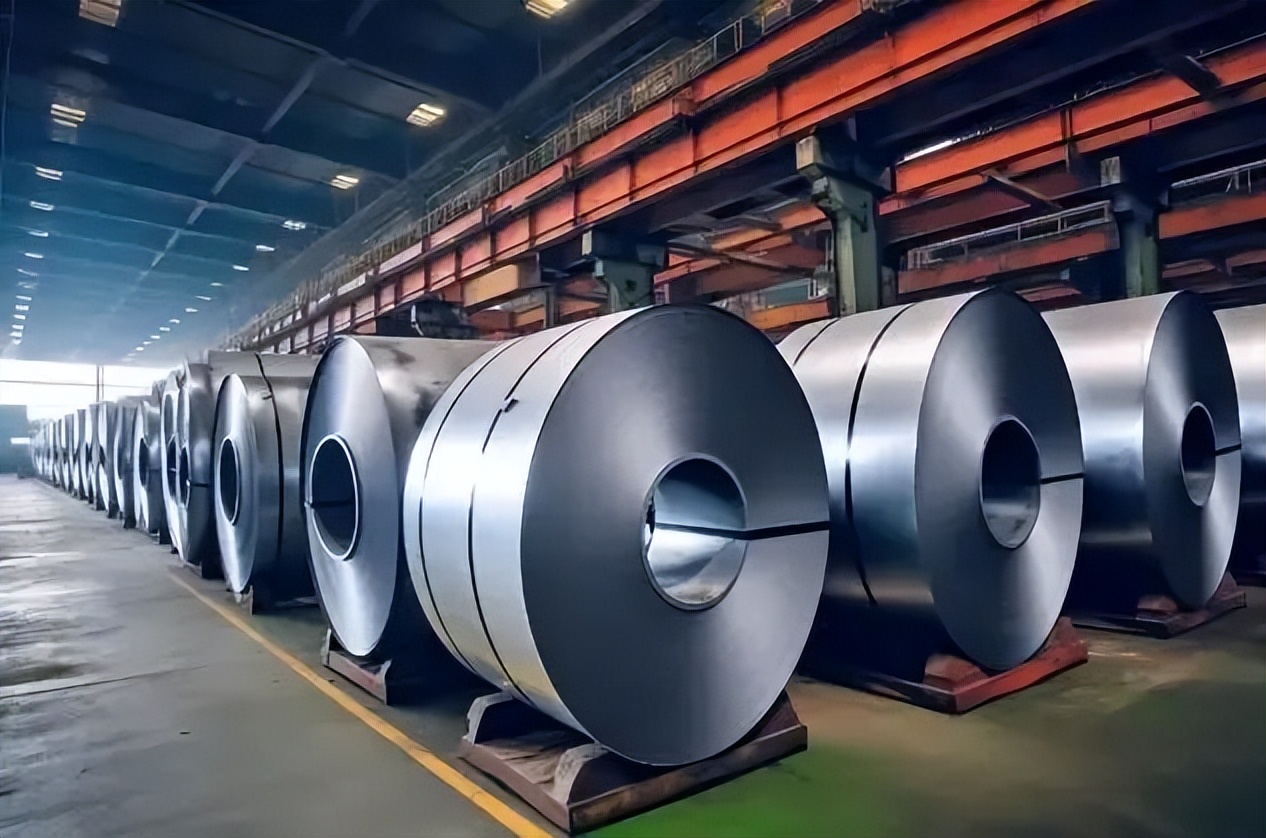
Grain - oriented electrical steel (also known as grain - oriented silicon steel) is a special type of electrical steel. Its main feature is that the grains are highly oriented along the rolling direction, resulting in strong magnetic anisotropy. It is almost exclusively used in equipment with a fixed magnetic field direction, especially the cores of power transformers.
The production of this kind of steel is extremely difficult and the process is very complex. It is known as the "pearl on the crown of the steel industry".
In high - end transformers for AI and green energy, only the top - grade grain - oriented electrical steel can ensure that the current transmission is heat - free and loss - free, meeting the extremely strict heat - dissipation requirements of computer rooms.
And China is the absolute leader in the field of grain - oriented electrical steel.
In the transformer field, the thinner the silicon steel sheet, the lower the eddy - current loss and the higher the energy efficiency.
While the world is still striving to reach the 0.23 - millimeter standard, leading Chinese enterprises such as Baowu Steel already have the world's only professional production lines for 0.18 - millimeter and 0.2 - millimeter grain - oriented electrical steel.
How thin is 0.18 millimeters? It is thinner than two stacked A4 papers.
It is this "Chinese steel" as thin as a cicada's wing that has produced high - end transformers with extremely low losses. Even if the power consumption of NVIDIA GPUs is astonishing, it can maximize the energy - use efficiency of data centers.
In addition to having top - notch technology, Chinese transformers have another secret weapon: large - scale production to meet demand.
Currently, China's annual production of grain - oriented electrical steel accounts for half of the global output. It is five times that of Japan and eight times that of the United States. China's advantages in industrial chain collaboration, scale, and cost may be an even more insurmountable gap than technology.
Without the strong support of the Chinese supply chain, at least 30% to 40% of the newly - built AI data centers in the United States last year would not have been able to be powered on on time, and AI training and model iteration would have been out of the question.
Actually, the United States is not the only one that depends on Chinese transformers.
In the wave of the accelerated upgrade of global power infrastructure, large - scale development of new energy, and rapid expansion of AI data centers, transformers, as the core equipment of the power grid, have increasingly become a bottleneck in the supply chain.
With about 60% of the global production capacity and a relatively shorter delivery cycle, China has become the world's major supplier.
This is no longer a question of whether the United States "wants to buy". Even if the United States is really eager to buy, it has to pay first and then wait in line.
The "Gift" of the Infrastructure Powerhouse
Perhaps even Americans didn't expect that they, who had a power grid a hundred years ago, would now need Chinese power equipment to "save" their power system.
It can only be said that in the past three decades, the development speed of China's power industry has truly exceeded everyone's expectations.
In the 1990s, China had just initially formed six major regional power grids in North China, Northeast China, East China, Central China, Northwest China, and South China, and most rural areas had just been connected to the power grid. But more than 30 years later, China has the world's most complete, most mature, and the only commercially - viable ultra - high - voltage (UHV) power transmission system.
China has built the world's largest and most technologically advanced UHV network, with a total line length exceeding 40,000 kilometers, covering 1000kV AC UHV and ± 1100kV DC UHV.
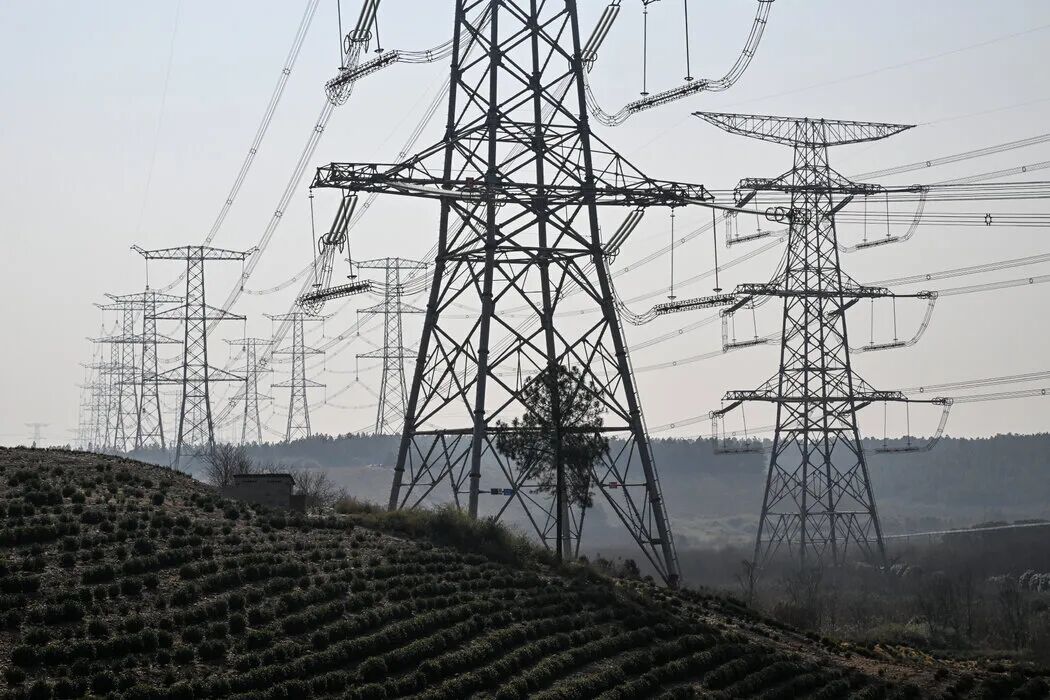
This not only means a leading position in voltage level and transmission distance but also means full control over insulating materials, transformer reliability, system stability, and long - term operation safety under ultra - high voltage.
Globally, most countries are still in the pilot or engineering verification stage, while China has completed the entire closed - loop process from technological breakthrough, project implementation to large - scale operation, turning UHV from a "laboratory capability" into a "national - level infrastructure capability".