Completely understand 6G in one article
6G has gone viral.
On the morning of January 21st, the State Council Information Office held a press conference to introduce the achievements of industrial and information technology development in 2025.
It was mentioned at the press conference that China has built 4.838 million 5G base stations, and all townships and 95% of administrative villages across the country are now covered by 5G. China has built the world's largest and technologically leading information infrastructure. The number of 5G users has exceeded 1.2 billion. China accounts for 42% of the world's declared essential patents for 5G standards.
The press conference also mentioned that currently, the first - stage technical tests for 6G R & D have been completed, resulting in over 300 key technology reserves. Recently, the second - stage 6G technical tests have been launched.
For a moment, the entire internet is paying attention - is 6G really coming? What's the difference between 6G and 5G? What impact will it have on our lives?
In this article today, we will conduct an in - depth interpretation.

What exactly is 6G?
So - called 6G refers to the 6th Generation, the sixth - generation mobile communication technology, which is the next - generation global mobile communication standard after 5G.
6G is actually a "nickname". Its official name, determined by the Radiocommunication Sector of the International Telecommunication Union (ITU - R), is IMT - 2030 (while 5G is IMT - 2020). IMT is the abbreviation of International Mobile Telecommunications.
The official logo of 6G
As a global communication technology standard, like the previous 3G, 4G, and 5G, 6G is led by ITU - R for formulation. However, the specific technical standard research institution is the 3rd Generation Partnership Project (3GPP) standards organization.
To put it simply, the 3GPP organization includes members such as major global operators, equipment manufacturers, and terminal manufacturers. They are responsible for researching and formulating technical drafts, then holding meetings to discuss and vote to form technical standards. Finally, the technical standards are submitted to ITU - R. After ITU - R makes a decision and gives an "official certification", it becomes a real global technical standard.
Note: If a new standards organization emerges and formulates a set of technical standards and submits them to ITU - R. If this technical standard meets the requirements, it can theoretically be recognized as a 6G standard.
What's the difference between 6G and 5G?
When it comes to 6G, many people will definitely ask about the network speed.
The speed of 6G is indeed faster than that of 5G (10 - 100 times). But in fact, with the development of mobile communication technology to date, network speed is no longer the only indicator to measure network generations.
According to the industry's vision, 6G is not a simple upgrade of 5G, but a revolutionary leap aiming at the in - depth integration of the "physical world, biological world, and digital world".
The core vision of 6G is to build a "intelligent interconnection of all things and digital twin" society. It will integrate multiple technologies such as "communication, sensing, computing, intelligence, security, etc." and become an important comprehensive digital infrastructure to support the development of the digital and intelligent economy and the digital and intelligent transformation.
The above statement sounds a bit like "bureaucratic jargon". Let's take a look at the specific functions and performance of 6G.
In 2022, ITU - R officially released "Future Technology Trends for Terrestrial International Mobile Communications towards 2030 and Beyond".
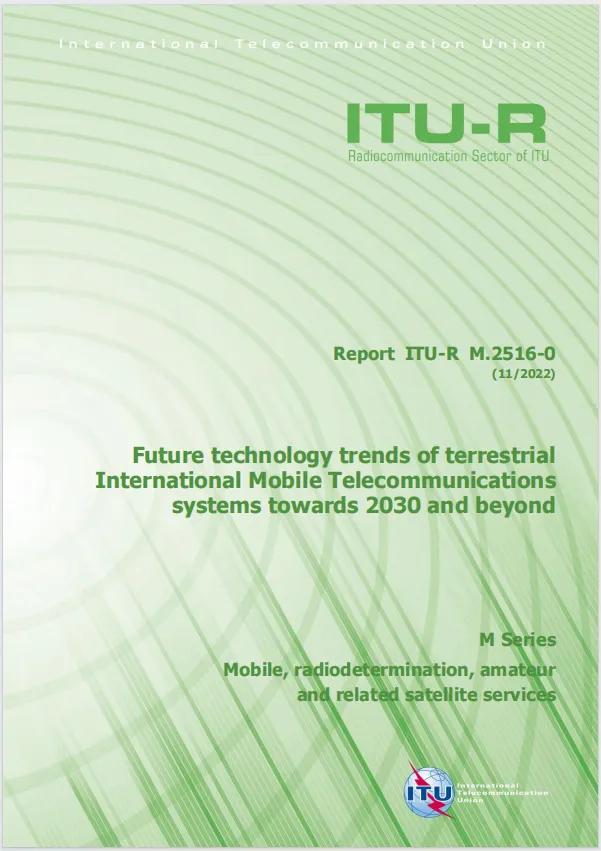
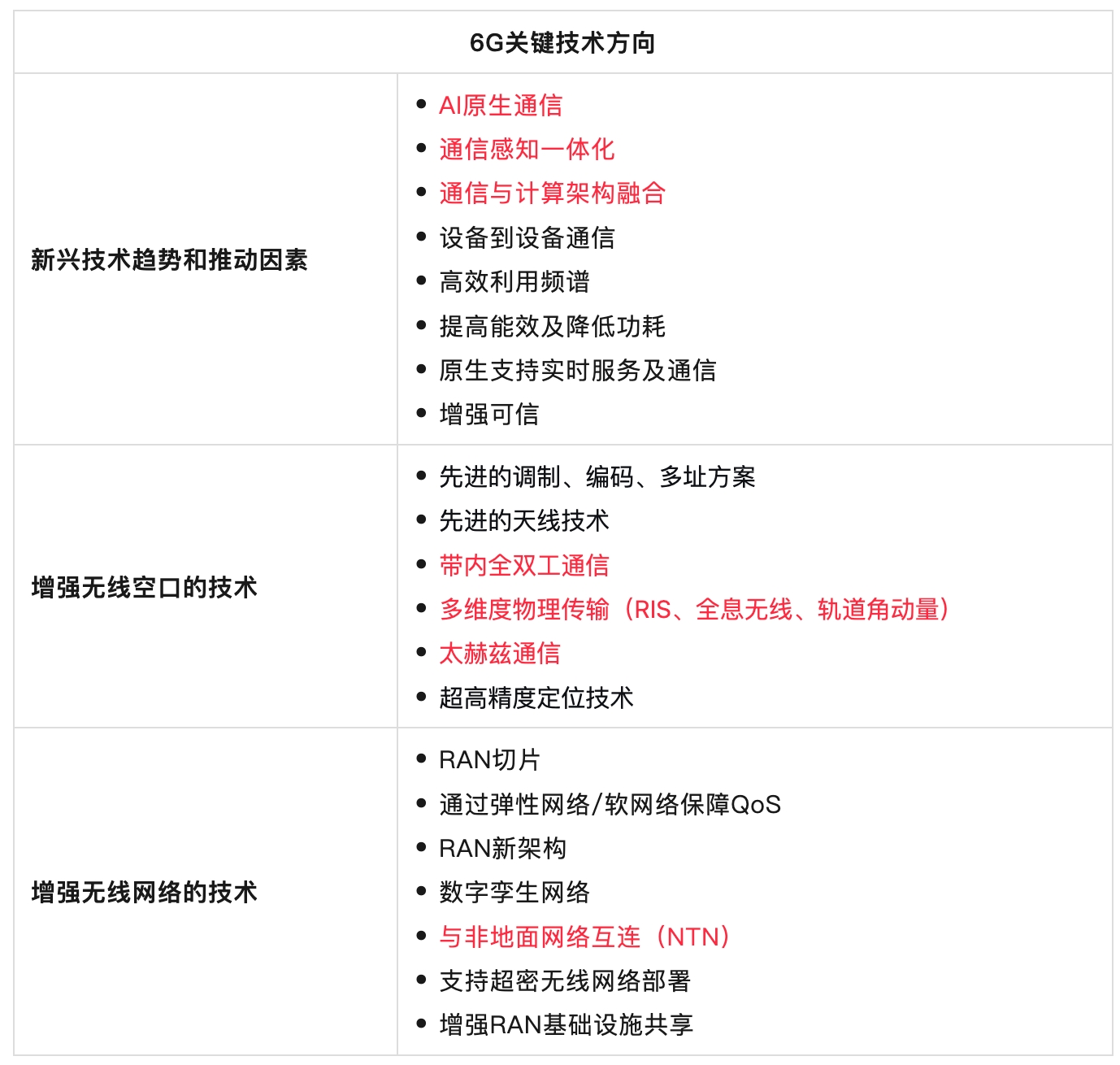
This report points out several key technology directions for 6G (the ones marked in red deserve special attention):
In this proposal, 6G expands the three major scenarios of the 5G era into six scenarios, including:
· Immersive communication
· Convergence of communication and sensing
· Ultra - reliable and low - latency communication
· Ubiquitous connection
· Massive communication
· Convergence of communication and AI
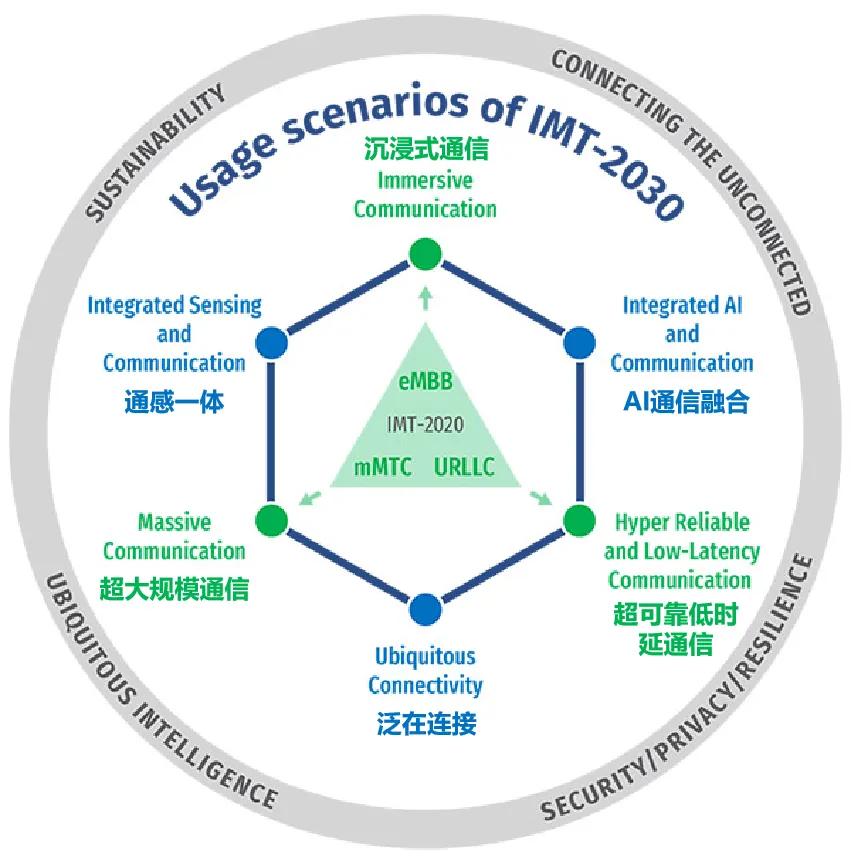
Specifically, it includes the following application scenarios:
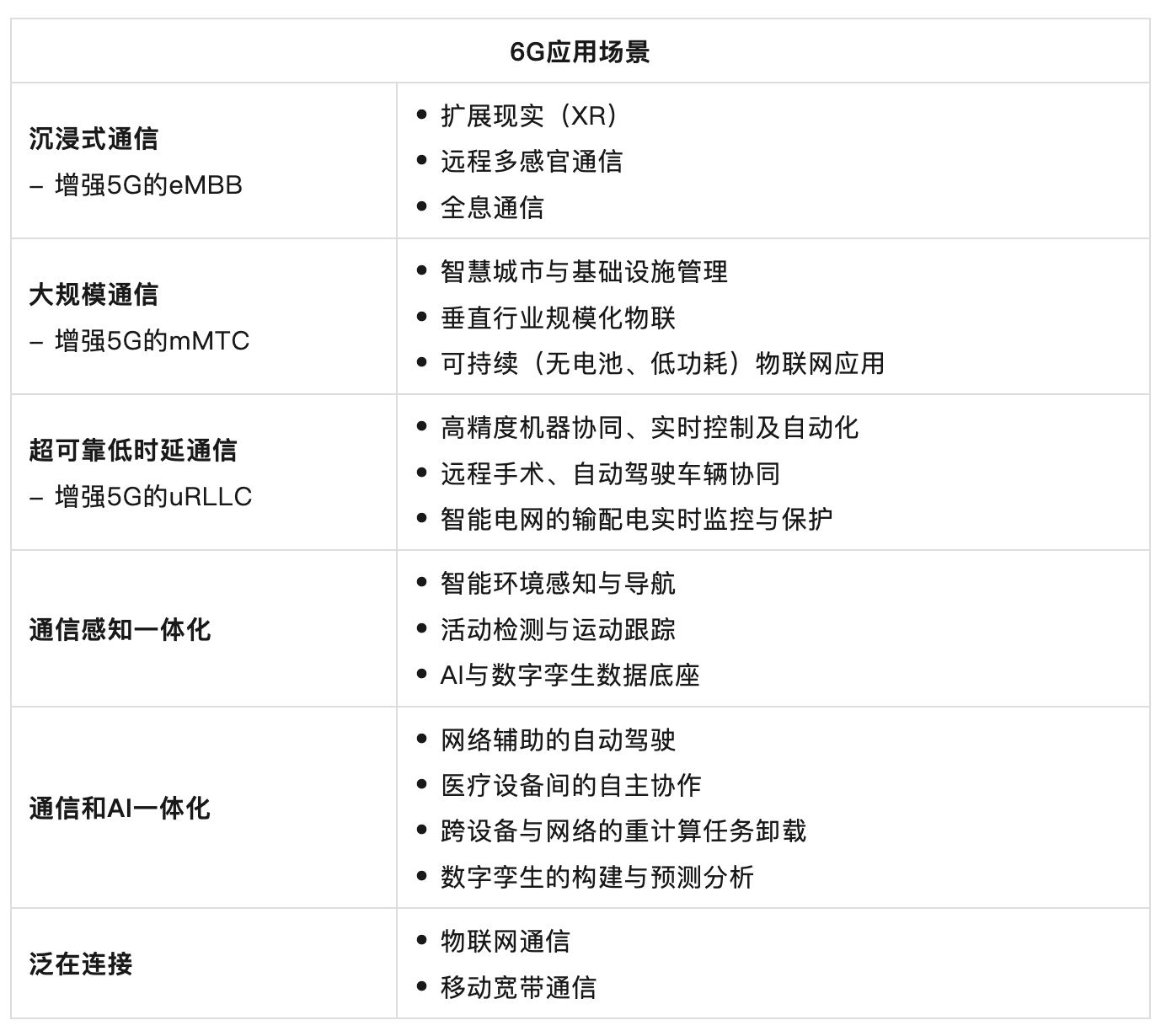
Simplified and compared with 5G:
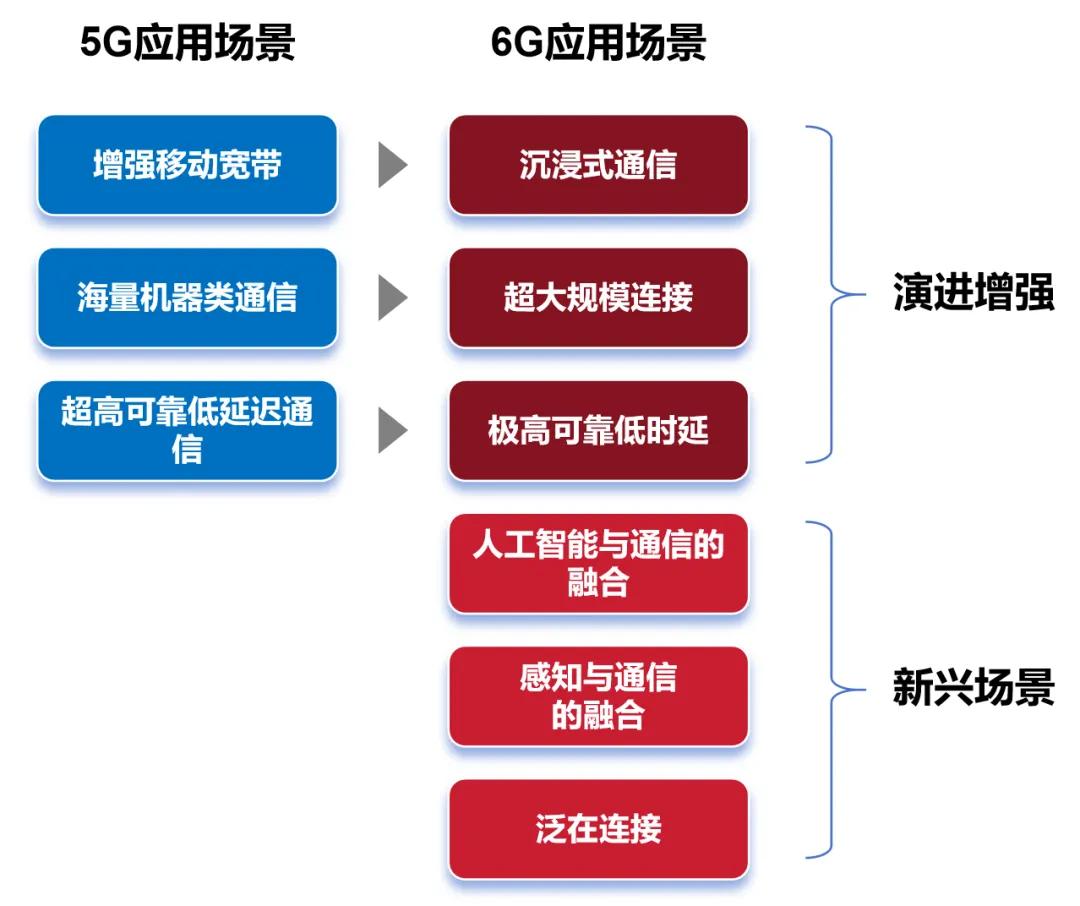
We can see that the first three are evolutionary enhancements of 5G scenarios, and the last three are emerging scenarios for integrated innovation.
Generally speaking, the main development trends of 6G are three integrations:
Integration with AI:
This includes AI for 6G and 6G for AI.
The former is to use AI to empower the improvement of 6G network capabilities. Traditional communication has currently entered a development bottleneck. With the help of AI technology, the performance bottleneck of the communication network can be broken through, the scenarios of the communication network can be optimized, and the network operation and maintenance efficiency can be improved.
The latter is to use 6G to serve AI application scenarios. AI is being popularized on a large scale, which puts forward higher requirements for network performance. 6G provides a better network experience to ensure the implementation of AI applications.
Integration with sensing:
That is what is currently called the integration of communication and sensing. 6G will not only have communication capabilities but also sensing capabilities.
The integration of communication and sensing can simultaneously provide high - precision sensing signals, seamless communication signals, and positioning signals in the same system, and can sense the movement of external objects, providing a solid technical foundation for the development of industries such as the low - altitude economy.
Integration with computing power:
Modern communication networks have evolved from information networks to computing power networks. The content transmitted by the network is not only data but also computing power.
Full cloud - based opening and flexible use of computing power are the inevitable trends in the evolution of 6G networks. Serving the flow of computing power and meeting users' demand for computing power at any time in the digital and intelligent era is an important task of 6G.
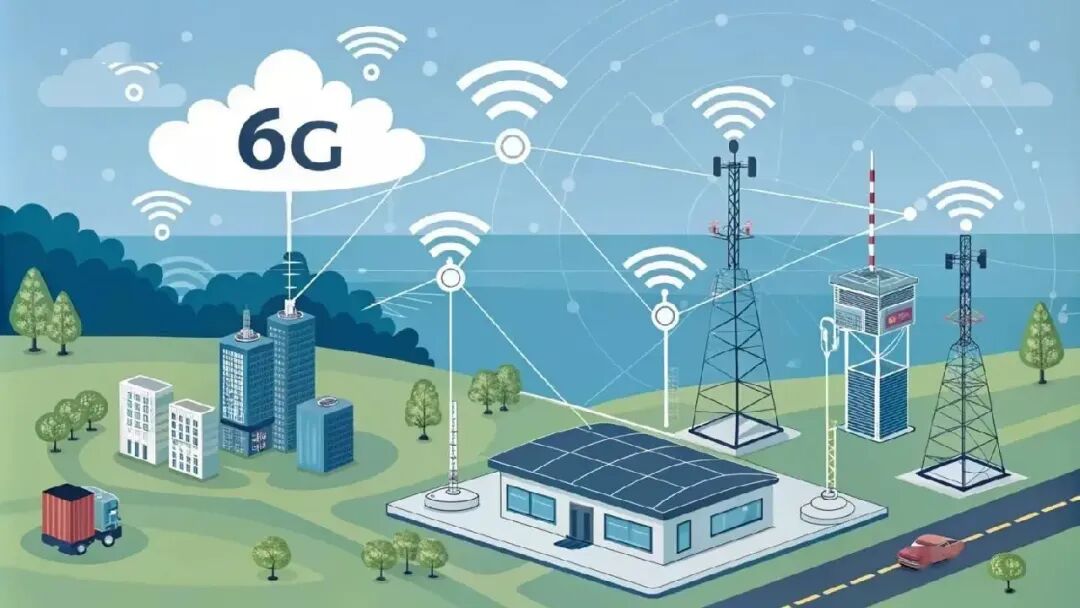
In general, what 6G wants to achieve is a comprehensive improvement in performance, a comprehensive expansion in functions, and a comprehensive coverage of scenarios. It should have everything imaginable.
What network indicators can 6G reach?
To support the six major scenarios mentioned above, what specific new capabilities does 6G need? And what level should the network indicator data reach?
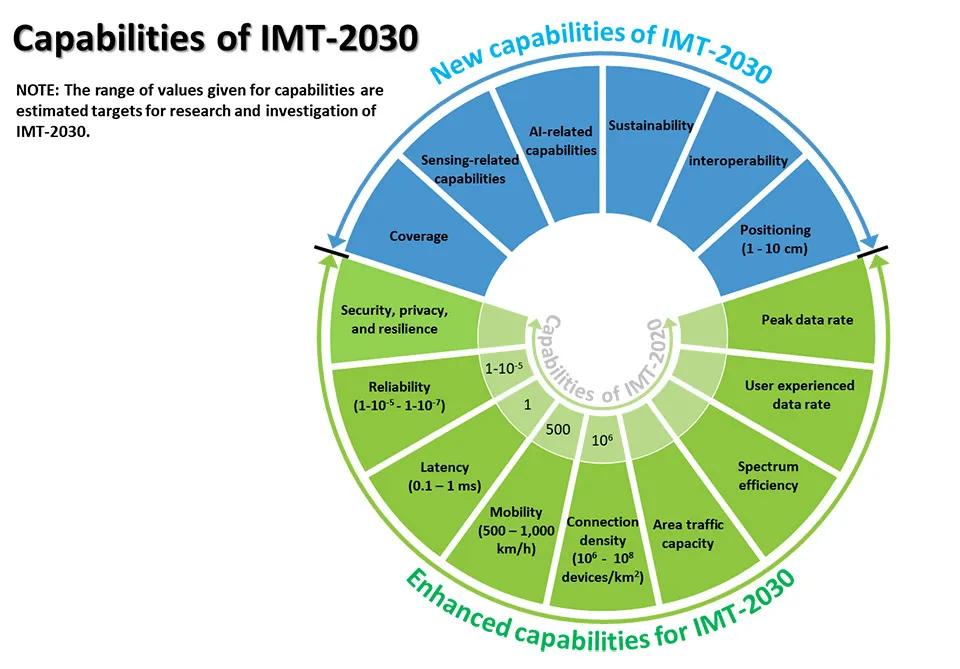
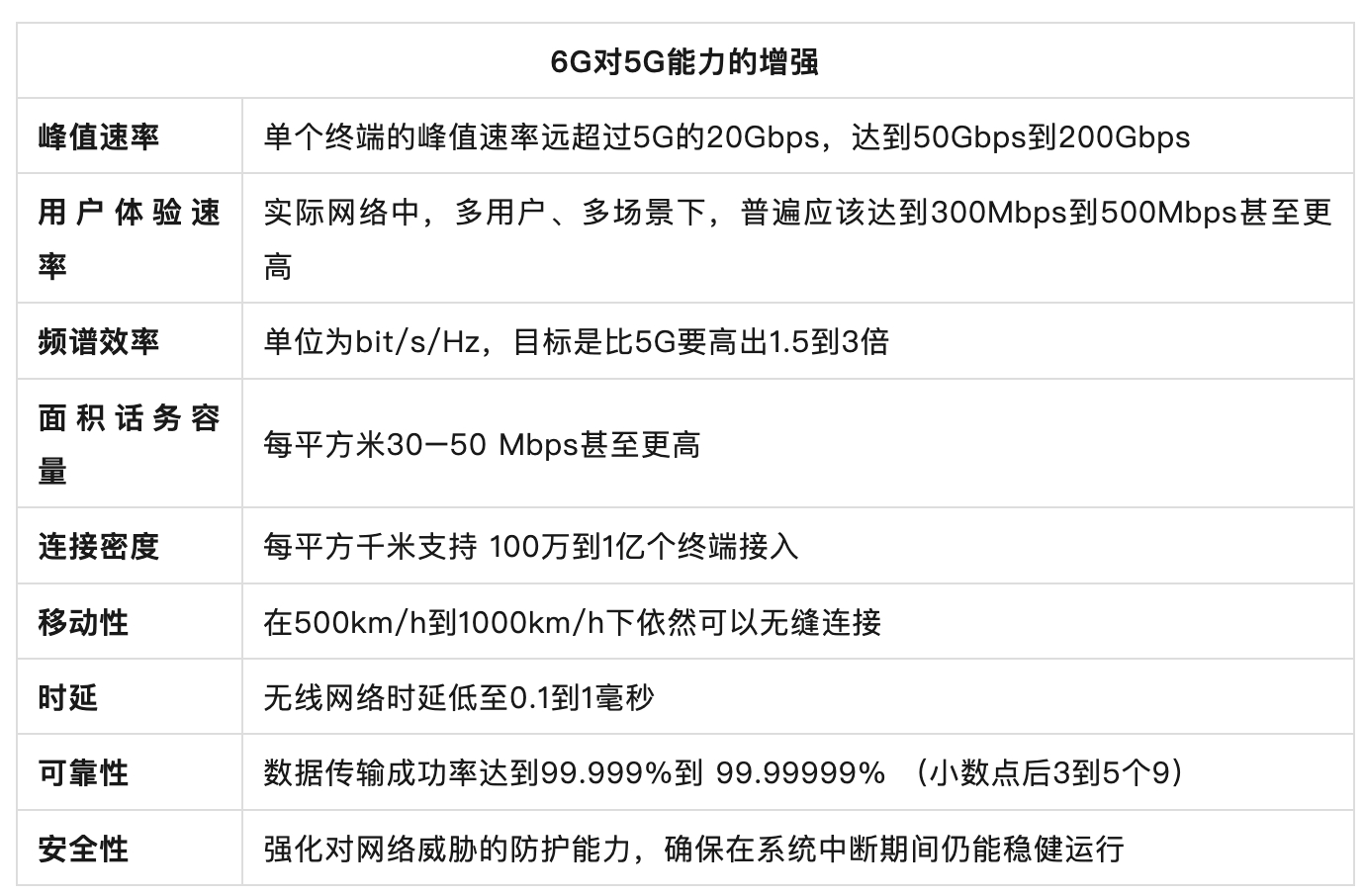
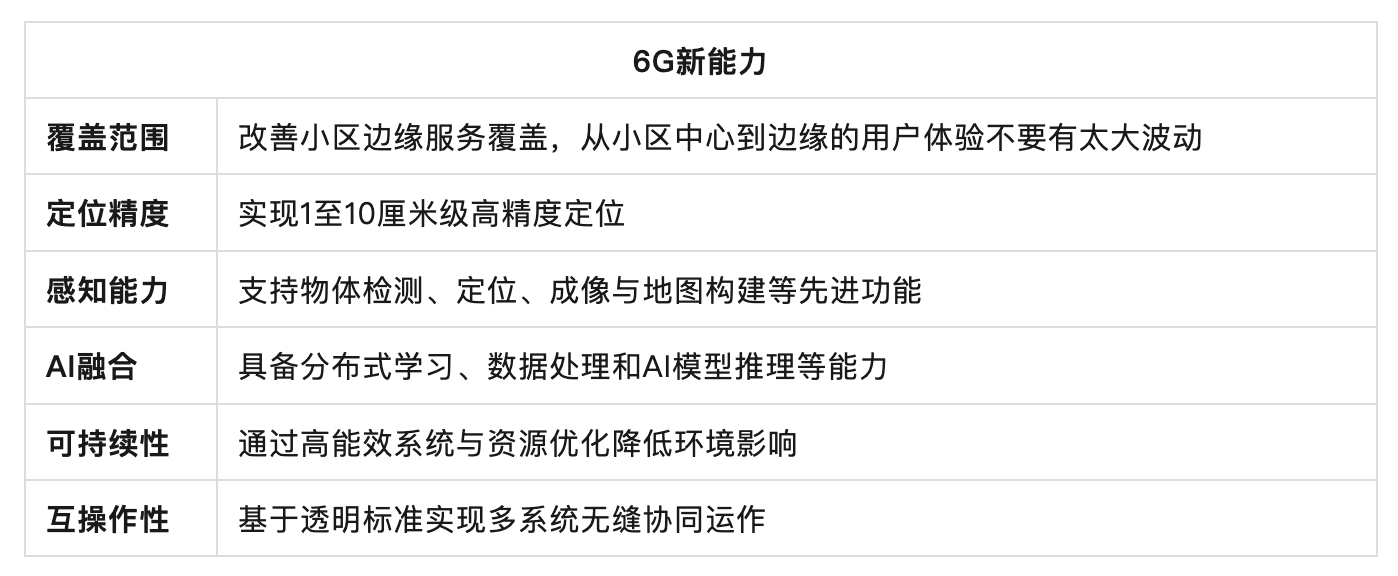
As shown in the IMT - 2030 capability map of ITU - R, the capabilities of 6G are divided into two categories. One is the enhancement of 5G capabilities (the green part in the figure), and the other is the new capabilities introduced by 6G.
Let's make a comparison of technical indicators with 5G:
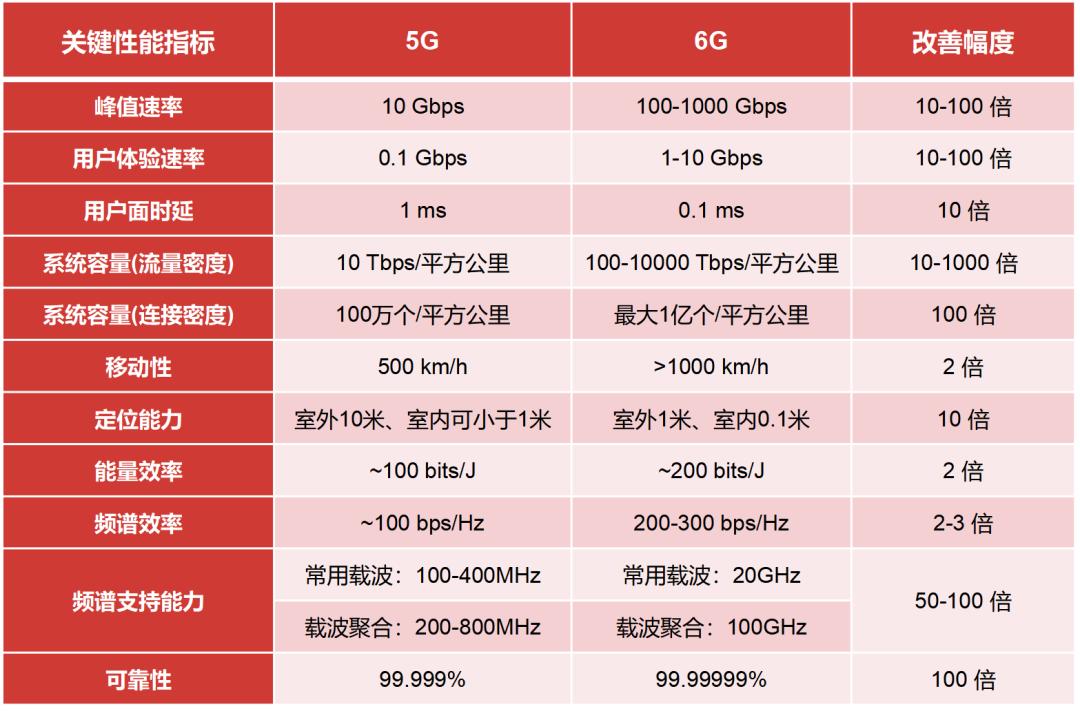
Compiled from network information for reference only
It should be noted that the indicators defined in the 6G vision are still relatively vague, and many of them have not been quantified. As the research on 6G standards deepens, the indicator data will become more specific.
The performance leap of 6G depends on the collaborative innovation of a series of disruptive technologies.
For example, to obtain ultra - large bandwidth, 6G will expand to the terahertz frequency band (0.1 - 10 THz), which is the key to achieving Tbps - level transmission rates.
Another example is that to build a space - air - ground - sea integrated network (NTN), 6G will definitely strengthen the layout and research of satellite communication technology. By integrating ground base stations, low - altitude drones, low - orbit and high - orbit satellites, a three - dimensional coverage will be formed to achieve true global seamless connection.
Reconfigurable intelligent surface (RIS), semantic communication, AI - native, extremely large aperture array (ELAA), orbital angular momentum (OAM), etc., are all specific 6G technology directions worthy of attention.
What's the current progress of 6G?
Let's first take a look at the following timeline of major 6G events:
From 2018 to 2019, many countries such as China, the United States, and Finland announced the launch of 6G research, kicking off the global 6G R & D.
In June 2019, the IMT - 2030 (6G) Promotion Group was established under the guidance of ministries and commissions such as the Ministry of Industry and Information Technology.
In June 2022, ITU - R officially released "Future Technology Trends for Terrestrial International Mobile Communications towards 2030 and Beyond", confirming the overall timeline for 6G development towards 2030.
In June 2023, ITU - R released the "Proposal on the Framework and Overall Objectives of IMT towards 2030 and Future Development".
At the end of 2023, 3GPP officially announced the launch of 6G standard development.
In March 2024, the 103rd plenary meetings of 3GPP CT, SA, and RAN further discussed the latest 6G promotion timeline.
In April 2024, the official logo of 6G was officially released.
In March 2025, during the TSG#107 meeting in Incheon, South Korea, a 6G workshop was held.
In March 2025, 6G was listed as a national strategic direction in the government work report.
In June 2025, 3GPP officially launched the SI (Study Item) project for the 6G air interface and architecture, starting the pre - research project for R20 technology, marking that 6G has entered the international standardization track.
In August 202