Only 6 months left for coders? Anthropic CEO claims AI will take over all coding and soar to Nobel-level intelligence
At the Davos Forum, two AI giants made a rare joint appearance, initiating a significant dialogue about the future of AGI. Dario Amodei made an astonishing prediction: AI could completely replace software engineers in as little as 6 months! Also, half of junior white-collar jobs will disappear within the next 1 - 5 years.
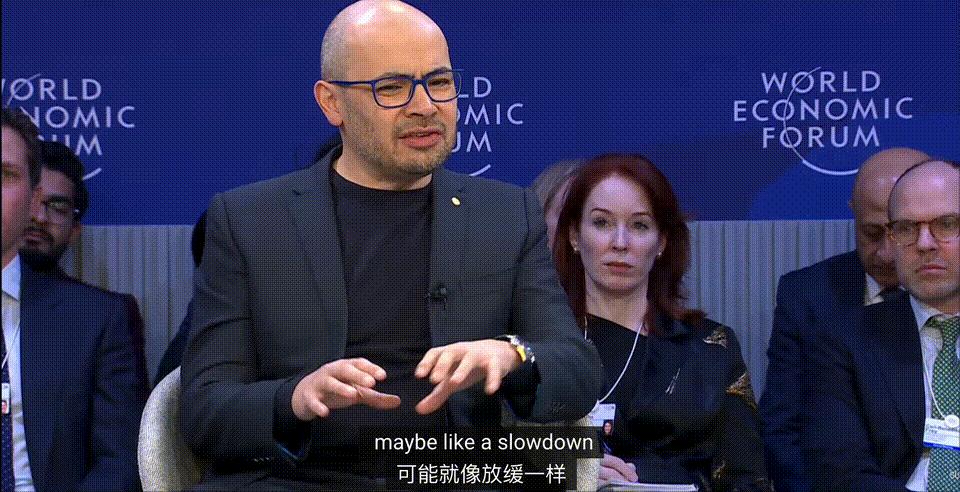
At Davos, a place where global bigwigs gather, the CEOs of Anthropic and Google DeepMind were in the same frame again.
This time, they sat together to discuss a topic that is both exciting and intimidating - The first day after the arrival of AGI.

Different from the meeting in Paris last year, there was a sense of urgency in their expectations, as if saying "it's really coming soon".
During the half - hour fireside chat, Dario Amodei dropped a "nuclear bomb" that shocked everyone -
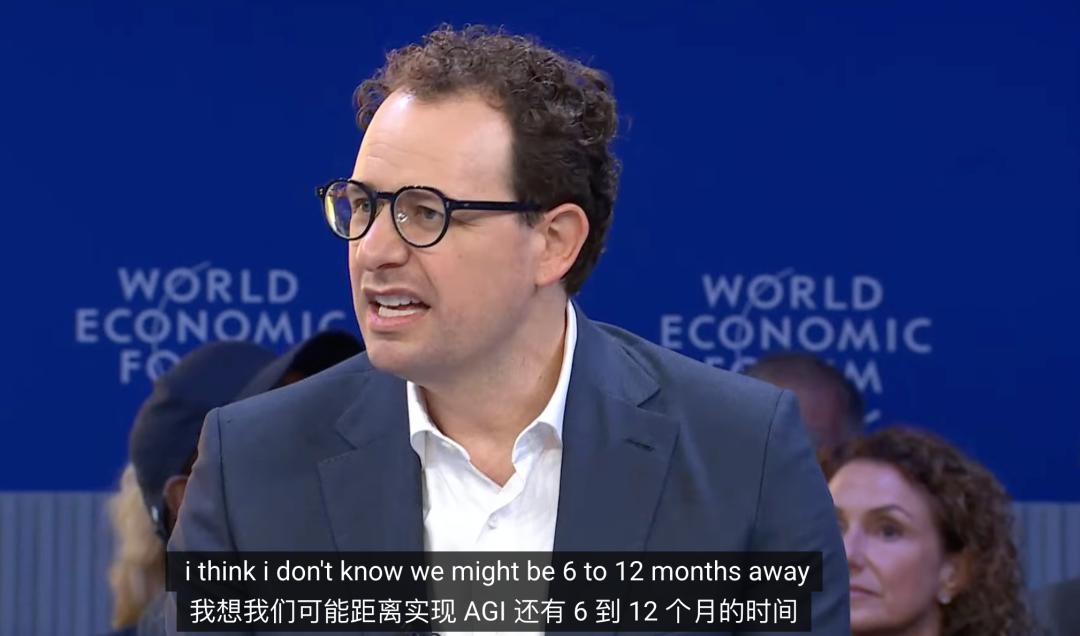
AI will take over almost all the work of software engineers (SWEs) end - to - end in just 6 - 12 months!
He also revealed that the internal engineers at Anthropic rarely write code by hand anymore. Instead, AI does it all, and humans only need to review and guide.
Dario Amodei and Demis Hassabis almost simultaneously admitted that the path to AGI is becoming clearer and clearer.
With the continuous scaling of model parameters, the increasing strength of multimodality, and the growing autonomy of agents - when these factors are combined, it's only a matter of time before AGI arrives.

Here are the main highlights of the interview, where all the core viewpoints are -
Dario Amodei:
By 2026 or 2027, AI models will reach the "Nobel - level" in multiple fields; 50% of white - collar jobs will disappear within one to five years.
AI writing code -> better AI -> faster iteration. This cycle is closing at an accelerating pace.
Anthropic's revenue has increased a hundredfold in three years, showing exponential growth.
If AI can write AI in a perfect closed - loop, there will be a miraculous and extremely rapid explosion.
Demis Hassabis:
There is a 50% probability of achieving AGI by the end of this decade (before 2030).
There will be short - term pains, but new jobs will emerge in the long run. The timeline for AI to replace humans has been extended to 3 - 5 years.
Google DeepMind AI has regained its entrepreneurial state and re - claimed the leading position in the industry.
If the physical world/hardware becomes a bottleneck, the development curve will be flatter, leaving more time for humans to adapt.
Two giants debate AGI, the closed - loop of AI self - evolution
Regarding when AGI will arrive, the two bigwigs gave their respective predictions.
Dario Amodei is not just radical; he is almost "going full - throttle".
Even standing at the threshold of 2026, he still firmly bets that by 2026 or 2027, there will definitely be models reaching the "Nobel - level" in many fields.
"I don't think the result will deviate too much."
His confidence comes from a "cycle" that is closing at an accelerating pace. One envisioned mechanism is -
AI writing its own code → AI conducting its own research → a completely self - iterative closed - loop.
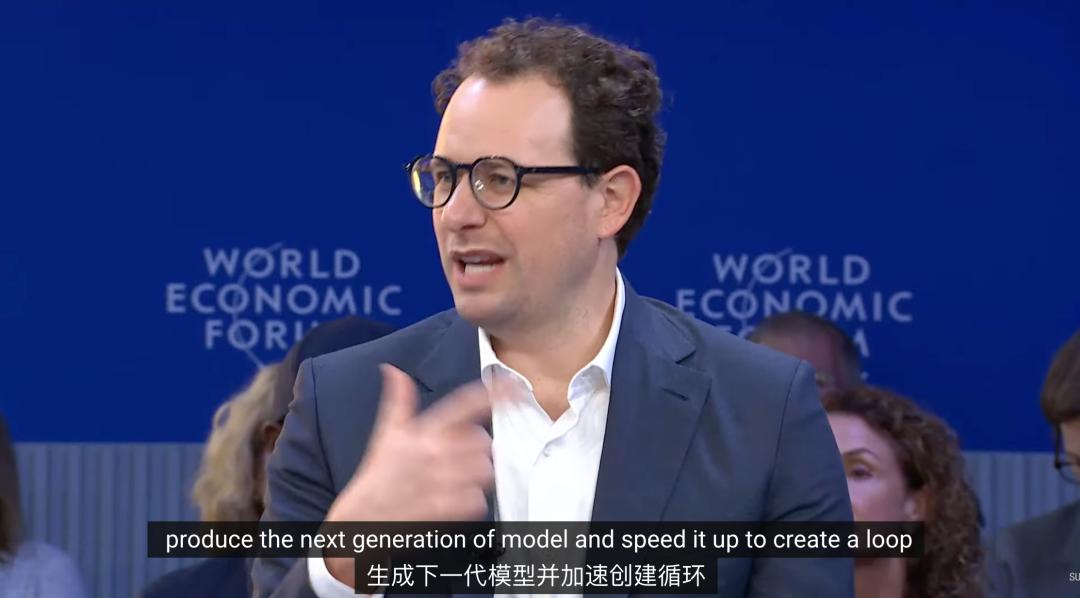
Dario made a judgment that shocked the AI circle:
Once this positive feedback loop runs smoothly, the R & D speed will take off directly and sprint exponentially.
Compared with Dario's radical stance, Demis Hassabis's position is relatively conservative, but he hardly backs down.
He holds on to last year's bottom line: There is a 50% probability of achieving AGI by the end of this decade (before 2030) - an AI that demonstrates all human cognitive abilities.

Why is he more conservative than Dario? Hassabis pointed out a "physical barrier" that cannot be easily overcome by code.
In the past year, there have been significant changes in the fields of programming and mathematics, but the progress of automation in natural sciences is a completely different story.
It requires experimental verification in the real world, and precisely in this link, AI cannot achieve a "closed - loop" for now. Hassabis said that the more difficult part lies in the level of scientific creativity.
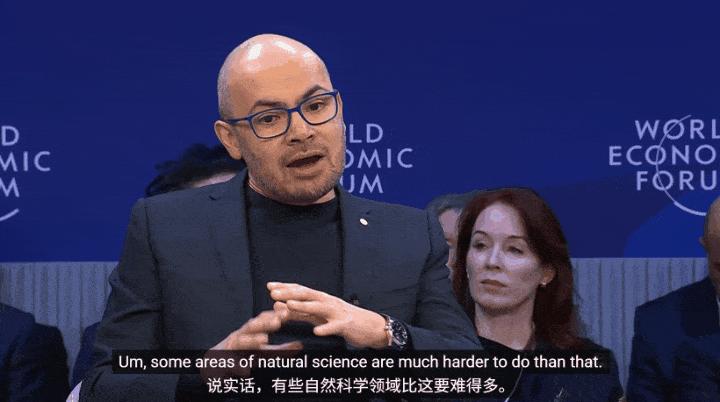
Google DeepMind will eventually create AGI, but it still lacks one or two "key pieces of the puzzle".
Here, he mentioned a key variable -
The closed - loop of self - evolution can truly run without in - depth human participation. If this closed - loop is truly formed, the progress speed will far exceed the current expectations.
AI to replace "all" programmers
Dario gave the most intuitive and chilling example -
The internal engineers at Anthropic hardly write code by themselves anymore.
Now, their roles are more like product managers or architects. That is, they only need to put forward requirements, edit the code generated by the model, and control the overall architecture.
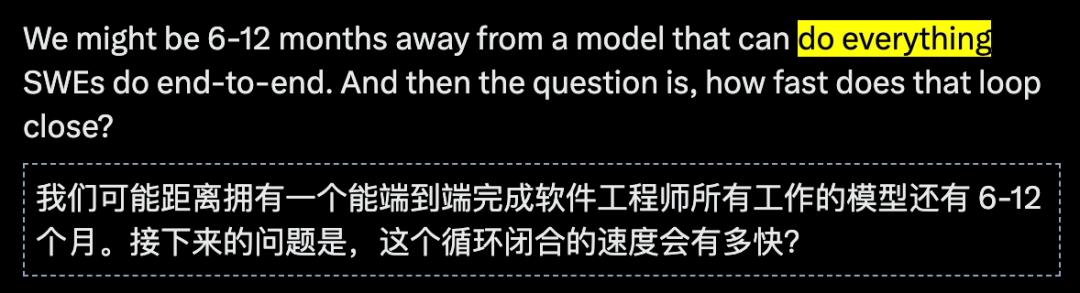
In Dario's view, we may be only 6 - 12 months away from the model completing most, if not all, of the software engineers' work "end - to - end".
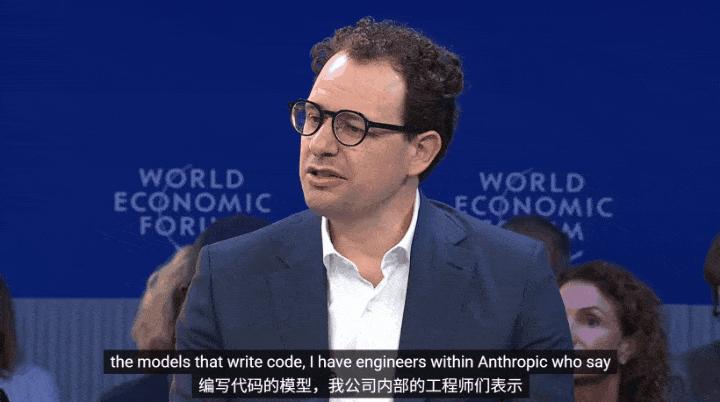
What does "end - to - end" mean here?
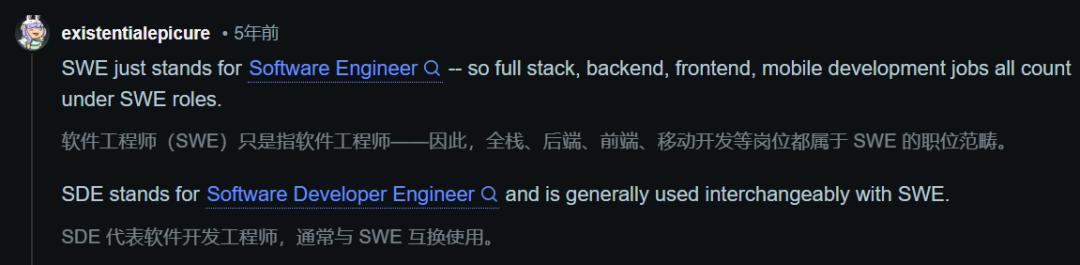
In the English context, SWEs (Software Engineers) are not just people who write code, and "end - to - end" covers the entire lifecycle of a software product: requirements, design, front - end, back - end, deployment, testing, etc...
It seems that Anthropic has taken the lead in achieving AGI in software development (after all, their employees have access to an unlimited - quota Claude).
To quantify this ability, let's take a look at SWE - Bench (Software Engineering Benchmark Test).
This is a "real - world test field" that evaluates a model's ability to locate problems in real GitHub code repositories, make cross - file modifications, pass tests, and deliver CI patches.
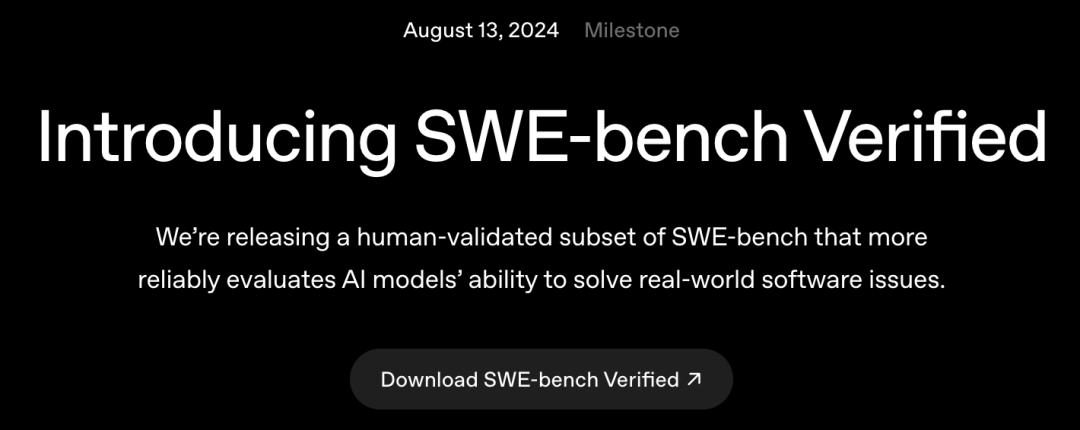
The original set has about 2,294 tasks, and the commonly cited Verified version is a simplified subset manually annotated by OpenAI.
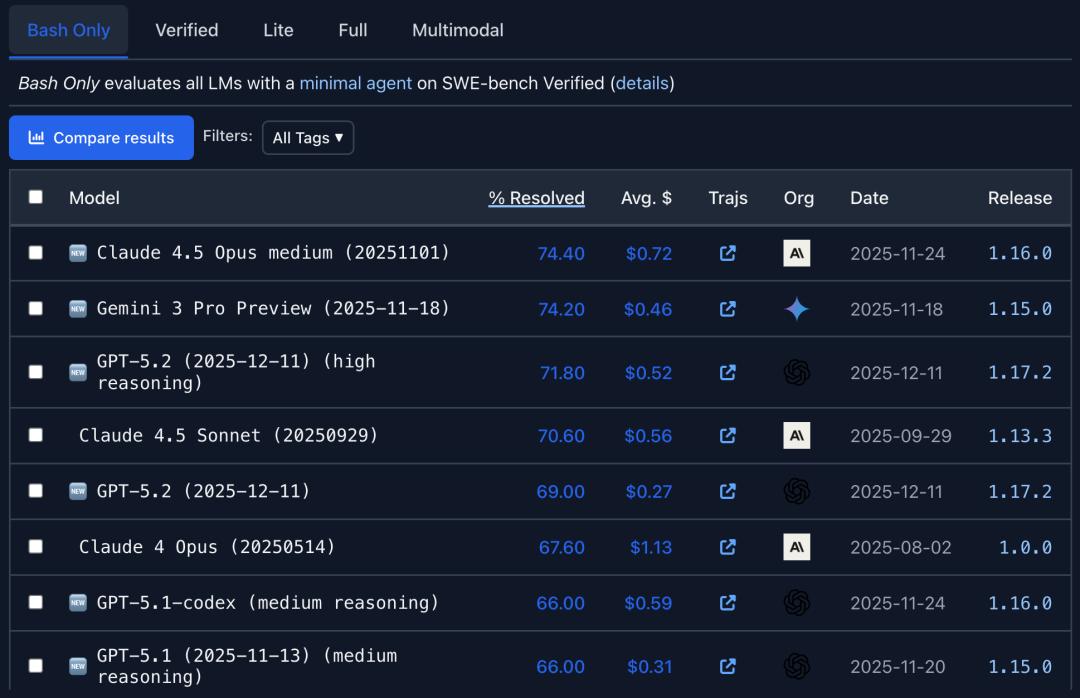
In the standard Bash Only environment, the solution rate of Claude 4.5 Opus has reached 74.4%, and the cost of each question is only $0.72.
We can divide the difficulty levels of these problems as follows:
Easy tasks (< 15 minutes): About 196 tasks, such as simple modifications like adding assertions to functions.
Medium tasks (15 minutes - 1 hour): Small - scale modifications that require some time to think.
Difficult tasks (1 - 4 hours): Substantial rewrites involving functions or multiple files.
Extremely difficult tasks (> 4 hours): Profound problems that require a lot of research and involve modifying more than 100 lines of code.
If we map the difficulty levels of SWE - Bench to the job levels of large technology companies in the real world, the situation is even more shocking:
Easy to medium tasks (< 1 hour) are equivalent to the level of junior engineers (Junior/SDE1).
Equivalent to: Google L3, Alibaba P5 - P6, ByteDance 1 - 1/1 - 2 levels, with 0 - 3 years of work experience.
Difficult tasks (1 - 4 hours) are equivalent to the level of mid - senior engineers (Senior/SDE2 - SDE3).
Equivalent to: Google L4 - L5, Alibaba P6 - P7, ByteDance 2 - 1/2 - 2 levels, with 3 - 7 years of work experience. These tasks involve more than just single - file modifications. They require cross - file modifications, with an average of 32.8 lines of code modified and involving 1.7 files.
Extremely difficult tasks (> 4 hours) are equivalent to the level of senior/expert engineers (Staff+).
Equivalent to: Google L6+, Alibaba P7 - P8, ByteDance 3 - 1 level and above.
Currently, it is very difficult for top - level AI models to solve such problems.
Although top - level AI models currently face problems that require extremely complex context understanding and architecture design to solve in these "extremely difficult tasks" -
AI still seems a bit inadequate.
But don't forget Dario's astonishing prediction: 6 - 12 months.
When the flywheel of "AI writing AI" starts spinning madly, evolving from L3 to L6 may only take a few model iterations.
The once - thought - to - be - insurmountable "expert - level" moat is drying up at a visible speed.
50% of junior positions will disappear within five years
When the technological flywheel turns, the old employment structure is crushed.
Dario once predicted that half of junior white - collar jobs will disappear within the next 1 - 5 years. The host said that current statistics show that there has not been an obvious fluctuation in the labor market yet.
She countered by asking if this is just the "fixed labor - quantity fallacy" and if AI will eventually create more new jobs?
Hassabis believes that in the short term, we will indeed see AI creating new jobs. Old jobs disappear, and new, more valuable and meaningful jobs emerge.
Moreover, he deeply feels that the recruitment of junior/entry - level positions and interns is slowing down.
But Hassabis encourages young people to master current AI tools extremely proficiently.
Even those who build models find it difficult to fully explore the "capability overhang" of current models, let alone future ones.
I think this may enable you to play a more important role in your professional field and achieve self - leap more effectively than traditional internships.
Demis Hassabis emphasizes that once AGI truly arrives, everything will enter uncharted territory.
Dario Amodei also offers no comfort and still reveals the cruel truth of 2026: Half of junior white - collar jobs will disappear within the next 1 - 5 years.