About the matter that I was possessed by AI hardware and became a cybernetic human, escaped when the subscription for the large model expired, but got lost and was caught because I couldn't use the WeChat bus code.
In 1944, Normandy, France.
You are an army private who has just finished two years of training and has never been in combat. Relying on unparalleled luck and an unbeatable destiny, you survived the early - morning beach landing. You didn't even use much of the equipment on you and only suffered a minor scratch.
The "longest day" is finally over. In the makeshift camp, you take off your heavy M1 Garand rifle and your steel helmet caked with sand and mud. You adjust the belt around your waist, which is stuffed with en - bloc clips and tools. You put the bulging M1928 backpack on the ground, take out a wrinkled Camel cigarette, and light it up.

Image | ww2incolor
In 2026, Guangzhou, China.
You are a tech - savvy trendsetter in the world of fashion. You always take all your smart devices with you when you go out. During every free moment, you read the newly - generated AI briefings on your phone and cross - compare how dozens of wearable apps summarize the 2 - kilometer riverside walk you just took.
The "most fulfilling day" is finally over. At home, on the red plastic stool next to the mahogany sofa, you take off your flashing smart glasses and AI camera earphones. You remove your smart necklace and AI brooch to charge them. You wipe the smart ring on your finger, then line up nine chargers, and place all the low - battery smart wearable devices on them.
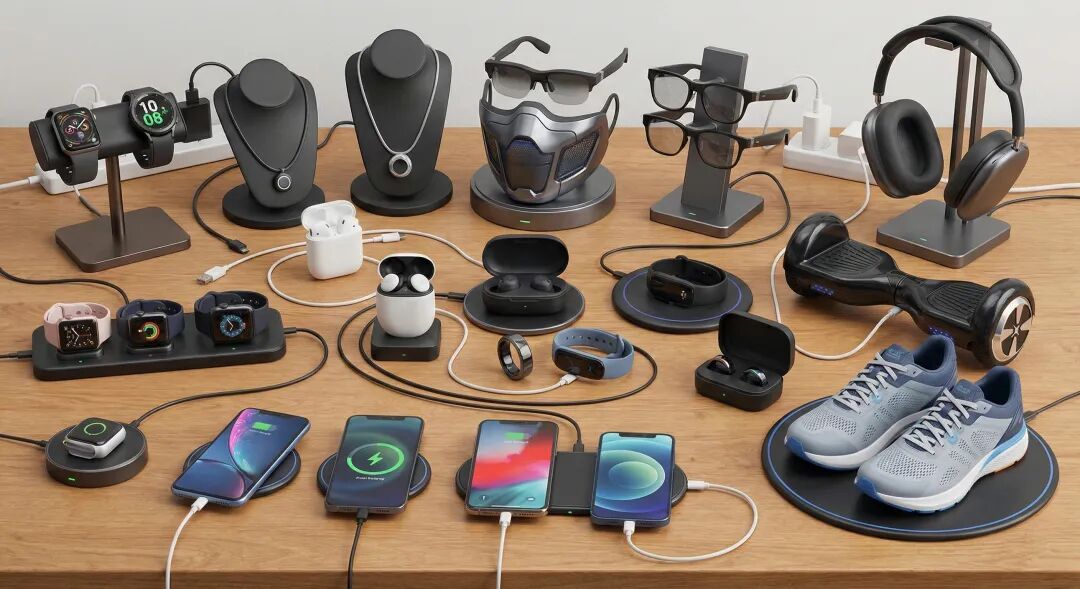
At this moment, you recall Normandy in 1944 and feel that the American soldier must not have been as tired as you are. After all, he didn't have to take off all his stuff and charge them every day.
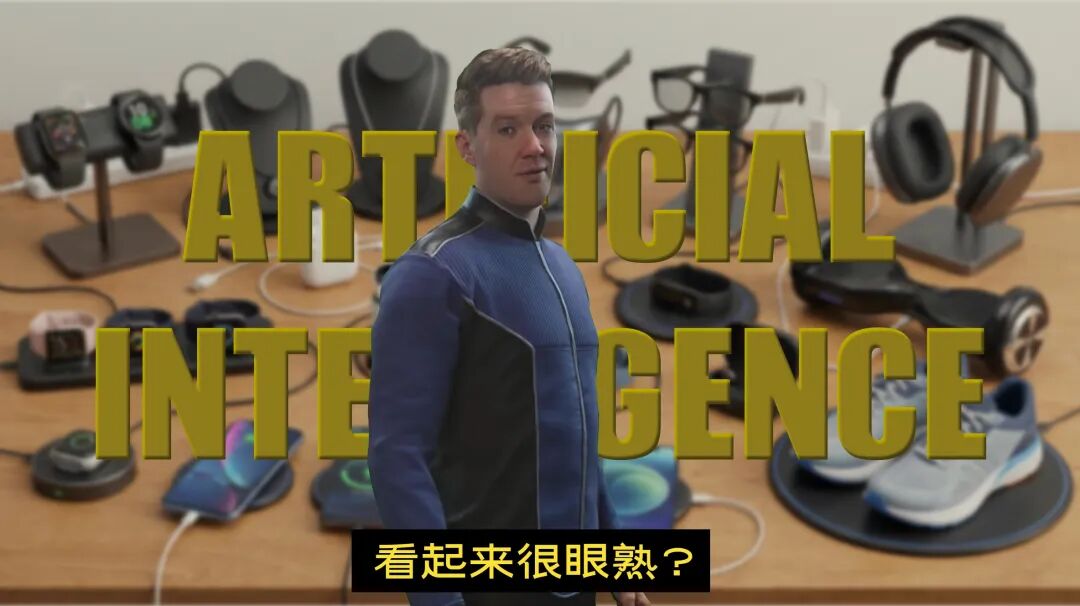
Does it look familiar? This kind of scenario is happening right now around every AI enthusiast! You might be next —
Of course, at present, this situation only exists in the minds of wearable AI device manufacturers. It's not serious enough to call for special forces.
However, imagination is one thing, and it doesn't prevent us from thinking about a question:
How long will wearable AI continue to expand its territory on our bodies?
After all, just 57 years ago, when Apollo 11 was launched, people's imagination of the future half a century later was of flying cars, intercontinental express trains, controllable nuclear fusion, and robots taking care of 90% of daily chores.
However, half a century later, although we don't drive flying cars, take intercontinental express trains, or use controllable nuclear fusion to boil water, and we even have to deal with some clutter before the newly - bought cleaning robot can work properly, at least we are covered with "smart wearables" —

When it comes to smart wearables, there's a lot to talk about. From a certain perspective, the number of various types of sensors we can wear and take out every day is even comparable to that in an ICU ward.
Undoubtedly, we seem to be a bit too obsessed with the idea of putting smart devices on our bodies.
After all, having a mobile phone that we're glued to 25 hours a day isn't enough. We also wear screens on our eyes, put cameras in our ears, wear microphones on our fingers, and hang a (not much smarter than a phone assistant) smart assistant necklace around our necks —
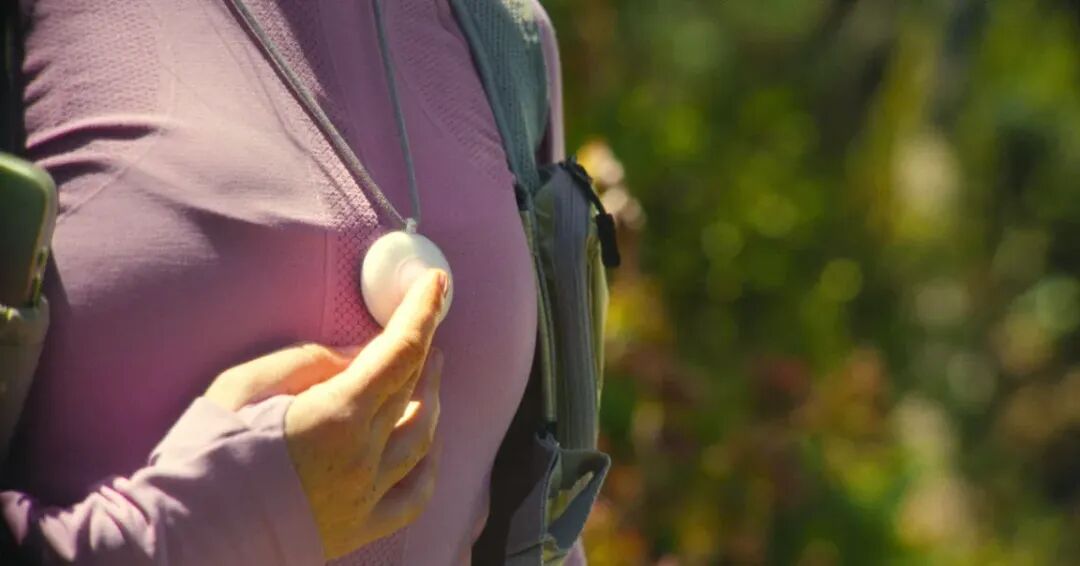
Image | Futurism
Even the most optimistic supporters have to admit that pinning a mini - projector or microphone on your chest not only looks like an outdated "Star Trek" prop, but also has the kind of "beauty" of a tech product during an economic upswing in terms of practicality.
To give it commands, you need to gesture in front of you like a traffic cop. And when you loudly tell your necklace on the subway to "remind me to get an ear cleaning this afternoon", you lose not only your privacy but also the last bit of dignity as an adult.
That's not all. After filling up the space on the head and neck, it's still not enough. Now you can also buy AI belts that can intelligently analyze road conditions, AI shoes that record foot posture and movement, AI sportswear and pants that track body movements, etc.
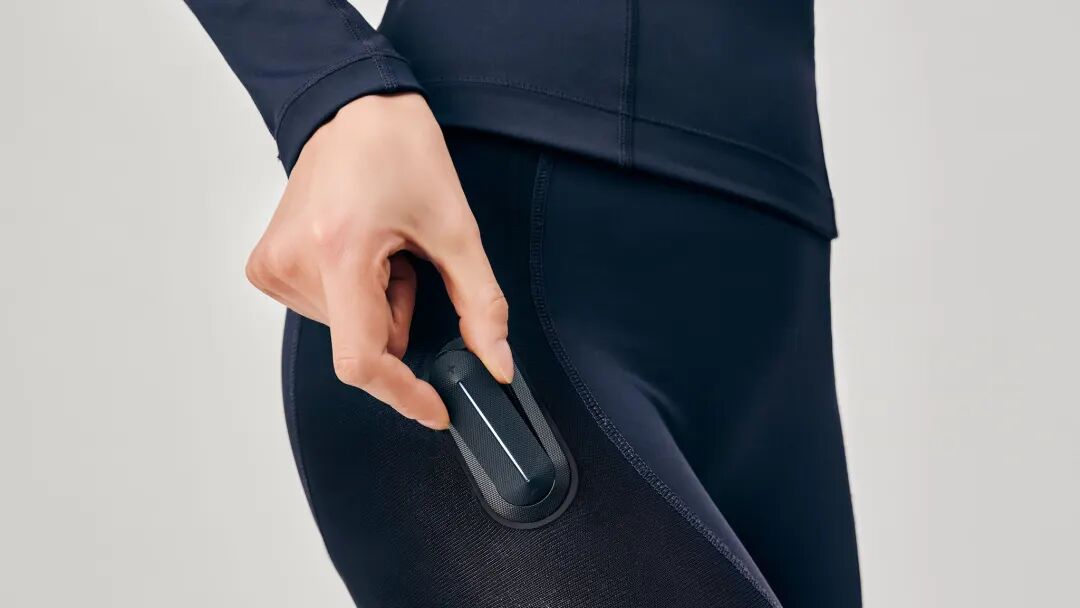
Image | iF Design Award
I can't even imagine when AI socks and AI underwear will appear in the future. Maybe one day, my socks will send me a push notification: "Abnormal humidity detected at the arch of your left foot. It is recommended to replace them. Click here to purchase our antibacterial subscription package."
Wrapping yourself from head to toe with AI is not the end.
If you're willing, you can also spend a fortune on a smart toilet equipped with an "excretion analysis large - scale model" to analyze the health status of what comes out of your body using advanced light and sound technology (i.e., hidden cameras).
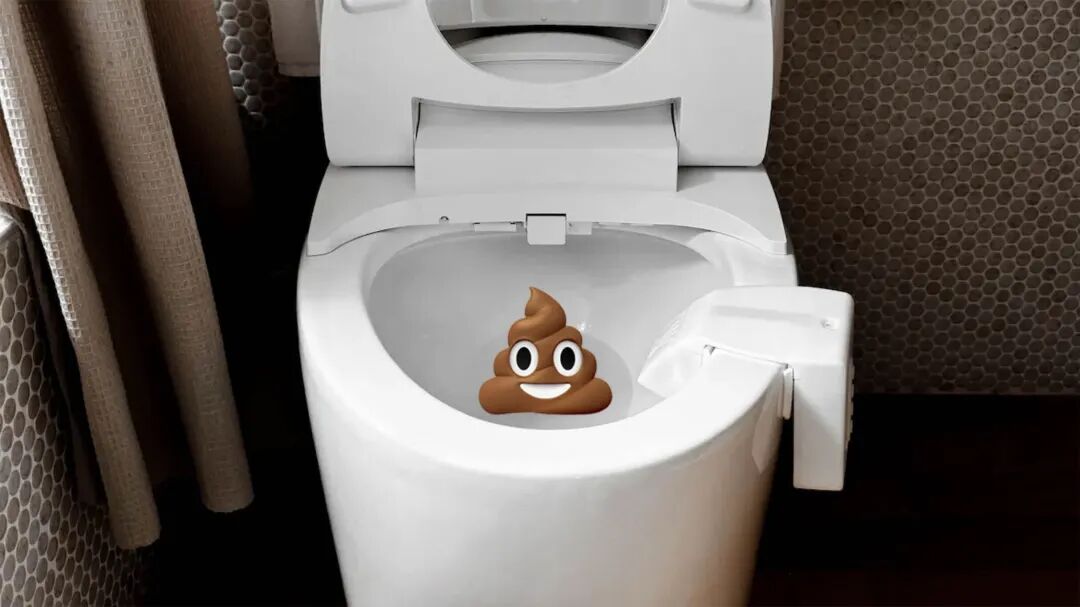
Image | MobileSyrup
Let's be honest. Given the serious sub - health status of most people today, can simply relying on dozens of sensors all over our bodies to tell us in real - time "how unhealthy we are" overcome all the obstacles of work and overtime and get us into the gym?
What's even worse is that in the field of wearables, the dream of artificial intelligence can't escape the iron fist of physical laws and is mercilessly crushed by the limitations of technology.
Limited by the size of wearable devices and the stagnant microelectronics technology of humanity, the so - called "AI" they carry basically needs to be connected to your mobile phone —

Image | PlayStation
That logic chain is so "wearable".
The information is collected from my body, consumes the thermal power charged at my home, uses my mobile phone's data, relies on the "AI model subscription" I bought with my bank card, and after being analyzed on the manufacturer's own server, the report is sent back. I'm not really wearing AI on me.
Compared with "wearable AI" or "portable intelligence", the name "highly commercialized distributed user data sensors" is obviously more suitable for this kind of products.

However, the good news is that "AI" is becoming a clear product - class distinction, just like "Pro" and "Ultra" in the mobile phone industry: Although I have fewer functions, I'm more expensive!
Take some AI smart sports shoes that claim to be able to record stride frequency, foot posture, speed, and mileage. The sensors inside are not fundamentally different from the sports sensors of Nike+ more than a decade ago. It's just that they have a higher level of integration and accuracy.
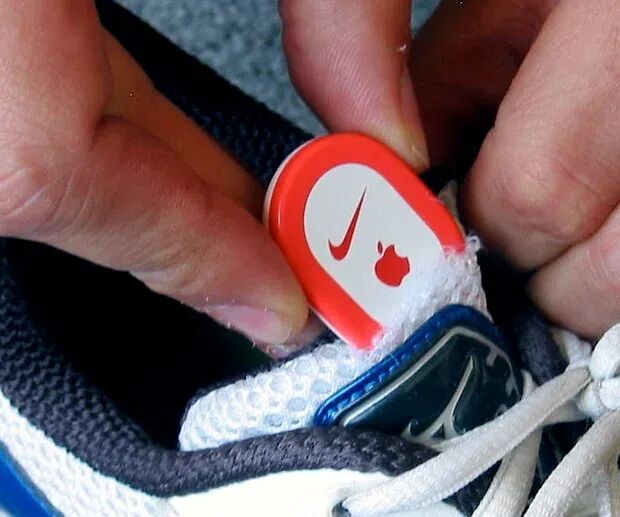
Image | Instructables
The only difference between AI sports shoes and the combination of iPod and Nike+ back then is an extra step of sending sensor data to the cloud for AI analysis. Apart from turning users into "middlemen" of data, it doesn't really improve practicality for most people.
Behind the vision of "tattooing AI on the body and applauding Silicon Valley people" is an extremely rude, chaotic, and short - sighted market product logic.
On the surface, these products are extremely fragmented. Your ring doesn't know what your glasses are doing, and your shoes don't know what your belt is thinking. But your phone has 20 different apps, each asking for Bluetooth, location, and microphone permissions.
These AI wearables don't form an intelligent butler. Instead, they form a noisy marketplace. Your body becomes a colony divided by various forces, and the devices on every inch of your skin are competing for your attention.
Image | Futurism
Deeper down, there is a flood of "false AI demands".
After all, most of the "AI wearables" we see now are essentially just API interfaces that can call cloud - based large - scale models. This is not hardware innovation. It's just adding a middleman between your data.
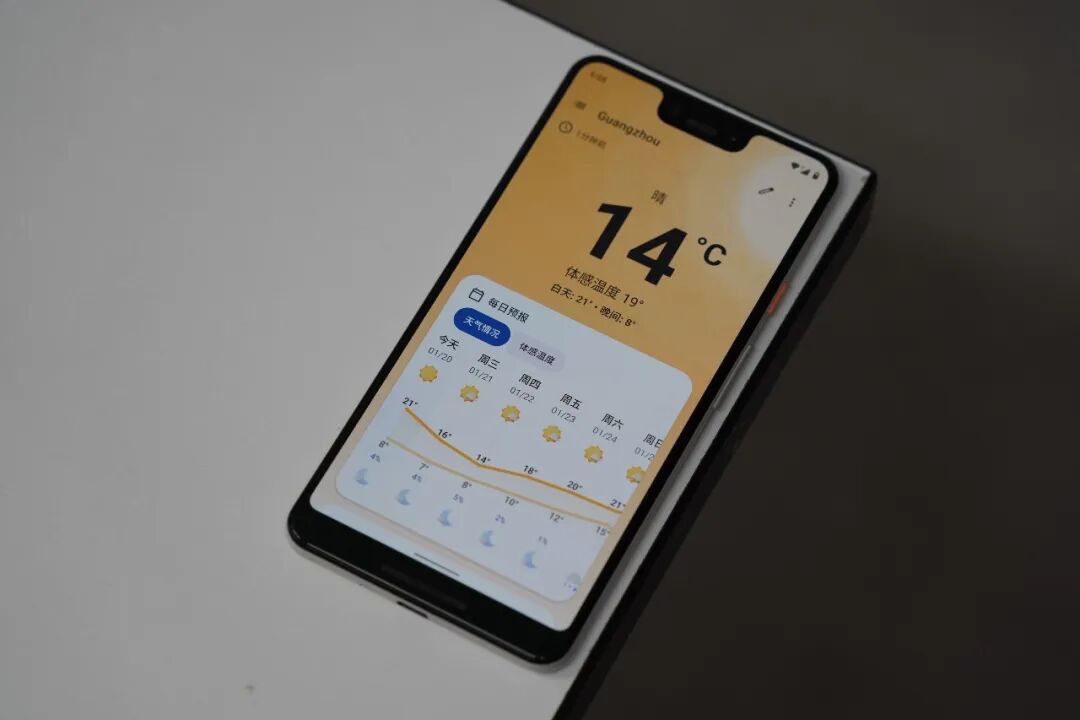
Most of these AI wearables break down problems that can be perfectly solved by a single mobile phone (checking the weather, setting alarms, taking notes) into countless little gadgets hanging on your body. This is not convenience. It's a step backward in technology.
But don't misunderstand. We're not against AI itself.
Of course, we're happy to see breakthroughs in early diagnosis of severe diseases by large - scale models, the application of autonomous driving in docks, warehouses, and assembly lines, and real smart assistants helping us reduce the clutter of information. We're longing for a future where technology fades into the background and humans are at the center.
But the current market is the opposite. It has become a market where the minor overshadows the major. Manufacturers are like a bunch of nouveau - riche with hammers. Everything looks like a nail to them: Regardless of whether something was originally useful or whether the scenario is suitable for AI processing, they first hammer in an "AI" label.
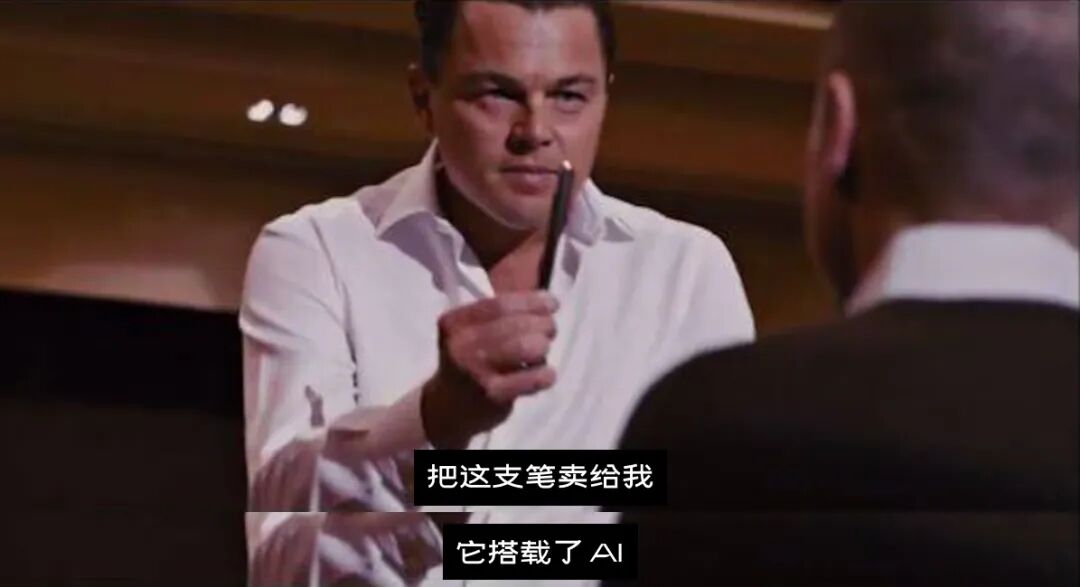
This concept is not only a waste of resources but also a desecration of the potential of AI. True intelligence is about subtraction, not addition.
What we want is smarter artificial intelligence, not more anxious human - AI hybrids.
This article is from the WeChat official account "ifanr" (ID: ifanr), written by someone who discovers tomorrow's products. It is published by 36Kr with authorization.