Is the discrete graphics card dead? NVIDIA's PC chips will debut in 2026, with GPU performance comparable to that of the RTX 5070.
After nearly two years of rumors, NVIDIA's Windows on Arm laptops finally have a clearer timeline.
Today (January 20th), industry media DigiTimes quoted supply chain sources as saying that NVIDIA's first batch of laptops for the Windows on Arm platform are expected to debut in the first quarter of 2026. Three more models will go on sale in the second quarter, and the next - generation N2 series is also planned to be launched in the third quarter of 2027.
Compared with previous rumors, this piece of news hasn't attracted wide attention yet. However, it means that Windows laptops equipped with NVIDIA's self - developed Arm SoC might be available for sale in the first half of this year.
Over the past year or so, a lot of information has actually been disclosed. Codenamed N1/N1X, based on the Arm architecture, it integrates a GPU based on the Blackwell architecture, is customized for Windows on Arm, adopts a unified memory design, and is positioned as a PC - class SoC that emphasizes AI and graphics performance.
In October last year, NVIDIA started shipping the DGX Spark desktop - class AI supercomputer equipped with N1X (GB10). However, the DGX Spark and DGX Station equipped with NVIDIA DGX OS are more targeted at developers and researchers. The upcoming laptops running Windows are the real consumer - market products.
But why would consumers buy it? Today's PC chip market is already crowded with players.
Image source: Qualcomm
Intel holds on to its x86 market share and gradually improves energy efficiency and AI instruction sets with Core Ultra. AMD boosts multi - core performance and NPU capabilities with Ryzen AI and captures the market for creative laptops and high - performance thin and light laptops. Qualcomm's Snapdragon X series has brought the experience of Windows on Arm thin and light laptops close to that of Apple's MacBook for the first time.
In contrast, NVIDIA's entry into the PC SoC market at this time seems neither easy nor cost - effective. If it's just to sell a few more chips, this move hardly makes sense.
However, this is also the most interesting part of the whole thing.
Putting a "discrete GPU" into an SoC, NVIDIA wants to make an elephant dance
First of all, it's clear that several OEMs have already received engineering prototypes. Enthusiasts have also dug out information about a 16 - inch Dell laptop from the NBD global trade data in November last year, which not only indicates N1X but also includes information such as ES2 (second - generation engineering silicon) and DVT (design verification test).
In fact, the earliest rumor was that NVIDIA would launch laptops equipped with N1X/N1 at last year's Computex Taipei and they would be available in September. However, the delay in the development of the new version of Windows 11 and NVIDIA's chip redesign have ultimately led to the fact that they haven't been released yet. As of now, we still don't know which OEM will be the first to launch a Windows on Arm laptop equipped with NVIDIA's N1X/N1.
As for N1X, thanks to the release of the DGX Spark last year, we're actually not unfamiliar with it. Currently, it's known that N1/N1X uses an Arm CPU cluster as the general - purpose computing core. At the same time, it integrates a GPU based on the Blackwell architecture in the same SoC and connects the CPU, GPU, and AI modules directly to the same high - bandwidth LPDDR5X memory pool through a unified memory architecture.
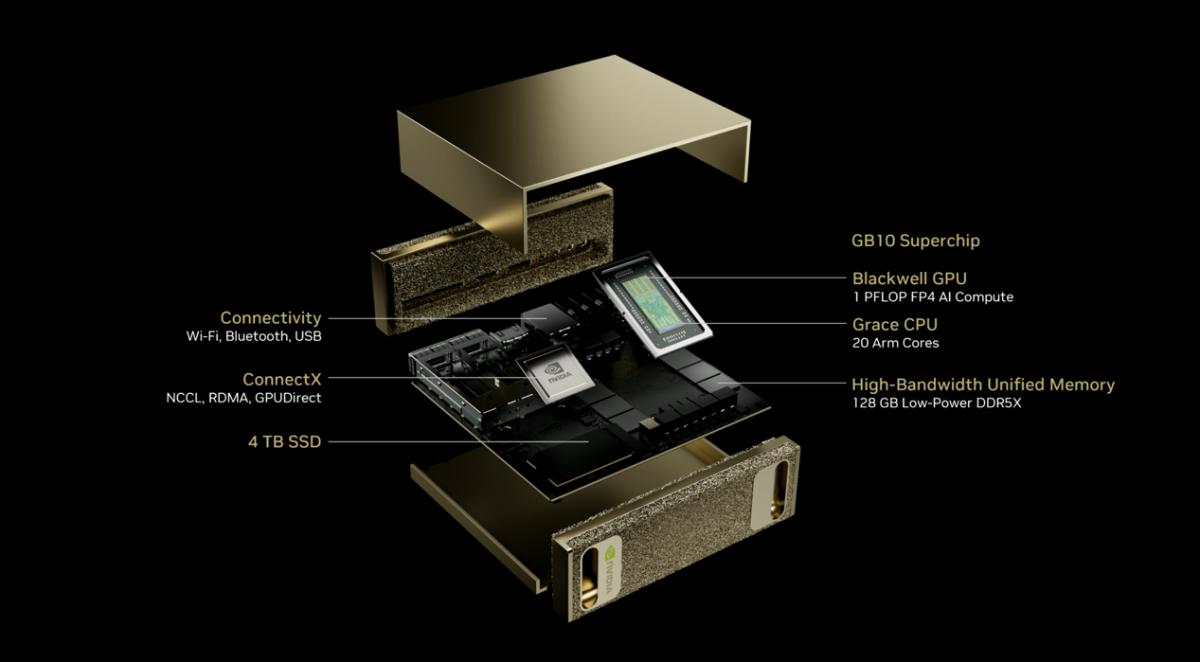
DGX Spark, Image source: NVIDIA
It's worth mentioning that this generation of N1/N1X uses a CPU + I/O chipset designed by MediaTek and connects a Blackwell GPU chipset through an ultra - high - bandwidth silicon bridge. NVIDIA revealed that the interconnection bandwidth between the two reaches an astonishing 600GB/s.
Meanwhile, if it's the same as the N1X on the DGX Spark, the upcoming NVIDIA Windows on Arm laptops are expected to have 20 Arm CPU cores and 48 Blackwell SM processors (corresponding to 6144 CUDA cores).
The latter's theoretical AI performance is equivalent to that of an RTX 5070. The reason it's theoretical is that N1X uses LPDDR5X instead of GDDR7 used in desktop GPUs, but it adopts a unified memory architecture design, which is beneficial for AI performance.
It can be said that the scale of the integrated GPU in N1X is much larger than what we usually understand as an "integrated graphics card", and the number of its CUDA cores is also close to that of a mid - range mobile discrete GPU. In other words, N1X almost packs a discrete - level GPU into an SoC.
If the GPU is the most obvious selling point of this chip, then the unified memory architecture might be the part that has the deepest impact on the system experience. N1/N1X connects the CPU, GPU, and AI acceleration units to the same physical memory pool, avoiding the data overhead of frequent copying between CPU memory and video memory in the traditional PC architecture.
The advantages of this design are more obvious in AI workloads rather than just in game frame rates. In scenarios such as local large - model inference, multi - modal processing, and real - time video understanding, data doesn't need to be transferred back and forth between different memory spaces. In theory, both latency and power consumption will be significantly reduced.
However, this also explains why the outside world sees N1/N1X as an "unprofitable" chip. It probably has high power consumption, has extremely high requirements for heat dissipation and motherboard design, and the cost can't be low. But it also hits three increasingly important capabilities in today's PCs:
Stronger graphics capabilities, local AI inference capabilities, and system - level efficiency improvements brought by designs such as SoC and unified memory.
These also mean that NVIDIA's Windows on Arm laptop is not likely to be a "killer of thin and light laptops" but rather a Windows laptop that can cover gaming, creative work, and local AI workloads at the same time. To some extent, it's closer to the MacBook Pro.
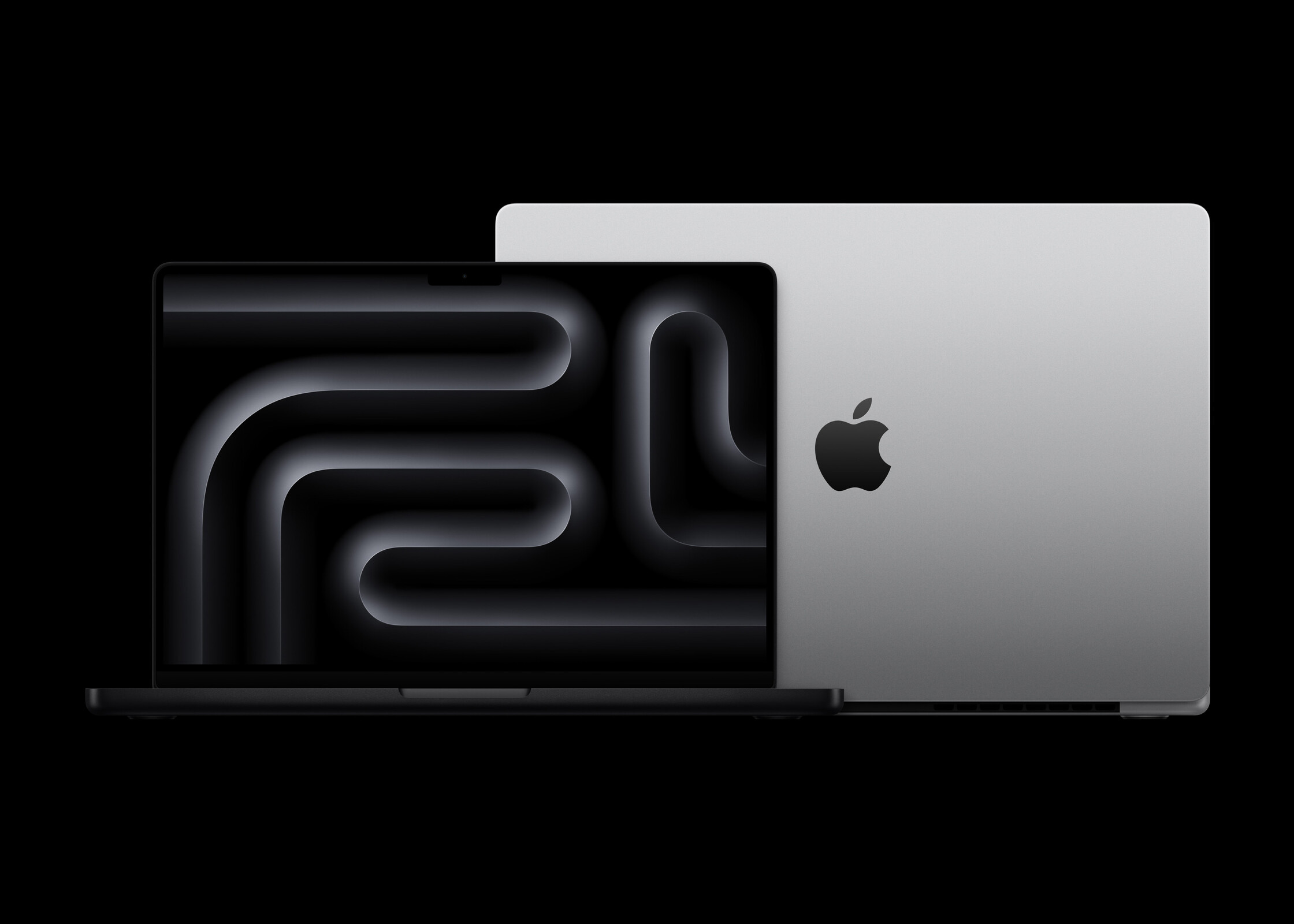
MacBook Pro, Image source: Apple
Why does NVIDIA want to get involved in the muddy waters of Windows on Arm when it can make money easily?
Just looking at today's business, NVIDIA actually doesn't need to get involved in making a PC processor itself.
In the PC market, it's in a very comfortable position. Its discrete graphics cards have almost no real competitors and occupy more than 90% of the market share, firmly controlling the hardware acceleration ecosystem for gaming and creative applications. In the more profitable data center market, GPUs are in short supply, customers are queuing up to buy, and the gross profit margin has reached a record high. Even if it does nothing, NVIDIA can continue to make good money by selling GPUs in the next few years.
In addition, the Windows on Arm ecosystem is not yet mature, and there are many problems with drivers, compatibility, and game support. At the same time, OEMs need to redesign the heat dissipation and motherboard for a unique SoC, so the cost and pricing are unlikely to be low, and there are also big questions about market sales.
So NVIDIA is unlikely to be looking only at short - term investment and results.
In fact, in the past decade or so, the core workloads of PCs have almost always revolved around two things: single - thread performance and graphics performance. The former determines system response and office experience, and the latter determines gaming and creative capabilities. NVIDIA only needs to make its GPUs stronger and stronger to firmly stay at the upper reaches of the PC industry and earn high profits.
But after entering the AI era, this workload structure is likely to change from quantitative to qualitative. First of all, we can see that more and more new workloads are not designed for the "discrete GPU" form. Local large - model inference, voice and video understanding, multi - modal processing, and resident agents are more like the workloads on mobile phones and cars: they need to be always online, have low latency, and low power consumption.
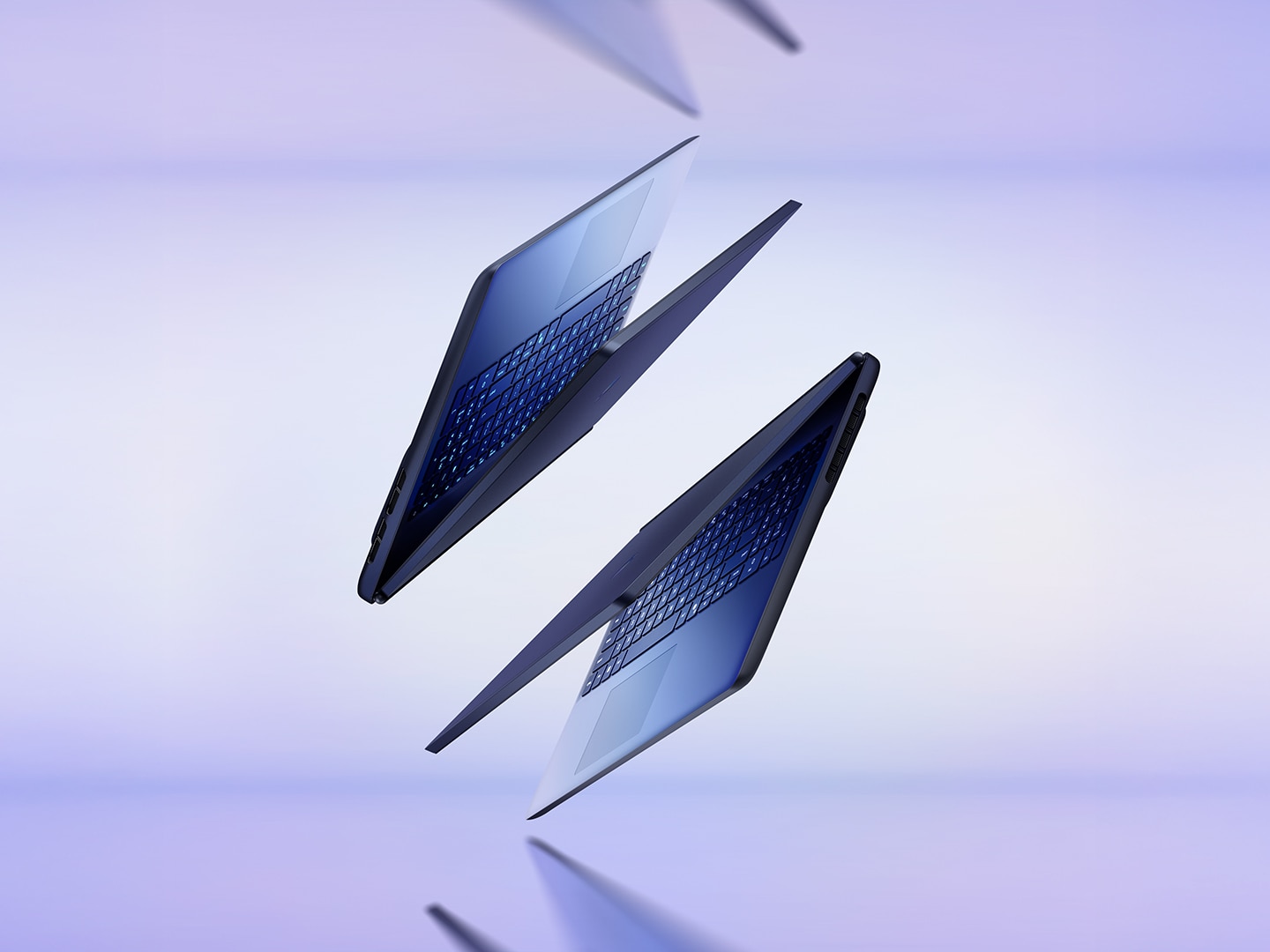
Dell Aurora gaming laptop, Image source: Dell
This is not the advantage of traditional GPUs but the advantage of NPUs.
In such scenarios, discrete graphics cards seem a bit cumbersome. Data needs to be copied from system memory to video memory and then back, and once the power consumption goes up, the fans start to spin madly. Many AI tasks don't require high peak performance but are very concerned about latency and energy efficiency. Considering that from Intel, AMD to Qualcomm and Apple are all emphasizing their NPUs and heterogeneous computing, if NVIDIA doesn't want to be "left out" by the era, making its own PC chips is a necessary move.
This also explains another key question: why NVIDIA is based on Arm.
If it uses x86, NVIDIA can hardly truly control this chip. Whether it licenses from Intel or AMD or takes a very niche compatible implementation route, it will be restricted by others in terms of CPU microarchitecture, power consumption curve, product rhythm, and platform roadmap. Arm gives it enough freedom to reverse - engineer the CPU scale around the GPU and AI units, customize the internal interconnection structure of the SoC, and design from scratch in terms of unified memory and heterogeneous scheduling.
Putting all these together, it becomes clearer why NVIDIA wants to enter the Windows on Arm platform. NVIDIA isn't suddenly interested in PCs. What it really worries about isn't the performance of x86 but that discrete graphics cards will become "tears of the era" after AI becomes the core ability of PCs. Choosing Arm SoC and making the N series is to continue to be a key part of PC evolution in the future. On the other hand, NVIDIA still has an absolute advantage in terms of GPUs, and the software stack of CUDA and TensorRT, which has been repeatedly verified in AI inference.
Conclusion
Regardless of whether the first - generation products sell well or not, NVIDIA's official entry into the PC SoC market has already changed the market's expectations.
In the past, the choices for Windows laptop processors were basically only Intel and AMD, and Qualcomm has been added in recent years. Now, there's a new player that brings GPU, AI, and gaming ecosystems to Windows on Arm. Even if the first - generation products aren't perfect, once this route is successful, it will be a good thing for the entire Windows ecosystem.
This might also force other manufacturers to rethink one thing: will the future PC continue to evolve around the CPU or start to be redesigned around local AI and parallel computing?
In this sense, N1/N1X may not be a chip that's "easy to sell" for OEM manufacturers, but it's likely to be an "important" chip for the PC industry.
This article is from the WeChat official account "Lei Technology", author: Lei Technology. Republished by 36Kr with permission.