The Robotics Landscape in 2026: An Inevitable Intensification of Price Wars and the Key Role of Embodied Intelligence Concept Realization
Recently, CCTV's Spring Festival Gala 2026 completed its first rehearsal. As a major highlight, after the intelligent robots doing yangge dance at the Spring Festival Gala in the Year of the Snake became a huge hit, robots will once again take the stage of the Spring Festival Gala.
Even earlier, a group of robot companies were reported to be vying for the sponsorship qualification of CCTV's Spring Festival Gala in the Year of the Horse, with the competition between ZHIYUAN and Unitree being the most intense.
Since the robot yangge dance at the 2025 Spring Festival Gala caught the nation's attention, robots (especially humanoid robots) have not only become a hot topic in the tech circle but also triggered an industry-wide arms race after attracting a large amount of capital. Correspondingly, important robot components such as dexterous hands and robotic arms, as well as their technological applications, have also become highly sought-after scenario-based tracks.
In this year, Shouxing completed four rounds of financing successively; Galaxy Universal broke both the single-round and cumulative financing records in the domestic industry in a new round of financing; after ZHIYUAN acquired Shangwei New Materials, Qiteng plans to acquire Shengtong Energy; the robot development platform was also not to be outdone, as Digua Robot completed a Series B financing of hundreds of millions of dollars.
In this year, ZHIYUAN's 5000th general-purpose embodied robot rolled off the production line; Songyan Power released a small humanoid robot priced at less than 10,000 yuan; the total order amount of Ubtech's humanoid robots exceeded 1.4 billion yuan; Unitree announced the launch of the "Humanoid Robot App Store".
At CES 2026, domestic robot manufacturers made their first collective appearance, triggering a warm response in the North American market and on the global stage, thus opening a wonderful chapter for the new year.
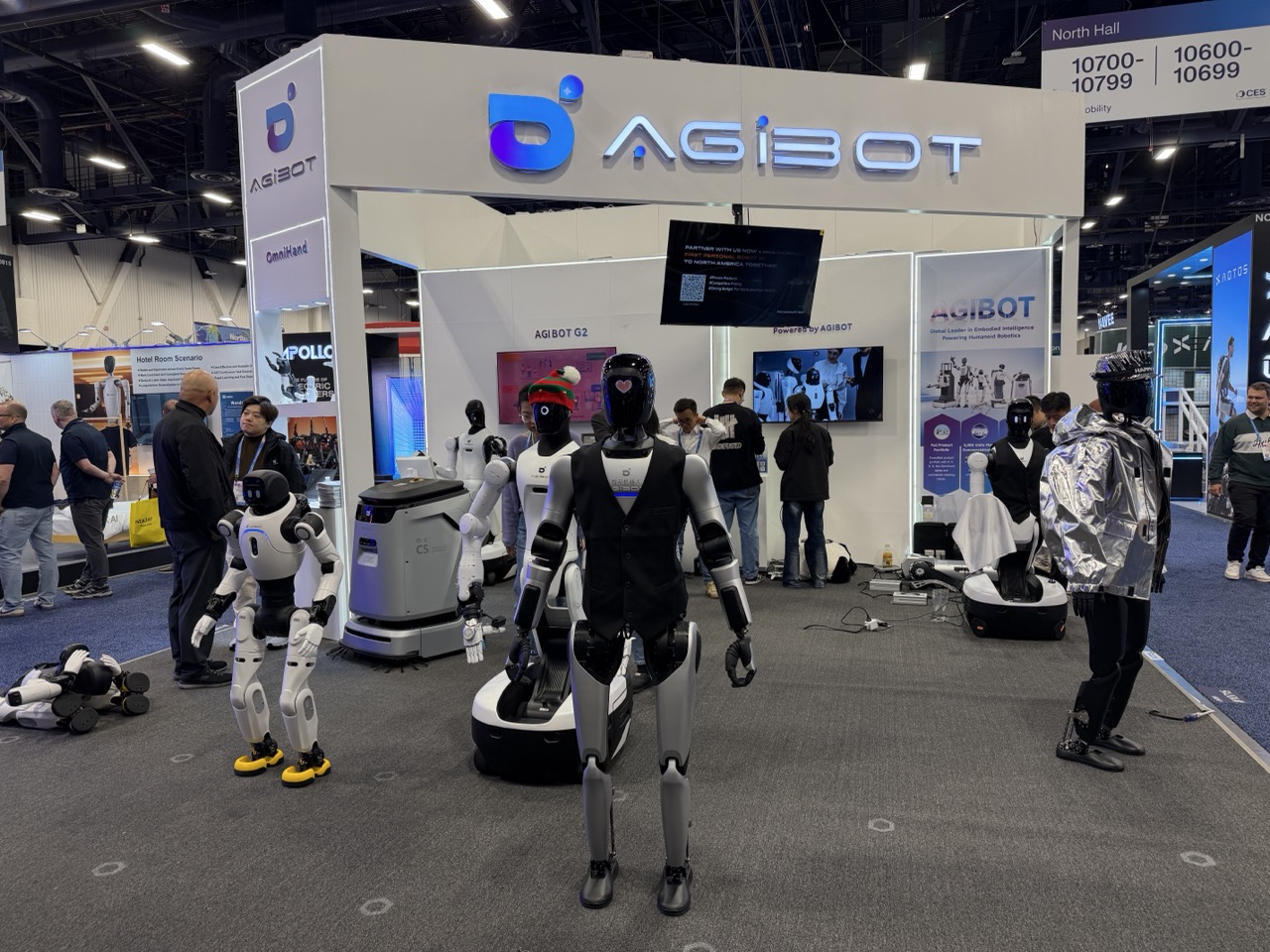
Photographed on-site at Lei Technology's CES 2026
Engaging in price wars and launching rental platforms, robots don't want to be just assembly line workers
Recently, Shangwei New Materials launched the world's first full-body force-controlled small-sized humanoid robot, "Qiyuan Q1". Meanwhile, Qingtianzu launched an "Instant Rental" service and rolled out a "1-yuan flash rental" activity in ten core cities such as Beijing, Shanghai, Guangzhou, and Shenzhen.
Both Shangwei New Materials and Qingtianzu point to an entrepreneur: Peng Zhihui (Zhi Huijun). The combination of strategies he has employed ultimately aims to enable humanoid robots to enter thousands of households and various industries earlier.
The volume and weight of Qiyuan Q1 are about 1/8 of those of traditional full-sized humanoid robots, yet it retains complete full-body force control performance and high dynamic response capabilities. Although the pricing of this robot has not been announced yet, it is foreseeable that this is a landmark product for Peng Zhihui to start a price war.
Actually, since the second half of 2025, the humanoid robot industry has been engaged in a price war. In July last year, Unitree launched the humanoid robot Unitree R1 with a starting price of 39,900 yuan. By October, the small humanoid robot released by Songyan Power was priced even below 10,000 yuan. During the same period, Jiasu Jinhua also launched a small humanoid robot priced at less than 30,000 yuan, and it has now started mass delivery.
Why can humanoid robots (especially small humanoid robots) significantly reduce costs and prices? The core reason is the further decline of technical costs and the further evolution of technical forms.
At the end of 2025, Fourier announced that it would launch a self-developed six-dimensional force sensor specially designed for humanoid robots, and make the price of similar products bid farewell to the 10,000-yuan era - according to industry insiders close to Fourier cited by the media, the price of this core component has been kept below 5,000 yuan. On Qiyuan Q1, Peng Zhihui's team changed the traditional fist-sized joints to egg-sized ones. "The materials and structure have been re-optimized, but the performance remains unchanged."
Starting a price war is to enable small humanoid robots to enter thousands of households; then, establishing a rental platform is to enable all robots (especially large humanoid robots) to enter various industries.
The single-unit pricing of large humanoid robots, which can easily reach hundreds of thousands or even more, means that not all corporate customers have the conditions to purchase a batch, or even one. Therefore, the rental market and its construction of robots (especially humanoid robots) are particularly crucial at present.
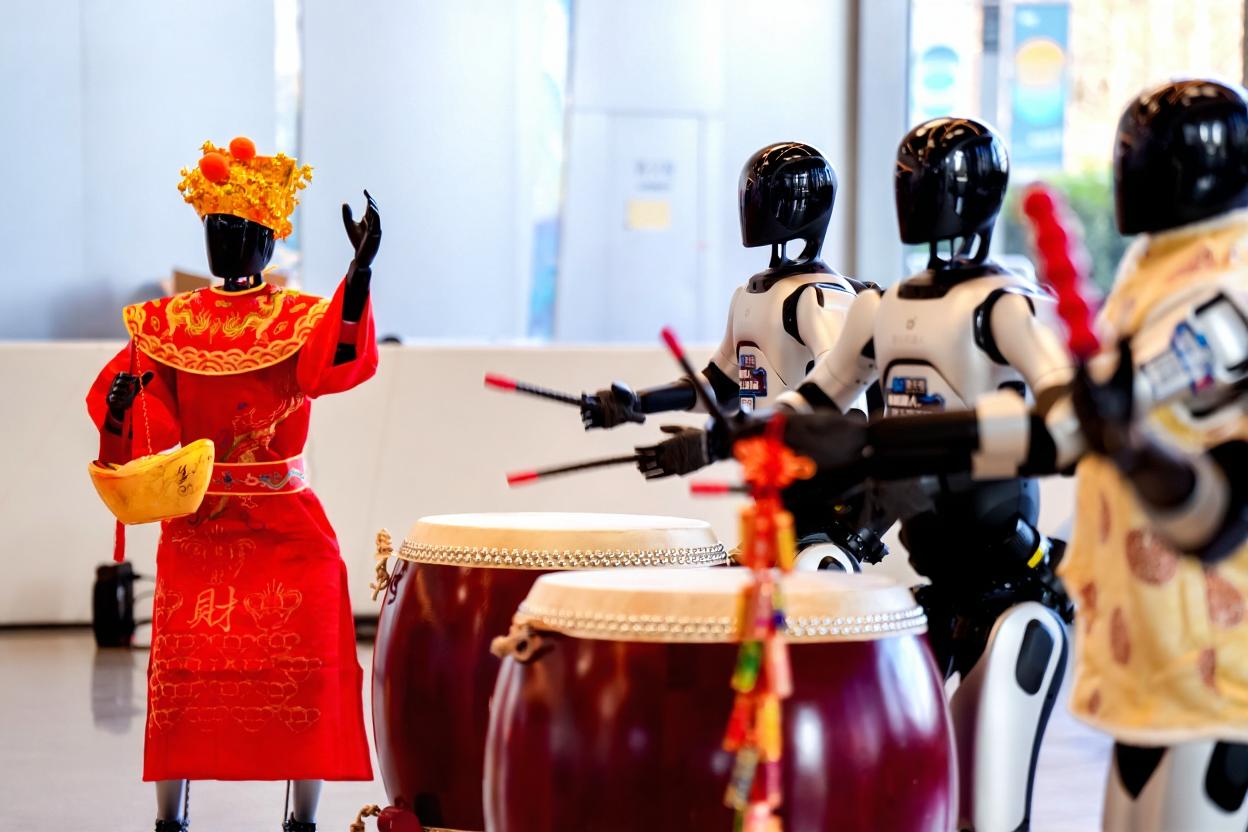
Qingtianzu, known as the first large-scale open robot rental platform in the country, currently covers 50 core cities across the country and more than 600 service providers, offering rental services for robots of multiple brands and models. While providing various rental scenarios for industry users, the recent "1-yuan flash rental" activity centered around Lingxi X2 launched by Qingtianzu aims to lower the "consumption" threshold for individual users to experience humanoid robots.
However, overall, the main application battlefield for high-cost large humanoid robots is still in factory and workshop environments at present.
Since 2025, humanoid robots from brands such as Ubtech, ZHIYUAN, and Unitree have been accelerating their entry into factories, and the first wave of industry customers are concentrated in the automotive and public sectors.
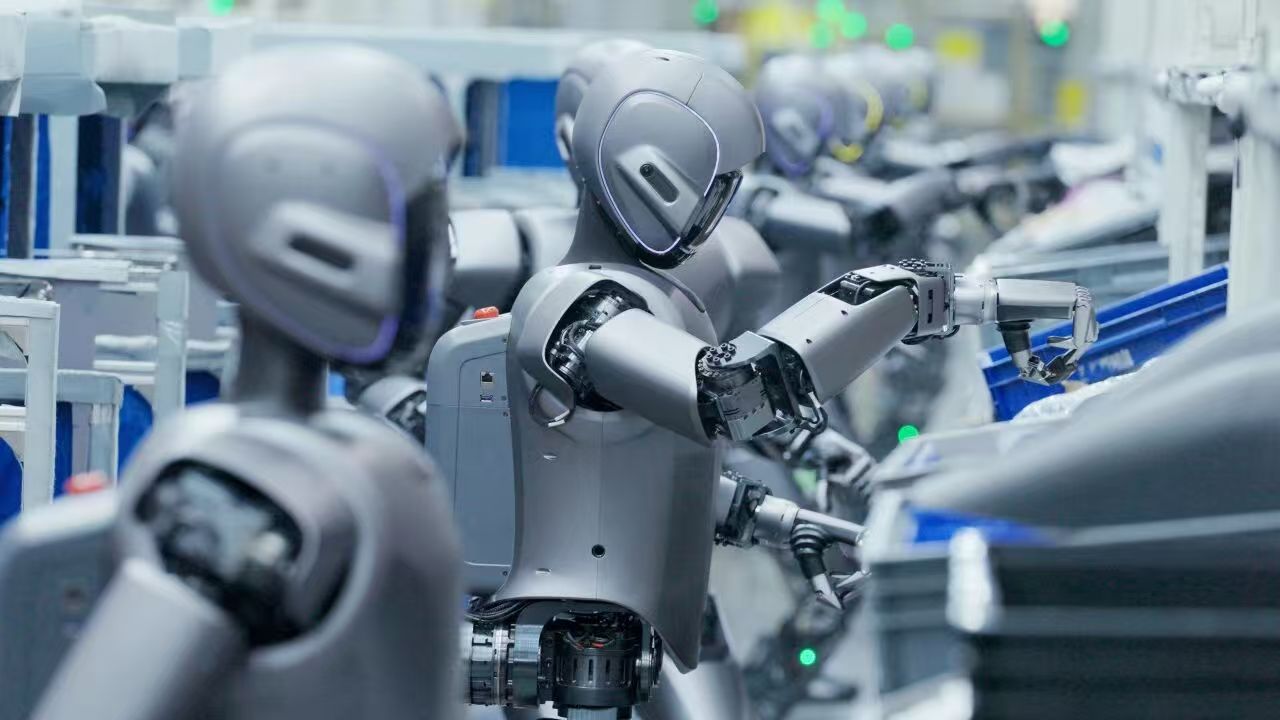
Why are corporate customers concentrated in the automotive field? After years of development, the form of automotive workshops has become a factory environment relatively close to "unmanned". Previously, industrial robots entered factories, and now humanoid robots are entering factories. The automotive industry has always been at the forefront of "embracing unmanned" work environments. This is the case for humanoid robots such as Optimus in Tesla factories, Figure in BMW factories, and Apollo in Mercedes-Benz factories.
It is worth noting that large manufacturers such as Midea (which owns KUKA) are also making efforts in the humanoid robot track. At the end of 2025, Midea released the third-generation product of its humanoid robot family, MIRO U. This series of six-armed wheeled-legged humanoid robots is expected to increase the efficiency of line change and adjustment in the relevant production line by 30% after entering the washing machine factory.
Humanoid robots for factory workshop scenarios can spread the purchase cost through heavy workloads, so they have become the first industry application scenario for mass delivery. For humanoid robots for personal application scenarios, there is currently no relatively unified answer at the product application level in the entire industry, so the only option is to lower the price first.
It is not difficult to understand the price war and the construction of rental platforms initiated by robotic dogs (quadruped robots) and small humanoid robots since last year. According to interviews conducted by the Lei Technology CES 2026 reporting team with multiple robot exhibitors, the price war launched by small humanoid robots will gradually spread to large humanoid robots.
With the decline in the cost prices of upstream technology modules and key components, the rise of general hardware development platforms, and the further increase in shipment volume, the comprehensive cost of humanoid robots will also continue to decline, which will be reflected in the continuous decline of the terminal product price.
The "cerebellum" and "brain" of robots are not developing synchronously, making it difficult to implement the concept of embodied intelligence
Some people believe that this round of development of humanoid robots is largely due to the "spillover" of the application of AI large model technology. This statement makes some sense, but it is also one-sided.
The relatively mainstream view is that on the path to AGI (Artificial General Intelligence), AI is the brain and the robot is the body, and both are indispensable. Therefore, "embodied intelligence", which connects AI and robots, has become the "top of the top" concept.
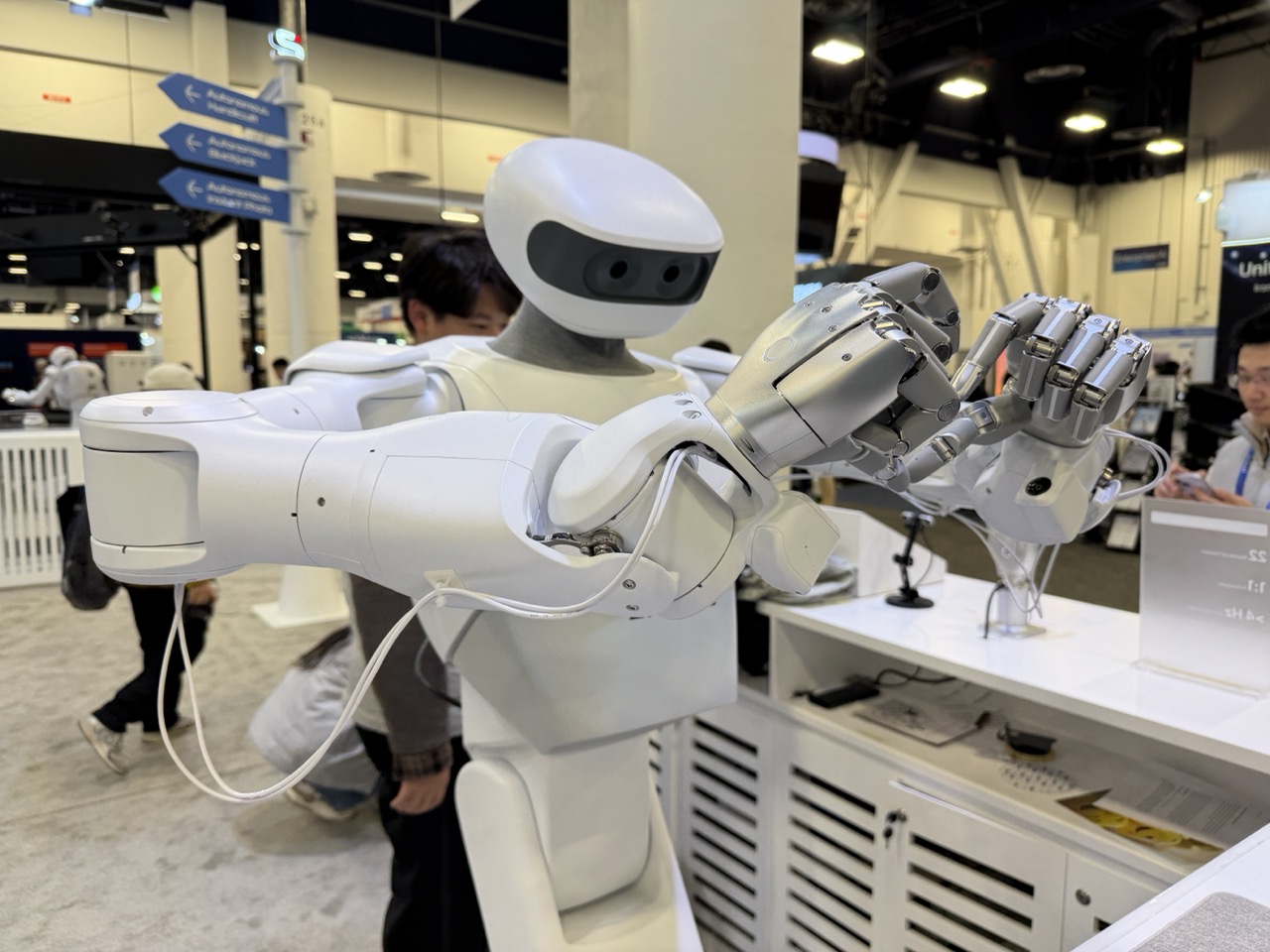
However, it may take a long time from the emergence of the concept to its implementation. According to on-site interviews conducted by the Lei Technology CES 2026 reporting team with more than a dozen robot exhibitors, almost all companies are talking about the development progress of the robot's "cerebellum". In contrast, few companies are talking about the development of the robot's "brain".
The "cerebellum" of a robot refers to the functional module that controls its movement ability; the "brain" of a robot refers to the functional module that controls its intelligence level.
Photographed on-site at Lei Technology's CES 2026
In recent years, humanoid robots have made obvious progress in motion control and basic work, but such performance can at most be regarded as that of a "tool". And the current shows of humanoid robots on display stands, such as dancing and fighting, mostly remain at the "tool" stage, and many even require manual remote control operation. The reasons are mainly as follows:
First of all, robot companies generally excel more in hardware technology, motion control, and corresponding software adaptation and optimization. This determines that most robot companies can only polish robot products from the hardware and motion control levels.
Secondly, there is currently no relatively mature vertical basic large model platform specifically for robot hardware, that is, the so-called "embodied intelligence OS" platform, even though some robot companies are making corresponding attempts and efforts. If the usual AI large models are simply applied to robot hardware, then robots can only remain at the "tool" stage. Leading AI large model manufacturers in China such as ByteDance and Alibaba, as well as emerging AI large model manufacturers such as DeepSeek, do not seem to show much enthusiasm for the research and development of large models dedicated to robots. It is not clear whether this is because the current market is still relatively small.
It is worth noting that many robot manufacturers currently apply VLA (Visual Language Action Model). VLA is a large model for intelligent vehicles and autonomous driving scenarios, and there are still significant differences between the current form of automotive applications and robot applications.
Of course, platform companies such as Beijing Humanoid also brought general embodied intelligence platforms such as "Huisi Kaiwu" to CES 2026, aiming to achieve the coordination of the "brain" and "cerebellum" and build a full-stack closed-loop ability of "cognition - decision - execution". However, at present, it can only be regarded as a relatively initial attempt and exploration.
Moreover, at the current stage of AI large model technology development, the main competition is still in the application of "basic skills", such as feedback stability and work efficiency. When projected onto robots, the competition is also about some basic skills. Therefore, robots are also waiting for the application of iterative AI large model products with higher IQ and EQ.
Photographed on-site at Lei Technology's CES 2026
Finally, the training data for humanoid robots, especially high-quality real-world training data, is still relatively scarce at present. If only relevant humanoid robot companies conduct real data training, it will still take a long time to accumulate. And the data mainly based on simulation has limitations in quality and diversity and cannot meet the current actual needs. Based on this industry situation, leading humanoid robot companies have begun to cooperate with platform companies. Recently, Hubei Humanoid delivered thousands of hours of humanoid robot training data to ZHIYUAN, which is also the first professional and customized humanoid robot data transaction between domestic enterprises.
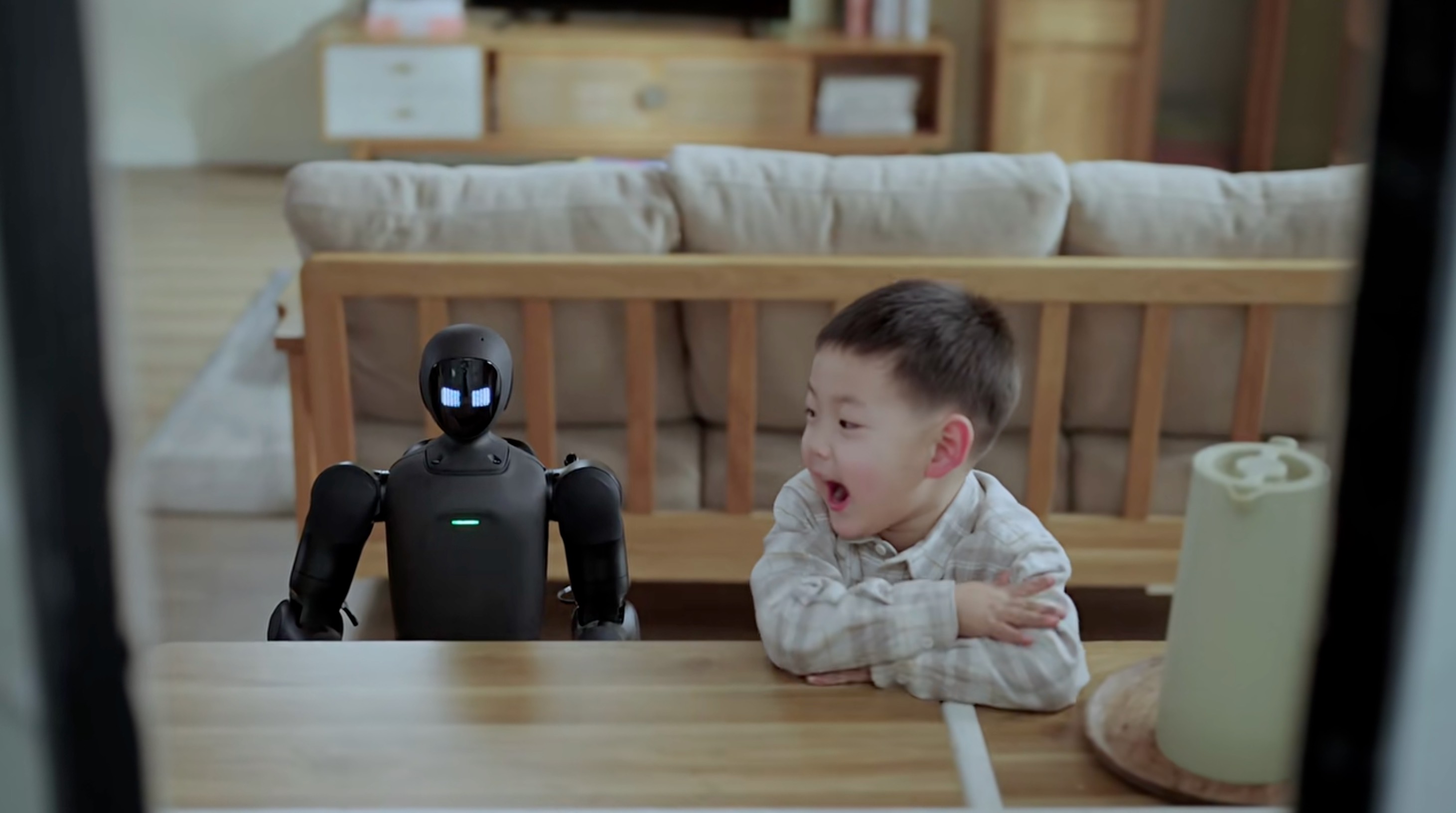
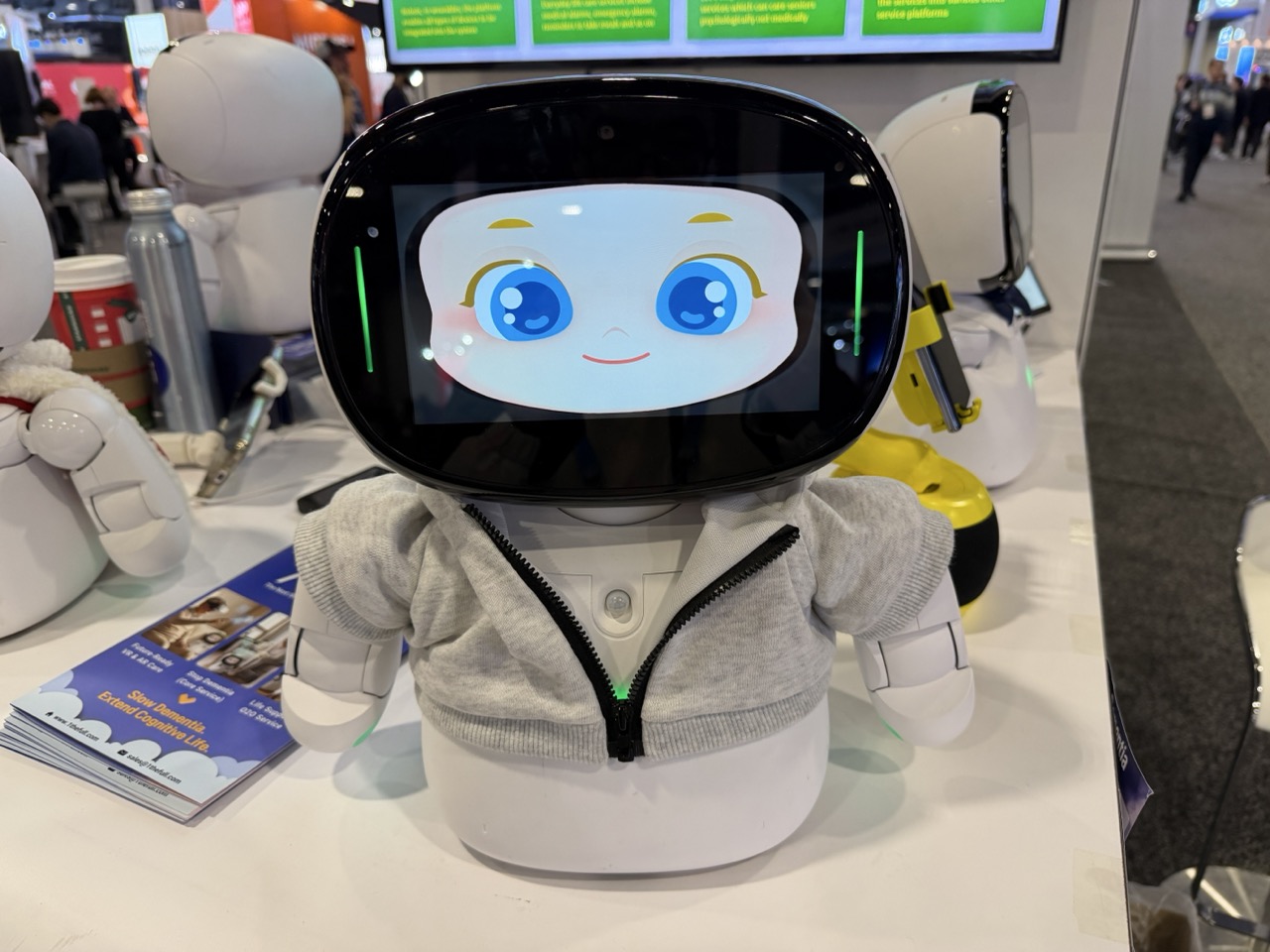
In summary, the "cerebellum" of robots is developing relatively faster, while the "brain" is currently difficult to develop synchronously with the "cerebellum" due to various limiting factors, directly leading to the problem of difficult implementation of the concept of embodied intelligence, even though many companies are touting their embodied intelligence concept labels. In particular, there are still some doubts about whether those embodied intelligent robots that mainly focus on "active companionship" and "emotional interaction" for household users can well undertake the role of "family companion robots".
Humanoid robots are the future, while non-humanoid robots are the present
After humanoid robots started to appear frequently and enter commercial scenarios, the general category of robots has gradually become humanoid robots and non-humanoid robots.
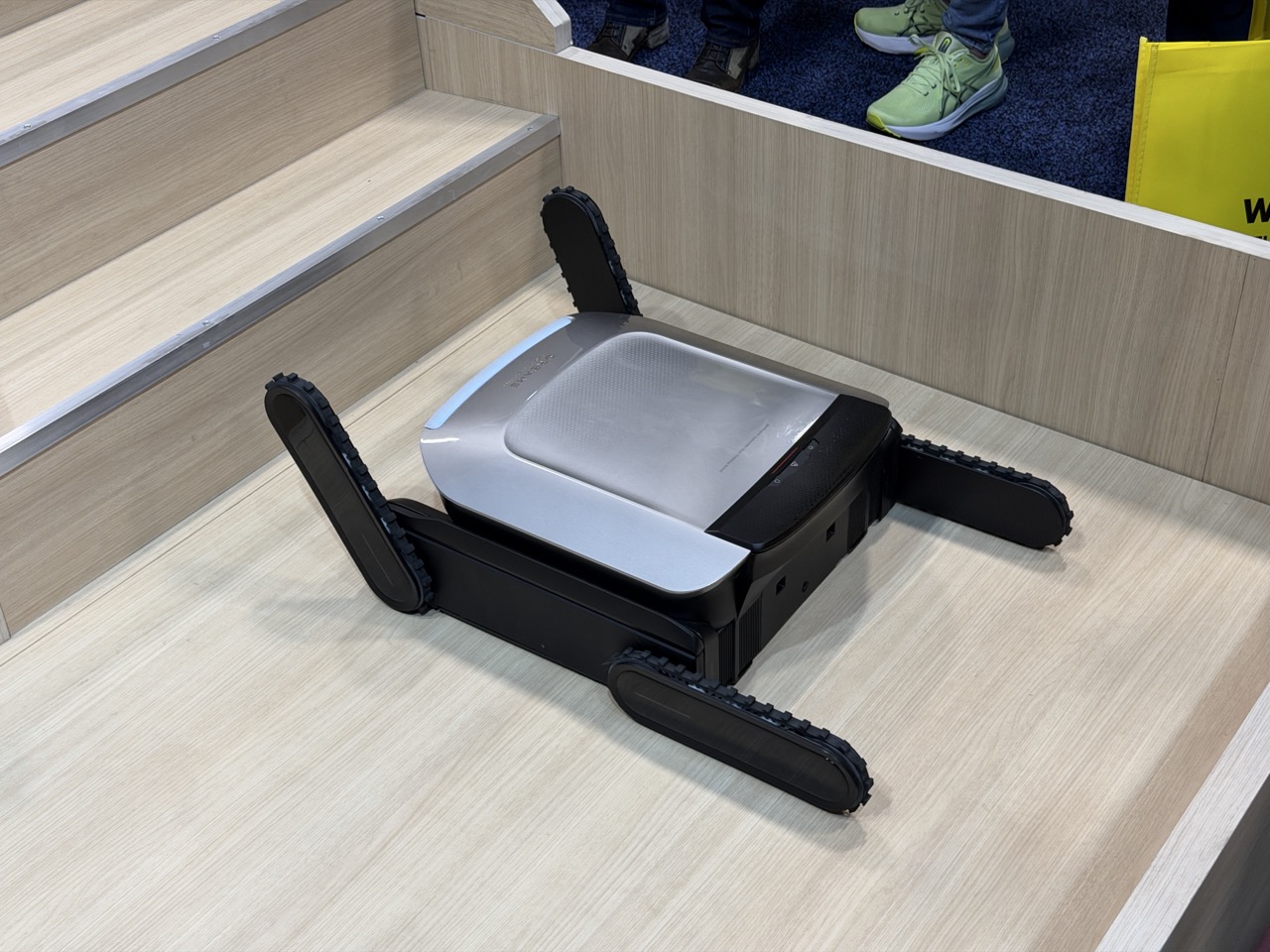
Compared with highly recognizable humanoid robots, non-humanoid robots have long entered thousands of households, such as intelligent cleaning robots (such as floor sweepers), terminal delivery robots, cooking robots, AI companion robots, industrial robots, and special industry robots. Even the robotic dogs that more consumers are starting to buy now cannot be regarded as "standard" humanoid robots but belong to quadruped robots.
In recent years, the non-humanoid robot track has become even hotter: domestic intelligent cleaning robots have been very successful in the European and American markets, and the competition has spread from home to courtyard and outdoor scenarios; cooking robots have seized the public's attention on "prepared meals" and, with the support and promotion of large manufacturers such as JD.com, have comprehensively accelerated their commercialization process; in the field of AI companion robots (AI toys), there has been a wave of entry from entrepreneurs to large manufacturers.
In particular, intelligent cleaning robots have now developed into one of the three popular new technology hardware categories with the fastest growth, along with intelligent imaging and intelligent glasses.
Photographed on-site at Lei Technology's CES 2026
Before humanoid robots, more forms of robots have entered a stage of diverse development, and this phenomenon itself is also a necessity.
At CES 2026, among the robot