After the Screen Disappears: OpenAI's New Bet on Smart Hardware
In the mainstream narrative of technological development, we are already accustomed to the linear logic of bigger, faster, and smarter: screens are getting larger, resolutions are getting higher, and interactions are becoming more and more dazzling. From smartphones to tablets, and then to foldable screen devices, each iteration seems to continuously pile up visual information, firmly anchoring users to the screen.
However, at the beginning of 2026, a seemingly low - key piece of news quietly disrupted this path:
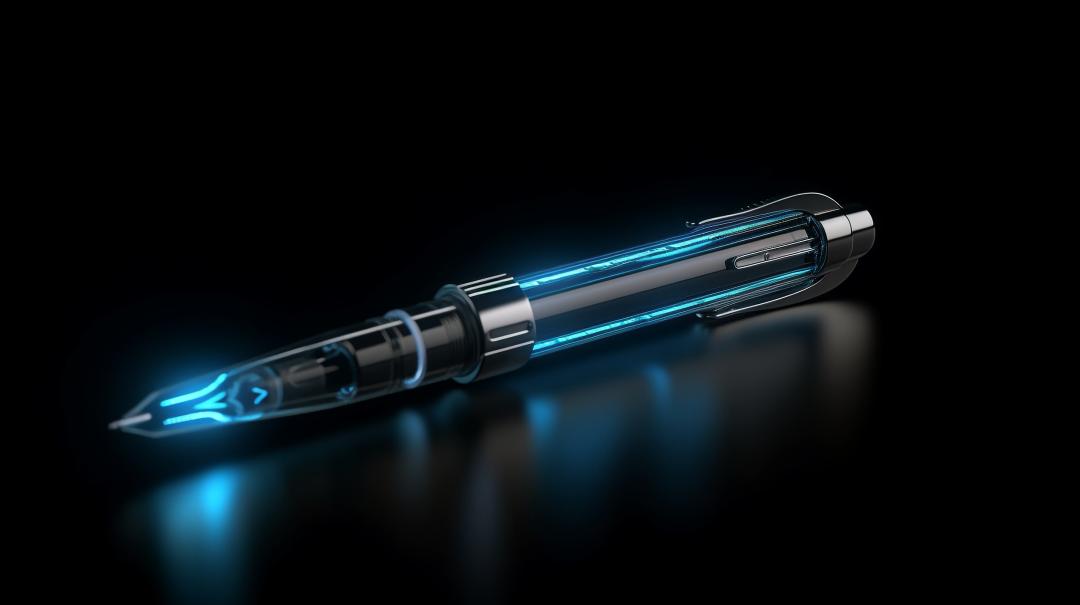
OpenAI is about to launch its first hardware product, an AI pen without a screen. It has an extremely minimalist appearance, like a metal fountain pen. It has no display screen and does not rely on touch operations, as if deliberately bypassing the graphical interface we are accustomed to.
This seemingly minor product choice actually reveals that AI may be trying to break away from the screen, return to the physical world, and integrate into the most natural and instinctive human behaviors, such as writing, speaking, and casual note - taking.
So, the question arises. As a company that started with large - scale models and software services, why did OpenAI bet its first hardware attempt on a pen? What kind of technical considerations are behind this?
01 The Screenless Discussion Triggered by a Pen
What really sparked the discussion about OpenAI's first hardware is not its upcoming release, but the fact that it doesn't look like any type of smart device we are familiar with.
In May of that year, OpenAI acquired the AI hardware startup io, co - founded by former Apple Chief Design Officer Jony Ive, through an all - stock transaction worth approximately $6.5 billion. This is the largest acquisition in OpenAI's history. This deal not only brought in all 55 top hardware, manufacturing, and industrial design experts from the io team but also marked OpenAI's official entry into the field of hardware development and design.
According to the currently leaked information, this hardware, codenamed Gumdrop, has an extremely minimalist appearance like a metal fountain pen, weighing only 10 - 15 grams. It has no screen, no camera, and even no traditional operating system interface. Writing itself is not its core function; handwriting recognition is just one of its input channels. It has no intention of replacing mobile phones or computers and instead deliberately avoids the "display" dimension.

Its interaction logic is compressed to the extreme: you speak, and it understands; even if you don't look, it's still there. In other words, it's always available and disappears when not needed.
This leads to a more fundamental question: When the capabilities of large - scale models are powerful enough, is a screen still necessary as the default interface for human - machine interaction?
Looking back at the evolution history of consumer electronics in the past two decades, from feature phones to smartphones, from laptops to smartwatches, AR glasses, and even AI glasses, almost all hardware with the "smart" attribute has ultimately converged on one center: the screen. The screen is not only a window for information output but also the core medium for users to confirm the system status, establish a sense of control, and complete the feedback loop. It can be said that "smart means having a screen" has almost become the default design anchor in the industry.
However, OpenAI has actively cut off this path with its first hardware, trying to address how to achieve the most natural and seamless human - machine collaboration with the minimum physical presence.
This is the screenless AI hardware that has emerged in recent years. So - called screenless AI hardware no longer centers on vision but is based on interaction through voice, environmental perception, context understanding, and even behavioral habits. Such devices are usually small in size, unnoticeable when worn or carried, and emphasize being "always at your service and gone when done." The goal is to integrate AI into the flow of life rather than interrupt it.
The exploration of screenless AI is not just a bet by OpenAI. In recent years, with the development of AI, many players have entered this field.
So, how is the development of screenless AI hardware? What are its characteristics?
02 How Far Has Screenless AI Hardware Come?
If we regard OpenAI's pen as a radical experiment, it didn't appear out of thin air. Before it, screenless AI hardware had already quietly entered the real world in various unobtrusive but continuously spreading ways.
The most typical and easily overlooked category is the AI toys and companion devices that have gradually become popular in China in recent years. From early smart storytellers and voice - interactive dolls to later children's companion robots and desktop pets equipped with large - scale model capabilities, most of these products deliberately avoid screens or only retain extremely limited indicator lights and status feedback, compressing almost all interactions into speaking and listening.
Take the popular BubblePal in China as an example. In essence, it's just a small voice module that can be hung on a plush toy. It has no screen and almost no operable interface, but it can quickly establish a sense of companionship through continuous conversations, storytelling, and emotional responses.

In terms of technical complexity, they are not at the forefront. However, toy companionship is a scenario with a very high tolerance for errors. Inaccurate answers and occasional logical confusion don't have serious consequences and may even be regarded as "personality." In this kind of interaction, screenless interaction is feasible, and it also verifies a new intelligent interaction logic: When the system is good at responding, people don't insist on seeing the interface.
Of course, the screenless trend doesn't stop at the toy level. Another more important evolutionary path is the downgrading of screens in practical smart devices. In more and more scenarios, the screen still exists but is no longer the core entry point for interaction. Smart headphones, smart glasses, in - vehicle systems, and smart home devices are all moving in the same direction: reducing explicit operations and increasing intention understanding.
Take the smart glasses that tech giants like Alibaba, Baidu, and ByteDance are investing in as an example. You no longer need to tell the system "what I'm going to do now." Instead, you let the system judge what you might need through voice commands and environmental information. This change essentially transforms the interaction logic from command - driven to intention - driven. The role of the screen here has shifted from the main stage to an alternative.
Furthermore, there is a type of solution that is hardly regarded as a hardware form but may be the most competitive rival of screenless AI. They don't require user interaction and don't emphasize their presence. Instead, they run in the background for a long time, automatically recording, organizing, reminding, and completing tasks. Users usually only notice them when the results appear. For example, in the in - vehicle field, the intelligent driving system can actively plan the fastest route and avoid obstacles in an emergency without human intervention.
If we connect these phenomena, we'll find that screenlessness is not just a style choice but an inevitable trend. However, currently, screenless AI hardware has not become a core product and still faces many challenges and problems in the development process.
03 Where Is the Inflection Point for Screenless AI from Toys to Productivity Tools?
Looking back at the development process of screenless AI, we'll find that the Humane AI Pin, a "next - generation productivity tool" that has raised hundreds of millions of dollars in financing and is highly anticipated, is far less popular in the market than a talking doll that costs only a few dozen dollars. Children's voice storytellers, smart companion robots, and even electronic pets that can recite Tang poems, these seemingly low - tech products have actually achieved higher usage frequencies and user stickiness in real life.
The core issue is that current screenless AI hardware can't do everything perfectly. It wants to undertake high - level tasks but lacks reliable underlying capabilities; it pursues minimalist design but has to face the complex reality. This contradiction between high expectations and low tolerance for errors has caused it to encounter many setbacks in implementation.
Specifically, current screenless AI faces two major bottlenecks:
On the one hand, AI hallucinations still exist, and the technical difficulty is greater than that of large - scale models. Even though large - scale models have become relatively mature in text generation, in real - time voice interaction, context understanding, intention recognition, and fact - checking are still prone to errors. A vague "Book a meeting for tomorrow" might be misinterpreted as booking a meeting room, a flight ticket, or even a restaurant. Without a screen as a confirmation interface, errors can't be corrected immediately, and trust collapses quickly. Toy - like products, due to their single function (such as just telling stories) and highly controllable output, are more reassuring.
On the other hand, the social acceptance of productivity - oriented AI hardware tools is low, and the toy - like attributes are more attractive. Since the technology is still in the development stage, people tend to label them as toys or entertainment products.
For manufacturers who want to turn screenless AI hardware into productivity tools, instead of trying to solve all problems with one device, it's better to take a step back and choose a small scenario with high value, high tolerance, and high demand to perfect the user experience.
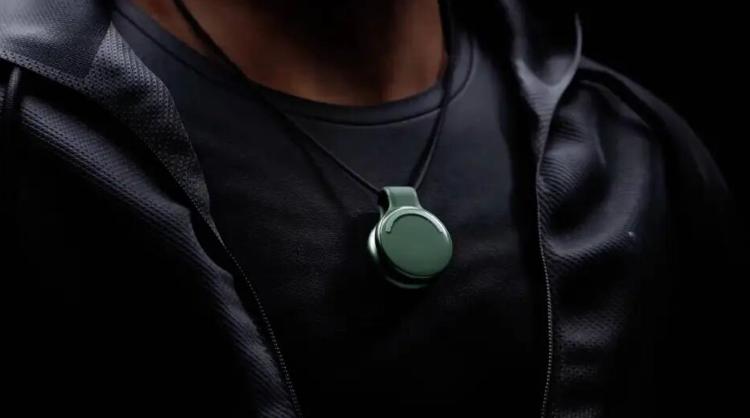
Among current screenless solutions, besides toys, Limitless' AI pendant and Meta's Ray - Ban glasses follow a similar logic. They don't aim to be all - around assistants but only enhance specific functions. Limitless focuses on "all - day memory." It doesn't try to answer questions but only silently records, transcribes, and summarizes like a black box. Ray - Ban glasses are first and foremost good sunglasses, and then an AI device that can take photos and play music.
OpenAI's screenless pen is worth looking forward to because it avoids the trap of being an all - around assistant and instead focuses on lightweight assistance for knowledge workers: meeting notes, inspiration capture, real - time translation, and literature summarization. In these scenarios, users have a certain tolerance for "occasional errors."
In these small and beautiful niches, screenless AI doesn't need to be perfect. It just needs to be more natural, less intrusive, and more in line with the workflow than existing solutions. Once it establishes a reliable reputation in a niche scenario, users will actively expand its usage scope, and this may be the real path for screenless AI to evolve from toys to productivity tools.
Ultimately, the future of screenless AI lies not in showy skills but in restraint: restraining the obsession with universality, over - designing the hardware form, and the grand narrative of replacing mobile phones. This may also be the reason why OpenAI's hardware pen has sparked people's thinking about the new generation of screenless AI hardware.
This article is from the WeChat official account “Brain Intelligence” (ID: unity007). Author: Shan Hu, Shan Hu. Republished by 36Kr with permission.