The legendary life of John von Neumann
On December 28, 1903, a baby boy was born into a Jewish family in Budapest, Hungary.
The baby boy's father was a successful banker. He was extremely excited about the birth of his son. He hoped that this child would inherit his business and become a business elite in the future.
In fact, the boy's growth trajectory did not turn out as his father wished. The boy did not go into business, let alone become a business elite. However, the achievements he made far exceeded his father's expectations.
This boy was later the super genius known as the "Father of the Computer" and the "Father of Game Theory", the proposer of the von Neumann architecture, and the hero behind the world's first atomic bomb - John von Neumann.
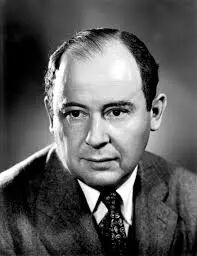
John von Neumann
The Early Years of the Prodigy
John von Neumann's original name was not John von Neumann.
His father was originally named Neumann Miska. In 1913, due to his "merits in the financial field", he was granted a hereditary title "von", and his name became Maximilian Neumann von Margitta. Then John von Neumann's name became Johann Neumann von Margitta, which was later simplified to John von Neumann.
John von Neumann was an out - and - out genius. At the age of 6, he could joke with his father in ancient Greek and perform eight - digit division in his mind. At the age of 10, he spent several months reading a 48 - volume world history and commenting on the military theories and political strategies in it.
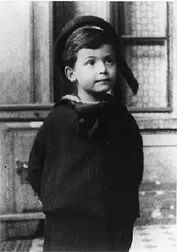
Young John von Neumann
His amazing memory and mathematical talent enabled him to stand out in his early education.
As mentioned before, John von Neumann came from a wealthy family. He received a Jewish - style family education at home from an early age. There were dedicated teachers for German, French and other subjects, and he could also read in his father's library. This laid a solid foundation for his knowledge.
In 1914, John von Neumann entered the Lutheran Gymnasium, one of the three elite high schools in Budapest.
Here, his mathematical talent caught the attention of the famous scholar Laszlo Ratz. At the age of 13, he was also guided by professors Joseph Kürschák, Gabriel Szegő, Michael Fekete and Leopold Fejér from the University of Budapest. At the age of 17, John von Neumann successfully published his first original paper (co - authored with Fekete).
In 1921, 18 - year - old John von Neumann graduated from high school and was preparing to enter university.
He was obsessed with mathematics and was determined to become a mathematician. However, his father thought that one could not make much money by studying mathematics and wanted him to study chemistry.
After some bargaining, John von Neumann finally enrolled in the University of Berlin and took courses in chemical engineering (he later transferred to the Swiss Federal Institute of Technology in Zurich). At the same time, he studied mathematics at the University of Budapest (he did not attend classes regularly but only went to Budapest to take the exams at the end of each semester. And he always got an A).
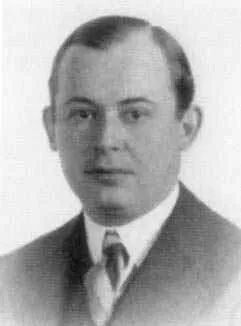
Young John von Neumann
In 1923, John von Neumann completed his long - length paper and submitted it to the German journal "Mathematische Zeitschrift". After receiving the submission, the journal sent it to the famous scholar Abraham Fraenkel for review. Fraenkel was deeply shocked after reading it and invited John von Neumann for a face - to - face talk.
This paper titled "An Axiomatization of Set Theory" was circulated among important figures before it was even published. The famous mathematician David Hilbert liked this talented young man very much and often invited him to his home.
A few years later, in 1926, 23 - year - old John von Neumann obtained both a degree in chemical engineering from the Swiss Federal Institute of Technology in Zurich and a doctorate in mathematics from the University of Budapest.
Interestingly, during the defense of his doctorate in mathematics, David Hilbert only asked him one question - "I've never seen such a beautiful evening dress. Who's your tailor?" This shows from the side that John von Neumann's academic ability already met the requirements for a doctorate, and there was no need for further examination.
Academic Migration and Peak
After obtaining his doctorate, John von Neumann went to the University of Göttingen to serve as David Hilbert's assistant.
The University of Göttingen was the world center of mathematical research at that time, where a large number of top - notch mathematical talents gathered. Under Hilbert's influence, John von Neumann began to conduct in - depth research on the mathematical theory of quantum mechanics, which laid the foundation for his important contributions in the field of quantum mechanics later.
From 1927 to 1929, John von Neumann served as a part - time lecturer at the University of Berlin and then transferred to the University of Hamburg. During this period, he had published many papers in the fields of set theory, algebra and quantum theory and gradually became well - known in the international mathematical community.
There was an interesting saying in the academic circle at that time: "Most mathematicians prove what they can prove, while John von Neumann proves what he wants to prove."
In 1928, John von Neumann published a paper proposing the minimax theorem for zero - sum games, proving that every finite two - person zero - sum game has an optimal mixed strategy, making the maximum loss of both sides equal to the minimum gain. This theorem laid the foundation for game theory as a mathematical branch.
In 1930, Princeton University in the United States hired John von Neumann as a visiting lecturer. For this young scholar, this was an important turning point. He later recalled that there were very few vacant positions in German universities and the competition was fierce (more than 40 lecturers were waiting in line). The general situation in Europe was also not good (war was approaching). So, it was a good choice to develop in the United States.
It is worth mentioning that before going to the United States, John von Neumann went back to Budapest first to "handle a family issue" - he married a girl named Marietta Kovesi and then took her with him to the United States.
In 1933, the Institute for Advanced Study at Princeton was established, and John von Neumann was invited to join as a professor, becoming the youngest life - long member of the institute. At that time, there were only six professors in the institute, including Einstein. At the age of only 30, John von Neumann was the youngest among them.
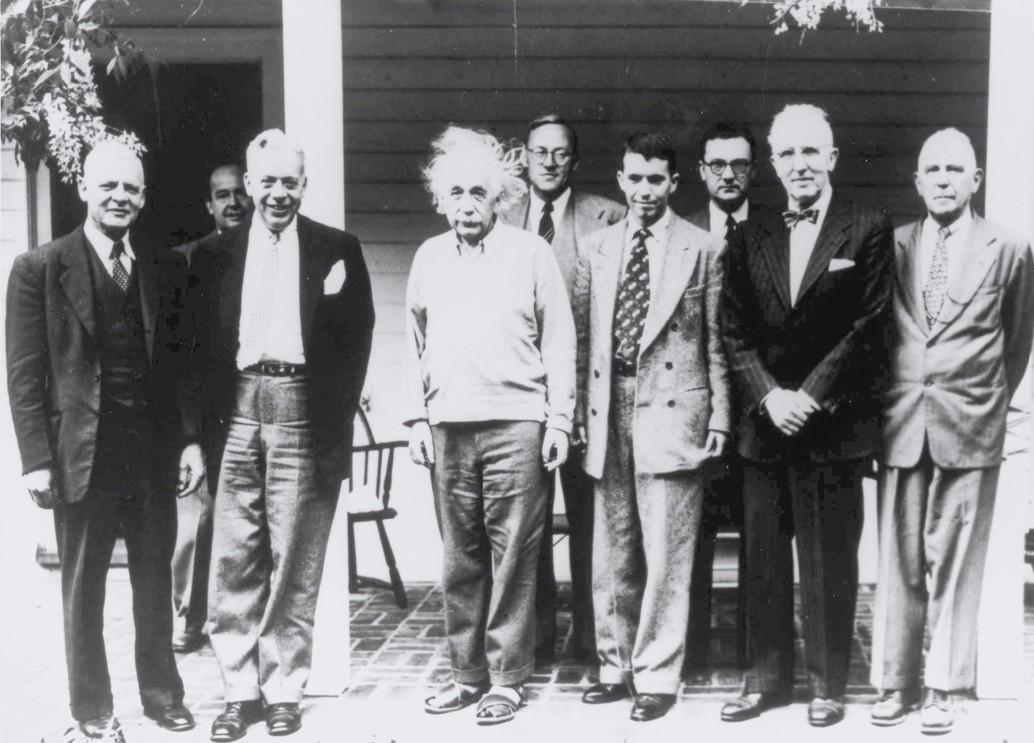
John von Neumann is the one hiding behind on the left second
Although John von Neumann and Einstein were colleagues, their relationship was not harmonious. There were some differences in their academic views and great differences in their thinking modes. According to an unreliable rumor, once when Einstein was going to New York, John von Neumann volunteered to drive him to the railway station but deliberately put him on a train going in the opposite direction...
During this period, John von Neumann had already started his exploration in multiple scientific fields. His contributions in quantum mechanics were particularly prominent. His book "Mathematical Foundations of Quantum Mechanics" published in 1932 is considered a classic in this field. Through the study of unbounded operators, he developed the Hilbert operator theory, providing a solid mathematical foundation for quantum mechanics.
Transformation Brought by the War
Before the outbreak of World War II, John von Neumann also held a scientific research position in Germany and would return to Germany every summer. Later, as the situation became more and more serious, John von Neumann reduced the frequency of his trips to Germany.
In 1933, Hitler became the Chancellor of Germany, and the Nazis began to persecute scientists of Jewish origin. John von Neumann had to resign from his position in Germany. In 1935, John von Neumann and Marietta had a daughter named Marina von Neumann. This was also John von Neumann's only child.
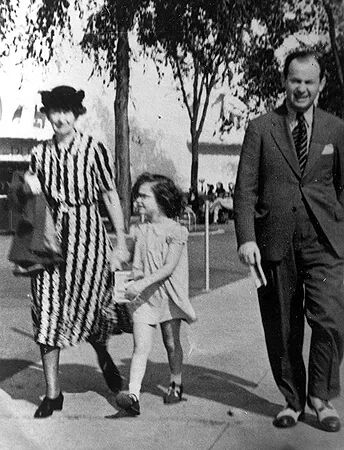
The arrival of the child did not save his marriage. In 1937, John von Neumann divorced Marietta and became a US citizen. Later, he once tried to join the US Army by taking the exam for a reserve second lieutenant in the US Army Ordnance Department but was rejected because of his age. In 1938, John von Neumann married Klara Dan.
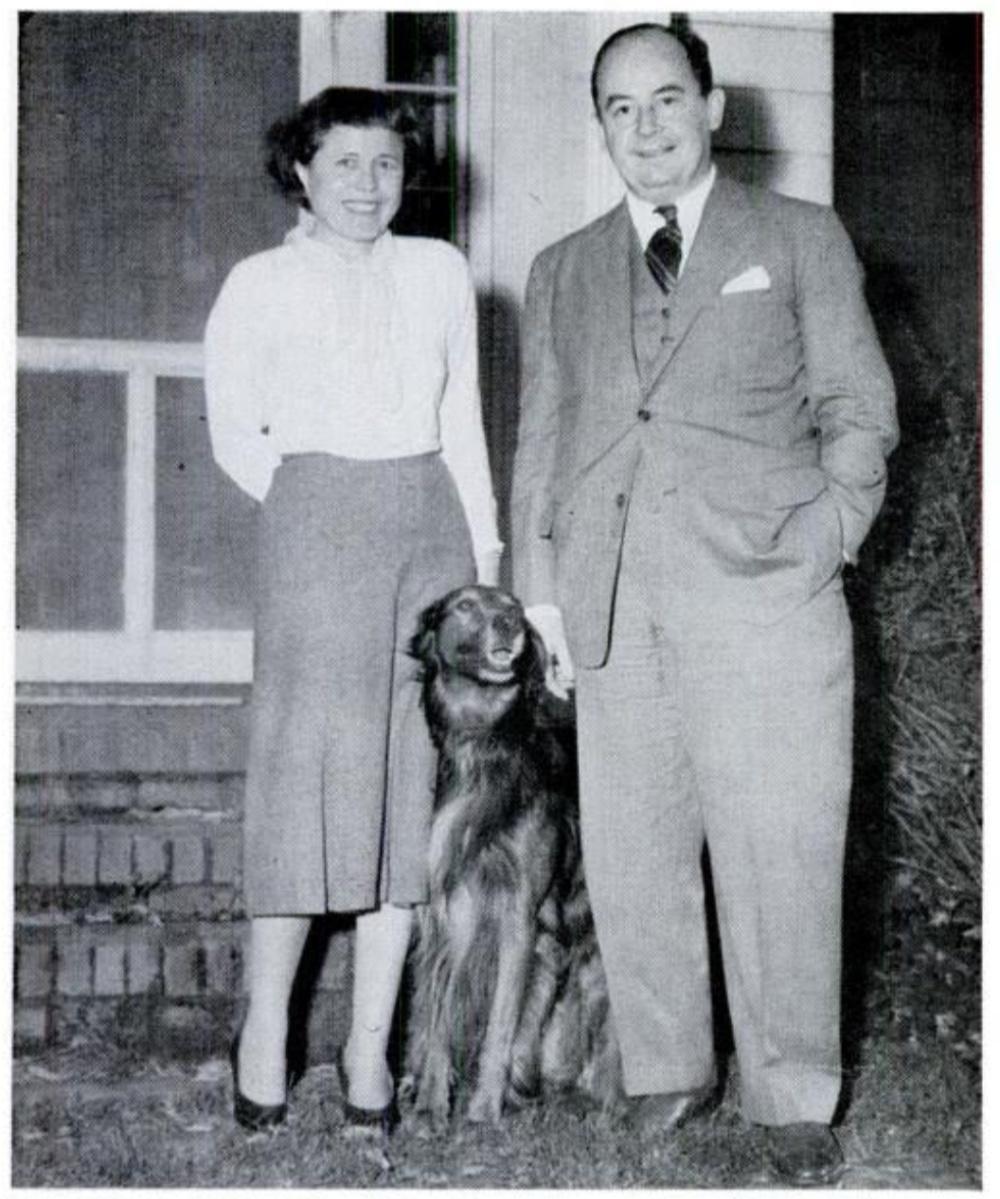
John von Neumann and Klara Dan
In 1939, Germany invaded Poland, and World War II officially broke out. John von Neumann continuously wrote letters and sent telegrams to members of Congress, fully supporting the United States' participation in the war.
Because of World War II, John von Neumann also changed his research direction. He began to shift from pure mathematics to applied mathematics, using his knowledge to contribute to the victory over the Nazis.
In 1940, John von Neumann joined the Army Department's Scientific Advisory Committee at the Ballistic Research Laboratory of the Aberdeen Proving Ground and became a calculator of shock waves and ballistic trajectories in the pre - computer era. Later, due to the needs of the war, he participated in the research on the motion of compressible gases, established shock wave theory and turbulence theory, and developed fluid mechanics.
In 1942, as a master of complex blasting calculations, John von Neumann was transferred to the Mine Warfare Division of the Navy's Machinery Department.
In 1943, as a consultant to the Los Alamos Laboratory, John von Neumann began to participate in the Manhattan Project and served as a consultant for the manufacture of atomic bombs. He proposed a mathematical model of "explosive lenses" and successfully solved the problem of plutonium bomb implosion.
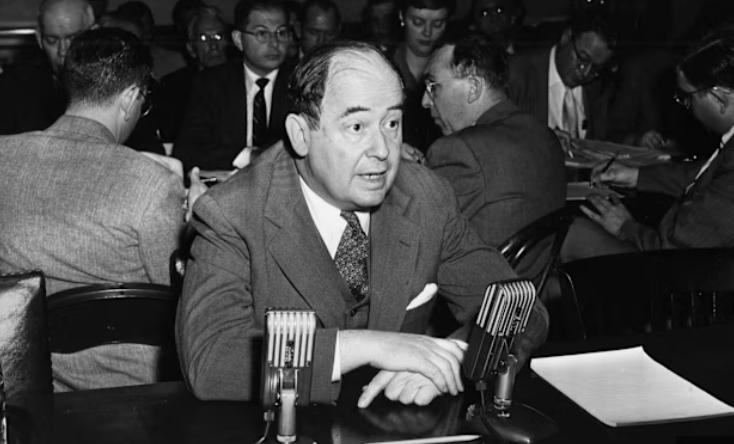
During the development of the atomic bomb, John von Neumann realized the importance of large - scale computing. At that time, the numerical simulation of the atomic bomb required a large number of complex calculations, and traditional calculation methods far could not meet the demand. This realization prompted him to start thinking about how to use machines to replace manual calculations, thus initiating his exploration in the field of computer science.
Meanwhile, John von Neumann also collaborated with the economist Oskar Morgenstern and completed the book "Theory of Games and Economic Behavior" in 1944. This book not only laid the foundation for game theory but also made John von Neumann one of the founders of mathematical economics.
During the war, John von Neumann's scientific contributions far exceeded the academic circle. His work directly affected the process and result of the war and also demonstrated the powerful force of mathematics in solving practical problems.
Founding Computer Science
In 1944, John von Neumann accidentally learned about the development plan of the ENIAC computer. Although it was a very risky project, he still joined the Moore School's computer development team without hesitation. No one could have imagined that the result of this choice would completely change the historical process of computer development.
In the next ten months, John von Neumann worked closely with other members of the team and put forward a series of revolutionary design ideas.
In 1945, they jointly drafted a 101 - page report, namely the famous "First Draft of a Report on the EDVAC". This report comprehensively and specifically introduced new ideas for manufacturing electronic computers and programming, announcing the arrival of the electronic computer era.

The core of the computer architecture proposed by John von Neumann includes two key ideas: binary system and program memory. Based on the bistable working characteristics of electronic components, he suggested using the binary system in electronic computers and predicted that the use of the binary system would greatly simplify the logic circuits of the machine.
At the same time, through the investigation of the ENIAC, he keenly grasped its design weakness of not having a real memory and put forward the idea of program memory - storing the operation program in the machine's memory, thus greatly accelerating the operation process. This idea marked the realization of automatic operation and became the basic principle of electronic computer design.
John von Neumann divided the computer into five major components: input device, memory, arithmetic unit, controller, and output device. This architecture is still called the "von Neumann architecture" today. From the ENIAC to the most advanced computers at present, all adopt this architecture.

Von Neumann architecture
In June 1954, John von Neumann went to work at the Institute for Advanced Study in Princeton, USA, and put forward a more perfect design report "Preliminary Discussion on the Logical Structure of Electronic Computing Devices". In this report, the two major design ideas in the EDVAC were further demonstrated, setting a milestone for computer design.
Multi - faceted Personality and Later Years
In the eyes of his friends, John von Neumann was not only a scientific genius but also a person full of life interest. In today's terms, he had an "interesting soul".
He liked parties and nightlife and often held parties at home. According to his good friend Stanislaw Ulam's recollection, John von Neumann was always