A 500 million yuan bet: Why do Unitree and others have to appear on the Spring Festival Gala?
If the 2025 Spring Festival Gala was a solo show for Unitree Technology, then the 2026 Spring Festival Gala might become a "collective debut" for the entire embodied intelligence industry.
According to the latest news from the WeChat official account "Sajia Junze", about five embodied intelligence companies are planning to appear on the 2026 Spring Festival Gala as a group, with each company contributing around 100 million yuan. Companies such as Unitree, Zhipu, and Galaxy Universal have all shown great interest in the Spring Festival Gala.
Regarding the matter of appearing on the Spring Festival Gala, Zimu PRO contacted Unitree and Zhipu for verification. As of the time of publication, neither side had responded.
Some industry insiders sighed that a 100 - million - yuan cooperation, and not even an exclusive one, is just crazy.
You know, when Alibaba defeated WeChat to become the exclusive interactive partner for the 2016 Spring Festival Gala, the sponsorship fee was 269 million yuan.
However, if you look back at Unitree's development trajectory after the 2025 Spring Festival Gala, it's not hard to understand this seemingly crazy investment.
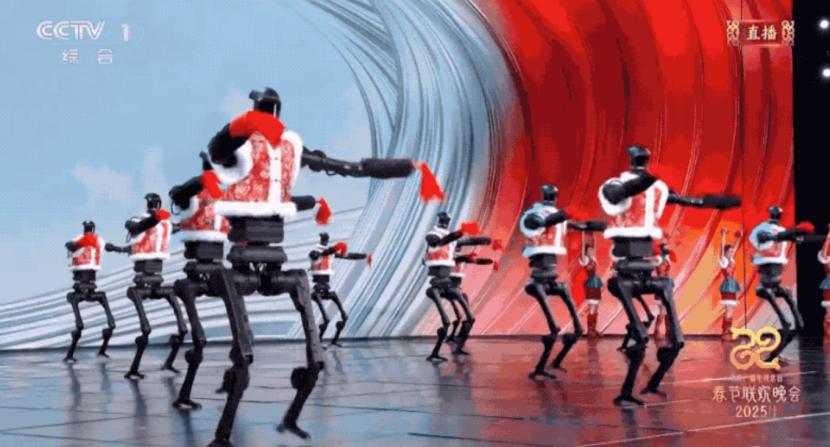
In 2025, Unitree not only broke into the mainstream through the Spring Festival Gala stage but also caught up with the industry trend, completing multiple rounds of financing and listing guidance, becoming the star enterprise closest to going public in this industry.
From a "solo dance" to a "collective performance", this is also a true portrayal of embodied intelligence in 2025 and a microcosm of the rise of China's embodied intelligence industry with its overall strength.
According to statistics from Kaiyuan Securities, as of October 2025, the total financing amount in the field of embodied intelligence increased by more than 400% compared to the whole year of 2024.
However, beneath the prosperous appearance, bubbles have also emerged. Only a few companies have truly succeeded, while more companies are still struggling on the verge of survival. Their profit models are unclear, and they rely on rounds of financing to stay alive, fearing a capital chain break due to the inability to raise funds.
Even so, the entire industry still has high expectations for the future.
Currently, the AI wave continues to sweep across, and the high - tech industry is at its peak. The listing of domestic GPUs has created multiple capital feasts, and leading AI companies such as Zhipu and MinMax have gone public one after another, making tech unicorns excited. As the next highly anticipated track, the market also hopes that companies in the embodied intelligence field can ring the listing bell as soon as possible, bringing new changes to the industry.
01
Unitree robots' appearance on the Spring Festival Gala and Wang Xingxing's initiation of the embodied intelligence craze owe a great deal to a key figure, the director Zhang Yimou.
In mid - 2024, Wang Xingxing cooperated with Zhang Yimou on a project called "Macau 2049", which required humanoid robots to dance automatically. It was also because of this project that Wang Xingxing and his humanoid robots caught the attention of the CCTV Spring Festival Gala director group.
However, the key was to bring something new to the Spring Festival Gala. So Zhang Yimou proposed the idea of robots twirling and tossing handkerchiefs, which led to the famous scene of robots dancing on the Spring Festival Gala stage watched by hundreds of millions of viewers around the world.
In fact, even without Zhang Yimou and the Spring Festival Gala as a traffic entry point, the industry would have continued on its existing path. But precisely because of the Spring Festival Gala's ability to break into the mainstream, "humanoid robots" have gone from being a niche product to a household name, igniting the frenzy in the embodied intelligence industry that year.
At the private enterprise symposium on February 17, 2025, Wang Xingxing became the youngest entrepreneur at the symposium. Other entrepreneurs who spoke at the same time included Ren Zhengfei, Wang Chuanfu, Liu Yonghao, Yu Renrong, and Lei Jun. After the meeting, when Wang Xingxing was interviewed, he said, "Personally, I feel that by the end of this year, the entire AI - powered humanoid robots will reach a new level."
Unitree's sudden popularity also triggered a wave of reflection in the tech circle about "why we missed Unitree". For a while, Yin Fangming, who initially invested 2 million yuan, also became well - known.
However, by this time, Unitree had become a leading company in the industry, having completed financing up to the C+ round, and its valuation soared. It became increasingly difficult for late - comers to enter. It wasn't until June that tech giants such as Tencent and Alibaba entered the scene.
No one wants to miss the next Unitree. Zhipu Robotics in Shanghai began to attract wide attention. This company, founded two years ago by Zhu Hui, a "Genius Youth" from Huawei, has encountered a crucial turning point in this wave of enthusiasm.
In March 2025, Zhipu, which had been lingering in the A - round stage for a year and a half and completed six rounds of financing, finally entered the B - round of financing, led by Tencent. After the investment, its valuation reached 15 billion yuan. Within half a year, Zhipu completed four B - round financings in a row, becoming part of the first - tier in the industry, just like Unitree.
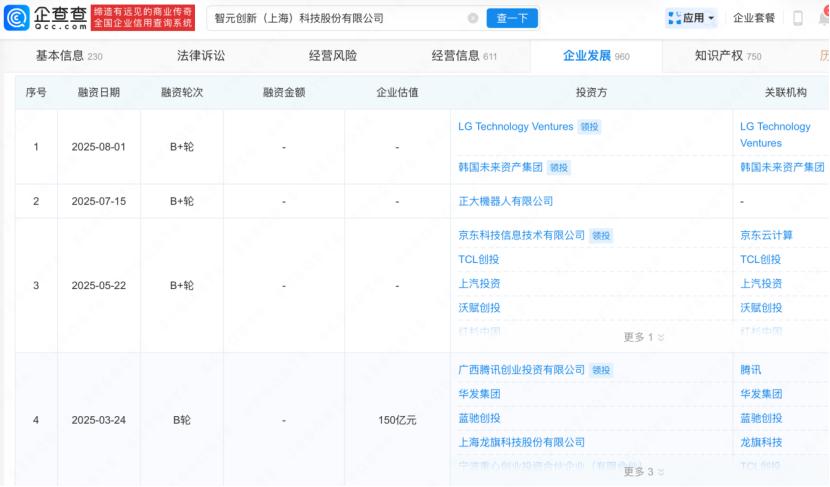
However, this doesn't stop investors from betting on the "next Unitree". At this time, humanoid robots are regarded as the next terminal form that may change the world, and the entire investment circle is filled with the FOMO (fear of missing out) mentality, with funds pouring into this track crazily.
According to IT Juzi, as of December 18, 2025, at least 165 embodied intelligence companies completed 303 rounds of financing in 2025; the financing amount was nearly 37 billion yuan, a nearly 260% increase compared to the whole year of 2024.
For a while, embodied intelligence startups with the aura of "Tsinghua - affiliated", "Peking - affiliated", "Huawei - affiliated", and "Overseas returnee - affiliated" have become the darlings of capital. New - comer companies such as Songyan Power, Independent Variable Robotics, Galaxy Universal, and Tashizhihang have emerged. Among them, Songyan Power completed six rounds of financing in one year, moving from the A - round to the Pre - B+ round; Tashizhihang, which was founded more than half a year ago, received two rounds of angel financing totaling about 120 million US dollars.
Internet giants are also not willing to sit on the sidelines. Internet tycoons such as Ma Huateng and Liu Qiangdong have taken action to get a share of the pie.
Tencent led Zhipu's B - round financing and then increased its investment. Now it has become the seventh - largest shareholder of Zhipu. Subsequently, Tencent led Unitree's C3 - round financing. JD.com was not willing to lag behind and made a series of investments, including investing in six robot companies in three months, including Zhipu Robotics.
While the giants are struggling to catch up, Wang Xing of Meituan has long secured his position as the "Number One Investor in Embodied Intelligence in China".
Many years ago, the fund under Wang Xing's name made multiple investments in Unitree Technology. According to incomplete statistics, in the first half of 2025 alone, Meituan made six investments in the field of embodied intelligence. Continuous investment is Meituan's style. Just as it invested in Unitree twice in a row, Meituan also made two consecutive investments in Independent Variable Robotics in 2025.
This is just the investment layout of Internet giants. They have also been conducting self - research on embodied intelligence technology for a long time. Tencent has the Robotics X Laboratory and has released the modular embodied intelligence open platform Tairos; ByteDance has the Seed team researching AI and has also released a large - scale embodied intelligence model.
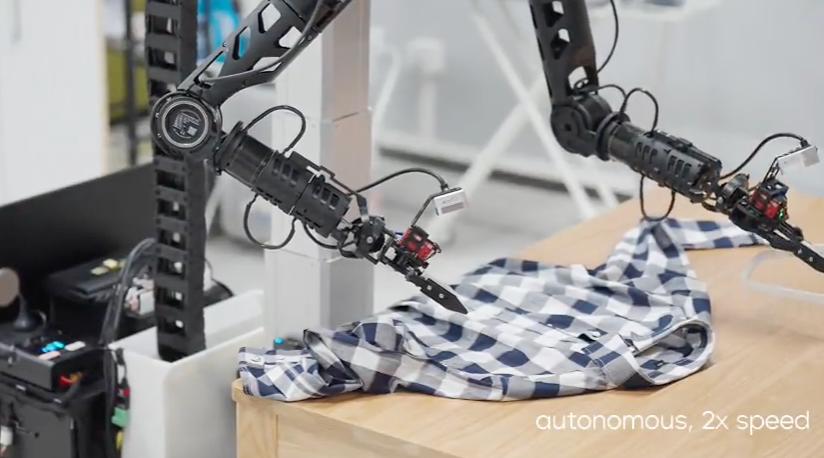
Source: ByteDance official website
Each giant has its own plans. Ma Huateng has said that Tencent will strive to become a partner of robot manufacturers in the field of embodied intelligence rather than getting involved in hardware manufacturing.
Jiang Yi, the founding partner of Hengye Capital, once told Zimu AI that what giants want is not short - term returns but a ticket to avoid being disrupted in five years.
With the entry of giants, the industrial ecosystem of embodied intelligence has become more diverse. One after another, embodied intelligence companies have announced orders for mass production in the thousands.
According to "Intelligent New Observation", in 2025, Unitree received orders worth nearly 1.2 billion yuan; Zhipu received orders worth 700 - 1 billion yuan; Galaxy Universal received orders worth more than 700 million yuan. Deng Taihua, the founder of Zhipu, said that Zhipu's sales revenue in 2025 is expected to exceed 1 billion yuan.
The competition is fierce in the domestic market, and it's even more crazy overseas.
Arnie Kherka, a partner at McKinsey, said that in 2025, about 5 billion US dollars was invested in humanoid robots.
After a large amount of financing entered the market, the valuations of leading companies skyrocketed. Figure AI completed its C - round financing, and its valuation soared to 39 billion US dollars; Physical Intelligence, which focuses on robot brains, saw its valuation soar to 5.6 billion US dollars; Skild AI just completed a 1.4 - billion - dollar financing led by SoftBank and participated in by NVIDIA, etc., and its post - investment valuation exceeded 14 billion US dollars.
Everyone present has a common understanding: These humanoid robots will eventually enter warehouses, factories, and then thousands of households, just like humans.
02
Although the entire industry is booming, the problems are also more obvious.
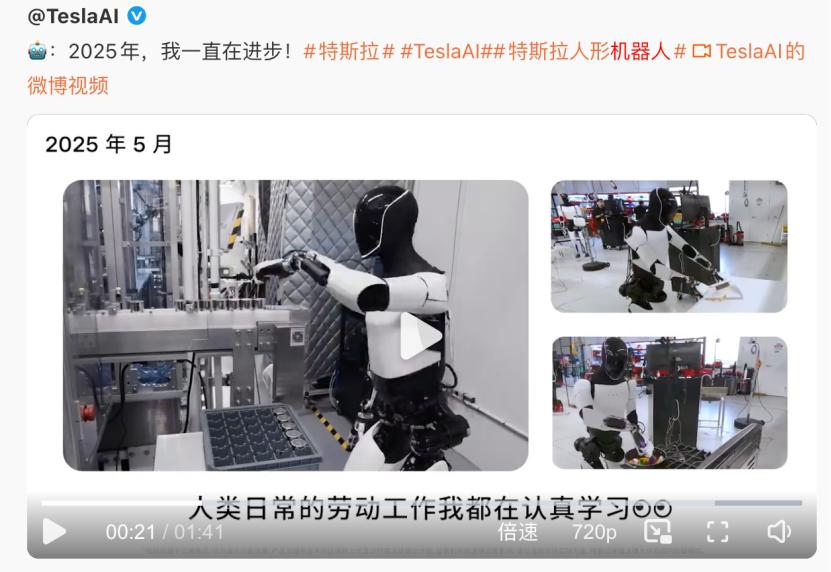
Even an optimistic person like Elon Musk, the CEO of Tesla, predicts that the market demand for humanoid robots will be "endless". He also expects Tesla to produce 1 million Optimus robots annually by 2030.
Jensen Huang, the CEO of NVIDIA, once said that humanoid robots and the technology to realize them are within reach. He even said, "The ChatGPT moment in the robot field has arrived." NVIDIA's projects such as the Cosmos AI world model and Project GR00T are promoting the technological development of robots.
However, some entrepreneurs in the center of the storm are cooling down the over - heated market expectations.
Kaan Dogrusoz, the CEO of Weave Robotics, said, "A lot of remarkable technological work is indeed being done in this area, and a large number of excellent talents are involved, but they are still far from being well - defined and mature products."
Pras Velagapudi, the chief technology officer of Agility Robotics, said, Making a robot is one thing, but making a robot that can do 'useful work' is an entirely different thing.
Rodney Brooks, known as the "Godfather of Robotics", even warned that the humanoid robot bubble is destined to burst, and investing billions of dollars in humanoid robot startups is a waste of money.
In China, investor Zhu Xiaohu also holds a similar view. "We are withdrawing from humanoid robot companies in batches." The Jinshajiang Venture Capital Fund under his name invested in embodied intelligence companies Xinghaitu and Songyan Power and has since withdrawn.
Zhu Xiaohu believes that the business models of embodied intelligence companies are not clear. He said that he met with the CEOs of some embodied intelligence companies, and the customers mentioned by the founders were all imaginary. "Who would spend hundreds of thousands of yuan to buy a robot to do these jobs?"
Whether optimistic or pessimistic views, they don't affect embodied intelligence from becoming the focus of investment and financing in the AI circle in 2025.
However, it's undeniable that Zhu Xiaohu is right about one thing, which is the insurmountable commercialization problem.
This has, to some extent, led to a phenomenon in the financing of most current embodied intelligence companies, where they raise funds five or even six times in one stage. For more companies, their rounds are even stuck at the earlier angel or Pre - A rounds.
Zimu AI once analyzed the reasons. The commercialization dilemma and the financing environment make it difficult for startups to obtain a large amount of funds at one time. However, R & D requires capital investment, so the financing in a certain stage is prolonged. Fu Zhilong, the partner of Yunxiu Capital and the person in charge of the intelligent manufacturing group, also said that when a company's valuation reaches a high level but its mass - production progress fails to meet expectations, the company will raise funds through multiple "+ rounds" to make up for the capital shortage.
Behind the commercialization problem is the gap between technology and reality. Humanoid robots still have difficulty doing work like humans. In 2025, we could see robots enter factories to tighten screws, participate in competitions, and perform dance tours, but we couldn't see humanoid robots cook a meal or clean a house.
This also led to the gradual cooling of the humanoid robot rental market by the end of the year. The daily rental price dropped from 10,000 yuan at the beginning of the year to about 3,000 yuan. Some merchants revealed that there was a lack of stable orders except for exhibitions and commercial activities.
How can humanoid robots do work like humans?
The key technology lies in achieving the ultimate generalization of the embodied intelligence model. Generalization was one of the most frequently mentioned topics in the embodied intelligence industry in 2025. In simple terms, generalization means that in the face of different scenarios and without human instructions, humanoid robots can do work like humans.
The current large - scale model technology is far from reaching this level.
For humanoid robots to operate in a real environment, they need to achieve multi - modal perception such as vision, voice, hearing, and even touch. However, the current large - language models or general multi - modal large models cannot meet such requirements.
Wang Xingxing once said that at the current stage, the hardware is sufficient, but the large - scale embodied intelligence models are not.
Jeff Linnell, the founder of the American humanoid robot company Figure AI, said, "To truly solve the problem of embodied intelligence, an end - to - end AI model focusing on specific hardware adaptation must be established."
Therefore, promoting the R & D of large - scale models has become a common understanding in the industry. The focus of major manufacturers has also shifted to technological hard power.
In February 2025, after Figure AI separated from OpenAI, it released its self - developed