The Battle for Autonomous Buses: From the Maze of Technology to the Revolution of Urban Public Transportation
In 2025, more than 30 cities around the world had launched pilot projects for autonomous buses. Technical solution providers and operators are facing not only technical problems but also practical operational challenges in complex urban environments.
When residents in Shenzhen can call driverless buses with a single click on their mobile phones, and when Chinese technical solutions win bids for Singapore's L4-level bus routes, autonomous buses have long since stepped out of closed test sites and entered the "deep waters" of global urban transportation. This silent technological battle is reshaping the underlying logic of the century-old bus industry, and the technological breakthroughs and scenario challenges behind it are far more complex than imagined.
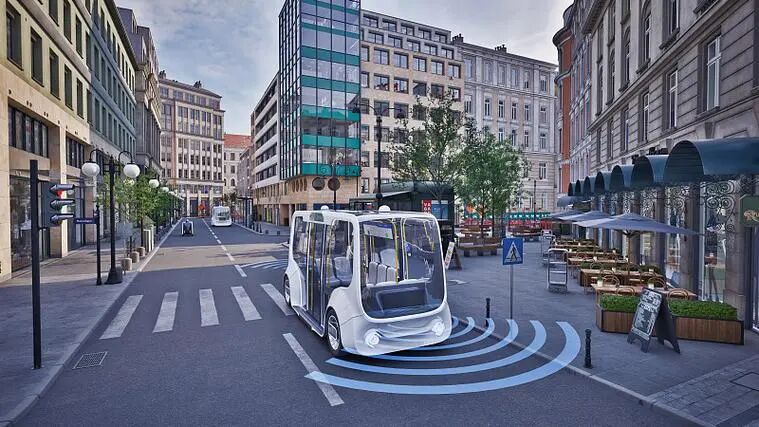
Three Hardcore Challenges for Autonomous Buses
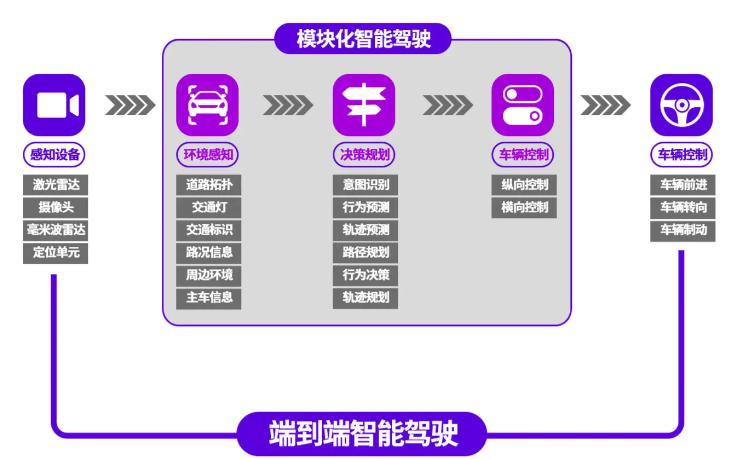
Autonomous buses are by no means "traditional buses without steering wheels." Instead, they are mobile intelligent terminals integrating perception, decision-making, and control. Under the amplification effect of the bus scenario, the technical difficulties have formed three hard-to-break barriers.
1. Perception Accuracy: "Full-Dimensional Insight" in Complex Road Conditions
The perception difficulty in the bus scenario far exceeds that of private cars. Buses are large in size and have many blind spots. They need to accurately identify pedestrians, non-motor vehicles, and sudden obstacles on roads with mixed traffic of people and vehicles. They also need to deal with special situations such as the occupation of bus lanes, crowded bus stops, and bad weather. Research shows that 70% of the risk scenarios on urban roads come from unstructured interactions, such as "long-tail scenarios" like pedestrians suddenly crossing the road and bicycles illegally changing lanes.
Early solutions relying on multiple mechanical lidars could provide three-dimensional point cloud data, but the cost was as high as hundreds of thousands of yuan, and the mechanical rotating parts were prone to wear and tear during high-frequency operations. Now, the architecture of "vision-based + solid-state lidar as a supplement" has become the mainstream. Surround-view cameras cover a 360-degree environment, and solid-state radars focus on high-precision forward ranging. Together with the BEV fusion perception algorithm, it can accurately analyze details such as pedestrians' postures and vehicle turn signals. The perception distance can reach over 200 meters, and the positioning accuracy is improved to the centimeter level.
2. Decision-Making Intelligence: "Human-Like Game" in the Bus Scenario
The operation logic of buses is completely different from that of private cars. Buses need to frequently enter and exit bus stops, park accurately, start and stop smoothly, and interact closely with passengers and other traffic participants. Traditional modular algorithms have difficulty coping with complex scenario games, and the emergence of end-to-end large models is solving this problem.
Through training with massive amounts of bus scenario data, self-developed large models can achieve an intuitive response of "seeing and then deciding." For example, at a crowded bus stop, the system will fine-tune the parking position according to the distribution of passengers. When encountering a bicycle signaling a turn, it can not only recognize the gesture but also predict the driving trajectory and slow down in advance. This "cognitive ability" is the core of bus autonomous driving and needs to meet multiple requirements of safety, efficiency, and serviceability at the same time.
3. Engineering Implementation: "Reliability Test" for Large-Scale Operation
Bus operations require "all-weather, high-frequency, and zero-fault" performance, which poses extreme requirements for the reliability of the autonomous driving system. Front-loading mass production has become a key dividing line. Different from post-installation modification, the front-loading solution integrates the wire-controlled chassis, sensor layout, and power supply and cooling systems from the beginning of vehicle design. This shortens the adaptation period from the industry's common 4 - 10 months to 2 months and reduces the full-life cycle maintenance cost by more than 30%.
In addition, the differences in road conditions in different cities bring additional challenges. The "urban canyons" in Singapore can easily interfere with GPS signals. The old city roads in Europe are narrow, and the mixed traffic flow in China is complex. This requires technical solutions to have strong scenario adaptation capabilities. This requires combining roadside perception devices to form "vehicle-road collaboration," building data sets covering different cities, weather conditions, and time periods, and continuously iterating the algorithm through the data flywheel.
Deep Exploration of the Technological Value in Bus Implementation Scenarios
Autonomous buses are not simply replacing drivers. Instead, through technological reconstruction, they are solving the core pain points of traditional buses. The deep meaning of their technological implementation far exceeds "driverlessness" itself.
Breaking the "Impossible Triangle" of Operation
Traditional buses have long been restricted by the "triangle" of "efficiency, safety, and cost." Increasing the number of trips will increase costs. Controlling costs will sacrifice service quality, and human errors will bring safety hazards. Autonomous driving technology reconstructs the economic model through three breakthroughs:
Eliminating drivers cuts the largest labor cost, and the full-life cycle cost is about 9.2% lower than that of traditional buses;
Intelligent scheduling and green wave traffic improve the line turnover efficiency, and the annual average revenue per bus can reach 700,000 yuan;
The consistent decision-making of the algorithm avoids human errors, and the accident rate is expected to be reduced by more than 80%.
Research data shows that with a 60% occupancy rate, a 49-seat autonomous bus can achieve an average annual gross profit of 170,000 yuan and a gross profit margin of 25% over an 8-year life cycle, achieving commercial sustainability.
Reconstructing Bus Service Capabilities
Empowered by technology, buses are upgraded from "mobile carriers on fixed routes" to "flexibly responsive service terminals":
The precise parking technology (error ≤ 5 cm) solves the problem of getting on and off the bus for the elderly and the disabled, improving the inclusiveness of travel;
The intelligent scheduling system can adjust the departure intervals according to real-time passenger flow, increasing the number of trips during peak hours and optimizing routes during off-peak hours to reduce the empty driving rate;
The vehicle-road collaboration technology enables information interaction with traffic lights and roadside devices, improving the traffic efficiency by 20% and reducing energy consumption by 15%.
For rural areas or remote communities, autonomous buses can break through the limitation of labor shortage, extend service hours, and expand route coverage, solving the "last-mile" travel problem. This is highly consistent with the conclusion in the research that "rural residents pay more attention to the service convenience of autonomous buses."
Promoting Sustainable Development of Transportation
The environmental protection value of autonomous buses is particularly prominent in large-scale operations. By optimizing the driving strategy and reducing sudden acceleration and braking, energy consumption and emissions can be reduced by 10% - 15%. The combination of electrification and autonomous driving can further improve energy utilization efficiency and contribute to the goal of carbon neutrality. In addition, centralized intelligent scheduling can reduce road occupation, relieve traffic congestion, and release more public space for cities.
Research by the European Commission shows that the widespread application of autonomous buses is expected to reduce urban transportation carbon emissions by 30% and improve road capacity by 40%, becoming a core part of the sustainable transportation system.
Global Competition: Technological Breakthrough of Chinese Solutions
Now, the competition in the field of autonomous buses has entered the stage of globalization and large-scale development. The global market size reached 1.8 billion US dollars in 2024 and is expected to increase to 5.09 billion US dollars in 2029. The growth rate of the Chinese market leads the world, and the scale is expected to reach 6.63 billion yuan in 2029.
The core advantage of Chinese solutions lies in "in-depth exploration of scenarios + technological iteration." For example, Mushroom AutoLink has accumulated a large data set of bus scenarios through regular operations in cities such as Shanghai, Dali, and Tianjin, covering diverse scenarios such as complex road conditions, extreme weather, and the travel of special groups. The combination of front-loading mass production and vehicle-road collaboration technologies forms a closed-loop iteration of "data - algorithm - engineering," enabling Chinese solutions to stand out in bids in overseas markets such as Singapore.
The ultimate goal of this technological revolution is to make buses a safer, more efficient, and more inclusive travel choice. When autonomous buses park steadily at every bus stop in the city, they carry not only the pride of technological breakthroughs but also the infinite possibilities of future urban transportation. A more inclusive, sustainable, and intelligent mobile ecosystem is being slowly driven by the gears of technology.
This article is from the WeChat official account "Shanzi". The author is Shanzi. It is published by 36Kr with authorization.