Shenyang is breaking through to build a highland for the robot industry.
Robots are extremely popular.
Major cities are fully betting on the robot industry, and cities like Shenzhen, Hangzhou, Shanghai, Nanjing, and Suzhou are standing out.
Do you know which city is the "cradle of China's robot industry"?
99% of people may not be able to answer.
The answer is Shenyang.
As the birthplace of China's robots, has Shenyang "got up early but missed the chance"?
How should Shenyang break through?
01 The Cradle
"We won't cooperate with China in the field of robots for 15 years."
"Even if we sell robots to you, you won't know how to use them!"
These were the arrogant words of the technical director of a well - known Japanese company at the first International Symposium on Artificial Intelligence in 1979.
At that time, Jiang Xinsong, the "Father of Chinese Robots" and the director of the Shenyang Institute of Automation of the Chinese Academy of Sciences, secretly made up his mind to build China's own robots.
Actually, as early as after the world's first industrial robot, Unimate, was born in the United States in 1958, Jiang Xinsong began to lobby and promote robot research.
However, due to China's weak foundation in basic industries, the project of developing robots was not included in the 1978 - 1985 Automation Science Development Plan until 1977.
The arrogant words of the Japanese were like a fishbone stuck in the throat, constantly spurring the scientists at the Shenyang Institute of Automation to make great efforts in research.
In June 1982, the Shenyang Institute of Automation developed China's first industrial robot prototype, the SZJ - 1 teaching - playback manipulator prototype.
On June 19 of the same year, the Shenyang Institute of Automation developed China's first teaching - playback industrial robot that used a computer to achieve point - to - point control and speed - trajectory control.
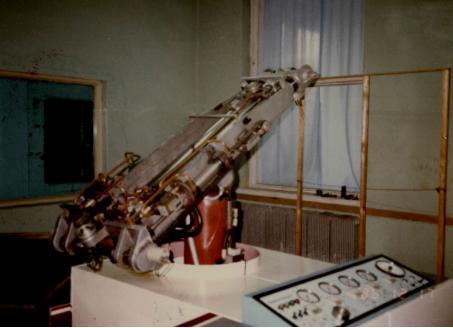
China's first teaching - playback industrial robot that used a computer to achieve point - to - point control and speed - trajectory control was successfully developed.
In 1987, the Shenyang Institute of Automation successfully developed China's first automated guided vehicle (AGV), the mobile operating robot "Pioneer No. 1", which is also the predecessor of today's various unmanned transport vehicles and automatic logistics vehicles.
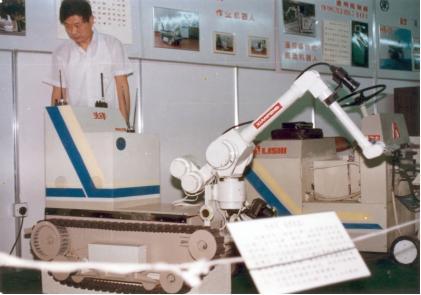
China's first automated guided vehicle (AGV), "Pioneer No. 1"
In 1995, the Shenyang Institute of Automation developed China's first 6000 - meter underwater robot, the "CR - 01", making China one of the few countries in the world at that time to master the core technology of 6000 - meter - class underwater robots.
The Shenyang Institute of Automation has been deeply involved in robot technology for nearly 50 years, creating more than 20 "firsts" and leading the research and development of China's robot technology. It is known as the "cradle of China's robot cause".
Benefiting from the scientific research achievements of the Shenyang Institute of Automation, Shenyang took the lead in nurturing and developing the robot industry.
In April 2000, the Shenyang Institute of Automation established the Shenyang Siasun Robot & Automation Co., Ltd., named after the former director Jiang Xinsong.
This is China's first high - tech robot enterprise and the first listed robot enterprise.
The prelude to the full - scale industrialization of China's robots was opened in Shenyang.
Therefore, Shenyang has become the "cradle of China's robot industry".
In addition, Shenyang also has -
The State Key Laboratory of Robotics, which is the earliest open - key laboratory in the robot field in China.
The National Robot Innovation Center, which is one of the seven national manufacturing innovation centers in China.
The Robot and Intelligent Manufacturing Industry Cluster, which is the only national - level advanced manufacturing cluster in the robot industry direction.
The landmark of China's robot industry, which has been successfully selected as one of the most influential urban industrial business cards in China.
Strangely enough, Shenyang's robot industry started early, has strong scientific research resources, and many national - level brands, but its popularity on the Internet is very low.
When it comes to the robot industry, it's hard for ordinary people to think of Shenyang.
Even on some relatively professional city lists, it's hard to find Shenyang.
For example, Shenyang is not on the TOP 10 list of cities with comprehensive strength in the robot industry released by the China Association for the Application of Mechatronics Technology.
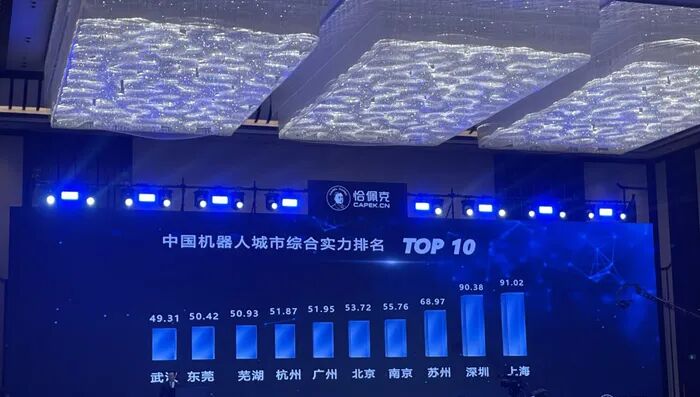
The list of cities with comprehensive strength in the robot industry
Another example is that Shenyang is not on the TOP 10 list of cities with potential for regional development in China's robot industry in 2023 released by GGII.
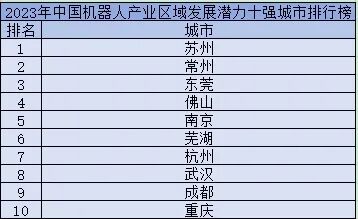
The list of cities with potential for regional development in China's robot industry in 2023
Why is the "cradle of China's robot industry" so silent?
02 Silence
To answer this question, we can start with Siasun Robot & Automation Co., Ltd.
As China's first high - tech robot enterprise, Siasun has completed more than 800 important national scientific and technological research projects, participated in drafting and formulating more than 80 national and industrial standards, and has more than 1300 invention patents. It has continuously broken monopolies, filled gaps, and created more than 100 industry "firsts" in the history of China's robot development.
The above is history.
Let's look at another set of real - world data.
According to the data released by MIR DATABANK, in 2024, the top ten brands in terms of industrial robot shipments in China were Fanuc, Estun, Inovance Technology, Kuka, Epson, ABB, Yaskawa, EVAT, Yamaha, and STEP.
Among them, domestic brands Estun, Inovance Technology, EVAT, and STEP made it into the top ten.
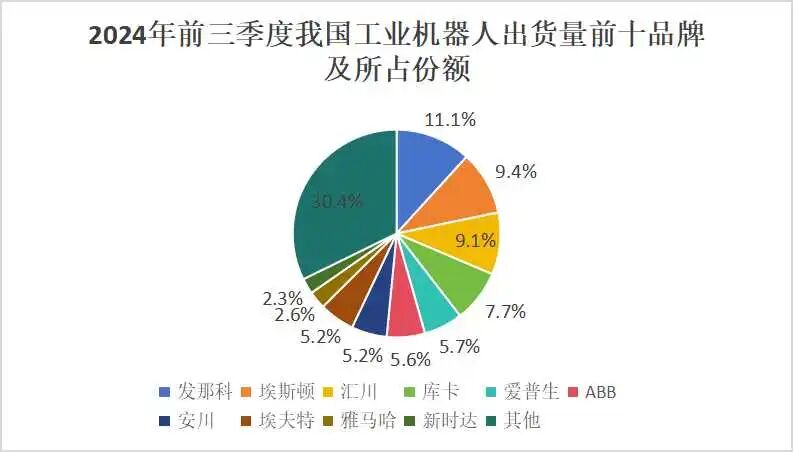
The top ten brands and their shares in terms of industrial robot shipments in China in the first three quarters of 2024
In the category of industrial robots, Siasun did not make it into the national top ten.
Of course, in addition to industrial robots, Siasun also has products such as mobile robots, special robots, and medical service robots.
For example, Siasun's mobile robots have rewritten the history of China's robots "only having imports but no exports", and their market share on automobile assembly lines has reached more than 80%.
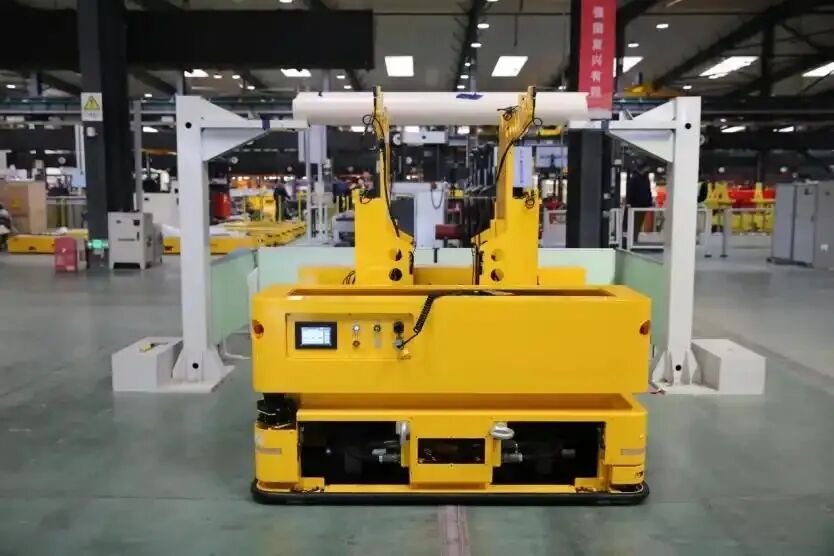
Siasun's mobile robots
Overall, Siasun's robot shipments are not among the top.
This can be verified by its revenue.
In 2019, Siasun's revenue was 2.745 billion yuan, while Estun's was 1.581 billion yuan.
In 2023, Siasun's revenue was 3.967 billion yuan, while Estun's was 4.652 billion yuan.
It's not that Siasun's growth rate is too slow, but that its competitors' growth rates are too fast.
As domestic robot enterprises such as Estun, Inovance Technology, and EVAT have risen rapidly, the once - dominant Siasun has gradually fallen behind.
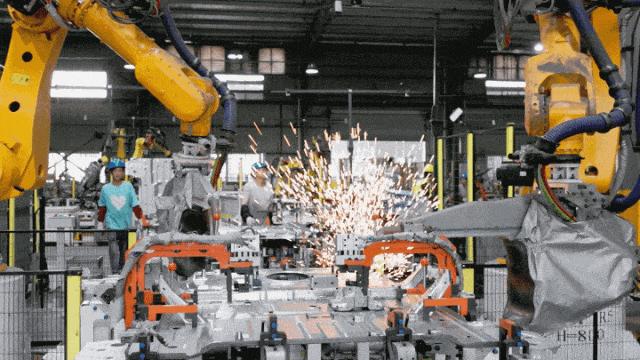
Estun robots are used in the automotive parts manufacturing field
In terms of history, the contribution is great.
In terms of the current situation, the achievements are limited.
This is a true portrayal of Siasun and a realistic microcosm of Shenyang's robot industry.
Public data shows that there are more than 500 upstream and downstream supporting enterprises in the robot industry in Shenyang.
In contrast, there are 51,100 robot - related enterprises in Shenzhen, 34 listed enterprises, and 7 of them are on the list of the world's top 100 listed humanoid robot enterprises by Morgan Stanley, accounting for nearly a quarter of the mainland Chinese enterprises on the list.
It can be seen that in terms of scale, Shenyang's robot industry is not advantageous.
Looking at the market segments, the most popular and highly - concerned ones currently are embodied robots. They can even make it to the hot search just by doing a somersault or a yangge dance.
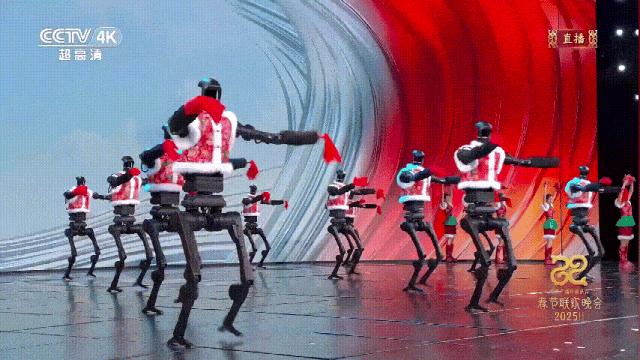
At the 2025 CCTV Spring Festival Gala, a group of robots in flowered jackets performed a yangge dance on the stage
Robots like floor - cleaning robots and window - cleaning robots are also well - known to the public because they are consumer - oriented.
Shenyang's robot industry is mainly concentrated in the fields of industry, collaboration, mobility, and special applications, and lacks leading brands in the fields of embodied robots and service robots.
With a low market share and low public awareness, Shenyang's robot industry has become silent.
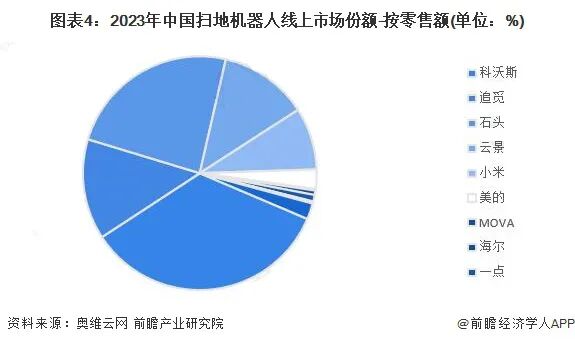
The online market share of China's floor - cleaning robots in 2023 - by retail sales (unit: %)
03 The High - ground
From industrial robots to service robots and humanoid robots, the market scale is continuously and rapidly growing.
Goldman Sachs predicts that by 2030, the global new market space for humanoid robots alone can reach 1 trillion yuan, and China's new market space is expected to exceed 500 billion yuan.
While the robot industry itself creates huge economic benefits, it will also drive the development of many high - end technology fields such as artificial intelligence, chips, motors, reducers, and sensors. At the same time, it will lead the digital development and intelligent upgrading of industries, and continuously give birth to new industries, new models, and new business forms.
For this reason, as an important old industrial base in China, Shenyang hopes that the robot industry can promote the transformation and upgrading of traditional manufacturing industries.
In the view of Zhengjieju, the relationship between robots and traditional manufacturing industries is not a simple "one - way promotion" relationship, but a "two - way symbiosis" relationship.
The birth and development of the robot industry cannot be separated from traditional manufacturing industries.
On the one hand, the R & D and production of robots involve multiple fields such as mechanical manufacturing, electronics and electricity, and sensors, which require the support and guarantee of traditional manufacturing industries.
On the other hand, traditional manufacturing industries are the main application fields, providing a broad space for the development of the robot industry.
Traditional manufacturing industries give birth to the robot industry - the robot industry empowers traditional manufacturing industries - traditional manufacturing industries drive the robot industry, thus forming a positive cycle.
This is also the reason why leading robot enterprises are concentrated in the Yangtze River Delta and the Pearl River Delta.
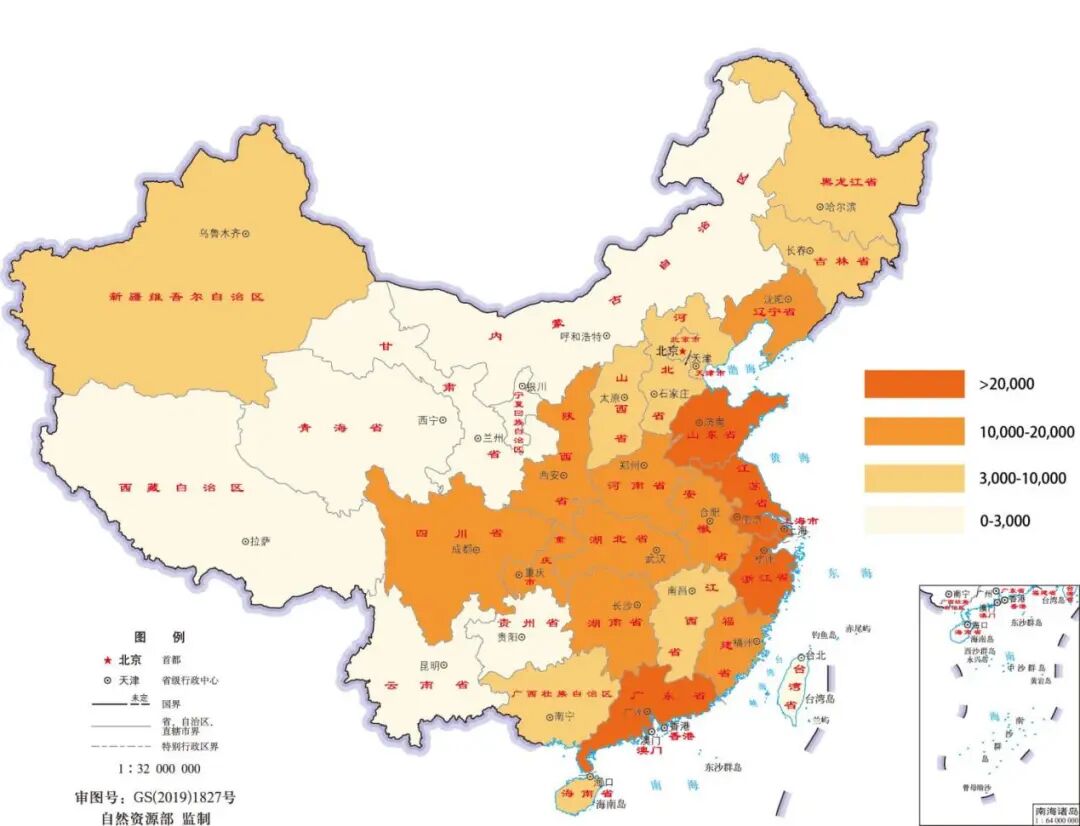
Schematic diagram of the regional distribution of the number of operating enterprises in China's robot industry (as of May 31, 2022, unit: number)
Compared with the Yangtze River Delta and the Pearl River Delta, the outflow of talents and capital in the Northeast, the low conversion rate of early - developed technologies, the short and scattered industrial chains, and the insufficient market demand have restricted the development of the robot industry.
As a result, although Shenyang's robot industry had a head - start advantage, it lacked stamina and was eventually surpassed by cities such as Shenzhen and Shanghai.
Under the regional competition pattern of the robot industry, how can Shenyang break through?
Shenyang needs to evolve from the "cradle of the robot industry" to the "robot industry rainforest" and finally build the "robot industry high - ground".
If the "cradle" focuses on original innovation and achieves a "from