A female investment banker switches to the beauty industry and earns 1 billion yuan annually: Can investment bankers really achieve a "dimensionality reduction strike" when starting a business?
In the past two years, more and more investment bankers have switched careers to start their own businesses.
One male investment banker switched to the trendy collectible card business, vying with Kyouyuu to become the "No. 1 card stock." One female investment banker from CICC gave up her high - paying job and ventured into the beauty industry across sectors, earning one billion yuan annually... When investment bankers with resources and connections start businesses, can it be considered a "dimensionality reduction strike"?
When investment bankers start businesses, can it be considered a "dimensionality reduction strike"?
As a well - known "female general" in the securities industry's wealth management, Xu Haining's movements have attracted much attention in the industry. Recently, Shanghai Zhihui Technology Co., Ltd. (hereinafter referred to as Shanghai Zhihui Technology), jointly initiated and established by Xu Haining and Zoomlion Capital, was officially established. Public information shows that Shanghai Zhihui Technology Co., Ltd. belongs to the technology promotion and application service industry, with a registered capital of 100 million yuan, and Xu Haining as the legal representative.
In the past two years, more and more investment bankers have switched careers to start their own businesses. One male investment banker switched to the trendy collectible card business, vying with Kyouyuu to become the "No. 1 card stock." One female investment banker from CICC gave up her high - paying job and ventured into the beauty industry across sectors, earning one billion yuan annually. There is also a medical doctor who went to an investment bank to specifically invest in innovative drug projects and then easily raised a large amount of money from investors when starting his own company.
This news has once again sparked discussions in the industry about investment bankers starting businesses. With the connections and resources in the capital circle, is it really easier for investment bankers to start businesses?
A female investment banker from CICC switched to the beauty industry and earned over 1 billion yuan annually
A female investment banker chose to enter the highly competitive beauty market when starting her business.
Liu Qianfei, the founder of the Hangzhou - based brand Benlai, left the investment banking industry and resolutely chose to start a business. According to her self - description, she studied financial management at Fudan University as an undergraduate, which was well - suited for an investment banking career. After graduation, she worked at CICC's investment banking department and Milestone Capital, a US - dollar fund, for two years each and was always a top performer. "After graduating from university, when I entered the investment banking industry, the lowest - level people I contacted were all CMOs, and most of them were CEOs and CFOs."
When Liu Qianfei was doing investments in Shanghai, she invested in some upstream and downstream projects in the cosmetics industry, such as Rililizhuang and the media and channel providers during the sudden boom of Jumei Youpin. "Before Rililizhuang, I also had contact with Alibaba. I worked on Alibaba's red - chip return and the spin - off of Alipay at CICC and was quite involved in the Internet industry." During this period, she took a fancy to a model called Matcha Beauty, where KOLs could create videos with a "see - to - buy" link below.
This model has evolved into live - streaming e - commerce today.
So, Liu Qianfei took all her personal savings of 4 million yuan and went to a company in Chengdu. She became a minority shareholder and the CFO in charge of finances, even leaving her boyfriend in Shanghai behind.
However, this project didn't succeed, and Liu Qianfei withdrew. But this experience made her realize that she couldn't be an ordinary executive and had to be the absolute boss.
This is just the first principle. There is also a second one.
For Liu Qianfei's second business venture, she switched to a makeup project. But the senior who led her in this project had a wife who was involved in direct selling and was very quick at getting things started. The senior partner was more focused on his wife's business and didn't invest much in this project.
Well, here comes the second principle: no partners, and do it alone.
In 2017, Liu Qianfei founded the brand Benlai. The products were officially launched in 2018 and were featured on Li Jiaqi's live - streaming room at the end of that year. At that time, Li Jiaqi's live - streaming room wasn't as popular as it is now, only ranking among the top 7 on Taobao, and the entire ecosystem wasn't as large as it is today.
So later, Liu Qianfei collaborated with Li Jiaqi on the variety show "All Girls' Offer" for four years.
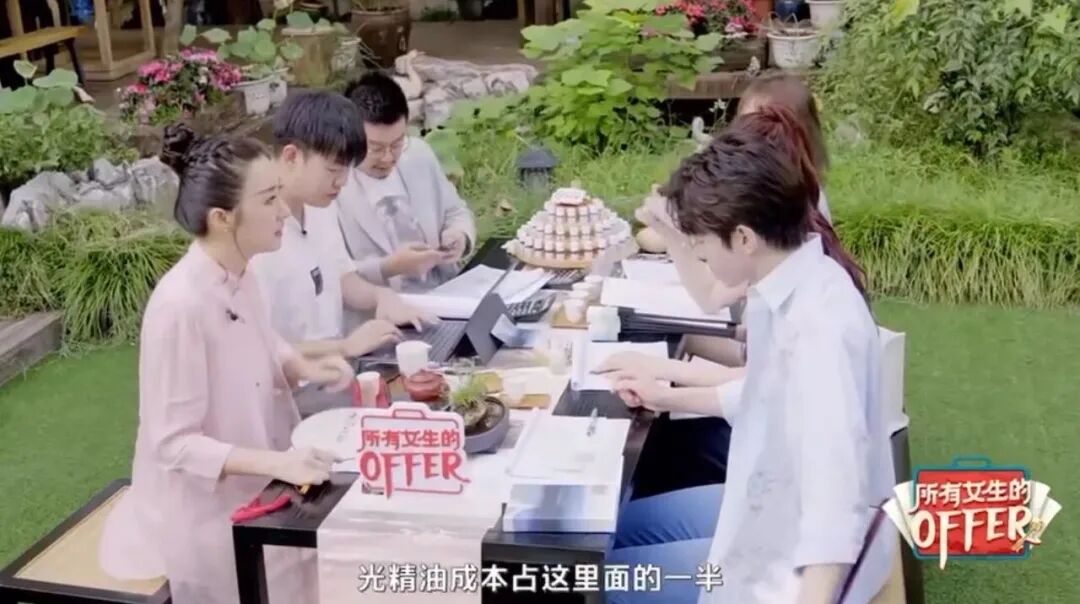
Now, Benlai's annual revenue has exceeded one billion yuan.
Liu Qianfei said that she plans to run the business by herself until she is 90 years old and doesn't want to go public. "Because I used to work in an investment bank and have seen too many listed and delisted companies. Capital has lost its allure to me." Moreover, her family is well - off. Liu Qianfei once mentioned in an interview, "I raised the first few million for my business by myself, but when it got tough in the middle, I also borrowed a few million from my dad."
Not being an executive but being the boss, having no partners, having no craving for capital, and being a strong - willed woman with family support and wide experience.
The 'paper - version Pop Mart' is booming, and a male investment banker's startup is going public
Kyouyuu, which targets the primary school student market, has submitted its prospectus to the Hong Kong Stock Exchange twice, but both submissions have expired. Recently, another card - making company, Suplay (Super Player), which focuses on adult cards, submitted an application for listing on the main board of the Hong Kong Stock Exchange.
This company focuses more on high - end collectibles, and its products are known as "paper gold" in terms of profitability. It also has the support of the game giant Mihoyo, which has not only invested money but also granted authorizations, almost "feeding it with a spoon." Mihoyo's interest in it is also related to its partners.
Huang Wanjun, the founder of Suplay, graduated from the Central University of Finance and Economics in 2013. After graduation, he first worked as an analyst at China Renaissance Capital and then participated in the establishment of Modian.com, a cultural and creative crowdfunding community. He has a good understanding of content and communities.
Around 2018, the blind - box trendy collectible craze began to boom. Addicted players bought more and more, giving rise to a huge second - hand trading market. Transactions took place daily on WeChat groups, Douban, Tieba, and Xianyu. At that time, Huang Wanjun seized this opportunity and created a second - hand trading platform for the trendy collectible circle called StockX. The following year, the Suplay mini - program was launched, where users could resell blind - boxes with one click after opening them and even complete the entire process of opening and reselling online without having to receive the express delivery.
When Suplay was first established, it was positioned as a trendy collectible platform, providing online product sales for third - party designers, different from both Pop Mart and Kyouyuu.
However, after two years of operation, Huang Wanjun found that although the platform had a large traffic volume, it only earned meager profits, while the brand owners took the lion's share.
As a financial person with an analyst background, after collecting commission fees for a long time, he wanted to get directly involved in the business.
Moreover, by 2021, the blind - box figurine market had become highly competitive. At that time, Pop Mart's Molly was losing its popularity. So, Huang Wanjun led Suplay to transform and enter a more niche market: collectible cards.
Primary school students play with Kyouyuu's Ultraman and My Little Pony cards, while middle - aged people collect sports cards. There is still room for growth in the market for young anime fans.
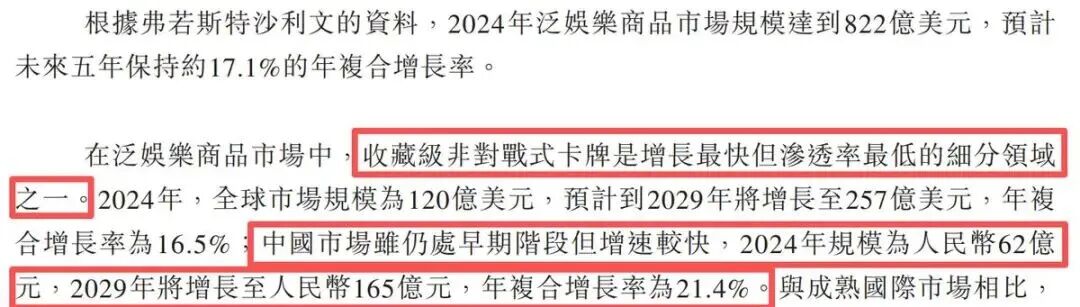
After Huang Wanjun set his sights on collectible cards, he launched his own brand, "Kakawow," and obtained authorizations from the game giant Mihoyo.
Mihoyo thought that while it focused on game development, Suplay could handle the peripheral business, covering both the game and anime markets. So, it not only granted exclusive authorizations for top - tier game IPs such as Genshin Impact and Honkai: Star Rail but also invested 8 million US dollars in Suplay's Series A+ financing. It said, "Expand production and sell as much as you can. I'll be a shareholder and share the profits. The more you sell, the more we'll all earn."
Subsequently, Suplay started brand - building, including acquiring "Heifen'er" and establishing its own brands, "Kakawow" and "Letao Valley."
Kakawow's cards were clearly positioned from the start, targeting adults, with a single - card issue price of over 10 yuan and a production process comparable to international top - tier standards. With the support of large companies, it developed rapidly. It not only collaborated with game IPs but also partnered with top - tier IPs such as Disney, Universal Studios, and the Forbidden City for co - branded products. Using techniques such as metal refraction, embossed gold stamping, and even real - object slicing, these cards are appealing to both adults and children.
"What we're selling is a sense of order and a collectible value that can be seen and priced," Huang Wanjun said.
Suplay's upcoming listing makes it the third company under Mihoyo to apply for an IPO within a month. Minimax and Soul have already submitted their prospectuses.
It's worth mentioning that besides Huang Wanjun, who was once an analyst at China Renaissance Capital, Suplay's CFO, Li Jing, also worked at China Renaissance Capital. Li Jing is also the former CEO of Xiaofanzhuo, a venture - capital service institution, and the wife of Wang Huadong, a partner at Matrix Partners China.
It's better to get directly involved than just invest. Investment tycoons become industrial tycoons
Some investment bankers switch to the real - estate industry, while others who were originally engaged in scientific research switch to investment and then come back to start their own companies.
Zhu Zhongyuan, the founder of Ying'en Biopharmaceuticals, which was listed on the Hong Kong Stock Exchange last year, had a winding path.
After graduating from Nankai University with a major in molecular biology, he went to the United States for further studies and obtained a Doctor of Biomedical Sciences degree from the University of Massachusetts Medical School and an MBA from the University of California, Berkeley.
When he graduated at the age of 35, he plunged into the investment departments of large companies or investment firms and worked in this industry for 13 years:
He has served as a director at Shanghai Ruixing Gene Technology Co., Ltd., CStone Pharmaceuticals, and China Resources Healthcare Holdings Co., Ltd., and has held senior positions at several foreign - invested companies. In addition, he has also served as a partner at two biotech venture - capital firms.
Of course, investment firms valued his technical background to evaluate projects. So, during his investment career, he mainly invested in companies in the innovative drug industry, including CStone Pharmaceuticals, Remegen Co., Ltd., Gan & Lee Pharmaceuticals Co., Ltd., and BGI Genomics Co., Ltd.
After accumulating more than a decade of investment experience and earning a lot of money, as a former researcher, he always had the idea of starting his own business. In 2019, Zhu Zhongyuan founded Ying'en Biopharmaceuticals and became its CEO, with a registered capital of 20,000 US dollars.
Thanks to its focus on the popular ADC (antibody - drug conjugate) field and Zhu Zhongyuan's years of connections and resources, Ying'en Biopharmaceuticals has continuously received financing. It has a lineup of luxurious investors. From the seed round, Series A, Series B, to Series B+, it has raised over 100 million US dollars. Investors include Zhu Zhongyuan's former employers, and later, funds affiliated with companies such as WuXi Biologics, Eli Lilly, AstraZeneca, Tasly, and Septwolves Group also joined. Especially since 2023, multinational pharmaceutical companies have been flocking to the Chinese innovative drug industry.
"Ying'en Biopharmaceuticals was born with a silver spoon in its mouth," as Zhu Zhongyuan said. While other companies have to wine and dine investors after their establishment, Zhu Zhongyuan could almost hear the "ding" of Alipay transfers while making plans. However, with more investment, his equity was diluted. Before submitting the prospectus, his shareholding had dropped to 9.54%, making him the third - largest shareholder. To regain control, before the IPO, Zhu Zhongyuan designed an equity - incentive plan for himself and obtained 8.6222 million shares. Moreover, his total salary from 2022 to 2023 before the listing reached as much as 27 million yuan.
Currently, Ying'en Biopharmaceuticals has established a pipeline of 12 self - developed ADC candidate drugs, including seven ADCs in the clinical stage, two next - generation bispecific ADCs expected to enter the clinical stage from 2025 to 2026, and several other pre - clinical ADCs.
Shortly after its listing, Ying'en Biopharmaceuticals was included in the Hang Seng Composite Index and added to the list of eligible stocks under the Shanghai - Hong Kong Stock Connect. Zhu Zhongyuan recalled that he thought his entrepreneurial luck was extremely bad until a week before the listing:
In January 2020, just as the team finalized the details of the startup, the pandemic hit;
In 2022, when the pipeline needed the most funds, the capital winter came;
During the Hong Kong stock roadshow in April last year, some political figures caused trouble.
Now, Wall Street and major US pharmaceutical companies are still trying to increase their investment in Chinese innovative drug companies. At the 44th J.P. Morgan Global Healthcare Conference a few days ago, Zhu Zhongyuan was surrounded by people throughout. "We started at 7 a.m. every day with a dense schedule of meetings, walking more than 20,000 steps around the venue each day. We met with senior executives of many multinational pharmaceutical companies and top - tier fund managers, and felt the high - level attention from the international market and multinational pharmaceutical companies towards Chinese innovative drug companies."
From investment to entrepreneurship, people in the financial circle don't just focus on making quick money.
This article is from the WeChat official account "Financial Gossip Girls Channel" (ID: baguanvpindao), author: Xinghua Xinghua. Republished by 36Kr with authorization.