What are the trends in the storage industry in 2026?
In 2026, the global storage industry is experiencing unprecedented transformation and opportunities. Strategic adjustments by industry giants are reshaping market supply and demand. The continuous iteration of AI technology is giving rise to new storage requirements. The boom in commercial space exploration has opened up a new frontier for space storage. The convergence of these three major trends is propelling the storage industry into a new development cycle. From the consumer market to AI data centers, and from the Earth's surface to outer - space orbits, the application scope of storage technology is constantly expanding, serving as the core support for the development of the digital economy and cutting - edge technologies.
Chinese - made DRAM Goes Global: Breaking through in the Global Market Amid the Withdrawal of Giants
Currently, storage chip manufacturers are focusing on producing the third - generation high - bandwidth memory (HBM3E). This ultra - high - speed memory, used in GPUs and AI accelerators, is suitable for AI inference and training. As a result, the production capacity of server DRAM is under pressure. Companies like Google and Microsoft are also developing AI service businesses based on inference, which to some extent is driving up the demand for server DRAM.
Against this backdrop, the global storage market is undergoing a profound reshaping. Micron even shut down its consumer - grade brand Crucial, which had a 29 - year history. This trend is an inevitable choice for storage giants to transform into high - value - added sectors, but it unexpectedly opens up a breakthrough for Chinese storage enterprises in the global market.
Meanwhile, the supply - demand imbalance driven by AI has directly led to price fluctuations in memory. Samsung and SK Hynix plan to increase the price of server DRAM by 60% - 70% in the first quarter of 2026 compared to the fourth quarter of 2025. The prices of PC and smartphone DRAM will also rise accordingly. The contract price of traditional DRAM is expected to increase by 55% to 60% quarter - on - quarter.
This has also affected the supply of core components for OEM manufacturers like Dell and many third - party memory/SSD brands. Once the supply is interrupted, the global consumer - grade storage market will face a serious "supply shortage" crisis, and Samsung will become the world's largest storage and NAND supplier, further increasing market concentration.
Under the dual pressure of rising prices and supply shortages, global computer manufacturers are actively diversifying their supply chains. HP has initiated the qualification review of Chinese memory suppliers. Although it won't switch to small and medium - sized manufacturers on a large scale in the short term, completing the "qualification certification" marks that Chinese storage enterprises have officially entered the candidate list of the international mainstream supply chain. The commodity nature of memory chips provides a natural advantage for this transformation - the strong substitutability between brands and models means that end - consumers are more concerned about performance stability and price rationality rather than the identity of the memory chip supplier. This means that Chinese storage enterprises can gain market share in the "replenishment" market with cost - effective products, gradually consolidating their global market position. Industry insiders predict that the supply - demand imbalance in the market will last at least until 2028.
It is both an inevitable trend and a future norm for Chinese memory products to go global.
AI Inference Drives a Surge in NAND Demand
When DRAM is in short supply, NAND steps in. Against the backdrop of the tight DRAM supply, NAND storage has become the core beneficiary in the AI era due to its technological compatibility. Especially, the explosive growth of AI inference scenarios is reshaping the demand pattern of the NAND market. The requirements of large AI models for long - context processing and massive parameter storage are driving the upgrade of NAND from traditional storage scenarios to the core infrastructure of AI.
NVIDIA's technological innovation is the key engine for the growth of demand. Its BlueField - 4 DPU can provide an additional 16TB of NAND context space for a single GPU, effectively solving the problems of memory loss during AI operation and insufficient HBM video memory capacity. In the new - generation Rubin NVL72 architecture AI server, four BlueField - 4 chips manage the memory uniformly, and each GPU is equipped with 16TB of NAND specifically for storing AI "memories". Based on a calculation of 100,000 cabinets, this architecture will generate an additional 115.2EB of NAND demand, accounting for 12% of the global supply in 2025, which will significantly boost the NAND market demand.
The Engram technology open - sourced by DeepSeek further expands the application scope of NAND. This "conditional memory" mechanism separates the "rote - learning" part of large models from neural network calculations and entrusts it to a TB - level static memory table, forming a new architecture of "MoE calculation + Engram static memory". The static memory table is very likely to adopt a hierarchical storage scheme (DRAM + SSD hot - cold hierarchical storage). DeepSeek Engram shifts the storage battlefield of large AI models from the expensive HBM video memory to the more cost - effective DDR5 + NVMe system. While the open - source nature significantly reduces the cost of AI model deployment, it further stimulates the demand for NAND storage.
Space Storage: A Blue Ocean of Special - Purpose Storage Driven by Commercial Space Exploration
The explosive development of commercial space exploration is opening up a new track for the storage industry beyond the Earth. The global satellite deployment is in a stage of explosive growth: According to data from the Satellite Industry Association of the United States, the number of on - orbit satellites increased from 958 in 2010 - 2020 to 3371, and it is expected to exceed 100,000 by 2030. In late 2025, China submitted a centralized application to the ITU for the frequency and orbital resources of 203,000 satellites, covering 14 satellite constellations, setting a record for the largest - scale international frequency - orbit application in China. Among them, the CTC - 1 and CTC - 2 constellations applied by the Institute of Radio Spectrum Development and Utilization and Technology Innovation each applied for 96,714 satellites, totaling 193,428, accounting for more than 95% of the total application this time. Other applicants include China SatNet, China Mobile, and Yuanxin Satellite.
Dongwu Securities pointed out that looking forward to 2026, the commercial space industry will receive multiple stimuli. In particular, the frequent maiden flights of multiple reusable/large - payload commercial rockets are expected to significantly improve rocket carrying capacity, thus breaking through the bottleneck in the previous development of satellite communication. China's low - orbit satellite internet has entered the stage of large - scale launch and construction since the second half of 2025, and it is expected to see even larger - scale launches in 2026, further accelerating industrial development.
Meanwhile, the U.S. Federal Communications Commission has approved the next - generation satellite constellation plan of SpaceX, owned by Elon Musk. SpaceX is authorized to deploy and operate an additional 7,500 second - generation Starlink satellites on top of the existing 8,000 satellites. The total number of approved second - generation satellites in orbit globally exceeds 15,000.
With the exponential growth of the number of satellites and the explosive development of commercial space exploration, the demand for aerospace - grade special - purpose storage chips has been directly driven. Such chips need to pass a strict aerospace certification system to ensure long - term stable operation in the extreme space environment.
The large - scale networking and launch of satellites have long broken through the traditional positioning of "signal relay stations" and evolved into intelligent platforms integrating data collection and computing processing. Earth - observation satellites generate a large amount of remote - sensing data every day. Communication satellites need to carry an increasing amount of high - throughput communication traffic. New - generation satellites are even endowed with on - orbit AI processing capabilities. So, how can space data be safely stored?
Space can be regarded as the "ultimate testing ground" for storage devices. High - energy particle radiation, wide - temperature fluctuations from - 55°C to 125°C, heat - dissipation problems in a microgravity environment, and severe vibration and shock during spacecraft launch and docking together pose a fatal test to storage chips. Ordinary consumer - grade storage chips are prone to problems such as data errors, component failures, or even complete failure in this environment. Only special - purpose storage chips that have passed aerospace - grade certification can shoulder the heavy responsibility of space data storage.
The storage devices on space stations face even more severe challenges. They not only need to withstand the above - mentioned extreme environments but also meet the high - reliability requirements for long - term on - orbit operation. High - energy particles can penetrate device packages and directly damage the transistor structure of chips, causing data loss or logical errors. Extreme temperature differences can cause materials to expand and contract, significantly reducing the lifespan of electronic components. The microgravity environment weakens heat - dissipation efficiency, and frequent vibrations impose strict requirements on the stability of the device's mechanical structure. The combination of multiple tests makes ordinary storage products completely unfit for the space - station environment.
To overcome the above - mentioned technical difficulties, chip manufacturers need to break through three core technical barriers:
Firstly, radiation - hardened technology. Through multiple means such as special - material packaging, redundant circuit design, and SOI (Silicon on Insulator) radiation - resistant processes, the error rate caused by radiation can be reduced to the aerospace - grade standard. For example, the "triple - modular redundancy" architecture can be adopted, where three independent circuits operate synchronously. Even if a single circuit is damaged, the system can restore correct data through redundant verification.
Secondly, optimization of wide - temperature adaptability. Special packaging materials resistant to high and low temperatures are selected, and temperature sensors and dynamic adjustment circuits are integrated inside the chip to achieve adaptive and stable operation under extreme temperatures. Some high - end products are even equipped with a miniature heat - pipe active heat - dissipation system to precisely control the chip's operating temperature.
Thirdly, reinforcement of the mechanical structure. Metal - reinforced shells and shock - absorbing brackets are used, along with anti - loosening locking structures, to withstand the severe vibration during launch and docking. The layout of internal components is optimized, and core components such as the main - control chip are placed in low - vibration areas and fixed with potting glue to prevent component displacement in a microgravity environment.
A qualified space - grade storage device must undergo the strict baptism of "full - dimensional extreme testing". Radiation testing: Simulate the space radiation environment in a particle accelerator and irradiate the chip continuously for hours or even days to verify its ability to resist single - event upsets and single - event latch - ups. Temperature - cycling testing: Continuously switch between - 55°C and 125°C, with each cycle lasting for hours, to simulate the drastic day - night temperature differences in space and test the tolerance of materials and components. Vibration and shock testing: Recreate the mechanical environment during spacecraft launch and docking through a vibration table to verify the structural stability of the device. Lifetime testing: Conduct continuous read - write tests for months or even years to ensure that the device's performance does not degrade during long - term on - orbit operation.
Only products that pass all the tests can obtain the "passport" to enter space.
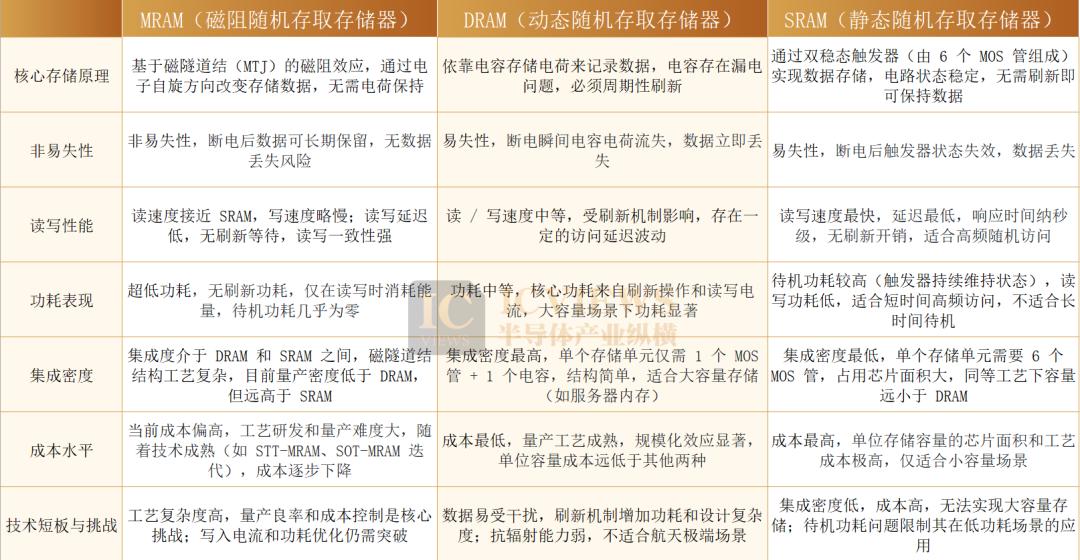
Among many candidate technologies, Magnetoresistive Random - Access Memory (MRAM) stands out with its excellent performance and becomes a potential star in the space - storage field. MRAM has natural immunity to the single - event upset effect caused by space radiation and has an almost permanent lifespan. At the same time, it has symmetrical read - write speeds and ultra - low operating power consumption. Compared with dynamic random - access memory (DRAM) of the same density, it achieves a dual breakthrough of "faster speed and lower power consumption", perfectly meeting the energy - constraint requirements of long - distance space flights. In scenarios where spacecraft are far from the sun and solar power supply is limited, the low - power consumption advantage of MRAM is particularly prominent. It can reduce system energy consumption while carrying out more on - orbit data - processing tasks, significantly reducing the risk of space - mission failure. The Earth - observation satellite SpriteSat launched by Japan has already upgraded the memory of its magnetometer subsystem to MRAM, verifying the application value of this technology in space.
In addition, Micron Technology, a storage - chip giant, also launched its first single - level cell (SLC) NAND flash memory with radiation - resistant capabilities and aerospace - grade verification last year, marking the starting point of its aerospace - memory product line. It is also planning to set up an aerospace engineering laboratory, targeting the space - product market. This aerospace - grade NAND flash memory from Micron has a single - chip capacity of 256Gb, making it the highest - density NAND product for space applications on the market. It has passed the key verification tests required by NASA and U.S. military specifications, including temperature - aging resistance, total ionizing dose (TID), and single - event effects (SEE), proving that it can operate stably in high - radiation and extreme environments for a long time and meeting the high - standard requirements of space missions for component reliability.
In 2026, the storage industry faces both opportunities and challenges. Chinese - made DRAM enterprises are seeking to break through in the reshaping of the global supply chain. NAND storage is achieving a value leap with the explosion of AI inference. Space storage is opening up a new track in the wave of commercial space exploration. These three major trends are not only reshaping the market pattern of the storage industry but also supporting the development of cutting - edge fields such as the digital economy, artificial intelligence, and aerospace. With the continuous advancement of technological innovation and the expansion of application scenarios, the storage industry is entering a new golden development period. Enterprises that can accurately grasp these trends and break through core technologies will ultimately dominate the global market competition.
This article is from the WeChat official account "Semiconductor Industry Insights" (ID: ICViews), written by Pengcheng, and is published by 36Kr with authorization.