In - depth Observation: Valued at $1.3 billion, this AI that understands film grammar has Hollywood completely panicked.
Popularize cinematic storytelling for the future. Stop the prompts and start directing.
Can you generate movie scenes with IMAX effects in AI just by moving your fingers?
Recently, a major update of Higgsfield Cinema Studio has caused a minor earthquake in Hollywood.
It is no longer satisfied with generating blurry and random AI clips. Instead, it has turned the top 6 types of cameras, 11 lenses, 4 focal lengths, 3 apertures in the film industry, as well as various camera movements and special - effect scenes, into an "arsenal" that ordinary users can freely mix and match.
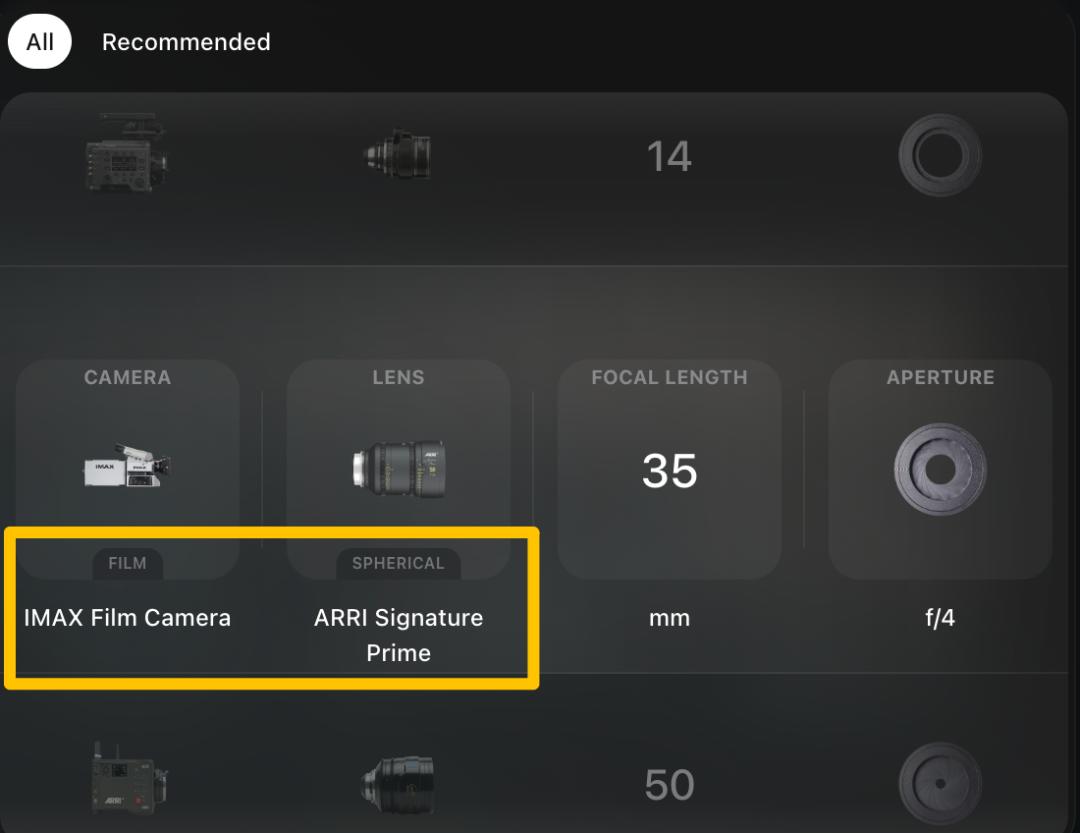
△ You can freely mix and match top - level movie cameras and lenses in HCS.
You must have heard the saying "Photography will impoverish you for three generations, and a DSLR will ruin your life", because these professional - grade photography equipment are just too! Expensive!
The combinations of IMAX, Steadicam, Canon K35, ARRI prime lenses... These movie - grade cameras and lenses cost at least one million in actual shooting.
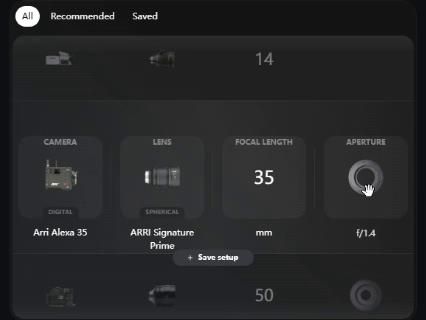
But in the HCS AI, you only need one US dollar.
The so - called "cinematic feel" that used to require multiple prompt words for limitation is now directly trained into the "cinematic grammar" of AI. The professional barriers are further weakened, and even primary school students can use AI to create Hollywood blockbusters.
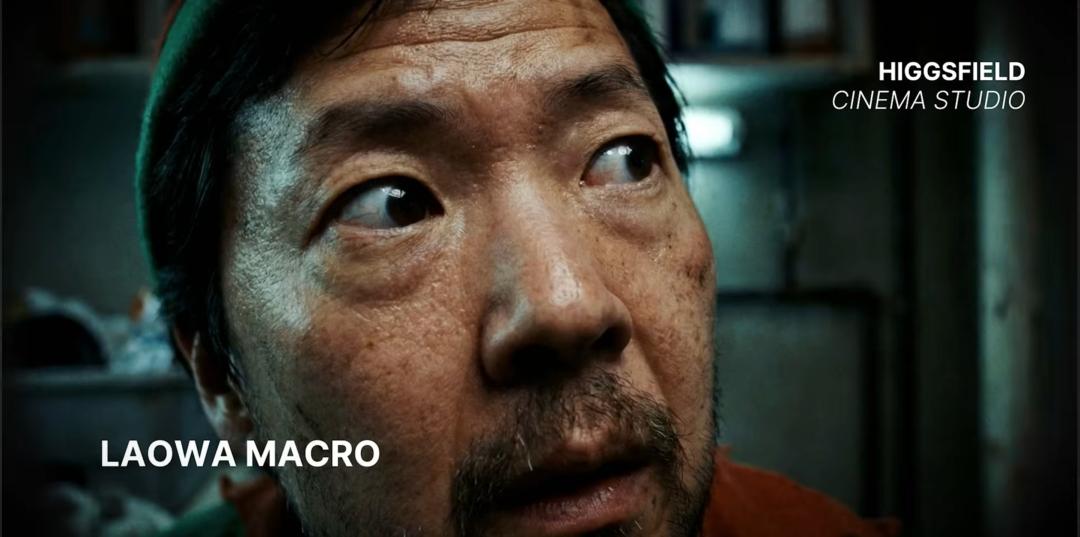
△ Generate skin details with movie - grade precision using HCS.
Is this just another over - hyped AI toy, or is it truly the beginning of the "Age of Exploration" for personal movie production?
At least Higgsfield has truly benefited. It recently announced an additional issuance of 80 million US dollars in stocks on the basis of its existing financing, bringing the total Series A financing to 130 million US dollars, and the company's valuation has also entered the "unicorn" club of 1.3 billion US dollars.
PART 01. Replicate IMAX texture when AI masters top - level cameras
For a long time, one of the major pain points of AI - generated images has been the "plastic feel":
At first glance, the images seem exquisite and imaginative, but upon closer inspection, they seem a bit fake. In fact, they lack the subtle texture produced by the interaction of light, lenses, and physical media in the real world.
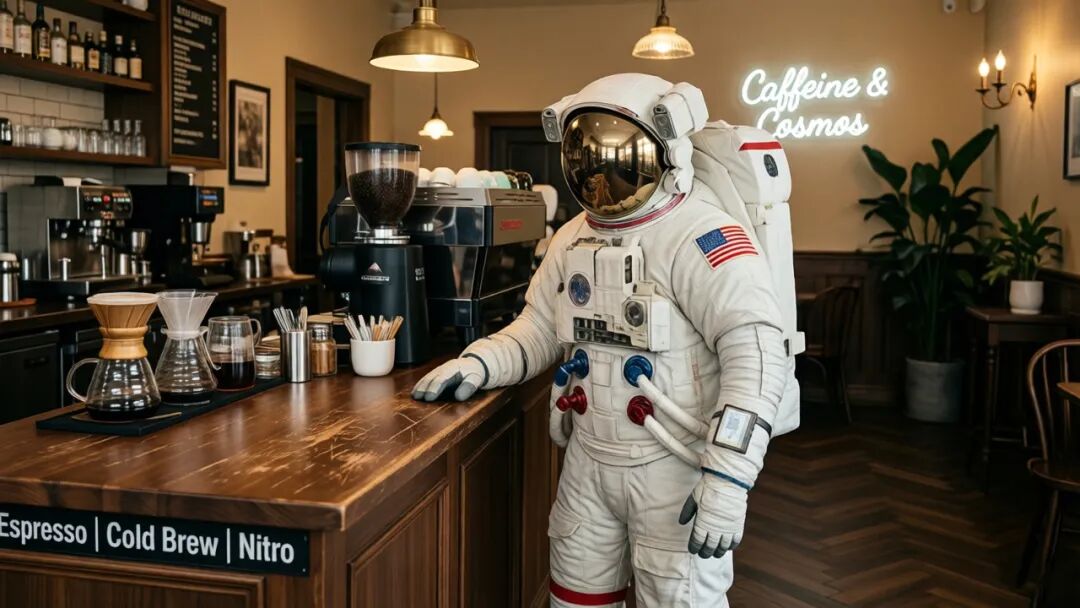
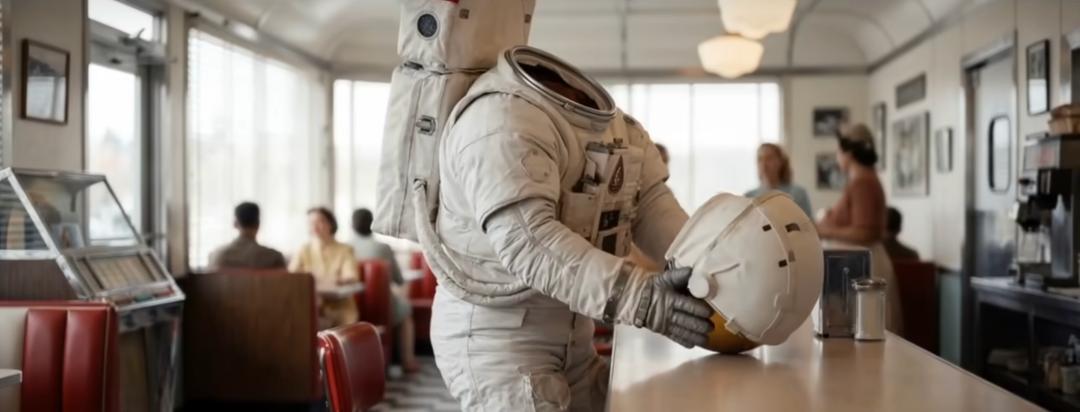
△ Comparison of the effects of an ordinary AI (top) and HCS (bottom) when generating an image of "an astronaut sitting in front of a coffee shop". The latter has more real - light texture and depth of field.
Higgsfield was founded by Alex Mashrabov, the former head of AI at Snap. It is committed to simplifying and accelerating the creation process of high - quality videos. It has accumulated over 15 million users in nine months since its launch, and its annual revenue has doubled in just two months, reaching 200 million US dollars.
In simple terms, this AI is determined to break down the professional barriers in the film industry.
HCS directly digitizes and modularizes the knowledge barrier of the film industry's century - long accumulation, "the combination of cameras and lenses", in an accurately retrievable way.

△ Alex Mashrabov, the founder of Higgsfield.
Now, in users' virtual "camera bags", there are a bunch of well - known names: from the ARRI Alexa 35, a favorite in Hollywood dramas, to the Red V - Raptor known for its color science, and then to the IMAX symbolizing grand narratives.
Along with a rich lens library, users can match these top - level camera bodies with legendary lenses, such as the Panavision C series known for its soft out - of - focus and vintage halos, the sharp and transparent Canon K35, or the anamorphic widescreen lens Hawk V - Light that can bring a unique stretching feeling and breathing effect.
This is not just about adding labels. The model has deeply learned the color response, dynamic range, and graininess performance of these photography equipment under different lighting conditions.
In actual operation, creators only need to provide simple text prompts (Prompts) and upload a reference image for composition, then they can choose different camera body and lens combinations, and even specify the focal length and aperture.
The platform also offers options for different resolutions such as 1K, 2K, 4K, allowing users to flexibly balance cost (point consumption) and image quality.
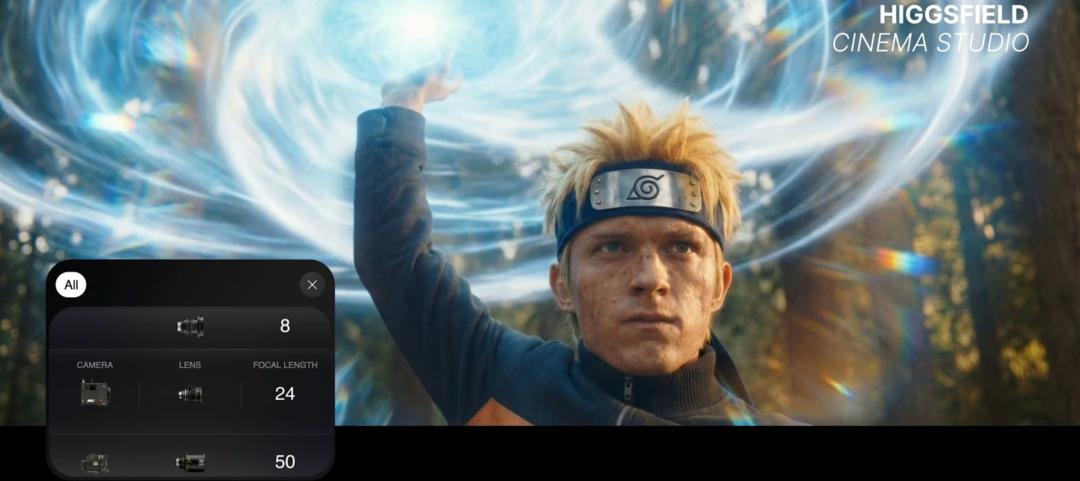
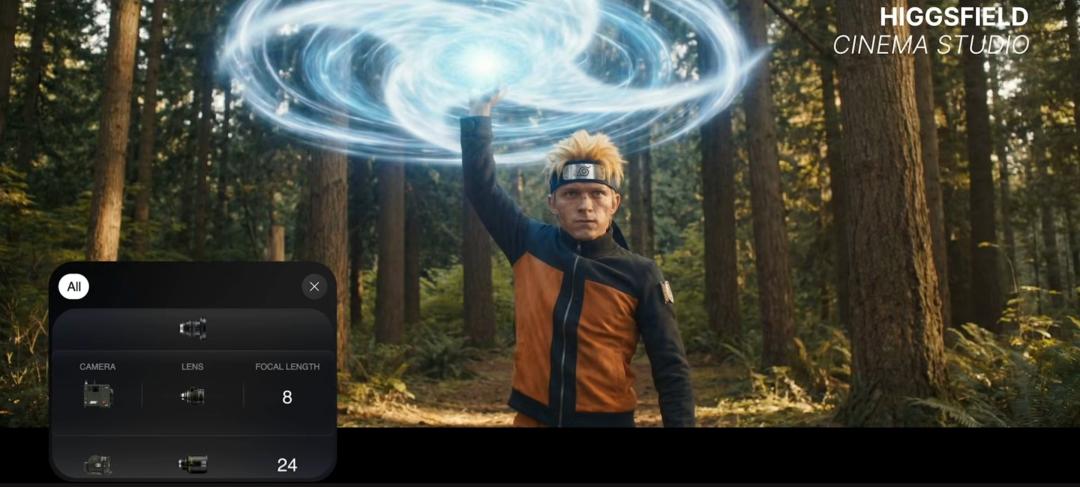
△ The effects of "Tom Holland as Naruto" at different focal lengths.
Actually, Higgsfield is not the first company to "covet" the century - old film heritage. Since countless film masters around the world have summarized various reusable knowledge such as tones and styles, there will always be someone who profits by breaking the information barrier.
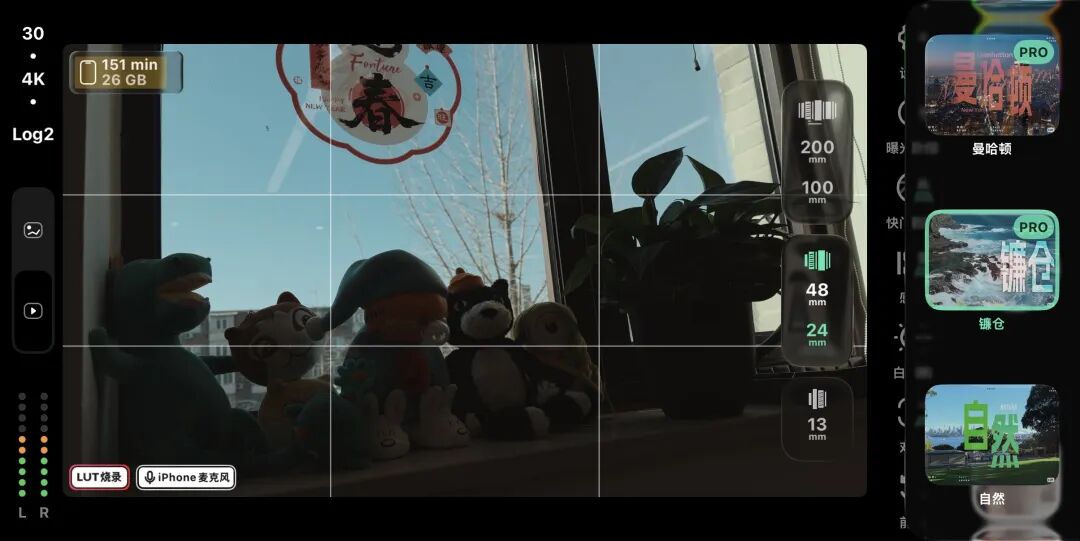
Not long ago, the leading domestic short - video team "Film Tornado" launched a photography app "Tornado Camera", which also comes with different lens tone styles. Users can also pay to unlock more professional color - grading LUTs of film masters to shoot movie - grade blockbusters to adorn their WeChat Moments.
The uniqueness of HCS is that in the infinite - generation AI world, it directly points out a direction to achieve a high - end cinematic feel at an extremely low cost.
Some users have reported that the cost of generating a still from a Western movie with IMAX - level visual impact is even less than one US dollar. In the past, this was a dream that required a large production crew and millions of dollars in equipment to achieve.
PART 02. Various camera movements and special effects make AI truly understand cinematic grammar
After determining the base image, the next step is to make the picture move like a movie.
As the founder Alex Mashrabov said:
"We've heard from creators over and over: AI videos look better, but they don't feel like movies because there's no intention behind the shots."
The ambition of Higgsfield is to endow AI with "the director's intention".
To this end, they developed a new control engine, the core of which is the deconstruction and recombination of "cinematic grammar". The platform has a large number of preset and complex camera movements that mimic classic Hollywood techniques.
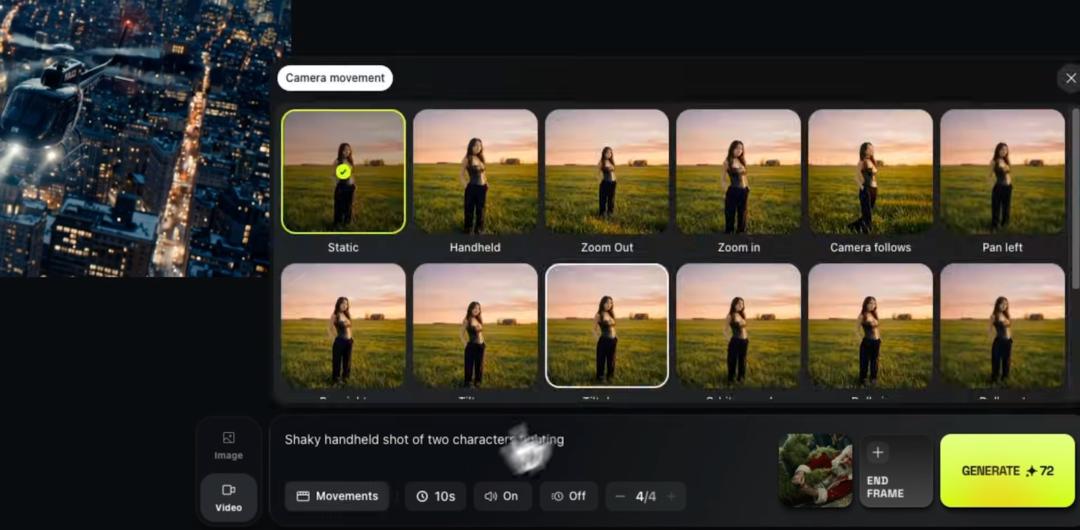
△ HCS includes various classic movie camera - movement techniques.
These are no longer simple "move left" or "zoom in" actions, but camera - movement methods with clear narrative functions:
Dolly series movements: including Dolly in (push in), Dolly out (pull out), etc.
Drone shot: Photography or videography using a drone from an aerial perspective, which can capture a wide view and unique composition of ground scenery.
360 roll (360 - degree surround): The camera rotates 360 degrees around the subject, which is especially suitable for showing the full view of a product or creating an immersive visual experience.
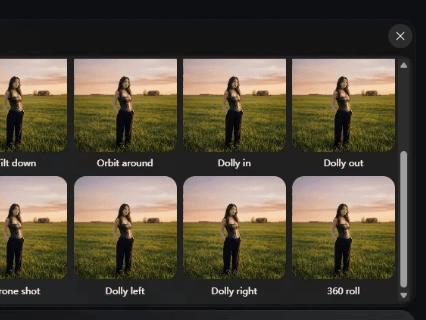
In traditional shooting, these camera movements often require professional tracks, jibs, Steadicams, and even complex body - binding devices, and they place extremely high demands on photographers.
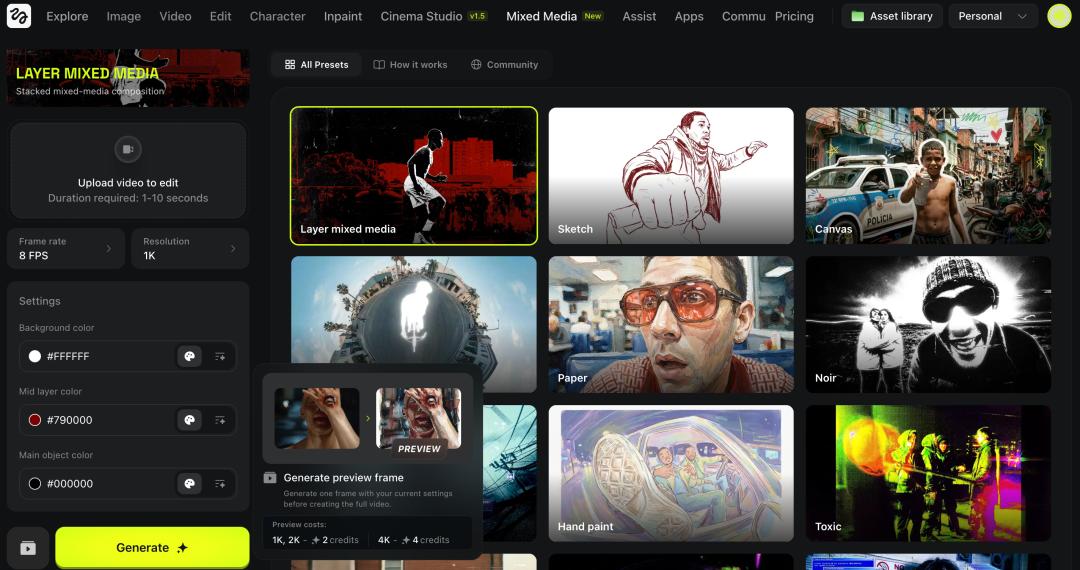
These shots can also be mixed in MIX mode to create visual effects that are almost impossible to achieve in actual shooting.
After experiencing it, Jason Zada, who won the Oscar for Best Visual Effects for The Matrix, said:
"These extremely difficult - to - complete shots are now just a preset option, and you can achieve them with just one click."
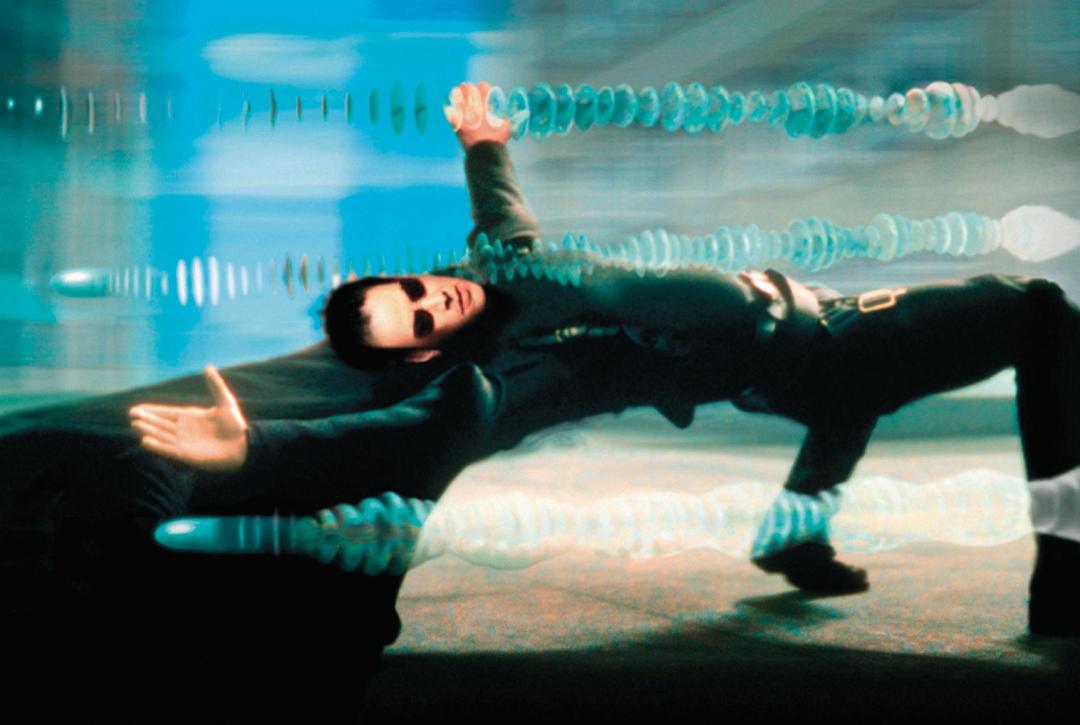
△ The classic "bullet - time" shot from The Matrix.
It is reported that Higgsfield can generate movie - grade shots with one click, mainly relying on the DOP I2V - 01 - preview model, an AI model specifically designed for cinematic photography grammar. The "electronic nutrients" fed to it are a large number of professional movie shots, lighting, and choreography techniques.
On this basis, Higgsfield integrates multiple top - level AI video models, including OpenAI Sora 2, Google Veo 3.1, Wan 2.5, Kling, and Minimax, and provides them to users through a unified interface.
After mastering the two magic weapons of movie - grade images and camera - movement methods, Higgsfield is solving one of the most difficult problems in generative videos: the consistency of characters and scenes across shots.
Users can generate "3×3 key frames" with a consistent subject and a fixed style based on the base image, and construct continuous narrative segments in a more orderly manner, rather than generating a bunch of "GIF animations" with fragmented styles.
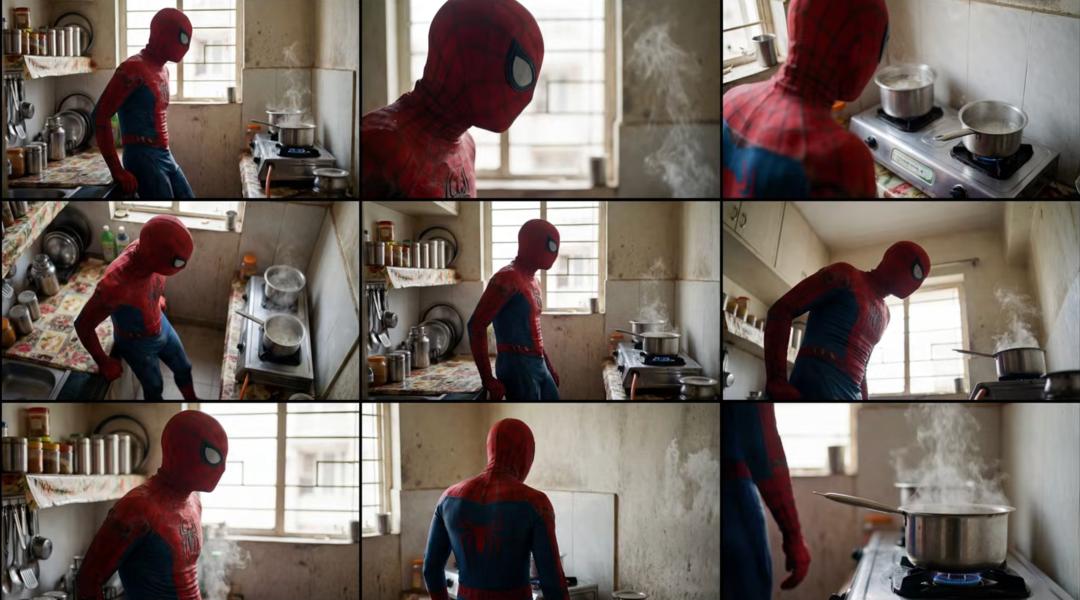
△ Users