Review of 2025: Nine "Fatal Flaws" Sending Automobile Manufacturers into Decline
In the just - past year of 2025, the competition in China's new energy vehicle market has never been so fierce. The production and sales of new energy vehicles reached 16.626 million and 16.49 million units respectively, with year - on - year growth of 29% and 28.2% respectively, ranking first in the world for 11 consecutive years.
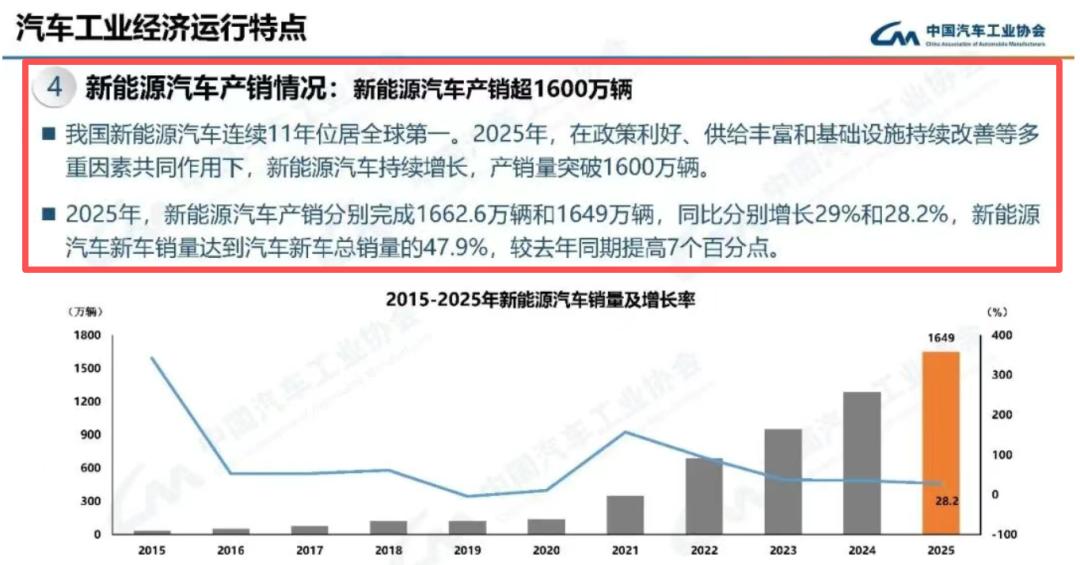
Picture/Sales and production of China's new energy vehicle market in 2025. Source/Screenshot from China Association of Automobile Manufacturers and New Energy Outlook
Meanwhile, you may have noticed that some once - shining brand names are quietly experiencing a cruel transformation from peak to mediocrity, or even falling into the abyss.
From Li Auto's dominance in sales to losing the sales championship, from Xiaomi SU7's popularity in the automobile circle to being surrounded by controversies, from Nezha's once - topping the annual sales list to struggling on the verge of bankruptcy... A profound reshuffle in the industry is underway.
The key to success in the new energy vehicle market is no longer just who can drive faster, but who makes fewer mistakes. The nine scars of these brands falling from grace serve as a wake - up call for all players.
1. Lagging product line iteration - Market share being eroded
In a rapidly changing market, standing still means moving backwards. Li Auto, which once accurately penetrated the family car market with its range - extender technology, once built a solid moat. However, when competitors caught up and rapidly iterated in range - extender technology, pure - electric platforms, and intelligent configurations, Li Auto seemed hesitant in updating its core product line.
Take the Li L9 as an example. Its CLTC pure - electric range is 280 kilometers, equipped with a 52.3 kWh battery. This data was quite competitive at the time of release, but its technology iteration has almost stagnated in the past year, while the market standard has been rapidly raised. In 2025, competitors launched multi - dimensional surpassing in terms of range, intelligence, and technological concepts.
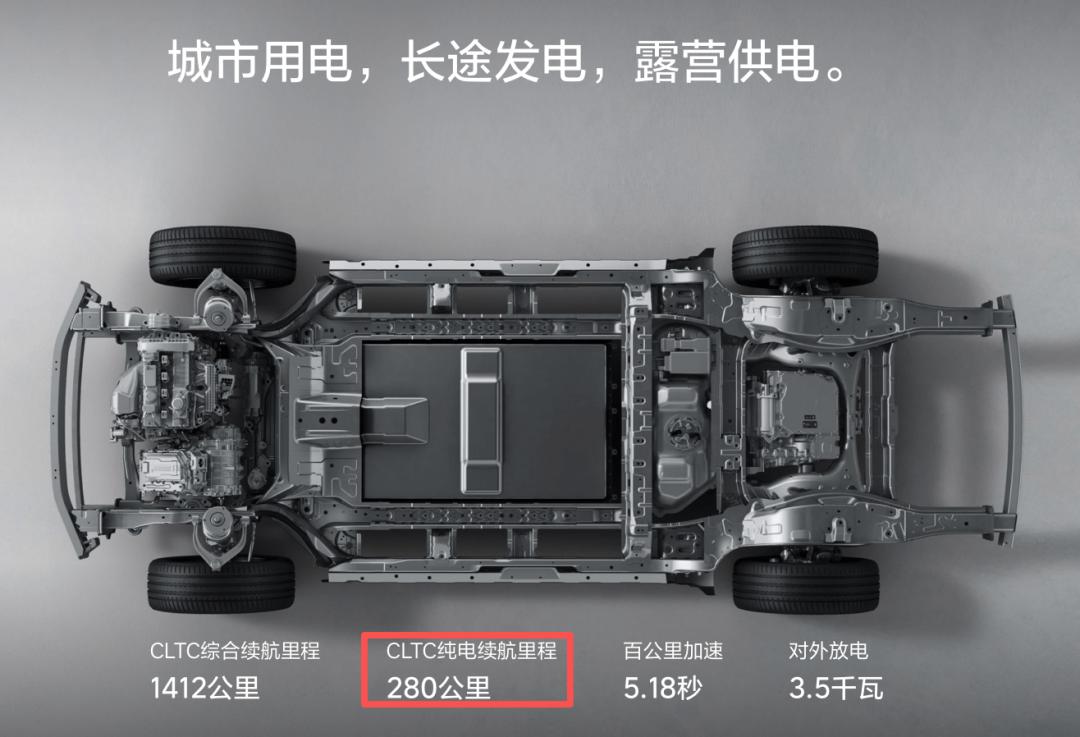
Picture/Li L9's range. Source/Screenshot from Li Auto's official website and New Energy Outlook
For example, in terms of the core issue of "electricity anxiety", competitors have generally entered the "pure - electric range of over 300 kilometers" club. Leapmotor, known as the "half - price Li Auto", even launched the Leapmotor D19 with a pure - electric range of 500 kilometers.
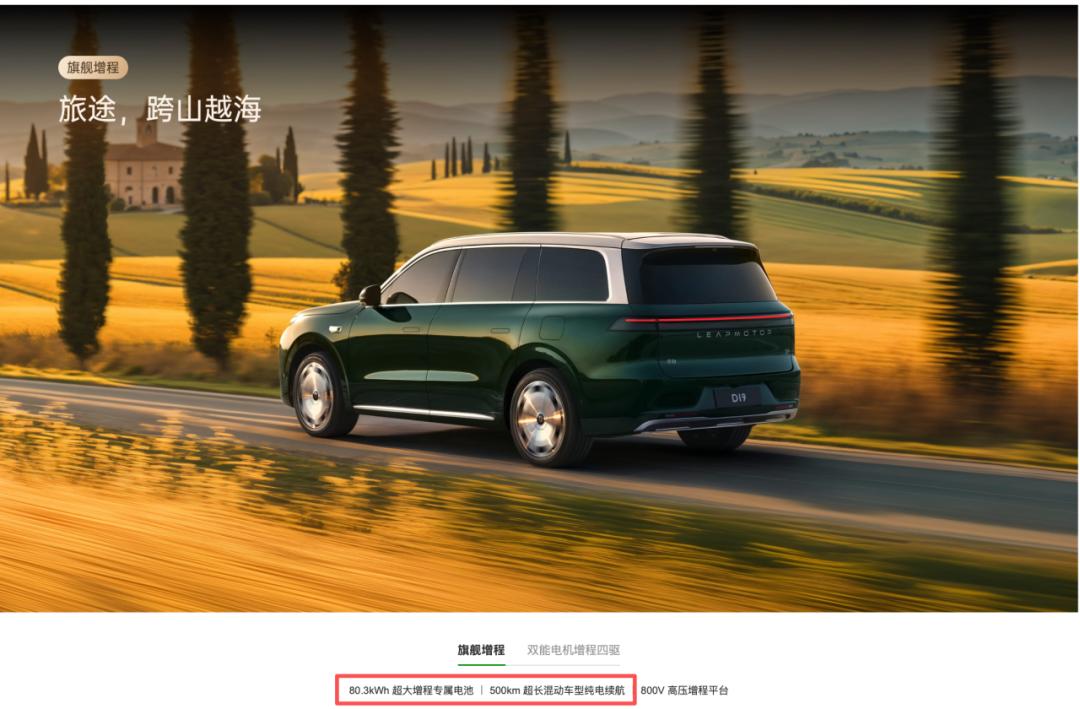
Picture/Leapmotor D19's range. Source/Screenshot from Leapmotor's official website and New Energy Outlook
More importantly, a new range - extender concept of "large battery, small fuel tank" is becoming popular. Competitors are redefining the standard of high - end range - extender SUVs by equipping larger batteries and more advanced intelligent driving systems. Li L9's first - mover advantage has been gradually erased in this rapid and comprehensive technological iteration.
However, starting from 2026, Li Auto will shorten its product replacement cycle from four years to two years, hoping to regain consumers' attention through faster product upgrades, such as increasing battery capacity, standardizing 5C super - charging, and canceling the entry - level version.
The market is large, but the competition is fierce. When a company is satisfied with its current success and slows down its innovation pace, the loosening of its sales base usually starts here, and sensitive competitors will quickly gobble up its market share.
2. Poor craftsmanship, powder spraying and rusting - Consuming consumers' patience and goodwill
When an automaker pursues expansion speed and cost control too aggressively, loopholes may appear in the most basic manufacturing processes and quality control. These problems are directly related to users' daily experiences and health, and are most likely to trigger widespread dissatisfaction.
The long - standing problem of "powder spraying from the air vents", which has been widely complained about by car owners, still troubled many car owners in 2025. Chen Ming (a pseudonym), a car owner in Huzhou, Zhejiang, had his BYD Dolphin's air - conditioning evaporator replaced at the 4S store, but the "powder spraying" problem remained. In July 2025, the 4S store proposed to clean the air - conditioning. "It's still the same after cleaning. The odor and the powder smell are even stronger. It didn't solve the problem at all."
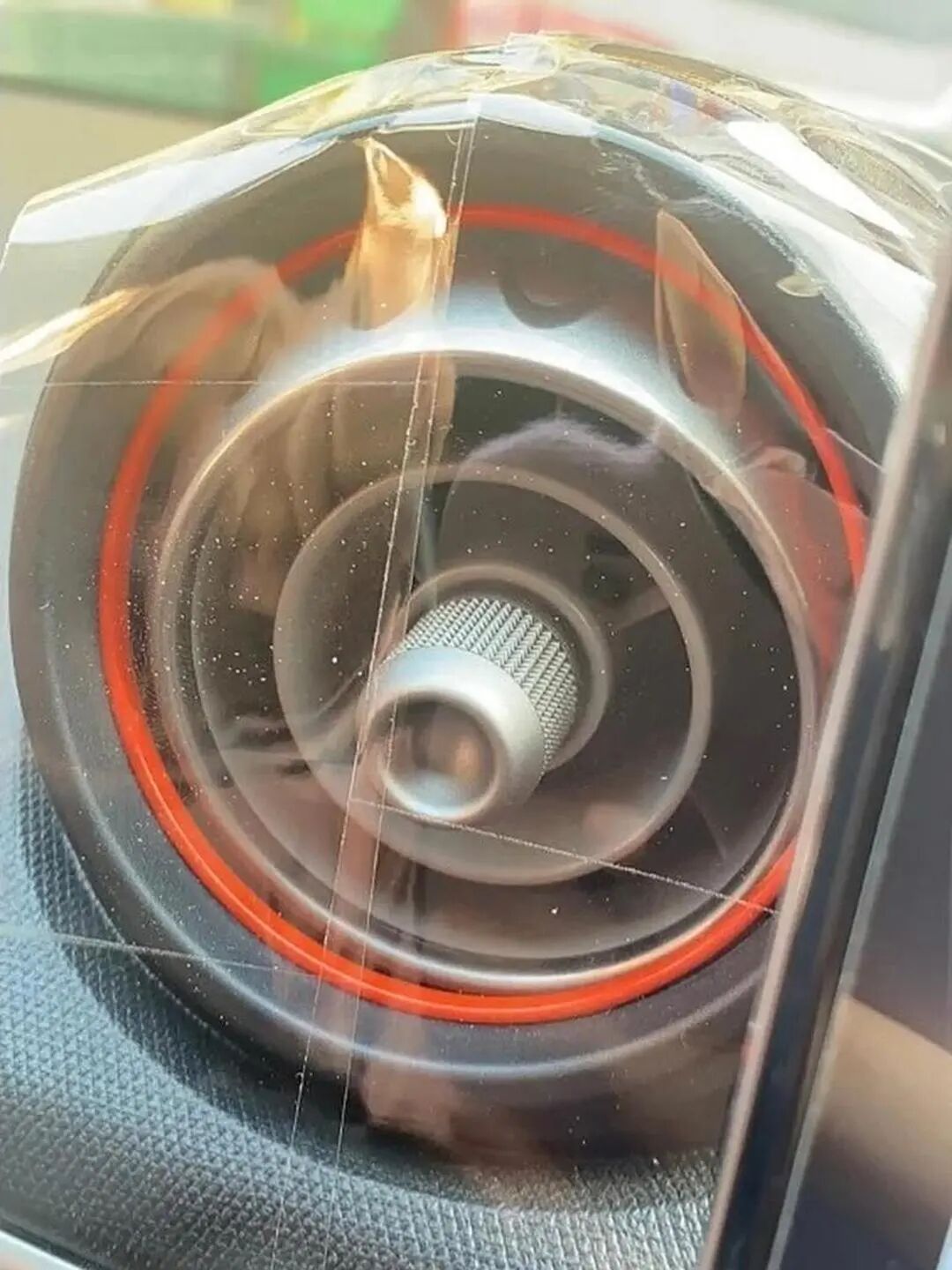
Picture/A BYD Dolphin owner sharing the powder - spraying problem from the air vents. Source/Screenshot from the Internet and New Energy Outlook
Some BYD models, such as the Dolphin, Yuan PLUS, and Seagull, have problems with sub - standard coating processes or design flaws, resulting in white powder mainly composed of aluminum oxide or aluminum hydroxide being sprayed from the air vents during cooling or heating. Manufacturers generally claim that the powder is harmless, but users' feedback contradicts this. Some car owners reported that the odor caused coughing or discomfort. Cases of rusting on the car body or chassis components also occurred in multiple brands.
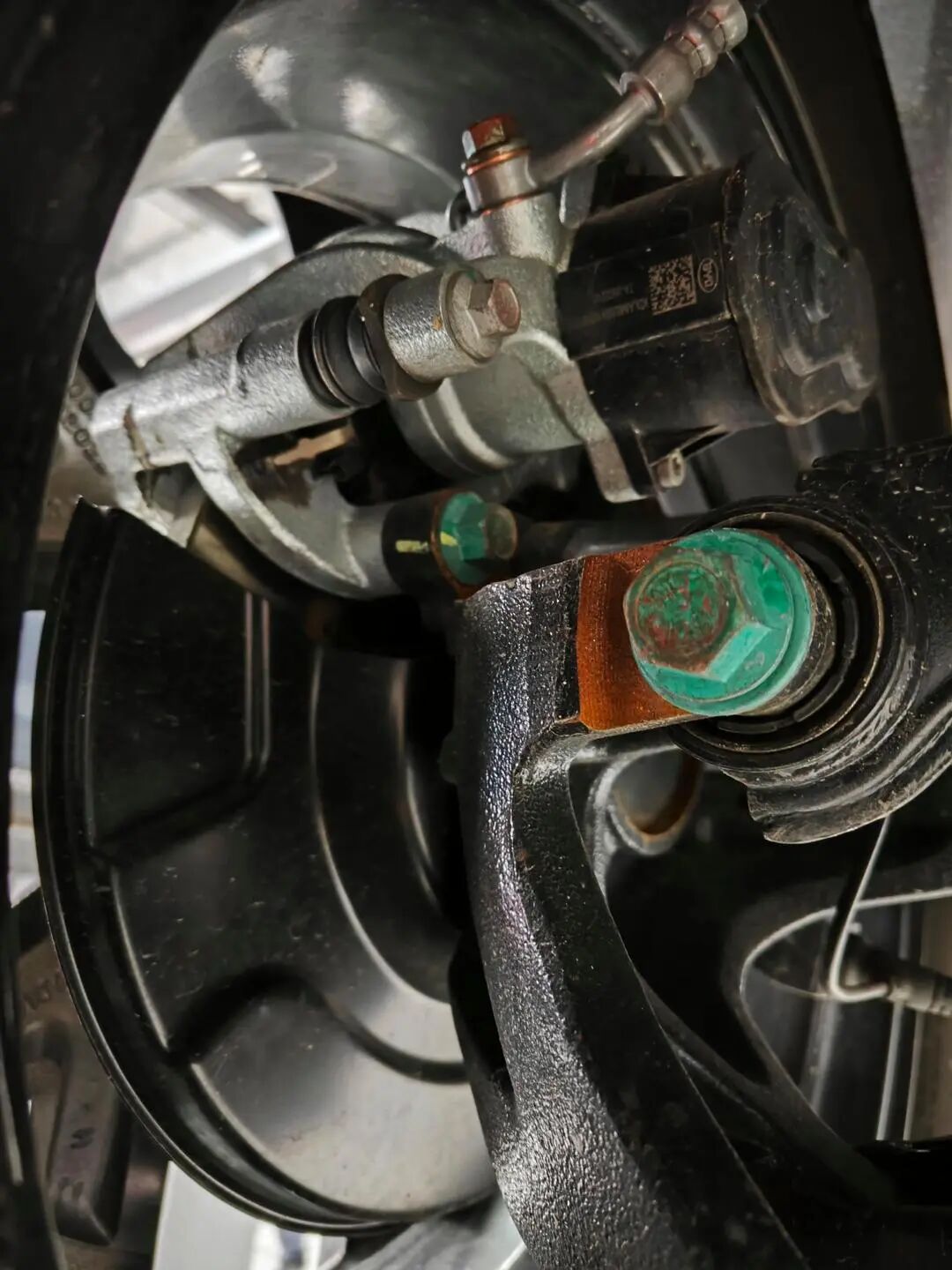
Picture/A BYD Yuan PLUS owner sharing the rusting problem of the chassis components of a three - month - old new car. Source/Screenshot from the Internet and New Energy Outlook
These seemingly "minor" craftsmanship and quality problems, due to their high - frequency and direct impact on users and wide - ranging influence, will continuously consume users' patience and goodwill towards the brand. They silently expose the company's weaknesses in supply chain management, production consistency, and quality inspection systems.
3. "Fine - print marketing" - Overdrawing brand trust through ambiguity and exaggeration
In the era of "traffic is king", some companies use exaggerated or even ambiguous language in marketing to create a sensational effect, hiding key limiting conditions in the inconspicuous "fine print". This "fine - print marketing" is becoming a sharp weapon for overdrawing brand trust.
At the beginning of its release, Xiaomi SU7's promotional slogans such as "comparable to million - yuan luxury cars" and "industry - leading" attracted a lot of attention. However, the subsequent "carbon fiber front hatch" incident became the fuse. Some car owners found through disassembly that the "dual - duct high - efficiency diversion and heat dissipation" function promoted by the company might not effectively form an air flow in reality, which was inconsistent with the official description.
This "contradictory promotion" incident led hundreds of car owners to form a rights - protection group and demand a no - loss return of the car. Similar controversies made the public scrutinize every promotional claim with a "magnifying glass", and any unfulfilled promise quickly turned into a trust crisis. Lei Jun also had to publicly admit that it was "the most difficult period since the establishment of Xiaomi".
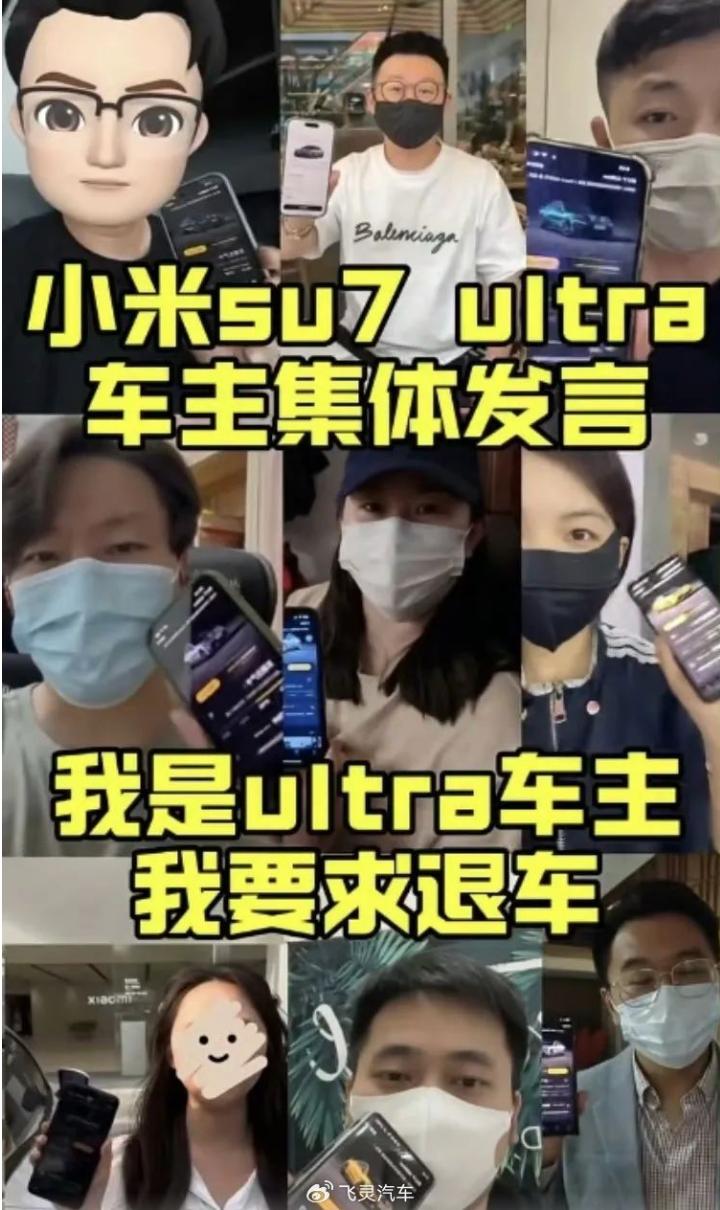
Picture/Xiaomi SU7 Ultra car owners collectively demanding a return of the car. Source/Screenshot from the Internet and New Energy Outlook
In recent live - broadcasts, Lei Jun also reiterated that using fine print is a bad industry practice, and Xiaomi will continue to reflect on it and try its best to "turn the fine print into large print".
4. Secretly reducing configuration and losing credibility - A cliff - like decline in brand reputation
Worse than exaggerated promotion is the "underhanded move" during delivery. Secretly reducing vehicle configurations not only is suspected of sales fraud but also deals a fatal blow to the brand's reputation. Many car owners of the XPeng G6 model complained that the car was "secretly downgraded in terms of millimeter - wave radars". Some car owners accidentally found during maintenance that the vehicle actually only had 3 millimeter - wave radars installed, instead of the 5 stated in the official app user manual before purchasing the car.
What made the car owners even more angry was that after the complaints, XPeng quietly modified the configuration parameters in the electronic user manual. Although the official explanation was that this was a hardware simplification after the technological upgrade to the "pure - vision solution" and that "the functions were not simplified", the car owners believed that this violated their right to know and was an act of "concealing important facts that affect decision - making".
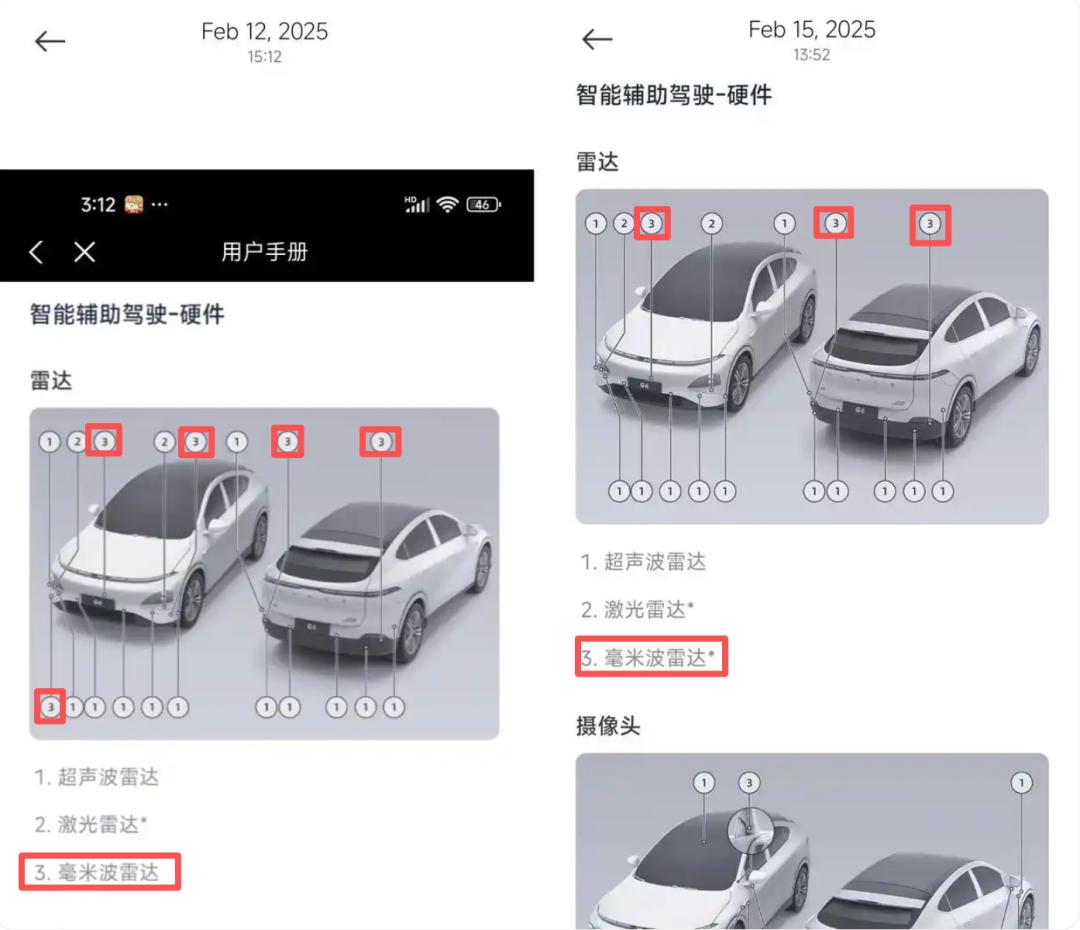
Picture/The changes in the XPeng G6 user manual before and after the modification. Source/Screenshot from the Internet and New Energy Outlook
As of December 2025, 159 car owners had jointly filed a rights - protection lawsuit. This act of losing credibility not only triggered legal disputes but also led to a cliff - like decline in the brand's reputation.
5. Controversial styling design - Both sales and brand image are damaged
Product design is the first language for a brand to communicate with users. An adventurous "misstep" in design can be very costly. The Li MEGA, still being criticized in 2025, is a typical case in the history of new energy vehicle industry.
The Li MEGA's futuristic but revolutionary styling has sparked strong polarization in public opinion and even been parodied and spread by some netizens. This adventurous design is considered to deviate from the mainstream aesthetics and the psychological expectations of safety and stability of its core family user group to some extent.
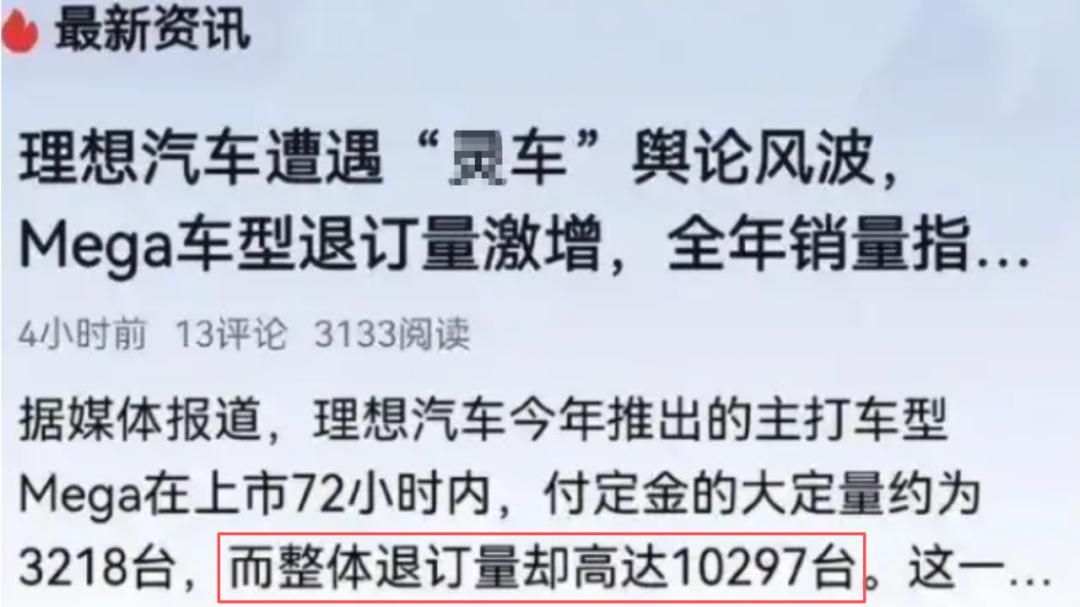
Picture/10,297 orders for the Li MEGA were cancelled within 72 hours of its launch. Source/Screenshot from the Internet and New Energy Outlook
The controversy not only affected the sales of the MEGA itself but also had an impact on the high - end image building of the Li Auto brand. It even disrupted the overall release schedule of its pure - electric products to some extent. Design can lead the trend, but if the emotional connection with core users is broken, it may turn from a market highlight into a burden.
6. "Blind - box" battery selection - Backfiring on brand reputation and losing public support
For new energy vehicles, the battery can be regarded as the "heart" of the vehicle. Some automakers, in order to ensure supply or reduce costs, will mix batteries of different brands and specifications in the same model without clearly informing consumers in advance. This practice is vividly called "opening a blind box". For example, in some models of Li Auto and Xiaomi, consumers may get batteries from CATL, BYD, or Sunwoda even though they pay the same price, which has triggered discussions among car owners about "battery discrimination" and unequal rights.
The phenomenon of "blind - box" battery selection continued to erode users' trust in a more complex form in 2025 with the intensification of market competition. At the end of 2025, a lawsuit worth up to 2.314 billion yuan brought the quality risk caused by the opaque battery information to the forefront. ZEEKR sued its battery supplier Sunwoda due to the quality problems of the batteries installed in its early models. Previously, a large number of ZEEKR car owners complained about problems such as slower charging speed and abnormal range attenuation in winter, forcing ZEEKR to replace the affected car owners' battery packs with CATL battery packs for free.
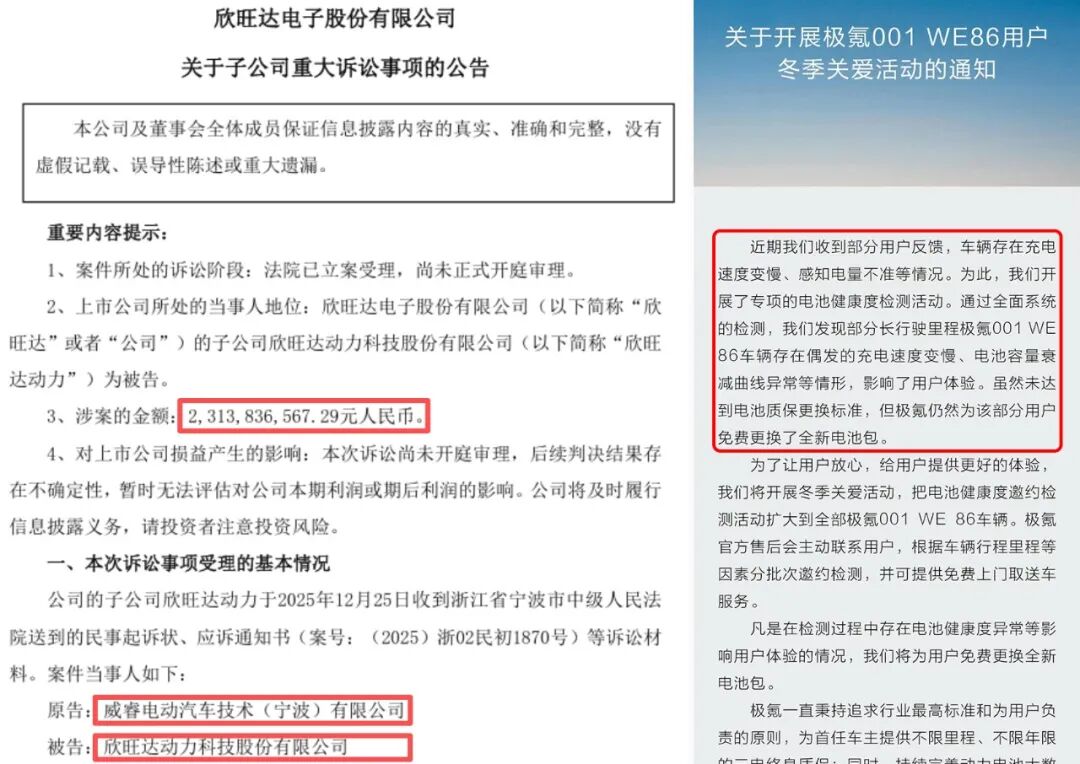
Picture/Weirui Automobile suing Sunwoda Power - ZEEKR car owners reporting battery problems. Source/Screenshot from the Internet and New Energy Outlook
Li Auto's i6 model even adopted a discriminatory battery supply plan: the first - batch users who picked up the car in 2025 would all be equipped with CATL batteries, while subsequent deliveries would be a mix of CATL and Sunwoda batteries. Different after - sales strategies would be adopted based on the feedback of prospective car owners. This operation of making the first - batch battery supply a "privilege" was regarded by consumers as a "sales - forcing" method and raised widespread questions about the consistency and fairness of the vehicle quality in the future.
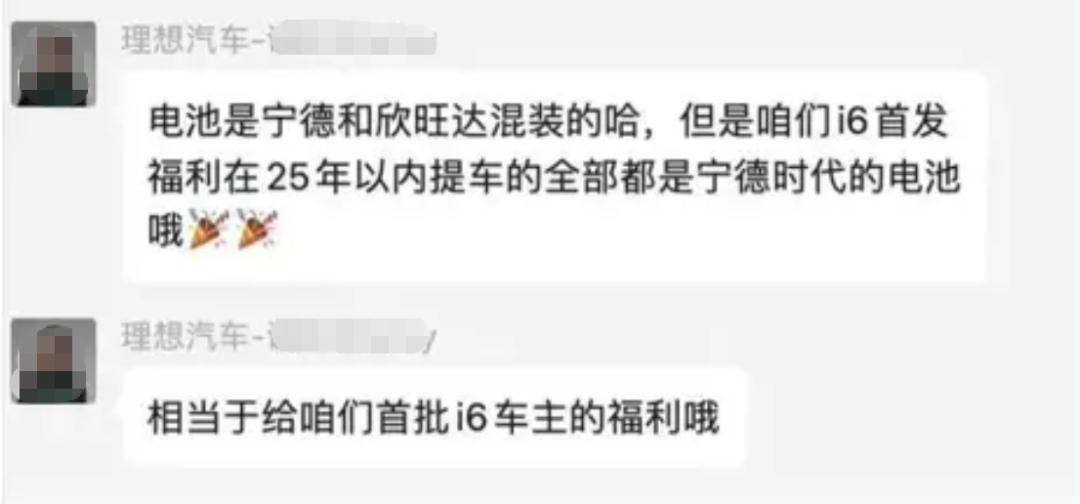
Picture/The battery assembly situation of the Li i6. Source/Screenshot from the Internet and New Energy