When a post-2000s Chinese team secures the world's No. 1 position on the AI programming agent leaderboard with state-of-the-art (SOTA) results, is the era of one-person companies really upon us?
In an interview at the beginning of 2024, Sam Altman, the founder of OpenAI, revealed a bet he had made in the Silicon Valley geek circle: "We're having an internal bet on which year the first 'one - person billion - dollar company' (one - person unicorn) will emerge?" Facing the camera, Altman said, "This was unimaginable before the AI era, but now, it's almost inevitable."
The logic behind this bet is almost cruel: In the old business order, scale was the sole measure of power. To build a unicorn company, you not only needed a genius idea but also a large R & D team to handle those trivial, repetitive, and extremely energy - consuming engineering tasks.
However, AI is changing all of this. Altman believes that when AI Agents can take over 90% of coding, testing, and operation and maintenance work, the boundaries of companies will undergo a drastic "collapse." One person's aesthetics, decision - making, and understanding of the market will be infinitely magnified through the leverage of AI.
This may sound like a distant prophecy, but late at night in Beijing's Tsinghua Science Park, this door is being pushed open by a group of post - 00s from China with an average age of 24.
It is understood that in the upcoming AI programming agent list (related to SWE - bench evaluation), with their self - developed Vinsoo 3.0 cloud - based Agent, without any human intervention, they not only far surpassed a number of Silicon Valley unicorns but also achieved the world's top SOTA result in the success rate of complex task processing.

Image source: Yunsi Intelligence
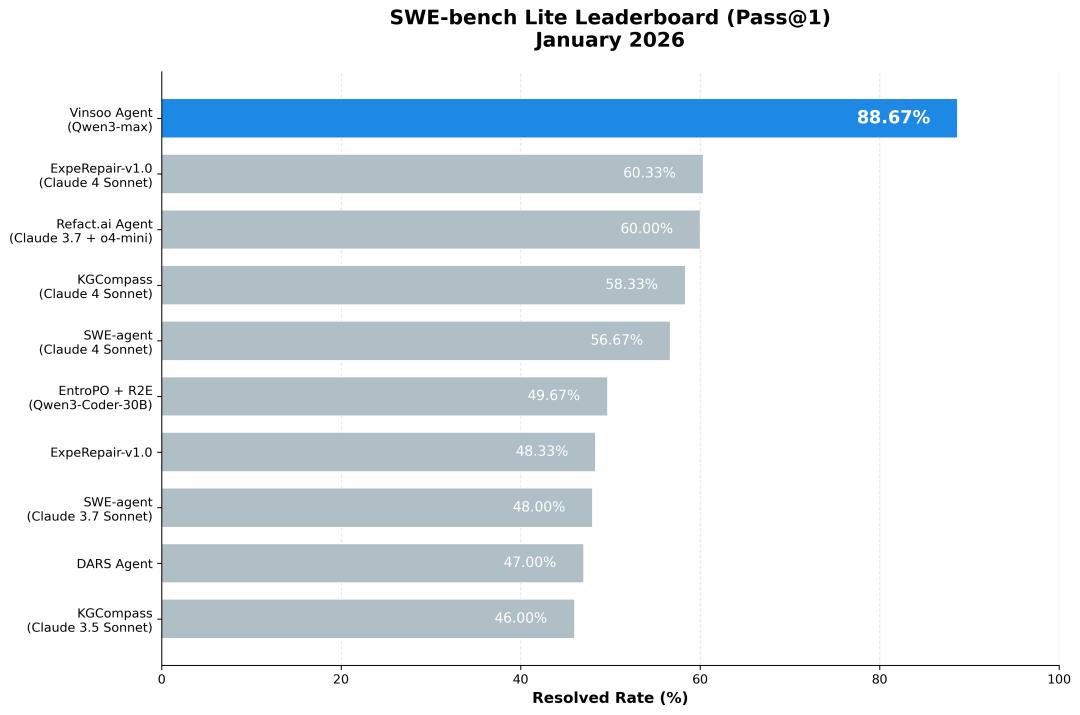
Image source: Yunsi Intelligence
In the past, people thought that China's chance in AI lay in quickly replicating Silicon Valley's innovations. Now, Vinsoo has proven that in the programming field, which is the most important, fundamental, and representative of a country's intelligence ability, Chinese teams can also achieve a leapfrog in the engineering paradigm. It's another "DeepSeek" moment - domestic large models + extreme engineering > Silicon Valley giants' large models + traditional IDE.
While global developers are discussing Vibe Coding, these post - 00s who don't blindly believe in the Silicon Valley myth have started to make changes at the fundamental level. What Vinsoo really wants to build is an infrastructure that can turn everyone's inspiration into scalable profits. Through extremely hardcore cost - reduction and efficiency - improvement measures, they have made the comprehensive cost of domestic large models on the application side only one - tenth of that of overseas models. This is not just a cost war but also an "entry ticket" for them to promote domestic AI intelligence to the global market.
I. Paradigm Dimensionality Reduction from Single - Model to Engineering System
In the AI programming circle, there is a well - recognized "80/20 rule": Using AI to write the first 20% of the demo code can significantly improve efficiency. However, when the project enters the latter 80% of in - depth development, AI often turns from a "great teammate" into a "bad teammate," from being efficient to being ineffective.
This is a situation many developers have experienced: When you put hundreds of files into the dialog box and try to refactor the cross - module logic, AI may suddenly experience a "cognitive breakdown." It may completely forget the underlying data structure defined in Module B when modifying the API call in Module A, or write code that is logically consistent but completely inconsistent with the global distributed architecture.
This phenomenon, known as "Context Corruption" in the technical community, essentially stems from the paradigm bottleneck of traditional tools. Whether it's Cursor or Claude Code, their underlying logic is still the single - dialogue mode, treating the large model as an all - powerful but isolated brain. However, the attention mechanism of large models has physical limitations. When the project scale exceeds tens of millions of lines and the file dependency chain becomes extremely complex, this single - structure will lose its effectiveness due to the overload of working memory.
Model performance alone can never solve engineering problems. The real solution lies in the cloud - based Agent - this was the understanding the Yunsi Intelligence (Vinsoo) team established at the beginning of their R & D.
In Vinsoo 3.0, Vinsoo's cloud - based Agent achieved a dimensionality - reduction strike on traditional tools through an architectural revolution.
The first step of this revolution was to completely abandon the primary form of one - on - one chat between humans and AI and instead build a topological - level Multi - Agent parallel network. The more core breakthrough lies in the handling of "memory." The Vinsoo team realized that parameterized memory of the model is more suitable for long - term iteration of information at the concept, abstract strategy, or sensory level. However, when dealing with accurate code facts and a large amount of refined information, its efficiency is far lower than that of architectural innovation.
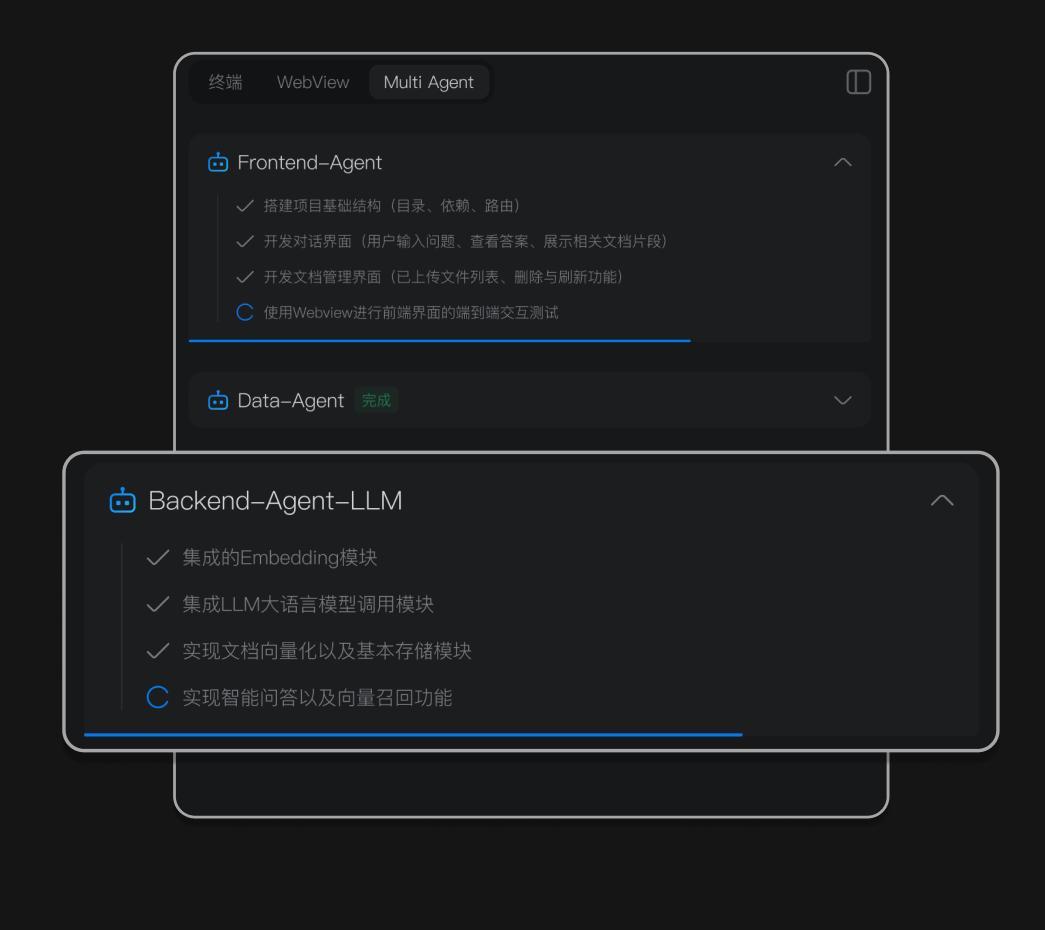
Schematic diagram of multi - agent division of labor
"The accurate memory of facts and knowledge should be entrusted to Agent Memory and context engineering." In this network, Vinsoo disassembled the heavy front - line R & D functions into eight agents with different responsibilities. Among them, the context engineer, like a brain cleaner, is specifically responsible for real - time summarization and redundancy removal of the input stream; the Agent code agent outputs high - purity logic without distraction in the purified local context; the pixel - level UI agent ensures the visual consistency of front - end components by analyzing the Render Tree; and the test agent runs continuously in the background and completes automated unit tests before each line of code is merged.
The essence of this division of labor is decoupling. It allows each agent to only handle the local tasks it is good at. Through the synchronous cooperation of up to eight agents, it completely offsets the cognitive load of a single AI when facing large - scale projects.
If the division of labor solves the efficiency problem, then Vinsoo's reshaping of the memory base solves the survival problem. To support tens of millions of effective contexts, Vinsoo found two "black technologies": DYCODE (Dual Encoding) and COTER (Topological Scheduling).
DYCODE uses dual - mapping technology to transform a large - scale code library into a dynamic index directory. This allows AI to only extract the key mapping encoding without constantly loading the complete original files, greatly saving video memory. As the general scheduler, COTER can dynamically determine the loading and unloading weights of memory fragments by predicting the change in information entropy of the code logic flow. This ensures that even for projects with tens of millions of lines, the system logic can remain in a minimalist state of "lowest entropy," preventing the common problem of AI forgetting things.
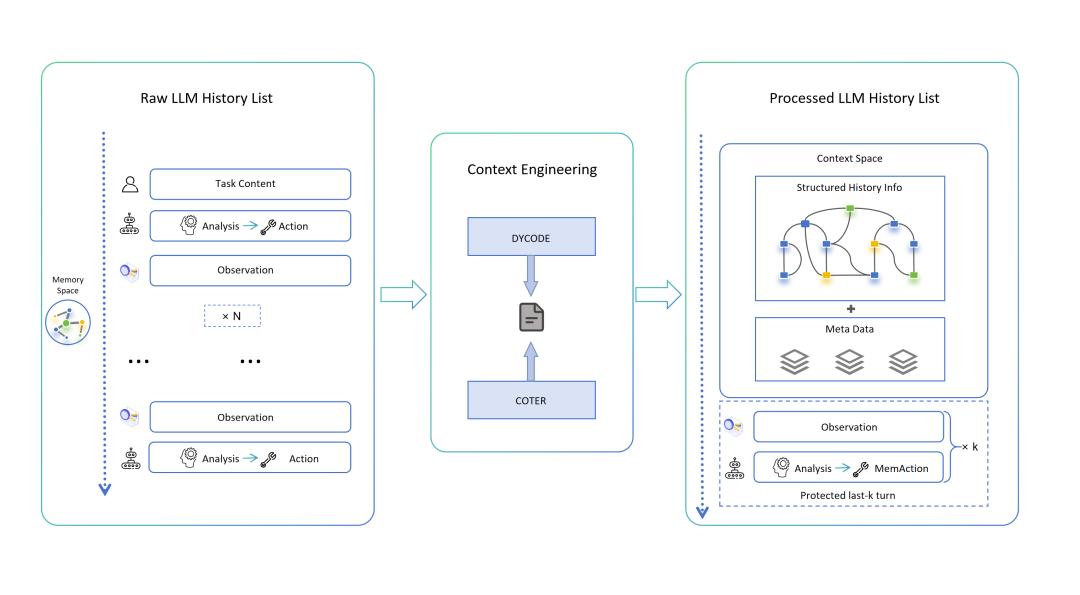
Illustration of the core long - context breakthrough algorithms DYCODE/COTER
More importantly, for security reasons, Vinsoo places all collaboration processes in an isolated sandbox in the cloud. Vinsoo's agents are launched from standardized images in the cloud, and their operation permissions are physically isolated from the production environment. No matter how extreme the logical attempts the AI makes in the sandbox, it cannot cause catastrophic damage to the user's local codebase or the real physical database.

Cloud - based agent interface
Beyond the hardcore breakthroughs in the technical architecture, this post - 00s team is also thinking about how to give the product more inter - generational interaction ideas, making the tool not only efficient but also full of creative expression, so that the development experience can be as simple as swiping short videos.
For capturing fragmented inspiration, Vibe Mode realizes intention perception on the mobile phone. Developers only need to swipe, and AI can understand the intention of visual fine - tuning in milliseconds, making vibe coding no longer exclusive to Silicon Valley. FullCycle Mode has become the ultimate engine for one - person companies: from stating requirements in one sentence, to AI automatically completing front - end and back - end joint debugging, to one - click publishing in the cloud and automatically generating available domain names, Vinsoo has fully automated and seamlessly processed the underlying engineering tasks such as server configuration, CDN deployment, and database initialization in the cloud.
When programming evolves from a monk - like code - typing process to an intention - driven creativity release, a new era of "development equals application" truly begins.
II. How Will the Era of One - Person Companies Arrive?
In the technical blueprint outlined by Vinsoo, the ultimate form of the product may be a commercial base that can support the implementation of super - individuals, one - person companies, atomized organizations...
For a long time, software development has required long - term, large - scale, and high - frequency intellectual input. For a startup product to go from concept to market, it usually requires a R & D team of at least 5 - 10 people. The increase in the number of people brings communication losses and management premiums, which has killed countless lightweight creative ideas before they could be realized due to the high cost of technology implementation.
The emergence of Vinsoo is essentially an attempt to break this cost curse.
This change is first reflected in the extreme compression of production costs. For entrepreneurs without a technical background, Vinsoo will definitely greatly lower the threshold for entrepreneurship and innovation: It deeply entrusts engineering tasks such as back - end architecture and database design to AI agent clusters, achieving a full - link closed - loop from "generating with one sentence" to "automatically allocating domain names for publishing," directly reducing the R & D cost at the start - up stage by an order of magnitude. This means that the cycle from inspiration to implementation is shortened to minutes. The value of technology is no longer reflected in expensive human resources but in the entrepreneur's ability to understand and define market needs.
For professional programmers, Vinsoo enables developers to transform from code "craftsmen" at the bottom level to product "managers" in control of the overall situation. Their boundaries are constantly expanding, which means that a programmer can manage multiple product lines simultaneously, achieving a leap in the business model from selling working hours to selling product value. In the new Beta 3.0 version, Vinsoo focuses on the cloud and completely reconstructs the R & D paradigm:
One - click cloud publishing: Users no longer need to manually configure the cumbersome server environment. Vinsoo's AI agent team can support fully automated development with "0 human interaction" throughout the process. After completion, it directly provides configured cloud services and website domain names, and even supports one - click synchronization to the app store, making the developed product immediately usable.
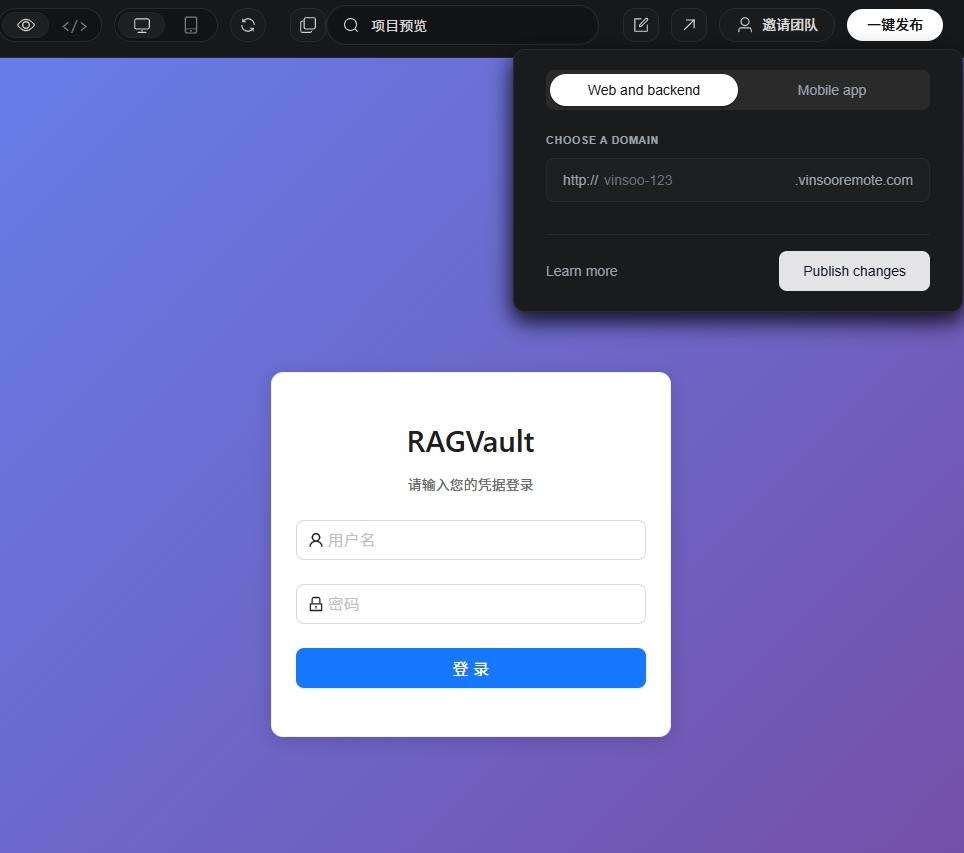
One - click publishing function
Full - time control on mobile devices: Even on a mobile phone, developers can manage AI to complete time - consuming trivial tasks through the cloud asynchronous mode, just like managing a team. They can start projects anytime and anywhere, view the AI development progress in real - time, and keep the code development going in the cloud without being restricted by fixed devices.
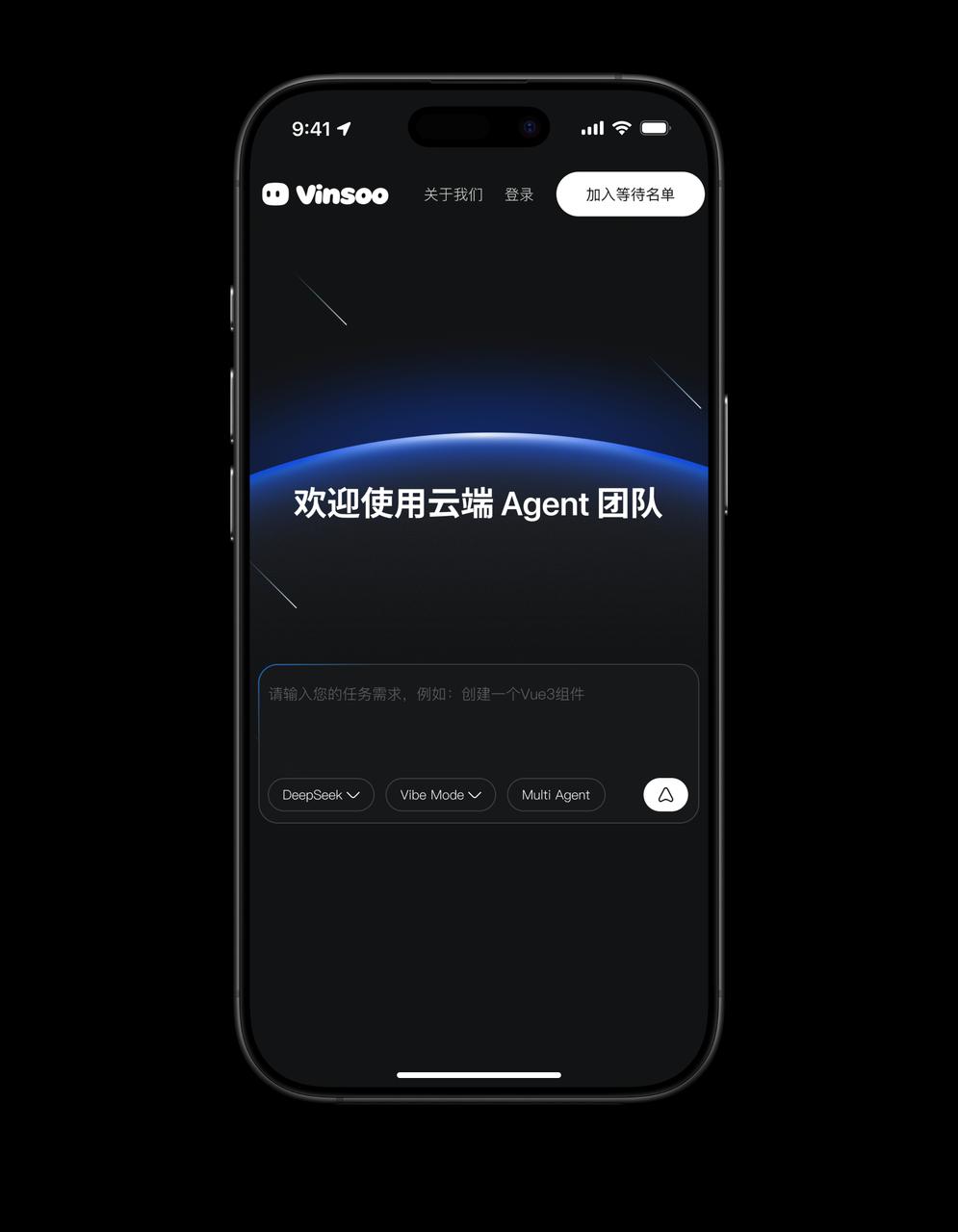
Mobile phone rendering
Evolution of team collaboration: To meet the needs of large - scale creative implementation, Vinsoo has added an invitation - based collaboration function, supporting real - time synchronization of work progress among multiple people. This "AI + human" multi - person collaboration mode allows independent developers to invite partners at any time to jointly promote projects.
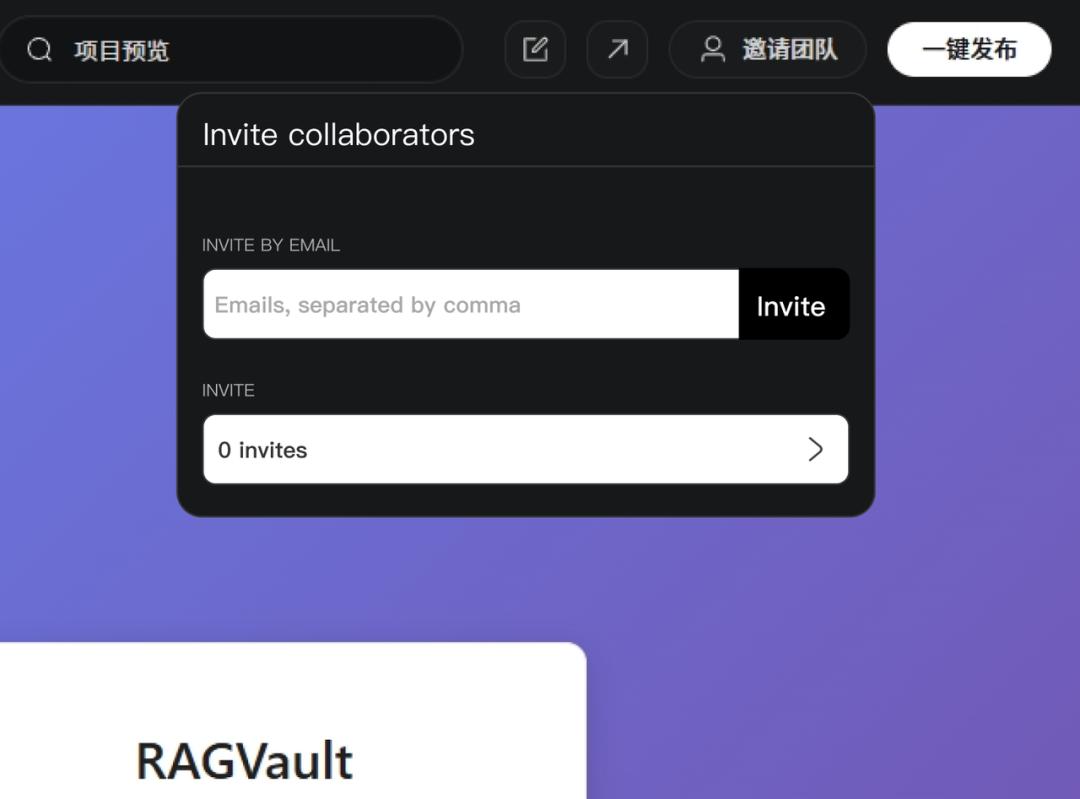
Invite team function
When inputting commands can directly generate a commercially available app, everyone can become a person who changes the world. Therefore, the product form of Vinsoo not only reconstructs code but also reconstructs the boundaries of organizations.
The one - person companies supported by Vinsoo, as a new and highly expandable business species in the AI era, are transforming fragmented individual creativity into production units with standardized delivery capabilities.
A one - person company refers to an individual achieving an independent closed - loop for complex tasks by scheduling highly automated production tools. With the explosive growth of AI agent capabilities, the productivity gap between individuals and organizations is being rapidly narrowed, and more individual super - heroes will emerge in large numbers soon. This echoes the prediction in Gartner's latest strategic trend report: The report states that by 2026, 30% of new global applications will be independently developed by micro - teams of less than 3 people or even individuals. This "Democratization of Expertise" is ending technical barriers, and creativity and aesthetics have become scarce resources.
From this perspective, the value of Vinsoo to the entire industry lies in its construction of an infrastructure that can turn creativity into large - scale profits. In the traditional business logic, economies of scale often depend on the personnel density of the organization. However, in the paradigm defined by Vinsoo, economies of scale depend on the individual's efficiency in scheduling the AI leverage.
III. The Ambition of Post - 00s Polygonal Warriors: Technological Equalization
The team background of Yunsi Intelligence (Vinsoo) is top - notch in the secular sense. The founder, Yin Xiaoyue, graduated from the University of Washington, interned at a top - tier investment bank, and resolutely gave up the admission offer from Brown University, an Ivy League school in the United States. Behind her, the 9 - member core team consists of genius geeks from global top -