Just now, Geoffrey Hinton became the second scientist with over one million citations.
Just now, Geoffrey Hinton officially became the second computer scientist in history whose citations on Google Scholar have exceeded one million.
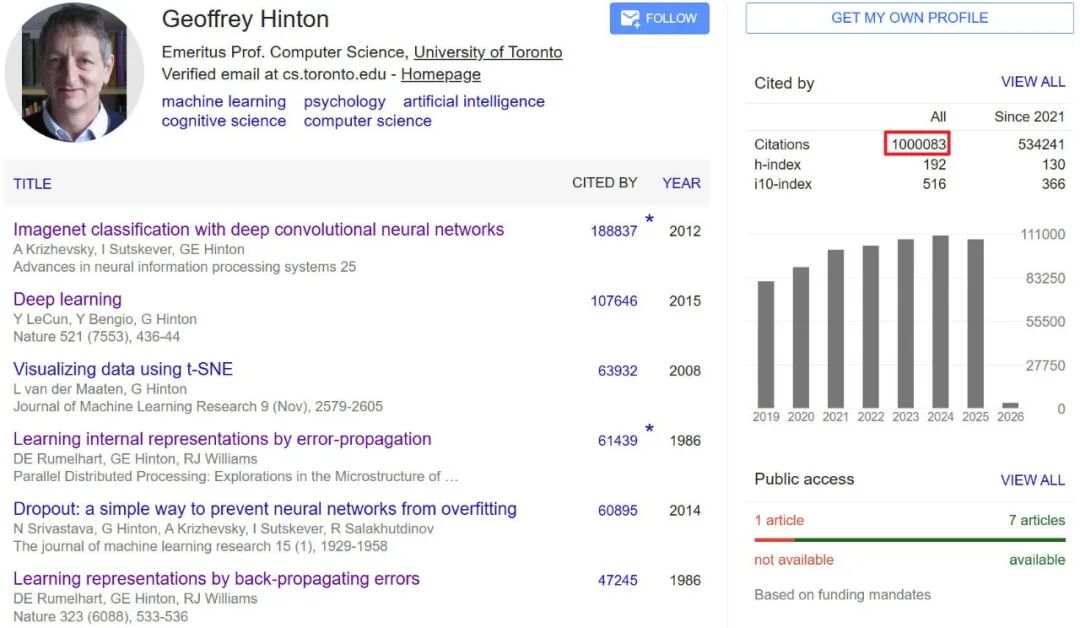
Before him, only his old partner, another "Godfather of Deep Learning," Yoshua Bengio, had achieved this feat. Currently, Hinton's citation count is still growing at an astonishing rate, and each citation represents his indelible contribution to the field of artificial intelligence. From the popularization of the backpropagation algorithm to the stunning debut of AlexNet, from winning the Turing Award to receiving the 2024 Nobel Prize in Physics, Hinton's career is almost a history of modern AI development.
This figure is not only a quantification of academic influence but also the highest tribute to the lifelong persistent exploration of this 78-year-old elder.
Geoffrey Hinton: The "Godfather" from an Academic Family
Childhood
Geoffrey Everest Hinton was born on December 6, 1947, in London, UK, into an academic family. His middle name, "Everest," comes from his great-uncle, George Everest, after whom Mount Everest is named in English. His family is full of luminaries. His great-grandfather is George Boole, the founder of Boolean logic, and his cousin is Joan Hinton (Han Chun), a nuclear physicist who participated in the Manhattan Project.
Being born into such a family means both pressure and glory. Hinton's mother once gave him a gentle yet stern "ultimatum": "Be an academic or be a failure." This high expectation may explain his extreme pursuit of academics later.
His childhood was full of strange and hardcore colors like those in the movie The Royal Tenenbaums. His family kept meerkats, and there were even venomous snakes in a pit in the garage. At the age of eight, Hinton once waved a handkerchief to tease the venomous snakes in the pit. As a result, a snake suddenly lunged at his hand, missing it by just an inch and almost killing him.
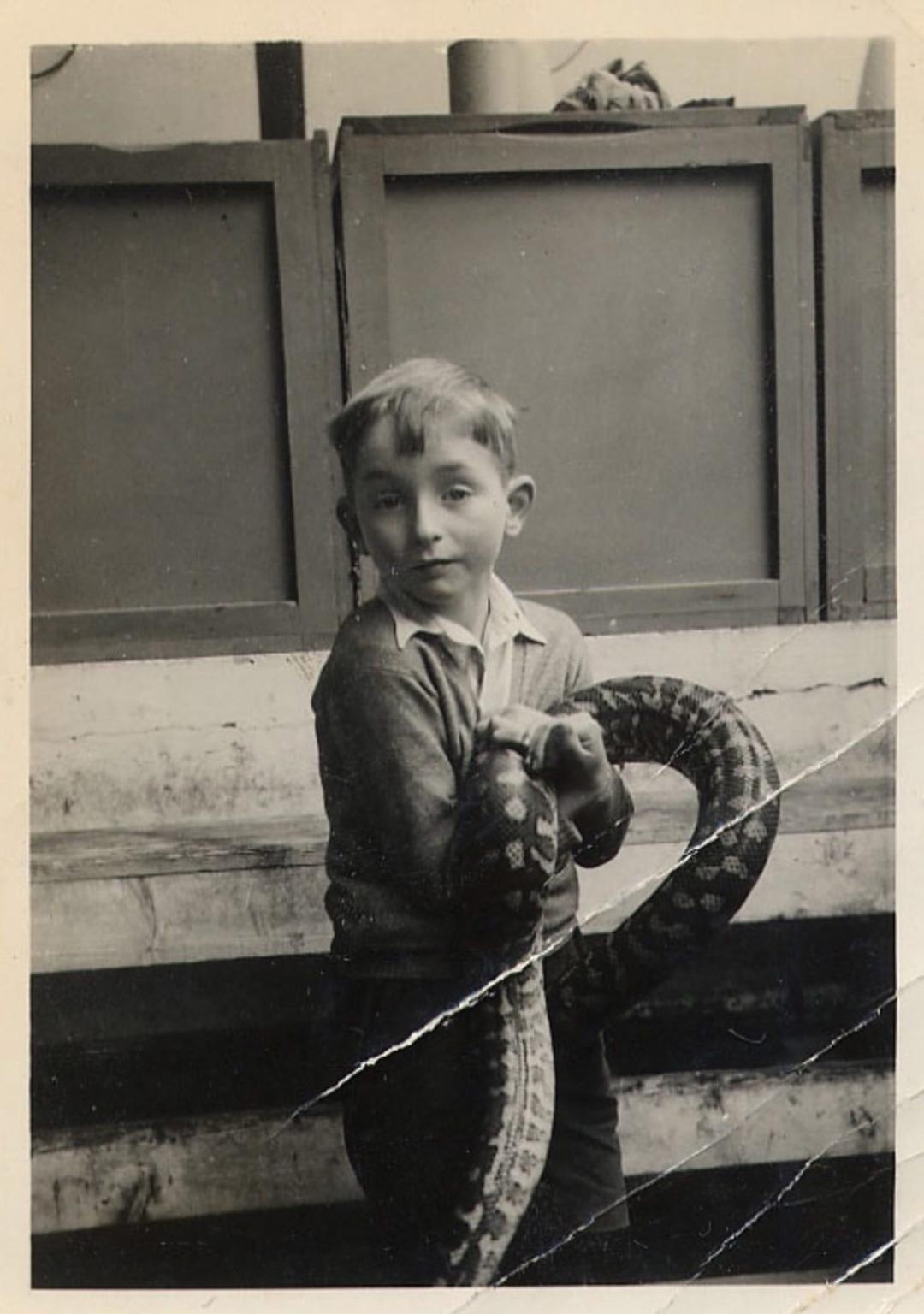
Eight-year-old Hinton hugging a python
The anecdotes of his family even involve Canadian politics. In 1961, when his father visited China, he brought back a dozen Chinese turtles. During the journey, the elder Hinton shared a hotel room with the future Canadian Prime Minister Pierre Trudeau. It is said that the elder Hinton kept all the turtles in the bathtub, leaving Trudeau unable to take a bath.
Academic Journey
However, this genius's academic path was not all smooth sailing, but his curiosity about the essence of the world had sprouted as early as the age of four.
At that time, he noticed a strange phenomenon on a rural bus: when the bus braked suddenly, the coins on the seat did not slide forward due to inertia but, counterintuitively, moved backward. This phenomenon that violated physical common sense puzzled him for a full decade until later he understood that it was the result of the combined effect of the angle of the seat fluff and vibration. In this regard, he once said, "Some people can accept things they don't understand, but I can't. I can't accept that there is something that violates my cognitive model of the world."
This obsession with "understanding how the world works" permeated his academic career. During his time at King's College, Cambridge, he hopped back and forth between physics, philosophy, and psychology. After graduation, in a state of confusion, he even briefly worked as a carpenter. During his pursuit of a doctoral degree, since neural networks were not favored at that time, he once fell into depression and self-doubt.
At a seminar similar to psychotherapy, while others were shouting "I want to be loved" to release their emotions, Hinton held back for a long time and finally roared out his deepest desire: "What I really want is a PhD!" With this stubbornness, he obtained a doctorate in artificial intelligence from the University of Edinburgh, officially starting his long march in the "wilderness" of neural networks.
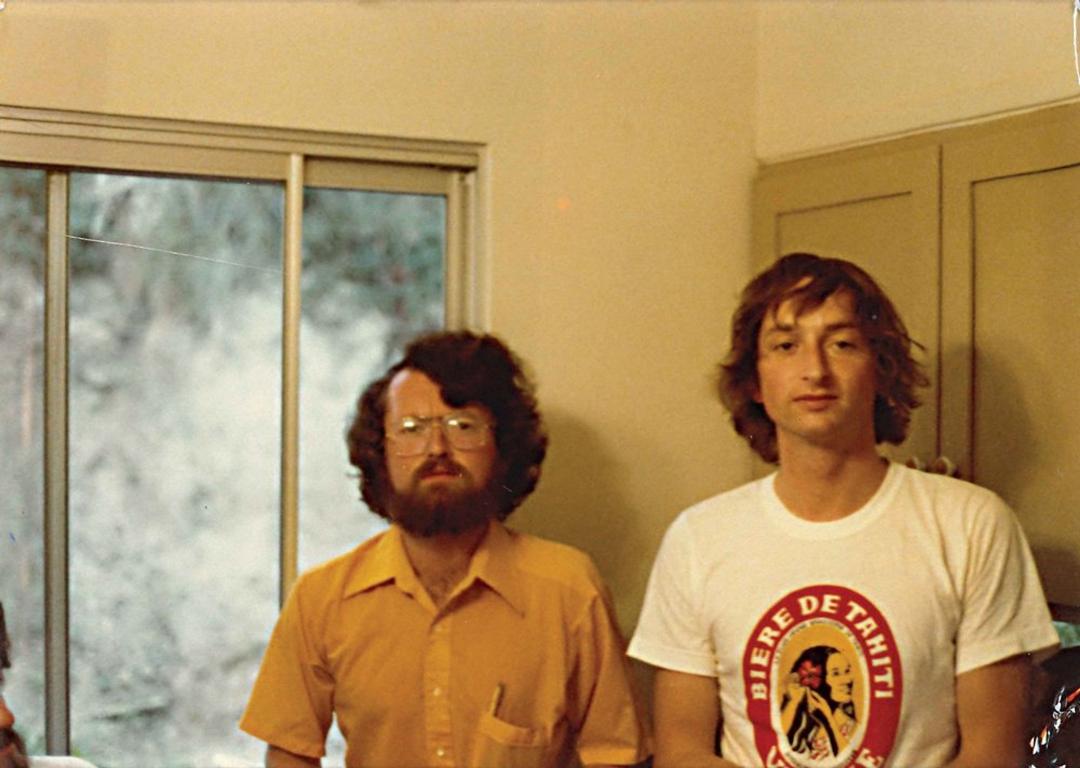
Thirty-one-year-old Hinton with his postdoctoral classmate Chris Riesbeck
Heading North to Canada
In the 1970s and 1980s, when the field of AI was dominated by symbolicism, Hinton was like a lonely outlier. Disappointed with the military funding dominated by the US Department of Defense during the Ronald Reagan era, he made a life-changing decision: to leave the United States and head north to Canada.
Besides political reasons, there is also a little-known warm reason behind this: at that time, he and his wife planned to adopt a pair of children from South America. He didn't want to raise these children in a country that was violently interfering in Latin American affairs at that time. So, he settled at the University of Toronto and worked tirelessly in the "wilderness" of neural networks for decades, which also laid the foundation for Canada to become a global AI hub later.
Academic Achievements
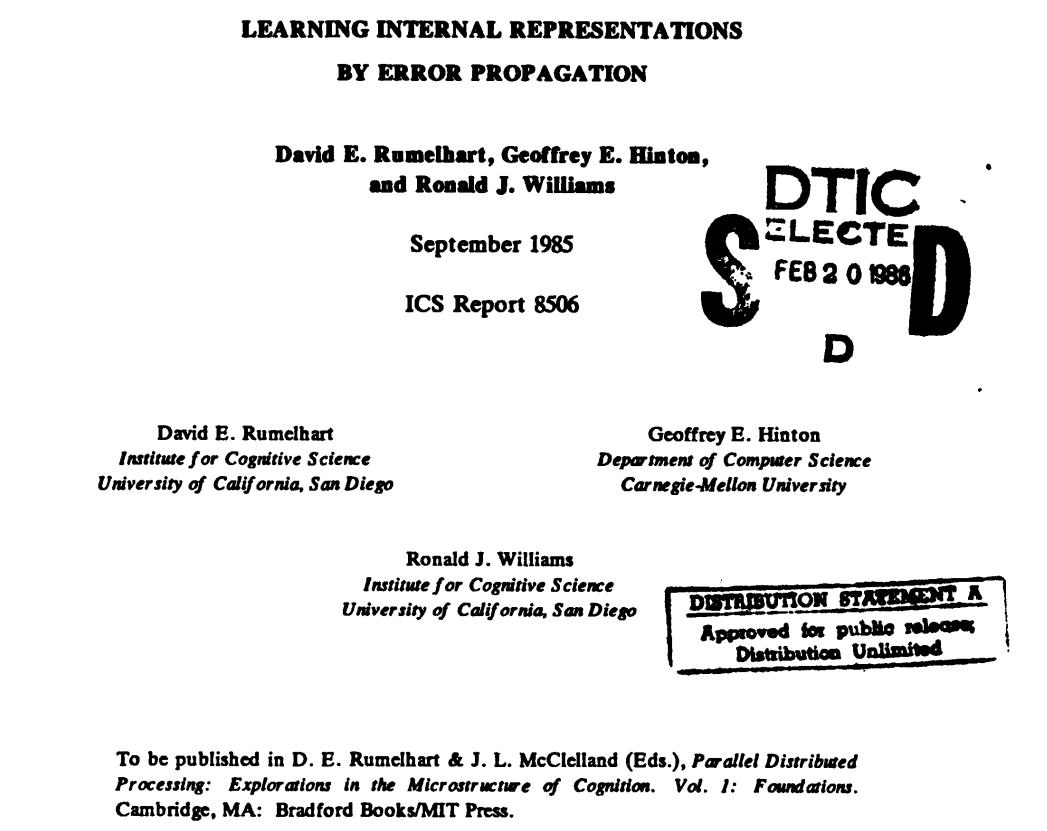
One of Geoffrey Hinton's most famous achievements is co - publishing a paper on Backpropagation with David Rumelhart and Ronald Williams, which solved the training problem of multi - layer neural networks and laid the foundation for the later explosion of deep learning.
But his contributions go far beyond this:
Boltzmann Machine and Restricted Boltzmann Machine (RBM): They laid the foundation for unsupervised learning and feature representation learning and can be used in generative models and pre - training neural networks.
Deep Belief Network (DBN): Proposed in 2006, it effectively trains deep neural networks through a layer - by - layer greedy training method, igniting the spark of the revival of deep learning.
Dropout: A simple and efficient regularization technique that prevents overfitting by randomly "dropping out" neurons and has become a standard practice in training large - scale neural networks.
t - SNE: A high - dimensional data visualization technique used to embed complex data into a low - dimensional space and is widely used to understand deep learning feature representations.
Distributed Representations: It emphasizes the importance of distributed feature encoding in learning systems.
Capsule Networks: It proposes an improvement to the problem of insufficient handling of spatial relationships in convolutional neural networks and enhances feature hierarchy perception through "capsule" representation and dynamic routing mechanisms.
Mixture of Experts (MoE): Multiple sub - networks (experts) work together and are selectively activated by a router, improving model capacity and computational efficiency and becoming an important design idea for large - scale models.
Knowledge Distillation: It proposes to transfer the knowledge of a large and complex model (teacher model) to a small model (student model), reducing computational costs while ensuring performance.
Layer Normalization: A technique that improves the training stability and convergence speed of deep networks and is especially important for natural language processing models.
Deep Generative Models and Probabilistic Graphical Models: It proposed a variety of innovative methods in the field of generative models, laying the theoretical foundation for subsequent variational autoencoders (VAEs) and generative adversarial networks (GANs).
AlexNet and the ImageNet Revolution: He, together with his students Alex Krizhevsky and Ilya Sutskever, launched AlexNet, which won the ImageNet competition by a huge margin. This is widely regarded as the "big bang" moment of the deep learning era, proving the dominance of deep convolutional neural networks with massive data and GPU computing power.
Forward - Forward Algorithm (2022): In the later stage of his career, this is a reflection and challenge to the biological rationality of backpropagation, proposing an alternative learning scheme closer to the human brain's operating mechanism.
In 2018, he, together with Yoshua Bengio and Yann LeCun, won the highest honor in the field of computer science: the Turing Award. These three are often referred to as the "Three Giants of Deep Learning."
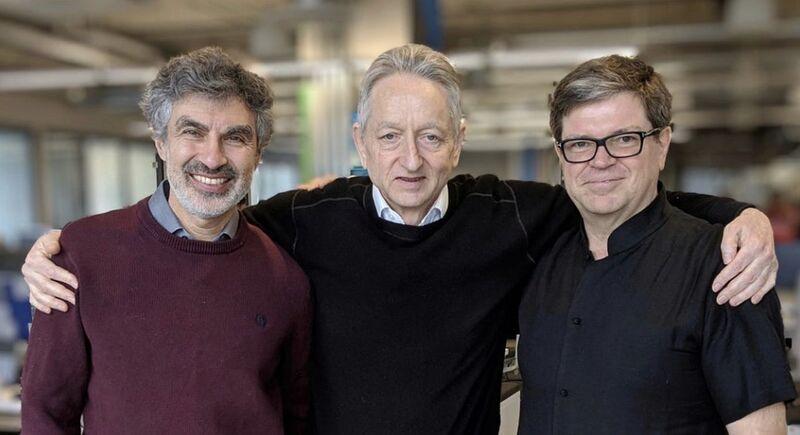
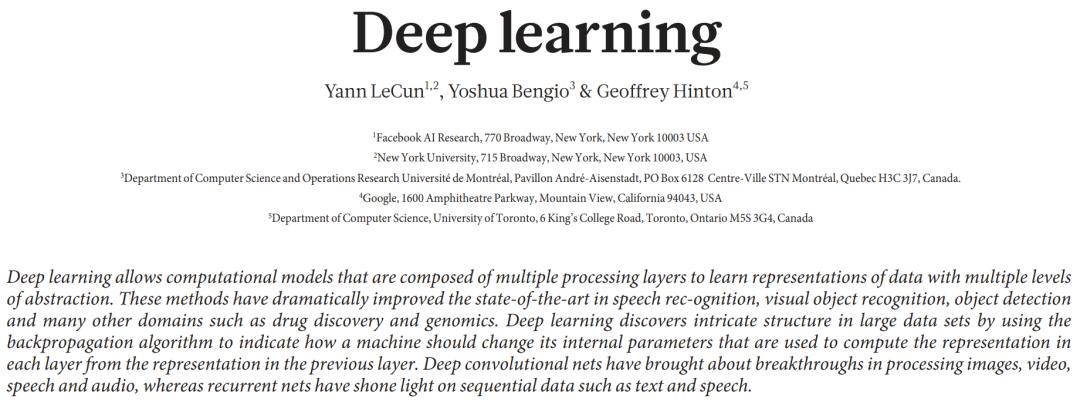
Notably, these three Turing Award winners are also the co - authors of Hinton's second - most - cited paper, Deep learning. This paper was published in Nature in May 2015 and has received more than 100,000 citations in ten years. It systematically summarizes the development history, basic principles, key algorithms (such as multi - layer representation learning, backpropagation, convolutional neural networks, and recurrent neural networks) of deep learning and its wide applications in fields such as speech recognition, visual recognition, object detection, and genomics. It marks the transition of deep learning from academic exploration to application - driven maturity and is widely regarded as a milestone work that promoted the field to the mainstream.
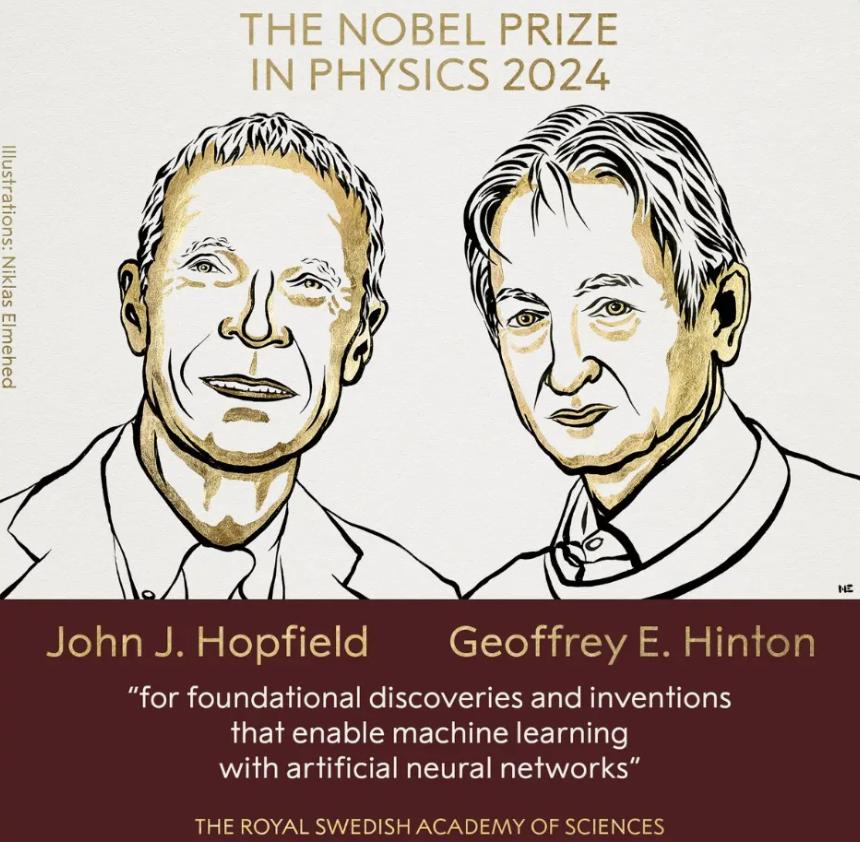
In 2024, Hinton and John Hopfield jointly won the Nobel Prize in Physics in recognition of their "foundational discoveries and inventions in enabling machine learning using artificial neural networks." Refer to the report Just now, the 2024 Nobel Prize in Physics was awarded to Geoffrey Hinton and John Hopfield.
A Calm Warning Voice
However, in his later years, this "Godfather of AI" has not only been a technology preacher but also a calm warning voice.
In May 2023, he left Google, where he had worked for ten years, just to "freely talk about the risks of AI." He once said, "I think I now regret part of my life's work." He is worried that digital intelligence may evolve into a form of intelligence superior to humans and may pose an existential threat to humans due to lack of control. He warned, "If you want to know what it feels like to no longer be the smartest creature at the top of the food chain, ask a chicken."
Alex Krizhevsky and Ilya Sutskever
Among Hinton's vast body of works, the most - cited one is undoubtedly the groundbreaking paper ImageNet classification with deep convolutional neural networks published in NeurIPS in 2012. This paper currently has more than 180,000 citations (possibly second only to the ResNet paper with nearly 300,000 citations and the Transformer paper with more than 200,000 citations). It not only marks the official start of the deep learning era but also made the names of the two co - authors resound: Alex Krizhevsky and Ilya Sutskever.
As two of Hinton's most outstanding students, they jointly opened the door to a new AI world in that laboratory at the University of Toronto.
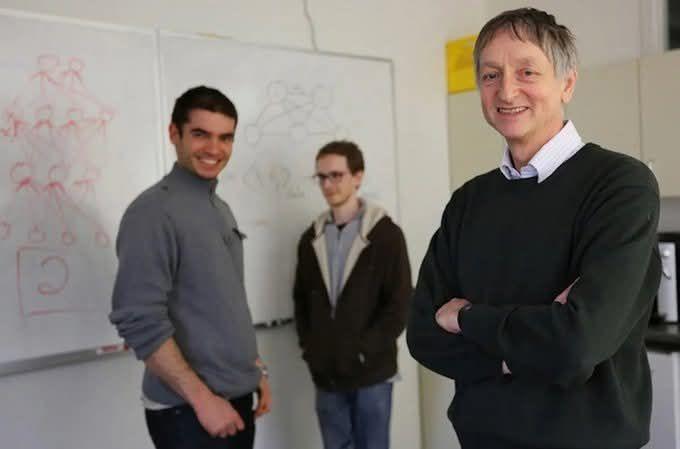
Alex Krizhevsky and Ilya Sutskever are the first and second authors of Hinton's most - cited paper.
Alex Krizhevsky: A Low - Key Hermit Genius
As the first author of that legendary paper, Alex Krizhevsky is the main builder of AlexNet. It was he who wrote the key CUDA code, enabling the neural network to be efficiently trained on two GeForce GPUs. As a result, in the 2012 ImageNet Challenge, it crushed the second - place finisher by an astonishing 10.8%, shocking the world.
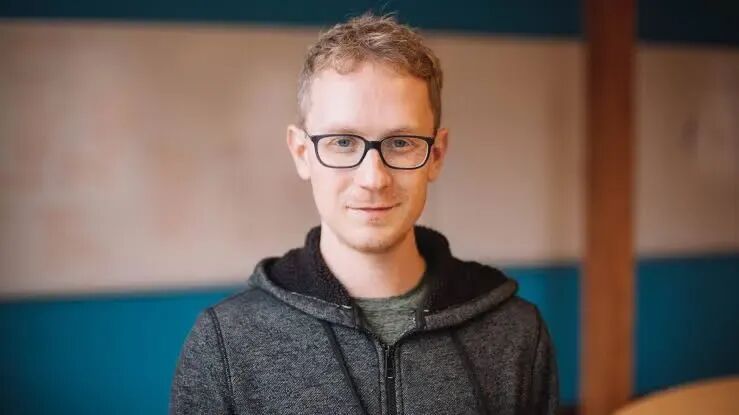
However, in sharp contrast to his great reputation in the academic world is his extremely low - key personality. Alex was born in Ukraine and grew up in Canada. He is described by many peers as a "pure engineer" with deep technical insights. After working at Google for several years, he left in 2017, citing "losing interest in the work" as the reason.
After that, he joined the startup Dessa and then gradually faded out of the public eye. It is reported that he may now be in a semi - retired state, enjoying the pleasure of hiking. In the frenzy of the tech circle chasing fame and fortune, Alex Krizhevsky is like a hermit who leaves after accomplishing his deeds. Although AlexNet has now been replaced by newer models in terms of technology, as a commentator said, "Without him, there would be no ChatGPT today, no convenient 3A games, and no advanced medical image analysis."
Ilya Sutskever: A Persistent AI Visionary
If Alex is a low - key technical genius, then Ilya Sutskever, the second author of the paper, is an AI leader full of a sense of mission.
