Under the shadow of Huawei, SERES' million-unit "coming-of-age ceremony"
The 1 millionth Seres AITO vehicle rolled off the production line.
At the roll-off ceremony, Zhang Xinghai, the chairman of Seres, attributed this achievement to the "cross-border integration" model and specifically thanked its partner, Huawei.
However, Yu Chengdong, a managing director of Huawei and the chairman of the Consumer Business Group, did not attend AITO's "coming-of-age ceremony." Instead, a polite and well-measured congratulatory video was presented while the tech media headlines were dominated by Huawei's "far ahead" achievements.
Five years ago, the cooperation with Huawei brought a turning point for Seres. This Chongqing-based automaker, which was once struggling for survival, has transformed into a capital star in the new energy vehicle field. The hot sales of models like the AITO M9 have enabled it to turn losses into profits, with its market value exceeding 200 billion yuan.
However, as Huawei's circle of cooperation in the automotive field expanded from one brand to five, the allure of Seres' capital story has diminished. As a result, Seres has to move from a relatively passive position to become more independent.
Self-research and overseas expansion are the two major strategies for Seres to reduce its dependence on Huawei. These are also the main uses of the funds raised from its Hong Kong IPO in November last year. However, the continuous decline in its stock price is a silent referendum from the market.
Huawei's increasing diversification in partnerships, combined with Seres' under - expected performance, has led many investment institutions to lower their profit forecasts for Seres in the next 2 - 3 years. Citigroup even asserted in its report that "Seres' golden product cycle is coming to an end."
Contract Manufacturing for Huawei: A Soaring Stock Price
Before entrusting the "soul" of its vehicles to Huawei, Seres faced repeated setbacks in its new energy transformation and suffered losses for two consecutive years.
In 2020, only 732 units of its strategic model, the SF5, were sold, resulting in a net loss of 1.73 billion yuan. This wiped out all the profits earned from selling traditional fuel vehicles in the past five years, and its stock price dropped to a low of 7.2 yuan.
Huawei's automotive business was also facing difficulties. Xu Zhijun, the rotating chairman of Huawei, led the company to establish cooperation with BAIC and Changan under the HI (Huawei Insight) model, where Huawei provided a full - stack intelligent vehicle solution as a supplier. However, the projects faced numerous obstacles, and the sales volume of the models after their launch did not meet expectations. As the business advanced sluggishly, this approach gradually came under pressure within Huawei.
At the end of 2020, Huawei transferred its automotive BU from the ICT Business Management Committee led by Xu Zhijun to the Consumer Business Management Committee led by Yu Chengdong. It also reorganized the Investment Review Board (IRB) for intelligent terminals and intelligent vehicle components and appointed Yu Chengdong as the new director of the IRB. In May 2021, Yu Chengdong also concurrently served as the CEO of the automotive BU, taking full charge of the automotive business.
After Yu Chengdong took charge of Huawei's automotive BU, he promoted the "Smart Selection" model, which involved in - depth cooperation with automakers. In this model, Huawei was deeply involved in the entire process of product definition, design, R & D, manufacturing, and marketing, aiming to "help automakers build and sell good cars."
At that time, some automakers were arrogant and only regarded Huawei as a supplier. Others were generally afraid of Huawei, worried that they would become mere contract manufacturers for Huawei.
Seres, which was in a critical situation, accepted the olive branch extended by Yu Chengdong. With the strong support of Chairman Zhang Xinghai, Seres actively handed over the decision - making power to Huawei, developed products according to Huawei's requirements, and strived to improve its R & D and manufacturing capabilities. This led to the birth of the joint brand, AITO.
At the end of 2021, the AITO M5 made a grand appearance at Huawei's autumn product launch. Yu Chengdong described it as a "smart terminal on wheels."
Before that, Huawei had installed its DriveONE three - in - one motor, HiCar in - car system, and HUAWEI SOUND audio system in the "Huawei Smart Selection Edition" of the Seres SF5 and sold it through its offline channels. The M5 was an upgraded version of the SF5, with additional features such as Huawei's HarmonyOS cockpit, AR - HUD, and cameras.
In mid - 2022, AITO launched its second model, the M7, a six - seat extended - range SUV developed to compete with the Li ONE.
After the launch of these three models, neither the sales volume nor the public reception was satisfactory. However, Huawei deepened its understanding of vehicle manufacturing, and Seres continuously improved its product R & D, manufacturing, and supply - chain management capabilities under Huawei's guidance.
The capital market reacted more strongly than the consumer market. After the news of their cooperation spread in November 2020, Seres' stock price hit the daily limit seven times in eight trading days, with a 150% increase in one month. After the SF5 was launched, Seres' stock price more than tripled in three months.
By June 2021, Seres' market value had risen from less than 10 billion yuan to over 100 billion yuan.
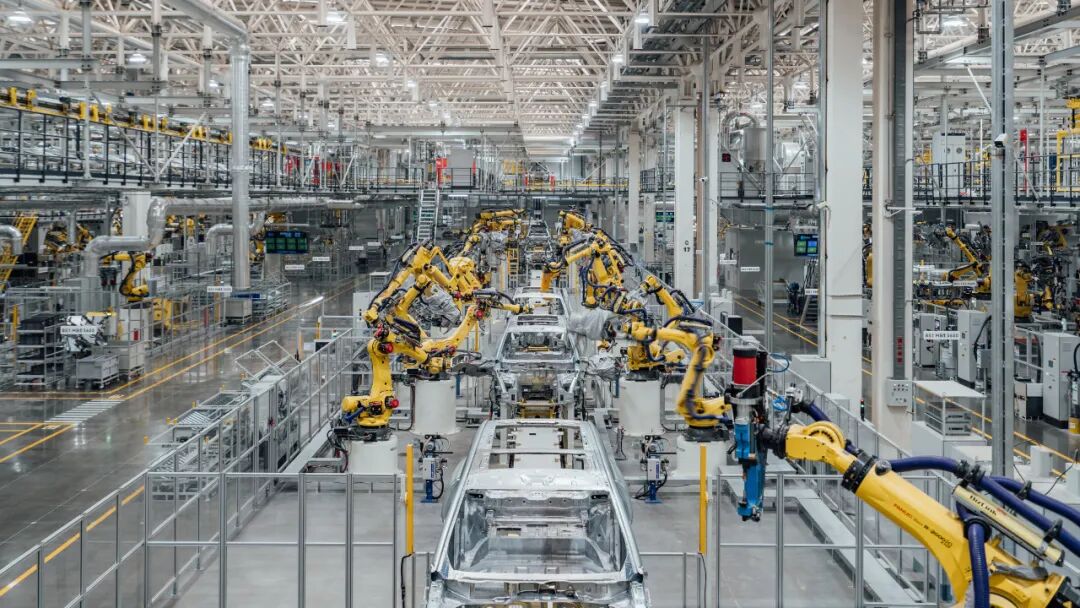
Seres Super Factory
A Difficult Turnaround
Contract manufacturing for Huawei allowed Seres to achieve a remarkable rise in the capital market, but it also tied its fate closely to Huawei.
After its market value exceeded 100 billion yuan, Seres' stock price failed to remain stable. Due to the mediocre market response to the first two models and the emerging doubts about the contract - manufacturing model and the so - called "Huawei concept bubble," its stock price started to decline from its peak, dropping below 33 yuan in April 2022. The launch of the AITO M7 led to a brief rebound in the stock price, but the monthly delivery volume of a few thousand units was clearly insufficient to support the market value.
In 2023, Tesla initiated a price war, and the entire industry became highly competitive. Li Auto launched the L9 and L8 successively, directly impacting the AITO M7. In the first half of the year, only 28,000 AITO vehicles were sold, with an average monthly sales volume of less than 4,000 units. In the same period, Li Auto delivered 139,000 vehicles, a year - on - year increase of 130%.
Seres, which didn't sell many cars, also didn't make money. From 2020 to 2022, Seres suffered continuous losses of 1.729 billion yuan, 1.824 billion yuan, and 3.832 billion yuan respectively.
An even greater negative factor was yet to come. In April 2023, Huawei officially announced its cooperation with Chery to launch the "Luxeed" brand. Rumors about its cooperation with BAIC and Jianghuai also circulated in the market.
In the foreseeable future, multiple brands will compete with AITO for Huawei's internal resources, technology, and user attention. The market believes that Seres' growth ceiling and profit margins will be limited by this internal competition, and it will lose its high - end scarcity premium. Some even think that Seres' "moat" has been filled.
This pushed Seres' stock price into a downward trend, with a cumulative decline of more than 70% in less than a year.
However, a turning point unexpectedly emerged. In September 2023, Huawei's 5G chips broke through the blockade, and its flagship phones, the Mate 60 Pro+ and the foldable Mate X5, were pre - released. The story of Huawei's "strong comeback" ignited the market sentiment. Meanwhile, the new AITO M7 was relaunched with a strategy of "price cuts and feature upgrades" and quickly became a best - seller, receiving 50,000 large - order bookings in 25 days. Yu Chengdong described this difficult turnaround as "bringing the dying back to life."
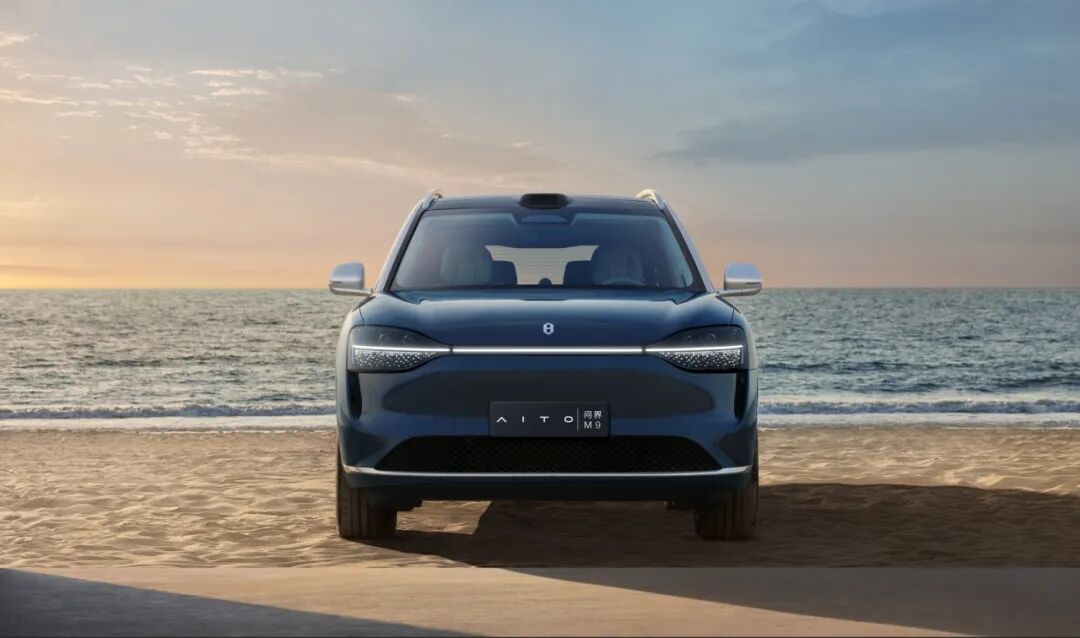
Subsequently, the luxury flagship SUV, the AITO M9, which was launched at the end of the year, brought even greater surprises. This vehicle was equipped with all the mass - producible technologies of Huawei's automotive BU at that time and was described by Yu Chengdong as "the best SUV under 10 million yuan." After its launch, its monthly sales volume quickly exceeded 10,000 units and remained between 10,000 and 20,000 units for a long time. It not only became the best - selling AITO model, surpassing the M7, but also the most popular new energy vehicle in the 500,000 - yuan price range at that time.
Seres' stock price rebounded accordingly. Due to the significant short - term increase, Seres had to issue a trading risk notice to warn investors: since August 28, 2023, the company's stock price has increased by 110.42% in total, while the Shenwan Auto Index increased by 7.28% and the Shanghai Composite Index increased by 0.36% in the same period. The short - term increase in the stock price is higher than that of the industry and the Shanghai Composite Index, indicating a risk of over - heated market sentiment.
AITO M9
Investing in Yinwang and Acquiring the AITO Trademark
The hot sales of the new AITO M7 and M9 restored the market's confidence in Seres. However, concerns about the internal competition within Huawei's automotive cooperation circle have never completely disappeared, which has become the main pressure source for the subsequent fluctuations of its stock price at a high level.
In November 2023, Huawei officially announced the upgrade of the "Smart Selection Vehicle" model to the "HarmonyOS Smart Mobility" model. It replicated the cooperation model with Seres to Chery, BAIC, Jianghuai, and SAIC, forming five major brands: AITO, Luxeed, Enjoy, Honor, and Shangjie.
Zhang Xinghai responded generously, saying, "It's a good thing that Huawei's circle of cooperation is expanding. Only in this way can the influence truly explode." However, the market was not convinced.
The conflict between the two technology routes within Huawei further intensified this contradiction. While Yu Chengdong was vigorously promoting the Smart Selection model, Xu Zhijun, the rotating chairman of Huawei, pushed for the spin - off of the automotive BU and introduced Changan Automobile as a shareholder of the joint - venture company.
At the end of November, Changan Automobile announced that it had signed an "Investment Cooperation Memorandum" with Huawei. Huawei would establish a new company (later named "Yinwang") and inject the core assets and personnel of the automotive BU into it. Changan Automobile would invest in the company, with a shareholding ratio of no more than 40%.
On the night when the news was released, Seres urgently issued a statement, saying that it had also received an invitation to invest in the target company and was actively evaluating the investment. It also emphasized that its cooperation with Huawei would not be affected, and Seres remained "the vehicle manufacturer with the deepest, broadest, and largest - scale cooperation with Huawei's automotive BU."
This statement failed to dispel the market's doubts. On November 27, Seres' stock price dropped by 8.7%, while Changan Automobile's stock price hit the daily limit.
As a firm supporter of the HI model, Changan Automobile jointly launched the high - end brand "Avatr" with Huawei and CATL as early as 2021. As of 2023, the total delivery volume of Avatr was about 28,000 units. Zhu Huarong, the chairman of Changan Automobile, publicly questioned the Smart Selection model led by Yu Chengdong on multiple occasions, saying that it did not conform to the laws of the automotive industry, national industrial policies, and consumer rights protection. He also implicitly criticized Yu Chengdong's aggressive promotion, saying, "If you are ahead, just be ahead, but be moderate," and "Don't claim a car worth hundreds of thousands of yuan to be worth tens of millions!"
At the beginning of its investment in the automotive BU, Changan Automobile sought greater decision - making power. At the partner conference in early 2024, Zhu Huarong used the metaphor of "two monks carry water to drink, but three monks have no water to drink," which was interpreted by the outside world as an opposition to Huawei's close cooperation with Seres and other automakers. It was seen as an attempt to get Huawei to allocate more resources to Changan rather than its competitors.
Facing the pressure, Seres did not sit idle. It was raising funds to invest in Yinwang while actively engaging in negotiations with various parties.
The hot sales of the high - end AITO M9 broke the tense situation. It not only helped Seres turn losses into profits in the first quarter of 2024 but also enabled Huawei's automotive BU to achieve profitability for the first time, greatly increasing Huawei's bargaining power in the joint - venture negotiations.
A person close to the automotive BU once told "Yunjian Insight" that Huawei initially planned to spin off the automotive BU to stop losses and quickly recover funds for new R & D. When the automotive BU started to make profits and generate billions of cash flow per month, Huawei began to reconsider that maintaining its dominant position in the joint - venture company was more in line with its overall interests.
In August 2024, the first - round investment plan for Yinwang was finally finalized. Changan and Seres each invested 11.5 billion yuan and obtained 10% of the shares in Yinwang, with Huawei holding 80%. After that, a person close to the deal said that Huawei did not continue to promote further financing.
While spinning off the automotive BU, Huawei also transferred the trademarks of "AITO," "Enjoy," and "Luxeed" to the partner automakers under the Smart Selection model. The trademark of "AITO" was valued at 2.5 billion yuan. At a subsequent media event, Yu Chengdong couldn't hide his regret when talking about this move, saying that the trademark transfer was required by national laws and regulations, and the brand owner and the manufacturer must be the same entity. "We have invested a lot in AITO, and this brand is worth at least over 10 billion yuan."
Although the investment in Yinwang and the acquisition of the AITO trademark were mainly promoted by Huawei, they ultimately became two major benefits for Seres. Seres transformed from a contract manufacturer for Huawei and a customer of the automotive BU to a shareholder of Yinwang and the legal owner of the AITO brand. This ensured a stable supply of technology and also retained a certain degree of decision - making power in Yinwang.
This move also dispelled the market's concerns for a period of time. On September 30, Seres' stock price rose significantly by 7.6%, and its market value increased to 279.8 billion yuan. In that year, Seres also achieved an overall profit turnaround, with a net profit of about 5.95 billion yuan.
New Challenges
Although Seres is trying its best to strengthen its alliance with Huawei, the launch of the "Five Brands" is like an invisible hourglass, urging Seres to become more independent at a faster pace.
In 2024, Seres' R & D expenses tripled, and it maintained a high - level investment in 2025. In November 2025, Seres raised more than 10 billion Hong Kong dollars through its Hong Kong IPO, and 70% of the funds were planned to be used for R & D, covering areas such as the Magic Cube platform, intelligent cockpits, assisted driving, and power systems - which are also the areas of Huawei's automotive business.
Meanwhile, Seres is also promoting cooperation with ByteDance on in - car large models, and its subsidiary has signed a cooperation agreement with Volcengine on embodied intelligence.
Overseas expansion is also progressing in parallel. According to a UBS report, Seres plans to achieve a sales target of 1 million vehicles in 2028, with