2026 automakers' sales targets revealed: The divergence between the "conservative" and "aggressive" approaches
In 2025, the Chinese automotive market came to an end with the keynote of "slowing growth in the incremental market and fierce competition in the stock market". According to the data from the Passenger Car Association, the annual sales volume of new energy narrow - sense passenger cars reached 12.809 million, a year - on - year increase of 17.6%. The export market also continued to be a highlight of growth. However, the differentiation within the industry has become more and more significant. Some automakers exceeded their annual targets and took the lead with their new energy and globalization layouts, while others failed to meet their expectations and were in a passive position in product iteration and cost control.
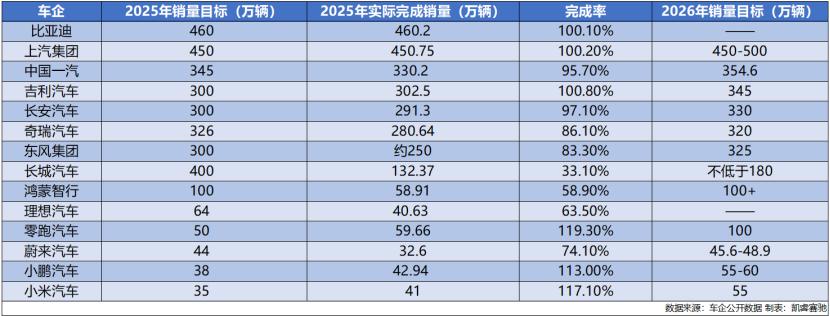
This differentiation is not only reflected in the performance reports of 2025 but also directly mapped to the setting of sales targets in 2026. Entering 2026, many mainstream automakers have successively announced their annual plans. Traditional automotive groups generally choose the path of "steady growth", taking new energy transformation and overseas expansion as the core measures. New - force automakers and technology companies entering the industry across sectors, relying on the high - speed delivery momentum in 2025, have set aggressive targets far exceeding the industry's average growth rate. On the surface, it is a difference in a set of numbers. In fact, it is the automakers' judgment of market trends, calibration of their own strategies, and response to the accelerating elimination competition in the industry. Against the backdrop of the China Association of Automobile Manufacturers' prediction that the retail sales of domestic passenger cars will only grow by 1% in 2026 and the penetration rate of new energy vehicles will reach 61%, these targets also indicate the start of a new round of industry integration and strategic game.
Target Differentiation: The "Stability" of Traditional Automakers and the "Advancement" of New - Force Automakers
In 2025, the structural transformation of the Chinese automotive market continued to deepen. The retail penetration rate of the new energy market exceeded 50% for six consecutive months. The industry's competitive landscape has shifted from a simple price war to a comprehensive competition in technology, products, and globalization capabilities. Against this background, there is a sharp contrast between the new - force automakers and traditional independent automakers in setting their sales targets for 2026. New - force automakers such as Leapmotor, NIO, and Xiaomi generally prioritize "scale expansion", with their target growth rates far exceeding the industry average. Traditional independent automakers such as Geely, Changan, and Chery emphasize "seeking progress while maintaining stability", with relatively restrained target growth rates.
This differentiated target setting stems from the differences in the target completion rates of each automaker in 2025. Take Geely as an example. In 2025, its total sales volume reached 3.025 million, exceeding the annual target of 3 million, a year - on - year increase of 39%. Among them, the sales volume of new energy vehicles was 1.6878 million, a year - on - year surge of 90%. This outstanding performance enabled Geely to further raise its sales target to 3.45 million in 2026, a year - on - year increase of 14%. In contrast, Chery's actual sales volume in 2025 was 2.806 million, still falling short of the target of 3.26 million, with a completion rate of only 86.1%. Based on this reality, Chery adjusted its target slightly to 3.2 million in 2026, a year - on - year increase of 14%. While maintaining stability, it plans to narrow the gap by increasing investment in new energy and intelligence.
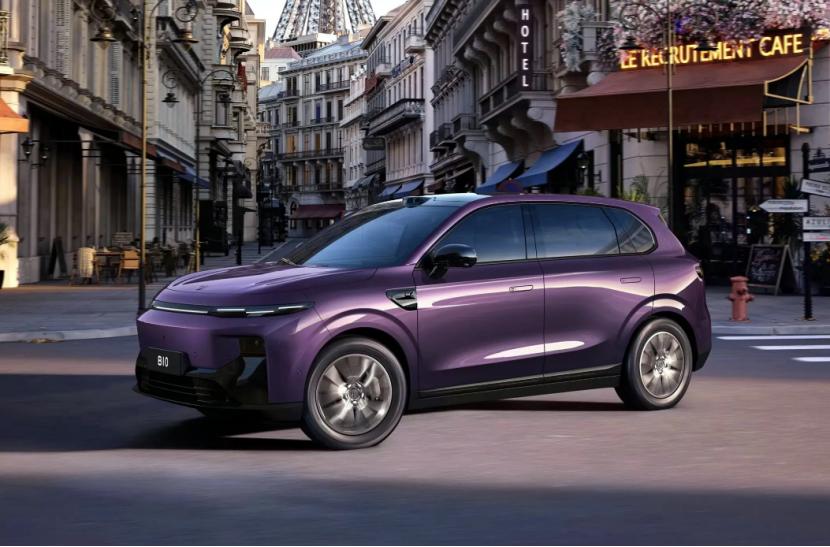
Behind the aggressive targets of new - force automakers lies both the practical demand for economies of scale and the pressure of the investment - return cycle of the sales channel and energy - replenishment system. Leapmotor sold 596,600 vehicles in 2025, a year - on - year increase of 103%, exceeding the target of 500,000 and becoming the sales champion among new - force automakers. Based on this, Leapmotor set its sales target for 2026 at 1 million, corresponding to a year - on - year increase of 67.5%, making it the most "aggressive" one among new - force automakers. It is worth noting that Leapmotor's overseas layout and production capacity arrangement are regarded as important supports for its goal of hitting one - million sales, including accelerating the planning of overseas sales networks and local production through partners. Similarly, Xiaomi Automobile exceeded the target of 350,000 in 2025, with actual deliveries exceeding 410,000. Based on this, it set its target for 2026 at 550,000, corresponding to a 34% increase.
In contrast, NIO delivered 326,000 vehicles in 2025, failing to reach the established target of 440,000. However, its sales volume in the fourth quarter of 2025 had increased significantly. NIO set its sales target for 2026 at 456,000 - 489,000, corresponding to a 40% - 50% increase, reflecting a rational positioning of "stable growth rate range". Li Bin, the founder of NIO, said that with the launch of new products such as the new ES8 and LeDao, NIO is expected to achieve profitability in the fourth quarter of 2025, thus supporting the sales target in 2026.
Structural Optimization under Steady Growth and Survival Anxiety in the Scale Rush
The differentiation of automakers' sales targets in 2026 is essentially a strategic response of different camps to industry trends. The "stability" of traditional automakers is to balance "growth" and "profitability" in the stock market, seeking incremental growth through new energy transformation and overseas expansion. The "advancement" of new - force automakers is to exchange "scale" for "time" in the elimination competition, trying to build competitive barriers through rapid expansion.
The "steady growth" of traditional automakers is not conservative but based on the judgment of the industry cycle, prioritizing "structural optimization". From the perspective of the core strategy, the new energy business and the overseas market are the two key engines. This is not only a continuation of the growth highlights in 2025 but also an inevitable choice to cope with the slight growth in 2026. In 2025, the new energy business of traditional automakers has shown strong potential: Geely's new energy business increased by 90% year - on - year, Chery's by 54.9%, and Changan's by 26.2%. These data make new energy a "battleground" in 2026.
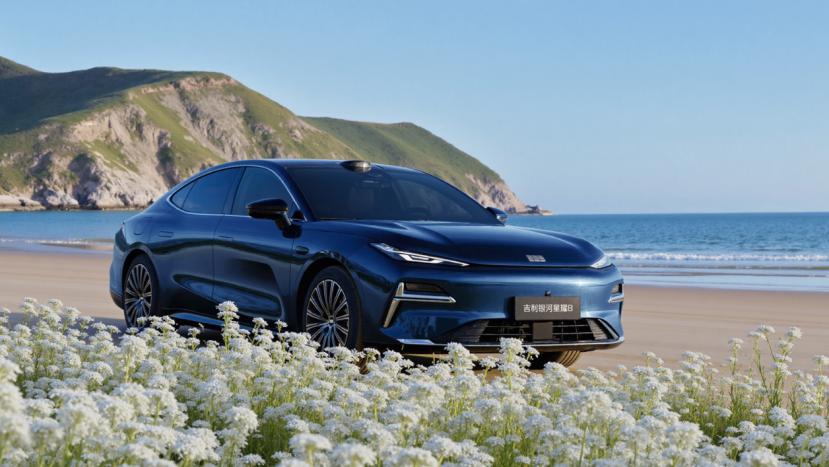
Geely plans to increase the penetration rate of new energy vehicles to over 64% in 2026. Changan has raised its new energy target to 1.4 million. Chery will strengthen its new energy product matrix with 17 new models, all trying to seize more market share under the background of the 61% industry penetration rate through electrification transformation. At the same time, the overseas market has become the "second growth curve" for traditional automakers. In 2025, Geely exported 420,100 vehicles, Changan exported 639,000 vehicles, and BYD's overseas sales even entered the "one - million - vehicle club". These achievements give more confidence to the overseas targets in 2026 - Geely plans to increase its overseas sales by over 50% year - on - year, Changan aims for one million vehicles, and BYD targets 1.5 million - 1.6 million vehicles.
More importantly, the overseas layout of traditional automakers has shifted from "product export" to "ecological rooting": BYD is building a battery factory in Hungary to support its European vehicle production base; Changan is deploying a new energy vehicle factory in Thailand; Geely is building a full - chain local system of "R & D, production, sales, supply, and service" through the establishment of factories in Brazil and Indonesia. This transformation can not only reduce logistics costs and avoid trade barriers but also increase brand premium through technology output. For example, the gross profit margin of BYD's overseas business has reached 28%, far exceeding the domestic average.
In addition, traditional automakers have significantly increased their emphasis on "profitability", which is particularly evident in Great Wall Motors' target adjustment. In 2026, Great Wall will set its net profit target at no less than 10 billion yuan, and its sales target will be lowered to 1.8 million. This "profit - first" strategy shows that traditional automakers have become vigilant about the "scale trap".
Against the backdrop of increasing inventory - reduction pressure and the possible recurrence of price wars in the automotive market in 2026, blindly pursuing sales volume may lead to the compression of profit margins. Therefore, companies such as Geely, Changan, and Chery all imply the logic of "structural upgrading" in their target setting - by increasing the sales proportion of their high - end brands, they can improve the overall profitability. For example, Geely aims to sell 300,000 Zeekr vehicles and 400,000 Lynk & Co vehicles in 2026, with the combined proportion exceeding 20%. It tries to balance the cost pressure of new energy transformation through product - structure optimization.
The "scale rush" of new - force automakers and technology companies stems from their anxiety about the "survival window". Against the backdrop of the accelerating elimination competition in the industry, economies of scale are the key to reducing costs, improving cash flow, and attracting capital. Leapmotor's full - domain self - developed technology needs a scale of one million vehicles to achieve profitability; Xiaomi's smart - car business needs to cover multiple models to improve production - capacity utilization and get rid of the "single - hit - product dependence"; Hongmeng Zhixing needs one - million - level sales to share the R & D costs of Huawei's ADS4.0. Therefore, the aggressive targets of these companies are essentially a strategic choice of "exchanging scale for survival".
From an industry perspective, market concentration will further increase. The total target of leading automakers (both traditional and new - force) in 2026 has exceeded 18 million. According to the Passenger Car Association's forecast of 24 million retail sales, leading enterprises will account for nearly 75% of the market share, far exceeding the level in 2025. Small and medium - sized automakers will face further compression of their survival space due to capital shortages and technological backwardness. JPMorgan Chase predicts that China's auto sales may decline by 3% - 5% in 2026, and this background may also accelerate industry integration. Some companies may face the risk of being acquired or exiting the market. At the same time, the competition between traditional automakers and new - force automakers has upgraded from the comparison of single models to the ecological competition of "battery + intelligent driving + cockpit + supply chain". These technological layouts are not only to support sales targets but also to gain the right to speak in long - term competition.
Picture sources: Leapmotor, BYD, Geely Automobile
This article is from the WeChat official account "Automotive Market Insights", author: Yang Shuo. Republished by 36Kr with permission.