爆火3天、被投资人追捧,「死了么」正式出海
On January 10th, a paid app named "Demumu" (initially priced at $1, now raised to $8, and around $1 in overseas markets) topped the iOS paid download chart and has held the top spot for 3 days. According to Diandian Data, on January 10th and 11th, the global downloads of "Demumu" were 2,289 and 2,279 respectively. However, according to the founder, this number is greatly underestimated. He revealed that the current daily new users are 500 times that before the app went viral.
After going viral for 3 days, the product announced that its name in both domestic and overseas markets would be unified to "Demumu". Apparently, the original Chinese name "Sileme" was a reference to "Eleme". According to media interpretations, the new English name "Demumu" might be a combination of "Death + Labubu", leveraging the high influence of "Labubu" overseas.
Amid a plethora of similar apps,
Three post - 95s "Favored" by Luck
"Demumu" was initially launched in June 2025 for free and later switched to a paid - download model. Its interface and functions are quite simple. When users first open the app, they need to enter their names and the email addresses of their emergency contacts, and then simply click the green button to check in every day. The service purpose is clear: to prove that one is still alive. If a user fails to check in for two consecutive days, the system will send a rescue email to the emergency contact in the user's name.
Choosing email might be to avoid the compliance requirements of SMS or WeChat. To be honest, considering how often I check my email, if my friend sent a rescue message this way, they might be long gone...
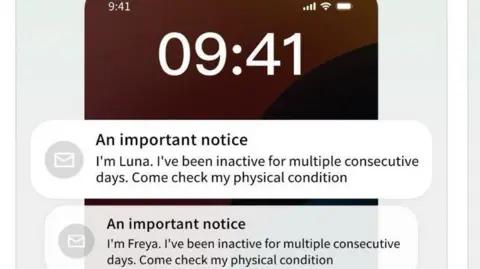
The founder revealed that the team consists of three people, all working part - time and remotely. The development cost of the product is about $200. However, "Demumu" became popular half a year after its launch. In fact, by that time, there were already many similar products on the market, including some apps with more mature designs. After "Demumu" went viral, similar abstract competing products flooded the market.
Only "Demumu" was favored by traffic and investors. Rather than having any outstanding product features, it was more due to its attention - grabbing name and the huge traffic suddenly brought by being mentioned on Xiaohongshu. Beyond the team's execution ability, other success factors are full of contingency.
For example, the name "Demumu" might have originated from another developer. According to available information on a WeChat official account, the developer of the WeChat official account "Biscuit Brother AGI" came up with the idea and completed the product naming and prototype design in March 2025 but didn't launch it. Netizens mocked him for missing out on 10 million.
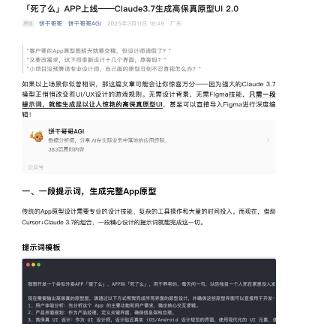
Biscuit Brother AGI wrote an article in March 2025, sharing this app as a development case.
The developer self - mocked that he ultimately failed to understand this abstract world. However, the "Demumu" team actually launched the app and achieved the above - mentioned results.
It has to be said that behind the success, apart from the team's strong execution ability, there are also other inevitable factors - real social dilemmas.
Random traffic, real needs,
The same world, the same anxiety
In the past few decades, the average size of Chinese families has shrunk significantly. According to the 2020 national population census, 25.4% of all households in China are single - person households, far higher than the 14.5% a decade ago. Although elderly people living alone obviously have a greater need for this "proving one is still alive" service, data shows that the number of young people living alone in first - and second - tier cities is also rising rapidly.
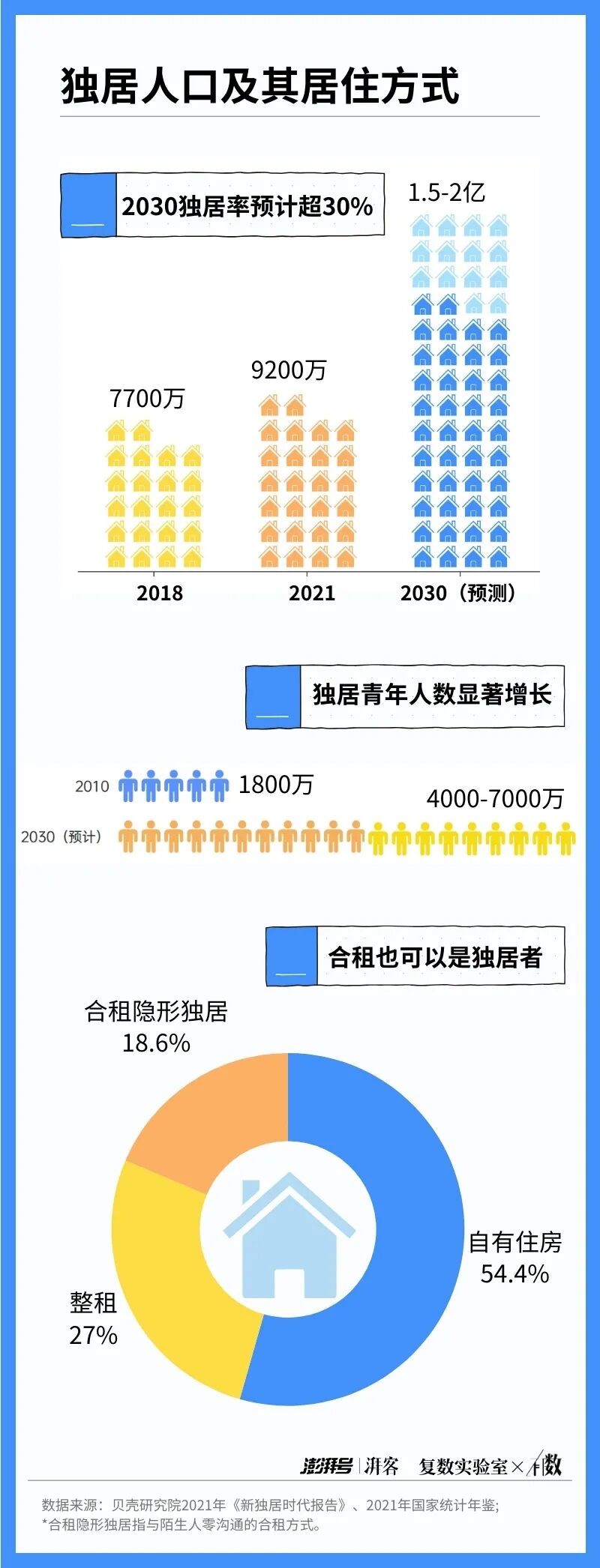
According to survey data from The Paper, in 2010, there were about 18 million young people living alone. By 2030, this number will reach 40 - 70 million. As the number increases, the "safety anxiety" of young people living alone is also growing. A domestic user who downloaded "Demumu" said, "I'm worried that if something happens to me, I might die alone in my rental apartment without anyone knowing. That's why I downloaded this app."
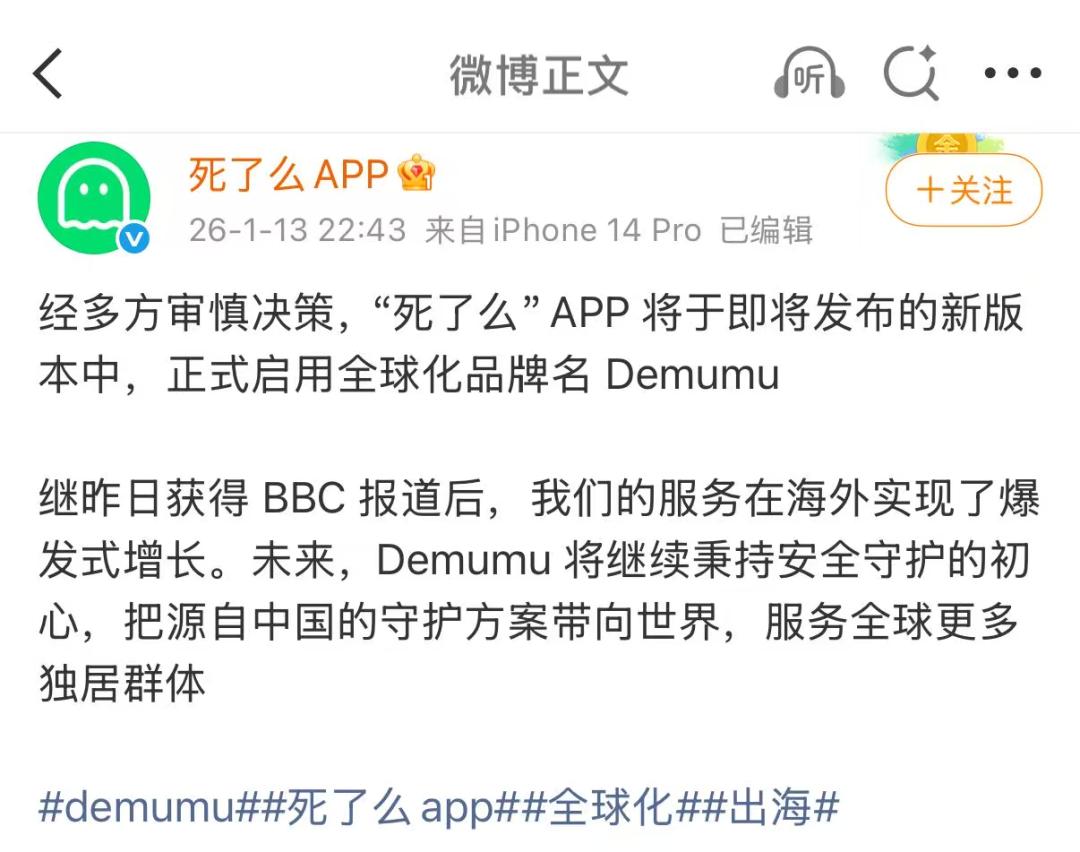
"Demumu" was probably launched globally simultaneously. Changing the name to "Demumu" was a sign of its official entry into the overseas market. The author purchased and downloaded the product on the iOS platform in both China and the UK.
In China, the product was named "Sileme", while overseas, it's now "Demumu". However, in Chinese - language systems, no matter which app store it's downloaded from, the product name remains "Sileme". There is no difference in the interface and functions between domestic and overseas versions. Apart from the name, the team might not have had time to "localize" the app for the overseas market.
In terms of performance, "Demumu" has ranked among the top in the paid - download charts of several developed countries. It ranks 25th in the US paid - app chart, with daily downloads of about a few hundred, probably contributed by overseas Chinese or international students after seeing posts on Xiaohongshu.
Although the spread might not have reached overseas local users yet, the overseas market also has the potential to go viral.
According to a relevant report from the World Health Organization (WHO) in 2025, about 1/6 of the global population suffers from loneliness, and the 15 - 24 age group is the most affected. In countries like the US and Japan, considering the living patterns and existing social problems, the "safety anxiety" of people living alone, especially young people, is becoming more and more serious. For example, in the US, young people mainly live in apartments with high tenant turnover. There is also a lack of organizations like "neighborhood committees" to manage and serve residents. Moreover, the abuse of drugs, medications, and alcohol among American young people is becoming more common, increasing the risk of illness or death when living alone.
Asian countries like Japan and South Korea are also facing increasingly serious "safety challenges for those living alone" due to severe "hollowing - out" and "low birth rates". According to a Japanese government survey, in 2024, 76,000 people living alone died at home in Japan, and 21,000 of them were discovered more than 8 days after death (defined as "lonely death"). Among them, over 1,000 were under 40, and over 100 were in their 20s. In Japan, "lonely death" is no longer exclusive to the elderly. Some Japanese apartments have launched an "intelligent power monitoring" system that automatically alarms if there is no change in electricity consumption within 24 hours.

Similar reports from Japan's Asahi Shimbun
In South Korea, where the birth rate is even lower, the proportion of single - person households is alarmingly high. By the end of 2025, there were over 8 million single - person households, accounting for over 36% of all households, far higher than in China.
With the development of society and the economy, "social atomization" is an inevitable trend. Coupled with the "hollowing - out" and "low birth rates" in many developed countries, at least in general, there is no shortage of potential users for "Demumu" overseas.
Conclusion
According to a report from Economic Observer, on January 10th, the founder of "Demumu" planned to sell 10% of the company's shares for 1 million yuan. Calculated this way, the valuation of the product has reached tens of millions. However, within the next 3 days, more than 60 investors approached the founding team with investment intentions. After bidding, the financing amount has risen to nearly 10 million yuan. The team expects to finalize this round of financing within this week.
Looking back at how "Demumu" went viral, entered the overseas market, achieved initial success, and was favored by investors, the team's most crucial strength might be its strong execution ability: identifying the need and actually launching the product. The increasing capabilities of AI - assisted coding are helping more developers and even product managers to launch products. The more difficult part lies in identifying real needs. For example, Biscuit Brother AGI, the earliest developer of a similar app, was inspired by a "complaint post" on Xiaohongshu.
"Demumu" is like a stone thrown into the water, suddenly making people realize that there is a large - scale market with such real needs. However, just like the numerous abstract competing apps in the domestic market, the overseas market will also quickly be filled with many similar products, including those from mature overseas - expansion teams.
How far these three lucky post - 95s can go remains unknown.
Reference Articles:
1. Behind the Virality of "Sileme" App: Traffic Arrived, but Problems Remain Unsolved
https://www.huxiu.com/article/4826217.html
2. China’s Hottest App Is a Daily Test of Whether You’re Still Alive
https://www.wired.com/story/china-are-you-dead-yet-app/
3. "Sileme": A Viral App Popular Among Young Chinese Living Alone
https://www.bbc.com/zhongwen/articles/cqxy2jd33e2o/simp
4. 60 Investors Compete, the Valuation of "Sileme" App Soars Nearly 10 - fold in 3 Days
https://mp.weixin.qq.com/s/_GUr1mvS1XLo - tI7sPIG0A?scene=1
The data comes from third - party platforms such as SimilarWeb, Diandian Data, Semrush, and Guangdada, and there might be some errors compared with real data. It is for reference only.
This article is from the WeChat official account "Baijing Chuhai" (ID: baijingapp). Author: Zhang Kairan, Editor: Yin Guanxiao. Republished by 36Kr with permission.