What's wrong with Boston Dynamics, the so-called "king of humanoid robots" that's being snubbed?
Is this your attitude of admitting your mistake?
At the recently concluded CES 2026, Boston Dynamics, known as the "leader in humanoid robots," finally made a watershed - making choice—officially abandoning the hydraulic system, which has long been criticized as "neither good - looking nor useful," and fully switching Atlas to pure electric drive. This change is not just a replacement of an engineering solution but also a crucial step for Boston Dynamics to actively shed the labels of "technological show - off" and "engineering PPT" and move towards large - scale production and industrialization.
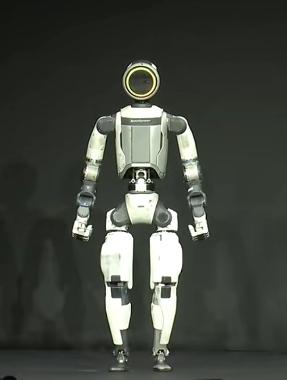
During the on - site demonstration, Boston Dynamics emphasized that the movement form of the new - generation Atlas is highly anthropomorphic, with natural, stable, and coherent actions. Its design inspiration comes from the human body structure, but in terms of flexibility, stability, and the range of extreme actions, it has clearly exceeded the physiological limits of humans. Some industry views suggest that among the currently publicly available humanoid robots, Atlas still stands out as the one with the strongest comprehensive capabilities and the highest technological completion level.
More importantly, the market discussion around Atlas' ultimate positioning is undergoing a qualitative change. An increasingly accepted judgment is that Atlas is not designed for a single vertical position but points towards the end - game scenario of "general - purpose labor." Through continuous training with large AI models, robots can acquire operational capabilities far beyond the boundaries of human experience and replicate and synchronize new skills to other individuals in a "software - based manner." Against the background of the continuous shortage of the global labor force, they can become a production factor that can be scaled up.
If in the past, Boston Dynamics demonstrated "what extreme actions a humanoid robot can perform," then starting from the pure - electric Atlas, it has truly entered a more dangerous and realistic proposition—when machines can not only move and learn but also be replicated and scaled up, how will human society redefine "work" itself?
01 The Last Link of Humanoid Robots: The Dexterous Hand Isn't Dexterous Enough
Before discussing "how humans should redefine work," humanoid robots actually have an unavoidable threshold—they must be able to truly replace human labor.
Among all the technological challenges, the last and most difficult link is not walking, balance, or even the "brain," but whether humanoid robots can truly have a pair of "human hands."
At CES 2026, the Atlas demonstrated by Boston Dynamics had only three fingers; in other publicly available videos, a four - finger version also appeared. Looking at the entire industry, some manufacturers have started to experiment with five - finger humanoid robots, which at first glance seem more "human - like." However, a counter - intuitive fact is that the more fingers a robot hand has, the less human - like it becomes; the more human - like it seems, the more difficult it is to use.
Even Atlas, as powerful as it is, has never chosen to "completely replicate the human hand." Some believe that this is not due to a lack of technology but a necessary trade - off in engineering.
The human hand is the result of millions of years of evolution, with a high degree of freedom, a complex tendon structure, and an extremely delicate force - feedback system. For robots, each additional finger means an exponential increase in control difficulty, computing power requirements, sensing complexity, and the risk of malfunction.
In other words, it's not difficult to build a mechanical hand that "looks like a human hand," but it's challenging to build a hand that "can actually do work and do it stably." Instead of pursuing morphological similarity, humanoid robot manufacturers should be more concerned about whether the hand is reliable, controllable, and won't malfunction at critical moments in the real and unpredictable physical world.
This is why today's humanoid robots can run, jump, and carry, but still get stuck repeatedly on seemingly ordinary actions such as "screwing a screw, organizing wires, and grasping flexible objects." It's not that the machines aren't smart; it's that the human hand itself is a seriously underestimated miracle.
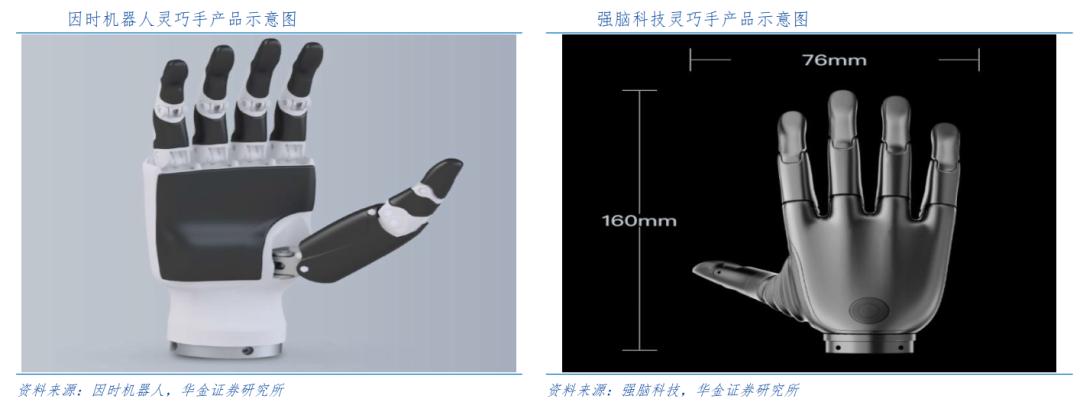
Against the current technological background, manufacturers' investment in dexterous hands is gradually increasing. Whole - machine enterprises such as Tesla, Unitree Robotics, and Ubtech are all conducting self - research on dexterous hands. Among component enterprises, Xingdong Jiyuan, Magic Atom, Lingqiao Intelligence, Yingshi Robotics and others have also developed various dexterous hand products for humanoid robots.
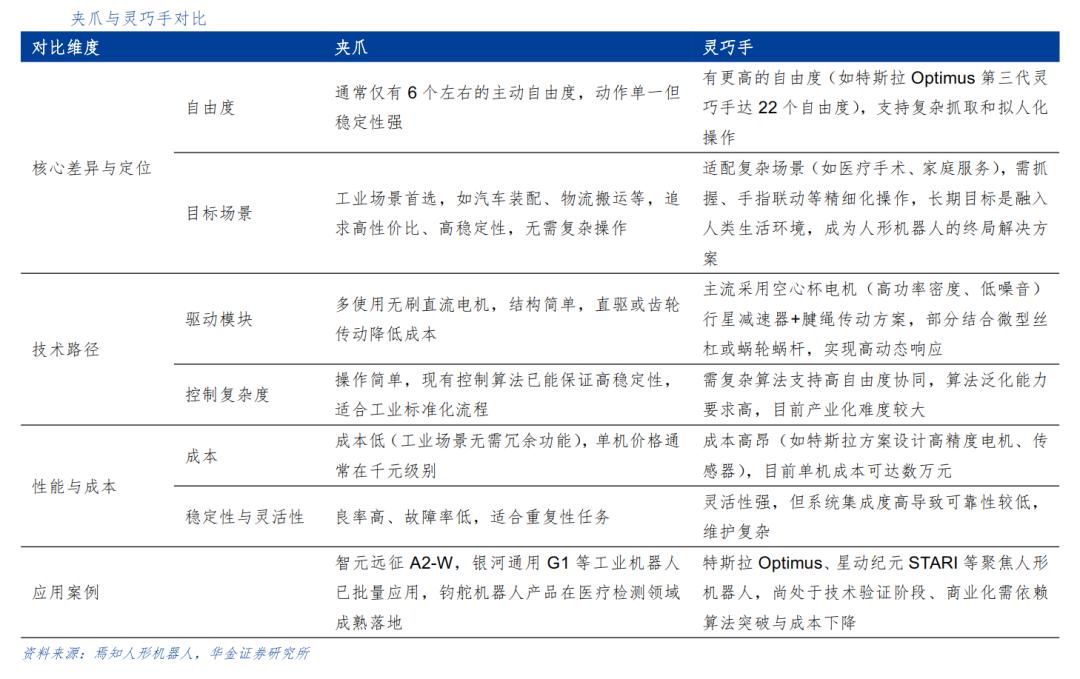
Traditional grippers or holding hands have been applied in fields such as industrial assembly and medical testing. However, since they are only designed for standardized processes, their generalization ability is limited. The dexterous hand has a similar structure to the human hand, featuring high degrees of freedom, high precision, etc., and can be paired with humanoid robots to perform a variety of complex tasks, such as grasping small objects and transporting items. It has great application potential in industrial, commercial, and household scenarios.
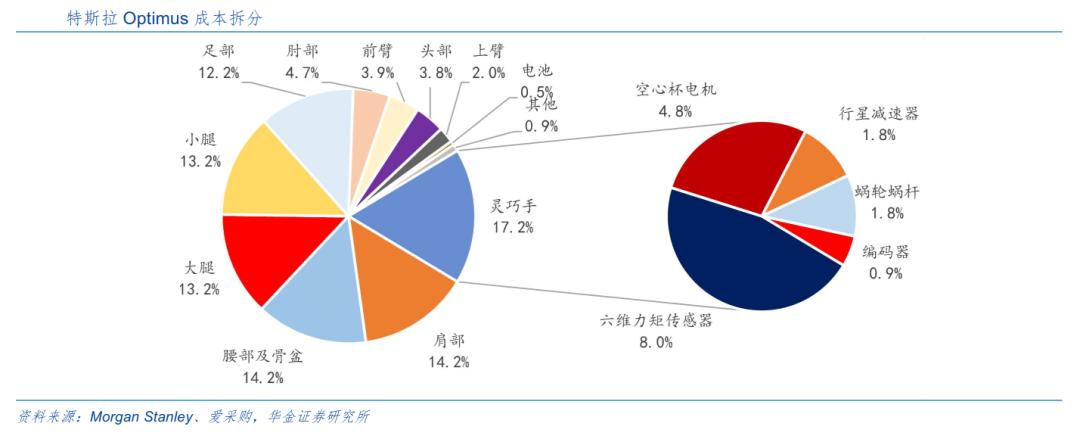
In terms of cost, the dexterous hand accounts for about 17% of the total cost of the whole machine. In terms of cost, the dexterous hand is one of the most important components of the whole machine. Taking Tesla's Optimus as an example, from the cost breakdown of each part of the whole machine, the cost of the dexterous hand accounts for about 17.2%, the largest proportion. Among them, the coreless motor and the six - axis force sensor account for 4.8% and 8.0% respectively, and the planetary reducer, worm gear, and encoder account for 1.8%, 1.8%, and 0.9% respectively. The coreless motor and the six - axis force sensor are the core components of the dexterous hand.
Atlas' abandonment of the hydraulic system in favor of motors has led many to think that humanoid robots are phasing out hydraulics because motors are more advanced. However, the truth is the opposite—hydraulics are not too weak; they are just too powerful for the current situation. Hydraulics are good at explosive power and extreme actions but are not suitable for long - term, stable, and replicable work scenarios.
Once they enter factories and cities, the complex maintenance and control uncertainty of the hydraulic system will be infinitely magnified. More importantly, hydraulics are not suitable for AI learning, while motors are more like a standardized interface and are naturally suitable for model training. Hydraulics belong to the era of engineers, and motors belong to the era of algorithms.
02 Motors Have Become the Preferred Solution for Manufacturers' Dexterous Hands
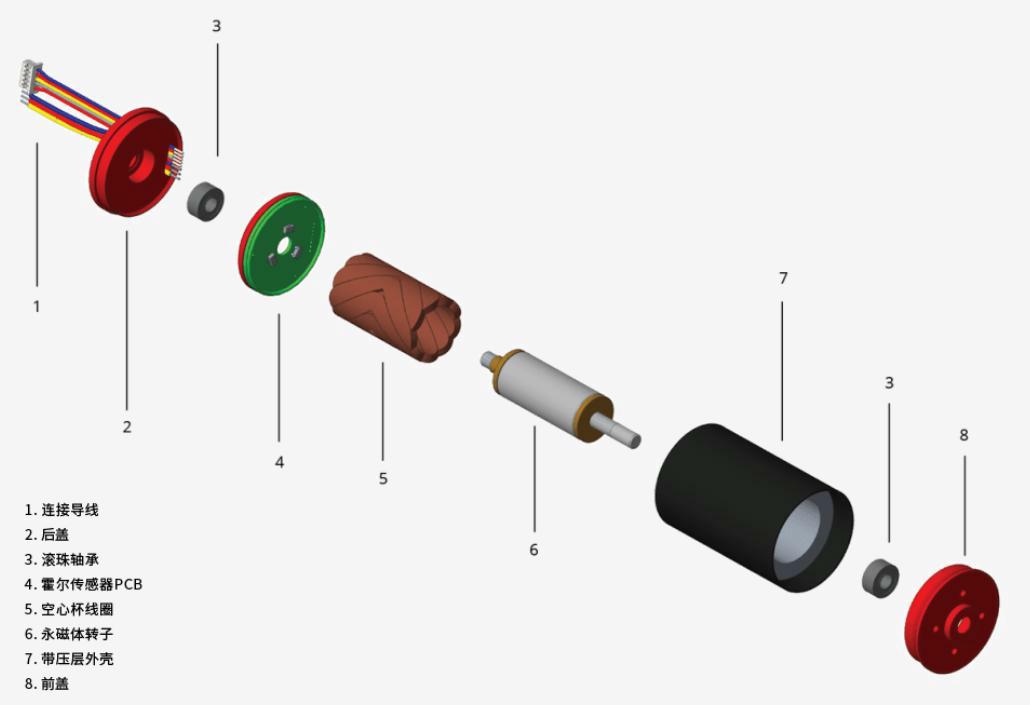
Motor drive meets the requirements of humanoid robot dexterous hands and is currently the mainstream solution. The motor drive system integrates components such as coreless motors, brushless slotted motors, and reducers. Due to its advantages such as small size, fast response, convenient regulation, and stable output torque, it is widely used in dexterous hand control.
Compared with traditional motors, the coreless motor uses a rotor design without an iron core, which avoids the eddy - current effect generated during the motor's operation. The eddy - current effect can cause the motor to heat up, torque fluctuations, and energy loss. Humanoid robot dexterous hands require high degrees of freedom, high precision, and fast response capabilities. The coreless motor has become the mainstream choice for dexterous hand motors due to its small size, high precision, and light weight.
Source: Official website of Shenzhen Zhengyuan Motor Co., Ltd., Huajin Securities Research Institute
Continuing to compare brushed and brushless motors, brushless motors have a longer service life. Because there is no wear on the mechanical brushes, brushless motors have a longer and more durable service life, especially under high - speed operation and harsh environmental conditions, and they also produce less operating noise. At the same time, brushless motors have a higher rotational speed, better conversion efficiency, and more excellent control performance.
Compared with brushless motors, the dexterous hand driven by hydraulics consists of a hydraulic motor, servo valve, oil pump, and oil tank, etc. It is usually used in the industrial field. The hydraulic system has a large grasping force and is suitable for driving large loads, but it still has problems in terms of miniaturization and portability.
The pneumatic drive system uses gas as the medium to simulate the driving method of human muscles. Its advantages are easy control, convenient energy storage, and good system flexibility. Its disadvantages are low stiffness, poor dynamic performance, difficult assembly, and inaccurate movement, which limit its wide application in industrial production. It is commonly used in simple holding hands and cannot achieve flexible movement of multiple joints.
In terms of the transmission method, the tendon - rope transmission can achieve long - distance power transmission. The motor in the forearm of the dexterous hand drives the ball screw through the gearbox. The nut on the ball screw converts the rotational motion into linear motion. The tendon rope forms a tendon loop around the nut, and the nut pulls the tendon rope connected to the phalanges of the dexterous hand fingers, realizing the rotational motion of the fingers around the joint axis.
The tendon - rope transmission simulates the tendon distribution of the human hand. It uses various materials to cooperate with the tendon sheath or casing to flexibly route the wires inside the arm, palm, and fingers. The structure is relatively compact and has a certain degree of elasticity, providing a certain degree of flexibility and grasping adaptability for finger movement and enabling long - distance power transmission.
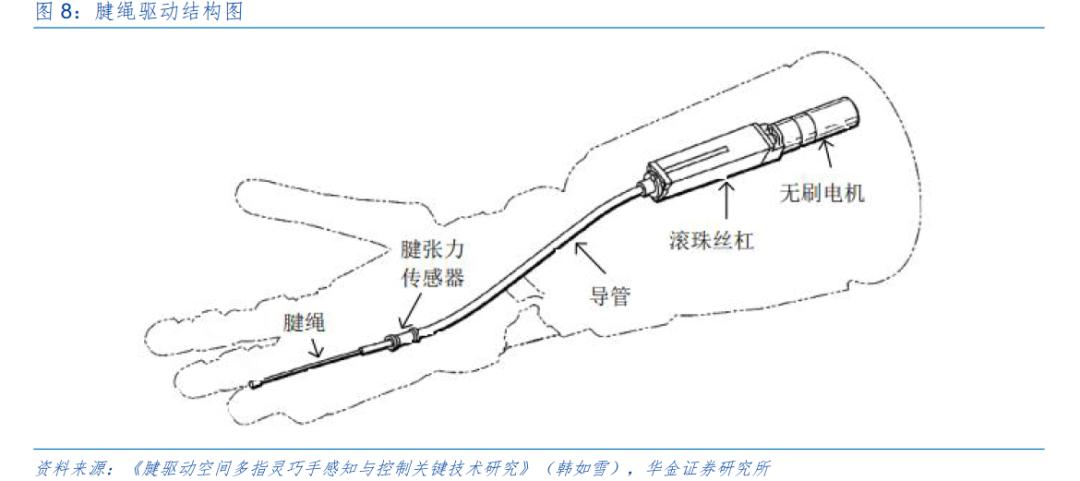
The tendon - rope transmission has a variety of different structures due to its variable arrangement forms, such as the tendon - tendon sheath type, equal - diameter pulley type, and belt - wheel transmission type. Due to the high flexibility and small size of the tendon rope, the tendon - rope transmission system has lower requirements for the structural size of the driver and the reduction mechanism.
At present, in the humanoid robot industry, there is no unified answer for the technical route of the "dexterous hand" yet. Various transmission schemes such as tendon - rope, linkage, and gear have their own advantages and disadvantages, and different trade - offs are made between control accuracy, structural complexity, cost, and reliability. Therefore, they are adopted in parallel by many mainstream whole - machine enterprises.
03 Who Has the Optimal Dexterous Hand?
Because the technical routes have not yet converged, the dexterous hand has not formed a single standardized market like motors and reducers. Instead, a group of professional manufacturers deeply deploying around different technical paths have gradually emerged.
These enterprises often do not directly participate in the competition of whole machines. Instead, through long - term accumulation in a certain transmission system, control algorithm, or sensor integration, they become key cooperation partners for whole - machine manufacturers in the "last mile" of capabilities. The dexterous hand manufacturers following different technical routes are also becoming an important window to observe the differentiation and maturity of the humanoid robot industry.
Some whole - machine enterprises are conducting self - research on dexterous hands and are generally iterating towards a higher degree of freedom and stronger sensing ability to expand the application scenarios of dexterous hands. For example, the dexterous hand of Tesla's Optimus has increased its degrees of freedom from 11 to 22. In the early stage, it could only perform a few actions, but the third - generation dexterous hand can already perform complex actions such as catching a tennis ball. Unitree Robotics' DEX3 - 1 has only 7 degrees of freedom, while the DEX5 - 1 has 20 degrees of freedom, greatly improving its application potential.
In addition to Tesla's Optimus and Unitree Robotics, the dexterous hand of the new - generation industrial robot WalkerS2 launched by Ubtech has 11 degrees of freedom and is equipped with 6 array - type tactile pressure sensors. Thanks to the high - strength and lightweight design of the dexterous hand, WalkerS2 can not only achieve sub - millimeter - level precision operations but also lift a 15 - kg heavy object within the full - space range of 0 - 1.8 meters, meeting the operation requirements of industrial - level handling.
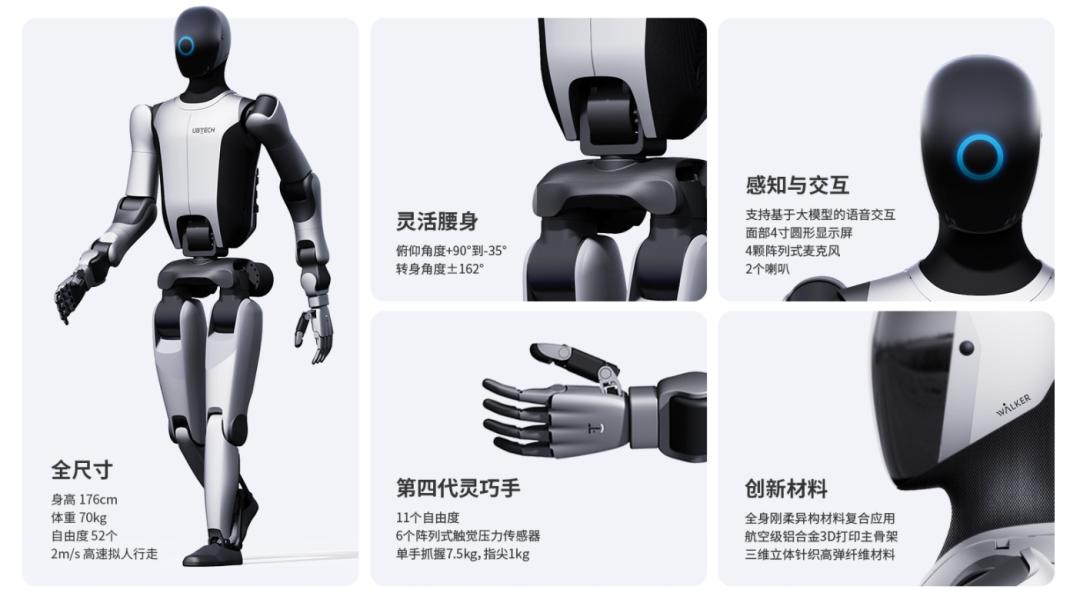
Image source: Official website of Ubtech
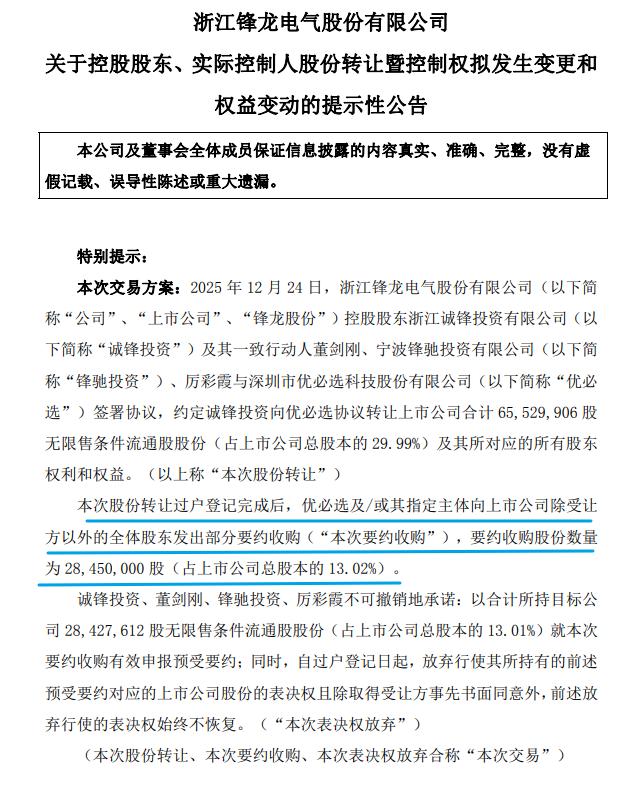
With the continuous support of excellent products, Ubtech has gradually entered the secondary market. According to multiple announcements released by Fenglong Co., Ltd. on December 25, the actual controller of the company has been changed to Ubtech.
In addition to the above - mentioned whole - machine manufacturers, a large number of component manufacturers are also deploying dexterous hands. The end - effectors of Yingshi Robotics include the RH56BFX series, RH56DFX series, RH56E2 series dexterous hands, and the EG2 - 4B series and EG2 - 4C series servo electric grippers. Among them, the RH56DFX series is a humanoid five - finger dexterous hand with a single - finger grasping force of up to 1.5 kg, a repeat positioning accuracy of ±0.2 mm, and a force resolution of 0.5 N. In addition, the whole hand weighs only 540 g. The dexterous hand of Yingshi Robotics can perform actions such as grasping eggs, fruits, barbells, and holding cups and tools, meeting the requirements of refined operations