Financing in the Yangtze River Delta accounts for nearly half of the country's total, while that in the Beijing - Tianjin - Hebei region ranks second.
“Answer the question about Chinese venture capital in 2025:
From a regional perspective, have distinct industrial characteristics and advantageous sectors been formed? ”
In 2025, the geographical landscape of Chinese venture capital presents a complex pattern of "one dominant and multiple strong" and "seeking common ground while reserving differences."
The Yangtze River Delta leads with an absolute advantage, while the Beijing-Tianjin-Hebei region, the Guangdong-Hong Kong-Macao Greater Bay Area, and the central and western regions form the chasing echelon.
This article will delve into the four major economic regions, analyze their scale structures, investment consensus, and characteristic sectors, and depict a panoramic view of the flowing capital.
Regional pattern differentiation: The Yangtze River Delta takes the lead, and the three regions chase fiercely
From the perspective of regional investment scale, a clear echelon differentiation has been formed in China's primary market.

The Yangtze River Delta region has become the most active venture capital center in the country with indisputable advantages.
In 2025, a total of 4,256 investment events occurred in this region, absorbing 311.582 billion yuan in funds. Both the number of events and the amount of funds led by a large margin.
The Beijing-Tianjin-Hebei region, the Guangdong-Hong Kong-Macao Greater Bay Area, and the central and western regions form the second echelon in terms of activity.
The number of investment events in the three regions is very close, with 1,364, 1,542, and 1,346 respectively. This shows that outside the Yangtze River Delta, the national venture capital resources are distributed in a multi - centered and balanced manner, and the competition among regions is becoming increasingly fierce.
Core consensus: Seven sectors construct the framework of new - economy investment
Despite the differences among regions, capital has reached a highly consistent national consensus in the layout of core sectors.
Data shows that the seven industries of artificial intelligence applications, pharmaceuticals, biotechnology, medical devices, new energy, integrated circuits, and robots have become the core investment mainlines running through the four major regions and have all appeared in the top ten lists of activity in each region.
The integrated circuit is the sector with the highest degree of consensus.
It ranks among the top two in terms of investment popularity in the three major regions of the Yangtze River Delta (597 events), the Guangdong-Hong Kong-Macao Greater Bay Area (160 events), and the central and western regions (110 events), indicating its solid position as the "foundation" of the digital economy.
Robots and new energy follow closely.
The robot sector ranks among the top three in the Guangdong-Hong Kong-Macao Greater Bay Area (173 events), the Yangtze River Delta (253 events), and the Beijing-Tianjin-Hebei region (126 events), reflecting the urgent need for the upgrading of China's manufacturing industry.
These seven cross - regional sectors together constitute the core framework of China's current new - economy investment, indicating that capital has formed a highly consistent layout in the long - term national strategic directions such as artificial intelligence, life sciences, energy transformation, and high - end manufacturing.
Characteristic sectors: The differentiated advantages of the four regions
Beyond the convergent mainlines, each region has also cultivated differentiated characteristic sectors based on its own resource endowments, building unique competitive advantages.
● Beijing-Tianjin-Hebei: The national science and technology origin

This region has outstanding performance in cutting - edge technology fields such as aerospace (76 events), AIGC (60 events), and the AI basic layer (52 events), highlighting its ability to originate in the full - stack artificial intelligence technology and "hardcore" technology as the national science and technology innovation center.
● Yangtze River Delta: Strong industrial chain collaboration
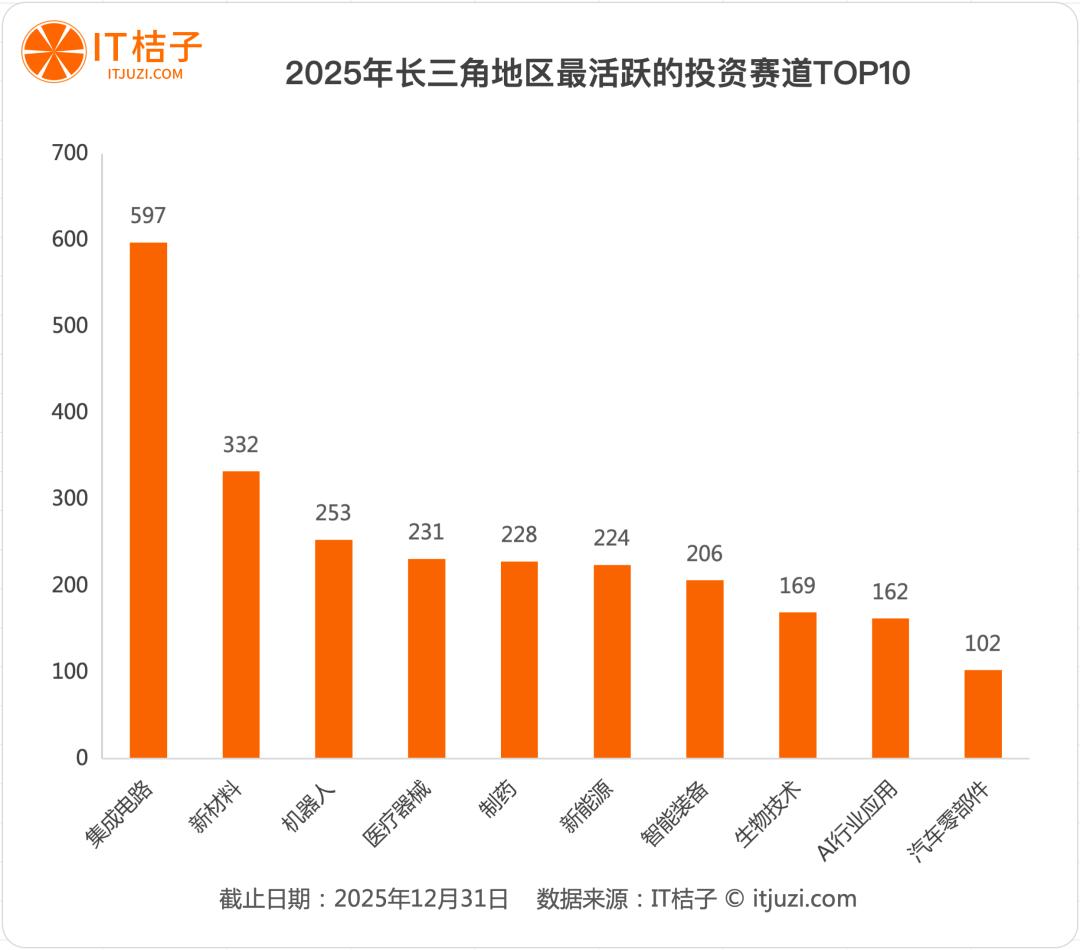
In the Yangtze River Delta, the new materials sector not only has as many as 332 investment events but also becomes the second - largest industrial pillar in the region with a proportion of 7.80%. This forms a strong upstream - downstream supply chain synergy effect with the integrated circuit industry, which ranks first in the region, and constructs a solid hard - technology industrial cluster.
● Guangdong-Hong Kong-Macao Greater Bay Area: The "foundation" and "implementation" of manufacturing
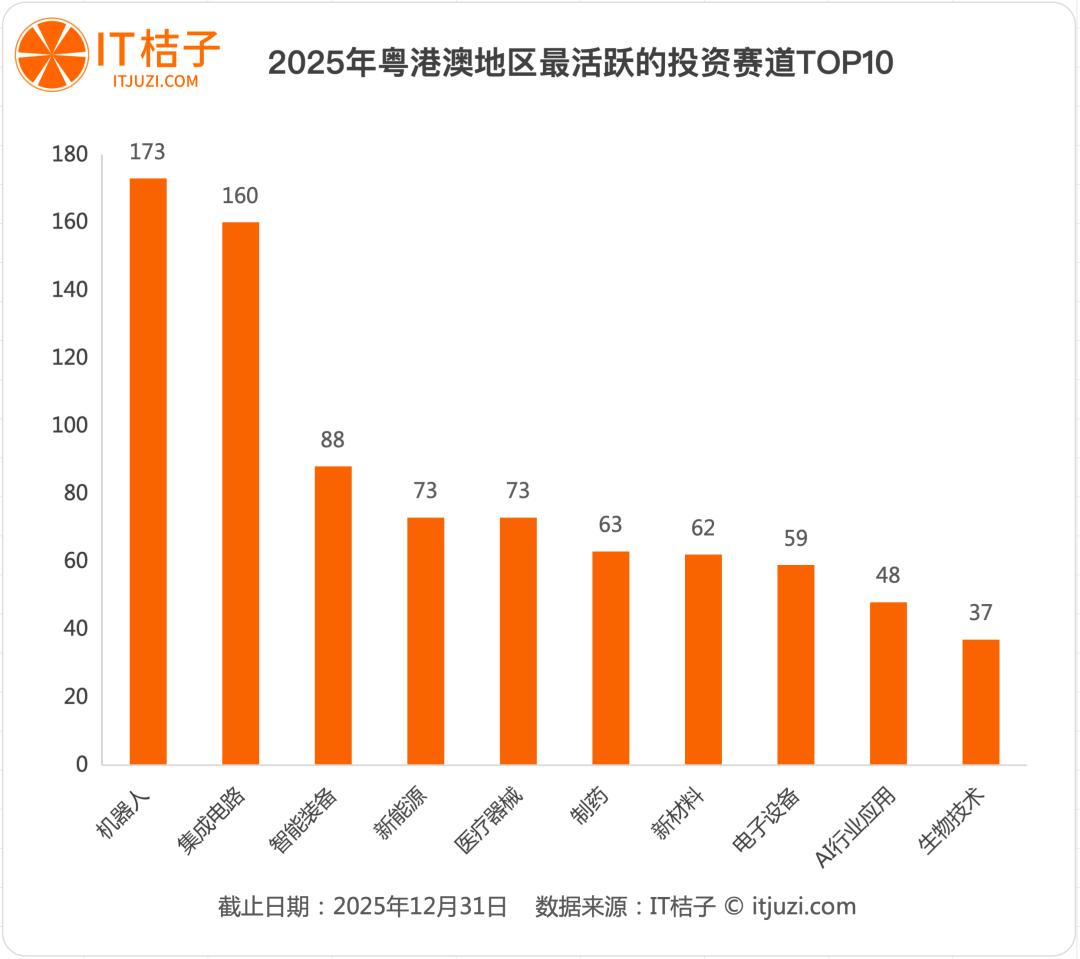
The inclusion of the intelligent equipment sector (88 events) reflects the profound precision manufacturing foundation in the Guangdong-Hong Kong-Macao Greater Bay Area. The capital layout here is more inclined to closely combine cutting - edge technology with manufacturing, which is a key link in the industrialization of technology.
● Central and Western Regions: Transforming resource advantages into industrial momentum
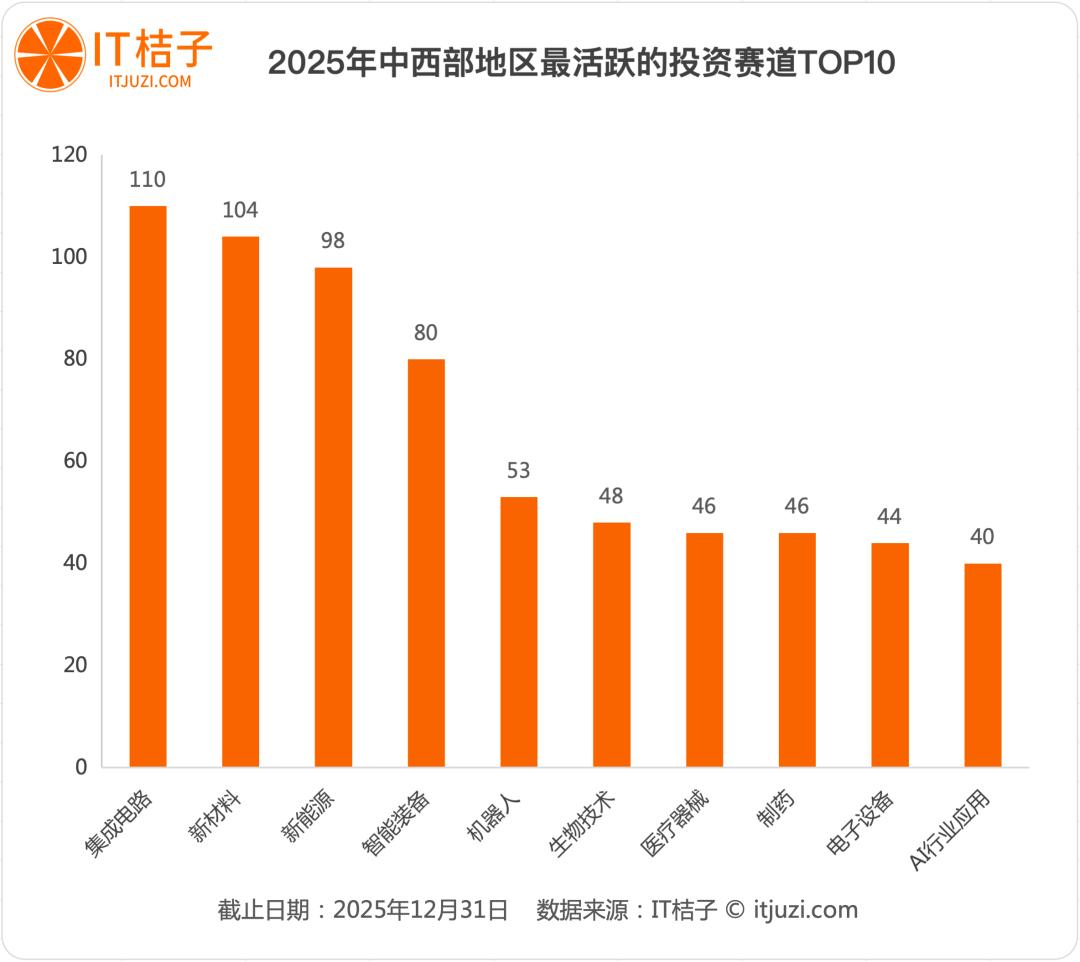
The central and western regions are actively transforming their local resource advantages into industrial development momentum. For example, new materials (104 events) have been cultivated as one of the top three growth points in the region, showing great potential in undertaking industrial transfer from the eastern region and developing characteristic industries.
Conclusion
The regional map of Chinese venture capital in 2025 presents a vivid picture of "concentration with dispersion and consensus with characteristics." The leading position of the Yangtze River Delta, the fierce competition among the three regions, the national consensus on the seven sectors, and the characteristic advantages of each region together define the current direction of capital flow. For entrepreneurs and investors, understanding this map is not only a prerequisite for grasping the opportunities of the times but also a compass for formulating future strategies.
This article is from the WeChat official account "IT Juzi" (ID: itjuzi521), author: IT Juzi. It is published by 36Kr with authorization.