From toys to tools, 3D printing is having its "iPhone moment".
For a long time, consumer-grade 3D printers seemed to be trapped in a "self-amusement" cycle: loved by a group of tech geeks, yet shunned by the broader mass market due to complex calibration and limited usability.
However, by 2025, this situation has been completely broken.
More and more data and events clearly show that the 3D printer market has shed its niche label and welcomed its "iPhone moment" - it is transforming from a professional tool that requires complex calibration into a practical platform that can stimulate the creativity of the general public and is integrating into mainstream consumer scenarios at an unprecedented speed.
01. Redefining the Label: Demand Shift Drives Market Explosion
According to data from the National Bureau of Statistics, since the beginning of this year, the production volume of 3D printing equipment has been maintaining a relatively high growth rate. In the first quarter, the year-on-year growth was 44.9%, in April it was 60.7%, and in May, the production volume of 3D printing equipment increased by 40% year-on-year, with its growth rate exceeding that of the two major star sectors of industrial robots (35.5%) and new energy vehicles (31.7%).
What's more interesting is that the main driver of this round of growth is not the high-end industrial-grade equipment, but the desktop products directly targeted at ordinary consumers.
According to the latest data from the General Administration of Customs, from January to November 2025, China exported a cumulative total of 4.48 million 3D printers, a year-on-year increase of 29.6%. Moreover, more than 99% of these exported 3D printers are desktop 3D printers, and China has become the world's largest producer of desktop 3D printers.
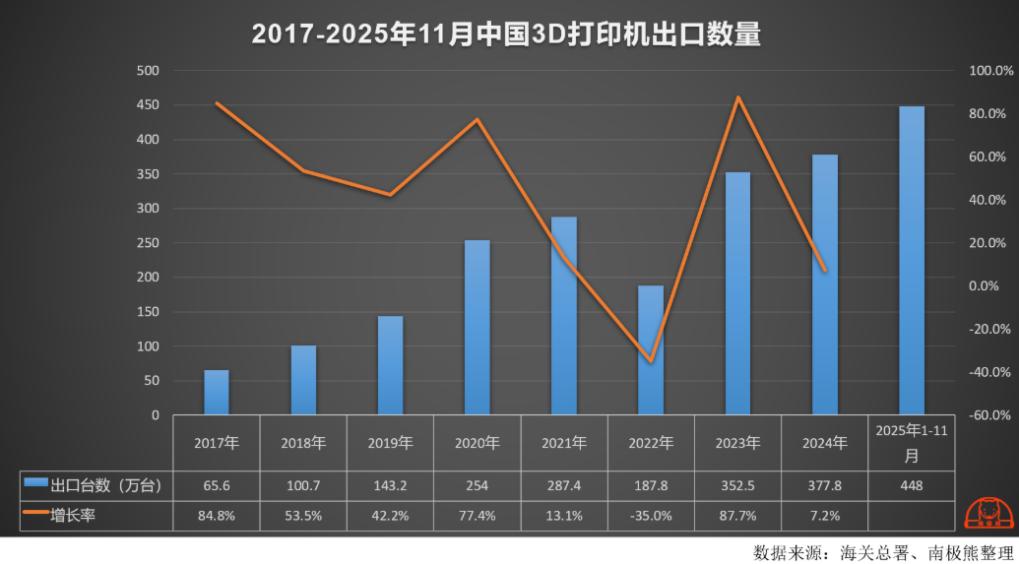
Image source: Nanji Xiong 3D Printing
And the underlying logic that prompted the market explosion is a fundamental "shift" in demand.
You know, in the past, 3D printers were mainly regarded as tools for manufacturing prototypes or replacement parts. Now, in the wave of new consumption, it is transforming into a "new production tool" to meet personalized creative expression.
A very representative case is the craze triggered by the trendy toy IP "LABUBU" in the middle of 2025. When the genuine dolls were in short supply, a large number of consumers turned their attention to 3D printing.
It is understood that on the well-known domestic 3D printing community MakerWorld, the number of LABUBU models spontaneously uploaded by users has increased sharply. The most popular model has received nearly 20,000 downloads and thousands of likes. Users spent thousands of yuan to purchase printers just to realize "LABUBU freedom" by themselves.
A palm-sized doll only costs a few dozen yuan in material cost. This low-threshold way of realizing creativity perfectly fits the current consumer psychology of "personalization + affordable alternatives". This marks that the core demand of consumer-grade 3D printing has shifted from "meeting functional manufacturing" to "realizing personalized creation".
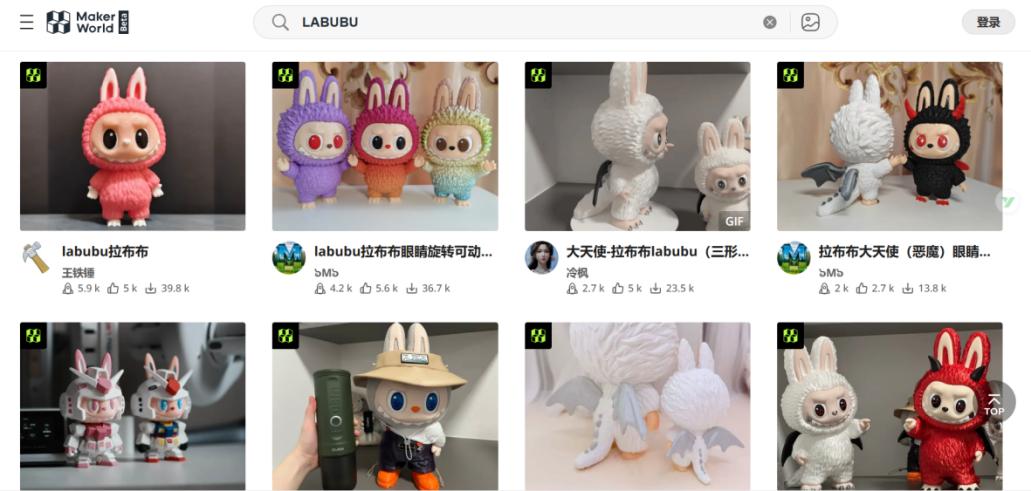
Image source: MakerWorld
This widespread enthusiasm for creation has also quickly spawned and expanded a new business format on the supply side - the "3D printing farm". This model centrally manages dozens or even thousands of consumer-grade printers and produces small-batch, customized products like a factory.
From the "carrot knives" and "dragon eggs" at the end of 2023 to LABUBU in 2025, the appearance of each online popular toy has become a production order for 3D printing "farmers". They are active on e-commerce platforms, cross-border e-commerce platforms and even street stalls, transforming creative models into tangible products.
This "grassroots" business model not only verifies that consumer-grade 3D printing has real commercial value and market demand, but also acts like a "showroom" and "experience store" all over the country, intuitively demonstrating the charm and possibilities of 3D printing to the general public in a highly efficient and down-to-earth way, greatly accelerating the market's awareness and education process.
Thus, 3D printers have completely bid farewell to the niche "geek toy" label and integrated into mainstream consumer scenarios as a "mass creative tool".
02. Two Wheels for Breaking the Deadlock: Technology and Capital Jointly Promote the Popularization
If demand is the "spark" that detonates the consumer-grade 3D printing market, then technology and capital are like two powerful "bellows", jointly fanning the flames to unprecedented heights.
In the past, consumer-grade 3D printers were often left unused. A core problem was that "knowing how to use" them was more difficult than "owning" them. The complex modeling software used to be a high wall between creativity and physical objects, intimidating people.
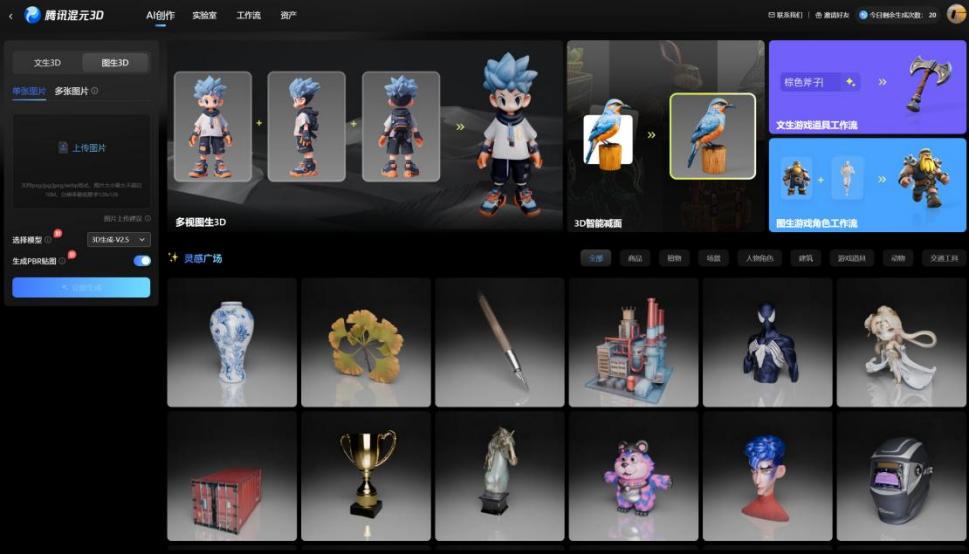
In 2025, the continuously emerging and iterating large generative AI models have made it unnecessary for users to learn professional CAD software. They only need to describe a text or upload a picture to the AI, and they can get a complete 3D model that can be directly used for printing within a few minutes, greatly shortening the design cycle that originally required professional learning.
This means that the threshold for creation has been reduced from "professional skills" to "language description", and anyone can quickly transform the wild ideas in their minds into tangible entities.
Tencent Hunyuan 3D Generation. Image source: Tencent Hunyuan
Meanwhile, the empowerment of AI also runs through the entire chain from design to finished products. For example, in the crucial printing process, in the past, the finished products were often unsatisfactory due to problems such as inaccurate leveling and nozzle blockage. Now, devices equipped with AI visual recognition functions can monitor foreign objects on the platform in real time, identify signs of model warping and material stringing, and take the initiative to intervene, greatly improving the usability and success rate of printing.
Technological inclusiveness has solved the problem of "being able to use", while the sense of smell of capital has accurately captured the timing of "worth investing".
In 2025, the once quiet 3D printing track has witnessed the collective return of the capital market, and its popularity is a historic turning point. According to data from Nanji Xiong, since the beginning of this year, the number of investment and financing events in the domestic 3D printing field has soared to about 100, involving 81 companies, with a total financing amount of up to about 8.4 billion yuan, a year-on-year increase of 115.4%, setting a new historical high.
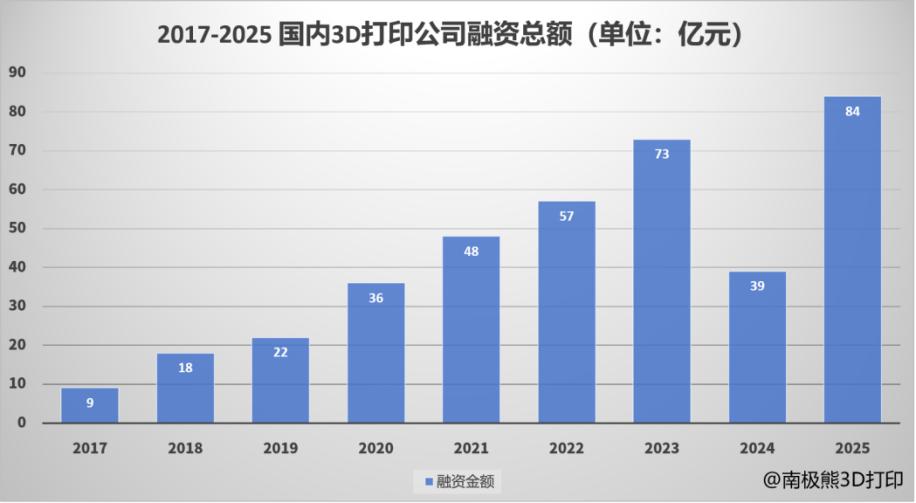
Image source: Nanji Xiong 3D Printing
More importantly, this wave of enthusiasm is not scattered investment, but presents a clear dual logic: on the one hand, capital is betting on the explosion at the consumer end; on the other hand, capital is also deeply cultivating the industrial ecosystem, reserving energy for the long-term development of the entire industry.
For example, Kuaizao Technology, with a flagship product that refreshed the global crowdfunding record, received a joint lead investment from Hillhouse Venture Capital and Meituan Longzhu, demonstrating the capital market's pursuit of companies that can create "blockbuster" products. And DJI, the drone giant, made a strategic investment in the established company Smart Pie Technology, which is regarded by the outside world as its recognition of consumer-grade 3D printing as the next important intelligent hardware platform. Its investment is not only a financial act, but also a layout for the future ecosystem.
The actions of these heavyweight players are by no means short-term speculation, but are based on long-term judgments of technological maturity and market potential, casting the most important vote of confidence in the entire industry.
In addition, technology and capital are not two parallel lines. They catalyze each other and form a strong positive cycle: the maturity of AI technology makes the large-scale market application of 3D printing possible, thus attracting the attention of capital; and the influx of capital provides sufficient ammunition for the rapid iteration of technological R & D, the strong promotion of marketing, and the innovative implementation of business models.
03. Future Landscape: Opportunities and Challenges under Ecosystem Competition
When consumer-grade 3D printers cross the critical point of technology and capital and enter ordinary families, the rules of the game in the industry have quietly changed. In the future, the simple comparison of hardware parameters will take a back seat, and industry players will face a deeper competition around the construction of an "ecosystem".
The core of this competition lies in whether enterprises can go beyond the role of equipment suppliers and successfully operate an ecological closed-loop that integrates creative inspiration, design realization, model sharing, material supply, and user interaction. In fact, some leading players have noticed this trend and started to make arrangements.
For example, the "MakerWorld" online community built by Tuozhu Technology is essentially a vibrant creative ecosystem: users can share, download, and even sell 3D models here, and the one-click printing function seamlessly connects creativity with physical objects. This model firmly attracts users within the brand ecosystem, and the rich model library and active community form a deeper moat than the hardware itself.
Companies represented by Kuaizao Technology have deeply integrated 3D printing with the "Print on Demand" (POD) model, building a distributed manufacturing network serving global cross-border e-commerce. In this ecosystem, after an overseas consumer places an order for a customized doll, the order will be immediately synchronized to a domestic "3D printing farm", which will use common materials such as PLA for production and direct delivery, achieving true zero inventory and flexible production.
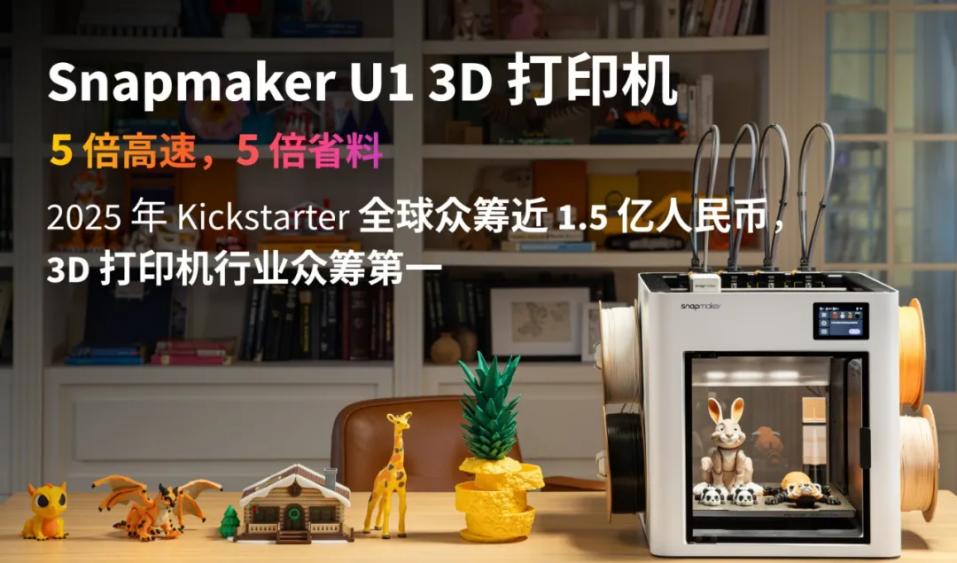
Image source: Kuaizao Technology
As a pioneer in going global, Creality's ecosystem construction focuses more on content marketing and global local community operation. They have successfully expanded their influence to a wider range of ordinary consumers by cooperating with more than 2,300 KOLs (Key Opinion Leaders) around the world, especially with top bloggers in the pan - technology field on platforms such as YouTube.
When enterprises shift from "selling equipment" to "selling an understandable creative experience", the application of 3D printing will rapidly penetrate into broad fields such as consumer electronics, home decoration, personalized fashion, and even educational tools.
However, there are also real challenges on the road to the future.
Firstly, there is a hidden worry of "price involution". As the Shenzhen supply chain continuously reduces the cost and price of entry - level equipment, Chinese brands have occupied more than 90% of the global 3D printer market share. While the fierce competition promotes popularization, it may also excessively squeeze hardware profits, thereby eroding enterprises' long - term R & D investment and ecosystem cultivation capabilities.
Secondly, there is the problem of "user retention". How to enable ordinary users who purchase equipment to continuously obtain value and avoid the equipment being left unused after a one - time try is the key to whether the industry can truly grow. This requires enterprises not only to provide equipment, but also to continuously lower the usage threshold and provide creative inspiration for users through a powerful ecosystem and services. Only by making "creation" itself a simple, interesting, and rewarding habit can consumer - grade 3D printing truly integrate into the mainstream lifestyle.
All in all, in 2025, driven by the dual wheels of the key "empowerment" of AI technology and the strategic "valuation" of the capital market, the 3D printing market has entered the most core section of the fast - track from "niche geeks" to "mass creation". Its future is not only about the technology itself, but also about whether it can give rise to a prosperous creator economy, thus profoundly reshaping the way we obtain and own things.
This article is from the WeChat official account “DoNews” (ID: ilovedonews), author: Wen Lin, published by 36Kr with authorization.