2026 Home Robot Buying Guide: When Will the Toilet-Cleaning Robotic Arm Arrive?
"Embodied intelligence" was the buzzword of the year in 2025. To a large extent, it's because it has really started to matter to ordinary people.
I wonder if you've noticed that visiting robot exhibitions in the past two years has felt a bit like visiting a "robot job fair" (this year's CES was no exception).
In the past, when faced with those robots that were out of reach, most ordinary people looked at them as a "tech concept" to be admired. Last year, however, people became much more practical. "Hey? That robot over there can take care of kids. What can yours do?"
Because of a simple and pure desire humans have had throughout history: to be freed from repetitive and trivial household chores. We wish that "robots" could start competing with each other right away.
After seeing countless well - choreographed "fake moves" of robots, I'm sure you're as curious as I am whether money can really buy us freedom from household chores.
Housekeeping: It's All About "Perceptiveness"
Many manufacturers have narrowed down their definition of embodied intelligence. They aren't creating entirely new species but rather improving and adding household functions to existing products.
Take the vacuum cleaner robot as an example. There's a very relatable joke about vacuum cleaner robots: the families that need them the most are the least suitable to use them. Because it's like a boyfriend pretending to be stupid, it'll just go around the dirty socks on the floor.
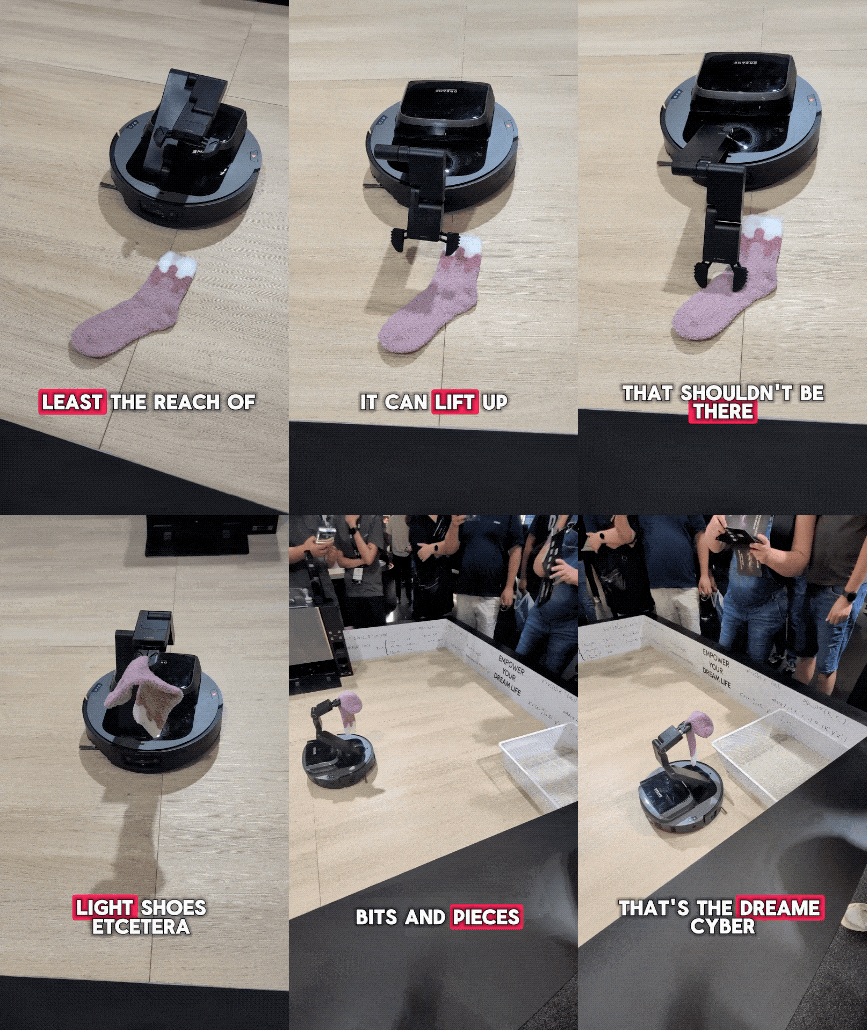
The Dreame Cyber 10 Ultra is equipped with a robotic arm. Its purpose is to pick up sundries like socks and data cables, throw them into the storage basket on its back, and then start vacuuming.
The Roborock Saros Rover may seem unremarkable on a normal day. But when it encounters stairs, it'll extend its two "wheel - legs" to lift its body up. It gets its body up the steps first and then brings its legs up. This function is mainly for households with multi - level homes. Also, it vacuums the stairs while climbing them.
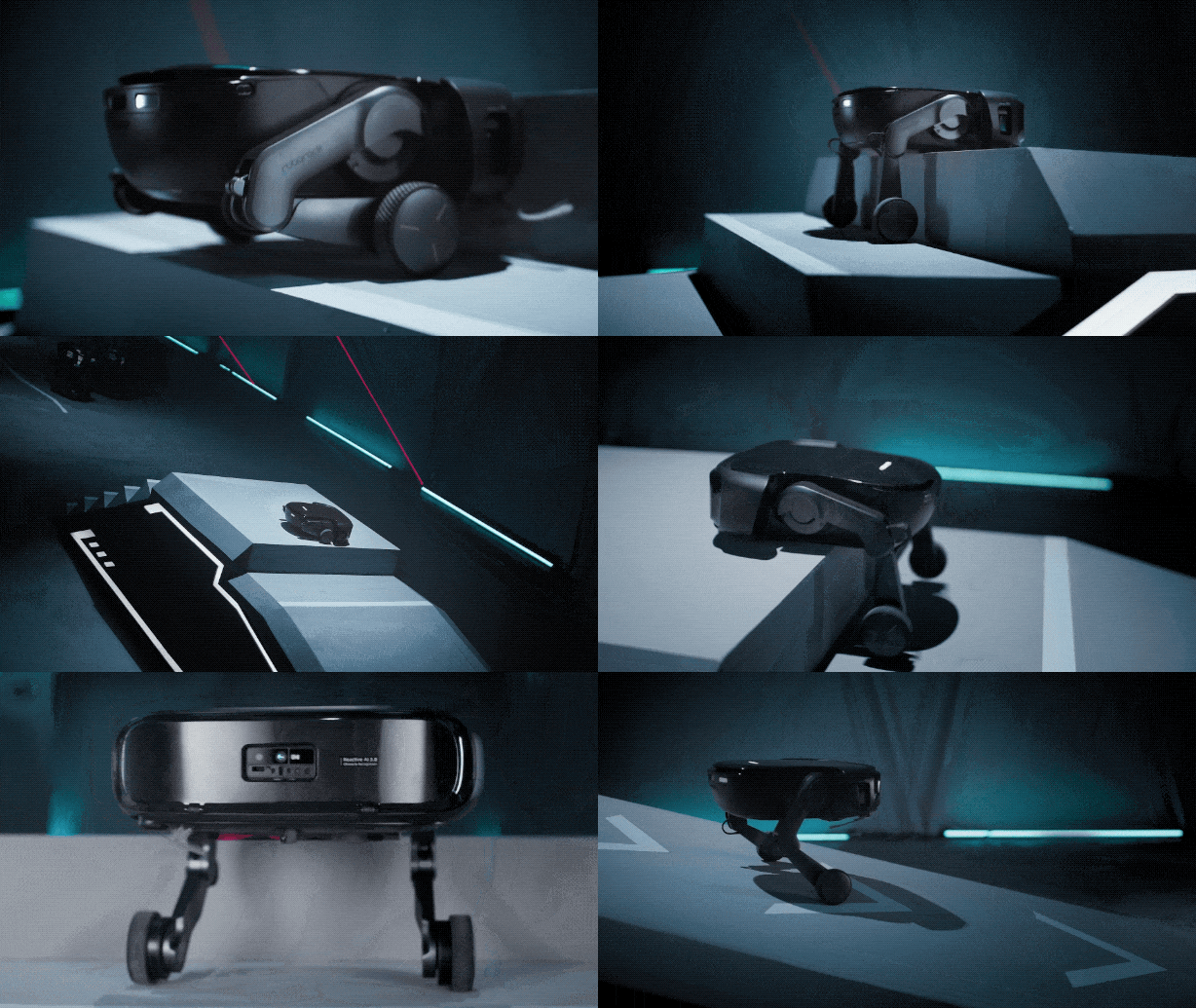
An important step for cleaning robots towards intelligence is to move from organizing two - dimensional planes to understanding three - dimensional spaces. In the past, even when vacuum cleaner robots were in fierce competition, it was all about a "flat - surface war". For multi - level home users, manufacturers would just kindly suggest: "Maybe you could buy a few more. Or you can carry it up and down the stairs if you don't mind the hassle."
However, the Dreame Cyber 10 Ultra (expected to be launched in August 2026) is priced at nearly 15,000 yuan (1,799 euros). It seems more cost - effective to buy one for each floor...
You Don't Have to Be Human
If we break down "doing household chores", we'll find that many actions only require the upper body, or even just a pair of flexible hands. So, many robots are designed in the form of a pair of liftable robotic arms on a wheeled base (for stability), such as the SwitchBot Onero H1 (expected to be launched this year with a price of around $10,000) and the LG CLOiD.
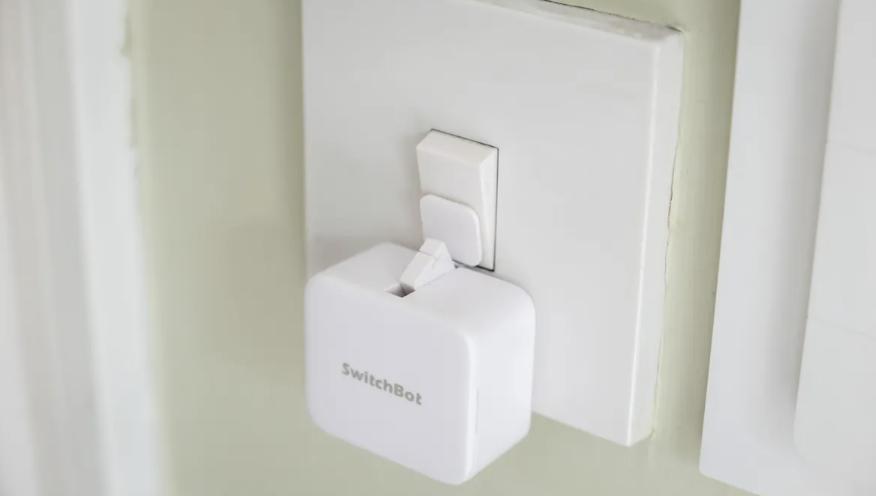
The company SwitchBot used to make small accessories that act like a "finger" on old - fashioned switches, focusing on "low - cost transformation" | Image source: Future
The SwitchBot Onero H1 can catch dirty clothes handed to it, put them into the washing machine, close the door, open the detergent dispenser, put in a laundry pod, and then press the "start" button. For humans, this is a set of "instinctive" actions.

SwitchBot Onero H1
But for robots, it requires a large amount of calculation. Unlike industrial robots, home scenarios are not fixed and repetitive. Robots need to be flexible and adaptable.
Robots can't rely on programmers writing fixed codes like "turn left 30 degrees here" anymore. Instead, they use the VLA (Vision - Language - Action) model to plan their movement paths in real - time.
Good news: Robots can really fold clothes now. LG introduced a robot called CLOiD at CES 2026, and it confidently demonstrated clothes - folding on - site.
Bad news: It's too slow! It takes about two minutes to fold a shirt. Even lightning is faster.
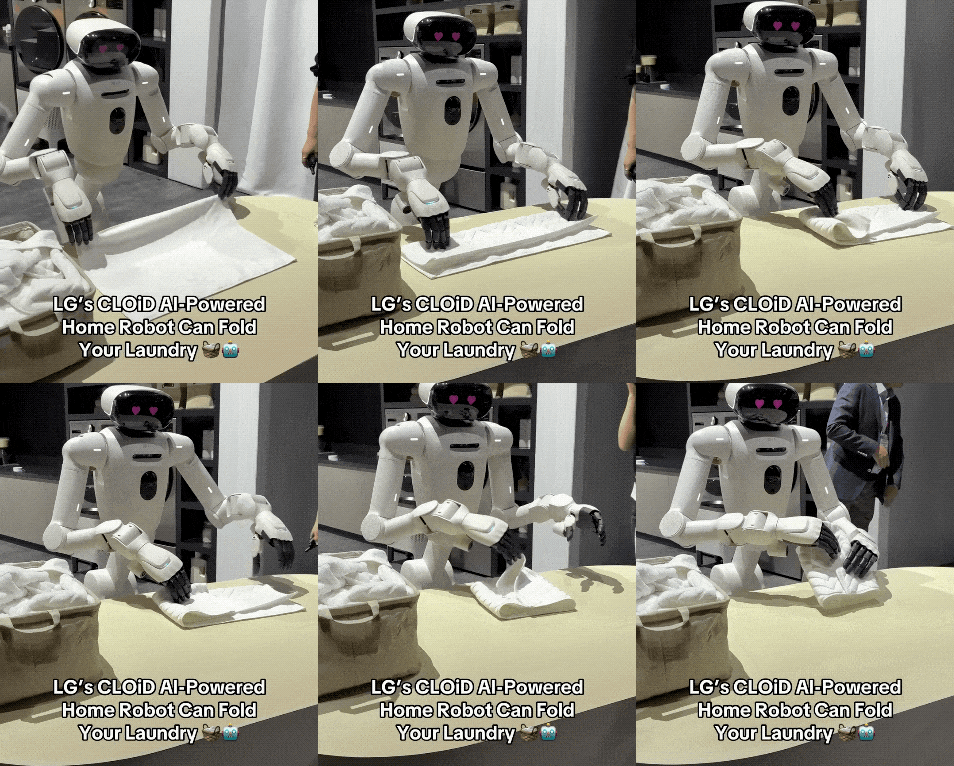
The vision of CLOiD is a "zero - labor household" (i.e., no humans doing housework at home). It looks a bit like a character from a Pixar movie: a cute screen face on two slender legs (actually liftable columns with wheels), and two very flexible seven - degree - of - freedom arms.
Because this level of "unity of knowledge and action" requires a huge amount of computing power. But it means that it's gradually gaining the ability to handle unknown situations. For example, if you give it a cup it's never seen before, it can roughly guess what it is, what it's for, and how to use it.
Another difficulty lies in the "hands". It's very hard to achieve a perfect balance between weight, heat dissipation, and power when integrating sensors, motors, and transmission structures in the relatively small space of the hand. To match the degrees of freedom and precision of a human hand (the hand and wrist joints together have 27 degrees of freedom), the control complexity will also increase significantly.
Household robots may really become a category of home appliances in the future. The "intelligence" of the LG CLOiD largely depends on "external devices". It needs to be connected to LG's ThinQ smart home appliance ecosystem. The washing machine tells it when the clothes are washed; it knows there are croissants in the oven because the oven has a camera. In short, how smart CLOiD is depends on how many LG appliances you have at home.
Choose the "Peacock Man" or the "Warm - Hearted Man"?
Is taking care of kids considered a household chore? Why not!
The 1X NEO, invested in by OpenAI, is priced at $20,000 and is now available for pre - order. From the outside, it's highly adaptable to home environments.
Other robots are like having "bronze heads and iron arms". If they hit a person, it's an accident. The NEO is "soft". It'll automatically release force when it hits a person. It uses a unique Tendon Drive technology. Simply put, it mimics human muscles and tendons instead of using rigid gearboxes. The Tendon Drive makes it extremely quiet at home. There's almost no "buzzing" sound of motors when it walks or moves its hands.

In terms of appearance, it follows the Nordic minimalist style. It doesn't dress up like a Terminator but wears a set of gray jumpsuits.
However, the drawback is that the NEO is a bit "fragile". For the sake of safety and lightness, it only weighs 30 kilograms, so its load - carrying capacity is limited. It may not be suitable for carrying buckets.
It may be more suitable for the following scenarios:
"Mom, get me a can of Coke."
"Mom, there's no toilet paper in the bathroom."
......
Another completely different "robot - making" philosophy offers more possibilities for daily companionship, education, and entertainment scenarios.
For example, robots like the Unitree R1 that can be second - arily developed have a starting price in the range of 30,000 - 40,000 yuan.
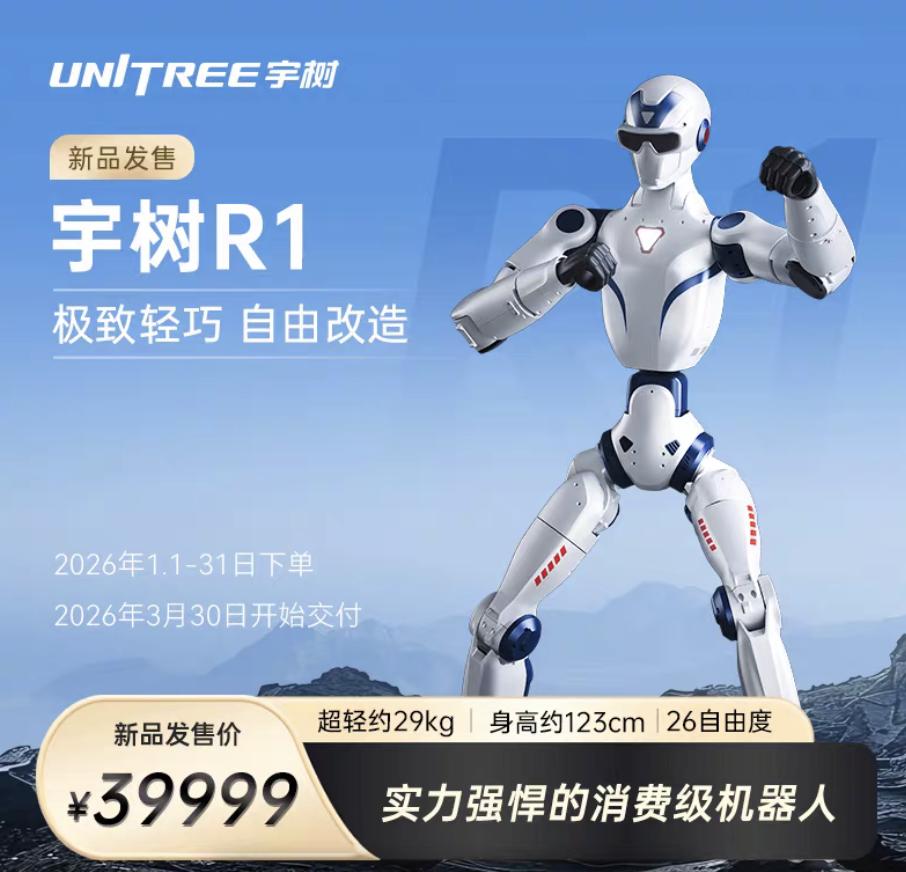
This price usually involves clear trade - offs in functions. It doesn't pursue extreme sports capabilities. It doesn't do flips, and it's not designed for heavy - lifting. Its load - carrying capacity is limited. But it retains the key elements: a complete perception and decision - making system, and hands that can really be "used".
It's a "raw - material robot" with good potential. Buying one and putting it in the study for your child to practice programming with. You can make it play any role you like, depending on your creativity and hands - on ability. By analogy, it's a bit like the "Redmi" or the "first - generation Android phones" in the field of humanoid robots.
Will They Really Enter Our Homes This Year?
After seeing these robot products at the beginning of 2026, I have a strange feeling of "both near and far".
I say "near" because the hardware cost has really come down. I say "far" because many of the smooth demonstrations we've seen haven't been tested on a large scale in real - life home scenarios. The uninterrupted experience only exists in the ideal test environment of the laboratory.
Take the 1X NEO for example. Although it claims to be "fully autonomous", when dealing with extremely complex and chaotic situations, there may still be a remote human operator watching silently in the background. The official calls it the "shadow mode", but this kind of "intelligence" feels a bit like a plot from "Black Mirror".
An obvious trend is that embodied intelligence doesn't necessarily have to pursue a humanoid form. When humans are practical, they just need the right kind of labor, not a human - shaped shell.
I wonder if you noticed the "toilet - cleaning" robot at CES. In the huge exhibition hall, it was just quietly working in the corner, holding a toilet brush and scrubbing the toilet vigorously. It made me think of the robotic arm stir - frying and tossing a wok I saw before. (Sorry, it sounds a bit "off - putting".)
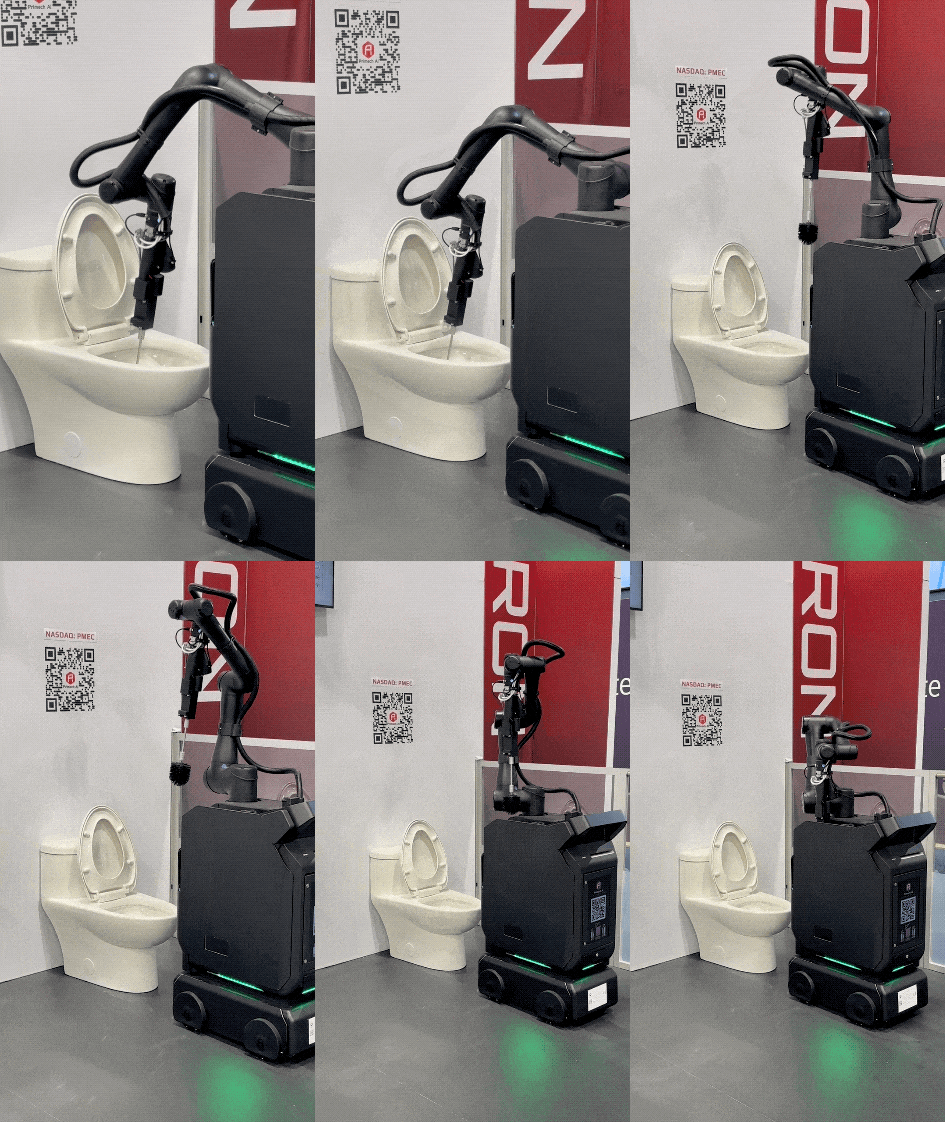
There are already very mature and inexpensive solutions for robotic arms on the market:
For example, desktop - level robotic arms like those from Elephant Robotics and Dobot. The prices of these products have already dropped to the sweet spot of 3,000 - 8,000 yuan.
Modifying robotic arms has become extremely popular in the geek community. Through a variety of expansion interfaces, you can second - arily modify robotic arms to unclog toilets, stir cream, clean windows, feed the elderly, and even do camera work for photography... Isn't this a kind of "distributed embodied intelligence", deploying the execution ability of AI to where it's most needed at the lowest cost?
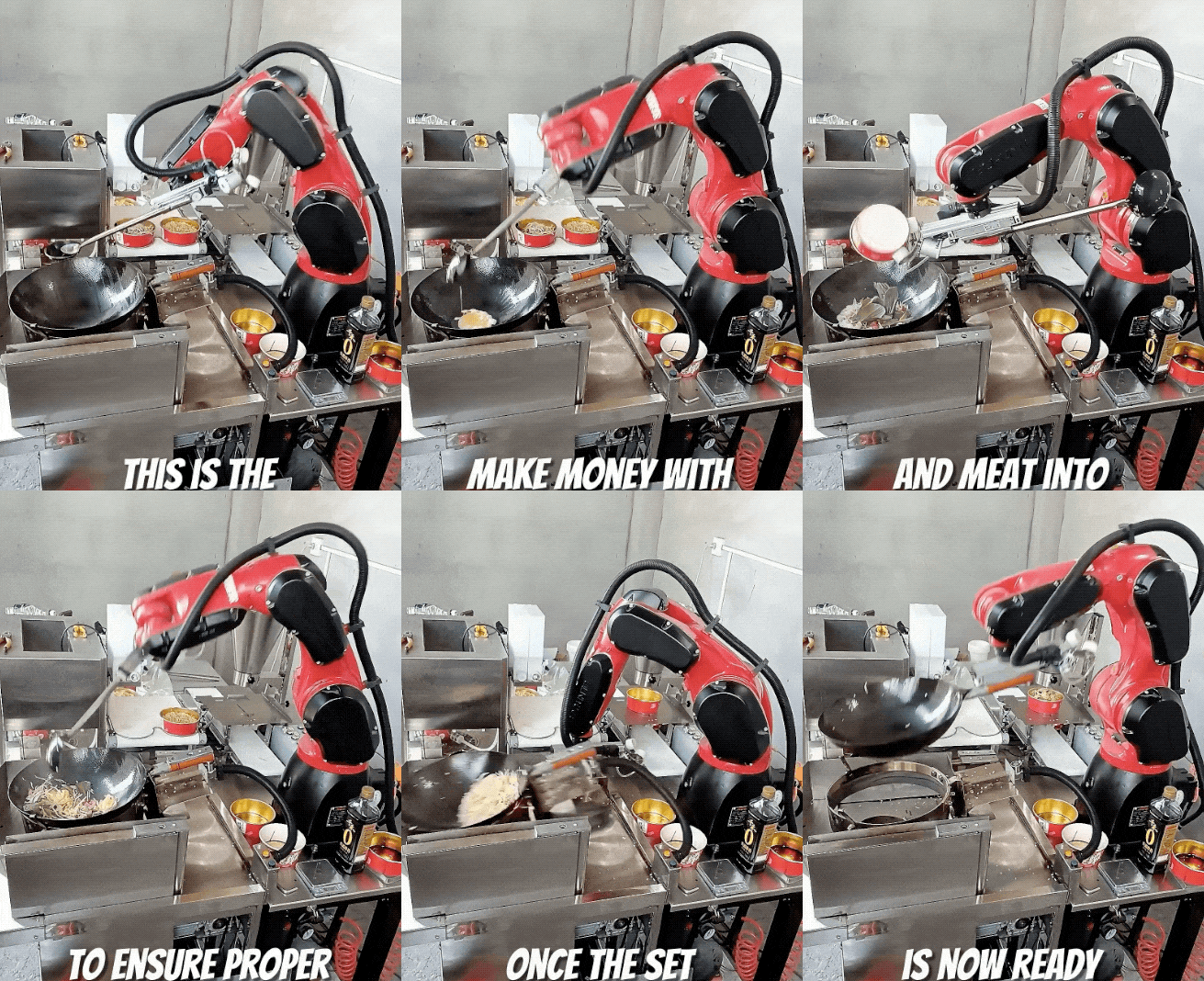
Robots leaving the laboratory and entering human lives are as slow and clumsy as toddlers just learning to walk. But a robotic arm that can clean a toilet may really be the beginning of humans accepting silicon - based labor.
This article is from the WeChat official account "Guokr" (ID: Guokr42), written by Gao Jidongwu, and published by 36Kr with authorization.