HomeArticle

In 2026, everyone is Cathie Wood.

巨潮 WAVE2026-01-13 12:32
Buy seeds of the future

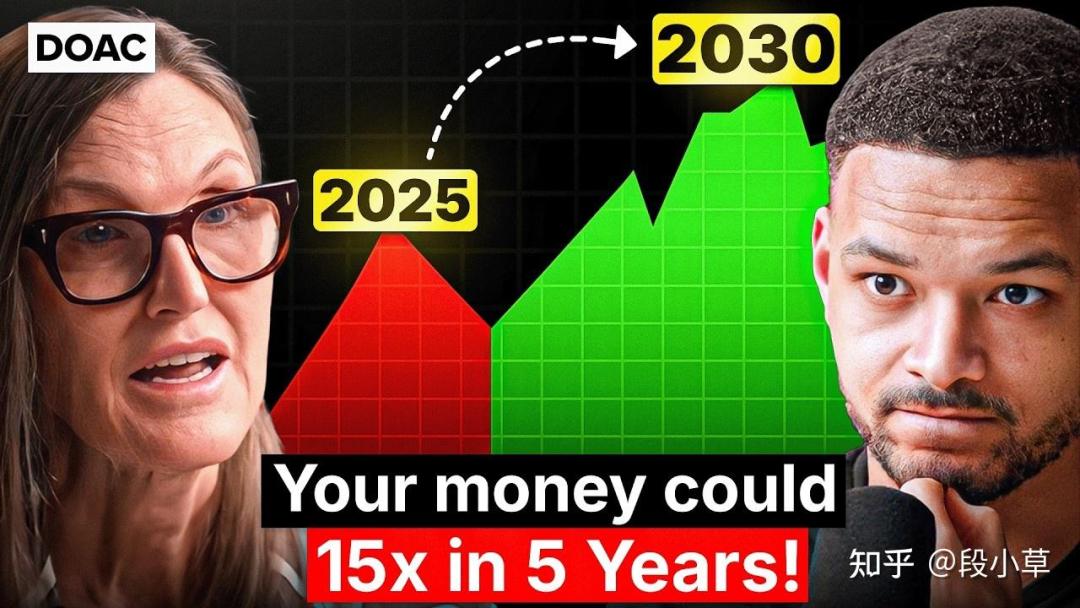
In the just - past year 2025, Cathie Wood, who had been widely questioned, made a remarkable comeback. The ARKK fund managed by her achieved a 35.5% increase in the past year, almost twice the increase of the S&P 500 index.

Just as the market was amazed by her performance, she didn't stop for a moment. At the beginning of the new year, she carried out her regular active portfolio adjustments.

As always, she implemented the strategy of "selling short - term achievements and buying future seeds". While taking profits, she quickly redirected her investment to the emerging stars with greater growth potential in her mind, continuing her signature all - in style.

The most prominent feature of this round of portfolio adjustment was the large - scale and systematic increase in holdings of gene - editing and genomics companies. From gene therapy, sequencing tools to synthetic DNA, ARKK almost covered the entire industrial chain of this cutting - edge field.

Of course, artificial intelligence still remained her core holding. However, the direction of increasing holdings shifted from the general AI concept to more specific data - layer application platforms and next - generation computing platforms, and the investment logic paid more attention to the commercialization of AI.

Her actions at the beginning of 2026 clearly indicated that she would continue to bet on technology companies that might reshape the future paradigms of health, life, and industry, maintaining her distinct style of pursuing high - growth potential.

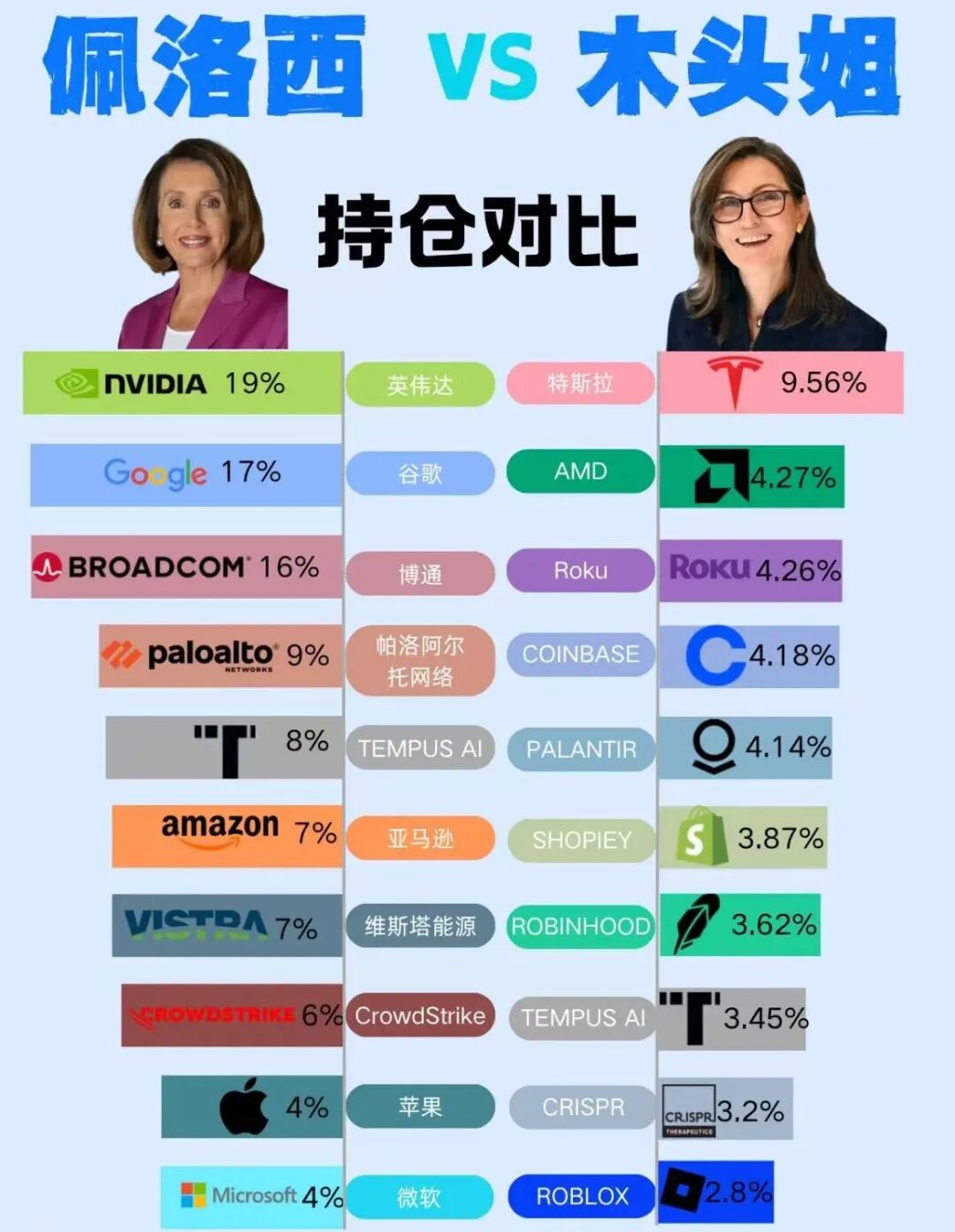
This extremely aggressive style, which doesn't control drawdowns and sometimes even seems to be against the entire market, has earned Cathie Wood the nickname of "big - sized leek".

Considering the current extremely structured market conditions driven by technology and led by growth stocks in both the A - share and US stock markets, especially the continuous boom in the future technology - related sectors in the A - share market, more and more people will adopt the same or even more aggressive strategies.

01

Fantasy

Tesla is undoubtedly Cathie Wood's top - weighted stock. When she publicly announced an increase in the company's stock holdings last June, she directly called Tesla "the largest artificial intelligence project on Earth".

Back in 2016 when she started investing in Tesla, the market's acceptance of electric vehicles was far lower than it is today. Traditional automakers were still on the sidelines, but Cathie Wood had a clear vision - Tesla was not only an automaker but also the leader of the electric vehicle revolution, which would completely disrupt the traditional automotive industry.

As the only listed independent pure - electric vehicle manufacturer at that time, Tesla represented the future direction of transportation.

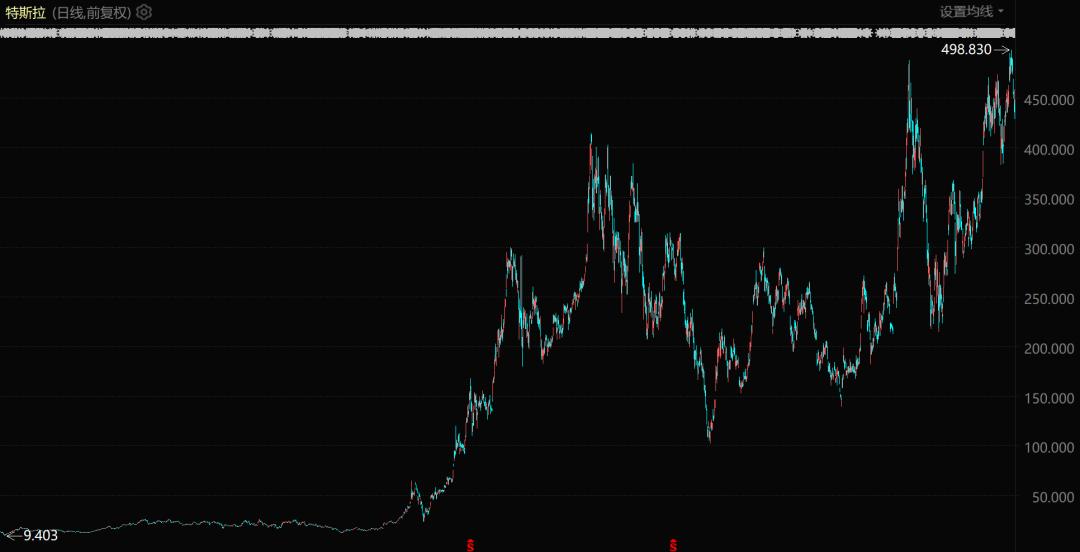
Tesla's stock price performance (from February 2016 to the present)

In 2020, Tesla's stock price soared astonishingly. It rose by more than 70% in the first two months of the year, and the annual increase reached an amazing 743%. That year was a crucial turning point for Tesla and also a key test for Cathie Wood's investment strategy.

With the official production launch of the Shanghai Gigafactory, Tesla delivered nearly 500,000 electric vehicles throughout the year and achieved its first annual profit (net profit of $721 million), significantly boosting the market's investment confidence and greatly increasing the expected future penetration rate of electric vehicles.

On December 21, 2020, Tesla was officially included in the S&P 500 index, which had a significant impact on Tesla's own development, market position, and the capital market at that time.

At that time, Tesla ranked fifth among the index components with an initial weight of 1.69%, marking its transformation from a high - volatility star stock and concept stock to one of the blue - chip stocks at the core of the US economy. However, it also triggered a valuation dispute over the so - called "good news exhaustion" and caused some subsequent correction pressure.

Cathie Wood wisely chose to reduce her holdings of Tesla several times at the stock price peak in 2021 for band - trading. Her evaluation of Tesla also changed subtly, referring to it as an "embodied artificial intelligence project", and her investment logic extended from automobile sales to future transportation services.

In June 2025, in an interview, Cathie Wood elaborated on her new view of Tesla - by 2030, the autonomous taxi network will account for 90% of Tesla's valuation, and the stock price could reach $2,600.

Looking back at Tesla's inclusion in the S&P 500 in 2020, the stable institutional funds it brought actually provided a crucial capital foundation for Tesla to move towards the more ambitious and long - term capital - intensive transformation goal of "future transportation services".

Elon Musk's business empire extends far beyond Tesla and electric vehicles. From commercial spaceflight to humanoid robots, from brain - computer interfaces to energy storage, these are all fields with great potential to disrupt future society.

Today, these projects are all in continuous progress. Neuralink plans to start large - scale production of brain - computer interface devices this year; the Optimus robot is expected to start ramping up production capacity after March this year, with an estimated annual delivery of 60,000 - 80,000 units. Elon Musk predicts that Optimus will contribute 80% of Tesla's market value in the future.

It can be said that before SpaceX goes public, Tesla is the most direct target for investors to access Elon Musk's series of disruptive innovation concepts, and it is the intersection point for investments in robots, energy storage, and AI - which is also an important reason why Cathie Wood has always held a large position in Tesla.

02

Disruption

Different from Elon Musk, a tech visionary who says he wants to "die on Mars", Cathie Wood is more like an "ordinary" investor who just wants to follow the trend of the times and increase her wealth.

In an investment outlook last year, Cathie Wood clearly stated that all her investment decisions for the next five years are based on a grand framework of how the world works.

She believes that humanity is standing at the starting point of the largest - scale technological disruption wave in history. This wave is driven by five interrelated and mutually reinforcing disruptive innovation platforms: artificial intelligence, robotics, energy storage, blockchain technology, and multi - omics sequencing.

Cathie Wood believes that these fields are currently converging and exploding, and their influence may be more rapid than when the telephone, electricity, and internal combustion engine emerged simultaneously in the early 20th century. They are even expected to push the global real GDP growth rate to a historical high of 7%.

Artificial intelligence is undoubtedly the core and brain among them, and it will ultimately form a winner - takes - all market. Wright's law will definitely be more universal than Moore's law.

Robotics is the physical embodiment of AI, which extends intelligence from the virtual world to the physical world, directly replacing or enhancing human labor. Cathie Wood even asserts that humanoid robots will be "the biggest part of all embodied AI opportunities", and a huge market worth $26 trillion may be formed from 2030 - 2040.

Energy storage is the power foundation of this revolution. From sodium - ion batteries to compressed - air energy storage, these technological breakthroughs aim to build a safe and efficient new power system to provide stable energy support for the all - weather AI and robot networks.

Blockchain technology is responsible for building the trust foundation in the digital age. Through its distributed and tamper - proof features, it provides a new solution for secure data circulation, fair collaboration ecosystems, and high - frequency micro - payments, and is the underlying rule for the operation of the digital economy.

Multi - omics sequencing is a precise detector for solving life - science problems. It can analyze the mysteries of diseases and aging with unprecedented precision, and is expected to shorten the new - drug R & D cycle by half when combined with AI.

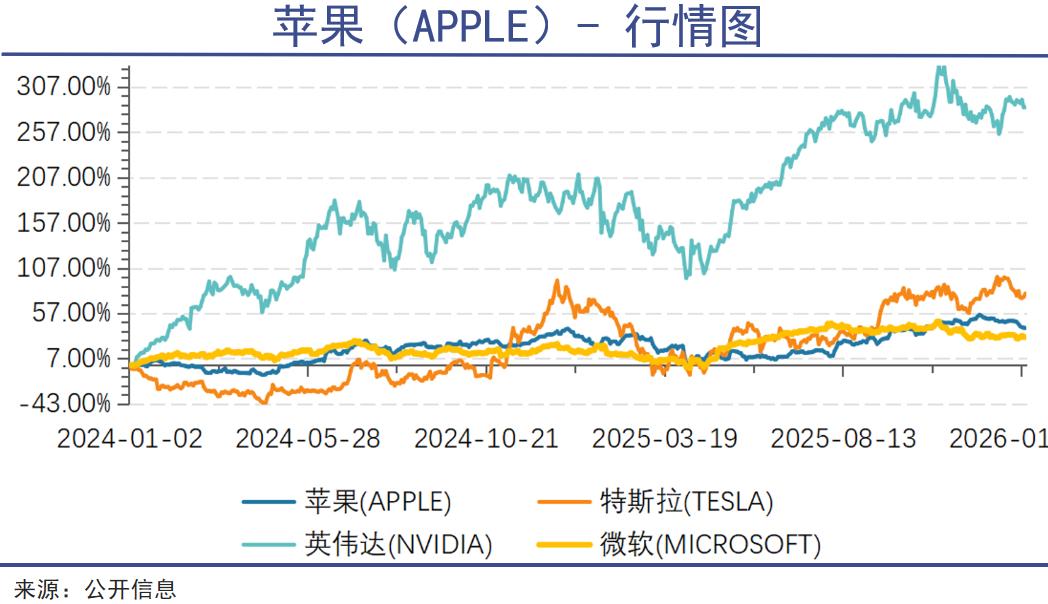
If these five fields that disrupt society all achieve success, then some winners of the past will inevitably be disrupted as well. Cathie Wood pointed out that Apple lacks a clear direction in its AI strategy and has missed the opportunity to define the next - generation mobile devices.

This judgment has been partially verified by Apple's stock price increase in the past two years.

As an extremely optimistic tech believer, Cathie Wood believes that the moment when the social paradigm will be disrupted is getting closer, and there are a large number of wealth opportunities in it. However, she also admitted that "I'm worried that some people will be left behind by these new technologies and, for various reasons, are unwilling to adapt."

"If you stand on the wrong side of the change, the consequences will be catastrophic. But if you can stand on the right side, the investment and job opportunities will be huge."

It is believed that A - share investors have a deeper understanding of Cathie Wood's words after experiencing this bull market.

03

Soaring

The debate in the A - share market about when consumer stocks and blue - chip stocks should start to rise in this bull market seems to have never stopped, but reality has constantly poured cold water on so - called value investors.

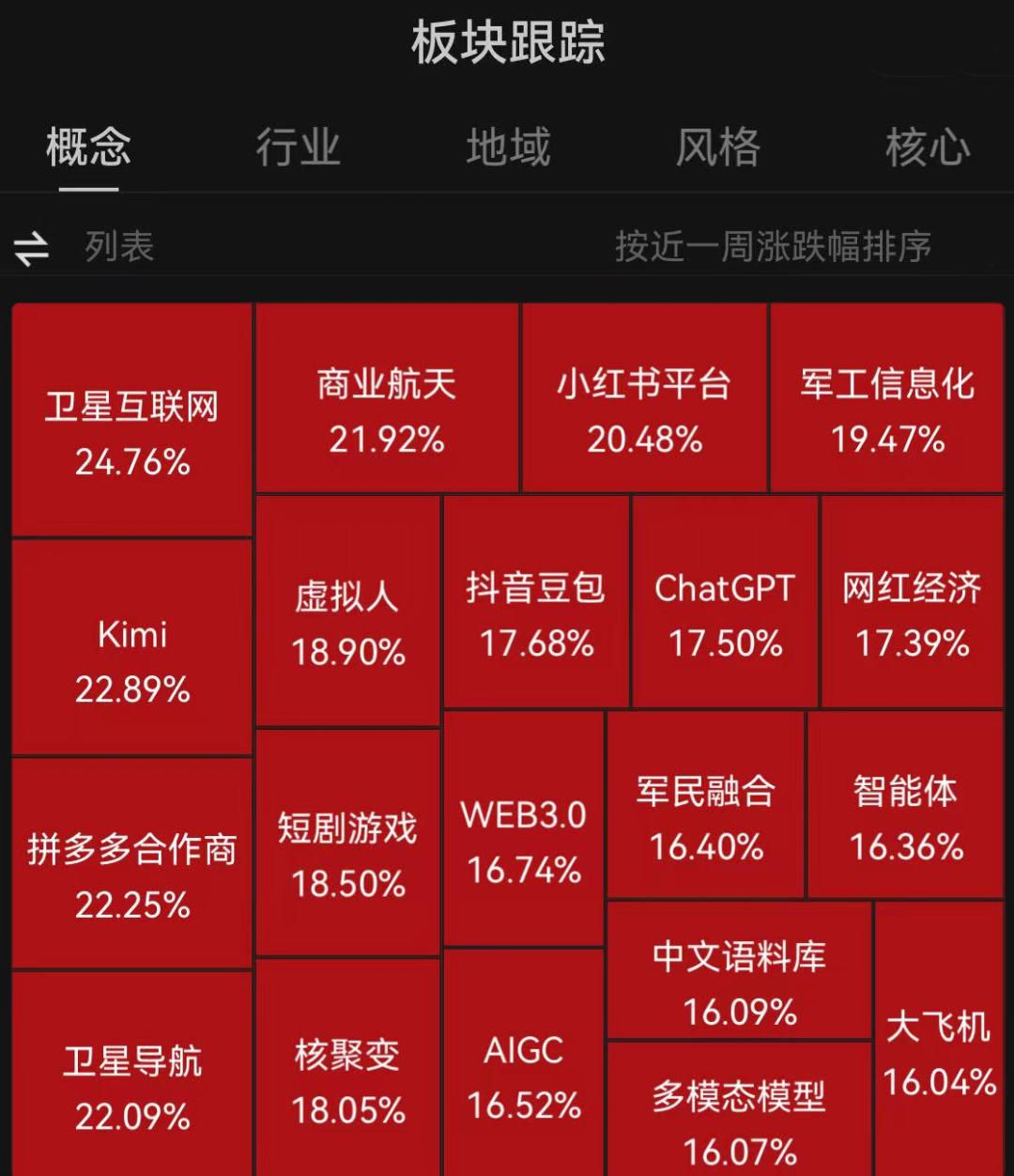
In the first trading week of 2026, in both the US and A - share markets, the "future industries" sectors represented by commercial spaceflight, next - generation artificial intelligence, and brain - computer interfaces continued to stage astonishing surges, ignoring the limitations of valuation and profitability.

The core narrative of the industry has completely deviated from traditional investment rules and evolved into a science - fiction - like future pricing. The market has quickly shifted from valuation repair to crazy bets on long - term possibilities.

The start of this madness was the listing of Moore Threads. A loss - making AI chip company went public on the STAR Market, soaring 468% on its first day and accumulating a 723% increase after five days, with its market value exceeding 440 billion yuan. It was like a spark thrown into dry wood, completely igniting the infinite imagination of the primary and secondary markets for "hardcore technology".

This enthusiasm continued to burn at the beginning of 2026 - commercial spaceflight stocks such as Aerospace Hi - tech and Shanghai Hanxun soared regardless of short - term performance; large AI model companies such as Zhipu AI and MiniMax went public one after another and continued to rise sharply. A technology company without a market value of over 100 billion yuan doesn't even deserve the name.

The valuation system of future - oriented technology stocks has completely deviated from the traditional revenue and profit framework. It only needs to be based on the possibility of defining future industry rules to be comparable to the valuations of the largest enterprises in relevant or similar fields.

A large amount of funds, either actively or passively, have joined this frenzy, and the market consensus is highly focused on the two investment themes of "AI +" and "self - controllability".

In this typical structural bull market, investors with heavy positions in technology stocks have a significantly higher probability of making profits than those in other sectors. Investors with assets of over 500,000 yuan, that is, high - net - worth clients in the eyes of securities firms who are eligible to trade on the STAR Market, have a continuously and stably higher probability of making profits in their accounts than retail investors with assets of only tens of thousands or hundreds of thousands of yuan.

Data shows that since September 2025, the proportion of small and medium - sized accounts with assets of less than 500,000 yuan recording positive returns is less than 35%. This means that most ordinary investors have not benefited from the feast of soaring technology stocks but have instead become the stepping stones for the market's volatile returns.

Why is this bull market different from the one in 2014, which made most people in the market see their account values turn positive?

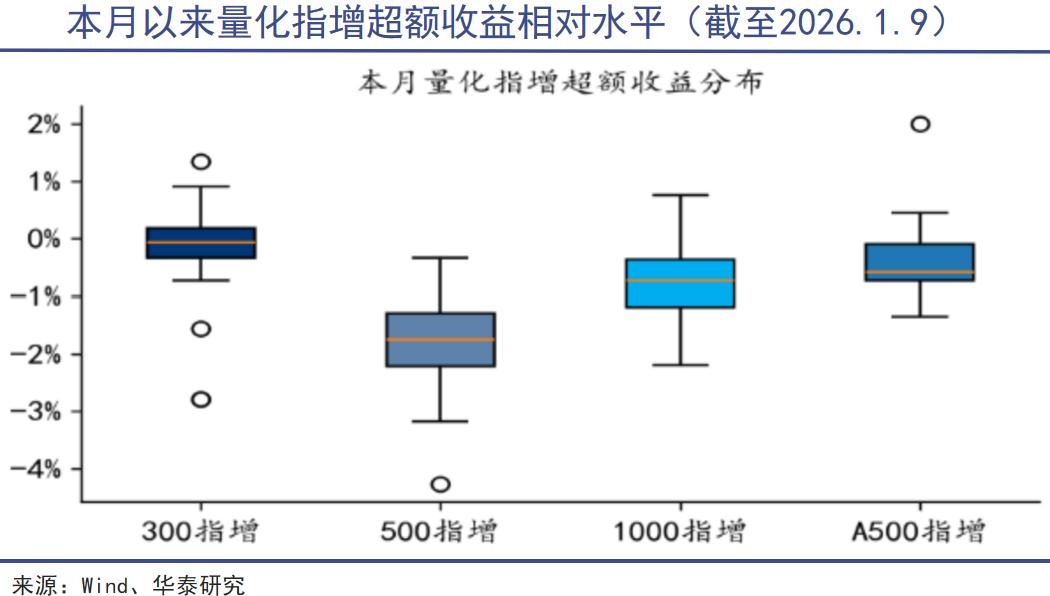
A key variable is that before AI completely changes social productivity, it has first disrupted the rules of the stock - market game. The prevalence of program trading and quantitative strategies has divided market fluctuations into micro - battlefields measured in milliseconds.

The market's reaction speed and pricing elasticity to "stories" have been extremely magnified, and fundamental factors have largely failed in the short - to medium - term. It has become normal for investors to "be right about the direction but lose money". The "style balance" and "high - low switch" that institutional analysts generally expected to occur this year seem quite ridiculous in the face of the market frenzy at the beginning of the year.

This may reveal a deeper logic. Under the grand narrative of the approaching technological singularity, when developing new productive forces becomes the absolute political and economic mainline, capital's choices are unprecedentedly firm and consistent. They are no longer satisfied with dividing the profits of the existing world but are all - in on an undefined incremental future.

Even a large number of market participants, including Elon Musk, are predicting that the value of ordinary commodities will become lower and lower.

Caught up in this trend,